Best hook size for Texas crappie fishing
Oh, the elusive crappie! We've all been there: you're out on your favorite Texas lake, the bite feels light, you set the hook, and… nothing. Or maybe you bring in a tiny speck, and the hook is practically swallowing it whole, causing unnecessary damage. It's frustrating, right? The truth is, one of the most overlooked aspects of consistent crappie success is something so fundamental: choosing the right hook size. This comprehensive guide is here to demystify crappie hook sizing specifically for Texas anglers, ensuring you get better hook sets, higher catch rates, and a more enjoyable day on the water, whether you're targeting big slabs or just filling a cooler.
Why Crappie Hook Size is a Game Changer
You might think a hook is just a hook, but when it comes to crappie, size truly matters. Crappie, those delicious panfish we all love to chase, have notoriously delicate, papery mouths. They also tend to "mouth" their bait rather than aggressively striking it, especially when they're a bit lethargic due to cold fronts or hot summer days. The wrong hook size can lead to a lot of missed opportunities and frustrating moments.
Understanding the Crappie's Mouth Structure
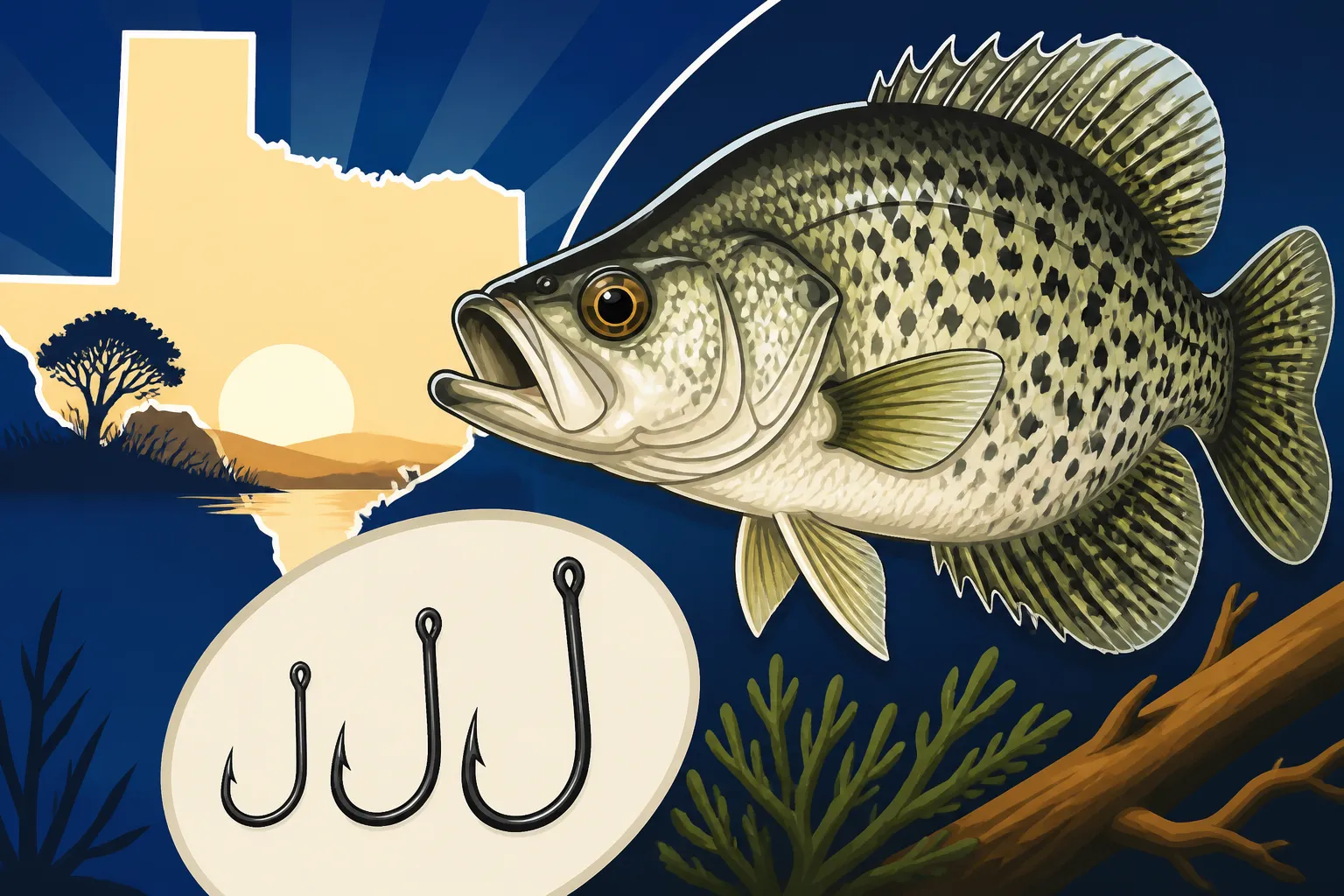
First, let's get a little scientific about our finned friends. Crappie have relatively small mouths compared to their body size, and their jaws are quite fragile. When they suck in a bait, they don't engulf it like a bass. Instead, they create a vacuum, drawing the bait in. If your hook is too large, it simply won't fit effectively into their mouth, or it will feel unnatural, causing them to spit it out before you can react.
Imagine trying to eat a delicate canapé with a giant dinner fork – it's awkward and difficult! That's essentially what a crappie experiences with an oversized hook. A smaller, more appropriately sized hook allows for a cleaner entry into their mouth and a more secure hookset in that soft tissue. This means fewer lost fish right at the boat, which, let's be honest, is one of the most heart-wrenching moments in fishing.
Impact on Presentation and Bait Action
Beyond just fitting in their mouth, hook size drastically affects how your bait behaves in the water. Crappie are visual feeders, and they're often looking for a subtle, natural presentation. If you're using a tiny minnow, but it's saddled with a hook that's too heavy or bulky, it won't swim naturally. It'll struggle, look stressed, or just hang unnaturally in the water, screaming "something's wrong here!" to a cautious crappie.
The same goes for artificial baits like small jigs or soft plastics. A hook that's too large can impede the lure's intended action, making a subtle tail flutter turn into a stiff, lifeless chunk of plastic. Conversely, a hook that's too small might not give the lure enough backbone, causing it to foul or twist in the water. Finding that sweet spot in hook size ensures your bait or lure presents itself in the most enticing, lifelike way possible, drawing those curious crappie in for a bite. This perfect presentation is crucial, especially in clear water or when the bite is tough, making all the difference between an empty stringer and a full cooler.
Demystifying Crappie Hook Sizes and Types
Navigating the world of fishing hooks can feel a bit like learning a secret code, especially with the numbering system. But don't worry, once you understand the basics, choosing the right hook for crappie becomes much clearer. We're generally looking at smaller hooks for crappie, typically in the size #8 to #2 range, or sometimes even smaller like #10 or #12 for tiny baits. For larger baits, you might creep into the #1 or even 1/0 territory, but that's less common for traditional crappie fishing.
The Hook Sizing System Explained
Here’s the golden rule for most panfish hooks: the larger the number, the smaller the hook. So, a #10 hook is smaller than a #6 hook, and a #6 hook is smaller than a #2 hook. It can be a little counterintuitive at first, but it quickly becomes second nature. This numbering system is what you’ll primarily encounter for the smaller hooks perfect for crappie.
However, when you get into the larger hooks, the system flips. For hooks larger than a #1, they start using a "0" or "aught" system: 1/0, 2/0, 3/0, and so on. In this system, the larger the number before the /0, the larger the hook. So, a 3/0 hook is significantly larger than a 1/0 hook. For crappie, you'll rarely go beyond a 1/0, and even then, it's usually for really big minnows or specific artificial presentations. Most of your crappie fishing will live in the #2 to #10 range. This can be confusing, so a quick reference chart at your tackle box, or better yet, a good understanding of what you're looking for, will save you a lot of guesswork.
Common Crappie Hook Types
Different hook designs serve different purposes, and crappie anglers often rely on a few key types:
-
Aberdeen Hooks: These are probably the most classic crappie hooks out there. They're characterized by a long shank and a fine wire. The long shank makes it easier to remove the hook from a crappie's mouth without damaging that delicate tissue, and the fine wire helps keep live minnows livelier for longer without impeding their natural movement. If you get snagged, the fine wire is also more likely to bend out, allowing you to retrieve your hook, which can be a real money-saver if you've got a pile of favorite jigs on a brush pile. Many anglers swear by these for their live bait presentations. You'll find a wide selection of these at places like Bass Pro Shops.
-
Jig Hooks: When you're fishing with jigs, whether hair jigs, soft plastic jigs, or tiny marabou jigs, the hook is integrated into the jig head. These hooks are designed to present the lure effectively and often have a slightly different bend and barb configuration to hold plastics securely. They come in various sizes to match the size of the jig body itself. For example, a 1/32 oz jig head might have a #8 or #6 hook, while a 1/16 oz jig could have a #6 or #4 hook. The key here is to ensure the hook size is proportionate to the soft plastic you're threading onto it, so the plastic has its intended action. You can often find a great variety of jig hooks by searching online at Amazon.
-
Kahle Hooks: These hooks have a wider gap and a more circular bend, almost like a hybrid between a traditional J-hook and a circle hook. They're excellent for holding live bait like minnows securely and tend to hook fish in the corner of the mouth, which can be better for release and prevent deep gut hooks. For crappie, you'd typically look for smaller Kahle hooks, usually in the #4 to #8 range. Many anglers find these particularly effective when crappie are biting very lightly, as the wider gap can provide a better bite.
-
Treble Hooks: While not typically used for crappie on their own, tiny treble hooks are found on small crappie lures like mini crankbaits or spoons. The multiple points increase the chance of a hookup, which can be beneficial with fast-moving baits or aggressive strikes. However, they can also cause more damage to a crappie's mouth, making careful handling crucial if you plan to release fish. When using lures with treble hooks, ensure the hook size doesn't overpower the lure's action.
Choosing the right hook type depends heavily on your preferred bait and fishing technique. For live minnows, an Aberdeen or Kahle is often ideal, while jig hooks are purpose-built for artificial presentations.
Matching Hook Size to Crappie Size and Bait
This is where the rubber meets the road. The perfect hook size isn't static; it shifts depending on what you're trying to catch and what you're offering them. It’s all about balance and creating the most natural and effective presentation possible.
For Live Minnows: The Classic Crappie Bait
Live minnows are arguably the most effective bait for crappie, especially when the bite is tough. The goal with a live minnow is to keep it alive and swimming naturally, attracting crappie without making it look like it's dragging an anchor.
- Small Minnows (1-2 inches): For these tiny morsels, you'll want to go with smaller hooks, typically a #8 or even a #10 Aberdeen or Kahle hook. A fine wire hook is critical here to minimize injury to the minnow, keeping it lively. Hook the minnow lightly through the back, just behind the dorsal fin, being careful not to hit its spine. This allows it to swim freely and present itself as an easy meal. If the crappie are exceptionally finicky, even a #12 might be warranted. A common mistake is using a hook that's too heavy, which kills the minnow quickly or makes it swim unnaturally, deterring bites.
- Medium Minnows (2-3 inches): This is probably the most common size of minnow for crappie fishing. For these, a #6 or #4 Aberdeen or Kahle hook usually works perfectly. Again, fine wire is preferred. You can hook them through the back or through both lips, depending on how you're presenting them (e.g., lips for vertical jigging, back for drifting). This size offers a good balance between holding power and keeping the minnow active. Many anglers will stock up on #6 hooks, as they are versatile for many crappie situations.
- Large Minnows (3+ inches): If you're specifically targeting "slab" crappie – those truly big ones – you might opt for larger minnows. For these, a #2 or even a #1 Aberdeen or Kahle hook might be appropriate. Some anglers might even venture into 1/0 territory, though this is less common for crappie. Just remember, the larger the minnow, the larger the crappie you're likely to attract, but you still need that hook to fit in its mouth. Larger hooks can also be beneficial in brushy areas, as the slightly heavier wire might prevent some minor snags.
For Artificial Lures: Jigs, Plastics, and More
Artificial lures require a different consideration for hook size, as the hook is integral to the lure's design and action.
- Small Soft Plastics (1-2 inches): Think tiny tubes, grubs, or small creature baits. For these, you'll typically be using a jig head with a #8, #6, or #4 hook. The key is to match the hook size to the length of the plastic body, ensuring the hook point emerges cleanly and the plastic can wiggle as intended. If the hook is too large, it can stiffen the plastic, destroying its action. If it's too small, you'll miss a lot of fish or the plastic will bunch up. A good rule of thumb is that the hook point should come out roughly halfway or two-thirds down the body of the soft plastic.
- Medium Soft Plastics (2-3 inches): These might include larger curly-tail grubs, paddle tails, or larger tube baits. Jig heads with #4, #2, or even #1 hooks are common here. Again, proportion is everything. You want the plastic to hang straight and move freely. These are popular for targeting crappie that are slightly more aggressive or when you're looking for a larger profile bait to entice bigger fish. Many crappie jigs available from brands like Mr. Crappie or Bobby Garland come pre-rigged on jig heads with appropriate hook sizes.
- Crappie Spoons and Mini Crankbaits: For these, the hook size is usually fixed by the manufacturer. However, pay attention to the treble hooks. If they seem too large or too small for the overall size of the lure, you might consider swapping them out. For spoons, a single hook can sometimes be more effective and cause less damage than a treble. When buying these, often checking the packaging for recommended applications can help. Always ensure the hook points are super sharp – that's paramount for good hooksets on tiny crappie mouths.
Here's a quick reference table to help visualize common hook sizes for various crappie baits:
| Bait Type | Bait Size | Recommended Hook Sizes (Aberdeen/Kahle) | Recommended Jig Head Hook Sizes | Notes |
|---|---|---|---|---|
| Live Minnows | 1-2 inches (small) | #10, #8 | N/A | Use fine wire hooks to keep minnows lively. |
| 2-3 inches (medium) | #6, #4 | N/A | Most versatile size for general crappie fishing. | |
| 3+ inches (large) | #2, #1 | N/A | For targeting larger "slab" crappie. | |
| Soft Plastics | 1-2 inches (small jigs) | N/A | #8, #6, #4 | Ensure hook point exits cleanly from plastic. |
| 2-3 inches (medium jigs) | N/A | #4, #2, #1 | Proportional to plastic length for best action. | |
| Crappie Spoons/Crankbaits | Small to Medium Lures | N/A | Built-in Treble Hooks (often #10-#6) | Check for sharpness; consider single hook swap for spoons. |
Remember, this table is a guideline. Local crappie preferences, water conditions, and your specific fishing style can influence the best choice.
Practical Tips for Choosing and Using Crappie Hooks in Texas
Now that you understand the theory, let's talk about putting it into practice on our fantastic Texas waters. From the brush piles of Lake Fork to the deep channels of Toledo Bend, crappie fishing here presents a variety of scenarios where the right hook choice makes all the difference. How to Fish for Crappie is a great resource if you're looking for more general techniques.
Considering Water Clarity and Cover
Texas lakes offer a huge range of water clarity. You might be fishing crystal-clear Hill Country reservoirs one day and murky East Texas waters the next.
- Clear Water: In clear water, crappie are much more visually oriented and can be very shy. This is where subtlety is key. You'll want to lean towards the smaller end of the hook size spectrum (e.g., #8 or #10 with small minnows or tiny jigs). The goal is to make your presentation as invisible and natural as possible. A heavy, dark hook can stand out like a sore thumb. Consider using light wire hooks with a dull, matte finish, or even a fluorocarbon leader to minimize line visibility. This is a situation where every detail, including the hook, can spell the difference between success and frustration.
- Stained or Muddy Water: In darker water, crappie rely more on lateral line vibrations and scent. While presentation is still important, the visual impact of your hook is less critical. You might be able to get away with a slightly larger hook (e.g., #4 or #2) if it helps with hook-up ratios, especially if you're using larger baits or heavier jigs. However, don't just jump to the biggest hook; still consider the crappie's mouth size. The primary goal here is to make sure your bait is found and then easily ingested. Sometimes, in these conditions, a robust hook that can stand up to thick cover is more important than extreme finesse.
Speaking of cover, Texas crappie absolutely love to hide in structure: brush piles, submerged timber, docks, and bridge pilings. How to catch crappie around brush piles delves deeper into these specific tactics. If you're fishing heavy cover, you might be tempted to use a larger, stronger hook to prevent it from bending out on snags. While this logic is sound, remember the delicate crappie mouth. It's often a trade-off. A fine-wire Aberdeen hook, for instance, might bend out on a snag, saving your rig, but it could also bend out on a really big crappie. Many anglers carry a variety of hooks to adapt to different situations.
Environmental Factors: Hot and Cold Water Crappie
Crappie behavior changes dramatically with water temperature, and so should your hook choices.
- Cold Water (Winter/Early Spring): When the water is cold, crappie are usually less active. Their metabolism slows down, and they feed more lethargically. This is a time for finesse. They'll often just "mouth" a bait very lightly. Using smaller hooks (e.g., #8, #10) with tiny baits becomes even more crucial, as it allows for easier ingestion and better hook penetration on those subtle bites. How to Catch Crappie in Cold Water provides even more detailed advice for these conditions. Think slow, small, and light. A small jig tipped with a tiny minnow on a #8 jig hook can be deadly.
- Hot Water (Summer): In the peak of Texas summer, crappie often seek deeper, cooler water. They can be more aggressive feeders, but they can also be concentrated in tight schools around thermoclines or deep structure. While they might strike a bit harder, they still have those papery mouths. You might be able to get away with slightly larger hooks (e.g., #4, #6) if you're fishing with larger minnows or faster presentations, but extreme oversized hooks are still a no-go. The key is to get your bait down to them efficiently. Using a slightly heavier jig head (which implies a slightly larger hook) can help you reach those deeper fish faster. Best depth to find crappie in summer is an excellent resource for this time of year.
Sharpening Your Game: Always Check Hook Sharpness
No matter the size or type, a dull hook is your worst enemy in crappie fishing. Crappie have delicate mouths, but the initial penetration still requires a needle-sharp point. Many hooks, even brand new ones, can benefit from a quick touch-up with a hook sharpener. This is especially true after you've bounced a jig off rocks or pulled a minnow hook through a brush pile.
A sharp hook means you'll convert more of those light taps into solid hook sets. It also helps prevent tearing a larger hole in the crappie's mouth, which is important for catch and release. Always keep a small hook file or sharpener in your tackle box. It's one of the simplest, most effective tools you can carry. Taking the time to ensure every hook is razor-sharp can significantly increase your crappie count over the course of a fishing trip. You can find quality hook sharpeners at any outdoor retailer or online at Amazon.
Storage and Organization
Keeping your crappie hooks organized and in good condition is also vital. Rust is the enemy of sharpness and strength. Store your hooks in small tackle boxes or compartment organizers. If you're buying hooks in bulk, consider separate containers for each size and type. This makes it easy to grab the exact hook you need without fumbling, especially when you're quickly trying to re-tie on the water. Bass Pro Shops and other tackle retailers offer a wide array of small, organized tackle boxes perfect for keeping your crappie hooks in prime condition.
Remember, every fishing trip is a learning experience. Don't be afraid to experiment with different hook sizes based on the conditions and how the crappie are biting. Pay attention to how the fish are hooked – are they just barely lip-hooked, or are they swallowing the bait? This feedback will tell you if your hook choice is spot on or if you need to adjust for better results. The more you pay attention to these subtle details, the more successful you'll become as a crappie angler in Texas. For a deeper dive into crappie as a species, check out our Texas Crappie Fishing Guide.
Disclaimer
This article is for general informational purposes only and does not constitute professional advice. Laws, prices and regulations vary by location and change over time. Consult a qualified professional for guidance on your specific situation.