Best Tackle for Texas Bass Fishing
Trying to figure out what bass fishing tackle you actually need for Texas can feel like stepping into a labyrinth. The sheer volume of rods, reels, lines, and lures out there is enough to make any angler, especially a newcomer, feel completely overwhelmed and wonder where to even begin. This comprehensive guide is here to cut through the confusion, offering clear, actionable advice on building a versatile and effective tackle arsenal specifically tailored for the diverse and challenging bass fishing environments found across our great state.
Understanding the Unique Challenges of Texas Bass Fishing
Texas isn't just big; it's incredibly diverse when it comes to bass fishing. What works wonders on a deep, clear Hill Country reservoir might be utterly useless in a shallow, stained East Texas lake. This diversity is what makes bass fishing here so exciting, but it also means your tackle box needs to be well-rounded and ready for anything. You can't just pick a few random lures and expect consistent success across the board. The conditions can change drastically from one body of water to another, and even within the same lake on a given day.
Diverse Habitats and Water Conditions
From the cypress-laden waters of East Texas lakes like Caddo and Sam Rayburn, where heavy cover and stained water are common, to the clear, rocky ledges and deep points of lakes like Canyon Lake or Travis, our state presents a myriad of challenges. You might encounter dense hydrilla beds one day, standing timber the next, or open water with schooling fish. Each of these scenarios demands specific tackle. A heavy-duty flipping stick might be your best friend when punching through matted vegetation, while a lighter spinning rod is perfect for skipping wacky-rigged worms under boat docks or targeting finicky fish in clear water. The type of structure, the water clarity, and the amount of vegetation all play a critical role in determining which lures will be visible and enticing to a bass, and which rod and line setup will be capable of getting that fish out of its hiding spot.
Extreme Weather and Seasonal Changes
Texas weather is legendary for its unpredictability and extremes, and bass fishing is no exception. We experience scorching summers where water temperatures climb, pushing bass deep or into thick shade. Then come the dramatic cold fronts of fall and winter that can shut down bites or send fish to deeper, more stable water. Spring brings the highly anticipated spawn, with bass moving into shallow water for bedding. Best Time of Year to Fish in Texas dives deeper into these seasonal shifts. Each season and its associated weather patterns demand adjustments in your tackle strategy. For instance, fast-moving crankbaits and topwater lures might dominate in warmer months when bass are active, while slower, more subtle presentations like jigs or finesse worms become key when the water cools down. Being prepared for these shifts means having a selection of baits that perform well in varying conditions and the right rods and reels to present them effectively. Ignoring these changes is a surefire way to have a frustrating day on the water.
Essential Rod and Reel Combos for Texas Bass
When it comes to bass fishing, your rod and reel are more than just tools; they're an extension of your body, allowing you to cast accurately, feel subtle bites, and effectively fight a fish. Having the right combo for the job makes all the difference, especially when you're battling a stubborn Texas largemouth. Trying to use one rod and reel for every technique is a common mistake and severely limits your effectiveness.
The Versatile Medium-Heavy Baitcasting Setup
If there's one combo that every Texas bass angler needs, it's a medium-heavy baitcasting outfit. This is your workhorse, capable of handling a wide range of lures and situations. A 6'10" to 7'4" medium-heavy fast-action rod paired with a baitcasting reel in a versatile gear ratio (like 7.1:1 or 7.3:1) can cast everything from spinnerbaits and heavier jigs to medium-sized crankbaits and Texas-rigged plastics. The backbone of a medium-heavy rod provides the power needed to drive a hook through a bass's jaw, especially when fishing around heavy cover like submerged timber or thick weeds. The fast action means the rod bends mostly in the tip, giving you excellent sensitivity for detecting bites and precise control over your lure. This setup is indispensable for covering water quickly and for battling bigger fish in tougher spots. For a deep dive into choosing the right gear, check out Best Fishing Rods for Texas Anglers and Best Fishing Reels for Texas Anglers.
Finesse Spinning Gear for Tricky Situations
While baitcasters excel at power fishing, there are times when finesse is the name of the game, especially in clear water or when bass are pressured and lethargic. A medium-light to medium power spinning rod, typically 6'6" to 7'2" with a fast action, coupled with a 2500 or 3000 size spinning reel, is perfect for these delicate presentations. This setup allows you to cast lighter lures like shaky heads, drop shots, weightless worms, and small jigs with exceptional accuracy and distance. The sensitivity of a good spinning rod helps you feel those incredibly subtle "thumps" or "ticks" that indicate a bite when fish aren't aggressively feeding. When you're fishing spots like Lake Travis or other clear-water reservoirs where bass can be notoriously finicky, this combo can often be the key to turning a slow day into a successful one. It’s also excellent for beginners learning to cast without the backlash challenges of baitcasters.
Specialized Rods for Specific Techniques
As you become more advanced, you'll find that specific techniques truly shine with dedicated rods. For instance, a longer (7'6" to 8'), heavy or extra-heavy power flipping stick is crucial for punching through dense vegetation mats with heavy tungsten weights and stout braided line. These rods have immense power to extract big bass from thick cover. Similarly, for deep-diving crankbaits, a moderate action rod (often made of fiberglass or a composite) around 7'6" is ideal. Its softer action allows the crankbait to wobble more freely and helps prevent hooks from tearing out when a bass surges at the boat. You might also consider a dedicated topwater rod, typically a medium power, fast action rod around 7 feet, which allows for precise casting and working of walking baits or poppers. Having these specialized tools, while not necessary for beginners, can significantly elevate your game once you start to consistently employ specific techniques.
Must-Have Baits for Texas Largemouth Bass
The world of bass lures is vast and sometimes overwhelming, but for Texas bass fishing, a core selection of bait types will cover almost every situation you're likely to encounter. It's about having the right tool for the right job, whether you're targeting shallow cover, deep structure, or schooling fish. Best Bait and Lures for Texas Fishing offers a broader look at common options.
Soft Plastics: The Texas Rig and Beyond
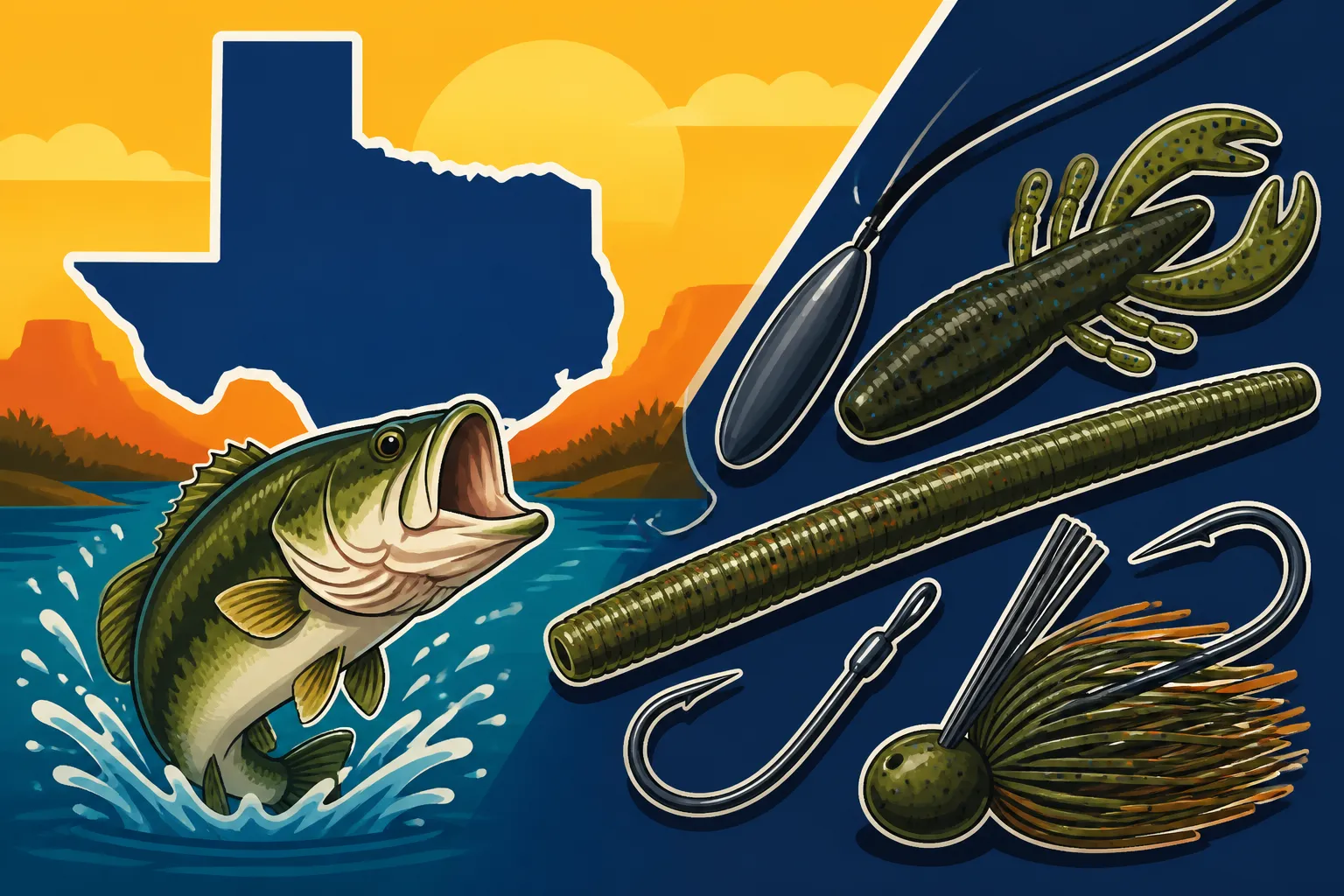
Soft plastic lures are undeniably the most versatile and consistently productive baits for Texas bass. The Texas rig is arguably the most famous presentation, and for good reason. It involves threading a worm, creature bait, or craw imitation onto a worm hook, with the hook point embedded back into the plastic, making it weedless. This setup is fantastic for fishing through heavy cover like brush piles, hydrilla, or submerged timber without snagging. It's subtle, mimics natural prey, and can be fished at various depths by adjusting the weight. You can find a vast array of soft plastics at retailers like Bass Pro Shops, offering endless colors and shapes to experiment with.
Beyond the classic Texas rig, explore other presentations:
- Shaky Heads: A jig head with a flexible spring that allows a straight-tail worm to stand upright, mimicking a foraging baitfish. Perfect for tempting finicky bass on rocky bottoms or when the bite is tough.
- Wacky Rigs: A stick bait (like a Yamamoto Senko) hooked through the middle, creating a unique shimmy on the fall. Excellent for skipping under docks or pitching to visible cover.
- Soft Plastic Swimbaits: These baits, often rigged on an exposed jig head or a weighted swimbait hook, are designed to imitate baitfish like shad or sunfish. They're incredibly effective for covering water and targeting active bass. Best Soft Plastics for Texas Bass Fishing goes into more detail. The beauty of soft plastics lies in their adaptability; by changing the weight, hook, and presentation, you can use them in almost any scenario.
Crankbaits and Lipless Crankbaits: Covering Water
When bass are active and feeding, few lures cover water more efficiently than crankbaits and lipless crankbaits.
- Crankbaits: These are hard-bodied lures with a bill that causes them to dive to specific depths. You'll want a range of sizes and diving depths, from shallow runners (0-5 feet) for flats and shorelines, to medium runners (5-12 feet) for points and ledges, and deep divers (12+ feet) for offshore structure. Matching the crankbait's color to the forage in the lake (e.g., shad patterns in open water, bluegill patterns near docks) is often key. They're excellent for provoking reaction strikes, especially when bounced off cover.
- Lipless Crankbaits: These lures lack a bill and typically sink quickly, allowing you to fish them at any depth by varying your retrieve speed and countdown. They emit a strong rattle and vibration, making them highly effective in stained water or on windy days when fish rely more on lateral line senses. Fishing them with a "yo-yo" retrieve – letting them sink then ripping them up – can be incredibly effective, especially during the colder months or when trying to locate schooling bass. You can often find great value packs of these on Amazon.
Topwater Lures: The Excitement of the Strike
Is there anything more exhilarating than a bass exploding on a topwater lure? Texas offers plenty of opportunities for this heart-stopping action, especially during warmer months or low-light conditions.
- Poppers: These lures have a cupped face that "pops" or "chugs" water when twitched, mimicking a struggling baitfish. They're great for targeting isolated cover like boat docks, laydowns, or weed edges.
- Walking Baits (Walk-the-Dog Lures): These slender, cigar-shaped lures are designed to be retrieved with a specific cadence, causing them to "walk" from side to side across the surface. They cover water efficiently and often draw aggressive strikes from larger bass.
- Frogs: Soft plastic hollow-bodied frogs are perfect for fishing over thick vegetation mats where other lures would snag. They're incredibly weedless and trigger violent strikes as bass ambush them from below. Understanding Best time of day to catch bass in summer can help you determine ideal topwater windows. A variety of these can be found at local tackle shops or online.
Jigs and Spinnerbaits: Versatile Producers
No Texas bass tackle box is complete without a solid selection of jigs and spinnerbaits.
- Jigs: These are truly versatile. Flipping/Pitching Jigs (often paired with a craw trailer) are heavy-duty options for penetrating thick cover, mimicking crawfish or bluegill. Football Jigs are designed for fishing deep, rocky structure, as their head shape helps them crawl over rocks without snagging. Swim Jigs (often lighter and dressed with a paddle-tail swimbait trailer) are retrieved steadily through vegetation or open water, imitating baitfish. Jigs are year-round producers and can catch some of the biggest bass in a lake.
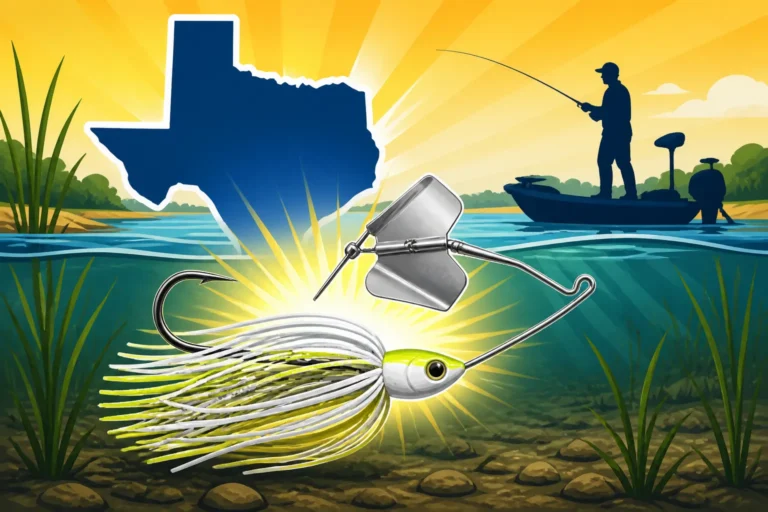
- Spinnerbaits: Characterized by their wire frame, skirted body, and spinning blades, spinnerbaits create flash and vibration, making them excellent search baits. They're particularly effective in stained to muddy water or on windy, cloudy days. Single Colorado blades excel in murky water and colder temperatures, while double Willowleaf blades are better for clear water and faster retrieves. They're surprisingly weedless and can be retrieved through sparse cover, along grass lines, or over submerged stumps. Best lure colors for stained water will help you pick the right colors.
| Lure Type | Best Use Case | Ideal Water Conditions | Key Feature | Common Texas Scenarios |
|---|---|---|---|---|
| Texas Rig | Heavy cover, structure fishing, subtle presentations | All water clarities | Weedless, natural | Flipping into hydrilla, pitching to laydowns |
| Crankbaits | Covering water, targeting specific depths | Clear to stained | Depth control, vibration | Retrieving over points, bouncing off ledges |
| Lipless Cranks | Schooling fish, reaction strikes, wind | Stained to clear (with rattle) | Vibration, sound, fast | Yo-yoing near humps, ripping through grass |
| Topwater Lures | Active fish, low-light, exciting strikes | Clear to slightly stained | Surface action, visual | Early morning over flats, around shoreline cover |
| Jigs | Heavy cover, deep structure, slow presentations | All water clarities | Mimics craws/baitfish | Punching mats, dragging ledges, skipping under docks |
| Spinnerbaits | Covering water, active fish, windy/cloudy days | Stained to muddy, windy | Flash, vibration | Parallel to grass lines, through sparse cover |
| Shaky Head | Finicky fish, rocky bottoms, light bite | Clear to slightly stained | Subtle, stand-up action | Dragging on points, slow retrieve after a cold front |
Terminal Tackle You Can't Live Without
Often overlooked in favor of flashy lures, terminal tackle is the crucial connection between your line and your bait, and ultimately, between you and the fish. Skimping here can lead to lost fish, frustrating snags, and ruined trips. Investing in quality terminal tackle, from hooks to weights, ensures your presentations are effective and your gear holds up when it counts.
Hooks: Choosing the Right Size and Style
The hook is your direct connection to the fish, so choosing the right one is paramount. For soft plastics, you'll mainly be using EWG (Extra Wide Gap) hooks and offset worm hooks. EWG hooks are excellent for chunkier baits like creature baits and wider worms, offering a good hookup ratio. Offset worm hooks work well for slender worms and provide a more streamlined presentation. Sizes typically range from 2/0 to 5/0, depending on the size of your plastic bait. When you're flipping heavy cover with stout line, a heavy-duty, strong wire hook is essential to prevent it from straightening out. For shaky heads, specific jig heads with a weed guard and a small, sharp hook are used. Circle hooks are often preferred for live bait fishing or when using juglines and trotlines, as they tend to hook fish in the corner of the mouth, reducing gut-hooking. Always ensure your hooks are razor-sharp; a dull hook is the quickest way to miss a fish.
Weights: Adapting to Depth and Cover
Weights serve to get your lure to the desired depth and maintain contact with the bottom.
- Bullet Weights: The classic choice for Texas rigs. They come in lead and tungsten. Tungsten weights are denser and smaller than lead of the same weight, offering a more compact profile and significantly better sensitivity, allowing you to feel subtle bites and bottom structure more clearly. Common sizes for Texas rigs range from 1/8 oz for light cover and shallow water to 1 oz or more for punching through heavy mats.
- Drop Shot Weights: These specialized weights, often cylindrical or teardrop-shaped, are designed to be tied to the tag end of your line, allowing your hook and bait to suspend above the bottom. They help keep your bait in the strike zone longer.
- Carolina Rig Weights: Typically heavier (3/4 oz to 1 oz) bullet or egg-shaped weights, used with a swivel and a leader to present a bait a few feet off the bottom.
- Jig Heads: Integrate the hook and weight, designed for specific presentations like shaky heads, swim jigs, or hair jigs. Having a variety of weights lets you adjust to wind, current, depth, and the density of the cover you're fishing.
Swivels and Snaps: The Small but Mighty Details
While not always necessary for bass fishing, swivels and snaps play important roles in certain situations.
- Swivels: Most commonly used with the Carolina rig to prevent line twist and to separate the main line from the leader. Barrel swivels and ball bearing swivels are the main types; ball bearing swivels offer superior anti-twist properties but are pricier. Using a good quality swivel is crucial for presenting your bait naturally and avoiding frustrating line tangles.
- Snaps and Snap Swivels: These allow for quick lure changes without retying. They can be useful for quickly swapping out crankbaits or spinnerbaits, but many bass anglers prefer to tie directly to their lure for maximum stealth and strength, especially with sensitive presentations. Avoid using snaps with topwater lures, as they can interfere with the lure's action. For instance, a snap on a walking bait can hinder its side-to-side motion. Always opt for strong, high-quality snaps if you choose to use them, particularly when fishing for bigger fish.
Fishing Line: The Unsung Hero
Your fishing line is the direct connection between you and the fish, and its importance cannot be overstated. The right line choice affects casting distance, sensitivity, strength, and overall lure presentation. Different types of line excel in different situations, and understanding their properties is key to successful bass fishing in Texas.
Monofilament: The Classic Choice
Monofilament, often simply called "mono," has been a staple in fishing for decades, and for good reason. It's a single strand of nylon, known for its stretch, knot strength, and affordability. The stretch in monofilament acts as a shock absorber, which can be beneficial when fishing with treble-hooked lures like crankbaits and topwater baits, as it helps prevent hooks from tearing out of a bass's mouth during aggressive strikes or head shakes. It also has good abrasion resistance, which is helpful when fishing around light cover. However, its stretch can reduce sensitivity, making it harder to detect subtle bites, especially in deep water. It also has memory, meaning it can retain the shape of the spool, leading to coils and tangles. Monofilament is a solid choice for moving baits where shock absorption is desired. Best line weight for Texas bass fishing is an important consideration for any line type.
Fluorocarbon: The Nearly Invisible Advantage
Fluorocarbon line has gained immense popularity among bass anglers, largely due to its near-invisibility underwater. This is because it has a refractive index very similar to water, making it incredibly difficult for fish to see. This stealth factor is a huge advantage, especially in clear lakes like the ones found in the Texas Hill Country, or when targeting pressured fish. Fluorocarbon also has much less stretch than monofilament, providing excellent sensitivity for detecting subtle bites and feeling bottom structure. It's also highly abrasion resistant, a plus when fishing around rocks or wood. However, fluorocarbon can be stiffer than mono, making it a bit more challenging to cast, particularly on spinning gear. It can also be more expensive. Many anglers use fluorocarbon as a main line on baitcasting reels for presentations requiring sensitivity, or as a leader material when connected to braided line.
Braided Line: Power and Sensitivity
Braided line is made by weaving multiple strands of synthetic fibers, resulting in a line that is incredibly strong, has virtually no stretch, and is very thin for its breaking strength. The lack of stretch provides maximum sensitivity, allowing you to feel every bump, tick, and bite with unparalleled clarity. Its incredible strength and abrasion resistance make it ideal for fishing heavy cover, such as punching through matted hydrilla, flipping into dense brush, or when you need to winch a big bass out of thick vegetation. However, braided line is highly visible underwater, so it's rarely used directly tied to a lure in clear water. Instead, many anglers will tie a fluorocarbon or monofilament leader to their braided main line. This gives them the power and sensitivity of braid with the stealth of a less visible line. Braided line vs fluorocarbon for Texas lakes offers a more detailed comparison. For specific techniques like frog fishing over mats or heavy flipping, 50-80 lb braided line is a must-have.
Storage and Organization: Keeping Your Tackle Ready
Having all the right tackle is one thing; keeping it organized and easily accessible is another. A well-organized tackle system saves time, reduces frustration, and protects your valuable gear from the elements. Nobody wants to spend precious fishing time untangling lines or searching for a specific lure.
Tackle Boxes and Bags for Different Needs
Your choice of tackle storage will depend on your fishing style.
- Hard-Sided Tackle Boxes: These traditional boxes with multiple trays are great for storing a wide variety of lures, tools, and terminal tackle. They offer robust protection for your gear. Brands like Plano offer excellent multi-tray boxes and utility boxes. They are particularly useful for keeping your gear compartmentalized and preventing hooks from tangling.
- Soft-Sided Tackle Bags: These bags, often made of durable fabric, typically hold several utility boxes (like the 3600 or 3700 series from Plano) that can be swapped out depending on what you're fishing for. They're lighter, easier to carry, and often have exterior pockets for additional storage. This modular system allows you to pack only what you need for a specific trip, rather than lugging around your entire collection. For example, if you're heading to Lake Fork specifically for big bass, you might pack boxes heavy with deep diving crankbaits and big worms, leaving your finesse gear at home.
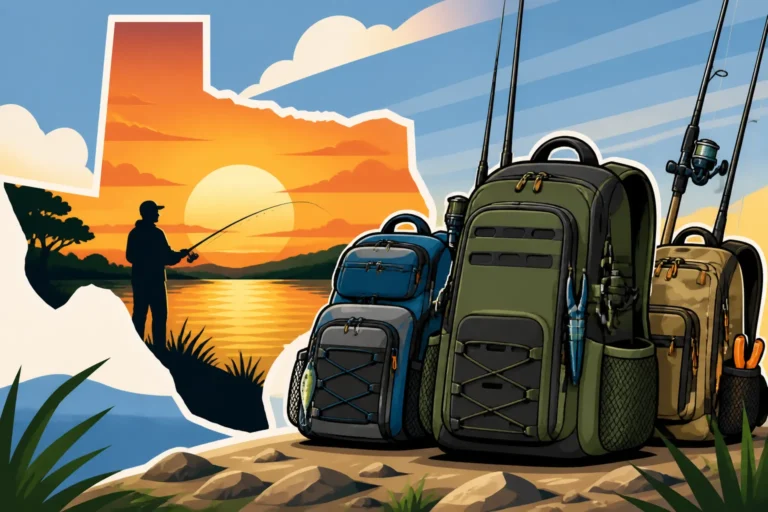
- Backpacks: For bank anglers or those who hike to remote spots, a dedicated fishing backpack is invaluable. It combines tackle storage with space for water, snacks, and other essentials, making it easy to carry everything you need. You might find a good selection of these on Amazon or at any well-stocked fishing retailer like Bass Pro Shops. Best tackle box organization for a Texas boat is a great resource if you're outfitting a boat.
Specialty Storage for Baits and Tools
Beyond general tackle boxes, specialized storage helps keep your more delicate or specific items protected.
- Worm Binders: These zippered binders with clear plastic sleeves are perfect for storing soft plastics, especially those that come in bags, keeping them organized by type or color. This prevents soft plastics from melting together in the Texas heat and keeps their scent contained.
- Jig Boxes: Dedicated boxes with foam inserts or dividers help keep jigs organized, preventing their skirts from getting tangled or crushed.
- Small Utility Boxes: For terminal tackle like hooks, weights, swivels, and beads, small, clear utility boxes with adjustable dividers are essential. They keep these small but critical items separated and easy to find, preventing rust and loss.
- Tool Holders: Pliers, line cutters, and hook removers should have dedicated spots that are easily accessible. Many tackle bags have external pockets or holsters for these frequently used tools. Keeping your tools clean and sharp will make your time on the water much more efficient and enjoyable.
Beyond the Basics: Advanced Tackle for Serious Anglers
Once you've mastered the fundamentals and built a solid foundational tackle collection, there's a world of advanced gear and electronics that can truly elevate your Texas bass fishing game. These tools aren't strictly necessary for catching fish, but they can significantly improve your efficiency, help you locate fish faster, and even allow you to tackle new techniques with confidence.
Electronics and Their Role in Tackle Selection
Modern fishing electronics have revolutionized how anglers approach bass fishing.
- Fish Finders (Sonar/Down Imaging/Side Imaging): These devices allow you to "see" underwater, revealing structure, depth contours, and even individual fish. Knowing the depth, type of bottom, and presence of baitfish or bass can directly influence your tackle choice. If you see a school of baitfish suspended at 15 feet, you'll reach for a crankbait that dives to that depth or a swimbait. If you identify a deep brush pile, a jig or a Texas rig becomes the prime choice. Brands like Lowrance and Humminbird offer a range of powerful units. Understanding what lies beneath can tell you exactly which lure and presentation is most likely to draw a strike. Best electronics for Texas reservoir fishing offers more detailed information on choosing and using these tools.
- GPS Mapping: Integrated into most fish finders, GPS mapping allows you to pinpoint exact locations, mark waypoints for productive spots, and navigate safely. This is invaluable for returning to a specific submerged hum, a brush pile you found, or a productive creek channel. Knowing your exact position relative to underwater structure ensures you're placing your casts precisely where the fish are holding, maximizing the effectiveness of your chosen tackle.
Specialized Tools and Accessories
Beyond the rods, reels, and lures, a few specialized tools can make your time on the water more productive and enjoyable.
- Line Cutters/Scissors: A sharp, reliable pair of line cutters or braid scissors is a must. Trying to bite through heavy fluorocarbon or braid is not only difficult but can damage your teeth.
- Fishing Pliers: Essential for safely removing hooks, cutting wire, or crimping sleeves. Opt for a pair with a comfortable grip and corrosion resistance, especially if you also dabble in saltwater.
- Hook Sharpener: Even the sharpest hooks can dull over time, especially after bouncing off rocks or fish teeth. A small hook sharpener can quickly restore a point, significantly increasing your hookup ratio.
- Measuring Board/Scale: If you plan on participating in tournaments or simply want to track your catches, a measuring board and a digital scale are essential for accurately weighing and measuring fish. Many modern scales can also connect to apps to log your catches.
- Net: A good landing net, particularly one with a rubberized mesh (which is gentler on fish and less prone to snagging hooks), is invaluable for safely landing larger bass, especially when fishing alone.
Budgeting for Your Texas Bass Tackle Arsenal
Building a comprehensive tackle arsenal for Texas bass fishing doesn't have to break the bank, but it does require smart planning and prioritization. It's easy to get carried away with all the options out there, but focusing on quality over quantity, especially for essential items, will serve you better in the long run.
Prioritizing Your Purchases
When starting out, focus on versatility. A good medium-heavy baitcasting combo and a reliable medium spinning combo should be your first major investments. These two setups will allow you to fish a wide range of techniques and cover most scenarios. Next, build your lure collection with the most versatile and consistently productive baits:
- A variety of soft plastics: Worms, creature baits, and stick baits in popular colors (green pumpkin, black/blue).
- Appropriate terminal tackle: A selection of EWG hooks, bullet weights (tungsten if your budget allows), and jig heads.
- A few versatile moving baits: A medium-diving crankbait, a lipless crankbait, and a spinnerbait.
- Essential line types: A spool of fluorocarbon for your baitcaster and monofilament for your spinning reel (or braid with fluorocarbon leaders).
Resist the urge to buy every new lure you see. Instead, understand why certain baits work in certain conditions, and then gradually expand your collection. As you gain experience, you'll naturally identify gaps in your arsenal and can make more informed purchases. Remember, a few well-chosen, quality pieces of tackle are far more effective than a massive collection of cheap, ineffective gear.
Finding Value in Quality Gear
While it's important to budget, don't automatically go for the cheapest option, especially for critical items like rods, reels, and line. Quality gear typically lasts longer, performs better, and provides a more enjoyable fishing experience.
- Rods: Look for rods with good sensitivity and backbone. You might find excellent mid-range options that offer great performance without the premium price tag of top-tier models.
- Reels: Smoothness, durability, and a reliable drag system are key. A mid-range reel from a reputable brand will often outperform a cheaper model significantly.
- Line: Don't skimp on line. Cheap line can lead to frustrating break-offs and missed fish. Invest in quality mono, fluoro, or braid that matches your intended use.
- Sales and Bundles: Keep an eye out for sales, especially at major retailers like Bass Pro Shops or through online deals on Amazon. Many brands offer rod and reel combos that provide excellent value for beginners. Sometimes buying an entire combo can be more cost-effective than purchasing individual components separately. Also, consider buying soft plastics and terminal tackle in bulk when they go on sale, especially for colors and sizes you know you'll use frequently.
Building your Texas bass fishing tackle collection is an ongoing journey, but by focusing on these essentials and understanding the unique demands of our Texas waters, you'll be well on your way to more successful and enjoyable days chasing those elusive largemouth.
Disclaimer
This article is for general informational purposes only and does not constitute professional advice. Laws, prices and regulations vary by location and change over time. Consult a qualified professional for guidance on your specific situation.