How much does a used bass boat cost in Texas
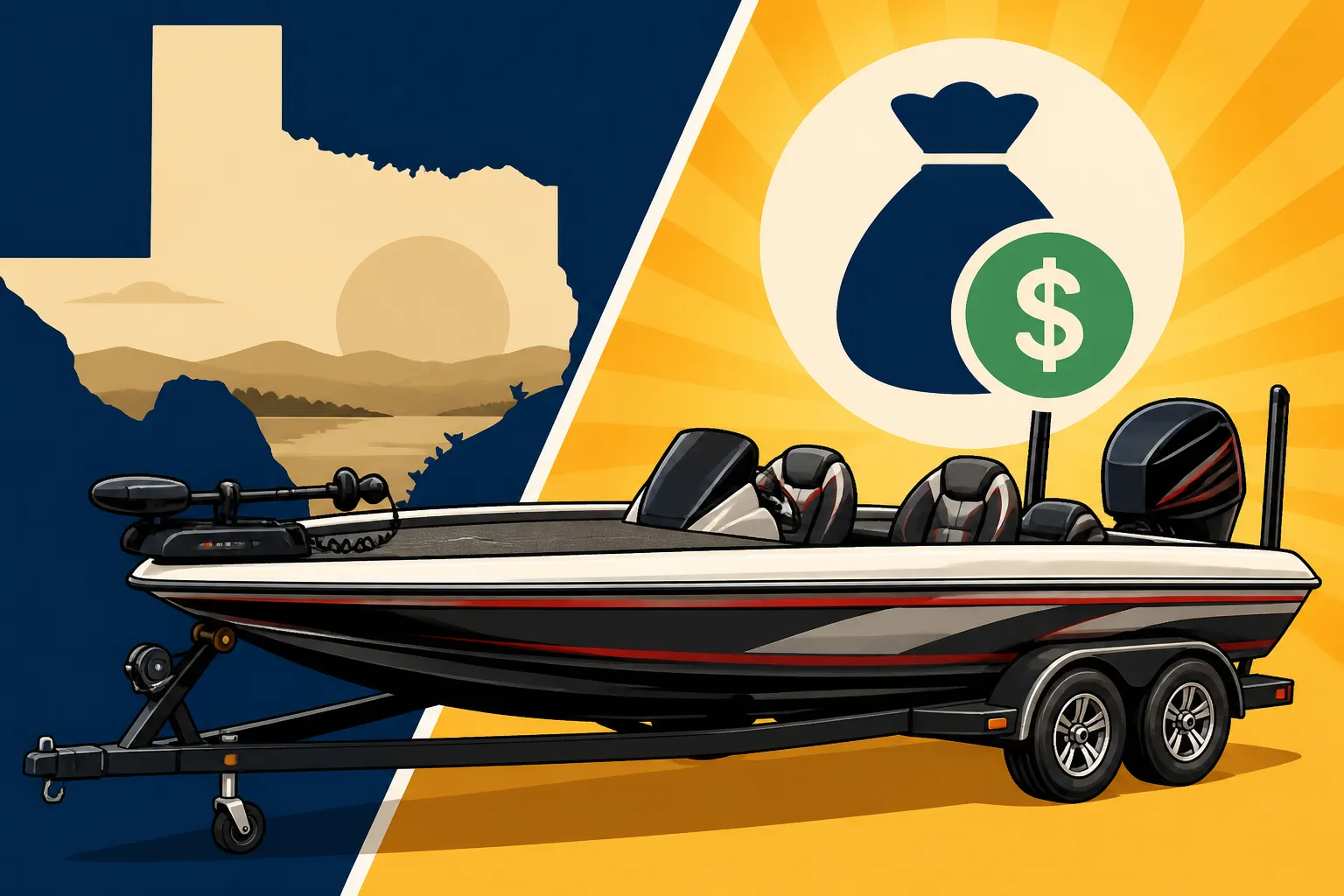
So, you're dreaming of owning a bass boat, cruising across a vast Texas lake, casting for those lunker largemouths. It's a fantastic dream, but let's be real: the sticker shock of a brand-new bass boat can quickly turn that dream into a distant fantasy. That's why so many of us turn to the used market, hoping to find a reliable rig without breaking the bank. This guide is here to help you navigate the sometimes murky waters of used bass boat costs in Texas, giving you a realistic picture of what to expect and how to find the best value for your hard-earned money.
Understanding the Factors Influencing Used Bass Boat Prices in Texas
When you start looking for a used bass boat, you'll quickly realize that prices aren't one-size-fits-all. There's a huge spectrum, and several key factors play a massive role in where a particular boat falls on that scale. It's not just about the boat itself, but also its history, its guts, and all the bells and whistles it comes with.
Age and Condition: The Wear and Tear Factor
Just like a used truck, the older a bass boat is, generally the lower its price will be. But age isn't the only thing that matters. A meticulously maintained 10-year-old boat could easily be worth more than a neglected 5-year-old boat. When you're eyeing a used boat, you need to look beyond the model year.
Think about the hull itself: Are there any major gouges, deep scratches, or signs of impact that could indicate structural issues? Does the gel coat still have some shine, or is it faded and chalky? What about the carpet? Is it stained, torn, or does it look like it's been replaced recently? All these cosmetic and structural details impact the boat's perceived value and, more importantly, its long-term reliability. A boat that looks like it's been fished hard and put away wet will understandably fetch a lower price than one that’s been babied, garage-kept, and regularly detailed. It's often worth paying a bit more upfront for a boat in excellent condition, as it can save you a ton of headaches and repair bills down the road.
Engine Type and Horsepower: The Power Beneath Your Feet
The engine is, without a doubt, the heart of any bass boat, and it's a huge determinant of cost. Most bass boats are powered by outboard motors, and the brand (think Mercury, Yamaha, Evinrude, Suzuki), horsepower (HP), and age of that engine significantly influence the boat's overall value. A powerful, fuel-efficient 250 HP four-stroke outboard from a reputable brand will command a much higher price than an older, less powerful two-stroke.
You also need to consider the engine's hours of use. Just like mileage on a car, lower hours usually mean more life left in the engine, but it's not foolproof. Regular maintenance records are gold here. Has it had its annual services? Were any major repairs done? A compression test is almost mandatory when you're serious about a purchase, as it can reveal underlying issues that might cost you thousands to fix. Remember, a cheap boat with a bad engine is rarely a good deal. The cost of replacing or rebuilding a marine outboard can quickly exceed the "savings" you thought you were getting on the boat itself.
Electronics and Accessories: The Modern Angler's Edge
Modern bass fishing is highly reliant on technology, and the electronics and accessories on a used boat can add significant value. We're talking about high-end fish finders, GPS units, trolling motors, shallow water anchors, and more. A boat equipped with dual 12-inch screens from Lowrance or Garmin, a powerful Minn Kota Ultrex trolling motor with spot-lock, and perhaps even a couple of Power-Poles, will naturally be priced higher than a bare-bones model.
These items, while sometimes overlooked by first-time buyers, are incredibly expensive to add after the fact. If a used boat already has the sophisticated electronics you'd want, that's a huge bonus. However, you need to assess their condition. Do they all work perfectly? Are the screens free of sun damage? What generation are they? Older, outdated electronics might not add much value and could even be a project you'll need to upgrade yourself. Factor in the cost if you're planning to buy a boat with minimal electronics and deck it out yourself; a new trolling motor or a high-end graph can easily run into the thousands. Finding a rig with a good Best Fishing Electronics for Texas Anglers setup already installed can be a major win.
Brand and Model Reputation: The Resale Value Angle
Just like cars, some bass boat brands hold their value better than others. Reputable brands known for quality construction, good performance, and strong dealer networks often have higher resale values. Brands like Ranger, Skeeter, Phoenix, Bass Cat, and Triton are often at the higher end of the used market because of their perceived quality and longevity. These boats are often built with tournament anglers in mind and are designed to withstand heavy use.
On the other hand, brands that might be considered more entry-level or less focused on performance might be more affordable on the used market. This isn't necessarily a bad thing, especially if you're just starting out or on a tighter budget. It simply means you'll see a wider range of prices across different manufacturers. Do a little research on the brand and model you're interested in. Look up forums, read reviews, and see what current owners have to say about reliability and common issues. This insight can help you decide if a particular boat, regardless of its price, is a good long-term investment. Many anglers seek out specific brands when they're ready to learn How to Fish for Bass in Texas more seriously.
Typical Price Ranges for Used Bass Boats in Texas
Now that we've covered the factors, let's talk numbers. It's important to remember these are broad ranges, and specific prices can fluctuate based on location within Texas, time of year, individual boat condition, and seller motivation.
Entry-Level Options: Getting Your Feet Wet
For many aspiring bass anglers, the entry-level used market is where the dream begins. These boats typically fall into the $5,000 – $15,000 range.
What you'll generally find in this bracket:
- Age: Often 15-25+ years old. Think late 1990s to early 2000s models.
- Engine: Usually older two-stroke outboards (e.g., Mercury 150-200 HP, Evinrude Ficht/Johnson) with higher hours. Expect some cosmetic wear and tear, and possibly some deferred maintenance.
- Electronics: Basic, older fish finders (often black and white or small color screens), manual trolling motors, or older electric motors that might need battery upgrades.
- Condition: Expect visible wear and tear on the carpet, seats, and gel coat. Minor repairs might be needed on things like pumps, lights, or trailer tires. The trailer itself might be an older single-axle model, potentially needing new bearings or tires.
These boats are perfectly capable of getting you on the water and catching fish. Many anglers start here. For instance, you could find a 1998-2005 model Ranger 361V or a Skeeter ZX series. You're buying a functional boat, but you should budget for immediate maintenance, like replacing batteries, servicing the engine, and potentially upgrading the trolling motor or fish finder. It’s also wise to research common issues for that specific vintage and brand. Some older models can still be great platforms for Texas Largemouth Bass Fishing Guide adventures.
Mid-Range Models: The Sweet Spot for Many
The mid-range market is where many serious recreational anglers and even some aspiring tournament fishermen find their ideal boat. Prices here typically range from $15,000 – $35,000.
What you'll generally find in this bracket:
- Age: Usually 8-15 years old, roughly 2008-2016 models.
- Engine: More likely to find newer generation two-strokes (e.g., Mercury Optimax, Evinrude E-TEC) or even some earlier four-strokes. Horsepower will range from 175-225 HP, with moderate hours. These engines tend to be more reliable and fuel-efficient than their older counterparts.
- Electronics: Often include at least one decent color fish finder/GPS unit (5-7 inch screen), a more powerful foot-controlled trolling motor (perhaps even a basic Spot-Lock feature if it's on the newer end), and working live wells.
- Condition: Generally in good to very good condition with minor cosmetic flaws. The gel coat should still have a good shine, and the interior might show some sun fading or minor tears in the seats, but nothing major. The trailer will likely be a dual-axle model in good shape.
Boats in this range offer a significant step up in performance, comfort, and reliability compared to entry-level options. Brands like Triton, Champion, Bass Cat, and Skeeter are commonly found here. You'll often find models like a 2012 Skeeter FX20 or a 2010 Bass Cat Puma in this category. These boats are often well-equipped enough to start fishing tournaments or to simply enjoy long days on the water. You might still consider some minor upgrades or preventative maintenance, but the core components should be solid. For anglers looking to get serious about Texas Bass Spawning Season Guide, a mid-range boat provides the necessary platform.
High-End and Tournament-Ready Rigs: When Only the Best Will Do
If you're looking for a boat that's practically new, decked out with all the latest technology, and ready for any tournament, you'll be looking in the $35,000 – $70,000+ range for used models.
What you'll generally find in this bracket:
- Age: Relatively new, often 3-7 years old, roughly 2017-current models.
- Engine: Predominantly powerful, fuel-efficient 200-300 HP four-stroke outboards (e.g., Mercury Verado/Pro XS, Yamaha SHO) with low hours. These engines offer incredible performance and reliability.
- Electronics: State-of-the-art fish finders with large (9-12+ inch) screens, side imaging, down imaging, and sometimes even forward-facing sonar. Advanced GPS units, powerful GPS-enabled trolling motors (like a Minn Kota Ultrex or Lowrance Ghost), and multiple shallow water anchors (Power-Pole or Minn Kota Raptor) are common.
- Condition: Pristine or near-pristine condition, meticulously maintained. Often garage-kept, regularly cleaned, and showing very minimal wear. The trailer will be a matching dual-axle, often with custom wheels and brakes.
These boats are often owned by serious tournament anglers who update their rigs frequently, or by recreational anglers who spare no expense. Brands like Ranger, Phoenix, Bass Cat, and Skeeter dominate this segment, with models like a 2020 Ranger Z520R or a 2021 Phoenix 921 Elite. While the initial investment is substantial, you're getting a boat that's almost indistinguishable from new, with all the cutting-edge features. You might still want to customize a few things, but it's largely turn-key. You'll likely find these boats listed on specialized boating websites or at larger dealerships like Bass Pro Shops who often have a good selection of used high-end boats that have been traded in.
Here's a quick comparison of what you might expect at different price points:
| Price Range | Age (Approx.) | Engine Type/HP | Electronics/Accessories | Condition (General) | Typical Buyer |
|---|---|---|---|---|---|
| $5,000 – $15,000 | 15-25+ years | Older 2-stroke, 150-200 HP, high hours | Basic/outdated fish finder, manual/older trolling motor | Significant cosmetic wear, potential repairs needed | Beginner, budget-conscious, DIY enthusiast |
| $15,000 – $35,000 | 8-15 years | Newer 2-stroke or early 4-stroke, 175-225 HP, moderate hours | Decent color fish finder, electric trolling motor (some GPS) | Good condition, minor cosmetic flaws, well-maintained | Serious recreational angler, occasional tournament |
| $35,000 – $70,000+ | 3-7 years | Modern 4-stroke, 200-300 HP, low hours | Advanced fish finders, GPS, powerful GPS trolling motor, shallow anchors | Excellent to pristine, meticulously maintained | Tournament angler, dedicated enthusiast, high-performer |
Beyond the Sticker Price: Hidden Costs of Used Bass Boat Ownership
It’s easy to get caught up in the excitement of finding a great deal on a used bass boat, but seasoned boat owners know that the initial purchase price is just the beginning. There are several ongoing and often overlooked costs that you absolutely need to factor into your budget. Failing to do so can quickly turn your dream boat into a financial headache.
Maintenance and Repairs: Keeping Her Running Smooth
Even a well-maintained used boat will require regular upkeep. Annual engine services are crucial for longevity and performance, and these can range from a few hundred dollars to over a thousand, depending on the engine and the service needed. Beyond the engine, you'll have things like replacing bilge pumps, aerator pumps, navigation lights, trailer lights, and wiring. Batteries, especially for trolling motors and electronics, have a finite lifespan and are an ongoing expense. Best Battery Upgrade for a Trolling Motor in Texas Summer Heat is a common question for a reason – batteries work hard in our scorching climate.
Then there's the unexpected. Things break. A forgotten dock can put a ding in your lower unit, a wiring issue can suddenly appear, or an old fuel line can crack. Having a slush fund for these unforeseen repairs is essential. If you're handy and can do some of the work yourself, you'll save on labor costs, but parts can still be expensive. A pre-purchase inspection by a qualified marine mechanic is highly recommended to uncover any immediate or looming issues that could lead to costly repairs. This initial investment can save you thousands down the line.
Insurance and Storage: Protecting Your Investment
Just like a car, you'll need to insure your bass boat, especially if you've got a loan or want to protect against theft, damage, or liability. Insurance costs vary widely based on the boat's value, your boating history, and where you live. Get several quotes before you buy to understand this recurring expense.
Storage is another big one. Do you have a garage or carport large enough to keep your boat out of the harsh Texas sun and weather? If not, you'll need to budget for storage. This could be a covered storage facility, a secure lot, or even a slip at a marina. Storage fees can run from tens of dollars a month for uncovered outdoor storage to hundreds for covered, secure, or marina options. Factor in these costs to prevent sun damage, wear and tear, and potential theft. Protecting your investment from the elements is crucial, especially in Texas, where intense sun and sudden storms are common.
Registration, Taxes, and Fees: The Paperwork Trail
Before you can legally hit the water, your boat and trailer will need to be registered and titled in Texas. There are fees associated with both the initial registration and annual renewals. You'll also likely pay sales tax on the purchase price of the boat itself. These aren't huge sums individually, but they add up and are mandatory. Don't forget that you'll also need to transfer the title, which involves its own set of fees and paperwork.
It's also worth noting that anyone born on or after September 1, 1993, needs to complete a boater education course to operate certain vessels on Texas public waters. While not a direct cost of the boat itself, it's a necessary step for many new boat owners. Make sure you understand all the Texas Boat Registration Requirements and Texas Boat Title and Renewal Rules before you make your purchase.
Essential Upgrades and Customization: Making It Your Own
Even if you buy a well-equipped boat, there's a good chance you'll want to add your personal touch or make some upgrades. This could be anything from new decals, upgrading your rod holders, adding more storage solutions, or replacing an old stereo system. For many, a fishing kayak might offer basic features, but a bass boat is a platform for serious customization.
More significant upgrades might include replacing older fish finders with newer models, adding shallow water anchors if the boat doesn't have them, or upgrading to a more powerful or feature-rich trolling motor. These improvements can dramatically enhance your fishing experience but also represent a significant investment. Consider what "must-have" features you have, and if the boat you're looking at doesn't have them, budget for their installation or purchase. While a new Best Live Wells for Texas Bass Boats might not be a must, a new set of Best Rods for Texas Catfish Fishing might be on your list. Many anglers also find themselves browsing Amazon for smaller accessories and upgrades once they get their new-to-them boat.
Smart Strategies for Buying a Used Bass Boat in Texas
Buying a used bass boat can be a fantastic way to get on the water without the hefty price tag of a new one, but it requires a savvy approach. You want to avoid pitfalls and ensure you're making a wise investment.
Where to Look: Finding the Right Deals
The search for a used bass boat in Texas can take you to several places. Online marketplaces are often the first stop for most buyers. Websites like Boat Trader, Facebook Marketplace, and local classifieds are overflowing with listings. These platforms offer a wide variety of boats at different price points and allow you to filter by brand, year, and location. Be sure to check multiple sites, as sellers often list their boats on several platforms.
Specialized forums and owner groups on social media can also be goldmines. These communities are often filled with passionate boat owners who are meticulous about their rigs, and you might find a gem being sold by someone who truly cares about their boat. Dealerships that sell new boats, like Bass Pro Shops, often have a trade-in section. While prices at dealerships might be a bit higher, you often get the benefit of a thorough inspection, potential warranties, and financing options. Finally, don't overlook local marinas or boat storage facilities; sometimes, "for sale" signs pop up there, or word-of-mouth can lead you to a great deal.
What to Inspect: Your Pre-Purchase Checklist
Once you've found a boat that piques your interest, a thorough inspection is critical. This is where you really dig in and look for any red flags. Start with the hull and transom. Look for cracks, repairs, or signs of stress. Walk on the transom; it should feel solid, not soft or spongy. Check the deck and carpet for rot, excessive fading, or major tears. Sit in the seats and check their condition.
Next, move to the engine. Visual inspection is important: look for corrosion, obvious leaks, or jerry-rigged wiring. Ask for maintenance records. A compression test is non-negotiable for serious consideration; a mechanic can perform this to assess engine health. Test all electronics – fish finders, GPS, livewell pumps, bilge pumps, navigation lights, horn. Make sure the trolling motor operates smoothly and powerfully. Check the trailer: tires (including the spare), lights, bearings, winch, and hitch. A test drive on the water is also crucial. Listen to the engine, feel how it handles, and ensure all systems function under real-world conditions. Don't be afraid to take your time and, if possible, bring a knowledgeable friend or marine mechanic with you. You'll want to be sure you have all the necessary Texas Boat Safety Equipment Requirements too.
Negotiating the Price: Getting the Best Value
Negotiating is a part of buying a used boat, so don't be shy. Start by researching comparable boats on the market to understand a fair price range. Armed with the results of your inspection, you'll have specific points to discuss. If you found issues, use them as leverage for a lower price. For example, if the livewell pump isn't working or the trolling motor batteries are shot, you can quantify those repair costs and factor them into your offer.
Be prepared to walk away if the seller isn't willing to negotiate or if the boat has too many issues for your comfort level. There are always other boats out there. Present your offer respectfully, but firmly. Sometimes, a seller just wants the boat gone, especially if they’ve already found their next rig or are facing storage fees. Showing up with cash in hand (or proof of funds) can also be a strong negotiating tool. Remember, the goal is to find a boat that fits your needs and your budget, giving you countless hours of enjoyment on the beautiful waters of Texas.
Disclaimer
This article is for general informational purposes only and does not constitute professional advice. Laws, prices and regulations vary by location and change over time. Consult a qualified professional for guidance on your specific situation.