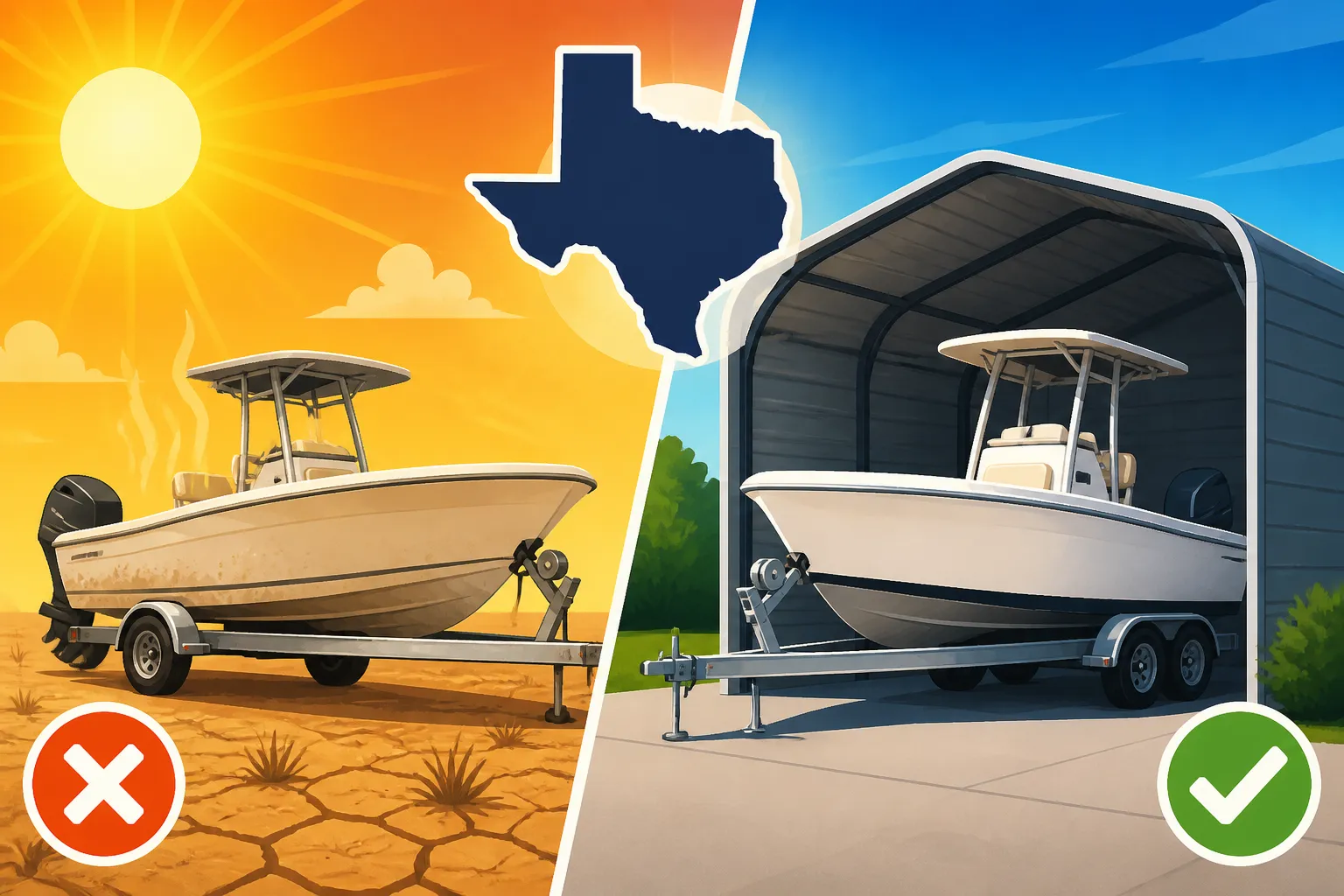
Best way to store a boat in Texas summer heat
Ah, the Texas summer heat! It's beautiful when you're out on the lake or bay, but when it comes to storing your beloved boat, that relentless sun and brutal heat can feel like a real enemy. Many boat owners worry about cracked upholstery, faded gelcoat, dead batteries, and all the other damage that the intense Texas climate can inflict. This guide is here to walk you through the best strategies for storing your boat to protect it from the extreme summer conditions, ensuring it stays in prime condition for your next adventure on the water.
Understanding the Relentless Enemy: Texas Summer Heat's Impact on Your Boat
When we talk about Texas summer heat, we're not just talking about warm days; we're talking about weeks, even months, of triple-digit temperatures and scorching sun. This isn't just uncomfortable for us; it's a harsh environment for your boat, and it can cause significant damage if not properly managed during storage. The intense UV radiation and prolonged high temperatures wreak havoc on various components of your vessel, leading to costly repairs and diminished lifespan.
UV Radiation: The Silent Destroyer
That glorious Texas sunshine, while perfect for a day of Texas Largemouth Bass Fishing Guide, is a relentless force against your boat's exterior. Ultraviolet (UV) radiation from the sun doesn't just make your skin tan or burn; it actively breaks down the chemical bonds in plastics, gelcoats, vinyl, and rubber. Over time, this leads to fading, cracking, and brittleness. Imagine leaving a plastic toy outside for a year – it becomes brittle and discolored, right? The same process, only much faster, happens to your boat's gelcoat, decals, and seating when exposed to the daily Texas sun. The vibrant colors of your hull can dull, clear plastics on gauges can become opaque, and the protective finish can degrade, opening the door for further damage.
Extreme Temperatures: Inside and Out
Beyond UV, the sheer heat itself is a major problem. Temperatures inside a boat, especially one left uncovered in direct sunlight, can soar far higher than the ambient air temperature. We're talking oven-like conditions. This extreme heat can cause materials to expand and contract repeatedly, leading to stress fractures in fiberglass, warping of plastic components, and delamination of wood or composite structures. Engine components, fuel systems, and electrical wiring are also susceptible to heat-related stress. Seals and gaskets can dry out and crack, leading to leaks. Even your fishing gear stored onboard, from expensive rods to delicate electronics, can suffer from prolonged exposure to such intense heat. Think about the difference between a cool garage and a car parked in the sun on an August afternoon; your boat experiences an even more exaggerated version of this.
Outdoor Storage Strategies: Maximizing Protection When No Cover is Available
Let's be realistic, not everyone has access to a covered slip, a spacious garage, or a climate-controlled storage unit. For many Texas boaters, outdoor storage, whether in a driveway or an uncovered storage lot, is the only option. While it presents more challenges, with the right strategies, you can significantly mitigate the damage caused by the brutal Texas summer heat. It's all about creating your own protective bubble around your boat.
High-Quality Boat Cover: Your First Line of Defense
If your boat is stored outdoors, a high-quality boat cover isn't just an accessory; it's an absolute necessity. Don't skimp here. A cheap, flimsy tarp will do more harm than good, trapping moisture and tearing in high winds. You need a cover specifically designed for marine use, made from durable, breathable, and UV-resistant material. Look for covers that are custom-fit or semi-custom for your boat's make and model, as these will provide the best coverage and resist wind lift. Many excellent options can be found at marine retailers like Bass Pro Shops or through online marketplaces like Amazon, often with reviews that speak to their durability in harsh climates.
A good cover will block virtually all direct UV rays, keeping your gelcoat from fading and your upholstery from cracking. It also significantly reduces the internal temperature of the boat by reflecting sunlight. Make sure the cover is properly secured with straps to prevent it from blowing off in sudden Texas thunderstorms or strong winds. Investing in a support system (poles or frames) under the cover can help create a peak, preventing water from pooling and stretching the material, which can lead to leaks or mildew. Regular cleaning of your cover will also extend its life and maintain its reflective properties.
Meticulous Cleaning and Waxing: A Protective Barrier
Before you put that cover on for extended storage, your boat needs to be impeccably clean and waxed. This isn't just for aesthetics; it's about creating an additional layer of protection against the elements. Wash your boat thoroughly, removing all salt residue if it's a saltwater vessel, and any freshwater grime, algae, or bug splatters. Pay close attention to the hull, deck, and especially the interior surfaces.
Once clean and dry, apply a high-quality marine wax or sealant to all fiberglass and gelcoat surfaces. This wax acts like sunscreen for your boat, offering an extra barrier against UV degradation and making it harder for dirt and pollutants to bond to the surface. For vinyl upholstery, use a marine-grade protectant that contains UV inhibitors. This will help prevent it from drying out, cracking, and fading. Don't forget metal surfaces; a good polish can help protect against corrosion and pitting. You'd be surprised how much protection a simple wax job can provide against the harsh Texas elements, making a huge difference in the long run.
Tire and Battery Care: Often Overlooked Details
When your boat is parked for the summer, especially on a trailer, its tires and battery often become neglected, but they are critical components. Prolonged exposure to heat and static pressure can damage trailer tires. Inflate them to the manufacturer's recommended maximum pressure to help prevent flat spots and sidewall cracking. Consider investing in tire covers, similar to mini-boat covers for your tires, to block UV rays and heat, which can accelerate rubber degradation. You can find these at most automotive or marine supply stores, including large retailers.
For the battery, disconnect the terminals to prevent any phantom draws that might drain it. Even better, connect it to a marine-grade "smart" battery tender or trickle charger. These devices monitor the battery's charge and only supply power when needed, keeping it topped off without overcharging, which can be damaging. A fully charged battery handles extreme temperatures better than a depleted one. If you can, remove the battery and store it in a cooler, drier place, like a garage or shed, and still connect it to a tender. For more information on maintaining your boat's power source, check out our guide on Best Battery Upgrade for a Trolling Motor in Texas Summer Heat.
Covered and Indoor Storage: The Gold Standard for Protection
If you have the means, covered or indoor storage is undoubtedly the best way to shield your boat from the ravages of the Texas summer heat. It offers a level of protection that outdoor covers simply can't match, preserving your boat's appearance, systems, and overall value for much longer. While often carrying a higher cost, the long-term benefits in reduced maintenance and extended boat life can make it a worthwhile investment.
Carports, Covered Slips, and Personal Garages
Even a simple carport or a covered boat slip can make a world of difference. The primary benefit here is shade, which prevents direct UV exposure and dramatically reduces the surface and internal temperatures of your boat. A covered slip, for instance, offers constant shade and protection from rain, which can lead to less frequent cleaning and waxing. If you have a boat that fits, your personal garage is an excellent option. Garages typically offer stable temperatures, no UV exposure, and protection from dust and pests. Just make sure there's adequate ventilation and no dampness.
For those without a large enough garage, dedicated covered storage facilities are widely available across Texas. These range from simple metal carports to more enclosed structures. Always look for facilities with good security and, ideally, solid roofs that block sunlight completely. Even parking your boat under a large tree can provide some natural shade, but be mindful of falling leaves, sap, and bird droppings, which can create their own maintenance headaches.
Dry Stack and Climate-Controlled Storage Units
For many coastal boaters, especially those with larger vessels, dry stack storage facilities are a fantastic option. Your boat is stored indoors, often in a multi-level rack system, and launched by the facility staff when you want to use it. This provides complete protection from the elements, zero UV exposure, and a much more stable environment. It's like having garage storage for your bay boat, without needing a huge trailer or truck. These facilities are common around popular spots like Galveston Bay or Corpus Christi Bay.
For the ultimate protection, climate-controlled storage units offer a stable temperature and humidity environment, which is ideal for sensitive electronics, fine upholstery, and preventing mold and mildew. While these are usually more expensive, they practically eliminate environmental stressors. This option is particularly beneficial for high-value boats or those with extensive electronic systems or delicate interiors. Regardless of the type of indoor storage, ensure good air circulation around your boat to prevent stagnant air and potential moisture issues.
Essential Pre-Storage and Ongoing Maintenance for Heat Protection
Putting your boat into storage isn't just about parking it and walking away; it requires a specific set of preparatory steps and some ongoing vigilance, especially when battling the Texas summer. These proactive measures can save you a lot of headache and expense down the line, ensuring your boat is ready to hit the water when cooler weather arrives.
Fuel and Fluid Management
One of the most critical steps before storing your boat, whether for a few weeks or months, is proper fuel treatment. Gasoline, especially ethanol-blended fuels, can degrade quickly, leading to gumming, varnish buildup, and phase separation, which can damage your engine. Add a marine-grade fuel stabilizer to your tank, run the engine for a few minutes to ensure it circulates through the entire fuel system, and then fill the tank completely. A full tank minimizes air space, reducing condensation and preventing fuel breakdown. For more detailed maintenance, consider changing your oil and filter if it's due or if the boat will sit for a prolonged period, as old oil can become acidic.
Don't forget other fluids. Check the level and condition of your power steering fluid, trim/tilt fluid, and lower unit gear lube. If the gear lube looks milky, it indicates water intrusion, which needs immediate attention. Fresh, clean fluids are better equipped to handle temperature fluctuations without breaking down. This kind of preventative maintenance is key to avoiding costly repairs when you're ready to use your boat again.
Protecting Electronics and Upholstery
Electronics are particularly vulnerable to extreme heat and humidity. If possible, remove portable electronics like fish finders, GPS units, and radios and store them in a climate-controlled environment indoors. For fixed electronics, ensure they are switched off and consider covering them with a breathable cloth to protect them from dust and some heat. Inspect all wiring for any signs of cracking or fraying caused by previous heat exposure. For more on what to consider for your onboard tech, check out Best Electronics for Texas Reservoir Fishing.
Your boat's upholstery and vinyl surfaces need extra attention in the Texas summer. As mentioned, clean them thoroughly and apply a marine-grade UV protectant. Many boat owners also place old sheets or towels over their seats and dashboards for an extra layer of protection against the sun's rays, even under a cover. Open compartments and lockers where possible to allow for air circulation and prevent mildew, especially if there's any residual moisture. If your boat has removable cushions, consider bringing them indoors if storage is prolonged, as this is the surest way to prevent fading and cracking.
Storage Checklist for Texas Summer Heat
To help you keep track, here’s a quick checklist summarizing the key steps for protecting your boat during the scorching Texas summer.
| Category | Action Item | Outdoor Storage Priority | Covered/Indoor Storage Priority |
|---|---|---|---|
| Exterior Protection | Thoroughly clean hull and deck | High | High |
| Apply marine wax/sealant to gelcoat | High | Medium | |
| Use custom-fit, UV-resistant boat cover | Essential | Low (still recommended for dust) | |
| Cover tires with UV shields | High | Medium | |
| Engine & Fuel | Add fuel stabilizer & fill fuel tank | High | High |
| Change oil/filter (if due or prolonged storage) | High | High | |
| Check & top off other fluids (power steering, etc.) | High | High | |
| Battery & Electrical | Disconnect battery terminals | High | High |
| Connect battery to a smart charger/tender | High | High | |
| Remove portable electronics for indoor storage | High | High | |
| Interior & Upholstery | Clean and apply UV protectant to vinyl/upholstery | High | High |
| Cover seats/dashboard with sheets | High | Medium | |
| Open compartments for air circulation | Medium | Medium | |
| Remove cushions for indoor storage | High | High | |
| General | Remove all trash and food items | High | High |
| Ensure proper ventilation | High | High |
Final Thoughts on Protecting Your Investment
Dealing with the Texas summer heat while storing your boat can feel like an uphill battle, but it's a battle you can win with the right preparation and ongoing care. Whether you're limited to outdoor storage with a robust cover from Bass Pro Shops or an option you found on Amazon, or you're lucky enough to have access to a cool, dry indoor space, every step you take to protect your vessel makes a difference. Thinking ahead about your Texas Fishing License Requirements Explained is great for getting out on the water, but thinking ahead about your boat storage ensures you can get out on the water without major headaches.
Remember, your boat is an investment, both financially and in countless hours of enjoyment. Taking the time to properly prepare it for summer storage isn't just about preserving its looks; it's about safeguarding its systems, ensuring reliability, and extending its life. By following these tips, you'll be able to confidently store your boat, knowing it will be in prime condition and ready for all the fantastic fishing and boating adventures Texas has to offer when the cooler seasons roll around. You might even want to consult our guide on How to Winterize a Boat in Texas for a comprehensive year-round approach to boat care.
Disclaimer
This article is for general informational purposes only and does not constitute professional advice. Laws, prices and regulations vary by location and change over time. Consult a qualified professional for guidance on your specific situation.