Best net for landing big bass
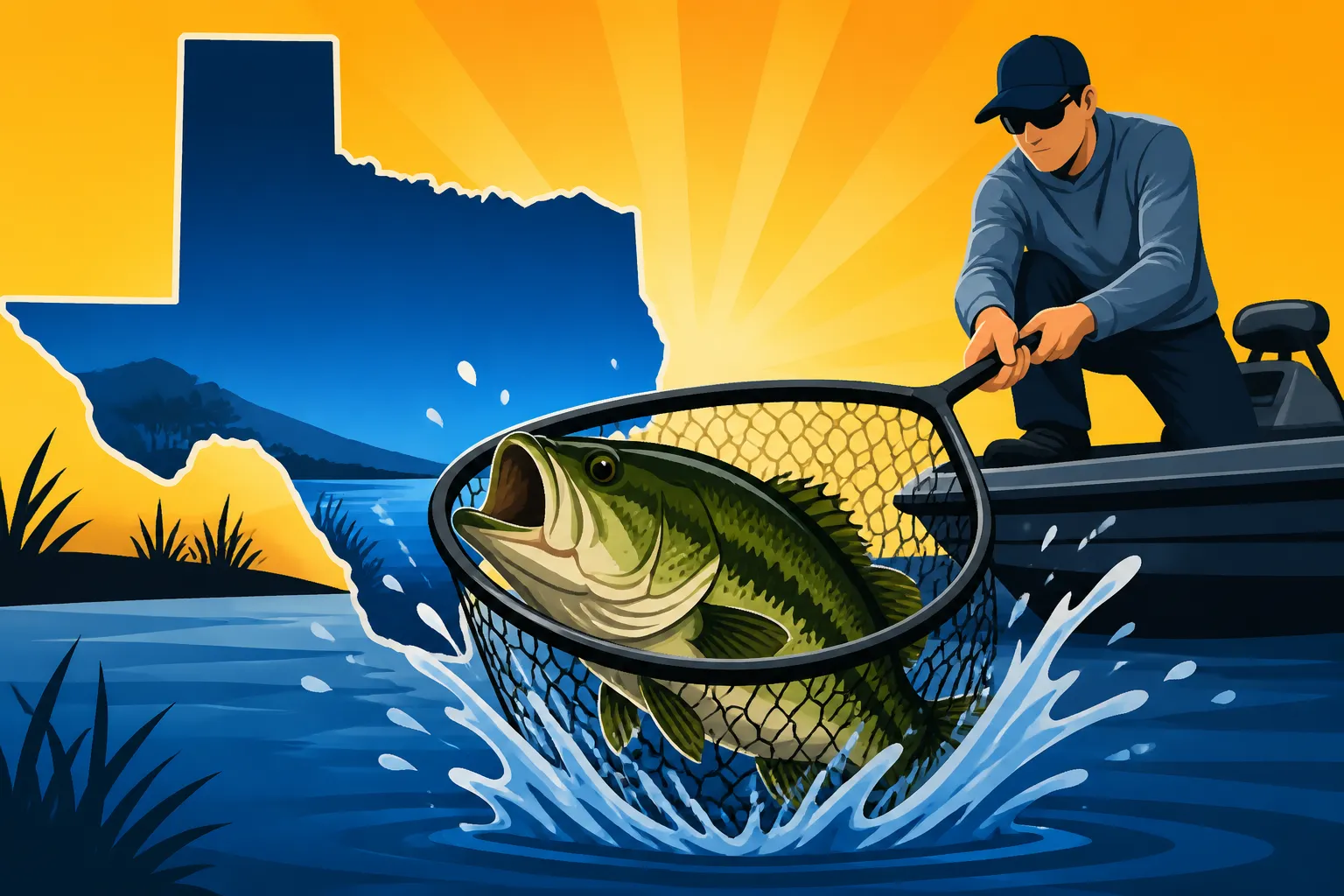
There’s nothing quite like the heart-stopping moment when you’ve got a truly giant Texas largemouth bass on the line. You’ve fought it, reeled it, and now it's right there, thrashing at the surface, giving you that 'oh-my-goodness-this-is-a-monster!' feeling. But then comes the crucial moment: how do you get that magnificent creature into your boat or up onto the bank without losing it, hurting it, or worse, hurting yourself? Fumbling around with a small, inadequate net or trying to hand-land a thrashing bass can quickly turn triumph into disaster. This guide is all about helping you choose the absolute best net to confidently land those big Texas bass, ensuring both your success and the fish's safety.
Why a Good Net is Non-Negotiable for Big Texas Bass
Many anglers, especially those new to chasing larger fish, often overlook the importance of a quality landing net. They might think a cheap, flimsy net will do the trick, or that they can just lip every bass. While lip-landing can work for smaller fish, trying to do that with a five-pounder, let alone a ten-pounder, is asking for trouble. A proper net is a critical piece of gear that ensures a smooth, safe, and successful end to your fishing battle.
Protecting the Fish (and Your Hands)
When you're fighting a big bass, especially one of those trophy-sized monsters that Texas is famous for, that fish is giving it everything it's got. Its mouth, gills, and fins are delicate, and attempting to drag it directly onto the bank, into a boat, or worse, trying to lip-land a genuinely large, still-energetic fish can cause serious injury to the bass. Think about those sharp gill plates and the sheer power of a thrashing tail. A good landing net minimizes physical contact, gently cradling the fish and reducing the risk of scales being rubbed off, fins bending unnaturally, or internal damage.
Moreover, it protects you. Anyone who's ever had a hook unexpectedly fly free from a thrashing fish knows the danger. A large bass with treble hooks hanging out of its mouth can be a real hazard if it decides to do a head shake right next to your hand. A net keeps that fish at a safe distance, allowing you to calm it down, remove hooks, and prepare for release or placement in the livewell without unnecessary drama or injury to your fingers from hooks or gill plates.
Securing Your Catch (No More Heartbreak)
We've all seen it or, more painfully, experienced it ourselves: that moment when a big fish is right at the boat, you reach for it, and it gives one last powerful head shake, throwing the hook and disappearing into the depths. The heartbreak is real! A high-quality landing net is your insurance policy against this devastating scenario. It allows you to quickly and efficiently secure the fish, greatly increasing your chances of successfully bringing it aboard.
Imagine you're out on Lake Fork, a lake renowned for its giant bass, and you've spent hours targeting that one bite. Finally, a monster largemouth hits your lure. You fight it perfectly, bring it to the boat, and with a swift scoop of your net, it's safely contained. That feeling of relief and accomplishment is immeasurable, and it's all thanks to having the right tool for the job. Without it, even the most skilled angler can lose a fish at the boat or bank. You've done all the hard work; don't let the final step be your downfall.
The Ethical Angler's Choice
For many of us, fishing is more than just catching; it's about respect for the resource. Especially when targeting larger, older fish that are vital to the breeding population, catch and release is often the preferred method. A net designed for big bass, particularly one with knotless, rubberized mesh, is the most ethical tool for handling these magnificent creatures. It reduces stress on the fish and minimizes the removal of its protective slime coat, which is crucial for preventing disease. Texas Bass Spawning Season Guide touches on the importance of protecting these fish during sensitive times.
When you invest in a good net, you're not just investing in your own fishing success; you're investing in the health and longevity of the bass population. It allows for quicker, safer handling, meaning the fish spends less time out of the water and has a much better chance of survival after release. For those participating in programs like the How to catch trophy bass for the ShareLunker program, proper fish care, starting with the landing process, is absolutely paramount to ensure the health of these valuable genetics.
Key Features to Look for in a Big Bass Landing Net
Choosing the right landing net isn't as simple as grabbing the first one you see. There are specific features that make a net ideal for big Texas bass, and understanding these will help you make an informed decision that will serve you well for many seasons.
Net Material and Mesh Size
The material and size of the net's mesh are perhaps the most critical aspects, especially when it comes to fish care. Traditional nylon nets, while inexpensive, often have knots that can strip the protective slime coat from a fish, or even damage fins and eyes. They can also snag hooks terribly, turning a quick release into a tangled mess.
For big bass, you absolutely want a rubberized, knotless mesh net. The rubber coating or full rubber construction prevents hooks from getting hopelessly stuck, allowing for quick and easy hook removal. More importantly, it's far gentler on the fish's delicate skin and scales, preserving that vital slime coat. The mesh size should be large enough to allow water to flow through easily, reducing resistance when scooping, but not so large that fins or gills could pass through and get injured. A mesh that's around 1 to 1.5 inches is generally a good sweet spot for big bass. Many popular models available at stores like Bass Pro Shops or online retailers like Amazon will specify their mesh type and size.
Handle Length and Construction
The handle of your landing net needs to match your fishing style and the kind of water you're fishing.
- Fixed-length handles are common and robust, but they can be cumbersome in smaller boats or tight spaces. They're great for situations where you consistently need a certain reach, like fishing from a high boat deck.
- Telescoping or extendable handles offer versatility, allowing you to adjust the reach as needed. This is invaluable when fishing alone, when a fish runs under the boat, or when transitioning from a short reach to a long one. For bank anglers, an extendable handle is almost essential to bridge the gap between the water's edge and your position. Look for handles made from strong, corrosion-resistant materials like anodized aluminum or fiberglass, especially if you plan on using it around saltwater or in high-humidity environments where rust could be an issue. You want a handle that feels solid and doesn't flex excessively when under the load of a heavy fish.
Consider the length in both its collapsed and extended states. Can it fit in your boat's rod locker or storage compartment when collapsed? Does it extend far enough to comfortably reach a big bass right at the side of your vessel? For instance, if you're fishing from a kayak, a shorter, more compact handle might be better than a long boat net that's designed for larger bass boats. Best Kayaks for Texas Fishing might pair well with a compact, yet robust, net.
Hoop Size and Shape
The hoop is the frame that holds the net bag, and its size and shape dictate how easily you can scoop a fish. For big bass, you need a big hoop. A common mistake is using a net with a hoop that’s too small, making it a frustrating struggle to get the entire fish inside.
- Hoop Size: Aim for a hoop that's at least 20-24 inches wide, ideally larger, for trophy bass. Remember, a 10-pound largemouth can be quite long and have a substantial girth. You want enough room to lead the fish into the net head-first, without having to cram it in or risk it jumping out.
- Hoop Shape: Oval or teardrop shapes are often preferred over perfectly round hoops as they provide a wider opening at the front for easier scooping while still being manageable. Some nets feature a flat bottom or a larger "throat" to make guiding the fish into the net simpler. Look for a strong, rigid hoop that won't bend or warp under the weight of a heavy fish. Again, aluminum is a popular choice for its strength-to-weight ratio.
| Feature | Recommendation for Big Texas Bass | Why It Matters |
|---|---|---|
| Net Material | Rubberized, Knotless Mesh | Protects fish slime coat, prevents hook snags, minimizes fish stress |
| Mesh Size | 1 to 1.5 inches | Allows water flow, prevents fin damage, secures fish without tangling |
| Handle Type | Telescoping/Extendable (Boat or Bank) or Fixed (Larger Boats) | Versatile reach, matches fishing situation, robust construction |
| Handle Material | Anodized Aluminum or Fiberglass | Strong, corrosion-resistant, durable under load |
| Hoop Size | 20-24 inches minimum (larger for trophy hunting) | Accommodates large fish girth and length, easier to scoop |
| Hoop Shape | Oval or Teardrop, often with a flat bottom or wide throat | Easier to guide fish into, more efficient scooping |
| Portability | Collapsible handle, compact storage (Kayak/Bank) or Boat-mounted (Boat) | Ensures easy transport and readiness for different fishing scenarios |
Portability and Storage Considerations
How you fish will largely determine the portability you need from your net. If you primarily fish from a large bass boat, you might prefer a fixed-handle, boat-mounted net that's always ready to go. Many tournament anglers have these nets strategically placed for quick access. For solo anglers or those fishing from a smaller craft like a kayak or from the bank, portability becomes a major factor.
A net with a collapsible or telescoping handle that can be easily stowed is a game-changer. You don't want a massive net getting in the way while you're casting or navigating. Look for designs that fold down compactly without sacrificing strength. Some nets even come with belt clips or shoulder straps for easy carrying while wading or hiking to remote spots. Think about where you'll store it on your vessel or how you'll carry it, and choose a net that fits seamlessly into your overall fishing setup. You want it accessible but out of the way until that moment of truth.
Different Types of Nets for Big Bass Situations
Just like there are different rods and reels for various fishing styles, there are different types of nets optimized for specific situations when targeting big bass in Texas. The "best" net isn't one-size-fits-all.
Boat-Mounted Nets for Tournament Anglers
For serious bass boat anglers, especially those who participate in tournaments, a robust, boat-mounted net is almost standard equipment. These nets typically feature long, fixed handles (often 6-8 feet or more) and very large, wide hoops. The extra length allows the co-angler or boat driver to reach fish far from the boat, even when a powerful bass is trying to run under the boat or dive deep. They are designed for quick, decisive scoops, minimizing the time the fish spends on the line at the boat. How to Fish a Texas Bass Tournament heavily relies on efficient fish handling, and a good net is central to that.
These nets are often stored in custom holders on the deck, making them instantly accessible. The handle is strong enough to bear the weight of a truly gargantuan bass, and the rubberized mesh is designed for both fish safety and snag-free operation. Brands like Frabill and Ego S2 are often seen on tournament circuits. When every second and every ounce counts, having a purpose-built, easily deployed net can make all the difference in getting that prize-winning fish into the livewell. Best Live Wells for Texas Bass Boats are designed to keep these precious catches healthy.
Bank and Kayak Nets for Solo Anglers
If you're primarily fishing from the bank or a kayak, your netting needs are quite different from a bass boat angler. Portability and manageability are key.
- Bank Fishing Nets: For bank anglers, an extendable handle is crucial. You need to be able to reach from your standing position down to the water, which can be several feet depending on the bank's slope. These nets need to be relatively lightweight to carry while walking, but still strong enough for big bass. A net that collapses compactly and can be carried with a shoulder strap or clipped to a backpack is ideal for accessing those hidden honey holes. When you're fishing a place like a state park pond or a river bank, you don't want to be dragging a massive, awkward net along with you.
- Kayak Fishing Nets: Kayak anglers require a net that is both compact and offers good reach. A shorter, extendable handle that can be stowed easily in the kayak's cockpit or in a rod holder is perfect. The hoop size should still be generous enough for big bass, but the overall footprint needs to be minimal. Many kayak-specific nets have a leash or tether attachment point, which is a lifesaver if you accidentally drop your net overboard in the middle of a big fight. Consider nets with floats integrated into the handle for this very reason. Being able to secure a fish quickly while balancing in a kayak is a skill, and the right net makes it significantly easier.
Nets for Catch and Release vs. Keepers
While all good nets should prioritize fish safety, there can be subtle differences in how you approach netting based on whether you intend to release the fish or keep it.
- Catch and Release: For catch and release, the gentlest possible handling is paramount. This means almost exclusively using rubberized, knotless mesh to protect the slime coat and prevent fin damage. The goal is to quickly get the fish into the net, remove the hook while it's still in the water (if possible, or quickly in the net), snap a photo, and release it with minimal stress. Nets specifically designed for catch and release often have deeper bags to prevent the fish from flopping out and injuring itself on the hoop. They might also feature measuring scales printed on the handle or hoop for quick length checks without excessive handling. Many ethical anglers on Best Places to Fish in Texas will use such nets.
- Keepers: If you're fishing to keep fish for a meal (within legal limits, of course), fish care is still important for quality, but the emphasis shifts slightly. You might be less concerned about a tiny bit of slime coat loss if the fish is going into a cooler immediately. However, rubberized nets are still recommended because they are so much easier to get hooks out of, and a tangled mess means more time handling the fish, which isn't ideal even for keepers. The main difference might be less focus on measuring tools on the net itself, as you might use a separate scale and board. The primary goal remains getting the fish into the boat or onto the bank efficiently and safely for both angler and fish.
How to Properly Use and Maintain Your Bass Net
Having the best net for big bass is only half the battle; knowing how to use it effectively and keep it in top condition is equally important. A well-maintained net will last longer and perform better when that trophy bass finally bites.
Landing Technique: The Art of the Scoop
Landing a big bass, especially solo, requires a bit of finesse and good timing. Don't just blindly swing the net at a fish.
- Lead the Fish: The most effective way to net a fish is to lead it head-first into the net. This means bringing the bass alongside the boat or bank, ideally with its head pointing towards the net opening. Many anglers will "steer" the fish by applying rod pressure to bring its head in the right direction. Try to get the fish to swim into the net rather than trying to chase it.
- Submerge and Scoop: Once the fish's head is aligned with the net, submerge the net well below the water's surface. Then, in one smooth, upward motion, scoop the fish entirely into the net. Once it's in, lift the net straight up and bring it into the boat or onto the bank. Avoid sweeping motions, as these can push water and create resistance, causing the fish to spook and dart away.
- Secure and Control: Once the fish is in the net, keep the net submerged if possible for a moment to allow the fish to calm down. If you're bringing it into the boat, ensure the net is firmly on the deck before attempting to remove hooks or lift the fish. For bank fishing, get the fish onto a flat, grassy area or an unhooking mat if you have one. The net provides a contained space to safely handle the fish, remove hooks, and prepare for photos or release. Remember, even in the net, a big bass can still thrash, so maintain control.
It's tempting to rush, especially with an adrenaline surge, but a calm, deliberate approach will yield the best results for both you and the fish. Practice makes perfect, so don't be afraid to try out your netting technique on smaller fish to get a feel for it.
Caring for Your Net: Longevity and Hygiene
Your landing net is an investment, and proper care will ensure it performs well for years to come.
- Rinse After Every Use: This is crucial, especially if you're fishing in brackish or saltwater. Rinse your entire net – handle, hoop, and mesh – with fresh water after every outing. This removes salt, dirt, fish slime, and any residual bait or debris. If left unrinsed, salt can corrode metal parts, and dried slime can stiffen the mesh and harbor odors.
- Clean the Mesh: Periodically, you might want to give the mesh a more thorough cleaning with a mild soap and water solution, especially if it starts to smell or get slimy. This is particularly important if you're practicing catch and release, as you want to minimize the transfer of bacteria or parasites between fish.
- Inspect for Damage: Before and after each trip, quickly inspect your net. Look for tears in the mesh, bent sections of the hoop, or loose rivets in the handle. Addressing small issues quickly can prevent them from becoming major problems later. If you find a tear in a rubberized net, it's often repairable with specific patch kits or strong adhesives.
- Proper Storage: Store your net in a cool, dry place, out of direct sunlight. UV rays can degrade rubber and plastic components over time. If you have a telescoping net, make sure the handle is clean and dry before collapsing it to prevent grit from scratching or binding the mechanism. For boat-mounted nets, ensure they are securely stowed and not exposed to unnecessary impacts during travel.
By following these simple care steps, your landing net will be ready to perform reliably every time you encounter that next big Texas bass. Remember, the best fishing trip is one that ends with a healthy fish and a happy angler!
Disclaimer
This article is for general informational purposes only and does not constitute professional advice. Laws, prices and regulations vary by location and change over time. Consult a qualified professional for guidance on your specific situation.