Best jig colors for clear Texas lakes
Fishing clear Texas lakes can feel like you're under a microscope. The bass seem to see everything, from your boat's shadow to your fishing line, and choosing the right lure can make all the difference between a triumphant day and a frustrating skunking. If you've ever stared at a tackle box full of bright, flashy jigs, wondering why they just aren't producing in that pristine, transparent water, this guide is for you. We're diving deep into the world of jig colors specifically designed to outsmart those wary bass in our clearest Texas waters.
Understanding Clear Water Dynamics for Jig Fishing
When you're out on a lake like Amistad or Canyon Lake, where you can see down several feet, the rules of engagement for bass fishing fundamentally change. The fish have a much clearer view of their surroundings, and that means your presentations need to be dialed in with extra precision.
Why Clear Water Changes Everything
Think about it from a bass's perspective. In muddy or stained water, they rely heavily on their lateral line to detect vibrations and less on sight. A bright, thumping jig might be just the ticket to get their attention. But in clear water, where sunlight penetrates deeper and visibility is high, a bass can easily spot your lure from a distance. They'll scrutinize it, looking for anything that seems unnatural or out of place. This means that a color that screams "danger" or "fake" will likely be ignored, or worse, cause the fish to flee.
The forage base in clear lakes often consists of baitfish like shad or sunfish, and crawfish that blend seamlessly with rocks and vegetation. Your jig color needs to mimic these natural elements closely. It’s not just about the color, but how that color interacts with the light, which is so much more prevalent in clear conditions. A subtle shimmer or a muted tone can be far more effective than something bold and aggressive. The clearer the water, the more critical it becomes to choose colors that look like something the bass naturally preys upon.
The Importance of Subtlety and Natural Presentation
In clear water, subtlety isn't just a suggestion; it's practically a command. Bright, unnatural colors, or those that stand out too starkly against the underwater backdrop, can be a major turn-off for bass. They've seen it all, and they're often more educated or "pressured," especially on popular clear-water fisheries. Think about a lake like Travis or the crystal-clear Guadalupe River. The bass there are accustomed to seeing a lot of lures, and they develop a keen sense of what looks real and what doesn't.
This is where natural presentation comes into play, and jig color is a huge part of that. A jig that perfectly imitates a crawfish scurrying across the bottom, or a small bluegill darting through a submerged brush pile, is far more likely to draw a strike. If your jig color clashes with the natural environment, it could send a signal of "fake food" to a cautious bass. We're talking about matching the hatch not just in size and shape, but in the subtle nuances of coloration that only clear water allows fish to truly appreciate. When you're fishing these types of lakes, your goal is to be as inconspicuous as possible while still making your lure appealing.
Top Jig Colors for Clear Texas Lakes and When to Use Them
Let's get down to the brass tacks: what colors actually work when the water is gin-clear? The general rule of thumb is to lean towards natural, muted, and translucent tones. But there are always exceptions and specific scenarios where a slight deviation can make all the difference.
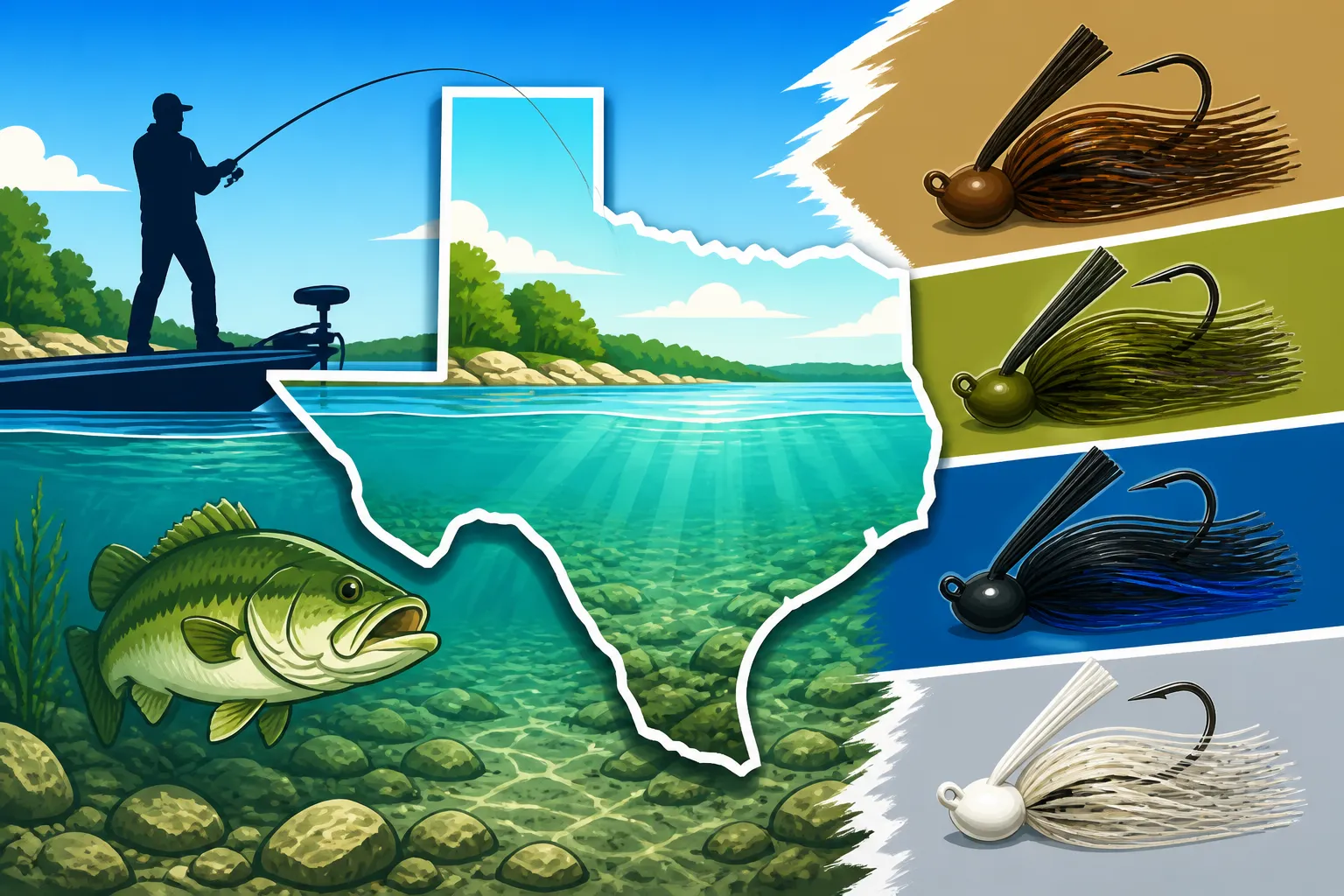
Natural & Earthy Tones: Green Pumpkin, Watermelon, and June Bug
These three colors are the workhorses for clear water jig fishing in Texas, and for good reason. They are incredibly versatile and mimic a wide array of natural forage.
-
Green Pumpkin: If there's one color you should always have in your clear water jig arsenal, it's green pumpkin. This chameleon-like color blends exceptionally well with many types of cover, from submerged hydrilla and coontail moss to rocky bottom structures. It perfectly imitates the subtle, mottled greens and browns of real crawfish, bluegill, and various aquatic insects that bass feast on. When the sun is high and the water is calm, a green pumpkin jig with a matching or slightly contrasting trailer (like green pumpkin with a bit of orange or brown flake) can be deadly. It offers just enough contrast to be seen, but not so much that it spooks cautious fish. It's fantastic for flipping into docks, pitching to laydowns, or dragging along rocky points. You'll find a massive selection of green pumpkin jigs, often with subtle flakes, at retailers like Bass Pro Shops.
-
Watermelon: Similar to green pumpkin, watermelon is another fantastic choice, especially when bass are keyed in on subtle baitfish or crawfish with lighter undersides. Watermelon often features a translucent green base with black or red flakes, giving it a very natural, almost watery appearance. It's particularly effective when fishing around sparse vegetation or over lighter-colored bottoms, where it can disappear and reappear, mimicking fleeing prey. Many anglers find watermelon to be incredibly effective for clear water sight fishing, as its subtle hues don't overpower the fish's vision. Try a watermelon jig with a chartreuse-tipped trailer if you want a tiny bit more pop without going overboard, or a straight watermelon trailer for ultimate stealth. This color often shines on lakes where bass are feeding on small, translucent prey items.
-
June Bug: This color might seem a little darker than the others, but it has a specific magic in clear water, especially under certain conditions. June bug is typically a deep purple or blackish-purple with blue or green flakes. While it might be too dark for direct sunlight in extremely clear, shallow water, it absolutely shines in deeper clear water, low light conditions (like dawn, dusk, or heavily overcast days), or when the bass are feeding on dark-bodied crawfish or bluegill. The purple tones retain visibility deeper in the water column and provide a fantastic silhouette against the sky. It's also a phenomenal choice after a slight rain or when there's a bit more chop on the water, breaking up the light and making darker colors more appealing. Don't be afraid to try a June bug jig with a matching June bug or blue flake trailer. It’s an underdog color that consistently produces when conditions are right. For a wide variety of jig brands that offer June bug, take a look at what's available on Amazon.
Translucent & "Ghost" Colors: Smoke, Clear, and White Pearl
Sometimes, the best approach in clear water is to make your lure almost disappear. These "ghost" colors are perfect for highly pressured fish or when bass are feeding on very transparent baitfish.
-
Smoke: Smoke is typically a translucent gray with black or silver flake. This color is incredibly subtle and effectively mimics small baitfish like shad or minnows, especially when they're not brightly colored. In clear water, smoke jigs offer a delicate profile that's not overtly aggressive. This makes them ideal for finesse situations, such as when bass are suspended or schooling on open water baitfish. Dragging a smoke-colored football jig over deep, clear humps or points can be incredibly effective, as it perfectly imitates a struggling baitfish near the bottom. It's also a go-to for fishing around docks or brush piles where bass are wary and you need a less intrusive presentation.
-
Clear/Transparent: While less common in jigs, some manufacturers offer truly clear or nearly clear jigs, or at least very transparent plastic trailers. The idea here is ultimate stealth. When bass are extremely finicky and refusing everything else, a clear presentation can sometimes trigger a bite. These are often used when bass are feeding on zooplankton or very tiny, almost invisible larvae. It's a highly specialized choice, but one that can surprise you. A clear jig with a few subtle silver flakes can mimic tiny glass minnows. You might find this color more often in soft plastic trailers, which you can pair with a light-colored jig head.
-
White Pearl/Albino: While not fully transparent, white pearl or albino jigs are fantastic for mimicking dying or injured shad and other light-colored baitfish. In clear water, especially on sunny days, the pearl finish has a subtle shimmer that looks incredibly natural. This color is particularly effective for swim jigs, where the jig is meant to imitate a swimming baitfish through the water column or over submerged grass beds. It's also great for flipping around docks or boat ramps, as many baitfish congregate in these areas. On cloudy days, a white pearl jig can still offer enough contrast without being too bright. It’s a very clean, attractive color for bass that are keyed into baitfish patterns. For a vast selection, consider checking out the fishing section on Amazon, especially for soft plastic trailers in white pearl.
Shifting to Contrast: Black/Blue for Low Light or Reaction Strikes
While subtlety is key in clear water, there are times when a bold move is exactly what's needed. Black and blue is a classic combination that, despite its darker appearance, performs exceptionally well in clear water under specific circumstances.
- Black/Blue: This combination is a staple for jig fishing, and it’s not just for muddy water. In clear Texas lakes, black and blue shines when light penetration is reduced. Think about fishing deep structure, heavily shaded areas (like under dense boat docks or thick tree cover), or during low light conditions such as early morning, late evening, or on heavily overcast days. The black provides a sharp, defined silhouette against the lighter sky above, making it easy for bass to track. The blue adds a flash of color that can be irresistible, mimicking everything from bluegill to crawfish. When bass are holding tight to cover in clear water, a black and blue jig dropped right on their nose can often trigger a violent reaction strike, even if they're not actively feeding. It's also a surprisingly good choice in surprisingly clear conditions when you're targeting big, wary bass that prefer to ambush prey from darker areas. This color also really pops in deep, clear water where certain light wavelengths are absorbed, making the blue visible. Don't hesitate to use a black/blue jig for punching through matted vegetation or probing heavy cover on lakes like Toledo Bend.
Factors Beyond Color: Jig Type, Trailer Choice, and Presentation
Choosing the perfect color is a huge step, but it's only one piece of the puzzle. How you rig your jig, the trailer you choose, and the way you present it are equally crucial for success in clear Texas lakes.
Matching the Hatch with Jig Styles
The style of your jig plays a big role in how it looks and acts in the water, and therefore, how effective your chosen color will be.
-
Flipping and Pitching Jigs: These jigs typically have a more compact head and a weed guard, designed to penetrate heavy cover. In clear water, you'll often be flipping into dense brush piles, submerged trees, or dark pockets under docks. For these situations, your green pumpkin, watermelon, or even a black/blue jig (for those dark, ambush spots) will be perfect. The key is that the jig needs to get into the strike zone efficiently and without snagging. The compact profile ensures it looks like a natural, fleeing creature when it lands.
-
Football Jigs: Named for their football-shaped head, these jigs are designed to be dragged and bounced along hard bottoms like rock piles, ledges, and humps. In clear, deep reservoirs, this is where football jigs excel. Colors like green pumpkin, smoke, or even a subtle brown craw will imitate crawfish scurrying along the bottom. The wider head helps the jig stand up, making the trailer wiggle tantalizingly. When you're fishing deep, clear ledges on lakes like Whitney or Possum Kingdom, a football jig in a natural color is tough to beat. How to fish a Texas Carolina rig offers a similar deep-water presentation but with different action, and knowing both can expand your clear water arsenal.
-
Swim Jigs: These jigs have a more streamlined head and are meant to be retrieved through the water column, mimicking a swimming baitfish. For clear water, white pearl, light shad, or a subtle green pumpkin with blue or silver flake are excellent choices. Pair them with a paddle-tail swimbait trailer for maximum action and realism. Swim jigs are fantastic for fishing over submerged grass or around sparse cover where bass are actively chasing baitfish. The natural colors ensure that the bass see a realistic meal rather than a brightly colored, unnatural intruder.
The Trailer's Role in Color and Action
The trailer is not just an add-on; it's an extension of your jig and can significantly influence its appeal. In clear water, the trailer's color and action are paramount.
-
Complementary Colors: Often, you'll want your trailer to either perfectly match your jig color for a seamless, natural look (e.g., green pumpkin jig with a green pumpkin craw trailer) or offer a very subtle contrast (e.g., green pumpkin jig with a brown or orange-tipped craw trailer to mimic a molting crawfish). The goal is naturalism. Avoid trailers with overly bright, clashing colors unless you are explicitly trying to create a reaction strike in a very specific, low-light scenario. Best soft plastics for Texas bass fishing goes into more detail on selecting the right trailer materials and designs.
-
Subtle Action: For clear water, less is often more when it comes to trailer action. While some days a flapping, high-action trailer might work, often a more subtle, lifelike quiver is preferred. Crawfish imitations with slender claws or subtle paddle tails are excellent. Consider finesse worms or chunks with minimal movement. The idea is to make the bass believe it's looking at live forage, not something manufactured. A trailer that kicks too aggressively can sometimes be perceived as unnatural in highly visible water.
Stealth and Finesse in Clear Water Presentation
Beyond the lure itself, your approach to fishing clear water must emphasize stealth and finesse. Bass in these environments are often more sensitive to disturbances.
-
Lighter Lines and Longer Casts: In clear water, fish can easily spot heavy, opaque fishing lines. Opt for fluorocarbon line in lighter pound tests (10-15 lb for jigs, depending on cover) as it has a lower visibility underwater. Additionally, making longer casts keeps your boat further away from the fish, reducing the chance of spooking them with boat noise or shadows. You can learn more about choosing the right line in Best line for Texas bass fishing.
-
Subtle Movements: When working your jig, resist the urge to violently rip it or twitch it aggressively. Instead, employ slow, deliberate hops, drags, and shakes. Let the jig pause on the bottom, allowing its skirt and trailer to slowly undulate. This mimics a crawfish feeding or a baitfish struggling, which can be incredibly enticing to a wary bass. Often, the bite will come on the pause.
-
Reading the Water: Pay close attention to current, wind, and cover. Use these elements to your advantage to make your presentation look as natural as possible. If the wind is blowing, use it to drift your jig into likely holding areas without having to motor close. Understanding How to read lake contour maps for bass fishing can help you identify these subtle features and approach them with maximum stealth. Also, remember that How water clarity changes lure choice is a constant factor; always observe the conditions and adjust.
Seasonal and Situational Adjustments for Jig Colors
Texas weather and fishing conditions can change on a dime, and what works one day might not work the next. Smart anglers adapt their jig colors based on the time of year and specific conditions.
Spring and Fall Transitions
These seasons are periods of significant change, both in water temperature and fish behavior, directly impacting jig color effectiveness.
-
Spring: As water temperatures rise in spring, bass become more active and start to move shallow for spawning. In the pre-spawn phase, they're often gorging themselves on larger crawfish and baitfish to build energy. This is a great time for green pumpkin, brown, or even a black/blue jig if the water is slightly stained from spring rains. As they move onto beds for the spawn, more natural colors like watermelon or green pumpkin are paramount, especially for sight fishing, as bass are guarding eggs and are incredibly wary. After the spawn, they’re recuperating and will still hit crawfish and baitfish patterns, often moving to deeper cover but remaining active. The Texas Bass Spawning Season Guide will give you specific timings for when bass are most active during this period.
-
Fall: In the fall, bass enter a feeding frenzy, chasing baitfish to fatten up for winter. This is a time when the "ghost" colors like smoke or white pearl can really shine if bass are schooling on shad. However, if they're moving into cover and targeting crawfish, your green pumpkin and watermelon still remain top contenders. The changing leaf colors on shore can sometimes even influence what crawfish look like, so don't be afraid to experiment with jigs that have flecks of orange or red. Best baits for a fall feeding frenzy will provide additional tips for capitalizing on this active time of year.
Sunny vs. Overcast Conditions
The amount of light penetrating the water has a direct impact on how fish perceive color.
-
Sunny Days: On bright, sunny days with clear skies, more light penetrates the water. This is when truly natural, subtle, and translucent colors like green pumpkin, watermelon, smoke, and white pearl are generally best. They blend in, mimic natural forage accurately, and avoid spooking fish with too much flash or contrast. The goal is maximum realism.
-
Overcast Days/Low Light: When it's cloudy, rainy, or during dawn and dusk, less light reaches the water. This is when darker, more contrasting colors can become more effective. A black/blue jig, which creates a strong silhouette, can be a killer. June bug also thrives in these conditions, as its purple hues can still be visible and intriguing in dim light. The reduced visibility allows bass to be less cautious and more willing to strike at something with a bolder profile. This is also a good time to consider going slightly larger with your jig, as bass might be more aggressive with the reduced light. You might find that Best time of day to catch bass in summer offers some insights into how light levels affect fishing, even in different seasons.
Deep Water vs. Shallow Water Considerations
Light penetration and water pressure also dictate jig color choices based on depth.
-
Shallow Water (0-10 feet): In very shallow, clear water, fish have the best visibility. This is where your most natural and translucent colors excel – green pumpkin, watermelon, smoke, and light browns. The colors you choose here should be almost identical to the forage present. Any deviation can be easily detected. Finesse is absolutely critical here. When bass are holding around shallow cover like submerged grass beds, How to fish shallow water for bass emphasizes the importance of subtle, natural presentations.
-
Deep Water (10+ feet): As you go deeper, light spectrums are absorbed. Red disappears first, followed by orange, yellow, green, and finally blue and violet. This means that a red jig will appear brown or gray at depth. Therefore, for deep water, darker colors that retain their contrast and visibility, like black/blue, June bug, or even a deep green pumpkin, often work best. These colors create a distinct silhouette that bass can easily see against the lighter surface from below. Also, as a general rule, bass in deeper water tend to be less pressured and might tolerate slightly bolder color choices. How to fish deep structure in Texas reservoirs is a great resource for understanding how to target these deeper fish effectively.
| Clear Water Jig Color | Primary Forage Mimicked | Best Conditions/Situations | Notes |
|---|---|---|---|
| Green Pumpkin | Crawfish, bluegill, insects | Sunny, clear skies, all depths, around varied cover | All-around best; versatile and natural. |
| Watermelon | Crawfish, small baitfish | Sunny, clear skies, shallow to medium depth, sparse cover | Subtle, translucent appearance; great for sight fishing. |
| June Bug | Dark crawfish, bluegill | Overcast, low light (dawn/dusk), deeper clear water | Strong silhouette, purple hues visible at depth. |
| Smoke | Shad, minnows | Sunny, highly pressured fish, schooling baitfish, open water | Very subtle, non-threatening; finesse presentation. |
| White Pearl | Dying shad, baitfish | Sunny, active baitfish, swim jig applications | Excellent shimmer; mimics injured or fleeing baitfish. |
| Black/Blue | Bluegill, crawfish | Low light, deep water, heavy shade, reaction strikes | Strong contrast, clear silhouette in low visibility. |
Experimentation is truly the key. The clearest lakes in Texas can be some of the most rewarding, but they demand a thoughtful approach to color selection. Start with these tried-and-true jig colors, pay attention to the conditions, and don't be afraid to make subtle adjustments. You'll be cracking the code on those wary clear-water bass in no time!
Disclaimer
This article is for general informational purposes only and does not constitute professional advice. Laws, prices and regulations vary by location and change over time. Consult a qualified professional for guidance on your specific situation.