Best leader material for redfish
There's nothing quite as frustrating as feeling that solid thump of a redfish on your line, fighting hard, only for your line to snap just when you think you've got them. You reel in, and there it is: a frayed, broken leader, often nicked by an oyster shell, a submerged stump, or even the rough rasp of the redfish's mouth itself. It leaves you wondering if you used the right gear, if your leader was up to the task. Choosing the best leader material for redfish isn't just about throwing something on; it's about understanding what these powerful, structure-loving fish demand from your tackle. This guide will walk you through the ins and outs of leader materials, helping you make informed choices so you can land more of those beautiful Texas reds.
Why a Good Leader is Non-Negotiable for Redfish
When you're chasing redfish in the expansive Texas bays and flats, your leader is often the most critical, yet sometimes overlooked, part of your entire setup. It’s the direct connection between your main line and your lure or bait, and it takes all the abuse. Redfish are notorious for inhabiting areas full of hazards, and their powerful runs combined with their rough environment can quickly lead to heartbreak if your leader isn't up to snuff.
Battling Abrasion from Structure
Texas redfish, whether you're targeting them in Galveston Bay or down in the Laguna Madre, love structure. We're talking oyster reefs, submerged pilings, rocky jetties, and dense grass beds. These aren't pristine, open waters; they're a gauntlet for your line. A redfish, once hooked, will instinctively try to rub your line against anything it can to break free. If your leader material isn't highly abrasion-resistant, it's game over. You might get a faint nick, and that's all it takes for a strong redfish to exploit that weakness and snap off. The frustration of losing a fish because of a compromised leader is something every angler knows, and with redfish, it's a constant threat. This is why investing in quality leader material is so important.
Stealth in Clear Water Conditions
While redfish aren't always the most finicky eaters, especially when they're in a feeding frenzy, there are plenty of times when water clarity demands a more subtle approach. Imagine sight fishing for reds tailing in shallow, crystal-clear flats. If your leader is thick, opaque, and highly visible, it can spook wary fish. They might see the line before they see your lure or bait, causing them to turn away. The goal is to present your offering as naturally as possible, almost as if it's swimming or drifting on its own. A leader that blends into the water, appearing nearly invisible, can make all the difference in getting that strike from a cautious redfish. It's about giving them no reason to suspect a trap.
Managing a Redfish's Powerful Fight
Redfish are known for their strong, bulldog-like runs. They're not necessarily leaping out of the water like a tarpon, but they put immense pressure on your line, especially when they hug the bottom or make sudden changes in direction. Your leader needs to absorb that shock and maintain its integrity under extreme tension. A weak knot or a leader material that stretches too much or too little can be a point of failure. When you finally hook into a big bull red, you'll understand why every component of your tackle, especially the leader, needs to be robust. Many anglers talk about the thrill of fighting a fish, but few emphasize enough the importance of the often-unseen connection that makes it all possible. This is also why having good Texas Redfish Fishing Guide knowledge helps.
Understanding Your Leader Material Options
When it comes to leader material for saltwater fishing, especially for species like redfish, you're primarily looking at two main contenders: monofilament and fluorocarbon. Each has its own strengths and weaknesses, making them suitable for different scenarios. Sometimes, braided line can be considered, but generally not as a leader in the traditional sense for redfish, more as a main line.
Monofilament Leader: The Classic Choice
Monofilament, often just called "mono," is made from a single strand of nylon. It's been around forever, and for good reason. It's generally less expensive than fluorocarbon, readily available, and very easy to tie knots with. Many anglers keep a spool of mono for various applications, and you can find a huge selection at places like Bass Pro Shops.
Advantages of Monofilament Leaders
- Stretch and Shock Absorption: Mono has a good amount of stretch, which acts like a shock absorber when a redfish makes a sudden, powerful run. This can prevent break-offs, especially if you're using a main line with little to no stretch, like braid. That bit of give can be a lifesaver when a fish surges away from the boat or when you're wading and a big red takes off unexpectedly.
- Knot Strength and Ease of Tying: Monofilament is very forgiving when tying knots. It cinches down nicely, and its inherent elasticity helps the knot hold under pressure. For beginners, or when you need to re-tie quickly out on the water, mono is often simpler to work with.
- Cost-Effective: If you're going through a lot of leader material due to abrasion or constant re-rigging, mono is generally a more budget-friendly option.
- Buoyancy: Mono floats, or at least sinks very slowly, which can be an advantage if you're fishing topwater lures or live bait that you want to keep suspended in the water column.
Disadvantages of Monofilament Leaders
- Visibility: This is mono's biggest drawback when it comes to clear water and wary fish. It's more visible in water compared to fluorocarbon due to its light-refracting properties. In shallow, clear flats where redfish are easily spooked, a mono leader might hinder your success.
- Abrasion Resistance: While decent, mono is not as abrasion-resistant as fluorocarbon. Those oyster shells and barnacle-encrusted pilings will chew through mono faster, leading to more lost fish.
- UV Degradation: Over time, mono can degrade from exposure to sunlight, weakening the line. It's a good practice to replace your spools more frequently than you might with fluorocarbon.
Fluorocarbon Leader: The Stealthy and Tough Contender
Fluorocarbon leader material has become the gold standard for many serious saltwater anglers, especially when targeting fish that are line-shy or inhabit abrasive environments. Its properties make it exceptionally well-suited for redfish. You can easily find high-quality fluorocarbon spools from brands like Seaguar, Berkley, or Oku on Amazon or at any tackle shop.
Advantages of Fluorocarbon Leaders
- Low Visibility: This is fluorocarbon's most celebrated feature. It has a refractive index very close to that of water, making it nearly invisible underwater. This stealth factor is crucial when fishing clear Texas bays or when redfish are being particularly finicky. It allows for a more natural presentation of your bait or lure, increasing your chances of a strike.
- Superior Abrasion Resistance: Fluorocarbon is much denser and harder than monofilament. This gives it phenomenal abrasion resistance, a critical advantage when fishing around oyster reefs, shell pads, or mangrove roots where redfish love to lurk. It can withstand nicks and scrapes far better than mono, drastically reducing break-offs. This makes a huge difference when you're How to Wade Fish for Redfish in Texas and encounter all sorts of underwater obstacles.
- Sensitivity: Fluorocarbon has very little stretch compared to mono, which translates to increased sensitivity. You can feel subtle bites or the lightest bump of your lure against the bottom, giving you more immediate feedback and a better chance to set the hook effectively.
- UV Resistance: Unlike monofilament, fluorocarbon is highly resistant to UV rays, meaning it won't degrade over time from sun exposure. This allows for longer shelf life and more consistent performance.
- Sinks Quickly: Being denser, fluorocarbon sinks faster than mono. This can be beneficial when you want your bait or lure to get down to the strike zone quickly or stay deeper in the water column.
Disadvantages of Fluorocarbon Leaders
- Cost: Fluorocarbon is significantly more expensive than monofilament. This can be a factor if you're on a tight budget or going through a lot of leader material.
- Stiffer and Less Pliable: Fluorocarbon is stiffer and has more memory than mono, which can make it a bit trickier to tie knots, especially with heavier pound tests. You need to be extra careful to lubricate your knots well and cinch them down slowly and firmly to prevent burning or weakening.
- Less Stretch: While increased sensitivity is good, the lack of stretch means less shock absorption. If you're not careful with your drag settings or if you set the hook too aggressively with no-stretch braided main line, you could pull the hook or break your leader on a powerful strike.
- Casting: Some anglers find heavier fluorocarbon leaders can be a bit stiffer and affect casting distance compared to mono, though this is often negligible for typical redfish leader lengths.
When to Consider Braided Line (as a component, not typically a leader)
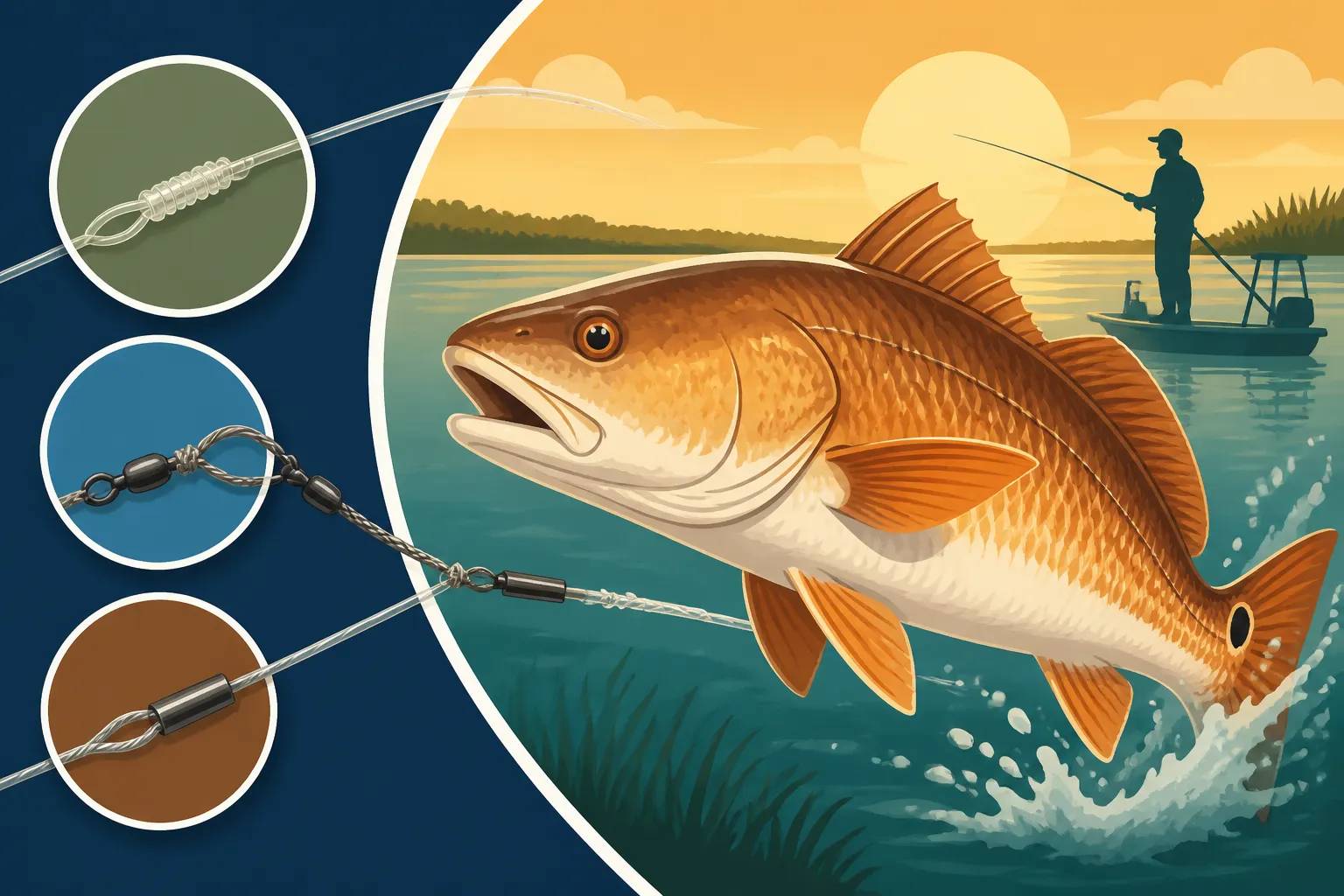
While braided line is an excellent choice for a main line due to its incredible strength-to-diameter ratio, zero stretch, and fantastic sensitivity, it's generally not recommended as a leader for redfish. Its high visibility and tendency to cut easily on sharp edges (paradoxically, despite being strong, a single strand can be nicked) make it less than ideal. However, it's worth mentioning that many anglers tie their fluorocarbon or monofilament leader directly to their braided main line using a strong knot like an FG knot or a Double Uni knot. This gives you the best of both worlds: the casting distance and sensitivity of braid, with the stealth and abrasion resistance of a mono or fluoro leader.
Here's a quick comparison of leader types:
| Feature | Monofilament | Fluorocarbon |
|---|---|---|
| Visibility Underwater | Medium (more visible) | Low (nearly invisible) |
| Abrasion Resistance | Moderate | Excellent |
| Stretch/Shock Abs. | High (good shock absorption) | Low (high sensitivity) |
| Knot Tying Ease | Easy | Moderate (can be stiff) |
| Cost | Lower | Higher |
| UV Resistance | Poor (degrades over time) | Excellent |
| Buoyancy | Floats/Sinks slowly | Sinks quickly |
| Sensitivity | Low | High |
| Best Use Cases | Topwater, general bait fishing, murky water | Clear water, heavy structure, lure fishing |
Key Characteristics of a Good Redfish Leader
Beyond just the type of material, there are specific characteristics that make a leader truly effective for redfish. Understanding these will help you choose the right pound test and length for your specific fishing conditions.
Abrasion Resistance is Paramount
We've touched on this, but it bears repeating: for redfish, abrasion resistance is king. Redfish live and feed in some seriously unforgiving environments. Think about fishing a oyster reef at low tide where you might be Galveston Bay redfish fishing spots. Your leader is constantly rubbing against sharp shells, barnacles, rocks, and even submerged wood or crab traps. A leader that can stand up to this abuse means fewer lost fish and less time re-tying. This is where fluorocarbon truly shines, offering a hard, slick surface that resists nicks and cuts much better than mono.
Consider a scenario where you've cast a spoon near a patch of spartina grass, and a redfish slams it. Its first instinct is often to dive into the nearest cover. If that cover is a cluster of oyster shells, a standard mono leader might be shredded in seconds. A robust fluorocarbon leader, however, stands a much better chance, buying you those crucial extra seconds to turn the fish and steer it away from danger. Always check your leader after every fish or after getting snagged; even the best material can get compromised.
Low Visibility for Skittish Reds
While redfish can be aggressive, they're not always oblivious to their surroundings. In clear water, particularly on shallow flats where the fish are actively tailing or cruising, they can absolutely be line-shy. If your leader is too visible, they might ignore your lure or bait completely, or worse, get spooked and bolt. This is especially true on calm, sunny days when light penetration is at its highest.
Fluorocarbon's near-invisibility gives you a distinct advantage here. It allows for a stealthier presentation, tricking wary reds into thinking your offering is just another natural prey item. Imagine carefully stalking a group of redfish feeding on a grass flat. A perfectly presented soft plastic on an invisible leader will often get eaten, while the same lure on a brightly visible leader might just get a sniff before the fish casually swims away. This stealth factor is often the difference between a successful cast and a missed opportunity, making fluorocarbon the go-to for many serious redfish anglers.
Adequate Knot Strength and Reliability
A leader is only as good as its knots. You can have the strongest, most invisible leader material in the world, but if your knots fail, it's all for naught. For redfish, you need knots that are strong, reliable, and can withstand the sudden shock and sustained pressure of a powerful fight.
Commonly used knots for leaders include the Improved Clinch knot, Palomar knot, and Uni knot for connecting your lure or hook. When connecting your leader to your main line (especially braid), knots like the FG knot, Double Uni knot, or Albright knot are popular choices known for their strength and ability to pass through rod guides smoothly.
The key to good knot strength isn't just the type of knot, but also how you tie it. Always lubricate your knots (with saliva or water) before cinching them down slowly and firmly. This prevents friction and heat build-up that can weaken the line. Practice these knots at home until they become muscle memory, because when that trophy redfish is on the line, you don't want to be second-guessing your knot-tying skills. A strong, consistent knot ensures that the weakest point isn't your connection, but rather the fish's will to fight!
Recommended Leader Setups for Redfish
Alright, let's get down to the brass tacks: what kind of leader should you actually be using? The "best" setup really depends on the conditions you're fishing in and the specific redfish behavior you're encountering.
Choosing the Right Pound Test
The strength of your leader, measured in pound test, is a crucial decision. It needs to be heavy enough to handle the fish and the environment, but not so heavy that it spooks fish or hinders your lure's action.
- 15-20 lb Test: This is your go-to for smaller redfish (slot reds) in very clear water or when the fish are particularly finicky. It offers maximum stealth and a more natural lure presentation. It's often favored when fishing lighter tackle or if you're targeting fish in very shallow, calm water where visibility is high. For example, if you're poling across a crystal-clear flat down near Port Mansfield, a 15lb fluorocarbon leader might be perfect. It’s also a good choice if you're using very light artificials where a heavier leader could impede the action.
- 25-30 lb Test: This is the workhorse leader for most general redfish applications in Texas bays. It strikes a great balance between abrasion resistance, strength, and stealth. It's robust enough to handle most slot reds and even some smaller bull reds without sacrificing too much in terms of presentation. This is what many anglers will spool up with when fishing around oyster reefs, grass lines, or when using live bait like shrimp or mullet. For example, when you're casting spoons or soft plastics near a shell bed on Matagorda Bay, a 25lb fluorocarbon leader gives you a good margin of safety.
- 40 lb Test and Up: When you're specifically targeting large bull reds, fishing in extremely heavy cover, or around abrasive structures like jetties and bridge pilings, bumping up to 40lb test or even heavier is a smart move. These larger leaders offer maximum abrasion resistance and raw breaking strength for powerful fish that will try to break you off on anything they can find. For instance, if you're fishing the jetties at Port Aransas or wading in the surf for bigger reds, a 40lb fluorocarbon leader might prevent a heartbreaking break-off. It’s also common for anglers using cut bait for big reds in murky water where visibility is less of a concern. Remember, a bigger leader might reduce the action of smaller lures, so match it to your bait size.
Optimal Leader Lengths for Different Scenarios
Just like pound test, the length of your leader isn't a one-size-fits-all situation. It depends heavily on your main line, casting style, and the conditions.
- 18-24 Inches (Short Leader): This length is often used when fishing with a baitcasting setup and a braided main line, particularly if you're casting frequently and want the leader knot to stay outside your rod guides. A shorter leader helps maintain casting distance and accuracy, reducing the chance of the knot catching on a guide. It's also suitable for fishing murky water where visibility isn't a major concern. This is a common choice for quick-fire casting with artificials.
- 2-4 Feet (Standard Leader): This is perhaps the most versatile length for most redfish applications. It provides a good balance of stealth (especially if using fluorocarbon), abrasion protection, and shock absorption. The longer length keeps the more visible or less abrasion-resistant main line further away from the fish and the structure. It's excellent for fishing with spinning gear, live bait, or artificials where you need that extra buffer. This length allows for a bit more stretch if you're using mono and a good invisible zone if you're using fluoro. This is a solid choice when Best Bait and Lures for Texas Fishing is key.
- 5-8 Feet (Long Leader): A longer leader is beneficial in extremely clear water conditions where maximum stealth is required, or when using a main line that is highly visible, like colored braid. This length ensures that only the nearly invisible leader material is in the fish's immediate vicinity. It's also useful when fishing topwater plugs where the main line might interfere with the lure's action or if you want extra abrasion protection from rough bottom. However, be aware that longer leaders can make casting more challenging, especially if your leader knot repeatedly goes through the rod guides. You'll need to develop a smooth casting stroke to manage this.
Rigging Your Leader
When you've selected your leader material and length, proper rigging is paramount.
- Connecting to Main Line: As mentioned, if you're using braided main line (which most Texas saltwater anglers do), you'll need a strong, slim knot to connect your leader. The FG knot is incredibly popular for its strength and small profile, allowing it to pass through rod guides smoothly. The Double Uni knot is also a reliable choice, though slightly bulkier. Practice these connections, as a weak leader-to-main-line knot is a common point of failure.
- Connecting to Lure/Hook: For attaching your lure, jig, or hook, dependable knots like the Improved Clinch knot, Palomar knot, or Uni knot are excellent. For any knot, always moisten the line before cinching it down to reduce friction and heat, which can weaken the line. Trim tag ends cleanly but leave a tiny bit for security.
- Terminal Tackle Considerations: Depending on your setup, you might incorporate swivels or snaps. A small, high-quality swivel can help prevent line twist, especially with certain lures or when using live bait. A snap can make changing lures quicker. However, every piece of terminal tackle is a potential point of failure and can sometimes detract from stealth. For redfish, many anglers prefer to tie directly to their lure or hook whenever possible to reduce hardware. When shopping for terminal tackle or leader spools, places like Bass Pro Shops often have a great selection, and you can also find specialized items on Amazon.
By thoughtfully considering your leader material, pound test, and length based on your fishing conditions, you'll significantly increase your chances of landing those powerful, hard-fighting Texas redfish. It's a small detail that makes a monumental difference.
Disclaimer
This article is for general informational purposes only and does not constitute professional advice. Laws, prices and regulations vary by location and change over time. Consult a qualified professional for guidance on your specific situation.