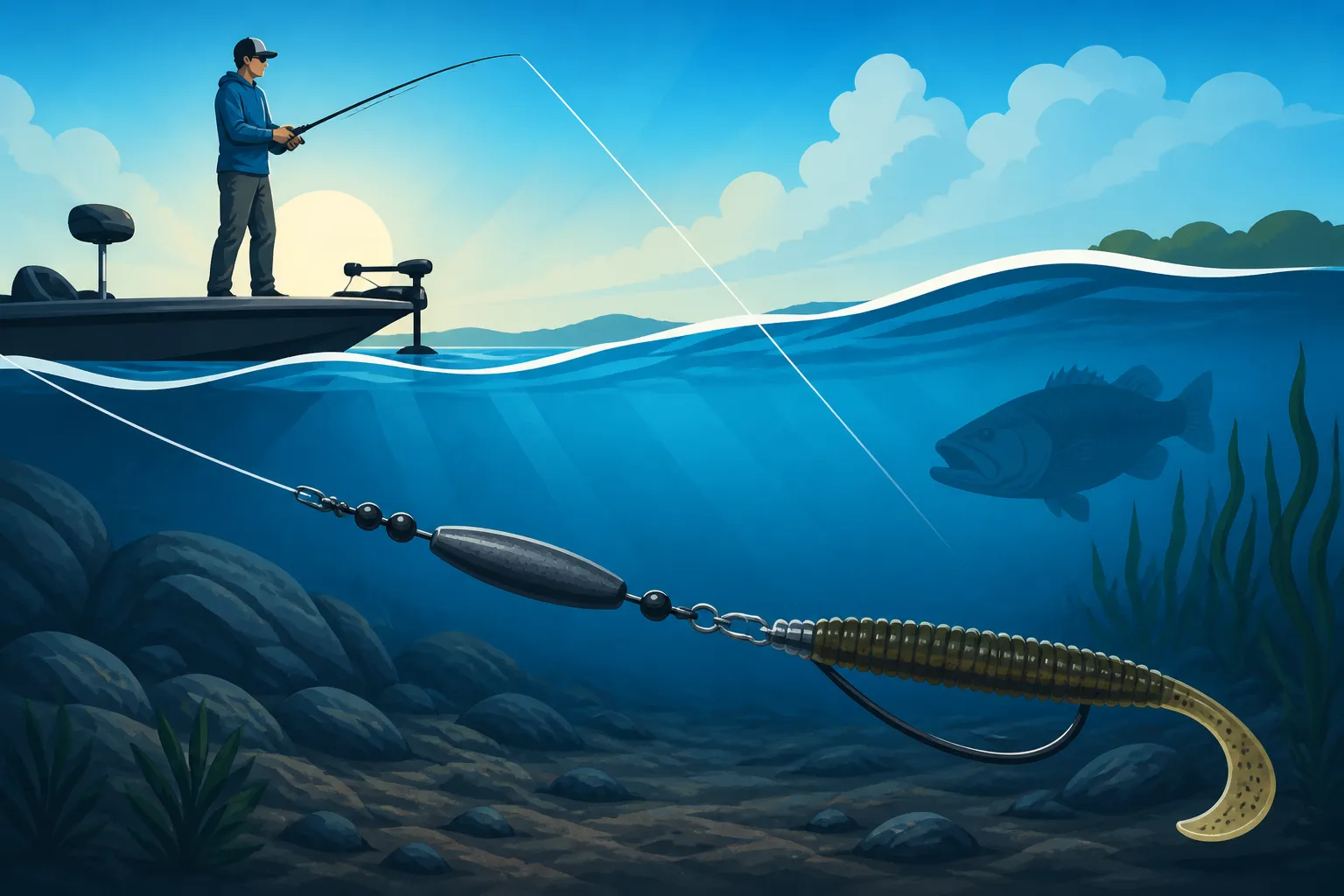
Best Carolina rig weight for deep water
There’s nothing quite like the satisfaction of feeling that subtle thump at the end of your line, signaling a hungry bass has picked up your bait in the mysterious depths below. But let’s be real, trying to get your bait down to those deep-water giants, especially when the wind is howling or currents are pulling, can be incredibly frustrating. You spend all that time rigging up, only for your bait to drift aimlessly or snag up immediately. This guide is all about cutting through that frustration by helping you pick the perfect Carolina rig weight for those deep-water Texas fishing adventures, ensuring your presentation is spot-on every time.
Understanding the Carolina Rig for Deep Water
The Carolina rig is a true classic for a reason, and nowhere does it shine brighter than when you're targeting fish holding in deeper water. It’s a technique that allows your bait to float or suspend just above the bottom, giving it a natural, enticing action that deep-dwelling bass find hard to resist.
Why the Carolina Rig Shines in Deeper Texas Lakes
Imagine a sprawling reservoir like Lake Fork or Sam Rayburn, where bass often retreat to cooler, deeper sanctuaries during the warmer months or when pressured. These fish aren't always looking for a fast-moving, aggressive presentation. They might be nestled alongside submerged timber, lurking near a deep channel edge, or cruising a rocky point. This is where the Carolina rig truly excels. It acts like a silent scout, presenting your soft plastic bait in a way that mimics natural forage, slowly dragging it along the bottom structure without getting constantly hung up. This methodical approach is exactly what’s needed to tempt those wary, deep-water bass in big Texas lakes. It's not about speed; it's about persistent, subtle temptation right in their wheelhouse.
The beauty of the Carolina rig is how it separates the weight from the bait, allowing your worm, lizard, or creature bait to drift and flutter freely on a leader. This offers a much more natural presentation than a jig or a Texas rig, where the weight is typically pegged right at the hook. In deep, clear lakes, where visibility might be better, this natural movement can be the key to getting a strike. It allows the bait to suspend slightly off the bottom, just enough to catch the current and sway enticingly, often triggering bites from fish that are suspended a foot or two above the lake bed but still associated with deep structure.
Components of a Deep-Water Carolina Rig
Before we dive into weight specifics, let’s quickly recap the essential elements of a successful deep-water Carolina rig. Each component plays a vital role in getting your bait to the strike zone and keeping it there effectively.
First, you have your main line, which is typically braided for sensitivity, especially when you're fishing in 20, 30, or even 40 feet of water. Next comes the star of our show: the sinker or weight. This is what actually gets your rig down to the desired depth. Immediately following the weight, you’ll usually find a glass or plastic bead. This little guy serves a couple of crucial purposes: it protects your knot from the weight's repeated banging, and it creates a subtle "click" against the weight as you retrieve, which can sometimes attract curious fish.
After the bead, a swivel is absolutely non-negotiable. This small piece of hardware prevents line twist, which can be a major headache when you're dragging a rig over long distances, especially with soft plastics that tend to spin. Finally, you have your leader, a length of fluorocarbon line tied to the other end of the swivel, and then your hook and soft plastic bait. The leader is crucial because it offers invisibility in clearer waters and allows the bait to move independently of the weight. Understanding these components is the first step to mastering How to fish a Carolina rig in deep water effectively.
Factors Influencing Carolina Rig Weight Selection in Deep Water
Choosing the right weight for your Carolina rig isn't a one-size-fits-all situation, especially when you're tackling the diverse deep waters of Texas. Several key factors come into play that should guide your decision, ensuring you maintain optimal contact with the bottom and present your bait effectively.
Depth and Bottom Composition
The most obvious factor is, of course, the depth you're fishing. It stands to reason that the deeper you go, the heavier your weight needs to be to achieve a reasonable sink rate and maintain bottom contact. Trying to fish a 1/2 oz weight in 40 feet of water will feel like trying to move a feather in a hurricane – you'll have no idea where your bait is. In shallower deep zones, say 15-20 feet, a 3/4 oz weight might feel perfect. But once you start pushing into the 30-40 foot range, or even deeper, you’ll likely need to step up to a 1 oz or even a 1.5 oz weight to maintain that crucial connection to the lake bed.
Beyond depth, consider the bottom composition. Are you dragging over hard rock, shell beds, or soft, silty mud? A lighter weight might get bogged down and lose feel in soft mud, whereas a heavier weight will telegraph every pebble and change in texture on a hard bottom. Conversely, a super heavy weight might get wedged in rocky crevices more easily, leading to frustrating snags. If you're fishing areas with lots of submerged timber or brush piles, like many parts of Lake Fork Fishing Guide or Sam Rayburn Reservoir Fishing Guide, you might want to experiment with different weight shapes or even slightly lighter weights that are easier to maneuver over and through cover, rather than burying themselves. Tungsten weights, which we’ll discuss later, can be a real game-changer here due to their smaller profile for a given weight.
Wind, Current, and Boat Control
Texas weather can be notoriously fickle, and nothing throws a wrench into deep-water fishing plans quite like a strong wind or unexpected current. Both of these elements significantly impact how your Carolina rig performs and, consequently, what weight you should choose. When the wind is whipping across the lake, it creates a "belly" in your line, pushing it around and making it incredibly difficult to feel bites or keep your rig on track. A heavier weight helps cut through this resistance, keeping your line straighter and allowing you to maintain better contact with the bottom.
Similarly, if you're fishing a river system or a reservoir with noticeable current, a lighter weight will simply be swept away, preventing your bait from reaching the desired depth or holding in the strike zone. You'll need to increase your weight to counteract this force. Think about it: if your boat is drifting rapidly, or you're trying to hold a specific spot with your trolling motor in windy conditions, a heavier weight helps anchor your presentation, giving you more control over where your bait is at all times. Without adequate weight, you're just dragging a string, hoping for the best, and that's not how you consistently catch fish.
Desired Presentation Speed and Feel
The speed at which you want your bait to fall and the feel you desire from your rig are also crucial considerations for weight selection. Sometimes, a slower, more deliberate fall is what triggers a bite from finicky bass. In these cases, you might opt for the lightest weight possible that still allows you to reach the desired depth and maintain bottom contact. This slower fall can give the bait more time in the strike zone, fluttering down enticingly.
However, if you're trying to cover a lot of water, aggressively searching for active fish, or need a faster fall to punch through a thermocline or get past suspended baitfish quickly, a heavier weight is your friend. It gets your bait down faster and allows for quicker sweeps and retrieves. The trade-off is often sensitivity; a heavier weight can sometimes dampen the subtle taps of a shy fish, though modern line materials and rod technologies help mitigate this. Ultimately, it’s about finding that sweet spot where you can feel the bottom, detect bites, and present your bait at the speed that you believe will be most effective for the fish on that particular day. It’s a constant dance between weight, speed, and sensitivity that experienced anglers master over time.
Target Species and Bait Size
Believe it or not, the species you're targeting and the size of the bait you're tying on also play a role in your Carolina rig weight decision. While the Carolina rig is a phenomenal tool for bass, especially Texas Largemouth Bass Fishing Guide, it can be effective for other deep-water dwellers too. Larger, bulkier soft plastics like 10-inch worms, big creature baits, or even certain swimbaits, will have more water resistance and require a heavier weight to sink efficiently and maintain a natural drag. If you're using a smaller, more streamlined bait, you might get away with a slightly lighter weight.
Consider the "profile" of your bait underwater. A large, bushy plastic will act almost like a parachute, slowing its descent and making it harder to feel the bottom with a lighter sinker. Conversely, a slender finesse worm won't require as much heft to get it down. Think about the common forage in deep Texas waters. If bass are feeding on bigger shad or crawfish, a larger bait profile might be more appropriate, necessitating a heavier weight to balance the presentation. It’s all about creating a cohesive system where the weight and bait work together to achieve the desired effect.
Recommended Carolina Rig Weights for Various Deep-Water Scenarios in Texas
Alright, let’s get down to the brass tacks: what specific weights should you be reaching for when you’re fishing deep in Texas? It really boils down to the exact conditions you’re facing, but there are some solid starting points that most seasoned anglers rely on.
Standard Deep Water (15-30 feet)
For what we consider "standard" deep water fishing, which generally falls in the 15-to-30-foot range, you'll find that weights from 3/4 ounce to 1 ounce are your bread and butter. This range offers a great balance of castability, sink rate, and bottom feel for most common scenarios you’ll encounter on lakes like Canyon Lake or Lake Whitney.
-
3/4 Ounce: This is a fantastic all-around choice for many deep-water situations, especially when the wind is calm to moderate, or you’re fishing slightly shallower ends of the deep spectrum (15-25 feet). It offers good feel for subtle bottom changes and structure, without being overly cumbersome. It's often my go-to when I want a slightly slower fall rate for my bait, giving those suspended bass a bit more time to react. If you're dragging through areas with less heavy cover, or trying to present a finesse worm, a 3/4 oz can be perfect.
-
1 Ounce: When you start pushing into the 25-30 foot range, or if there’s a noticeable breeze causing a bit of line bow, a 1-ounce weight becomes invaluable. It provides a more definitive bottom contact and helps maintain a straighter line from your rod tip to your rig. This weight is also excellent for covering ground more efficiently when you’re systematically dragging a large flat or a long point. It provides enough heft to easily deflect off submerged stumps or rocks, reducing snags compared to a lighter weight that might get wedged more easily. Many anglers consider the 1 oz a "heavy duty" standard for a reliable deep-water Carolina rig setup.
These weights give you the versatility to probe deep ledges, offshore humps, and submerged timber lines effectively. The key is to start with one and adjust as you gain a feel for the specific conditions of the day.
Very Deep Water & Strong Wind/Current (30+ feet)
When you venture into truly deep territory – 30 feet and beyond – or when Mother Nature decides to throw some strong wind and current your way, you absolutely need to scale up your weight. In these challenging conditions, a heavier sinker isn't just a preference, it's a necessity to simply get your bait where it needs to be and feel what’s happening down there.
-
1 Ounce to 1.5 Ounces: If you're consistently fishing 30-40 feet deep, or if the wind is really pushing your boat around, jumping to a 1 oz or even a 1.25 oz weight is often the right move. This extra mass helps your rig cut through the water column faster and maintain better contact with the bottom, even when your boat is drifting. You'll notice a significant improvement in your ability to detect subtle bites and feel structure. Trying to drag a lighter weight in these conditions is like trying to hear a whisper in a storm – it's just not going to happen reliably.
-
1.5 Ounces and Beyond (up to 2 Ounces): For the extreme scenarios – fishing 40+ feet, battling very strong currents (perhaps on a river system or below a dam like at Canyon Lake), or enduring fierce Texas winds – don't shy away from weights as heavy as 1.5 ounces or even 2 ounces. While these might seem excessive, they are crucial for maintaining control and sensitivity. Imagine trying to fish a big deep hump on Lake Texoma Fishing Guide when the wind is whipping up waves; a lighter weight simply won't stay put. This heavier tackle ensures your bait is presented correctly and your rod tip can still transmit those all-important bumps and thumps from the bottom. Yes, casting these heavier weights requires a more robust rod, but the trade-off in control and bite detection is well worth it.
Remember, the goal isn't just to get the bait down, but to feel it down there. If you can't feel your weight dragging, you can't feel a fish picking up your bait, and you can’t tell what kind of bottom you’re fishing. That's a recipe for missed opportunities.
Balancing Weight with Sensitivity
This is truly where the art of deep-water Carolina rigging comes into play. It's a constant battle between getting your bait down efficiently and maintaining the sensitivity needed to detect those often-subtle deep-water bites. There's a sweet spot for every scenario, and finding it will make you a much more effective angler.
Sometimes, in relatively calm conditions at say 20-25 feet, you might be able to get away with a 3/4 oz or even a 5/8 oz weight. While a 1 oz might get down faster, the lighter weight allows for a slightly slower, more natural fall of your plastic bait, and can sometimes transmit the feel of the bottom and light bites with incredible clarity, provided there's minimal line interference from wind or current. You might sacrifice a bit of casting distance, but the enhanced feel could be worth it if the fish are playing hard to get.
The problem with going too light, however, is the lack of "bottom out" feel. You won't know if your bait is truly on the bottom or just suspended somewhere in the middle of the water column. The advantage of a heavier weight, even if it slightly dampens the absolute sensitivity of your rod tip, is that it makes consistent bottom contact undeniable. You know your bait is where the fish are. Modern fishing rods, especially those designed for Carolina rigging, combined with braided main lines and fluorocarbon leaders, do an incredible job of transmitting even the lightest taps through heavier weights. So, while going super heavy might feel less "sensitive" in theory, the practical benefit of knowing your bait is in the zone and feeling a solid thump when a fish inhales it often outweighs the perceived loss of sensitivity from a lighter weight. Don't be afraid to experiment, but err on the side of a weight that gives you confidence in your presentation.
| Weight (Oz.) | Ideal Depth Range | Conditions | Primary Benefit | Potential Drawback |
|---|---|---|---|---|
| 3/4 | 15-25 feet | Calm to moderate wind, light current | Good sensitivity, slower fall | Can lose bottom contact in strong wind/current |
| 1 | 25-35 feet | Moderate wind, light to moderate current | Strong bottom contact, good castability | Slightly faster fall, can snag in dense cover |
| 1.25 – 1.5 | 35-45+ feet | Strong wind, moderate to heavy current | Excellent bottom contact, efficient deep fishing | Less subtle presentation, requires stout gear |
| 2 | 45+ feet | Extreme wind, very heavy current | Maximum depth control and bottom feel | Can be overkill, very fast fall, more snags in rock |
Tips for Optimizing Your Deep-Water Carolina Rig in Texas
Beyond just picking the right weight, there are several other elements you can fine-tune to make your deep-water Carolina rig as effective as possible in Texas waters. These subtle adjustments can make a big difference in your catch rates.
Choosing the Right Weight Material and Shape
The material and shape of your Carolina rig weight might seem like minor details, but they can significantly impact your feel and success.
Weight Materials:
- Lead: This is the traditional and most affordable option. Lead weights are effective, but they are denser, meaning a 1-ounce lead weight will be physically larger than a 1-ounce tungsten weight. This larger profile can sometimes get hung up more easily in heavy cover, and lead transmits vibrations slightly less efficiently than tungsten. You can find a wide variety of lead weights at most local tackle shops and general sporting goods stores.
- Tungsten: Tungsten has become incredibly popular among serious anglers, and for good reason. It is much denser than lead, so a tungsten weight is significantly smaller for the same weight (e.g., a 1 oz tungsten weight is roughly the size of a 1/2 oz lead weight). This compact size makes it less prone to snagging in rocks and timber, which is a huge advantage when fishing those gnarly deep spots in Texas. More importantly, tungsten is much harder than lead, so it transmits bottom composition and subtle bites with much greater clarity. You can literally feel every pebble and stick. The downside? Tungsten is more expensive. However, many anglers find the increased sensitivity and reduced snagging to be well worth the investment, especially when targeting those elusive deep-water giants. Both Bass Pro Shops and Amazon carry a huge selection of tungsten weights.
Weight Shapes:
- Bullet Weights: These are very common and stream-lined, making them good for sliding through weeds and some forms of cover. They’re a solid all-around choice.
- Egg Weights: Spherical, these weights roll over obstacles easily and are less prone to getting wedged in cracks. They're excellent for dragging over hard, rocky bottoms.
- Cylinder/Pencil Weights: These long, slender weights are designed to slip through heavy cover, especially grass and brush, with minimal snagging. If you're fishing deep submerged hydrilla or brush piles, these can be a lifesaver.
Experimenting with different materials and shapes can drastically improve your feel for the bottom and reduce frustrating hang-ups, letting you spend more time fishing and less time re-tying.
Leader Length Considerations
The length of your fluorocarbon leader is another critical adjustment that can influence how your bait behaves and how many bites you get. There's no one "correct" length; it depends on the fish's mood and the cover you're fishing.
-
Shorter Leaders (18 inches – 3 feet): When fish are aggressive or when you're fishing in very dense cover, a shorter leader is often more effective. A shorter leader provides more direct control over your bait, making it easier to maneuver around obstacles and to detect bites quickly. It also minimizes tangles. If the water is murky, a shorter leader might also be beneficial as fish aren't relying as much on visual cues and are more likely to strike something close to the commotion of your weight and bead.
-
Longer Leaders (3 feet – 6 feet, sometimes more): When fish are finicky, pressured, or if the water is extremely clear (think some of the clearer Hill Country lakes), a longer leader can be a game-changer. The increased separation from the weight allows your bait to swim and drift more naturally, appearing completely unattached and less suspicious. This "stealth" presentation can tempt wary bass that might shy away from the bulk of the weight and swivel. The downside is that longer leaders can be harder to cast, especially in windy conditions, and can lead to more tangles. It also means a longer fight to get a fish into the boat once it's hooked. For specific situations, like fishing a clear, open bottom, a super-long leader might be the key to getting bit. Finding the optimal leader length is a skill that takes practice and observation, and it can vary wildly even on the same body of water from day to day.
Line Selection for Deep-Water Carolina Rigs
Your choice of fishing line is paramount for deep-water Carolina rigging. You need a setup that maximizes sensitivity, minimizes stretch, and provides ample strength to land those big Texas fish.
-
Main Line (Braided): For your main line, connecting directly to your reel, braided line is almost universally recommended for deep-water Carolina rigging. Its near-zero stretch is critical for transmitting every bump, grind, and subtle bite from the depths to your rod tip. You literally feel everything. Additionally, braided line has a smaller diameter for its breaking strength compared to monofilament, which helps it cut through the water more efficiently, reducing line bow in wind and current. A good starting point is 30-50 lb test braid, depending on the cover you're fishing and the size of fish you expect.
-
Leader (Fluorocarbon): While your main line is braid, your leader should almost always be fluorocarbon. Fluorocarbon has several key advantages: it's nearly invisible underwater, which is a huge asset for clear water and spooky fish. It's also much more abrasion-resistant than monofilament, offering better protection against rocks, shell beds, and submerged timber. While fluorocarbon does have some stretch, it's minimal compared to mono, helping to maintain sensitivity. Matching the strength of your fluorocarbon leader to your braid is important; typically, you'd use a 15-25 lb test fluorocarbon leader. The combination of a low-stretch braided main line and an invisible, abrasion-resistant fluorocarbon leader creates a highly effective system for deep-water Carolina rigging. This pairing is essential for successful Texas Bass Spawning Season Guide fishing when bass often drop deeper post-spawn.
Practical Drags and Sweeps
Once you've got your Carolina rig set up perfectly with the right weight and line, how you retrieve it becomes the final piece of the puzzle. It's not just about reeling in; it's about making your bait dance.
The most common technique is a slow, methodical drag. This involves making a long cast, letting your weight sink to the bottom, and then using your rod tip to slowly drag the weight along the lake bed. Don't reel with the rod tip; instead, sweep your rod from about 9 o’clock to 11 or 12 o’clock, taking up any slack as you bring the rod forward for the next sweep. This action pulls the weight and then allows the leadered bait to drift behind it, mimicking a crawfish scooting or a worm slithering. It’s crucial to maintain contact with the bottom, feeling for changes in texture – a key skill also valuable in How to read lake contour maps for bass fishing.
Another effective technique is a lift-and-drop or sweep-and-pause. After dragging for a bit, you might lift your rod tip higher, causing the weight to hop off the bottom, then let it fall back down. This can stir up sediment and make your bait appear like it's darting or fleeing, often triggering a reaction strike. In very deep water, sometimes a slightly quicker, more aggressive sweep can be beneficial to cover ground faster, particularly if you're trying to locate schooling fish. The key with all these techniques is to truly visualize what your weight and bait are doing down there, interpreting the feedback from your rod tip, and adjusting your retrieve until you find what the fish are responding to. Don't be afraid to experiment with different speeds and pauses; sometimes, a longer pause after a sweep is exactly what it takes for a hesitant bass to commit.
Disclaimer
This article is for general informational purposes only and does not constitute professional advice. Laws, prices and regulations vary by location and change over time. Consult a qualified professional for guidance on your specific situation.