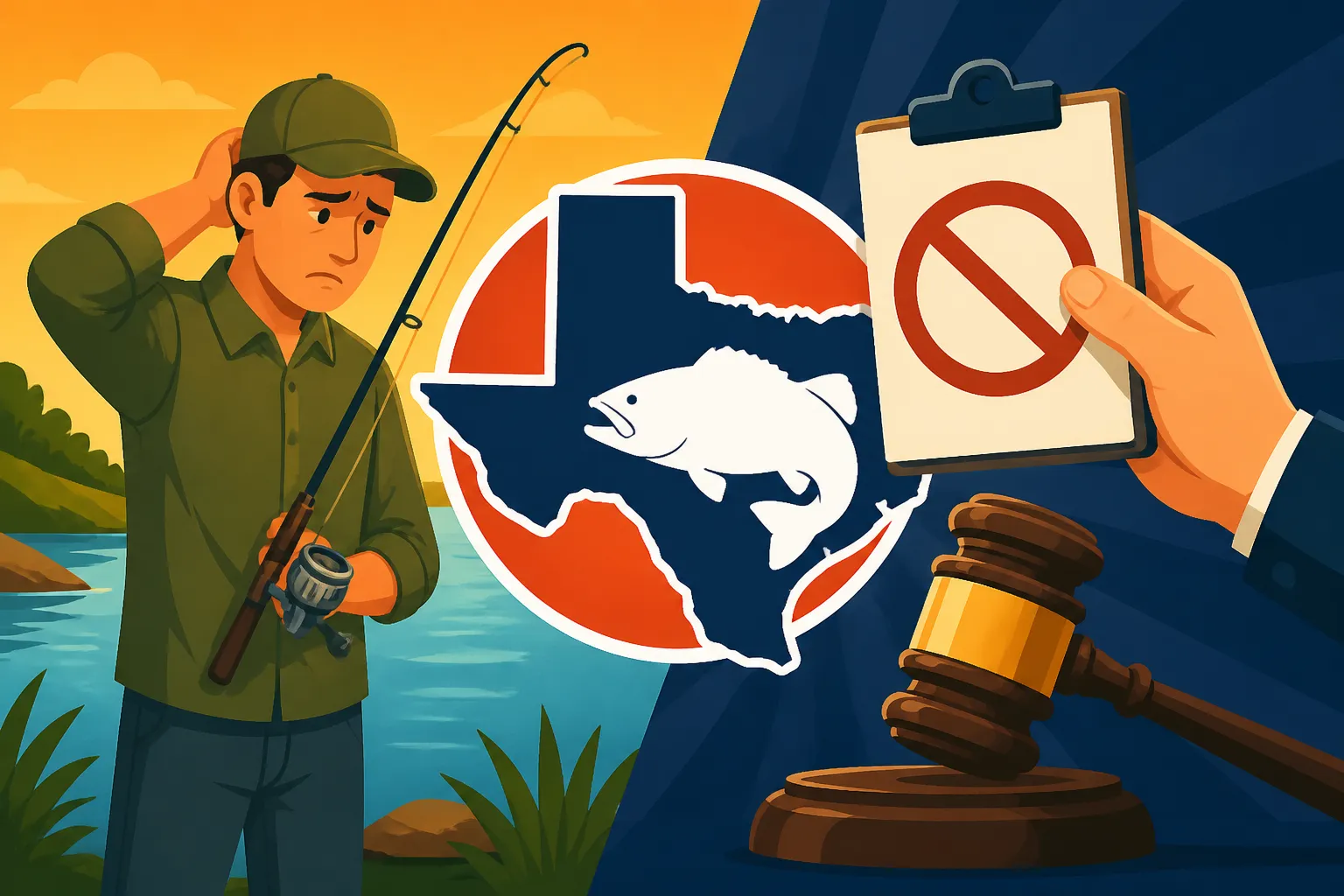
Fine for fishing without a license in Texas
There’s nothing quite like the feeling of reeling in a big one, whether it’s a lunker bass from Lake Fork or a speckled trout from Galveston Bay. But that sense of peace and excitement can quickly turn to dread if a Texas Parks and Wildlife Department (TPWD) game warden pulls up, and you realize your fishing license is back home, expired, or worse, you never even bought one. The thought of a hefty fine, legal trouble, and the sheer embarrassment can really spoil a day on the water. This guide is here to walk you through exactly what happens if you're caught fishing without a license in Texas, detailing the fines, the legal repercussions, and how to avoid this common but costly mistake.
The Immediate Impact of Fishing Without a License
Finding yourself face-to-face with a Texas game warden when you're not properly licensed can be an unsettling experience, to say the least. It’s not just a polite reminder; it’s a serious interaction with law enforcement. Understanding what to expect during this initial encounter can help you navigate it more effectively, even if you’re already in a tough spot.
The Encounter with Law Enforcement
When a game warden approaches you, whether you’re casting from a pier, wading the flats, or out in a boat, their primary role is to ensure compliance with state wildlife and fishing laws. They are fully commissioned peace officers, just like any sheriff or police officer, with the authority to enforce all state laws, not just those pertaining to fish and game. They’ll likely ask to see your fishing license, your driver's license or other identification, and may inquire about your catch or gear.
If you cannot produce a valid fishing license, the situation escalates. This isn't just a minor oversight in their eyes; it's a violation of the Texas Parks and Wildlife Code. The warden will typically issue you a citation, which is essentially a ticket. This citation will detail the offense, the date, time, and location, and usually include a court date or instructions on how to pay the fine. It's crucial to remain calm and respectful during this interaction. Arguing or being uncooperative can lead to additional charges or further complications, which is the last thing anyone wants when already facing a violation. Remember, they're just doing their job, enforcing the rules designed to protect our natural resources and ensure fair play among anglers.
Potential Confiscation of Fish and Gear
While not an automatic consequence for every license violation, game wardens do have the authority to confiscate fish you've caught if they were taken in violation of the law. This absolutely includes fish caught by someone without a valid license. Think about it: if you don't have the legal right to fish, then any fish you possess from that activity aren't legally yours. It's a bitter pill to swallow after a successful day, but it's a real possibility.
In more egregious cases, or for repeat offenders, there's even a possibility of gear confiscation. This is less common for a first-time, simple license offense but can occur if the violation is tied to other, more serious infractions, such as using illegal fishing methods, exceeding bag limits, or fishing in a restricted area. Imagine having your prized rod and reel or even your boat seized – it's a stark reminder of the importance of knowing and following the rules. While a warden might not always confiscate gear for just a license issue, the legal framework allows for it, especially if there's a pattern of non-compliance or if the gear itself is illegal. Always consult the official Texas Fishing License Requirements Explained for a full understanding of what's expected of you before heading out.
Understanding the Financial Penalties
Getting a citation for fishing without a license isn't just about a slap on the wrist; it comes with tangible financial consequences that can quickly add up. Texas takes its wildlife regulations seriously, and these penalties reflect that commitment to conservation and responsible angling.
The Base Fine: A Class C Misdemeanor
In Texas, fishing without a valid license is generally classified as a Class C misdemeanor. This is the lowest class of criminal offense in Texas, but don't let that fool you into thinking it's minor. A Class C misdemeanor can carry a fine of up to $500. It's not a fixed amount; rather, the exact fine can vary depending on the county or justice court jurisdiction where the violation occurred, and sometimes even the discretion of the issuing game warden or judge.
For example, a first-time offense in one county might see a fine of around $150-$200, while in another, it could be closer to $300-$400. This base fine is just the starting point. It’s designed to be a deterrent and to cover some of the administrative costs associated with processing the violation. It’s significantly more expensive than simply purchasing an annual license, which for a Texas resident is currently around $30 for a basic freshwater license, or about $40 for an all-water package. When you consider that a Texas All-Water Fishing License Explained covers both fresh and saltwater, the cost-benefit analysis clearly favors buying the license upfront.
Additional Court Costs and Surcharges
Unfortunately, the base fine is rarely the only financial hit you’ll take. On top of the fine itself, you’ll almost certainly be assessed various court costs and state surcharges. These additional fees can easily double or even triple the total amount you owe. Court costs cover things like administrative fees for filing the case, judicial support, and other operational expenses of the justice system. Surcharges are often state-mandated fees that go towards specific funds, such as judicial education or victim compensation.
For instance, a $200 base fine could quickly become a $400-$600 total payment once court costs (which can range from $50-$150+) and state surcharges (which might add another $50-$100+) are factored in. The total out-of-pocket expense can be a significant blow, especially for something that could have been avoided with a simple purchase. Many people overlook these additional costs when they think about a "ticket," but they are a very real part of the penalty. You might even find specific fees for an Texas Online License Purchase Fees listed if you were to eventually buy your license online to avoid future issues.
Here's a generalized table showing how these costs can stack up for a first-time offense:
| Cost Category | Estimated Range (First Offense) | Notes |
|---|---|---|
| Base Fine | $150 – $500 | This is for the Class C misdemeanor of fishing without a license. The actual amount can vary by county and judge. A common amount is often in the $250-$350 range for a first offense. |
| Court Costs | $50 – $150+ | These cover administrative fees, court clerk services, and other operational expenses of the justice court. These are usually fixed by the county or precinct. |
| State Surcharges | $50 – $100+ | State-mandated fees that go to various funds. These are often standardized across the state for Class C misdemeanors but can include multiple smaller surcharges that add up. |
| Total Estimated Cost | $250 – $750+ | This range does not include potential legal fees if you choose to contest the citation or any other penalties like license suspension. This is merely the financial outlay for the initial ticket and associated processing fees. It also assumes no other violations (like exceeding Texas Fish Bag and Length Limits). |
Remember, these figures are estimates. The actual costs will be detailed on your citation or by the specific court handling your case.
Beyond the Financial Burden: Other Penalties
While the financial hit of fines and court costs is significant, the consequences of fishing without a license in Texas can extend far beyond your wallet. These additional penalties can impact your ability to enjoy fishing in the future and even have broader legal implications.
License Suspension and Revocation
One of the most immediate and frustrating non-monetary consequences is the potential suspension or revocation of your fishing privileges. The Texas Parks and Wildlife Department (TPWD) has the authority to suspend your fishing license, or your ability to purchase one, for a certain period if you are convicted of fishing without a license. This isn't just about the current year; it can mean you're barred from legally fishing for several months or even years, depending on the severity of the offense and if you're a repeat offender.
Imagine planning a big fishing trip to Toledo Bend Reservoir, only to find out you can't legally cast a line because your license privileges have been revoked. It's a genuine bummer and a stark reminder that these regulations exist for a reason. For serious or repeated violations, TPWD's regulatory review committee might even hold a hearing to determine the length of your suspension or whether your licenses (including hunting licenses, if applicable) should be revoked entirely. This is why understanding Texas Fishing License Renewal Rules is so critical – ensuring continuous licensure can prevent such issues.
Criminal Record Implications
Even though fishing without a license is a Class C misdemeanor, it is still a criminal offense. A conviction for a Class C misdemeanor will appear on your criminal record. While it's a minor offense compared to felonies or higher-level misdemeanors, having any criminal conviction on your record can have unexpected consequences down the road.
For instance, certain job applications, particularly those requiring background checks for sensitive positions, might ask about criminal history, even for misdemeanors. While a single Class C might not automatically disqualify you, it's an additional hurdle and something you'd have to explain. It can also affect future licensing applications beyond just fishing, or even travel to certain countries that have strict entry requirements regarding criminal records. It's not something to panic about, but it's certainly not ideal. The best approach is always to secure your license, whether through the official TPWD website or a retailer like Academy Sports + Outdoors, or even a local Walmart, well before you ever head out. For more details on avoiding issues, check out How to Get a Texas Fishing License.
Strategies to Avoid a License Violation
The easiest and cheapest way to avoid all the headaches, fines, and potential legal issues is simply to make sure you're properly licensed before your line ever hits the water. It sounds obvious, but so many people get caught due to simple oversight or misunderstanding.
Know Your Requirements and Exceptions
First and foremost, understand the basic rules. Almost everyone aged 17 and older needs a fishing license to fish in public waters in Texas. There are, however, some important exceptions that many people aren't aware of. For example, children under 17 years old do not need a license to fish in Texas. Also, anyone fishing on a designated Texas Free Fishing Day (usually the first Saturday in June) can do so without a license. There are also specific rules for fishing on private property or within certain state parks.
Did you know that residents born before January 1, 1931, are exempt from the license requirement? Or that you don't typically need a license to fish on private water that you own? It's these kinds of specific details that can trip people up. Make sure you know if you fall under any of these categories. If you're unsure, it's always safer to buy a license. Many resources, including the Who Doesn't Need a Texas Fishing License guide, break down these exceptions in detail.
Always Carry Proof of Your License
Once you have your license, the next critical step is to have proof of it with you when you're fishing. It's not enough to just have bought it; you must be able to present it to a game warden upon request. Historically, this meant carrying a physical paper copy, often laminated and tucked into a wallet. While that's still perfectly acceptable, technology has made things much easier.
Texas now allows anglers to carry proof of their license on their smartphone. You can download the official TPWD Outdoor Annual app, which stores your licenses digitally. This is incredibly convenient! Just make sure your phone is charged. If you bought your license online through the TPWD website, you would have received an email confirmation, which often includes a printable license or a temporary tag. You can also screenshot your digital license or save the PDF to your phone. Think of it like a digital boarding pass – easy to access. Many anglers will purchase small waterproof phone cases, perhaps one they found on Amazon, to keep their device safe while out on the water, ensuring their digital license is always accessible.
Where and How to Purchase a License
Purchasing a Texas fishing license is incredibly easy, with multiple convenient options available. There's really no excuse to be caught without one.
- Online: The quickest and often preferred method is to purchase your license directly from the official Texas Parks and Wildlife Department website. You can do this 24/7, and it immediately generates a digital license you can print or save to your phone. It’s a seamless process.
- In Person: If you prefer a tangible license or want to ask questions, you can visit thousands of retailers across the state. Major sporting goods stores like Academy Sports + Outdoors and Bass Pro Shops are popular options. You can also find them at many local bait and tackle shops, gun stores, and even many Walmart and HEB locations. These authorized license retailers have the system to issue you a physical license on the spot. For a comprehensive list, consult the guide on Where to Buy a Texas Fishing License In Person.
- By Phone: For those who prefer to speak to someone, you can also purchase a license over the phone through the TPWD customer service line.
Regardless of how you purchase it, make sure you understand the different license types available. Do you need a Texas Freshwater-Only License Cost or a Texas Saltwater-Only License Cost, or is the comprehensive All-Water license the best fit for your fishing plans? Taking a few minutes to choose the right license and complete the purchase can save you hundreds of dollars and a lot of stress.
What to Do If You Receive a Citation
Receiving a citation for fishing without a license can be a jarring experience, leaving you feeling frustrated and uncertain about the next steps. However, it's important to approach the situation calmly and methodically. Knowing your options and the process can alleviate some of the stress.
Understanding Your Options
Once you've received a citation, you generally have two main paths: plead guilty and pay the fine, or plead not guilty and contest the charge in court.
- Plead Guilty and Pay: This is the most common approach for Class C misdemeanors. If you choose this option, you're admitting to the offense and agreeing to pay the fine and any associated court costs and surcharges. The citation will usually provide instructions on how to pay, which can often be done online, by mail, or in person at the justice court specified on the ticket. Paying the fine means the case is closed, and you'll have a conviction on your record. While it's the simplest path, it's also an admission of guilt, and all the penalties discussed previously will apply.
- Plead Not Guilty and Contest: If you believe you were wrongly cited (e.g., you actually did have a valid license, or there was a misunderstanding of an exemption like Texas Disabled Veteran Fishing License Rules), you have the right to plead not guilty and appear in court to challenge the citation. You'll usually need to notify the court of your intention to plead not guilty by a specific date. This will lead to a court hearing where you can present your case to a judge. This path can be more time-consuming and might require you to gather evidence (like your actual license, if you had it) and potentially even hire legal counsel. However, if you genuinely believe you're innocent, it's your right to defend yourself.
Navigating the Legal Process
If you decide to contest the citation, or if the citation requires a mandatory court appearance, you'll need to understand the basic legal process.
- Arraignment: This is usually your first court appearance. The judge will read the charges against you, and you'll formally enter your plea (guilty, not guilty, or no contest).
- Pre-Trial (Optional): If you plead not guilty, there might be opportunities for pre-trial conferences with the prosecutor to discuss the case, potentially leading to a plea bargain or dismissal.
- Trial: If no agreement is reached, the case will go to trial. For a Class C misdemeanor, this is usually a bench trial, meaning a judge hears the evidence and makes a ruling, rather than a jury. You and the game warden (who acts as the prosecuting witness) will present your sides of the story, along with any evidence.
- Verdict and Sentencing: If found guilty, the judge will impose the fine and other penalties. If found not guilty, the case is dismissed.
It’s important to take any citation seriously. Ignoring a citation or failing to appear in court can lead to even more severe consequences, such as additional fines, a warrant for your arrest, or the suspension of your driver's license. If you're facing legal issues beyond a simple fine, considering legal advice is always a good idea. Sometimes, simply talking to the court clerk can clarify the specific procedures for your local jurisdiction, which might vary slightly from county to county.
Disclaimer
The information provided in this guide is for general informational purposes only and does not constitute legal advice. Fishing regulations and penalties can change, and interpretations may vary. Always consult the official Texas Parks and Wildlife Department regulations or a legal professional for the most current and accurate information regarding your specific situation.