Texas redfish slot limit explained
It can be incredibly frustrating to hit the Texas coast, spend hours casting, finally hook into a beautiful redfish, and then realize you're not entirely sure if you can keep it or if it needs to go back. Texas fishing regulations, especially when it comes to specific species like redfish, can feel like a labyrinth, leaving many anglers scratching their heads. This guide is here to untangle the complexities of the Texas redfish slot limit, helping you understand the rules, why they exist, and how to stay compliant so you can enjoy your time on the water without worry.
Understanding the Texas Redfish Slot Limit: Why It Matters
The first step to confidently fishing for redfish in Texas is truly grasping what the "slot limit" means and why it's a critical part of our state's conservation efforts. It's not just a random set of numbers; it's a carefully designed regulation aimed at protecting these iconic fish for generations to come.
The Purpose Behind Slot Limits
Think of a slot limit as a strategic conservation tool, much like a protective fence around a precious resource. For redfish, the Texas Parks and Wildlife Department (TPWD) implements these limits to ensure the long-term health and stability of the population. The idea is to protect the younger, growing fish (undersized) so they have a chance to mature and contribute to the breeding stock. Equally important is protecting the large, older fish (oversized), often referred to as "bull reds." These big, mature fish are the prime breeders, responsible for producing the next generation of redfish. By releasing them, we safeguard the genetic diversity and reproductive capacity of the entire fishery.
If we allowed anglers to keep every redfish, regardless of size, we could quickly deplete the population, especially the crucial spawning fish. This proactive approach helps prevent overfishing and maintains a vibrant ecosystem. It’s a balance between allowing recreational angling and ensuring our kids and grandkids will have redfish to catch.
Specific Numbers: Length and Daily Bag Limits
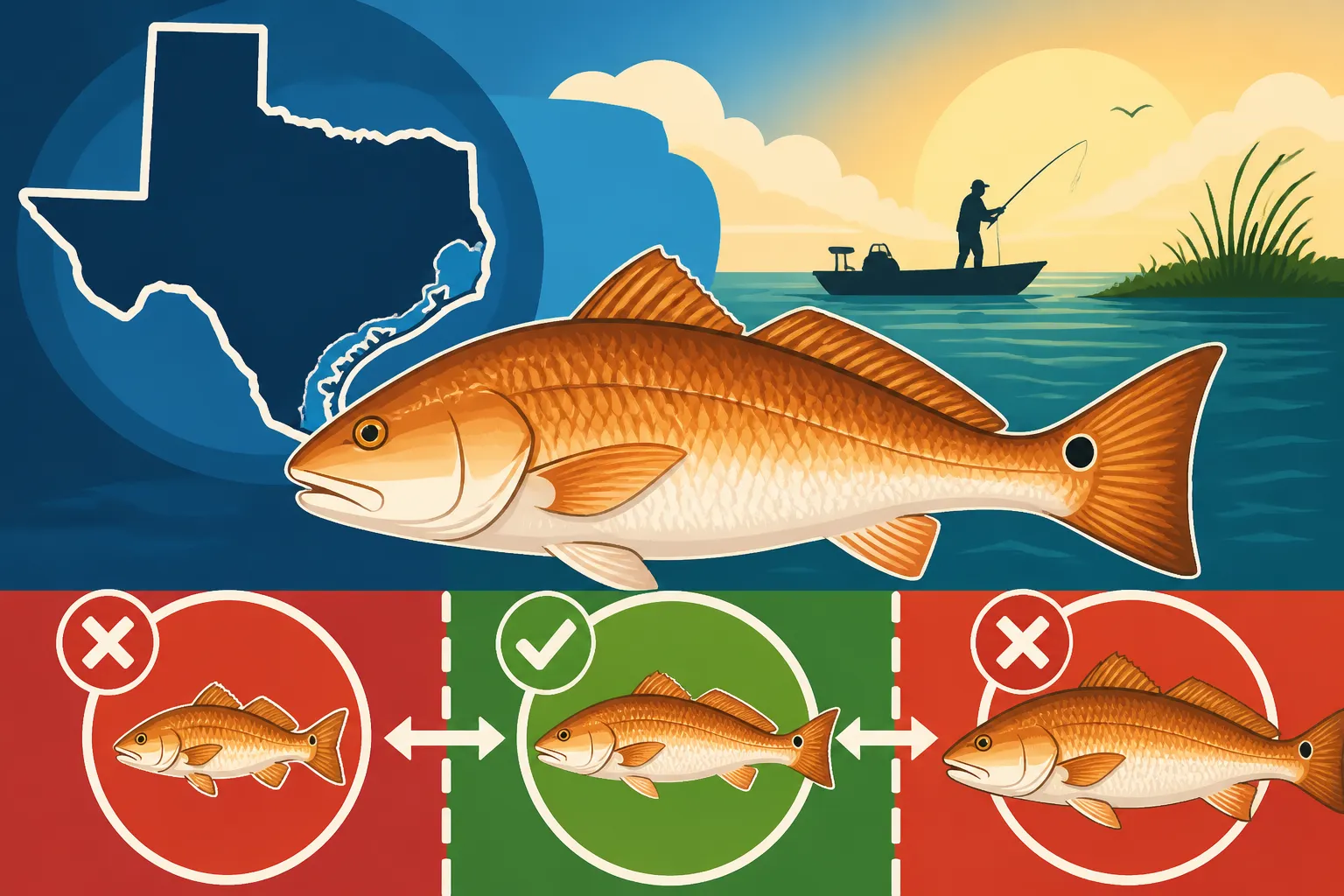
Alright, let's get down to the nitty-gritty: the actual numbers you need to remember when you're out on the water. The core regulation for red drum, commonly known as redfish, in Texas coastal waters is a 19-28 inch slot limit. This means that any redfish you keep must measure at least 19 inches long but no more than 28 inches long. Anything outside of this range must be immediately released.
In addition to the length limit, there's also a daily bag limit of 3 fish per person. So, on any given day, you can keep up to three redfish, provided each one falls within that 19-28 inch slot. These numbers are consistent across most Texas bays and the Gulf of Mexico waters. You can always check the full, most current regulations in the TPWD outdoor annual, or refer to our detailed guide on the specific Texas Redfish Size and Bag Limits. It’s good practice to double-check every year, as things can occasionally change based on scientific assessments.
Let's visualize this:
| Fish Length | Status | Action Required |
|---|---|---|
| Less than 19 inches | Undersized | Release Immediately |
| 19 to 28 inches | Slot Fish | Can be Kept (up to bag limit) |
| Greater than 28 inches | Oversized | Release Immediately |
This table clearly illustrates the "slot" you're aiming for. It's a common misconception that if a fish is just under or just over, it's okay. Absolutely not. The rules are precise for a reason.
The Importance of Accurate Measurement
Measuring your catch correctly is paramount. Game wardens take these regulations very seriously, and a slight mismeasurement can lead to a hefty fine. When measuring a redfish, or any fish in Texas, you need to measure it from the tip of its snout to the tip of its tail, with the tail compressed or squeezed together. Lay the fish flat on a measuring board or a reliable measuring tape. Don't eyeball it!
Imagine you catch a redfish that feels like it’s in the slot, but you don't use a proper measuring device. You get back to the dock, and a game warden checks your cooler. If that fish is 18.75 inches or 28.25 inches, it's considered an illegal catch, and you'll face penalties. This isn't just a minor infraction; it's taken as seriously as any other violation of Texas Saltwater Fishing Regulations. So, invest in a good, rigid measuring board. Many experienced anglers attach one to their cooler or boat for quick and accurate checks.
Practical Implications for Anglers: What to Do on the Water
Knowing the rules is one thing, but applying them in the heat of the moment, especially when you've got a feisty redfish on the line, is another. Let's walk through the scenarios you're likely to encounter.
Catching Undersized Redfish
It happens all the time: you cast out, feel a strong tug, and reel in a vibrant, small redfish, maybe 15 or 16 inches. These little guys are often called "rat reds," and while they put up a good fight, they are not legal to keep. The rule is simple: if it's under 19 inches, it must be immediately released back into the water where it was caught.
The key here is minimizing harm. Redfish are tough, but improper handling can still injure them. Wet your hands before touching the fish to protect its slime coat, which is its primary defense against infection. If the hook is easy to remove, use a pair of long-nosed pliers or a de-hooking tool to gently extract it. Try not to drag the fish across rough surfaces or bounce it around in your boat. Get it back in the water quickly and let it swim off naturally. Sometimes, if the fish is tired from the fight, gently hold it in the water, facing into the current, until it regains its strength and swims away on its own. Releasing healthy fish ensures they grow up to be slot-sized or even oversized breeders.
Catching Oversized Redfish
This is the dream for many anglers: hooking into a true "bull red" – a monster redfish over 28 inches! These powerful fish are an incredible thrill to catch, but just like their smaller counterparts, they are protected. Any redfish over 28 inches must also be immediately released.
While it's disappointing to let a trophy fish go, remember why: these are the prime breeders. They are the future of the redfish fishery. Treating these giants with respect during catch and release is even more critical. Their sheer size means more stress, so a quick fight, careful handling, and a gentle release are essential. Avoid lifting them vertically by the jaw or tail, which can damage their internal organs or spine. Instead, use a net or cradle them horizontally. If you want a photo, be quick, keep the fish in the water as much as possible, and support its full body weight. For specific tips on how to handle these big fish, our article on Texas Redfish Fishing Guide has some excellent advice.
The "Bonus Redfish Tag" Explained
Now, here's where it gets a little nuanced. Texas offers a special provision that allows anglers to keep one oversized redfish per license year. This is known as the "Bonus Redfish Tag." Every angler who purchases a valid Texas fishing license that includes a saltwater endorsement gets one of these tags.
Here's how it works:
- Eligibility: You must possess a valid Texas fishing license with the required Texas Saltwater Endorsement Explained.
- One Fish Limit: You can only use this tag for one oversized redfish (greater than 28 inches) per license year.
- Immediate Tagging: The moment you decide to keep an oversized redfish (and remember, it must be legally caught), you must immediately attach your bonus tag to the fish. The tag should be attached in a secure manner, usually through the gill plate or fin, and remain attached until the fish is processed for consumption.
- No Replacement: Once you've used your tag, it's gone for that license year, which runs from September 1st to August 31st of the following year. There are no replacements.
This bonus tag is a privilege, allowing anglers to keep a true trophy fish while still largely adhering to the conservation principles of the slot limit. However, it's absolutely crucial to remember that you only get one, so choose wisely!
Common Mistakes and How to Avoid Them
Even seasoned anglers can sometimes make mistakes, especially with complex regulations. Being aware of common pitfalls can save you a lot of trouble and ensure you’re always fishing legally and ethically.
Misidentifying Fish
Texas bays are home to several drum species that can look similar to redfish, especially when they're young. The most common mix-up is between a redfish and a black drum. Young black drum can have stripes, similar to a juvenile redfish, and mature ones are often caught in the same areas. However, black drum do not have the distinctive "spot" on their tail base that redfish almost always possess. They also have whiskers (barbels) under their chin, which redfish lack.
Knowing the subtle differences is vital because black drum have different size and bag limits. For instance, the general black drum slot is 14-30 inches, with a 5-fish daily bag limit. If you accidentally keep an undersized redfish thinking it's a legal black drum, you're in violation. Take a moment to properly identify your catch. Our guide on How to tell a redfish from a black drum can be a huge help here.
Ignoring the Rules
It might sound obvious, but some anglers, either through ignorance or intentional disregard, simply ignore the regulations. This is a risky game with serious consequences. Fishing without a proper license or keeping undersized/oversized fish is not just frowned upon; it carries significant fines and can even result in the confiscation of your gear or boat. Game wardens are constantly patrolling, and they are experts at spotting violations.
Staying informed isn't difficult. The TPWD Outdoor Annual is available online, as a free app, and in physical copies at most places where you buy licenses. Make it a habit to review the regulations before each season, especially if you're targeting specific species or fishing a new area. Remember, ignorance of the law is no excuse.
Improper Gear for Catch and Release
While not a direct violation, using improper gear can indirectly lead to problems by increasing fish mortality, which negatively impacts the fishery we all love. For example, using treble hooks with bait can often lead to gut-hooking fish, making a successful release nearly impossible, especially for those undersized or oversized reds you must release.
Consider switching to circle hooks when bait fishing. Circle hooks are designed to hook fish in the corner of the mouth, significantly reducing gut-hooking. This is particularly important when you're targeting species like redfish where catch and release is a frequent necessity. Investing in a good de-hooking tool is also a smart move, allowing you to quickly and safely remove hooks without excessive handling of the fish. These tools are readily available at most sporting goods stores or online retailers like Amazon. Even something as simple as a pair of long-nosed pliers can make a world of difference. You'll find a lot of useful information on essential gear in our comprehensive guide on Best Tackle for Texas Saltwater Wade Fishing.
By understanding the Texas redfish slot limit and practicing responsible angling, you're not just avoiding fines; you're actively contributing to the health and future of one of Texas's most cherished fisheries. Keep those measuring boards handy, respect the limits, and enjoy the incredible redfish opportunities our state has to offer!
Disclaimer
Please remember that fishing regulations can change. While every effort has been made to provide accurate and up-to-date information, it is always your responsibility to consult the current Texas Parks and Wildlife Department Outdoor Annual or website for the most official and recent regulations before you go fishing.