What is a sheepshead fish
If you've spent any time fishing the Texas coast, from the bustling jetties of Galveston to the quiet oyster reefs of Corpus Christi Bay, chances are you've seen or heard of the sheepshead. This often-underestimated saltwater fish is a true character of our inshore waters, known for its distinctive appearance and notoriously tricky bite. Many anglers find them frustratingly clever, but incredibly rewarding once you figure them out. This guide is here to shed some light on this fascinating creature, helping you understand its habits, identify it correctly, and ultimately, improve your chances of hooking one.
What Exactly is a Sheepshead Fish? The "Convict Fish" of Texas Waters
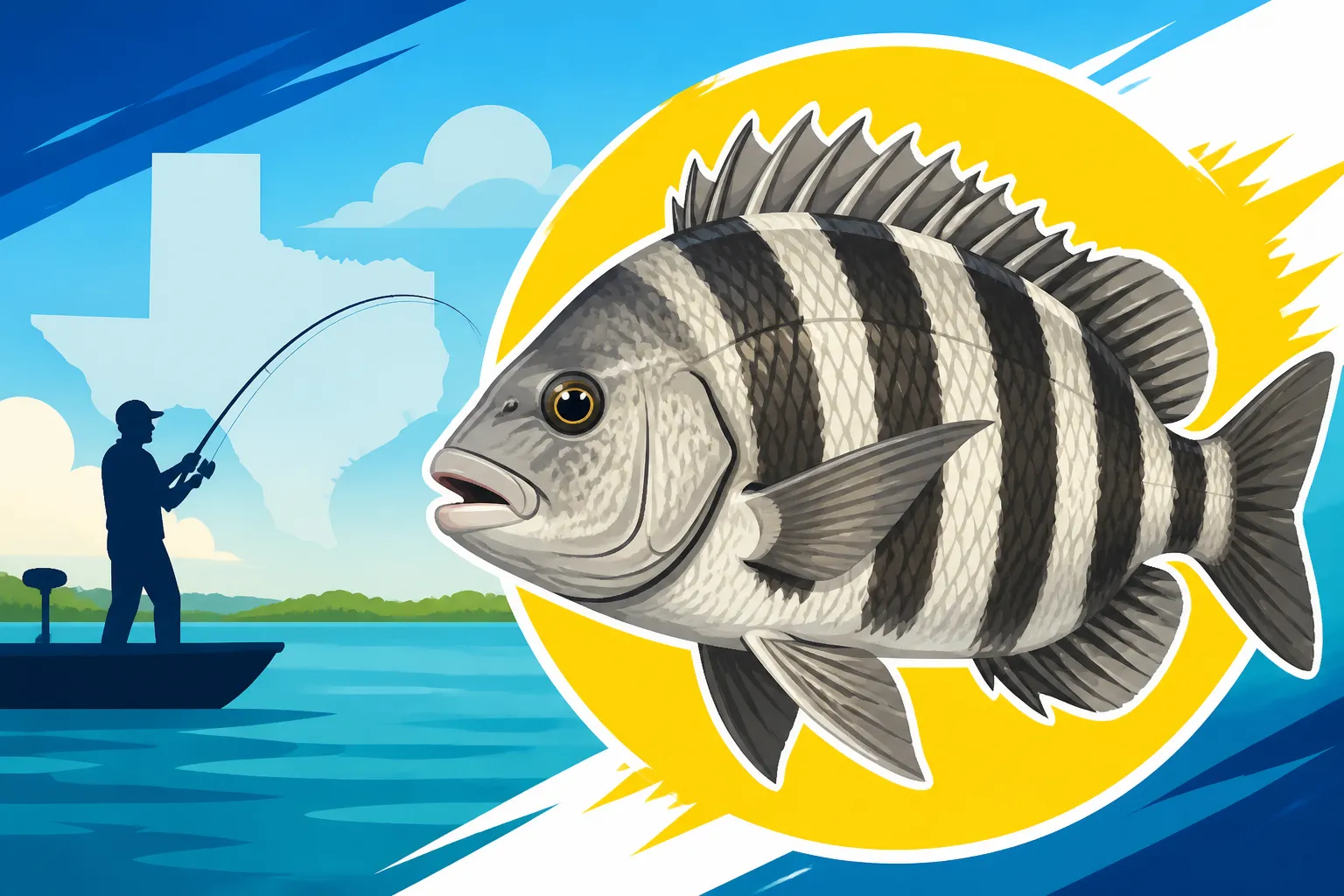
The sheepshead, or Archosargus probatocephalus, is one of those fish that once you see it, you don't easily forget it. Often affectionately, or perhaps sometimes exasperatedly, called the "convict fish" due to its vertical black and white stripes, it truly stands out from other species. But its appearance is more than just skin deep; its anatomy is perfectly adapted to its unique lifestyle.
Identifying the Sheepshead: Stripes and Those Peculiar Teeth
The most striking feature of the sheepshead is undoubtedly its teeth. Unlike most fish with pointed, conical teeth designed for gripping prey, the sheepshead boasts a set of incisors at the front of its mouth that look remarkably human-like. Behind these, it has strong molars and grinders. These aren't for smiling; they're for a very specific diet. Imagine trying to pry barnacles off a pilin' or crush the shells of shrimp and crabs – those teeth are a built-in multi-tool for exactly that.
Beyond the teeth, look for its oval, deep-bodied shape and those prominent vertical stripes. Typically, you'll see five to seven dark bars on a silvery-gray body. Young sheepshead tend to have more pronounced stripes, which might fade a bit in older, larger fish. They also have a spiny dorsal fin and powerful tail, allowing them to exert surprising strength when hooked. They don't have the pointed snout of a redfish or the sleek, torpedo-like body of a speckled trout. Their almost flat head and small mouth relative to their body size are key identifiers.
Common Misconceptions and Similar Species
It's easy to confuse a sheepshead with other striped fish, especially when you're just starting out or if the lighting isn't great. The black drum (Pogonias cromis) is a common culprit for mistaken identity. While black drum also have vertical bars when they're young, their bodies are generally darker, they grow much larger, and critically, they have barbels (whiskers) under their chin, which sheepshead lack entirely. Also, a black drum's teeth are more like cobblestones, designed for crushing, while the sheepshead's front incisors are distinct. Understanding these subtle differences is key to proper identification, especially since regulations can vary by species. You can learn more about similar species in a guide like Texas Black Drum Fishing Guide.
| Feature | Sheepshead | Juvenile Black Drum |
|---|---|---|
| Stripes | 5-7 distinct dark vertical bars | 4-5 less distinct dark vertical bars |
| Teeth | Prominent human-like incisors, molars | Cobblestone-like crushing plates, no incisors |
| Body Shape | Deep, oval, laterally compressed | More elongated, slightly less deep |
| Mouth | Small, terminal mouth | Downward-pointing mouth |
| Chin | Smooth chin | Possesses barbels (whiskers) under the chin |
| Max Size | Up to 20-25 lbs, common 2-8 lbs | Can exceed 100 lbs, common 5-30 lbs |
Where Do Sheepshead Live and What Do They Eat in Texas?
To successfully target sheepshead, you've got to think like one. These aren't open-water cruisers; they are structure-loving specialists. If you understand their preferred habitat and diet, you'll find them much easier to locate.
Favorite Hangouts: The Structural Specialists
Sheepshead are masters of foraging around hard structures in saltwater and brackish environments. Think about any submerged or partially submerged object in a bay, estuary, or nearshore Gulf waters, and you've likely found a sheepshead hotspot. They love the protection and abundant food found around bridge pilings, rock jetties, oyster reefs, dock posts, sunken barges, artificial reefs, and even oil rigs. These structures are magnets for the small invertebrates that make up the bulk of a sheepshead's diet.
In Texas, this means you'll find them along the entire Gulf Coast. Popular spots include the Galveston jetties, the jetties and piers around Port Aransas and Corpus Christi, and countless private docks and public fishing piers in all the major bay systems. They'll often school up in these areas, making it possible to catch several once you find a good spot. When water temperatures drop, they often move to deeper structures, but in warmer months, they can be found in surprisingly shallow waters, often right up against the pilings or rocks.
The Sheepshead Diet: Crushers of Crustaceans and Shellfish
Remember those unique teeth? They're perfectly designed for one thing: crushing. Sheepshead are primarily bottom feeders with a strong preference for crustaceans and mollusks. Their menu includes barnacles, oysters, mussels, clams, fiddler crabs, blue crabs, and shrimp. They use those incisors to nip and scrape barnacles and other growth directly off structures, then use their molars to pulverize the shells before swallowing the soft meat inside. This specialized diet means that certain baits are far more effective than others.
Because they're so focused on their natural food sources, presenting your bait in a way that mimics their natural feeding behavior is crucial. A whole shrimp or crab simply dropped to the bottom might not get their attention as much as a small piece presented subtly. This is where patience and technique truly come into play, as they are not typically aggressive chasers like a redfish or a trout.
Why Are Sheepshead So Unique to Catch? The Art of the "Sheepshead Shuffle"
Catching a sheepshead is an experience unlike almost any other in Texas saltwater fishing. They're not known for blistering runs, but for a powerful, stubborn fight, and a bite that can drive even experienced anglers crazy.
The Frustratingly Subtle Bite and The Strong Fight
The sheepshead bite is legendary for its subtlety. Many anglers describe it as a gentle "tap-tap" or a slight pressure on the line, sometimes feeling like nothing more than a curious nibble from a bait stealer. This is often because they are delicately picking at the bait, crushing it with those powerful jaws, rather than aggressively swallowing it whole. You have to be incredibly attentive to your line and rod tip, ready to set the hook at the first sign of anything unusual. Missing a sheepshead bite is almost a rite of passage for coastal anglers. It takes practice and a light touch to distinguish their bite from the current or other minor disturbances.
Once hooked, however, a sheepshead transforms from a nibbler into a bulldog. They don't make long, screaming runs, but they will pull with immense power, often trying to dive back into the structure they came from. This can make for an intense battle, especially if you're fishing near sharp oyster shells or barnacle-encrusted pilings, which can easily fray or cut your line. Their broad, flat bodies allow them to leverage the water, making them feel much heavier than they actually are. It's a true test of your tackle and your angling skills.
Effective Baits and Rigging for Sheepshead Success
Given their diet, natural baits are almost always king for sheepshead. Small pieces of fresh shrimp are universally popular and effective. Peel your shrimp and cut it into small, bite-sized pieces – about the size of your thumbnail. Other excellent baits include fiddler crabs, small blue crabs (cut into quarters), and oysters or mussels. You might even have luck with small pieces of clam. The key is to use fresh, natural offerings that they're used to finding in their habitat. You can find a wide array of hooks and fishing line suitable for these techniques on Amazon.
Rigging is also critical. A simple Carolina rig or a knocker rig works well, but the hook choice is paramount. You need a small, strong hook, usually a #1 or 1/0 circle hook or J-hook. The small size allows for easy concealment within the tiny bait pieces, while the strength is necessary to stand up to their crushing jaws and powerful fight. Many anglers prefer a circle hook because it's less likely to gut-hook the fish, making for easier release if you're not keeping them. When using a circle hook, resist the urge to "set" the hook like you would with a J-hook; instead, just slowly reel until the line tightens, and the hook will typically set itself in the corner of the fish's mouth. This finesse approach is vital for consistent hookups. For more on Texas saltwater techniques, check out Texas Saltwater Fishing Techniques.
Is Sheepshead Good to Eat? From "Convict" to Culinary Delight
After all that effort, the question naturally arises: is this tricky-to-catch fish worth the trouble on the dinner plate? For many Texas anglers, the answer is a resounding yes!
The Culinary Appeal: Taste and Texture
Sheepshead are highly regarded for their firm, white, flaky meat. Because their diet consists mostly of crustaceans and shellfish, their flesh often has a sweet, clean flavor that many compare favorably to snapper or even crab. It's not a "fishy" tasting fish at all, which makes it appealing to a wide range of palates, including those who might be hesitant about stronger-flavored seafood. The meat holds up well to various cooking methods, from pan-frying and baking to grilling.
You won't find the reddish, oily meat sometimes associated with certain other species. Instead, it’s a beautiful, pearly white, making it a versatile ingredient in many culinary preparations. Many anglers consider it one of the best-eating fish in Texas waters, a true hidden gem for those willing to put in the effort to catch them.
Cleaning and Preparing Sheepshead: A Bit of Work, A Lot of Reward
Now, here's where the "work" comes in. Cleaning a sheepshead isn't for the faint of heart, especially if you're new to it. Their scales are incredibly tough and firmly embedded, and their skin is thick. This makes scaling them a bit of a chore, often requiring a sturdy scaler or even the backside of a knife blade and some elbow grease. Some anglers opt to fillet them by first cutting through the skin behind the head and then peeling the skin off with pliers, rather than trying to scale them. Others simply cut the fillets off the frame, skin-on, and then skin the fillets themselves.
Once you get past the tough exterior, the filleting process is straightforward, yielding beautiful, boneless fillets. Common preparations include simply pan-frying with a light breading, baking with herbs and lemon, or grilling. Given their mild, sweet flavor, you don't need to overpower them with strong seasonings. A simple preparation often lets their natural taste shine through. Remember to always consult current Texas Saltwater Bag Limits by Species before keeping your catch.
Conservation and Regulations
As with any prized game fish in Texas, responsible angling and adherence to regulations are crucial for maintaining healthy sheepshead populations. The Texas Parks and Wildlife Department sets specific bag and length limits for sheepshead, which can change periodically. Before you head out, always double-check the most current regulations to ensure you're fishing legally and sustainably.
Understanding the sheepshead, from its unique teeth to its challenging bite and delicious meat, makes fishing for them all the more rewarding. It's a species that demands respect and offers a unique experience to any angler willing to take on the "convict fish." So next time you're on a pier or jetty, keep an eye out for those stripes, and remember that patience and precision are your best tools for landing one of these remarkable Texas residents. Don't forget, if you're planning a full day on the water, you'll need a valid Texas All-Water Fishing License Explained or a Texas Saltwater-Only License Cost to legally fish these coastal treasures.
Disclaimer
This article is for general informational purposes only and does not constitute professional advice. Laws, prices and regulations vary by location and change over time. Consult a qualified professional for guidance on your specific situation.