How to catch bass at night in summer
Fishing for bass in Texas during the summer can feel like an impossible task when the sun is blazing, temperatures are soaring, and the fish seem to have vanished into thin air. Many anglers get frustrated by the midday heat and the lethargic behavior of bass, leading to slow days on the water. But what if I told you that some of the best bass action actually happens when the sun goes down? This comprehensive guide will walk you through everything you need to know about catching bass at night in summer, transforming those frustrating daylight hours into exciting, productive nocturnal adventures on your favorite Texas lakes.
Why Night Fishing for Bass in Summer is a Game Changer
Let's face it, Texas summers are brutal. The heat isn't just uncomfortable for us; it significantly impacts bass behavior. When the sun is high and the water is warm, bass tend to become less active, seeking refuge in deeper, cooler waters or hiding in dense cover, making them incredibly difficult to entice. But as dusk settles and darkness takes over, a whole new world of opportunity opens up.
The Heat Factor and Bass Behavior
During the day, especially in the dog days of July and August, surface water temperatures in many Texas lakes can easily climb into the upper 80s or even low 90s. This isn't ideal for largemouth bass, which prefer cooler, more stable conditions. They become sluggish, their metabolism slows down, and they're far less inclined to chase a lure across open water. It’s like trying to run a marathon in a sauna – nobody wants to do it. So, they conserve energy, often hunkering down in the coolest, shadiest spots they can find. If you've ever spent a summer afternoon casting endlessly with no bites, you know exactly what I'm talking about. It can be incredibly disheartening, leaving you wondering if there are any bass left in the lake at all. This is precisely why understanding How to Fish in Hot Texas Summers is so crucial.
Reduced Pressure and Increased Activity
When the sun dips below the horizon, the entire lake changes. The air cools, and more importantly, the surface water temperatures begin to drop, even if only by a few degrees. This seemingly small change can trigger a significant shift in bass behavior. They feel more comfortable moving into shallower water, abandoning their deep-water retreats to hunt for food. The darkness also offers them a veil of invisibility, making them more confident predators. Suddenly, those lethargic bass that ignored your baits all day become aggressive, opportunistic hunters.
Another huge advantage of night fishing is the dramatic reduction in boat traffic and angling pressure. During the day, popular lakes can be buzzing with recreational boaters, jet skis, and other anglers, all of which can spook fish. At night, the lake becomes a much quieter, more serene place. This reduced disturbance allows bass to feed more freely and venture into areas they might avoid during daylight hours. It’s a chance to experience your favorite fishing spots in a completely different, often more productive, way. It’s a bit like having the whole place to yourself, a rare luxury on many popular Texas fisheries.
Essential Gear for Texas Night Bass Fishing
Stepping out onto the lake after dark requires a bit more preparation than your typical daylight excursion. You'll need specialized gear not just for catching fish, but for navigation and safety. Trust me, being caught unprepared in the dark is no fun, and it can even be dangerous.
Lighting Up Your Night
The most obvious, yet often underestimated, piece of equipment for night fishing is proper lighting. This isn't just about seeing where you're going; it's about seeing what you're doing without blinding yourself or spooking the fish.
- Headlamps: A good quality headlamp is absolutely non-negotiable. Look for one with multiple settings, including a red light option. The red light preserves your night vision, is less intrusive to the fish, and won't attract as many bugs as a bright white light. You'll use this for tying knots, rigging baits, and moving around the boat. Many reliable options are available on platforms like Amazon, offering different brightness levels and battery lives.
- Boat Navigation Lights: If you're fishing from a boat, ensure your navigation lights are fully functional and properly displayed. This is a legal requirement and crucial for avoiding collisions with other vessels, especially if there are any other brave night owls out there. Check your state's specific regulations for exact requirements, but generally, you'll need red and green bow lights and an all-around white stern light.
- Area Lighting (Optional): Some anglers like to use a small, dim, ambient light in their boat to make finding gear easier. Battery-powered LED strips or lanterns with a low setting can work. Again, consider a red or green light for minimal disturbance. Avoid bright floodlights unless absolutely necessary, as they can ruin your night vision and spook fish.
Tackle Choices for Low Light
While you might use many of your standard bass fishing setups, a few considerations for night fishing gear can make a big difference. Think about what will give you the best feel and visibility in the dark.
- Rods and Reels: Sensitivity is key when you can't rely on sight to detect subtle bites. Opt for sensitive graphite rods. Many anglers prefer longer rods (7' to 7'6") for increased casting distance and leverage. Baitcasting reels are often favored for their power and ability to handle heavier lines and lures, but a good spinning setup can work for lighter presentations. The specific type of rod and reel you choose might depend on whether you’re fishing deep structure or throwing topwater. For comprehensive information on setups, check out Best Fishing Rods for Texas Anglers and Best Fishing Reels for Texas Anglers.
- Fishing Line: Heavier line can be advantageous at night. First, if you hook into a big bass, you'll want the extra strength, especially if you can't see obstructions as clearly. Second, heavier mono or fluorocarbon lines can offer a bit more stretch, which can be forgiving when a fish strikes aggressively in the dark. Braided line, with its zero stretch, provides excellent sensitivity for detecting those subtle bites, but it can be harder to tie knots in the dark without practice.
- Lures: This is where night fishing truly shines, as bass rely heavily on their lateral line and sense of smell, not just sight.
- Dark Colors: Black, blue, and junebug are classic night colors. They create a strong silhouette against the moonlit sky or the glowing surface of the water, making them easier for bass to detect.
- Noisy Lures: Topwater lures with propellers, rattles, or plopping tails are fantastic. Whopper Ploppers, Jitterbugs, and buzzbaits create irresistible surface commotion.
- Scented Baits: Soft plastics infused with scent, or adding scent attractants to your lures, can give bass another reason to strike, even if they can't see the bait perfectly.
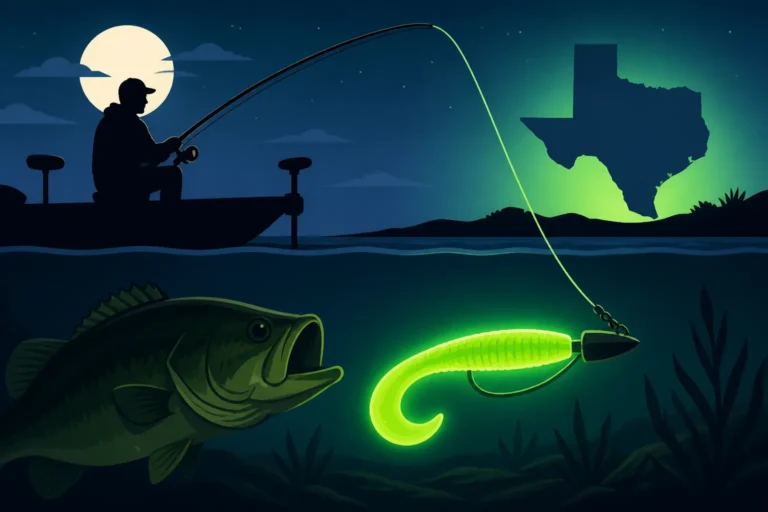
- Glow-in-the-Dark/UV Lures (Optional): Some anglers swear by glow-in-the-dark or UV-enhanced lures, believing they offer an added visual cue in extremely dark conditions. While not always necessary, they can be an interesting experiment. For more details, explore Best Lures for Night Bass Fishing.
Boat and Personal Safety Equipment
Safety is paramount when you're on the water after dark. Don't cut corners here.
- Life Jackets: Ensure everyone on board has a properly fitting life jacket and wears it, especially when underway. Accidents happen quickly, and the dark significantly reduces visibility for rescue efforts. Texas Life Jacket Requirements for Boats outlines important safety rules.
- First Aid Kit: A well-stocked first aid kit is essential for any fishing trip, but even more so at night when assistance might be harder to reach quickly. Include bandages, antiseptic wipes, pain relievers, and any personal medications.
- Whistle/Air Horn: A whistle or air horn can be used to signal other boaters or alert someone to your presence in an emergency.
- Anchor: A reliable anchor is crucial for holding your position, especially if you're fishing a specific piece of structure or need to stop suddenly.
- Communication Device: A fully charged cell phone (in a waterproof bag) or a marine radio is vital for emergencies. Ensure someone on shore knows your float plan – where you're going and when you expect to return.
- Spare Batteries: For your headlamp, boat lights, and any other electronics. You do not want to be stuck in the dark with dead batteries.
- Bug Spray: Trust me, mosquitoes and other biting insects come out in full force at night, especially near the water. Don't forget it! You can find effective repellents on Amazon.
Top Techniques and Lures for Night Bass
Now that you're geared up, let's talk about how to actually catch those nocturnal bass. The approach often needs to be slower and more deliberate than during the day, focusing on sounds, vibrations, and proximity.
Slow and Steady Presentations
Bass in the dark are often less pressured and more confident, but they're still not always going to chase down a fast-moving bait. Think about what makes sense for a predator relying more on feel than sight.
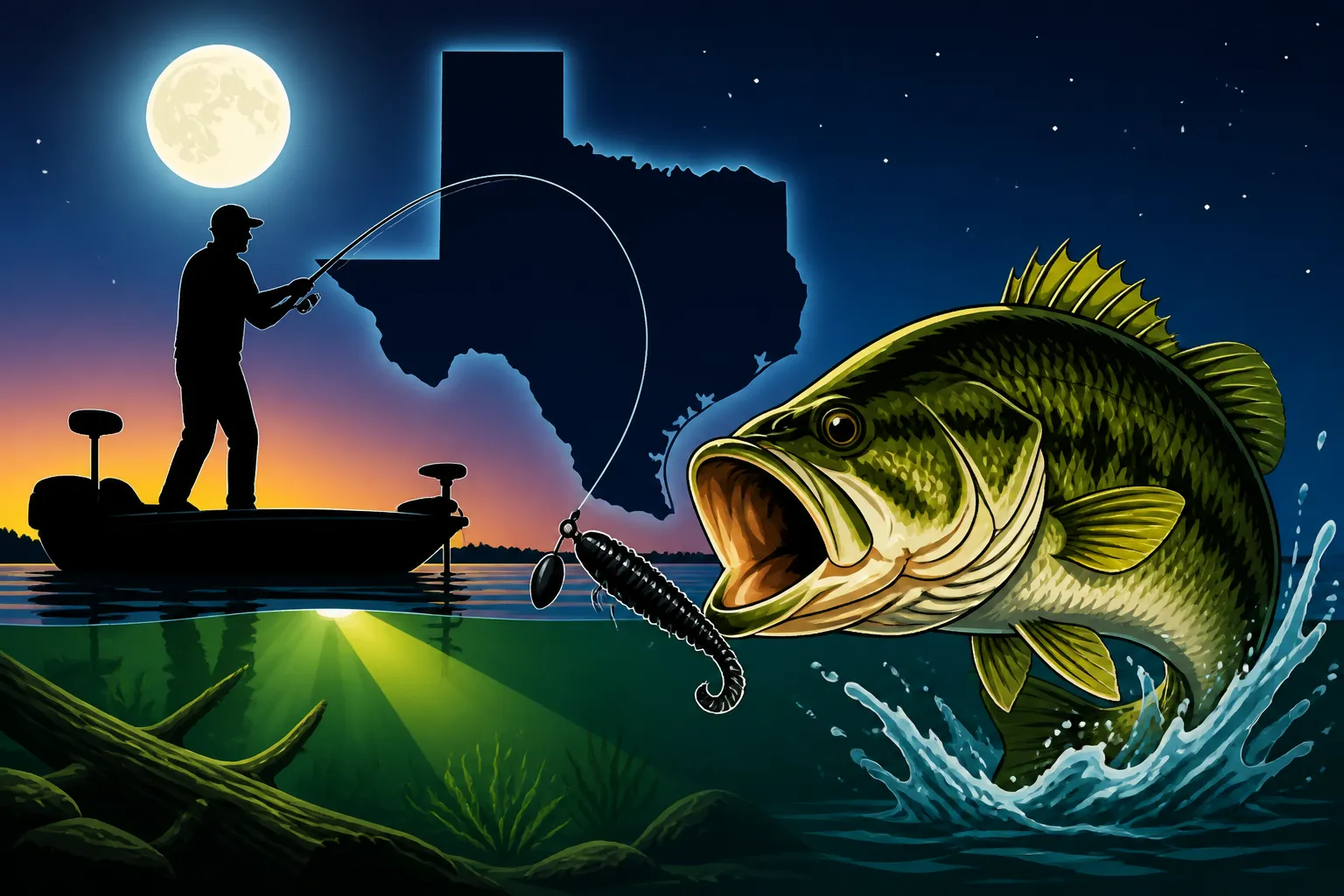
- Worms and Jigs: Large plastic worms (10-12 inches) rigged Texas-style or on a weighted hook are superb night baits. Black, blue, and plum are excellent choices. Work them slowly along the bottom, feeling for subtle taps or the sensation of weightlessness. Jigs, especially those with bulky skirts and a trailer, are also highly effective. Black and blue jigs are hard to beat, pitched into cover or slowly dragged along points and ledges. The slow fall and subtle action of these baits can be irresistible to bass lurking in the dark.
- Spinnerbaits: A slow-rolled spinnerbait with a single large thumping blade (like a Colorado blade) can create a lot of vibration, calling bass in from a distance. Again, dark colors like black or blue with a touch of silver or gold flash are good. Focus on keeping the bait just above the bottom or working it through sparse cover. The thumping vibration is something a bass can easily hone in on, even in total darkness.
- Crankbaits (Deep Diving): While topwater gets a lot of love, don't overlook deep-diving crankbaits, especially if you know bass are holding on deep structure. Slow-rolling these baits, letting them occasionally tick the bottom or brush, can trigger reaction strikes. Choose ones with rattles for added noise. This is where understanding How to fish deep drop-offs for bass really comes into play.
Noisy Topwater Action
If there's one technique synonymous with night bass fishing, it's topwater. The explosive strikes in the dark are absolutely heart-stopping and addictive.
- Buzzbaits: Cast a black buzzbait parallel to shorelines, over submerged grass beds, or along docks and logs. The squeaking and gurgling sound it makes on the surface is a dinner bell for hungry bass. Vary your retrieve speed until you find what they prefer, but generally, a medium-slow retrieve is best. The thrill of hearing that "ker-SPLASH!" in the darkness is unparalleled.
- Whopper Ploppers and Jitterbugs: These lures create massive surface disturbance. The Whopper Plopper, with its rotating tail, makes a distinct gurgling sound that bass can't ignore. The Jitterbug, a classic, wobbles and gurgles enticingly. Work them with a slow, steady retrieve, occasionally pausing them near cover. Again, dark colors are king here. Sometimes, the bigger the noise, the better.
- Frogs: If you're fishing over dense lily pads or matted vegetation, a weedless frog lure can be dynamite. Work it slowly across the mats, pausing it in open pockets. Bass will often blow up on it with incredible force, pulling it straight through the thickest cover. It takes patience, but the rewards are huge. For more insight into topwater fishing, you might enjoy Best conditions for topwater fishing.
Deep Water and Structure Approaches
Even at night, bass will relate to structure. While they might move shallower, they often don't stray far from their daytime haunts.
- Points and Ledges: These are classic bass holding areas day or night. As the water cools, bass will often move up onto shallower parts of points and ledges to feed, but still have quick access to deeper water if they feel threatened. Cast your worms, jigs, or slow-rolled spinnerbaits across these features. Your fish finder, even in the dark, can help you identify these transition areas, especially those near brush piles or rock formations. Learning How to read lake contour maps for bass fishing can really pay off here.
- Submerged Humps and Islands: Just like points, submerged humps and islands offer bass an ambush point. Fish the tops and the edges, paying close attention to any irregularities. A Carolina rig with a large plastic lizard or worm can be particularly effective here, allowing you to cover ground slowly and thoroughly feel the bottom.
- Docks and Piers: Lights from docks and piers often attract baitfish, which in turn attracts bass. Cast parallel to the docks, working your buzzbaits or soft plastics under and around the pilings. Many trophy bass are caught around these illuminated structures at night. For tips on fishing specific structures, check out How to Catch Bass Around Boat Docks.
Safety Considerations for Night Fishing
I can't stress this enough: safety must be your absolute top priority when fishing after dark. The risks are significantly higher than during the day, and being prepared can literally save your life.
Visibility and Navigation
Reduced visibility is the most obvious challenge of night fishing. You simply can't see what you can see during the day, and reflections on the water can be incredibly deceptive.
- Know Your Lake: Never venture onto a new or unfamiliar lake at night. Stick to waters you know like the back of your hand, where you're intimately familiar with submerged hazards, shallow spots, and navigation routes. Even on familiar waters, approach everything with extreme caution.
- Go Slow: When running your boat, always proceed at a much slower speed than you would during the day. This gives you more time to react to unexpected obstacles like floating debris, unlit boats, or even wildlife. It's not a race; it's about getting there and back safely.
- GPS and Depth Finder: Your boat's GPS and depth finder are invaluable tools at night. Use your GPS to mark waypoints for known hazards or safe routes, and constantly monitor your depth finder to avoid running aground. While Amazon offers a wide selection of marine electronics, ensure you get a reliable unit that you know how to operate effectively in low light. Learning How to use a fish finder for bass fishing is essential here.
- Buddy System: If possible, always fish with a buddy at night. Two sets of eyes are better than one, and in an emergency, having another person there can be critical.
Wildlife Encounters
Texas is home to a lot of amazing wildlife, and much of it becomes more active at night. While most encounters are harmless, it's wise to be aware.
- Alligators: In many Texas lakes, particularly in East and Southeast Texas, alligators are present. They are generally shy, but seeing their glowing red eyes near the surface at night can be unnerving. Give them a wide berth, and never attempt to feed or approach them. For more about this fascinating creature, see Texas Alligator Gar Fishing Guide.
- Snakes: Water snakes are common around Texas lakes and rivers. Be mindful when reaching into brush or handling fish, as snakes can be startled and react defensively.
- Insects: We already talked about mosquitoes, but be prepared for other biting insects. Cover up with long sleeves and pants, and use repellents to avoid becoming a midnight snack yourself.
Weather Awareness
Even though it's summer, weather can still be unpredictable, and a sudden storm at night can be particularly dangerous.
- Check the Forecast: Always check the weather forecast thoroughly before heading out for a night trip. Look not just for rain, but for wind warnings and potential thunderstorms. A strong gust of wind can make boat control difficult, and lightning is exponentially more dangerous on open water.
- Portable Weather Radio: Consider bringing a portable weather radio to stay updated on any sudden changes in conditions, especially if your cell service is spotty.
- Dress in Layers: Even if it's hot during the day, nights can sometimes get surprisingly cool, especially if there's a breeze. Bring a light jacket or sweatshirt. Staying comfortable is part of staying safe and focused.
Night fishing for bass in Texas during the summer is a truly unique and often incredibly rewarding experience. It demands respect for the darkness and preparation for its challenges, but the rewards—cooler temperatures, fewer crowds, and aggressive fish—make it all worthwhile. So, next time the summer sun sends you indoors, consider waiting for the moon to rise. You might just find your new favorite way to chase those Texas largemouth.
| Lure Type | Best Conditions / Application | Key Characteristics | Recommended Colors (Night) | Retrieve Style |
|---|---|---|---|---|
| Large Plastic Worm | Slow presentation, bottom fishing, around structure | Soft, natural feel, adds scent | Black, Blue, Junebug | Slow drag, hop, pause |
| Jig (Football/Skirt) | Bottom fishing, pitching into cover, deep water | Bulk, vibration (skirt), weedless (some) | Black & Blue, Black | Hop, drag, swim, pitch |
| Buzzbait | Surface disturbance, shallow cover, open water | Loud squeak/gurgle, creates wake | Black, Dark Green | Medium-slow, steady retrieve |
| Whopper Plopper | Major surface commotion, targeting active fish | Rotating tail, plopping sound | Black, Bone, Dark Gill | Slow to medium steady retrieve |
| Deep Diving Crankbait | Deep ledges, humps, offshore structure | Rattles, dive depth, deflection | Dark Red, Bluegill, Black | Slow roll, bottom contact, varied speed |
| Spinnerbait | Covering water, calling fish, around sparse cover | Vibration (blade), flash, subtle action | Black, Blue, Chartreuse | Slow roll, stop-and-go |
Disclaimer
This article is for general informational purposes only and does not constitute professional advice. Laws, prices and regulations vary by location and change over time. Consult a qualified professional for guidance on your specific situation.