How to Catch Bass Around Boat Docks
Many Texas anglers find themselves frustrated when they see a beautiful stretch of shoreline dotted with boat docks, knowing bass should be there, but they just can't seem to get a bite. It's a common dilemma – docks offer incredible cover, shade, and ambush points, yet extracting those hidden lunkers requires a specialized approach. This comprehensive guide will break down the secrets to successfully targeting bass around boat docks, helping you unlock their potential and put more fish in your boat or on the bank.
The Irresistible Allure of Boat Docks for Texas Bass
Boat docks, whether simple private structures or expansive marina systems, are much more than just places to tie up a boat; they're bustling aquatic neighborhoods for bass. Understanding why bass are drawn to these man-made structures is the first step in learning how to effectively catch them.
Why Docks Are Prime Bass Real Estate
Think about what a bass needs: food, cover, and comfortable water conditions. Docks provide all three in spades. For starters, the pilings and crossbeams that support a dock create a complex underwater jungle. This structure offers countless hiding spots for bass to ambush baitfish, crawfish, and other unsuspecting prey. It’s like a built-in buffet line and a fortress all rolled into one. Furthermore, docks often accumulate debris like fallen leaves, branches, or discarded fishing lines, creating even more habitat and attracting smaller organisms that become part of the food chain. This makes them a consistent feeding ground, regardless of the time of day. If you're looking for Best Places to Fish in Texas, many of them feature extensive dock systems.
Beyond just physical cover, docks act as a significant thermoregulation zone. The shaded areas under and around docks provide cooler water temperatures during the scorching Texas summers and sometimes slightly warmer water during cold fronts. This thermal refuge is incredibly important for bass, influencing their comfort and activity levels. In colder months, the concrete or wooden pilings can absorb solar radiation, releasing subtle warmth into the water, making these spots attractive for lethargic bass. Conversely, in the intense heat of July, a deep, shady dock can be an absolute oasis, concentrating bass that would otherwise be spread out across open water.
Understanding the Cover and Shade Advantage
The shade cast by boat docks is arguably their most critical feature, especially here in Texas where the sun can be brutal. Bass, being sight predators, use shade to their advantage in two main ways: camouflage and comfort. When a bass sits in the shadow line, it's virtually invisible to prey looking down from above, and it can launch an attack with surprising stealth. This predatory advantage is a huge draw. But it's not just about hunting; it's about survival and energy conservation.
During bright, sunny days, bass will seek out the deepest, darkest pockets of shade a dock can offer. This reduces glare, protects their eyes, and helps them avoid overheating. You'll often find them tucked right up against the pilings, under the walkways, or near boat lifts where the shadows are densest. This means that to catch them, you need to get your bait into those hard-to-reach dark spots. Many anglers make the mistake of fishing only the edges of the shade, missing the bass that are buried deep within it. Learning how to catch bass in hot Texas summers often involves targeting these shaded areas.
Deciphering Different Dock Structures and Their Bass Potential
Not all docks are created equal when it comes to holding bass. The type of dock, its construction, and what's connected to it can all influence how bass use the structure and, consequently, how you should fish it. Recognizing these nuances will significantly improve your success rate.
Floating Docks vs. Stationary Piers
Texas lakes and rivers are home to both floating docks and stationary piers, and each presents a unique challenge and opportunity.
Floating docks, common in lakes with fluctuating water levels like many Texas reservoirs, are typically anchored to the bottom but rise and fall with the water. The key characteristic here is the lack of fixed pilings extending into the substrate, at least not directly under the main structure. Instead, they often have cables or chains extending down, which can also provide excellent, albeit less visible, cover for bass. The biggest advantage of floating docks for bass is their consistent shade regardless of water depth. The entire underside of the dock is dark, creating a vast shaded ceiling that fish love. This means you can often find bass suspended directly underneath them, especially during the brighter parts of the day. When fishing floating docks, focus on the entire underside and look for any submerged objects tied to the dock, such as old tires used as bumpers, or brush piles intentionally sunk by anglers.
Stationary piers, on the other hand, are built on pilings driven into the lake bed. These pilings are gold mines for bass. Each piling acts as a vertical piece of structure, often attracting algae and barnacles, which in turn draw baitfish, creating a miniature ecosystem. Bass will often hug these pilings tightly, using them as ambush points. The shade pattern around stationary piers changes with the sun's position, so understanding the time of day is crucial. Early morning or late afternoon, when the sun is lower, might cast long shadows, but midday means the deepest shade is directly under the pier. These docks are also more prone to having brush piles or old tires sunk directly at their base, providing even more intricate cover. When trying to learn How to Fish for Bass in Texas, understanding the difference between these dock types is fundamental.
The Importance of Associated Structures Pilings, Ladders, Cables
Beyond the main dock structure itself, it's the smaller, often overlooked details that can make a huge difference. Think of these as the "micro-structures" that concentrate bass.
Pilings are perhaps the most obvious. Whether wood, concrete, or metal, these vertical elements are natural magnets. Bass will orient themselves on the shady side of a piling, facing outwards to watch for prey. They often use multiple pilings as a network, moving between them. Your presentation needs to be precise, hitting the piling itself or landing just beyond it and drawing your bait past it. This is where a good Best Fishing Rods for Texas Anglers setup for accuracy really pays off.
Ladders and steps descending into the water are also prime real estate. They offer vertical cover from top to bottom and are often overlooked by other anglers. Bass might hang out on one of the steps, especially if there's a slight drop-off nearby, or they might suspend underneath the ladder itself. Any horizontal crossbeams, supports, or even boat lift mechanisms also create fantastic ambush points. These areas typically offer denser shade and more complex cover than the open underside of a dock. Bass use these intricate patterns to their advantage, making them challenging but rewarding targets.
Don't forget the cables, ropes, or chains that anchor docks or boat lifts. While seemingly minor, these can be key. Bass will often position themselves along these submerged lines, particularly if they lead to deeper water or intersect with other cover. They act like underwater highways or fence lines that bass patrol. A slow-moving bait dragged along one of these submerged lines can often trigger a strike from a bass that's been using it as a travel corridor or ambush point.
Marinas and Larger Dock Systems
Marinas are essentially super-sized dock systems, presenting both greater opportunities and greater challenges. The sheer number of boats, docks, and associated structures means an abundance of cover, but also more angling pressure and potential distractions.
In a marina, you'll find a labyrinth of docks, often packed with boats. Each boat tied to a dock creates its own micro-environment of shade and cover. Many boats have fenders hanging down, ladders, or even trash that's fallen overboard, all adding to the complexity. Bass in marinas are often more accustomed to boat traffic and noise, meaning stealth is still important, but sometimes they're less spooky than bass in more isolated areas. The key in marinas is to break down the overwhelming amount of structure into manageable sections. Don't try to fish every dock; instead, look for patterns. Are bass holding better on the main docks, or the smaller side piers? Are certain types of boats (larger yachts vs. smaller fishing boats) creating better shade?
One crucial element in marinas is the presence of deeper water, especially in the main channels or at the ends of the piers. Bass might hold in deeper water during the day and move into the shallower, more covered areas of the docks during lower light conditions to feed. Utilizing a fish finder to scout the deeper sections around marinas can tell you a lot about the bass's preferred depth. Also, pay attention to current. In some marinas, there might be subtle current flows that concentrate baitfish and, in turn, bass. Think about where natural funnel points might be or where currents might push debris and food under docks. Targeting these high-traffic areas can be incredibly productive.
Essential Gear for Successful Dock Fishing in Texas
Fishing docks effectively requires a specific setup that prioritizes accuracy, stealth, and the ability to extract bass from heavy cover. Having the right tools for the job makes all the difference between frustration and success.
Rods, Reels, and Line for Precision Casting
When you're threading a lure into a tiny opening under a dock or skipping it across the surface to get it way back, precision is paramount. This isn't the time for a big, clumsy casting setup.
For most dock fishing, a medium-heavy to heavy power casting rod, around 7 to 7.6 feet in length, is ideal. The extra length helps with longer skips and pitches, while the backbone is necessary to pull bass out of heavy cover before they can wrap you around a piling. A fast or extra-fast action tip allows for accurate casting and quick hook sets. For finesse applications around docks, a medium-light to medium power spinning rod, 6.6 to 7 feet, is a better choice, especially when fishing lighter baits or in tighter spots where a spinning reel's easier casting can be an advantage. Many anglers find the Best Fishing Rods for Texas Anglers often include these versatile options.
Pair your casting rod with a high-quality baitcasting reel with a fast gear ratio (7.1:1 or higher) to quickly take up slack and keep fish from burying themselves. For spinning setups, a 2500-3000 series reel with a smooth drag is perfect. Line choice is critical: 15-20 lb fluorocarbon is an excellent all-around choice for its low visibility, sensitivity, and abrasion resistance. If you're fishing extremely heavy cover or targeting very large bass, consider bumping up to 20-30 lb braided line with a short (12-18 inch) fluorocarbon leader. Braid provides superior strength and abrasion resistance, while the fluorocarbon leader maintains stealth in clearer water. For lighter finesse techniques on spinning gear, 8-12 lb fluorocarbon or a braided main line with a 6-10 lb fluorocarbon leader will work well. The strength of your line often dictates how aggressively you can fish and how quickly you can land a fish once hooked, which is crucial around docks where an instant pull-away is often necessary to prevent snags.
Top Baits and Lures for Dock Dwelling Bass
The choice of bait for dock fishing usually comes down to versatility, weedlessness, and the ability to get into tight spaces.
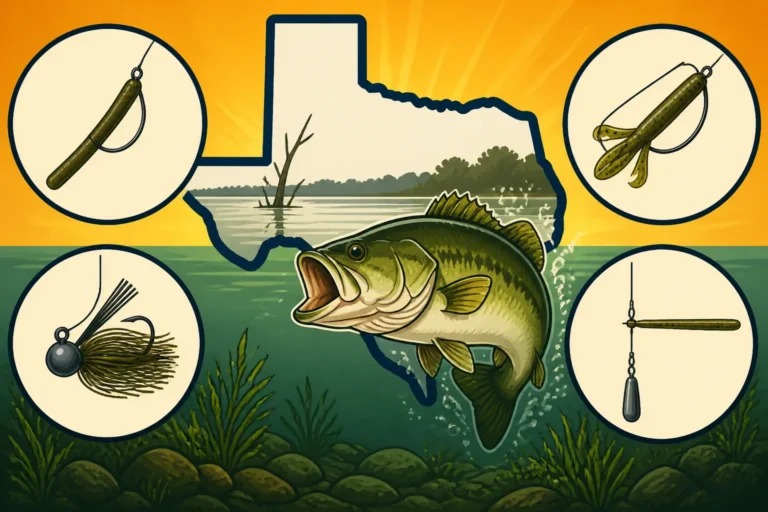
Soft plastics are kings for dock fishing. The classic Texas Rig is a go-to, rigged with creature baits, worms, or flukes. The weedless nature of a Texas rig means you can drag it through cluttered pilings and under docks with minimal snagging. Flipping and pitching jigs are also incredibly effective. They mimic crawfish, a primary forage, and their compact profile allows them to penetrate dense cover. Combine them with a creature bait trailer for added bulk and action. You can find a huge selection of Best Soft Plastics for Texas Bass Fishing and jigs on sites like Amazon, making it easy to experiment.
For topwater action around docks, especially in low light conditions or when bass are actively feeding, consider small poppers, walking baits, or hollow-body frogs. These baits can be skipped under docks or worked slowly along the edges of shade lines, often triggering explosive strikes. When bass are suspending or in deeper parts of the docks, consider small crankbaits (square bills for shallower docks, deeper divers for deeper marina areas), bladed jigs, or even drop shot rigs for a more vertical presentation. The key is to match the bait to the depth and the bass's activity level.
Table: Popular Dock Fishing Lures & Best Uses
| Lure Type | Best Use Case | Ideal Depth | Key Advantages |
|---|---|---|---|
| Texas Rig | Skipping under docks, pitching to pilings | Shallow to Mid | Weedless, versatile, subtle presentation |
| Flipping/Pitching Jig | Crawling bottom near pilings, tight cover | Shallow to Deep | Mimics crawfish, good bulk, strong hook |
| Skipping Jig | Designed for long, low skips under docks | Shallow | Exceptional reach into tight spaces |
| Bladed Jig (Chatterbait) | Along dock edges, open pockets, retrieves through sparse cover | Shallow to Mid | Vibration, flash, strong reaction strike |
| Shallow Crankbait | Parallel to dock edges, around outside corners | Shallow | Covers water quickly, deflection triggers strikes |
| Topwater (Frog, Popper) | Low light, dense overhead cover, skipping under docks | Surface | Exciting strikes, good for heavy surface cover |
| Drop Shot Rig | Suspended bass, vertical presentations near pilings | Mid to Deep | Finesse, precise depth control, subtle action |
Must-Have Accessories for Dock Hopping
Beyond your rod, reel, and lures, a few key accessories will make your dock fishing experience much smoother and more productive.
First up, quality polarized sunglasses are non-negotiable. They cut glare, allowing you to see submerged structures, subtle changes in water clarity, and even cruising bass in the shallows. This visual edge is crucial for making accurate casts and identifying prime targets. Many great options are available, and you can often find highly-rated ones on Amazon. Next, a good pair of line cutters or sharp scissors is essential for retying frequently, especially if you're getting snagged often. You'll want to check your line for nicks and abrasions after every few casts, particularly when fishing around rough pilings.
Finally, consider a de-hooking tool or long-nose pliers. Bass hooked in the mouth with heavy tackle are usually easy to unhook, but sometimes they swallow a jig deep or get hooked in an awkward spot, and those long pliers can be a lifesaver for both you and the fish. A small tackle box or bag that's easy to carry as you move from dock to dock is also incredibly helpful, allowing you to keep your essential baits and tools organized and accessible without lugging a huge amount of gear.
Mastering Techniques to Entice Bass from Dock Cover
Getting your bait to the bass is only half the battle; the other half is making them want to eat it. This section delves into the specific techniques that consistently produce fish from under and around docks.
The Art of Skipping and Pitching Under Docks
Skipping and pitching are the two foundational techniques for dock fishing, allowing you to reach bass that other anglers simply can't.
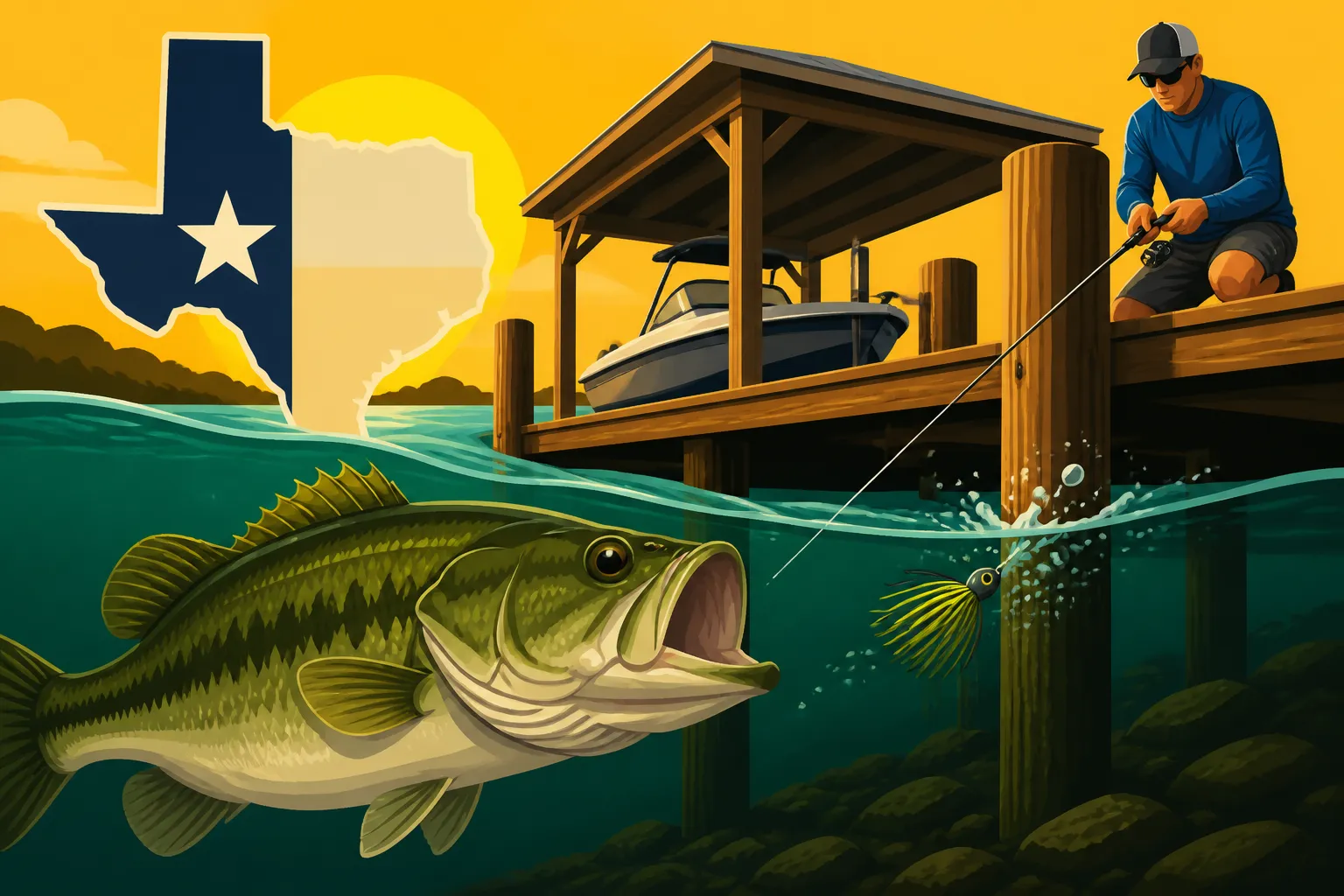
Skipping is often likened to skipping a stone across water. It involves a low, sidearm cast that makes your lure bounce across the surface of the water, propelling it far back into the darkest recesses under docks. This technique is incredibly effective for getting baits into spots that are otherwise inaccessible due to low overhead clearance. It takes practice, but the payoff is huge. To skip effectively, use a bait that has a flat bottom or a streamlined profile, like a soft plastic fluke, a senko, a small jig, or even a hollow-body frog. The key is to generate enough speed with your cast while keeping the lure close to the water's surface to maximize the number of skips. The angle of your rod tip and the power of your wrist flick are critical. Your bait needs to stay parallel to the water for optimal skipping. Once your bait is under the dock, let it sink on a semi-slack line, watching for any "thump" or line movement that indicates a bite. Bass often hit a bait as it falls, especially if it lands near them after a long skip. Learning How to skip a bait under docks is a game-changer.
Pitching is a quieter, more controlled technique used for dropping baits into specific targets around docks, such as the shady side of a piling, a small opening between boats, or a brush pile. It's a short-distance cast that minimizes splash and disturbance. You swing the bait like a pendulum, using your thumb on the spool to control the distance and accuracy. The goal is a soft, precise entry into the water, presenting your bait naturally. Pitching is excellent for presenting Texas-rigged plastics, jigs, or even weightless worms right into tight cover. It allows for a more subtle approach than a full overhead cast, which can spook wary bass. When fishing a series of pilings, pitch your bait to the far side of one, let it sink, then slowly work it back along the piling. Then repeat for the next piling. This methodical approach ensures you're thoroughly covering the structure.
Vertical Jigging and Finesse Tactics
Sometimes, bass around docks are holding tight to vertical structure or are simply not aggressive enough for a fast-moving bait. This is when vertical jigging and finesse tactics shine.
Vertical jigging is particularly effective when you've identified bass suspended directly under a dock, perhaps with your fish finder, or when they're hugging pilings in deeper water. Baits like blade baits, small spoons, or even a drop shot rig can be lowered directly to the depth where the bass are holding. The action involves subtle lifts and drops of the rod tip, making the bait dart and fall. The goal is to imitate a dying baitfish. This technique is less about covering water and more about precise targeting. It's often most productive when bass are less active, perhaps due to a cold front or extreme heat, and they're unwilling to chase a horizontal presentation. Ensure your electronics are dialed in, allowing you to see your bait and the fish on the screen.
Finesse tactics employ lighter lines, smaller weights, and more subtle baits. This approach is invaluable on heavily pressured lakes or when bass are extremely wary. A weightless Texas-rigged Senko allowed to slowly undulate under a dock, a Ned Rig hopped subtly along the bottom near pilings, or a wacky-rigged worm dropped into a small pocket can be incredibly effective. The key is patience and paying close attention to your line for the slightest twitch, which often indicates a bite. When fishing clear water lakes in Texas, finesse presentations often outproduce power fishing methods around docks. Don't be afraid to slow down, downsize your bait, and work an area thoroughly with these subtle presentations.
Understanding Retrieve Speeds and Angles
The way you retrieve your bait is just as important as how you cast it. Bass around docks are often ambush predators, meaning they're looking for an easy meal that wanders into their strike zone.
Retrieve Speed: There's no single "right" retrieve speed, as it depends on the bait, water temperature, and bass mood. However, a general rule of thumb for dock fishing is often slower is better. A slowly falling Texas rig, a jig crawled deliberately along the bottom, or a weightless worm that takes its time sinking can often draw strikes from less aggressive fish. In colder water, bass are more lethargic, so an even slower retrieve is necessary. In warmer water, especially during a feeding frenzy, a slightly faster retrieve with a bladed jig or a shallow crankbait paralleling the dock edge can trigger reaction bites. The key is to experiment. Try a few casts at one speed, then adjust. Pay attention to when and where you get bites, and try to replicate those conditions.
Retrieve Angles: How you bring your bait back to the boat or bank can significantly impact its appeal. When fishing pilings, try to bring your bait past the shady side or directly through the "strike zone" you identify. Casting past a piling and retrieving the bait into the piling can trigger a reaction strike as the bait appears to be trying to escape. Similarly, for skipping under docks, aim to land your bait as far back as possible, then allow it to sink naturally. Retrieve it slowly out, keeping it in the darkest shade for as long as possible. Sometimes, a retrieve that brings the bait parallel to the dock, rather than straight out, can be more effective. This keeps the bait in the strike zone longer and presents it along a natural travel path for bass that might be patrolling the dock.
Adapting Your Approach: Seasonal Strategies for Dock Bass
Just like anywhere else, bass behavior around docks changes with the seasons. A technique that worked wonders in spring might fall flat in summer, and vice-versa. Understanding these seasonal shifts is crucial for consistent success.
Springtime Dock Fishing: Pre-Spawn and Spawn Tactics
Spring is a fantastic time to target bass around docks as they move up from deeper wintering grounds to prepare for spawning.
During the pre-spawn phase, bass are actively feeding to bulk up for the rigors of spawning. Docks that are close to deeper water, but also near potential spawning flats, become major staging areas. Bass will often cruise the deeper ends of docks or suspend around the pilings, looking for easy meals. This is a great time for moving baits like bladed jigs, lipless crankbaits, or even shallow-running crankbaits worked parallel to the dock edges. Pitching jigs and Texas rigs to the corners and deeper pilings can also be very productive. Look for docks that get good sun exposure, as these areas warm up faster and attract baitfish. Often, the bass are just waiting for the right water temperature to move into the actual spawning areas. If you want to know What month do bass spawn in Texas, it typically kicks off when water temperatures hit the mid-60s Fahrenheit.
As the spawn begins, bass will move into shallower areas, often creating beds around pilings, boat lifts, or even on the flatter bottoms under docks where there's good cover and protection. This is when skipping weightless soft plastics, like Senkos or flukes, under docks becomes extremely effective. You're trying to mimic a creature or baitfish invading their nesting area. Bass will often pick up these baits defensively rather than aggressively. Look for male bass guarding beds or females cruising nearby. Be observant for any dark spots or circular clearings on the bottom under the dock, which might indicate a bed. Stealth is key here; a quiet approach and a soft landing of your bait will increase your chances. Remember, it's often more about coaxing a defensive bite than a feeding bite during the spawn.
Summer Docks: Deep Shade and Early/Late Bites
Texas summers are brutal, and the heat drives bass deep into the coolest, darkest cover they can find. Docks become absolute sanctuaries during this time.
During the hottest parts of the day, from late morning to late afternoon, bass will be tucked as far back into the densest shade under docks as possible. They're seeking refuge from the intense sun and warmer surface temperatures. This means you need to be precise with your skipping and pitching, getting your bait right to the back of the darkest shade. Jigs, Texas rigs with creature baits, and even drop shot rigs are excellent choices. Slow down your presentation considerably. Bass in these conditions are often lethargic, waiting for prey to practically bump them on the nose. Vertical jigging directly under docks where bass are suspended can also be very effective. This is also a good time to consider night fishing around docks, where the bass might come out of the deepest cover to feed more actively under the ambient lights of the dock or moon.
The early morning and late evening hours (or low-light conditions) offer a different opportunity. As the sun begins to rise or set, bass might move out from the deepest shadows and patrol the edges of the docks. This is when topwater baits can be incredibly exciting. Work walking baits or poppers along the shady edges or skipped well under the dock. Bladed jigs or shallow crankbaits can also be effective when retrieved parallel to the docks. Bass are more active and willing to chase during these cooler periods, making it a prime time for a reaction strike. Focus on the main travel routes they might use to move from deep shade to more open feeding areas.
Fall and Winter Dock Fishing: Following the Bait
As temperatures cool in the fall and winter, bass behavior around docks shifts again, often mimicking the movements of baitfish.
In fall, bass enter a "feeding frenzy" phase, actively chasing baitfish to put on weight for the colder months. Docks near creek channels or points where baitfish congregate can be highly productive. Bass might be schooling and chasing bait along the dock edges, making reaction baits like spinnerbaits, bladed jigs, and even jerkbaits very effective. They might also be holding near the deeper pilings, ambushing schools of shad that pass by. Pay attention to active baitfish on your electronics or visually. If you see baitfish flickering around docks, you can bet bass are not far behind. This is a time when Best Topwater Lures for Texas Bass can really shine, especially in the early mornings as bass push bait to the surface.
Winter dock fishing usually means slower fishing, but it can be rewarding for patient anglers. Bass will seek out the most stable water temperatures, often found in deeper water, but docks can still hold fish. Look for docks over deep water, especially those with dark pilings that absorb solar warmth. Bass will be tight to cover, often suspended motionless or hugging the bottom. Finesse techniques like a drop shot, Ned rig, or a slowly dragged football jig are your best bets. Target the deepest pilings and work your bait very slowly. Sometimes, a bass will only take a bait that's practically motionless. Think about how to catch bass when the water is cold; slow and subtle is the way to go. Focus on sunny days when the water might warm up a degree or two, making the bass slightly more active.
Troubleshooting and Overcoming Common Dock Fishing Hurdles
Dock fishing, while productive, comes with its own unique set of frustrations. Snags, spooky fish, and figuring out what the bass are doing can test anyone's patience. But with a few strategies, you can turn these challenges into opportunities.
Dealing with Snags and Lost Lures
The number one frustration for dock anglers is undoubtedly snags. All that glorious cover that attracts bass also loves to grab your lure. Lost lures are inevitable, but you can minimize them.
First, use weedless presentations whenever possible. Texas rigs, weedless jigs, and hollow-body frogs are designed to slide through cover, significantly reducing snags compared to open-hook baits. When you feel your bait contact cover, try to gently lift or pull it over rather than yanking it, which often embeds the hook deeper. This requires a bit of finesse and patience, but it's worth it. Many anglers find their go-to weedless soft plastics on Amazon, keeping their tackle boxes well-stocked.
Second, consider your retrieve angle and line strength. Sometimes, pulling a bait straight out from under a dock increases the chance of snagging. Experiment with different retrieve angles that allow your bait to slide along the cover rather than getting caught. And while you want to be stealthy, using a slightly heavier line, like 15-20 lb fluorocarbon or even braided line, can help. If you do get snagged, don't just yank. Try pointing your rod tip directly at the snag and plucking the line like a guitar string; sometimes the vibration can free the lure. If that doesn't work, slowly try to move your boat to the other side of the snag, changing the angle of pull. This often works. If all else fails and it's safe, you might have to get closer or use a lure retriever. Remember, prevention is the best medicine, so prioritize weedless rigs.
Approaching Pressured Docks
On popular lakes, docks can get fished heavily, making the bass in them extremely wary and difficult to catch. This is where stealth and a change of tactics become crucial.
Stealth is paramount. Approach docks quietly, especially if you're in a boat. Use your trolling motor minimally and avoid banging oars or gear. Cast from a distance, don't motor right up to the dock. Bass under docks are often used to seeing boats, but sudden movements or loud noises can still spook them. Think about casting from angles that are less obvious or less direct, mimicking a natural approach for prey.
Downsize and slow down. Heavily pressured bass often ignore bigger, faster baits. Switch to finesse presentations: smaller jigs, Ned rigs, weightless worms, or a drop shot. Use lighter line and smaller weights. Allow your baits to fall naturally and work them at an incredibly slow pace. These subtle presentations can often trigger bites from bass that have seen every crankbait and spinnerbait in the book. Also, try different retrieve angles. Instead of fishing straight into the dock, try casting parallel to it or fishing the very outer edges if bass are just beginning to move out of cover. Consider fishing docks at low-light times, like dawn, dusk, or even at night, when pressure is typically lower and bass are more comfortable moving around.
Reading Water and Bass Behavior Around Docks
The best dock anglers are constantly observing and adjusting. Learning to "read" the water and anticipate bass behavior is an ongoing process.
Look for clues. Are there baitfish flickering around the dock? Are birds diving nearby? These are signs of active feeding. Look for any subtle movements in the water, like a slight wake or a swirl, which could indicate a bass. Pay attention to the sun's position and where the densest shade is. This is where bass will likely be holding. If there's wind, is it blowing bait into a particular side of the dock? This can concentrate bass. If you have a fish finder, use it to scan under and around docks for suspended fish or bait schools. How to use a fish finder for bass fishing can make a huge difference in confirming where bass are holding.
Experiment and learn from every cast. Don't get stuck on one bait or one retrieve. If a Texas rig isn't working, try a jig. If they're not hitting a slow fall, try a faster retrieve. If you get a bite on a particular piling or in a specific shaded pocket, remember that spot. Bass often use similar areas repeatedly, or other bass might move into that vacated spot. The time of day, weather conditions, and even boat traffic can all influence how bass are using the docks. Keep a mental log (or an actual fishing log!) of what worked, when, and where. Over time, you'll develop an intuition for which docks are "good" and how to approach them under various conditions, unlocking the full potential of these amazing structures.
Disclaimer
Fishing involves inherent risks. Always prioritize safety, wear appropriate personal flotation devices, and be aware of your surroundings. Regulations regarding fishing licenses, bag limits, and specific gear can change. Always consult the latest rules and regulations from the Texas Parks and Wildlife Department before heading out on the water. This guide is for informational purposes only and does not constitute professional advice.