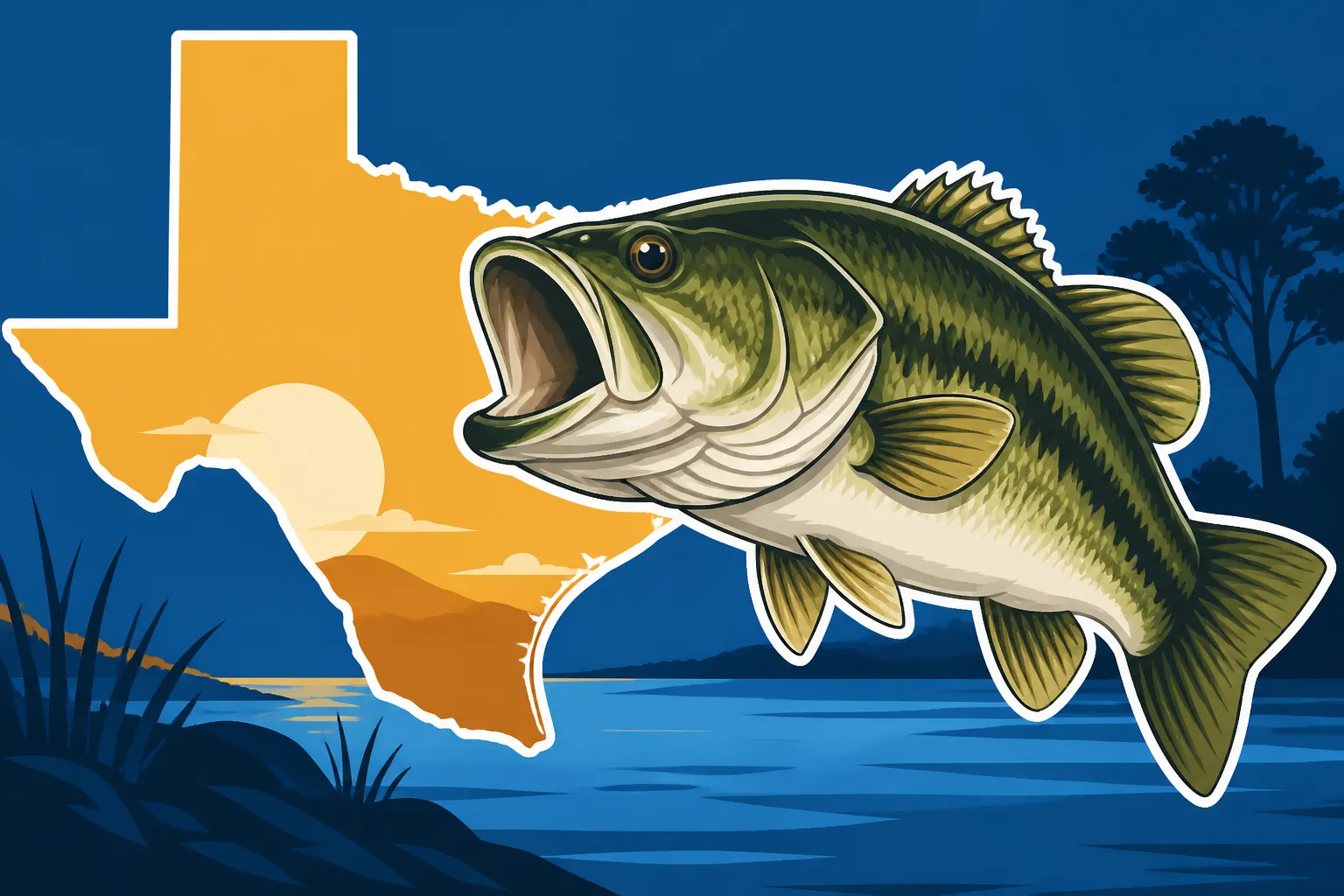
Texas Largemouth Bass Identification Guide
It can be incredibly frustrating to reel in a beautiful bass in a Texas lake, only to stare at it and wonder, "Is this a largemouth? Or something else entirely?" You're definitely not alone in that moment of uncertainty! Many anglers, from seasoned veterans to excited beginners, sometimes struggle with correctly identifying different bass species, especially the subtle nuances between a largemouth, a spotted, or even a Guadalupe bass. Getting it right isn't just about satisfying your curiosity; it's crucial for adhering to those all-important Texas Fish Bag and Length Limits and ensuring you don't accidentally keep a protected species. This comprehensive guide will walk you through the definitive identification features of the Texas largemouth bass, ensuring you can confidently tell what you've caught every single time you hit the water.
The Defining Features: What Makes a Largemouth, a Largemouth?
When you're trying to figure out if you've got a true Texas largemouth bass on your line, there are a few tell-tale signs that set them apart. It's not just about their size, though that's often the first thing people notice. It's about a combination of distinct anatomical characteristics that, once you know what to look for, make identification much clearer. Think of it like a secret handshake among bass species.
The Defining Jawline
The absolute, hands-down most reliable characteristic for identifying a largemouth bass is its jaw. If you've caught a fish and you're holding it up, gently press its mouth closed. Now, look at how far back the corner of its mouth extends. For a largemouth bass, that upper jaw (specifically, the maxilla) will extend past the rear margin of its eye. This is a critical distinction that immediately separates it from its cousins.
Imagine you're out on Lake Fork, a prime spot for big bass, and you just landed a nice green fish. You're thrilled, but you want to be sure. You take a moment to observe its jaw, and sure enough, the corner of that mouth goes well beyond the eye. That's your first strong clue you've got a largemouth. This feature is so pronounced that even a quick glance can often confirm it, making it one of the easiest ways to distinguish it from a spotted or smallmouth bass.
Lateral Line Patterns
Another key identifier lies in the largemouth bass's lateral line, which is that horizontal stripe running down the side of its body. While all bass have a lateral line, the largemouth's is often quite distinctive. It typically presents as a series of dark, blotchy, or irregular spots that form a somewhat broken or jagged horizontal stripe. Sometimes, especially on larger, older fish, this stripe might appear more continuous but will still have a somewhat diffused, mottled look rather than a sharp, unbroken line.
Consider a sunny day on Sam Rayburn Reservoir. You pull in a fish, and while the jaw is a dead giveaway, you also notice the pattern on its side. It's not a perfectly straight, uniform line, but rather a series of dark smudges that connect to form a lateral band. This broken pattern is classic largemouth. Sometimes, depending on the water clarity and substrate, the lateral line might be more faded or prominent, but the nature of the pattern – those irregular blotches – remains consistent. You might even find some helpful field guides available on Amazon that specifically highlight these lateral line variations.
Dorsal Fin Separation
The dorsal fin, located on the fish's back, is another important clue. A largemouth bass has two dorsal fins, but they are very distinctly separated by a deep notch. It almost looks like two completely separate fins connected by just a thin membrane at the base. One part is spiny, and the other is soft-rayed. This deep division is quite different from some other black bass species.
When you're handling a largemouth, gently run your finger along the top of its back, from head to tail. You'll feel a clear, deep dip where the spiny front portion of the dorsal fin ends and the soft-rayed rear portion begins. It's not a subtle indentation; it's a pronounced separation. This characteristic is particularly useful when quickly trying to differentiate a largemouth from a spotted bass, which tends to have a less severe or more connected dorsal fin. Understanding this feature can help confirm your identification, especially when combined with the jawline check.
Size, Shape, and Coloration of Texas Largemouth Bass
While the anatomical features are definitive, the overall look and feel of a largemouth bass—its general size, body shape, and color—also contribute to its identity. These characteristics can vary quite a bit based on age, diet, and environment, but there are still some general patterns to look for that will help solidify your identification.
Typical Body Proportions
Texas largemouth bass are generally robust fish, built for ambush predation. They tend to have a thick, somewhat stout body, especially around the midsection. Their profile is deeper than it is wide, giving them that classic "football" shape many anglers love. As they grow, they can become quite deep-bodied, particularly the older, larger fish that are often sought after for the Texas ShareLunker Program Explained.
A young largemouth might be more slender, but as they mature and pack on the pounds, they develop that characteristic chunky appearance. Think of the difference between a sleek, torpedo-like smallmouth bass and the broader, more imposing largemouth. When you catch one that feels heavy for its length, it's often a good indicator of a well-fed largemouth, perfectly adapted to its environment in a rich Texas reservoir. Their strong, muscular bodies allow them to power through cover and engulf prey with their large mouths.
Color Variations and Markings
The coloration of a Texas largemouth bass can be incredibly varied, which sometimes throws anglers off. Generally, they are a dark green or olive color on their back, fading to lighter green or greenish-gold on their sides, and typically have a white or cream-colored belly. However, the exact shades can change dramatically based on the water clarity, the type of bottom, and even the fish's mood.
For instance, a largemouth caught from a clear, rocky lake like Canyon Lake might appear much lighter green with more defined markings, almost bluish in some cases. Conversely, a bass from a muddy, tannin-stained East Texas lake might be a very dark, almost black-green, with less distinct patterns. The blotchy lateral line we discussed earlier is almost always present, though its visibility can vary. Sometimes, you might even see vertical bars on their sides, especially on younger fish or those stressed from being caught, but these are typically less distinct than those on a smallmouth.
Age and Environmental Influences on Appearance
It's fascinating how a largemouth bass's appearance can evolve throughout its life. Younger bass often have much more pronounced and sometimes even darker blotchy patterns on their lateral line, acting as camouflage. As they age, these markings can become more faded or diffused, particularly on the largest specimens. Environmental factors play a huge role too. Bass that spend their lives hiding in dense vegetation, like hydrilla or lily pads, often have a darker, richer green coloration to blend in.
On the flip side, bass living in open, deep, or clearer waters might appear lighter or more silvery. Even the amount of sunlight can affect their pigment. It's why sometimes you'll catch a fish and think, "Is this the same species I caught last week?" Rest assured, the core anatomical identifiers remain constant, regardless of these superficial changes. It's just their way of adapting to their specific patch of Texas water, whether it's the clear waters of Lake Amistad or the timber-filled depths of Lake Fork Fishing Guide.
Common Look-Alikes: Largemouth vs. Spotted vs. Smallmouth Bass
Texas is home to several "black bass" species, and while the largemouth is arguably the most famous, it's not the only one. Correctly telling them apart, especially the largemouth from the spotted bass, is a challenge many anglers face. The key is to know those critical differentiating features.
Distinguishing from Spotted Bass
The spotted bass (often just called "spots" by anglers) is probably the most commonly confused species with the largemouth, especially in certain regions of Texas. Here's how to tell them apart:
- Jaw Extension: Remember the largemouth's jaw extends past the eye? A spotted bass's jaw typically extends to, or only slightly beyond, the rear margin of its eye, but rarely significantly past it. This is your number one differentiator.
- Scales on Belly: This is a less talked-about but very reliable feature! Gently run your finger over the scales on the belly of the fish, below the lateral line, particularly near the anal fin. A spotted bass will have distinct small, diamond-shaped scales in this area, sometimes feeling rougher, while a largemouth will have larger, more uniform scales throughout its body. You might need to look closely for this one, but it's very consistent.
- Tongue Patch: If you can, gently open the fish's mouth and feel the roof of its tongue. A spotted bass almost always has a rough patch of teeth (like sandpaper) on its tongue, which is absent in a largemouth bass. This one takes a bit more effort to check, but it's a definitive trait.
- Lateral Line: While a largemouth's lateral line is blotchy and often broken, a spotted bass tends to have a more continuous and distinct dark lateral line. Below this line, spotted bass often have several rows of dark spots (hence the name "spotted" bass), which are usually much more prominent than any spots on a largemouth.
It's a common scenario: you're fishing a river system, perhaps the Brazos, and you catch a bass that looks "right" but feels a bit off. You check the jaw, and it's close to the eye. Then you feel the tongue – rough! And those tiny belly scales confirm it. You've got yourself a spotted bass, not a largemouth. This is why How to identify a largemouth bass vs a spotted bass is such a critical skill for Texas anglers.
Distinguishing from Smallmouth Bass
Smallmouth bass are less common in many parts of Texas compared to largemouths and spots, but they do exist in certain cooler, clearer waters, particularly in the Panhandle or some Hill Country reservoirs. They are much easier to distinguish:
- Jaw Extension: The smallmouth's upper jaw will not extend beyond the rear margin of its eye. It stops well short, giving the fish a much more compact face.
- Coloration and Pattern: Smallmouth bass are typically a bronze, brown, or golden-green color, often with distinct dark vertical bars or stripes along their sides, rather than a horizontal lateral line of blotches. Their bellies are usually a creamy white.
- Dorsal Fin: While the largemouth has a deep notch, the smallmouth's dorsal fins are usually only shallowly notched, appearing much more connected as a single unit.
- Habitat: Smallmouth prefer cooler, clearer, rockier waters with less vegetation and more current, like those found in lakes such as Lake Whitney. Largemouths, conversely, thrive in warmer, weedier, and often murkier waters.
If you're fishing somewhere like Possum Kingdom Lake and catch a bronze-colored fish with clear vertical bars and a small mouth that doesn't extend past its eye, you've likely landed a smallmouth bass. It's a different fight, and a different fish! For those seeking specific knowledge, guides like Guadalupe Bass vs Smallmouth Bass can further clarify these subtle differences.
The Elusive Guadalupe Bass
Ah, the Guadalupe bass! Texas's official state fish and a true gem. These guys are native only to certain river systems in Central Texas, like the Guadalupe, San Antonio, and Colorado Rivers, and their tributaries. They are often mistaken for smallmouths or spotted bass due to their similar appearance and habitat preferences for moving water.
- Jaw Extension: Similar to the smallmouth, the Guadalupe bass's upper jaw does not extend beyond the rear margin of the eye.
- Coloration and Pattern: Guadalupe bass are typically olive green with a distinctive pattern of diamond-shaped spots or dashes along their sides, often merging into a lateral line. They usually have a series of unconnected dark spots below the lateral line, but these are rounder than the distinct rows of spots on a spotted bass. They also lack the vertical bars of a smallmouth.
- Scales and Tongue: Like largemouths, Guadalupe bass do not have a patch of teeth on their tongue and generally have larger, uniform scales on their belly. This distinguishes them from spotted bass.
- Habitat: Crucially, if you're not fishing in the clear, flowing waters of the Central Texas Hill Country rivers, you're not catching a pure Guadalupe bass. They are rarely found in large reservoirs or coastal areas.
So, if you're fly fishing the Guadalupe River Trout Fishing Guide and catch a small, feisty bass with a jaw that doesn't go past the eye and a unique diamond-patterned lateral line, you've likely encountered a beautiful Guadalupe bass. Remember, these fish are precious, and knowing how to identify them helps with conservation efforts, especially regarding Guadalupe Bass Native Range in Texas.
| Feature | Largemouth Bass | Spotted Bass | Smallmouth Bass | Guadalupe Bass |
|---|---|---|---|---|
| Upper Jaw Extension | Past rear margin of eye | To or slightly beyond rear margin of eye | Not beyond rear margin of eye | Not beyond rear margin of eye |
| Lateral Line Pattern | Blotchy, broken horizontal stripe | More continuous, distinct dark stripe with rows of spots below | Faint or absent; distinct vertical bars (juveniles) | Diamond-shaped spots often forming a broken lateral line |
| Belly Scales | Large, uniform | Small, rougher, diamond-shaped scales near anal fin | Large, uniform | Large, uniform |
| Tongue Patch (Teeth) | Absent | Present | Absent | Absent |
| Dorsal Fin Notch | Deep notch, almost two separate fins | Less pronounced notch, more connected | Shallow notch, appears mostly continuous | Shallow notch, appears mostly continuous |
| Body Coloration | Dark green to olive, white belly | Greenish-bronze, rows of spots below lateral line | Brown to bronze, distinct dark vertical bars | Olive green, diamond-shaped spots |
| Typical Habitat | Warm, still, weedy water, reservoirs | Clearer, rocky, flowing water, rivers/res. | Cool, clear, rocky water, less vegetation | Clear, flowing Hill Country rivers |
Geographic Distribution and Habitat in Texas
Understanding where largemouth bass naturally thrive in Texas can also be a significant clue to their identity. While they are incredibly widespread, certain environments just scream "largemouth." This knowledge is particularly helpful when you're exploring new fishing grounds.
Preferred Environments
Largemouth bass are habitat generalists to a degree, but they definitely have preferences. They absolutely adore warm, relatively still waters with plenty of cover. Think about those classic Texas lakes: sprawling reservoirs, calm ponds, and slower-moving river sections. They thrive where there are submerged trees, brush piles, docks, lily pads, hydrilla, coontail, or even just patches of tall grass. This type of cover provides both ambush points for hunting prey and protection from predators and harsh sunlight.
They are less commonly found in fast-flowing, rocky streams with strong currents, which are more the domain of smallmouth or Guadalupe bass. If you're fishing a murky, stump-filled backwater of a lake, you can bet your bottom dollar you're in prime largemouth territory. Their body shape and large mouths are perfectly adapted for gulping down bluegill, shad, and even small ducks or frogs from these dense, vegetative hideouts. These fish are masters of their domain in these classic Texas fishing scenarios.
Where You're Most Likely to Find Them Across Texas
You can find largemouth bass in virtually every major body of freshwater across Texas, from the cypress-lined lakes of East Texas to the arid reservoirs of West Texas, and the sprawling impoundments of Central and North Texas. They are, without a doubt, the most popular and widespread game fish in the state. So, if you're fishing almost any lake or larger river, the chances of encountering a largemouth are extremely high.
Iconic bass fisheries like Lake Fork, Sam Rayburn, Toledo Bend, Lake Ray Roberts, and Falcon Lake are renowned for their trophy largemouth populations. Even smaller community ponds and city park lakes are often stocked with largemouths as part of programs to provide accessible fishing. The versatility and adaptability of the largemouth allow it to thrive in such a diverse range of aquatic environments throughout the Lone Star State. Essentially, if there's freshwater and decent cover, you'll likely find a largemouth. They are truly the kings of Best Bass Lakes in Texas.
Habitat's Impact on Appearance
As mentioned earlier, the specific habitat a largemouth bass calls home can subtly influence its appearance. A bass living in crystal-clear water with a sandy or rocky bottom might have a lighter, almost silvery-green hue, with its dark markings standing out sharply. This helps it blend into the lighter background. Conversely, a largemouth from a dark, muddy, or heavily vegetated lake will often exhibit a much deeper, darker green or even brownish coloration, sometimes almost appearing black, to better camouflage itself in the shadows.
This phenomenon is called chromatism, and it's a testament to the fish's ability to adapt. So, don't let a slightly different shade of green throw you off your identification game. Always rely on those unchangeable anatomical features like the jawline and dorsal fin. The color is merely a stylish outfit the bass wears to match its local environment, a truly fascinating aspect of these incredible fish.
Subspecies and Their Characteristics
Within the broad category of Micropterus salmoides (largemouth bass), there are actually different subspecies, and Texas has been profoundly influenced by one in particular: the Florida Largemouth Bass. Understanding these subspecies can sometimes add another layer to identification, especially if you're dealing with hybrid fish.
Florida Largemouth Bass Influence
The Florida largemouth bass (Micropterus salmoides floridanus) is famous for its potential to grow much larger than the Northern largemouth bass. Recognizing this, the Texas Parks and Wildlife Department (TPWD) began an aggressive stocking program decades ago, introducing Florida-strain bass into many Texas reservoirs. This initiative is a huge reason why Texas is now celebrated for producing so many trophy-sized bass.
Florida-strain bass generally have a slightly different genetic makeup that allows for faster growth rates and larger maximum sizes. While visually they are very similar to Northern largemouths, they can sometimes exhibit a slightly darker, more uniform coloration and may have less distinct lateral line markings as adults. However, these are not reliable identification features on their own; genetics laboratories are needed for definitive subspecies identification. What's important for anglers to know is that many of the big bass caught in Texas lakes today have Florida largemouth genetics, either pure or hybridized.
Northern Largemouth Bass Traits
The native largemouth bass to much of North America, including parts of Texas before the widespread introduction of the Florida strain, is the Northern largemouth bass (Micropterus salmoides salmoides). These fish tend to have the classic deep-green back, lighter sides, and that distinct blotchy lateral line. They are excellent game fish but generally don't reach the colossal sizes that Florida-strain or hybrid bass can achieve.
In many older, smaller ponds or less-managed rivers in Texas, you might still encounter predominantly Northern-strain largemouths. They are visually almost identical to Florida-strain fish, so relying on general appearance alone won't help you tell them apart. It's truly a genetic distinction. The takeaway here is that both types are "largemouth bass," and the primary identification features discussed earlier apply to both. The difference lies in their growth potential.
Hybrid Vigor and Identification Challenges
Where things can get truly interesting, and sometimes a bit confusing for anglers, is with hybrid largemouth bass – crosses between Florida and Northern strains. These hybrids often exhibit "hybrid vigor," meaning they combine the best traits of both, potentially growing large like Florida bass while maintaining some of the hardiness of Northern bass. Most major Texas reservoirs now have a mixed population of Northern, Florida, and hybrid largemouth bass.
Visually, these hybrids are virtually indistinguishable from their purebred counterparts. You'd need a genetic test to confirm hybrid status. So, if you're focused on simply identifying a fish as a largemouth bass versus a spotted or smallmouth, the presence of hybrids doesn't complicate the process. All the key features – the jawline, the dorsal fin notch, the lateral line – remain consistent for any fish that is, at its core, a largemouth bass. You might even find specialized gear and guides on Amazon that help anglers target these specific, larger bass. This blend of genetics is part of what makes Texas Largemouth Bass World Record History so captivating and why Texas continues to produce monster fish.
Tips for Accurate Identification on the Water
Even with all this knowledge, making a quick, accurate identification out on the water, especially when the adrenaline is pumping, can be tricky. But with a few practical tips and the right mindset, you'll become a pro at identifying your catch.
Hands-On Examination Techniques
The best way to get good at identifying bass is to practice! Every time you catch a bass, take a moment for a quick, respectful examination before release.
- The Jaw Check: This is always your first and most reliable step. Gently close the fish's mouth and see if the upper jaw extends past the eye. If it does, you're almost certainly holding a largemouth.
- Dorsal Fin Feel: Lightly run your finger along the dorsal fins to feel for that deep, distinct notch. This helps confirm the jaw check.
- Lateral Line Observation: Look at the pattern of the dark stripe on its side. Is it blotchy and broken (largemouth) or more continuous with rows of spots below (spotted)?
- Belly Scale Check: For tricky cases, especially between largemouth and spotted bass, feel the scales on the belly below the lateral line. Are they uniform and large (largemouth) or smaller and diamond-shaped (spotted)?
- Tongue Check (if necessary): If still unsure and handling the fish carefully, gently open its mouth to feel for a rough patch of teeth on the tongue. If present, it's a spotted bass.
Remember to handle the fish with wet hands to protect its slime coat, and always return it to the water quickly and gently after identification and any photos. Proper handling is key to the fish's survival, especially when participating in catch-and-release programs or tournaments. Getting proficient at this hands-on process is an integral part of becoming a responsible Texas angler, much like knowing the intricacies of Texas Largemouth Bass Fishing Guide.
Using Field Guides and Apps
Don't be afraid to bring aids with you! Many anglers carry a small, waterproof field guide specific to Texas fish species. These guides often have clear illustrations or photos highlighting the key identification features side-by-side, making comparisons easy. Some even have rulers or charts for quick length and bag limit checks.
Beyond physical guides, there are numerous fishing identification apps available for smartphones. Many of these allow you to take a photo of your catch and will help you identify it, often with community verification. While not always 100% accurate, they can be a fantastic tool for learning and confirming your suspicions on the go. Just make sure your phone is charged and protected from water! It's always a good idea to cross-reference with a reliable source. You can find excellent waterproof field guides for Texas fish, along with protective cases for your phone, on Amazon.
Observing Behavior and Habitat Clues
While not definitive on their own, paying attention to where and how you caught the fish can offer additional clues to its identity. Largemouth bass are typically found in shallower, weedier, and warmer parts of a lake or river, often around cover. They're known for their aggressive strikes, especially on surface lures.
If you're pulling a fish out of thick hydrilla in a shallow cove during the summer, chances are high it's a largemouth. If you're catching fish in a fast-moving, rocky section of a river in the Hill Country, and it's small and bronze, you might start thinking smallmouth or Guadalupe bass before confirming with the anatomical checks. These environmental observations provide context, helping you narrow down the possibilities before you even lay hands on the fish. For instance, knowing What month do bass spawn in Texas can give you an idea of where fish might be concentrated, offering more context for identification. Similarly, understanding the best tackle like Best Soft Plastics for Texas Bass Fishing can lead you to the right species in the right cover. Ultimately, a keen eye for habitat, combined with those crucial anatomical identifiers, will make you an expert at bass identification.
Disclaimer
This article is for general informational purposes only and does not constitute professional advice. Laws, prices and regulations vary by location and change over time. Consult a qualified professional for guidance on your specific situation.