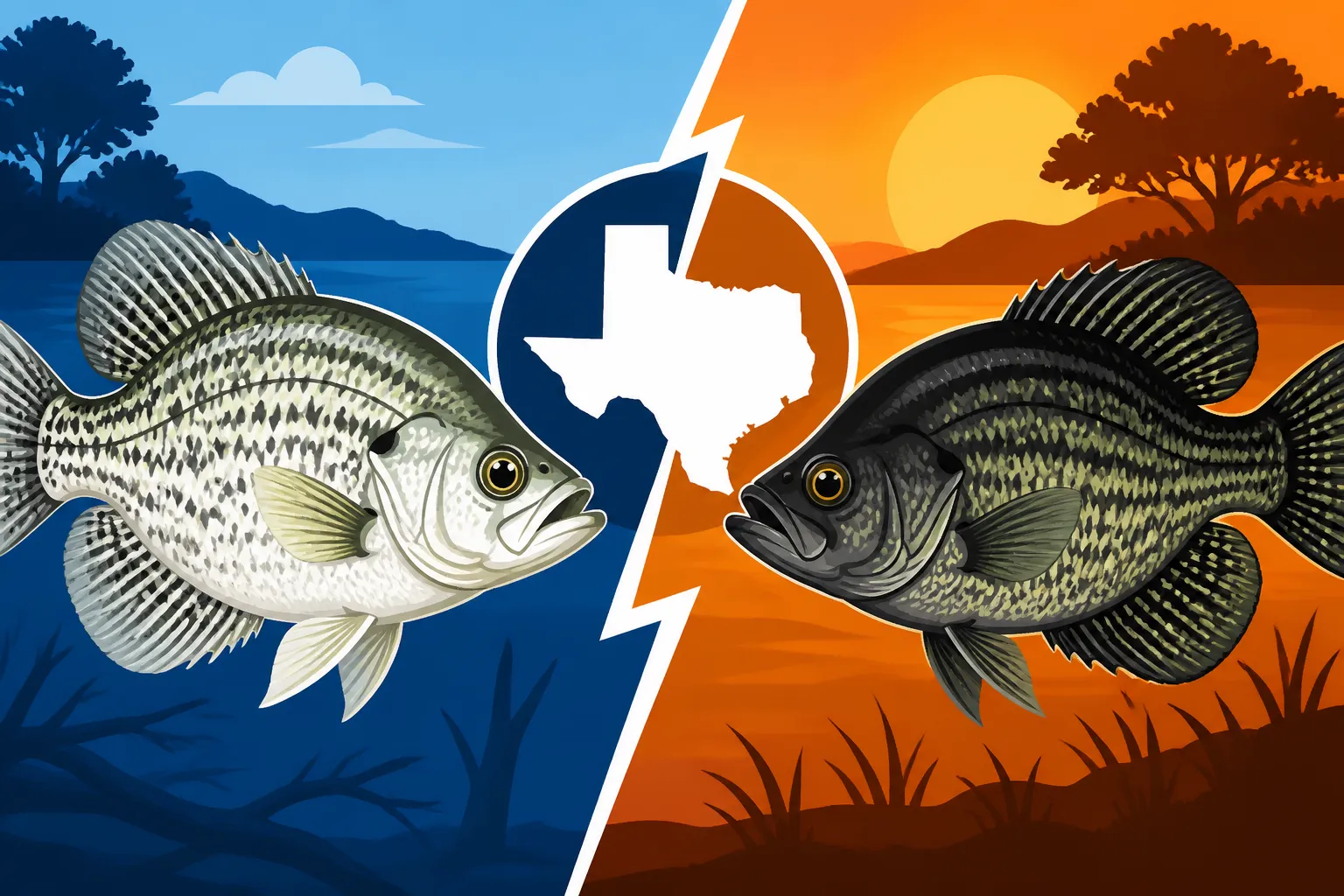
Texas White Crappie vs Black Crappie
It can be incredibly frustrating to be out on a beautiful Texas lake, reeling in crappie after crappie, and still not be entirely sure if you've caught a white crappie or a black crappie. Many anglers, even seasoned ones, find themselves squinting at their catch, trying to remember the subtle differences that separate these two popular panfish. This comprehensive guide is here to clear up that confusion once and for all, helping you confidently identify your crappie and understand the nuances that make each species unique in our Texas waters.
The Crappie Conundrum: Why Distinguishing Matters
For many anglers, a crappie is a crappie, and as long as it's biting, that's all that matters. But for those of us who love chasing these delicious panfish in Texas, knowing the difference between a white crappie and a black crappie isn't just a matter of trivia. It can actually impact your fishing strategy, from where you cast your line to the type of bait you use. These two species, while similar in many ways, have distinct preferences when it comes to habitat, water conditions, and even how they react to different lures. Understanding these subtleties can significantly boost your success on the water and make you a more versatile crappie angler.
Think about it: you might spend hours meticulously working a brush pile in murky water, only to realize later that you were in prime white crappie territory when you were really hoping for black crappie. Or perhaps you're using a technique perfect for one, but completely ignoring the preferences of the other. The goal here isn't just identification; it's about empowering you with the knowledge to actively target either species, or to maximize your chances when both are present. It's about taking your crappie fishing from a guessing game to a strategic pursuit.
More Than Just a Name: Understanding the Species
Both white crappie (Pomoxis annularis) and black crappie (Pomoxis nigromaculatus) are part of the sunfish family, known for their flattened bodies and delicious white flesh. In Texas, they are among the most sought-after freshwater game fish, prized for their abundance and fight. They inhabit a vast array of our lakes, rivers, and reservoirs, from the piney woods of East Texas to the sprawling central reservoirs. While they share many characteristics, their evolutionary paths have led them to adapt to slightly different ecological niches, leading to the distinct traits we'll explore.
For a deeper dive into crappie in general, check out our Texas Crappie Fishing Guide. Knowing the general characteristics of crappie is a great first step, but the real advantage comes from understanding the individual species.
Telling Them Apart: Visual Cues and Identification Secrets
This is where the rubber meets the road! When you pull a crappie out of the water, there are a few key visual indicators that will immediately tell you whether you've got a white crappie or a black crappie on your line. It's not always obvious at first glance, especially with younger fish or those from certain waters, but once you know what to look for, it becomes much easier.
Dorsal Fin Spines: The Most Reliable Indicator
Without a doubt, the dorsal fin is your go-to identification tool. This is the fin on the fish's back.
- White Crappie: A white crappie will almost always have 6 dorsal fin spines. These are the hard, pointy rays at the front of the dorsal fin. Count them carefully!
- Black Crappie: A black crappie, on the other hand, will have 7 or 8 dorsal fin spines. Sometimes you'll find one with 9, but 7 or 8 is the common range.
This count is the most consistent and definitive way to differentiate the two. Other features can sometimes be misleading due to variations in individual fish, water conditions, or even diet, but the dorsal spine count is a biological constant that rarely fails. It's a bit like counting the spots on a specific breed of bird – it's a fundamental characteristic.
Body Markings and Coloration
While the dorsal fin spine count is the scientific method, most anglers first notice the overall pattern and color. These can be helpful, but they're not foolproof.
- White Crappie: Tend to have a more elongated, somewhat silvery body with distinct, often vertical bars or stripes running down their sides. These bars can be quite pronounced or faint, depending on the fish's mood, health, and environment. Their overall body color might lean more towards a silvery-green or silvery-gold hue.
- Black Crappie: Generally have a rounder, deeper body shape and a darker, more mottled appearance. Their spots are usually irregularly scattered across their entire body, lacking the distinct vertical bar pattern of the white crappie. These spots can be very dark and numerous, giving them a "peppered" look. Their coloration often ranges from olive green to dark brown or even blackish, especially when caught from clear, dark-bottomed waters.
It's important to remember that crappie can change their color intensity based on their environment. A black crappie from a muddy lake might not be as dark as one from a clear, rocky lake. Conversely, a white crappie from clear water might show very defined bars, while one from stained water could have very faded markings.
Mouth and Jaw Structure: A Subtle Clue
Another, albeit more subtle, characteristic lies in their mouth and jaw.
- White Crappie: When you close a white crappie's mouth, the upper jaw (maxillary) typically extends behind the middle of the eye. This gives them a slightly more pointed snout.
- Black Crappie: The upper jaw of a black crappie, when closed, usually extends only to or slightly in front of the middle of the eye. Their mouth often appears a bit smaller and more compact.
This difference can be tricky to spot quickly on a squirming fish, but it's another piece of the puzzle that, combined with the other features, can confirm your identification.
Here's a quick comparison table to help you keep these distinctions straight:
| Feature | White Crappie | Black Crappie |
|---|---|---|
| Dorsal Fin Spines | 6 (highly reliable) | 7-8 (sometimes 9, highly reliable) |
| Body Markings | Distinct vertical bars/stripes | Irregular, scattered spots (mottled/peppered look) |
| Body Shape | More elongated, somewhat silvery | Rounder, deeper body, often darker overall |
| Upper Jaw Position | Extends behind middle of eye (more pointed snout) | Extends to or slightly in front of middle of eye |
| Overall Coloration | Silvery-green to silvery-gold | Olive green to dark brown/blackish |
Crappie Country: Preferred Habitats and Environments
While both species are widely distributed across Texas, they do have preferred stomping grounds. Understanding these habitat preferences can dramatically improve your fishing success by helping you choose the right lake and even the right spots within that lake. It's all about playing to their strengths and putting your bait where they're most likely to be comfortable.
Water Clarity and Vegetation
One of the most significant differences between white and black crappie lies in their tolerance for water clarity and their preferred type of cover.
- White Crappie: These fish are generally more tolerant of murkier, turbid, or stained waters. They thrive in lakes and rivers that might have a bit more sediment or tannin staining. They often congregate around large, open structures like standing timber, brush piles, bridge pilings, or submerged roadbeds. They don't typically hide as deep within dense vegetation as black crappie do. You'll find them in many of our sprawling, slightly stained reservoirs.
- Black Crappie: Prefer clearer, cleaner water with abundant vegetation. Think about lakes with plenty of lily pads, submerged hydrilla, coontail, or emergent reeds. They love to snuggle deep into this cover, using it for ambush points and protection. If you're fishing a crystal-clear reservoir with lots of aquatic plants, chances are you'll encounter more black crappie.
This isn't a hard and fast rule, as you can certainly catch both in various conditions, but it's a strong guideline. If a lake is known for its clear water and abundant plant life, such as some of our Hill Country lakes, you might focus on techniques suited for black crappie. Conversely, a larger, more turbid reservoir might lean more towards white crappie techniques.
Depth and Structure Preferences
Beyond just water clarity, the specific types of structure and depth they favor also differ.
- White Crappie: Often found in slightly deeper waters or suspended over deeper channels, especially in open water near distinct structures. They love to relate to vertical cover that extends from the bottom, like isolated brush piles or bridge columns. They can be a bit more nomadic, moving between structures throughout the day. In the summer, they might suspend in deeper, cooler water.
- Black Crappie: Tend to be found in shallower areas, particularly around dense cover like cypress trees, thick lily pads, or extensive submerged grass beds. They are less likely to suspend in open water and prefer to be directly associated with some form of physical cover. During the spawn, both species will move shallow, but black crappie often remain closer to dense vegetation even after spawning.
For example, if you're fishing a massive East Texas lake like Sam Rayburn Reservoir, you might find white crappie dominating the bites in the main lake's deeper, timber-filled areas, while black crappie might be more prevalent in the clearer, more vegetated coves. Knowing these tendencies can help you decide where to drop anchor.
Behavior on the Bite: How Their Habits Affect Your Fishing
Understanding how white and black crappie behave and feed is crucial for effective angling. While both are schooling fish and share a general diet, their subtle differences in temperament and feeding strategies can make or break your trip. It's not just about finding them, but presenting your bait in a way that appeals to their specific instincts.
Schooling Tendencies and Aggressiveness
Both crappie species are known for schooling, which is great for anglers because when you find one, you often find many! However, there are some minor differences in their schooling and how aggressively they might strike a lure.
- White Crappie: Often form larger, more loosely organized schools that might roam more widely. They can be quite aggressive feeders, especially when actively chasing baitfish. Their willingness to strike at a moving lure or bait can sometimes be a bit more pronounced, particularly if they are in a competitive feeding mood. They might be more apt to hit a jig on a steady retrieve.
- Black Crappie: Tend to form tighter, more cover-oriented schools. They can be a bit more finicky, especially in clear water where they might be more cautious. While they'll certainly hit aggressively, they often prefer a more subtle, vertical presentation when nestled deep in cover. You might need to drop your jig directly into their hiding spot and work it slowly.
Imagine you're out on Lake Fork, a renowned trophy bass lake that also holds impressive crappie. If you're targeting white crappie, you might focus on drifting over open water timber with multiple lines, hoping to intersect a roaming school. For black crappie, you'd likely motor into a shallow cove, find a dense hydrilla bed, and meticulously pick apart small pockets within the vegetation.
Preferred Prey and Feeding Styles
Both white and black crappie are primarily piscivorous, meaning they eat other fish, especially shad, minnows, and other small forage fish. They also consume insects, crustaceans, and larvae. However, their preferred feeding zones might lead to subtle differences in their diet.
- White Crappie: Given their preference for more open water and vertical structures, they might be more opportunistic feeders, willing to chase baitfish in open water. They are excellent ambush predators, darting out from cover to snatch a passing meal.
- Black Crappie: Due to their love for dense vegetation, they might incorporate a wider variety of insects and aquatic invertebrates into their diet, as these are abundant in healthy plant beds. They are also ambush predators, but their strikes might be more precise and short-ranged as they dart out from thick cover.
This is why live minnows are universally effective for both, but subtle jig presentations or tiny artificial insects can be particularly deadly for black crappie nestled in the weeds. For more on catching these elusive panfish, check out our How to Catch Crappie.
Gear Up for Crappie: Tackle and Techniques Tailored to Each
While a basic ultralight rod and a handful of jigs will certainly catch crappie, optimizing your gear and techniques for either white or black crappie can give you a significant edge. It's about fine-tuning your approach to match their specific preferences and habitats.
Rods, Reels, and Line Choices
The general rule for crappie is light tackle, but there are nuances.
- White Crappie: Since they can be more aggressive and often found in slightly deeper, more open water around larger structures, a slightly stiffer ultralight or light-action rod might be preferred. A fast-action tip helps with quick hooksets and managing larger crappie. Spin cast or spinning reels spooled with 4-6 lb monofilament or fluorocarbon line are standard. If you're using a spider rigging setup (multiple rods from a boat), longer, more flexible rods are key.
- Black Crappie: When fishing dense vegetation for black crappie, you might want a slightly softer action rod with a more parabolic bend to absorb sudden lunges into cover. A sensitive tip is crucial for detecting subtle bites. Lighter line, often 2-4 lb test, helps with more natural presentations and allows smaller jigs to sink slowly. Braided line can also be effective in heavy cover due to its strength and lack of stretch, especially when paired with a fluorocarbon leader.
You can find a great selection of ultralight rods and spinning reels on Amazon that are perfect for either species. Just be sure to read reviews and consider the action and power ratings for your specific crappie hunting needs.
Lure Selection and Presentation
This is where your knowledge of habitat and behavior really pays off.
- White Crappie: Often respond well to slightly more active presentations. Small crankbaits, spinnerbaits, or larger (1/16 to 1/8 oz) jigs retrieved steadily can be effective when they are scattered or actively feeding. Minnows fished under a bobber or on a tight-line around vertical structures are also incredibly productive. Trolling small jigs or baits at various depths is a fantastic way to locate roaming schools of white crappie in open water.
- Black Crappie: Tend to prefer more subtle, vertical presentations. Tiny jigs (1/32 to 1/64 oz) tipped with a small plastic grub or tube bait, worked slowly and directly into dense cover, are often irresistible. Live minnows, fished very still under a small bobber right in a pocket of weeds, are deadly. The key is often patience and precision, gently twitching your bait without moving it too far from the strike zone. If you're looking for the best specific options, Amazon offers a wide range of crappie jigs and soft plastics, including those tiny finesse options perfect for clear-water black crappie.
For specific lure recommendations, take a peek at our Best Crappie Jigs for Texas Lakes to ensure your tackle box is ready for any crappie encounter.
The Dinner Plate: Taste and Texture Differences
Let's be honest, for many of us, the ultimate reward for a successful crappie trip is a delicious meal. Both white and black crappie are widely considered some of the best-tasting freshwater fish, often described as having a mild, sweet, white, flaky flesh. But are there any noticeable differences when they hit the frying pan?
Culinary Qualities: A Subtle Distinction
In general, most anglers and chefs would agree that the taste and texture of white crappie and black crappie are incredibly similar, almost indistinguishable to the casual palate. Both offer that desirable mild flavor and tender, flaky meat that makes them perfect for frying, baking, or grilling.
However, some connoisseurs might argue for very slight nuances:
- White Crappie: Because they often inhabit slightly murkier waters and may have a diet that includes a wider variety of forage from the bottom, some claim white crappie can occasionally have a very subtly stronger "fishy" flavor, or sometimes a tiny hint of earthiness if caught from particularly muddy areas. This is often debated and highly dependent on the specific body of water and preparation.
- Black Crappie: With their preference for clearer waters and a diet often richer in aquatic insects, some believe black crappie tend to have an even milder, cleaner flavor, perhaps a touch sweeter. They are often perceived as having a slightly firmer, flakier texture, likely due to their diet and cleaner habitat.
These differences are so minor that they are often overshadowed by factors like how quickly the fish was put on ice, how it was cleaned, and the cooking method used. If you want a fish finder to improve your catch rate for both species, researching options on Amazon can reveal many highly rated models.
Preparation and Enjoyment
Regardless of which crappie species you've caught, proper handling and preparation are key to maximizing their culinary potential. Get them on ice quickly after catching to preserve their fresh flavor. Fillet them carefully, removing any skin or red meat for the purest taste.
Whether you're frying them up with cornmeal and hot sauce, baking them with lemon and herbs, or even using them in a crappie ceviche, you're in for a treat. Both species are excellent table fare, and their abundance in Texas makes them a fantastic choice for a family fish fry. Just be sure to stay within the Texas Crappie Bag Limits so these delicious fish remain plentiful for generations to come.
Ultimately, whether you catch a white crappie or a black crappie in Texas, you've landed a prized catch. Knowing the subtle differences allows you to appreciate each fish more, target them more effectively, and become a more knowledgeable and successful angler on our amazing Texas waters. Happy fishing!
Disclaimer
This article is for general informational purposes only and does not constitute professional advice. Laws, prices and regulations vary by location and change over time. Consult a qualified professional for guidance on your specific situation.