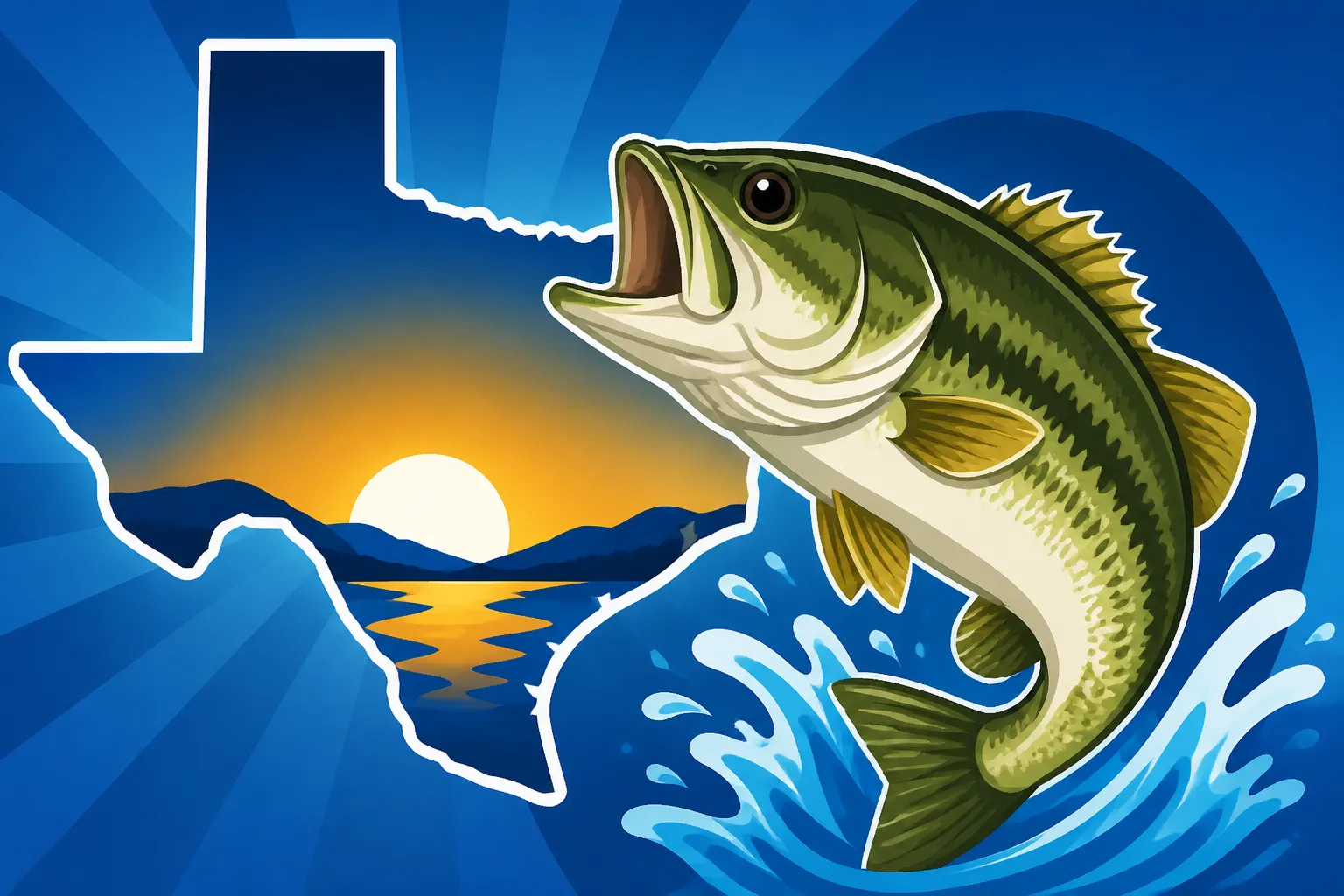
What is the Texas state fish
Alright, let's talk about the heart and soul of Texas fishing – our official state fish! Many folks who love fishing in our great state of Texas have probably heard whispers about our official state fish, but might not know all the ins and outs of this unique aquatic gem. It's not the biggest or the flashiest, but it's deeply ingrained in our natural heritage. This guide is going to dive deep into what makes our Texas state fish so special, where you can find it, how to identify it, and why it holds such a significant place in the hearts of Texas anglers.
Unveiling the Texas State Fish: The Guadalupe Bass
For those wondering, "What is the Texas state fish?", the answer is a true Texas native: the Guadalupe Bass (Micropterus treculii). This isn't just any bass; it's a unique species of black bass found almost exclusively in the Lone Star State. It was officially designated as our state fish in 1989, a testament to its ecological and recreational importance to Texans. Unlike its more widespread cousins, the largemouth or smallmouth bass, the Guadalupe bass prefers the clear, flowing waters of certain central Texas rivers and streams.
It’s easy to feel a connection to a fish that’s so intrinsically linked to the Texas landscape. When you’re out on a river like the Llano or the Guadalupe, and you hook into one of these feisty fighters, there’s a sense of pride knowing you’ve encountered a creature that calls only our state home. They might not grow to the massive sizes of a Lake Fork largemouth, but what they lack in sheer bulk, they more than make up for in spirit and the challenge they present to anglers. They truly embody the resilience and unique character of Texas's freshwater ecosystems.
Why the Guadalupe Bass Earned Its Title
The Guadalupe Bass didn't just stumble into its role as the Texas state fish; it earned it through its sheer uniqueness and importance to our natural heritage. What truly sets it apart is that it is endemic to Texas, meaning its natural range is almost entirely confined within our state borders. While you might find a stray population here or there in neighboring areas, its true stronghold, its native home, is right here in Texas. This exclusivity makes it a living symbol of our state's distinct biodiversity. You can delve deeper into its natural habitat by reading Guadalupe Bass Native Range in Texas.
Beyond its native status, the Guadalupe Bass is a remarkable fish in its own right. It’s known for its preference for clear, flowing water and rocky substrates, thriving in environments that other bass might shy away from. Their habitat is often characterized by cool, oxygen-rich waters, making them an indicator of healthy river systems. These fish are incredibly hardy and possess a tenacious fighting spirit, making them a highly prized catch for fly anglers and light-tackle enthusiasts who appreciate a good challenge in a beautiful setting. The combination of its unique geographic distribution, specific habitat preferences, and spirited nature made it the perfect ambassador for Texas's freshwater fisheries.
The journey to becoming the state fish wasn't just about biological factors, though. It was a recognition by Texans of a species that genuinely represents our state's wild beauty. In an era where many species face environmental pressures, designating the Guadalupe Bass as our state fish also brought a spotlight to the importance of conserving these unique river systems. It encouraged a deeper understanding and appreciation for the delicate balance of our natural aquatic resources. This designation underscored the fact that our rivers are not just for recreation, but are vital homes for irreplaceable wildlife, prompting ongoing discussions about how to protect these precious ecosystems, especially as more anglers explore rivers like the Guadalupe and Llano. Anglers often wonder, Is the Guadalupe bass endangered in Texas?
Identifying and Finding the Guadalupe Bass
Identifying a Guadalupe Bass can be a bit tricky, especially if you're used to seeing largemouths or smallmouths. They share similar characteristics with other black bass species, which sometimes leads to misidentification. However, there are a few key features that, once you know them, will help you distinguish our state fish. Typically, they have a more slender body profile than a largemouth and their jaw doesn't extend past the back of the eye. They usually have a series of diamond-shaped or connected lateral blotches along their sides, which can sometimes form a more continuous, dark stripe. Unlike a spotted bass, they typically don't have distinct rows of spots on their lower belly, and their tongue is usually smooth, without the tooth patch found on many spotted bass. A good field guide or even some visual comparisons on sites like Amazon can be really helpful for learning these nuances.
| Feature | Guadalupe Bass | Largemouth Bass | Smallmouth Bass |
|---|---|---|---|
| Body Shape | More slender, torpedo-shaped | Robust, deeper body | Stockier, bronze to brown color |
| Jaw Extension | Doesn't extend beyond the back of the eye | Extends well past the back of the eye | Doesn't extend past the middle of the eye |
| Lateral Markings | Distinct diamond-shaped or connected blotches | Prominent dark lateral stripe, sometimes broken | Vertical bars or tiger stripes |
| Spots on Belly | Typically no distinct rows of spots | Often has some scattered spots, not distinct rows | Often has faint spots or clear belly |
| Tongue Patch | Usually smooth | Smooth | Often has a tooth patch |
| Habitat | Clear, flowing rivers & streams (Central TX) | Variety of habitats, often still or slow water | Clear, cool rocky rivers & lakes |
When it comes to finding Guadalupe Bass, you need to think "river." Their preferred habitats are the clear, spring-fed rivers and streams of the Edwards Plateau in Central Texas. You’ll find them in places like the Guadalupe River (no surprise there!), the Llano, San Gabriel, Colorado, and San Marcos Rivers, among others. They love areas with rocky bottoms, gravel beds, and plenty of submerged structure like logs, boulders, and aquatic vegetation, which provide ambush points and protection from currents. Kayak fishing or wading is often the best way to access their prime haunts, allowing you to quietly approach their territories. To get a more specific idea of their stomping grounds, check out What rivers have Guadalupe bass in Texas.
Fishing for Guadalupe Bass is a rewarding experience, typically requiring lighter tackle and a finesse approach. They are often less aggressive than largemouth bass, and spooky in the clear waters they inhabit. Many anglers opt for ultralight to medium-light spinning gear, spooled with 4-8 pound fluorocarbon or monofilament line. Small crankbaits, finesse jigs, small soft plastics like worms or creature baits, and even tiny spinnerbaits are effective. Fly fishing with small poppers, streamers, or nymphs is also incredibly popular and productive. A good pair of polarized sunglasses, easily found on Amazon, can make a huge difference in spotting these fish in the clear water. For more general advice on fishing for bass, consider reading How to Fish for Bass in Texas. Remember, the key is stealth and precise presentations.
Conserving Our Lone Star Legacy
The Guadalupe Bass, being endemic to Texas and having a relatively restricted range, faces specific conservation challenges that are vital for all anglers and Texans to understand. Habitat degradation is a major concern, primarily from development, water pollution, and changes in natural river flow. As human populations grow and demand on water resources increases, the clear, flowing waters that Guadalupe Bass depend on can be impacted, leading to warmer water temperatures, increased sedimentation, and altered food chains. This is why understanding and protecting their unique river systems is so critical for their survival and our ability to enjoy them.
Another significant challenge has been genetic hybridization with the introduced Smallmouth Bass. For years, Smallmouth Bass were stocked in some of the same river systems, leading to interbreeding that diluted the pure genetic strain of the Guadalupe Bass. Thankfully, the Texas Parks and Wildlife Department (TPWD) recognized this threat early on and has implemented strict management plans, including stocking pure Guadalupe Bass in affected areas and ceasing smallmouth introductions in their native range. These efforts are crucial for restoring and maintaining the genetic integrity of our state fish. You can learn more about differentiating these species by checking out Guadalupe Bass vs Smallmouth Bass.
As anglers, we play a huge role in the conservation of the Guadalupe Bass. Practicing catch-and-release, especially for larger fish, is highly encouraged to ensure these fish can continue to reproduce and sustain healthy populations. Using single, barbless hooks can also minimize harm during release. Always be mindful of the fishing regulations, which are designed to protect these precious resources. You can refresh your memory on state-wide rules with Texas Freshwater Fishing Regulations. Supporting organizations dedicated to river conservation and responsible land management also contributes significantly to the long-term health of Guadalupe Bass habitats. Remember, when you're purchasing new fishing gear or conservation-related items, many excellent products for responsible angling are available on Amazon, from nets designed for minimal fish handling to sustainable tackle options.
The Guadalupe Bass is more than just a fish; it's a symbol of Texas's unique natural heritage and a reminder of the importance of preserving our wild places for future generations. By understanding its needs, respecting its habitat, and adhering to responsible fishing practices, we can all help ensure that this feisty, beautiful fish continues to thrive in our beloved Texas rivers for years to come.
Disclaimer
This article is for general informational purposes only and does not constitute professional advice. Laws, prices and regulations vary by location and change over time. Consult a qualified professional for guidance on your specific situation.