Why do sheepshead have human-like teeth
Many Texas anglers, especially those new to saltwater fishing, experience a moment of genuine shock when they reel in their first sheepshead and catch a glimpse of its mouth. Those eerily human-like teeth can be quite startling, even a little unsettling, making you wonder if you've stumbled upon some ancient marine secret! This guide is here to demystify this fascinating fish, diving deep into the biological marvel of why sheepshead possess such unique dentition and what it truly means for their survival and your angling success.
The Sheepshead's Dental Anatomy: A Closer Look
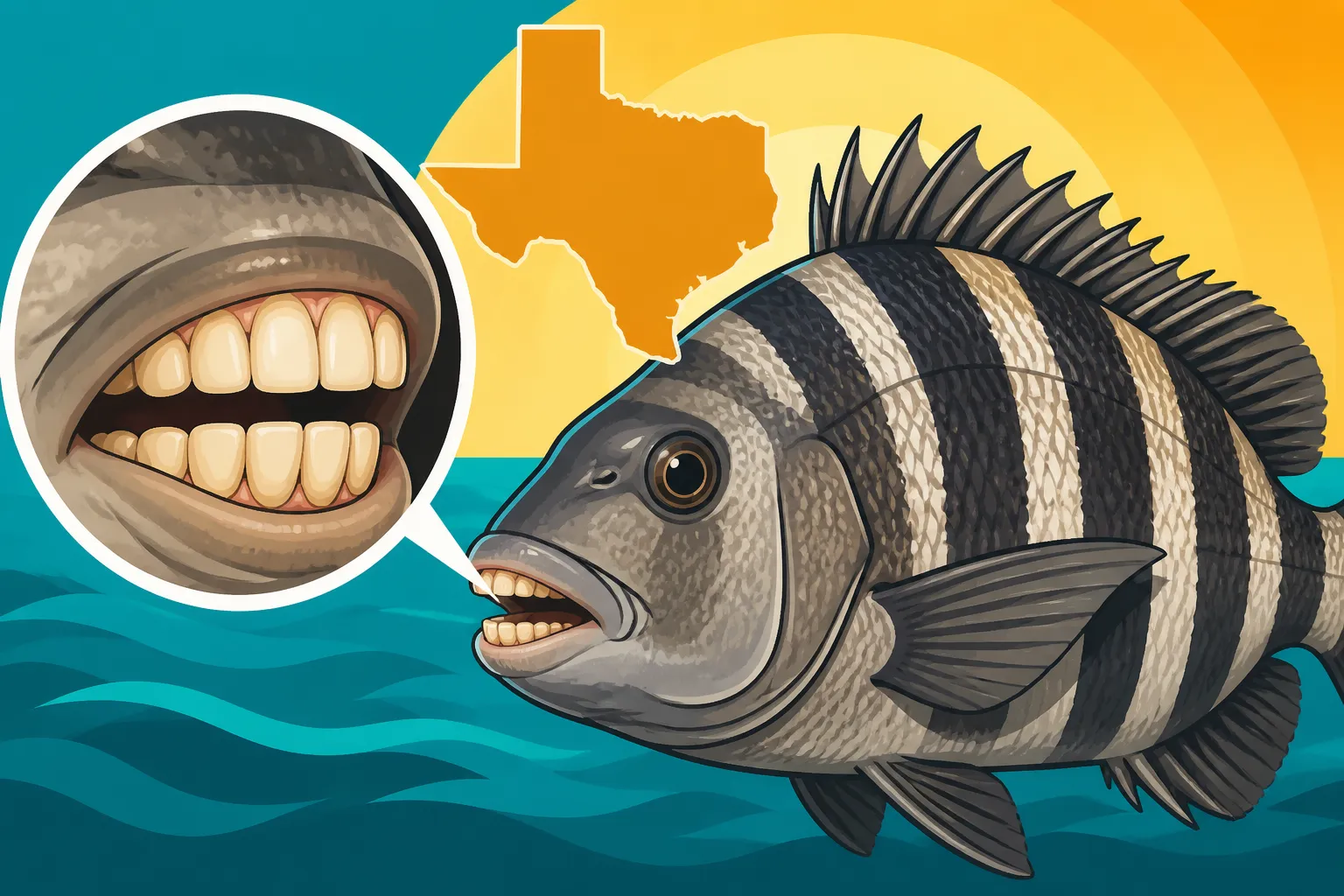
The first time you see a sheepshead up close, it’s hard not to do a double-take. The prominent, almost unnervingly familiar row of incisors at the front of its mouth is what usually grabs your attention. It's often described as a "sheep's head" or even having "human teeth," and that's precisely where the common name "sheepshead" likely originated. But there’s so much more to their dental setup than just those front chompers, and understanding this full array of teeth is key to appreciating their remarkable adaptability.
More Than Just "Human-Like": The Full Set of Chompers
When we talk about sheepshead teeth, most people immediately picture the rows of flat, almost square-looking teeth at the very front. These are their incisors, and yes, they bear a striking resemblance to our own front teeth. But if you were to open a sheepshead's mouth further, you'd discover a much more complex and robust dental system perfectly engineered for its lifestyle.
Behind those initial incisors, further back in their jaws, sheepshead possess several rows of molar-like teeth. These aren't just for show; they are incredibly strong, rounded, and designed for serious crushing power. Think of them as nature's built-in nutcrackers, ready to pulverize the toughest shells imaginable. These molars work in conjunction with the incisors, allowing the fish to first nip at or scrape prey from surfaces, and then move it back for the real pulverizing.
But wait, there's even more! Deep within the sheepshead's throat, they have what are known as pharyngeal teeth. These are another set of strong, bony plates covered in rough, abrasive surfaces. Their purpose is to provide a final stage of grinding, ensuring that even the most stubborn shells are completely broken down before digestion. It's an incredible, three-tiered system of dental weaponry, far more sophisticated than what most anglers initially imagine. Each set of teeth plays a distinct and crucial role, demonstrating just how specialized these fish are.
Evolutionary Adaptation for a Specific Diet
The sheepshead's unique dental configuration isn't some random quirk of nature; it’s a prime example of evolutionary adaptation at its finest. Over countless generations, sheepshead developed these powerful teeth as a direct response to their primary food source: hard-shelled invertebrates. Imagine trying to eat an oyster or a barnacle with thin, pointy teeth like a trout, or even the sharp, canine-like teeth of a redfish. It simply wouldn't work.
Their diet consists mainly of creatures that cling stubbornly to structures or are encased in tough calcium carbonate shells. Without the ability to effectively crush and grind these items, sheepshead wouldn't be able to access the nutritious meat inside. So, nature "equipped" them with the tools necessary to thrive in their specific niche. This process of natural selection favored individuals with stronger, more appropriate teeth, gradually shaping the sheepshead into the formidable mollusc-munching machine we see today.
This kind of specialization isn't unique to sheepshead, of course. Many fish species have evolved distinct dental patterns that reflect their feeding habits. Barracuda have razor-sharp fangs for slicing prey, while parrotfish have fused beak-like teeth for scraping algae off coral. The sheepshead's journey, however, led it to mimic a familiar human trait in its incisors, which is why it often sparks so much curiosity among anglers. It’s a testament to how perfectly suited these fish are to their environment and the food sources available along our Texas coast.
What Do Sheepshead Eat? Unpacking Their Mollusc-Heavy Diet
Understanding a sheepshead's diet is paramount to appreciating its incredible dental structure. These fish aren't just opportunistic feeders; they are precision excavators and crushers, perfectly adapted to a very specific menu. Their teeth are not merely for show; they are vital instruments in their daily quest for sustenance, allowing them to exploit food sources that many other fish simply can't touch.
Crushing Shells and Hard-Bodied Prey
Sheepshead are masters of consuming hard-shelled organisms. Their favorite foods include barnacles, which they scrape off pilings and rocks with those chisel-like incisors. Oysters are another major part of their diet; they'll skillfully pry them open or crush them whole. Blue crabs and fiddler crabs are also high on their list, which they tackle with surprising efficiency, often nipping off legs or crushing the carapace to get to the meat inside. Shrimp, small clams, mussels, and even marine worms round out their diverse but tough-to-eat menu.
The mechanics of their feeding process are quite remarkable. They use their front incisors like tiny chisels or pliers to nip at barnacles, scrape oysters from surfaces, or snip off pieces of crabs. Once a piece of food, or an entire small organism, is dislodged, it's moved further back into the mouth. This is where those powerful, rounded molar-like teeth come into play. With incredible force, these molars grind down the shells, breaking them into manageable pieces for digestion. The pharyngeal teeth in the throat provide the final stage of grinding, ensuring maximum nutrient extraction. It’s a precise, systematic approach to eating that few other fish can emulate, making sheepshead a dominant force in certain ecological niches.
You can often observe evidence of their feeding habits if you examine bridge pilings or jetty rocks along the Texas coast. You'll see patches where barnacles have been cleanly scraped away, a tell-tale sign that a hungry sheepshead has been at work. Their preference for these hard, structure-bound foods also means that where you find robust structures like oyster reefs, jetties, and docks, you're likely to find sheepshead.
Impact on Habitat and Ecosystem
Sheepshead play a crucial, if often overlooked, role in their marine environment. As dedicated bottom feeders and grazers, they act as a natural cleanup crew, helping to keep hard structures like piers, jetties, and oyster reefs clear of excessive marine growth. Without them, these surfaces could become overloaded with barnacles and other fouling organisms, potentially impacting other species or even man-made structures.
Their constant foraging for oysters and barnacles helps to cycle nutrients within the ecosystem. By breaking down tough shells, they contribute to the natural decomposition process and make the organic material available to other organisms. They are a vital link in the food chain, converting energy from invertebrates into a form that can then be consumed by larger predators, or even by us anglers!
The presence of sheepshead often indicates a healthy, thriving ecosystem rich in marine invertebrates. They are frequently found in inshore waters, around structures, and over oyster beds in bays and estuaries, from Galveston Bay down to the Laguna Madre. These environments provide the perfect buffet for their specialized teeth, offering an abundance of their favorite crunchy snacks. If you’re ever curious about their habitat, spending some time exploring Best Texas Gulf Coast Fishing Spots will give you a great visual of where these toothy critters love to hang out.
Fishing for Sheepshead: Adapting to Their Bite
Now that you understand why sheepshead have those peculiar teeth and what they eat, you can probably guess that catching them requires a bit of finesse and the right approach. They're not like a hungry redfish that will smash a lure, nor a catfish that engulfs a chunk of bait. Sheepshead are notoriously clever, earning them the nickname "convict fish" due to their striped patterns, and "thief of the sea" because of their uncanny ability to steal your bait without you even knowing it.
The Challenge of the "Thief of the Sea"
Anyone who has tried to catch sheepshead can attest to their frustratingly light bite. Unlike many other species that give a distinct "thump" or pull when they take the bait, a sheepshead often just lightly "mouths" it, nibbling it away with those incisors. This subtle take is precisely why so many anglers miss them. Their teeth are designed for precision scraping and crushing, not for a violent strike. They can deftly remove a shrimp from a hook in a blink of an eye, leaving you with nothing but an empty hook and a bewildered look on your face.
This skill at bait theft means that many traditional fishing setups just won't cut it. You might feel a tiny tick, think it's just the current or a small baitfish, only to reel in and find your hook completely barren. It's a humbling experience for even seasoned anglers! Their ability to steal bait so efficiently makes it critical to use very sensitive tackle and pay extremely close attention to your line. Any slight twitch, any minor abnormality in the line movement, could be a sheepshead delicately removing your offering. Understanding this unique biting behavior is the first step to successfully hooking one of these cunning fish.
Best Baits and Rigging for Sheepshead
To consistently catch sheepshead, you really have to think like them. Since their diet is focused on hard-shelled invertebrates, your bait choice should reflect that. The undisputed champion bait for sheepshead is the fiddler crab. Their small, meaty bodies and tough shells are exactly what sheepshead are accustomed to crushing. Live shrimp are also incredibly effective, especially when fished whole. Other great options include small pieces of oyster, clam, or even sand fleas, which you can often find burrowed in sandy beaches.
When it comes to rigging, finesse is the name of the game. You need small, incredibly sharp hooks. A J-hook or a small treble hook (sizes 1 to 1/0) works well, but many prefer a strong, small circle hook. The key is to embed the hook carefully into the bait so that the hook point is exposed but not overly visible, and yet allows for a solid hookset when the fish finally commits. A short leader of fluorocarbon line, perhaps 12-20 lb test, can also be beneficial as it's nearly invisible underwater and offers some abrasion resistance against their teeth and nearby structures.
Many successful sheepshead anglers use a Carolina rig with a small egg sinker above a swivel, and then a leader (12-18 inches) to the hook. Others prefer a simple bottom-rig with a small weight directly above the hook. The crucial part is keeping your line tight enough to feel the subtle taps, but not so tight that the sheepshead detects resistance and drops the bait. You can find a wide range of specialized sheepshead hooks and leader materials on Amazon to help you refine your setup. Remember, it's about making it easy for the sheepshead to find the hook with its tough bite, but hard for it to steal the bait without getting caught. For more specific bait recommendations, check out our guide on Best Bait and Lures for Texas Fishing.
Essential Gear Considerations
Beyond bait and rigging, your overall gear setup plays a huge role in your sheepshead success. Because of their light bite, a sensitive rod tip is absolutely critical. You need to feel every tiny tap and nudge. Look for rods with a fast action tip, allowing you to detect the slightest disturbance, but also with a strong backbone to muscle them away from snags once hooked. A medium-light to medium power spinning rod, around 6.5 to 7 feet in length, is often ideal.
Pair this with a small, smooth spinning reel spooled with braided line. Braided line offers superior sensitivity with almost no stretch, transmitting even the most subtle bites directly to your hands. A 10-15 lb test braid is usually sufficient, tied to a fluorocarbon leader. When you feel that subtle peck, resist the urge to violently set the hook immediately. Instead, often a slow, steady pull is more effective, allowing the fish to fully commit to the bait and turn its head, allowing the hook to find purchase in their tough mouth.
Finally, don't forget the accessories. Sheepshead have sharp dorsal spines that can give a nasty poke, so a good pair of fishing pliers (perhaps a sturdy pair you picked up from Amazon) is invaluable for safe de-hooking. A decent pair of gloves can also protect your hands from those spines and their rough scales. Given their tendency to hug structure, you'll want gear that can withstand a bit of a fight near barnacle-encrusted pilings, so invest in quality terminal tackle. For guidance on rod and reel selection, you might find our articles on Best Fishing Rods for Texas Anglers and Best Fishing Reels for Texas Anglers helpful.
Common Misconceptions and Interesting Facts
The sheepshead is truly a unique fish, and its "human-like" teeth often lead to a lot of questions and sometimes even a little apprehension. Let's clear up some common misunderstandings and dive into a few more interesting facts about these striped bottom dwellers that call Texas waters home.
Are They Dangerous to Humans?
The sight of those teeth can certainly spark a moment of "what if?" in many people. With teeth resembling our own, it’s natural to wonder if a sheepshead is aggressive or dangerous. Let me assure you, sheepshead are not aggressive towards humans in the water. They are bottom feeders, focused entirely on their invertebrate diet, not on attacking swimmers or waders. You won't find them chasing after you with their mouths open, eager to take a bite.
However, like any fish with sharp parts, they absolutely demand respect and careful handling once you've landed them. While their "human-like" teeth aren't designed for tearing flesh, they are certainly capable of giving a painful nip if you're careless when handling one. The more significant concern, though, are their incredibly sharp dorsal spines. These spines can inflict a deep and uncomfortable puncture wound if you're not careful. It’s always best to use a fish gripper or a glove when handling a sheepshead, especially when removing the hook, and keep your fingers clear of its mouth and spiny fins. So, dangerous in the sense of a shark attack? Absolutely not. Dangerous if you're sloppy with handling? Potentially, yes.
Sheepshead in Texas Waters
Sheepshead are a popular and abundant species along the entire Texas Gulf Coast. You’ll find them thriving in environments that provide plenty of hard structure and their preferred shelled prey. This means they are common around rock jetties, bridge pilings, oyster reefs, docks, and submerged wrecks in our bays and nearshore Gulf waters. From Sabine Lake to Galveston Bay, Matagorda Bay, Aransas Bay, and down to the Laguna Madre, these "convict fish" are almost everywhere there's a structure to pick clean.
They are particularly sought after by anglers not just for the challenge they present, but also because they are excellent eating fish. The white, flaky meat of a sheepshead is highly prized, making them a fantastic table fare. Many local seafood restaurants will feature sheepshead, especially during cooler months when they tend to congregate in larger numbers.
Fishing for sheepshead peaks during the cooler months, generally from late fall through early spring, when they move into shallower waters and schooling aggregations become more common. This is often the best time to target them, though they can be caught year-round. Before you head out, always make sure to check the Texas Saltwater Fishing Regulations and Texas Saltwater Bag Limits by Species to ensure you're fishing legally and sustainably. Knowing the rules for species like the sheepshead is crucial for every responsible angler. For a deeper dive into this species, our Texas Sheepshead Saltwater Fishing Guide offers even more insights.
Here's a quick comparison of sheepshead and human teeth:
| Feature | Sheepshead Teeth | Human Teeth |
|---|---|---|
| Primary Function | Nipping, scraping, crushing hard-shelled invertebrates (oysters, barnacles, crabs) | Biting, tearing, grinding a diverse omnivorous diet (meat, vegetables, grains) |
| Incisors | Prominent, chisel-like, used for prying and nipping prey from surfaces. | Flat, sharp-edged, used for cutting and biting food. |
| Molars | Multiple rows of strong, rounded, heavy-duty crushing teeth behind the incisors. | Broad, flat, ridged surfaces at the back of the mouth, used for grinding food. |
| Pharyngeal Teeth | Present, specialized grinding plates in the throat for final crushing of shells. | Absent. |
| Number | Varies with age and size, but a full set includes incisors, multiple rows of molars, and pharyngeal teeth. | Typically 32 (including wisdom teeth) in adults, consisting of incisors, canines, premolars, and molars. |
| Appearance | Front incisors bear a striking resemblance to human teeth; molars are powerful and blunt for crushing. | Incisors are sharp, canines pointed, and molars are broad for grinding; generally uniform in appearance within functional groups. |
| Adaptation For | Extreme durability and crushing power to break through tough, calcium-rich shells. | Versatility for a wide range of food textures, adapted for speech and facial structure. |
Disclaimer
This article is for general informational purposes only and does not constitute professional advice. Laws, prices and regulations vary by location and change over time. Consult a qualified professional for guidance on your specific situation.