Do you need waders to fish Texas rivers in summer?
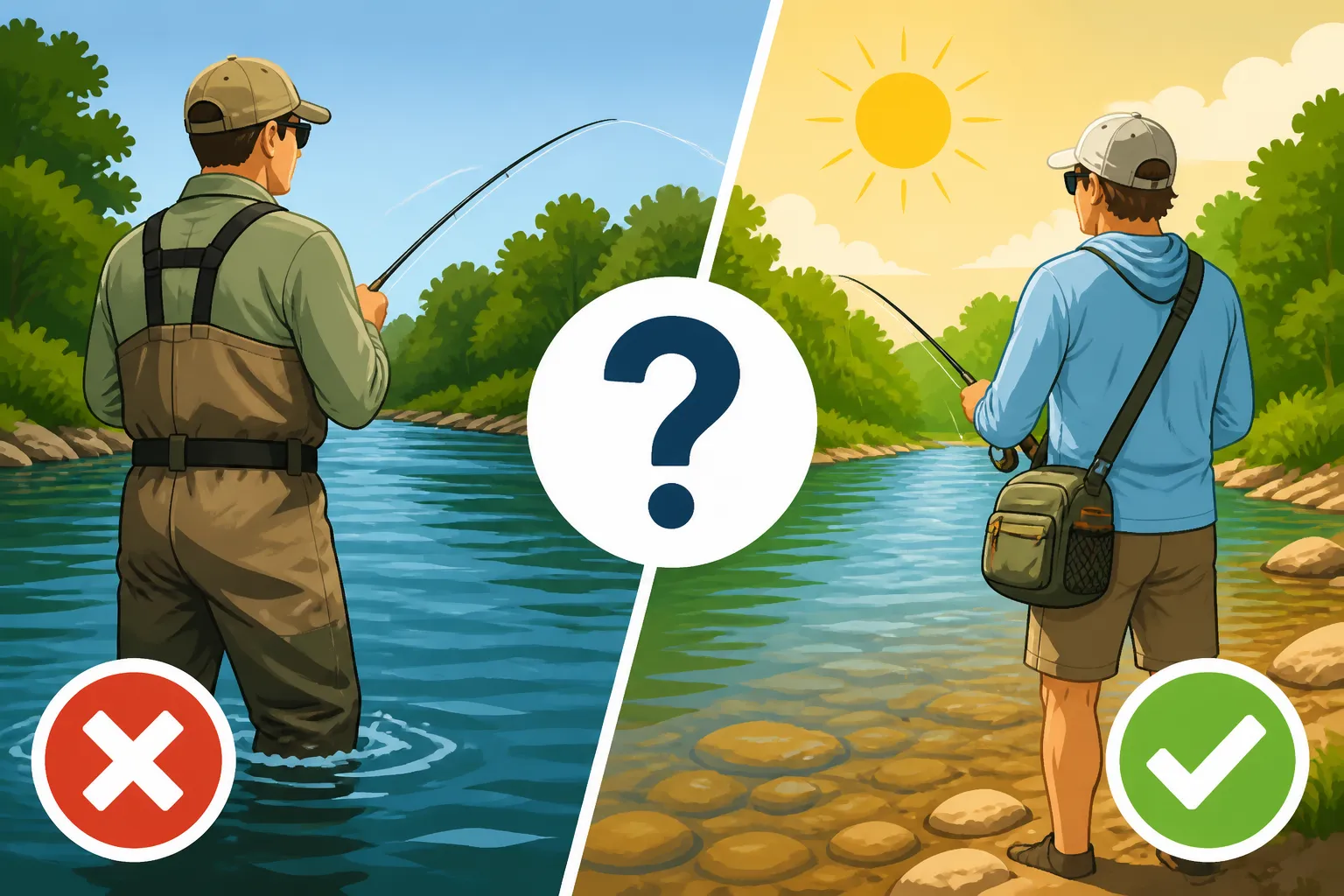
Oh, the Texas summer! Just the thought of stepping into one of our beautiful rivers when the sun is blazing can conjure up images of cool, refreshing water. But then you start thinking about the gear: waders, right? Everyone talks about waders for fishing. Well, let me tell you, when it comes to fishing Texas rivers in the sweltering heat of summer, the traditional wisdom about waders often goes right out the window. This guide is going to dive deep into why waders are usually a hard pass in the Texas summer, what to wear instead to stay comfortable and safe, and those rare instances where you might, just might, consider them.
The Reality of Texas Summer River Fishing
Let's get real for a minute. Texas summers are no joke. We're talking triple-digit temperatures that feel like a hairdryer to the face, even early in the morning. Our rivers, while offering a welcome reprieve, often aren't as cold as you might imagine once the dog days truly set in. This extreme heat fundamentally changes what kind of gear makes sense. The priority shifts from staying warm and dry to staying cool and comfortable, preventing heatstroke, and protecting yourself from sun and other elements.
Understanding Water and Air Temperatures
Many folks picture mountain streams when they think of wading, where the water is snow-melt cold year-round. Texas, for the most part, isn't that. While spring-fed rivers like the Guadalupe or Comal might maintain cooler temperatures closer to their source, the vast majority of our rivers, from the Brazos to the Trinity, warm up considerably during July and August. The air temperature, of course, is almost always significantly hotter than the water, even if the water is a balmy 80 degrees. Trapping that heat next to your body in thick waders is a recipe for misery, and frankly, danger.
Imagine a typical August afternoon on the Llano River. The air is 100 degrees, the sun is beating down, and the water you're wading through is probably in the mid-80s. Now, picture yourself encased in neoprene or even breathable GORE-TEX waders. You'd be sweating buckets inside those things, feeling like you're in a personal sauna. Your body would struggle to regulate its temperature, and dehydration would set in rapidly. It’s not just uncomfortable; it can lead to heat exhaustion or even heatstroke, especially if you're exerting yourself by casting and moving against a current.
Prioritizing Comfort and Safety
Your primary goals when fishing Texas rivers in the summer should be comfort and safety. Comfort isn't just about feeling good; it's about being able to focus on your fishing, respond quickly to a fish strike, and remain alert to your surroundings. Safety means avoiding overheating, minimizing sun exposure, and protecting yourself from various river hazards like submerged obstacles, sharp rocks, or even critters.
Traditional waders, designed for cold water and air, directly counteract these summer goals. They insulate, which is the last thing you need. They're bulky, which can impede movement and make climbing over banks or navigating tricky currents more challenging. And if you take a spill in waders filled with water, they can become a serious safety liability, potentially dragging you down or making it much harder to regain your footing or swim to safety. This is a critical consideration, especially in rivers with stronger currents or deep holes.
When Waders are a Definite NO in Summer
Let's just put it out there: for the vast majority of summer river fishing scenarios in Texas, leave the waders at home. They're overkill, uncomfortable, and can even be hazardous.
The Overwhelming Heat Factor
The number one reason to ditch the waders in summer is the heat. Texas heat is oppressive, persistent, and can be dangerous. Waders, by design, are meant to keep you warm and dry. In 90 to 100-degree weather, with water temperatures often in the 70s or 80s, keeping warm is the absolute last thing you want to do.
Think about it this way: waders trap a layer of air and moisture around your body. While this is insulating in cold weather, in the summer, it creates a personal sauna suit. Your body's natural cooling mechanisms, like sweating and evaporation, are severely hampered. You'll sweat profusely inside the waders, but that sweat can't evaporate effectively, leading to a rapid rise in core body temperature. I've seen anglers practically dripping with sweat and looking visibly distressed after just an hour in waders on a hot Texas day. It's simply not worth the discomfort or the health risk.
Risk of Heat Exhaustion and Heatstroke
This isn't just about being a little warm; it's about serious health risks. Heat exhaustion can manifest as heavy sweating, clammy skin, dizziness, headache, and nausea. Push through that, and you're looking at heatstroke, a life-threatening condition where your body temperature rises to dangerous levels, leading to confusion, seizures, and even organ damage. Wearing waders exacerbates these risks dramatically.
Consider a hot day fishing the Brazos River. You’re excited, you’re moving around, casting, and reeling. All that physical activity generates internal heat. Add to that the external heat from the sun and air, and the insulation of waders, and your body is working overtime. Hydration becomes almost impossible to keep up with, even if you’re drinking water constantly. The last thing you want is to be miles from the car, feeling faint and disoriented because you wore inappropriate gear. Your fishing trip should be enjoyable, not a test of endurance against your own clothing choices.
Impeded Mobility and Safety Concerns
Beyond the heat, waders can be surprisingly cumbersome. They're not designed for agile movement over slippery rocks, through dense riverside vegetation, or in strong currents. The fabric can restrict your stride, and the overall bulk can throw off your balance, especially when wet.
Falling in waders is a serious concern. If your waders fill with water, they can become incredibly heavy, making it difficult to stand up, move, or even swim. Imagine slipping in a deeper section of the river, perhaps the lower Colorado, and trying to right yourself with dozens of pounds of water pulling you down. Even "breathable" waders, while lighter than neoprene, still pose this risk. The best practice for summer river wading is to wear gear that won't hold water and allows maximum freedom of movement, so you can recover quickly from a stumble and stay safe. The ability to move quickly and freely is paramount when navigating uncertain river bottoms and unexpected currents.
Essential Alternatives to Waders for Summer River Fishing
So, if waders are out, what should you wear? The key is quick-drying, breathable, and protective gear that prioritizes comfort and safety in the heat.
Quick-Dry Clothing: The Summer Uniform
Your summer river fishing uniform should revolve around quick-drying, lightweight clothing. This means synthetic fabrics designed to wick moisture away from your skin and dry almost instantly if they get wet. Think about what hikers or paddlers wear – that's the right idea.
For tops, a long-sleeved, light-colored fishing shirt made of nylon or polyester is perfect. These shirts often have UPF (Ultraviolet Protection Factor) ratings, which is crucial for protecting your skin from the intense Texas sun. Many also feature vents or mesh panels for extra airflow. Brands like Columbia PFG (Performance Fishing Gear) or Magellan Outdoors offer excellent options that are widely available at stores like Bass Pro Shops or online at Amazon. Don't be afraid to get it wet; that's part of the cooling strategy. If you splash water on yourself, the rapid evaporation will help cool you down.
For bottoms, quick-dry shorts or convertible pants are the way to go. Again, lightweight nylon is your friend. Convertible pants give you the option to zip off the legs if you want shorts, or keep them on for extra sun protection or to navigate through brushy areas. Some anglers prefer board shorts or swim trunks, especially if they plan on spending a lot of time actually swimming or sitting in the water. The idea is that if you step into a deeper hole or take a deliberate dip to cool off, your clothes won't stay waterlogged and heavy for long.
| Clothing Item | Material | Key Benefits | Brands/Examples |
|---|---|---|---|
| Long-Sleeve Shirt | Polyester, Nylon | UPF protection, moisture-wicking, quick-dry | Columbia PFG, Magellan, Huk |
| Convertible Pants | Nylon | Quick-dry, sun protection, insect barrier, versatile | Columbia, REI Co-op, Bass Pro Shops |
| Wading Shorts/Pants | Nylon, Spandex Blend | Quick-dry, flexible, comfortable for wet wading | Simms, Patagonia, Orvis |
| Underwear | Synthetic | Moisture-wicking, prevents chafing | ExOfficio, Under Armour |
| Hat | Breathable fabric | Sun protection for face/neck, cooling | Wide brim, mesh back |
The Importance of Proper Footwear
Forget the insulated wading boots you wear in winter. Summer river fishing calls for sturdy, comfortable, and quick-draining footwear. You need something with good traction to prevent slips on algae-covered rocks and submerged logs, excellent foot protection from sharp objects, and the ability to shed water quickly.
Closed-toe wading shoes or sandals are ideal. Look for styles that offer robust toe protection and a secure fit, so they won't slip off in the current. Brands like Simms, Chaco, Keen, and Orvis make excellent wading-specific footwear. Even some sturdy, water-friendly trail running shoes can work, as long as they have good drainage and grip. Avoid flip-flops or open-toed sandals that offer no protection from stubbed toes, sharp rocks, or potential snake bites. Remember, you're not just walking on a paved trail; you're navigating natural river bottoms that can be full of surprises. Getting a gash on your foot miles from the car is a surefire way to ruin a fishing trip. You might also want to consider wearing lightweight wool or synthetic socks to prevent blisters, even in wet conditions. Best boots for bank fishing in Texas might offer some crossover advice here.
Sun Protection and Hydration: Non-Negotiables
Beyond clothing, comprehensive sun protection and rigorous hydration are absolutely non-negotiable for summer river fishing in Texas. The sun here is brutal, and cumulative exposure can lead to severe sunburns, skin damage, and heat-related illnesses.
A wide-brimmed hat is a must, providing shade for your face, ears, and neck. Many fishing hats come with an integrated neck gaiter or a strap to keep them from blowing off in the wind. Sunglasses, polarized ones specifically, are not just for comfort; they help you spot fish and submerged structures, reducing glare off the water. Don't forget sunscreen – apply a broad-spectrum, high-SPF sunscreen to all exposed skin, and reapply frequently, especially after wading or sweating. A lip balm with SPF is also a good idea.
As for hydration, carry more water than you think you'll need. A good rule of thumb is at least a liter per hour of activity in intense heat. Consider a hydration pack or a larger water bottle that you can easily access. Electrolyte drinks or tablets can also be beneficial to replenish salts lost through heavy sweating. I always pack a cooler with extra water and a few sports drinks, especially if I'm going to be out all day. Dehydration sneaks up on you, and by the time you feel thirsty, you're already behind. Learn How to stay safe fishing in Texas summer heat before heading out.
Niche Situations Where Waders Might Still Be Considered
While the general rule is "no waders in summer," there are a few very specific, less common scenarios where you might still reach for them. These are exceptions, not the norm, and always require careful consideration of the prevailing conditions.
Cold Spring-Fed Waters
Texas does have some truly cold, spring-fed rivers and sections of rivers, even in the dead of summer. The most notable example is the Guadalupe River, especially below Canyon Lake Dam. Here, the water released from the bottom of the lake remains quite cold, often in the 50s or low 60s, even when the air temperature is soaring. This creates an almost year-round trout fishery, a unique anomaly in a warm state.
If you are specifically targeting trout in the coldest sections of the Guadalupe River, particularly in the mornings or on overcast days, breathable waders might be more comfortable than wet wading. Even then, many experienced Guadalupe River anglers opt for wet wading during summer afternoons when the air temperature is high, relying on layers of quick-dry clothing to regulate warmth in the cold water. The key is knowing the specific water temperature of your fishing spot. Always check conditions before assuming waders are necessary, even on the Guadalupe. For more on this, check out our Guadalupe River Trout Fishing Guide.
Protection from Specific Hazards
In some very particular situations, waders might offer a layer of protection against hazards that outweighs the discomfort of the heat. This is rare for recreational fishing, but it's worth mentioning.
One example might be wading through thick, abrasive vegetation that could scratch or irritate your legs, or through areas with a high density of venomous snakes that prefer to hide in such cover. Even then, snake gaiters worn with sturdy wading pants are often a better, cooler option. Another scenario could be fishing in areas known for a high concentration of aggressive leeches or biting insects that can penetrate lighter fabrics. For these, a tightly woven, full-coverage garment would be preferable. However, for most Texas rivers, the primary "hazards" are sun, heat, and slippery rocks, which waders only exacerbate or don't solve effectively.
If you find yourself in a situation where you feel a strong need for physical protection beyond what quick-dry pants can offer, consider alternative protective gear that doesn't trap heat as severely. For example, specialized wading pants made of tougher, abrasion-resistant material, combined with sturdy boots and perhaps even leg guards, could offer similar protection without the full insulating effect of traditional waders. Always weigh the potential protection against the very real risks of overheating in Texas's punishing summer climate.
Very Early Morning or Late Evening Excursions
Sometimes, on those rare cooler summer mornings after a front, or during very late evening/night fishing trips for species like catfish, the air temperature might drop enough that a light pair of breathable waders could briefly be considered. This would typically be for very short periods before the sun is high or after it has set, and only if the water itself isn't too warm.
However, even in these marginal conditions, the default should still be wet wading. The moment the sun rises or the humidity builds, those waders will become uncomfortable very quickly. It's usually far more practical to start wet wading and carry a light jacket or long-sleeved shirt to layer on if there's a brief chill in the air. For instance, if you’re out on the San Gabriel River for Night Fishing Techniques for Texas Lakes targeting big blue catfish, the evening might be pleasant, but the river water is probably still quite warm from the day. You’d likely be better off in shorts and wading boots, enjoying the cool night air on your legs.
In summary, while there are theoretical scenarios, the practical application for most recreational anglers in Texas during the summer points overwhelmingly away from waders. Opt for smart, breathable layers and prioritize your comfort and safety.
Conclusion: Embrace the Wet Wade
So, do you need waders to fish Texas rivers in summer? The short, sweet, and emphatic answer for most anglers is a resounding no. Trying to battle the oppressive Texas summer heat while encased in insulating waders is a battle you're almost guaranteed to lose, potentially at the cost of your comfort, your fishing enjoyment, and even your health.
Instead, embrace the liberating feeling of wet wading. Equip yourself with quick-drying, breathable clothing that protects you from the sun, sturdy footwear that offers grip and protection, and a commitment to staying hydrated. You'll be cooler, more comfortable, more mobile, and ultimately, safer, allowing you to truly enjoy the incredible river fishing opportunities Texas has to offer, even when the mercury is soaring. Your body (and your fishing success!) will thank you for making the sensible choice.
Disclaimer
This article is for general informational purposes only and does not constitute professional advice. Laws, prices and regulations vary by location and change over time. Consult a qualified professional for guidance on your specific situation.