Best rod holders for a kayak
Managing your fishing rods on a kayak can feel like a clumsy dance, especially when you're paddling, navigating tricky currents, or trying to land a feisty fish in Texas. With limited space and the constant motion of the water, a misplaced rod can quickly turn a peaceful outing into a frustrating tangle or, worse, an unexpected swim for your prized gear. This comprehensive guide will walk you through the various types of kayak rod holders available, their key features, and how to choose the best ones to keep your rods secure and accessible, ensuring a smoother, more enjoyable fishing experience on any Texas waterway.
Understanding the Different Types of Kayak Rod Holders
When you first start looking at kayak rod holders, it can feel a bit overwhelming with all the options out there. But really, most of them boil down to a few core mounting styles, each with its own set of advantages and considerations. Knowing these differences is key to picking out what’s going to work best for your specific fishing adventures, whether you’re targeting largemouth bass on Lake Fork or stalking redfish in the skinny waters of Galveston Bay.
Flush Mount Rod Holders: Stealth and Stability
Flush mount rod holders are often thought of as the most integrated and low-profile option for a fishing kayak. These holders are designed to be permanently installed into the hull of your kayak, sitting flush with the deck. Imagine them as a built-in part of your kayak, not an add-on. They typically consist of a tube that's angled outwards and backwards, providing a stable and secure spot for your rod, often for trolling or simply holding a spare rod out of the way.
The installation process for flush mounts does require a bit of commitment, as you’ll need to drill holes into your kayak's hull. This can be intimidating for some, but with the right tools and careful measurements, it’s a straightforward task. Once installed with marine-grade sealant, they become incredibly sturdy, capable of handling the strain of a heavy fish strike or the constant drag of a trolling lure. Because they don't protrude much above the deck, they minimize snag points and maintain a clean, uncluttered deck space, which is fantastic when you're casting or paddling in tight quarters. However, their fixed position means you can't adjust the rod angle or easily move them once they're in. This makes them less versatile for active fishing techniques that require frequent rod repositioning, but perfect for holding a bait rod or a secondary trolling setup while you focus on casting another.
Surface Mount Rod Holders: Versatility and Ease of Installation
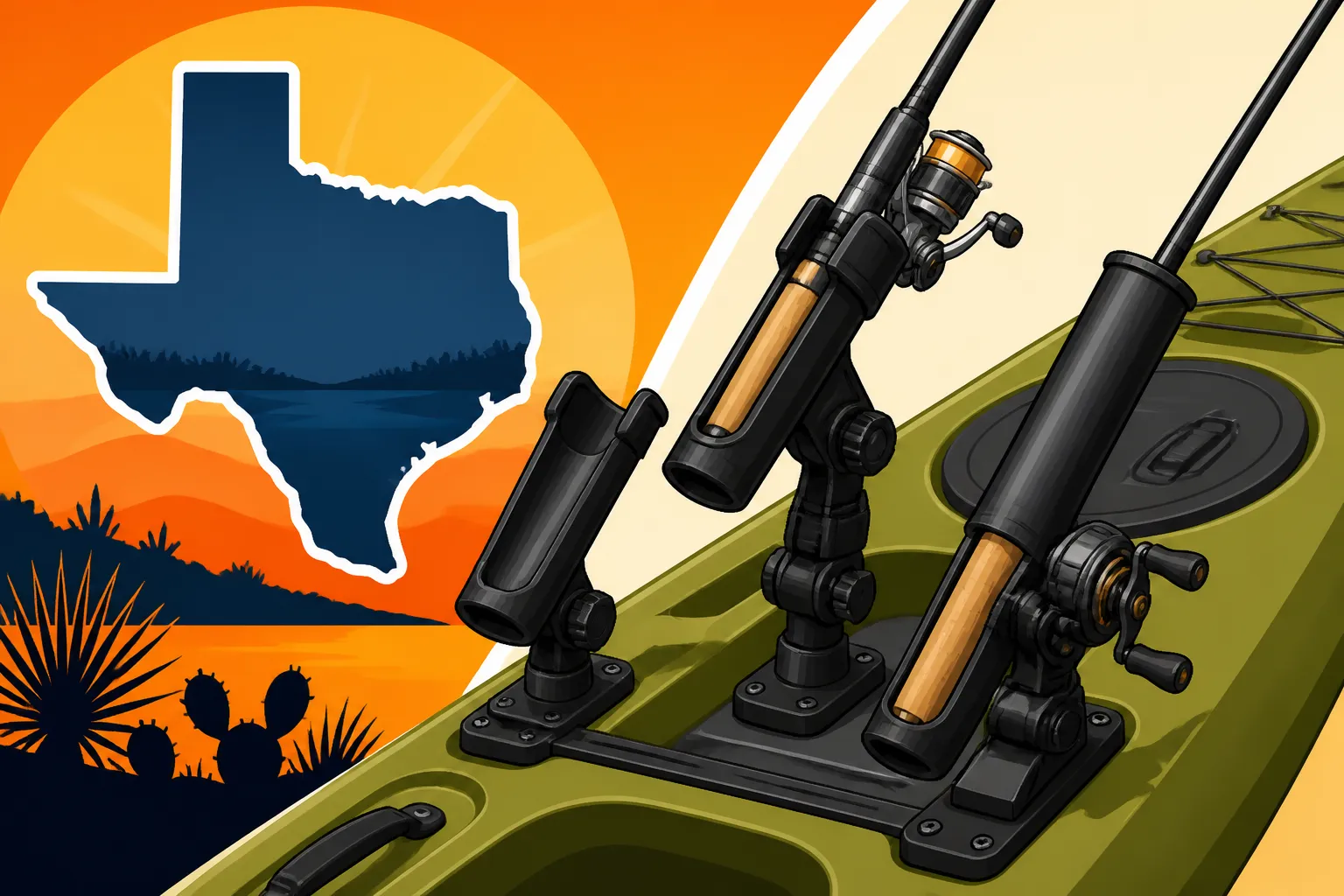
Surface mount rod holders are incredibly popular among kayak anglers for their versatility and relatively easy installation. Unlike flush mounts, these holders are mounted directly onto the surface of your kayak's deck, usually with screws and backing plates. They come in a wide variety of styles, from simple tube holders that keep your rod upright to highly adjustable models that can pivot and tilt.
What makes surface mounts so appealing is their adaptability. Many systems, like those from Scotty or RAM Mounts, offer a base plate that you permanently attach, and then the actual rod holder can be easily clicked in and out. This means you can swap different types of holders or remove them entirely for transport, leaving only the low-profile base. This modularity is a huge benefit for anglers who might use different techniques on different days, or who want to remove all accessories when simply paddling for recreation. Installation, while still involving drilling, is often simpler than flush mounts as you don't need to consider the interior angle of the tube. They tend to sit higher on the deck, which can be a pro for accessibility but a con if you're concerned about snagging gear or if you want a completely clear deck. When browsing for these, you'll find a huge selection on platforms like Amazon, offering different brands and designs to suit almost any preference.
Track Mount Rod Holders: The Ultimate in Customization
If customization and flexibility are at the top of your list, then track mount rod holders are likely your best bet. This system involves installing a "track" – a long rail usually made of aluminum or heavy-duty plastic – onto your kayak's deck. Once the track is in place, various accessories, including different types of rod holders, can be slid into the track and locked into position. The beauty of this system is that you can move your rod holders along the track to any desired spot, or even remove them and replace them with other accessories like fish finders, camera mounts, or cup holders.
Track systems have revolutionized kayak rigging because they allow anglers to fine-tune their setup on the fly. You can quickly adjust the position of a rod holder for optimal trolling spread, move it out of the way for paddling, or reposition it to fight a fish from a more comfortable angle. Brands like YakAttack and Hobie offer robust track systems and a wide array of compatible rod holders. While the initial investment in tracks and compatible holders might be slightly higher, the long-term flexibility often outweighs the cost. Installation usually involves drilling a series of holes for the track, but once it's mounted, adjusting your gear is tool-free and quick. This kind of versatility is particularly valuable for Texas anglers who might fish diverse waters, from wide-open reservoirs to narrow bayous. You can easily adapt your setup to different conditions and species. You can find a vast selection of track mounts and accessories, including rod holders, at retailers like Bass Pro Shops.
Crate and Cooler Rod Holders: Simple, Practical, and Often DIY
For those looking for a simple, cost-effective, and often removable solution, crate and cooler rod holders are fantastic. This approach involves attaching rod holders to a milk crate, a tackle crate system, or even directly to a cooler that you then secure in the tankwell (the open storage area) of your kayak. These are particularly popular with newer anglers or those who want to avoid drilling into their kayak.
Milk crates, in particular, are a classic kayak fishing accessory. They offer a simple, sturdy structure to which you can zip-tie or bolt PVC pipe sections or dedicated plastic rod holders. This instantly creates storage for multiple rods, tackle boxes, and other gear, all in one easily removable unit. Similarly, many coolers are designed with integrated rod holder slots or have surfaces suitable for attaching aftermarket holders. The main advantages here are affordability, ease of setup, and the ability to transfer your entire setup between kayaks or even to a different fishing platform. While perhaps not as secure for heavy-duty trolling or battling massive fish as a permanently mounted holder, they are perfectly adequate for general fishing, transport, and keeping rods organized. They are also incredibly popular for Beginner Fishing Gear Checklist for Texas due to their simplicity.
Key Features and Considerations for Your Kayak Rod Holders
Choosing the right rod holder isn't just about how it mounts; it's also about its construction, functionality, and how well it integrates with your specific fishing style. In Texas, where conditions can range from scorching heat and strong sun to the corrosive saltwater of the Gulf Coast, these details become even more critical. You want holders that can stand up to the elements and perform when it counts.
Material and Durability: Built to Withstand Texas Conditions
The material of your rod holder is paramount, especially when fishing in Texas. Cheap plastics might seem like a good deal initially, but the intense Texas sun and, for saltwater anglers, the corrosive salt spray, can quickly degrade them. Look for holders made from heavy-duty, UV-stabilized nylon, fiberglass-reinforced plastic, or even aluminum.
For freshwater fishing, like chasing bass in Lake Fork Fishing Guide, durable plastics are often sufficient, but ensuring they are UV-resistant will prevent them from becoming brittle and cracking over time. If you're heading out to the bays for Texas Redfish Fishing Guide or Texas Speckled Trout Fishing Guide, opting for stainless steel hardware and saltwater-grade plastics is non-negotiable. Saltwater will ruthlessly rust untreated metals and weaken plastics that aren't specifically designed to resist its effects. Always consider the expected lifespan and the environmental stress your holders will endure. Investing a bit more upfront in quality materials will save you the frustration and cost of replacing broken holders down the line, and more importantly, prevent the heartbreaking loss of a favorite rod and reel.
Adjustability and Angle: Adapting to Your Fishing Style
One of the most significant advantages of modern kayak rod holders is their adjustability. A good rod holder allows you to fine-tune the angle of your rod, both horizontally and vertically, to suit different fishing techniques and conditions. This flexibility is a game-changer for many anglers.
When trolling, for example, you might want your rods angled wide to create a broader spread for your lures, increasing your chances of covering more water. Adjustable holders allow you to position your rod tips low to the water to minimize line drag and keep your lures running at their intended depth. For dead sticking or holding a bait rod while you cast another, you might want the rod angled higher, making it easier to see a bite. Some holders offer a full 360-degree rotation and multiple vertical locking positions, which is ideal for fighting larger fish, as you can adjust the rod to absorb runs and keep the line clear of your kayak. Ball-and-socket style mounts, like those offered by RAM Mounts, provide incredible freedom of movement, letting you position your rod holder almost infinitely. This adaptability is especially important when you're fishing diverse Texas waters, switching between open water trolling for stripers on Lake Texoma and pitching jigs into submerged timber for crappie.
Security and Retention: Protecting Your Valuables
Losing a rod and reel overboard is a nightmare scenario for any angler, and unfortunately, it's a very real possibility in a kayak. A strong fish strike, an unexpected wave, or even just bumping your rod while paddling can send your gear to the bottom. This is why the security features of a rod holder are incredibly important.
Look for rod holders that offer positive retention, meaning they firmly hold your rod in place. Many designs feature a collar or a locking ring that secures the rod butt, preventing it from being pulled out of the holder inadvertently. Others have a deep cup or a trigger mechanism that only releases the rod when you deliberately lift it. Some anglers even add a rod leash, a simple tether that connects the rod to the kayak, as an extra layer of security. This is particularly wise if you're fishing in rougher waters or targeting powerful fish like alligator gar. While it might add an extra step when grabbing your rod, the peace of mind knowing your expensive gear is safe is priceless. For those using track-mounted systems, ensuring the rod holder itself is securely locked into the track is also crucial. Double-checking these small details before you hit the water can prevent a very expensive mistake.
Ease of Installation and Removal: Permanent vs. Portable Needs
The ease of installation and removal is another practical consideration, dictated by your kayak, your skills, and how you intend to use the rod holders. Some anglers are perfectly comfortable drilling permanent holes in their kayak, while others prefer non-invasive or easily removable options.
Permanent installations, like flush mounts or surface mounts that are bolted down, offer maximum stability and a clean look. However, they require careful planning, measuring, and drilling into your kayak's hull, usually with stainless steel hardware and marine-grade sealants to prevent leaks. If you’re not comfortable with this, or if you rent kayaks, these options might not be for you. Track systems fall somewhere in between; the track itself is usually permanently mounted, but the rod holders can be added, removed, or repositioned with ease. On the other hand, clamp-on or rail-mount rod holders, which attach to existing rails or the edge of your kayak, offer quick, tool-free installation and removal. The crate and cooler rod holders are the most portable, allowing you to simply lift your entire setup out of the kayak. Consider how often you want to reconfigure your setup, if you need to transport your kayak frequently, or if you might want to move your rod holders between different vessels.
| Rod Holder Type | Primary Mounting | Adjustability | Security | Ideal Use Cases | Pros | Cons |
|---|---|---|---|---|---|---|
| Flush Mount | Permanent (Drilled) | Fixed Angle | High | Trolling, Storage, Spare Rods | Very stable, low profile, clean deck | Permanent, fixed angle, difficult install |
| Surface Mount | Permanent Base (Drilled) | Variable (Many options) | Medium to High | All-around fishing, versatile | Flexible, removable holder, wide variety | Requires drilling, can snag more |
| Track Mount | Permanent Track (Drilled) | Highly Variable | Medium to High | Customizable setups, multi-species | Extremely versatile, easy repositioning | Initial track install, system cost |
| Crate/Cooler | Strapped/Bungeed | Fixed (depends on crate) | Medium | Storage, Bank Fishing, Beginners | Affordable, no drilling, portable | Less secure for heavy use, bulky |
Choosing the Right Rod Holder for Your Texas Kayak Fishing Style
Texas offers an incredible diversity of fishing environments, from the vast freshwater reservoirs of East Texas to the labyrinthine estuaries and open Gulf waters along the coast. The "best" rod holder for you will heavily depend on where and how you typically fish in the Lone Star State. Thinking about your primary fishing goals will help narrow down the options and ensure your gear enhances, rather than hinders, your experience.
For Trolling Texas Lakes and Bays: Stability and Spread
If you love the thrill of trolling, whether it’s for striped bass on Lake Texoma, hybrid stripers on Richland Chambers Reservoir, or redfish and speckled trout in the bays of Corpus Christi, then stability and the ability to manage multiple lines are paramount. For these situations, you’ll want rod holders that are extremely secure and can withstand the constant drag of lures and the sudden strike of a powerful fish.
Flush mount rod holders are an excellent choice for dedicated trolling, especially if you have a larger, more stable kayak. Their fixed, sturdy position is ideal for setting a line and forgetting it, allowing you to paddle or work another rod. However, if you need to adjust your trolling spread or vary angles, track-mounted or highly adjustable surface-mounted rod holders, like those from Scotty or RAM Mounts, are superior. These allow you to fine-tune the angle and position of each rod, creating an optimal lure presentation and helping to prevent lines from tangling. Consider setting up a "trolling tree" with multiple holders on a track if you want to run several lines simultaneously, a tactic often seen when pursuing big fish in Sam Rayburn Reservoir Fishing Guide. Always make sure whatever system you choose locks your rod in tight, as a fierce strike from a Texas lake monster can easily yank an unsecured rod overboard.
For Sight Fishing the Texas Flats: Quick Access and Minimal Obstruction
Sight fishing the shallow flats of the Texas coast for redfish and flounder is an exciting, visual game that demands stealth, quick reflexes, and minimal clutter. When you spot a tailing redfish or a camouflaged flounder, you need to grab your rod, make a cast, and present your lure instantly. Any delay or obstruction can mean the difference between a hook-up and watching the fish disappear.
For this style of fishing, rod holders that keep your rods readily accessible but completely out of your casting arc are ideal. Flush mount holders often work well for storing a spare rod, keeping it low and out of the way until needed. However, for the rod you're actively using, you might prefer a track-mounted holder that allows you to swing the rod clear for a cast and then quickly reposition it. Some anglers even prefer no rod holder for their primary casting rod, keeping it across their lap or between their feet for instant access. The key is to avoid anything that protrudes too much or creates a snag point for your line when you're making those critical, often quick, casts. Think about the path your paddle takes and your casting motion; your rod holders should never interfere. Many wade fishermen, after paddling to a flat, will secure their kayak and then wade, leaving their rods in simple crate-style holders for later retrieval. This method keeps them from having to manage multiple rods while actively wading the Galveston Bay Fishing Spots or Matagorda Bay Fishing Spots.
For Bank/Shore Launching and Portaging: Durability and Low Profile
Many Texas anglers launch their kayaks from natural shorelines, sandy beaches, or small public access points, often involving dragging or carrying their kayak some distance. This "portaging" or rough launching can put a lot of stress on your gear, and fragile, protruding rod holders are often the first to take a beating.
If you frequently launch from unimproved banks or need to portage your kayak over obstacles, prioritize durability and a low-profile design. Flush mount rod holders are excellent here because they are integrated into the hull and don't stick out to snag on branches or get crushed when dragging the kayak. If you opt for surface or track mounts, look for models made from robust, impact-resistant materials. Consider models that can be easily removed or folded down when you're not actively fishing, leaving only a low-profile base. This minimizes the risk of damage during transport or when negotiating tight spots. Crate-style rod holders can also be a good option as the entire unit can be removed before dragging the kayak, protecting your rods and holders from unnecessary abuse. Protecting your gear during these phases means more time fishing and less time worrying about broken equipment.
For Storage and Transport: Keeping Rods Safe Off the Water
Let's be real, fishing isn't just about being on the water; it's also about getting there and back, and storing your gear in between trips. Protecting your rods during transport and storage is just as important as on the water, especially with the bumpy roads and hot garages we often encounter in Texas.
For transport on top of your car or in a truck bed, detachable rod holders are fantastic. Systems like track mounts allow you to remove the holders themselves, leaving a clean deck and minimizing wind resistance or the chance of damage from low-hanging branches. Flush mounts also offer a low-profile advantage here. If you use a crate or cooler system, you can often just remove the whole unit from the kayak and place it securely in your vehicle, keeping your rods and tackle consolidated. For long-term storage, keeping your rods out of direct sunlight and extreme heat is crucial to prevent damage to guides, blanks, and line. While rod holders are primarily for on-water use, considering how they impact your off-water routines – from loading up the truck to stowing your kayak in the garage – can make a big difference in the longevity and condition of your fishing gear. Proper rod storage, even when not actively fishing, is key to ensuring your equipment is ready for your next adventure.
This article is for general informational purposes only and does not constitute professional advice. Laws, prices and regulations vary by location and change over time. Consult a qualified professional for guidance on your specific situation.