Matagorda Bay Fishing Spots
Matagorda Bay, with its vast expanse and intricate network of marshes, bayous, and deep channels, can be a truly intimidating place for any angler, whether you're a seasoned local or just visiting. It's easy to feel lost amidst the endless water, wondering where the fish are hiding and what secret spots the successful folks are hitting. This comprehensive guide is here to cut through the confusion, offering a realistic, in-depth look at the prime fishing spots in Matagorda Bay, helping you unravel its secrets and bring home a cooler full of fish.
Understanding Matagorda Bay's Unique Charm for Anglers
Matagorda Bay isn't just one big body of water; it's a complex, dynamic estuary system that offers an incredible diversity of fishing opportunities. Its sheer size and varied habitats are what make it so appealing, yet also so challenging to master. You've got everything from shallow grass flats and oyster reefs to deep channels and meandering bayous, each holding its own promise for different species and fishing styles. This isn't your average small lake; it's a living, breathing ecosystem with nuances that take time to understand.
The Bay System: East, West, and Connecting Waters
When folks talk about Matagorda Bay, they're often referring to both East and West Matagorda Bay, two distinct, yet interconnected, systems. East Matagorda Bay, separated from the Gulf by a barrier island and connected to the main bay by the Intracoastal Waterway (ICW) and a few natural passes, tends to be shallower and more marshy. It's a fantastic spot for wade fishing, with expansive flats where redfish and speckled trout love to ambush bait. West Matagorda Bay, on the other hand, is generally deeper and wider, with more pronounced channels and oyster reefs. It's directly connected to the Gulf of Mexico via Pass Cavallo, which means it experiences a stronger tidal flow and often sees a greater influx of Gulf species. Understanding this fundamental difference is your first step to unlocking its potential.
Navigating between these two sections and understanding their unique characteristics is crucial. The Intracoastal Waterway itself acts as a highway for fish, particularly during migrations, connecting various bayous and lakes. Many anglers find success fishing the numerous cuts and coves that branch off the ICW. Each side of the bay offers a different challenge and reward, and knowing which one suits your preferred style, or even the day's conditions, can make all the difference. For example, a windy day might make East Matagorda Bay's protected coves a better option than West Matagorda's open expanses.
Why Matagorda Bay Stands Out
Matagorda Bay isn't just another pretty face on the Texas coast; it truly stands out for several reasons. First, its relatively undeveloped shoreline, particularly in East Matagorda Bay, means less fishing pressure in many areas compared to some of the more populated bays like Galveston or Corpus Christi. This translates to healthier fish populations and a more pristine fishing experience. You can often find stretches of water where you feel like you're the only boat or wader for miles, a rare luxury these days.
Secondly, the abundance of diverse habitat types is unparalleled. From the nutrient-rich marshes teeming with baitfish and shrimp to the sprawling oyster reefs providing cover and feeding grounds, the bay supports a robust food chain. This intricate web of life ensures that there's always something biting, whether you're chasing trophy redfish in the skinny water or drifting for speckled trout over shell. Anglers who take the time to learn the bay's geography and how different species relate to specific structures often find themselves consistently successful. The incredible variety truly caters to all skill levels and preferences, from fly fishing enthusiasts to bait-and-wait channel anglers.
Key Fishing Zones Within Matagorda Bay
Knowing where to drop a line is half the battle in a bay system as vast as Matagorda. While the entire bay holds fish, certain areas consistently produce more action due to their unique structure, depth, and forage availability. These hotspots aren't always secret, but understanding why they're productive and how to approach them can significantly boost your success. It's about more than just showing up; it's about strategizing your attack based on the conditions and the habits of the fish.
Productive Estuaries and Inlets
The many estuaries, bayous, and inlets that feed into Matagorda Bay are absolute magnets for fish, especially during tidal movements. These areas act as funnels, concentrating baitfish and shrimp, which in turn attract game fish like redfish, speckled trout, and even flounder. In East Matagorda Bay, places like Boggy Bayou, Oyster Lake, and the numerous unnamed guts and cuts off the Intracoastal Waterway are prime examples. These areas often feature muddy or sandy bottoms, surrounded by marsh grass, offering excellent ambush points. Fishing the mouths of these inlets during an outgoing tide, when bait is being flushed out, can be incredibly productive.
Similarly, in West Matagorda Bay, the areas around the Colorado River and the numerous smaller bayous like Live Oak Bayou and Carancahua Bay are stellar. The river mouth, in particular, can be a fantastic spot for a variety of species, especially after heavy rains when freshwater inflow stirs up nutrients and bait. When fishing these areas, pay close attention to any current lines or subtle changes in water color, as these often indicate where bait is concentrating. A little patience and observation go a long way in these dynamic zones. Remember, fish use these sheltered areas not just for feeding but also for escaping harsh weather, making them reliable spots even on less-than-ideal days.
Prime Reefs and Shell Pads
Oyster reefs and shell pads are the backbone of Matagorda Bay's ecosystem, providing structure, food, and shelter for countless marine organisms. For anglers, they are indispensable hotspots for speckled trout and redfish, and often attract other species too. These underwater formations can vary from subtle, almost flat shell patches to towering reefs that break the surface at low tide. In West Matagorda Bay, you'll find extensive reef systems, many of which are well-known, like the reefs around the Port O'Connor jetties or those scattered throughout the main bay. These reefs create current breaks and eddies, which are perfect places for predatory fish to lie in wait.
East Matagorda Bay also boasts its share of excellent shell, particularly in the mid-bay areas and near the channels. Fishing around these reefs requires careful navigation, especially for those unfamiliar with the bay, as hitting an exposed shell pad can quickly ruin your day. However, the rewards are often worth the effort. Drifting over these shell beds with a popping cork and live shrimp, or working soft plastics along their edges, can lead to consistent hook-ups. The best part is that different parts of a reef can hold fish depending on the tide and time of day, so don't be afraid to experiment with your approach. Remember to check local charts or ask experienced guides about the specific locations of these crucial underwater structures.
Navigable Channels and Deeper Waters
While Matagorda Bay is largely considered a shallow-water fishery, its deeper channels and dredged cuts are incredibly important, especially during colder months or when fish seek refuge from extreme heat. The Intracoastal Waterway (ICW) is the most prominent of these, traversing both East and West Matagorda Bay. The ICW offers deeper water, often 10-12 feet, and creates strong currents along its edges. These currents can be fantastic for targeting channel catfish, black drum, and even some larger speckled trout or redfish that are cruising the deeper lanes. Fishing the drop-offs and ledges along the ICW, particularly where smaller bayous or guts intersect it, can be highly effective.
Beyond the ICW, there are other natural and dredged channels, such as those leading to various ports and marinas, or the deeper sections of Pass Cavallo. These deeper waters are also crucial for fish migration. During the fall flounder run, for instance, flounder will stage in these channels before heading out to the Gulf. Similarly, large schools of baitfish often move through these deeper thoroughfares, attracting bigger predators. When fishing these channels, consider using heavier baits that can get down to the bottom quickly, or try trolling deep-diving lures. These areas often require a boat, but the payoff can be substantial, especially when other shallow-water spots are slow.
Targeting Specific Species in Matagorda Bay
Matagorda Bay is a multi-species angler's paradise, offering excellent opportunities for several coveted Texas game fish. Knowing the habits, preferred habitats, and feeding patterns of each species is key to maximizing your catch. You can't just throw out any bait anywhere and expect to catch everything. Each fish has its quirks, and understanding them will make you a more effective and successful angler.
Redfish: The Bay's Bronze Beauties
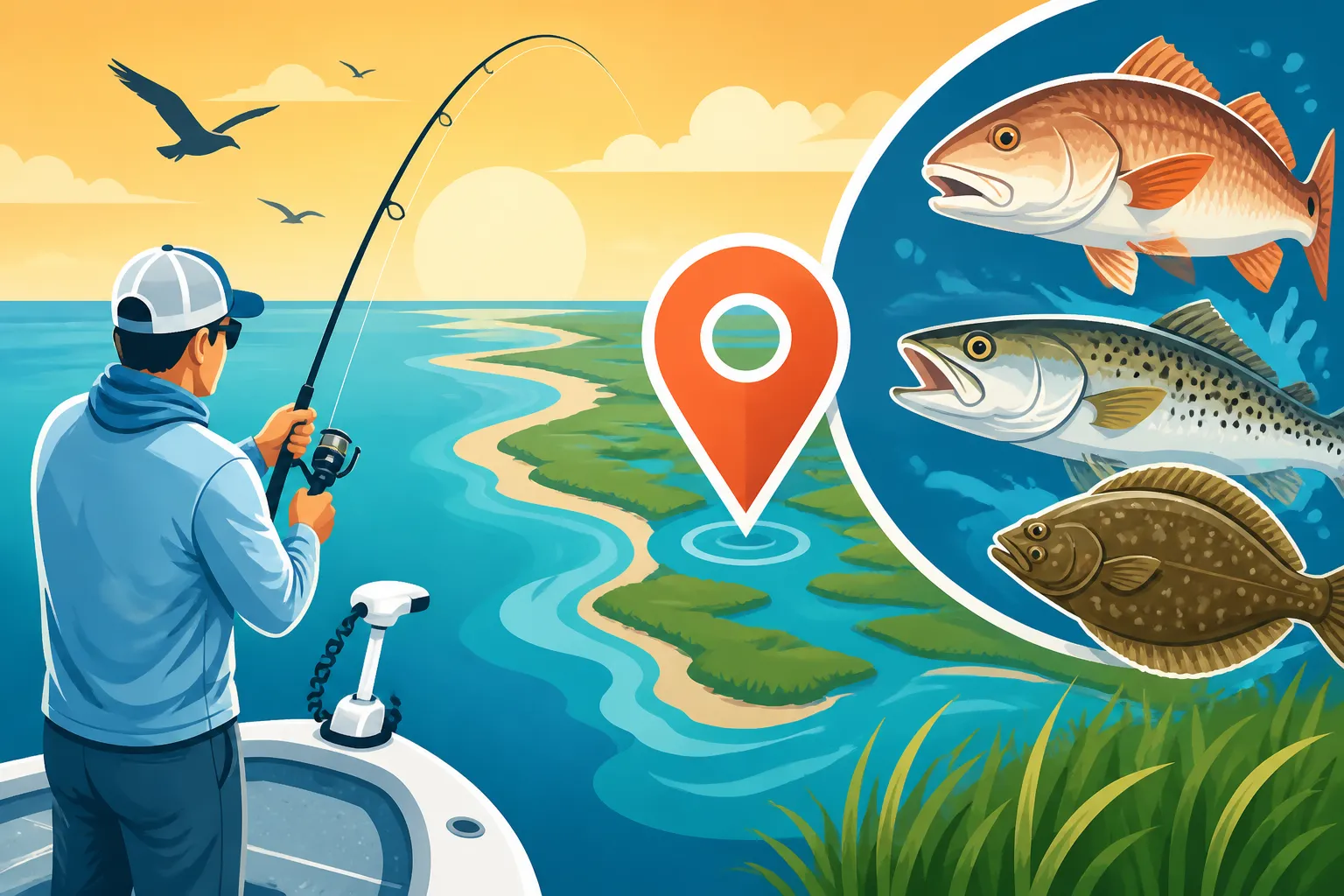
Ah, the redfish! These powerful, bronze-colored fighters are arguably the most sought-after game fish in Matagorda Bay. They thrive in the bay's shallow, grassy flats, mud bottoms, and around oyster reefs. In East Matagorda Bay, the expansive flats near Oyster Lake or the back lakes and ponds are prime real estate for redfish. You'll often find them "tailing" in super skinny water as they root for crabs and shrimp, their bronze tails flashing in the sun – an incredible sight for wade fishermen. In West Matagorda Bay, the marsh systems around the Colorado River delta and areas near Carancahua Bay hold strong populations.
When targeting redfish, live bait like shrimp, mullet, or mud minnows fished under a popping cork or free-lined are incredibly effective. For artificials, scented soft plastics like those from Gulp! or Down South Lures rigged on a jig head, spoons, and topwater plugs are go-to choices. Redfish are notorious for their strong fight, so make sure your tackle is up to the task. Remember, Texas Redfish Size and Bag Limits are strictly enforced to ensure these magnificent fish continue to thrive for generations to come. They're often found in schools, so where you catch one, there are likely more.
Speckled Trout: Silver Kings of the Flats
Speckled trout, or "specks" as they're affectionately called, are another staple of Matagorda Bay fishing. These beautiful silver fish with distinctive spots are known for their aggressive strikes and delicious table fare. They prefer clearer water than redfish and are frequently found over oyster reefs, grass beds, and along the edges of channels. West Matagorda Bay, with its generally clearer water and extensive shell, is particularly renowned for its speckled trout fishing. The reefs near Port O'Connor and the deeper guts within the bay are consistently productive. East Matagorda Bay also has excellent speckled trout opportunities, especially in the cleaner parts of the bay, like the mid-bay reefs.
Live shrimp is, without a doubt, a top bait for speckled trout, often fished under a popping cork. For artificials, soft plastics in chartreuse, clear with glitter, or pearl white, rigged on a 1/8 to 1/4 ounce jig head, are deadly. Topwater lures fished at dawn and dusk can also produce explosive strikes from larger "gator" trout. Many experienced anglers utilize Texas Saltwater Fishing Techniques like drifting the flats or slow-wading over shell to cover ground and locate schools of trout. They're often found schooled up, so once you find a few, stick around!
Flounder: Masters of Camouflage
Flounder, with their unique flattened bodies and incredible camouflage, are an exciting and challenging catch in Matagorda Bay. These bottom-dwellers are ambush predators, lying in wait on sandy or muddy bottoms, often near structure or drop-offs, ready to dart out and grab unsuspecting bait. They are particularly active during their fall migration, often referred to as the "flounder run," when they move from the bays to the Gulf of Mexico to spawn. Key areas to target flounder include the mouths of bayous and passes, drainages along the ICW, and the edges of oyster reefs.
Live mud minnows or finger mullet are irresistible to flounder, typically fished on a bottom rig or a Carolina rig. For artificials, a dark-colored soft plastic jig or a bucktail jig bounced slowly along the bottom can entice a strike. The bite can be very subtle, often feeling like a light "thump" or just added weight, so a keen sense of feel is essential. You'll need to set the hook firmly after giving them a moment to fully ingest the bait. Keep an eye on the Texas Flounder Season and Limits as there are specific rules and closed periods, especially during their spawning migration. Gigging for flounder at night is also a popular method, but requires a separate set of rules and gear.
Other Notable Catches: Drum and Sheepshead
While redfish, speckled trout, and flounder often get all the glory, Matagorda Bay also offers fantastic opportunities for other delicious and hard-fighting species. Black drum are abundant throughout the bay, especially in deeper channels, around oyster reefs, and near passes. They're bottom feeders, known for their distinctive "drumming" sound, and can grow to impressive sizes. Fresh dead shrimp or crab are top baits for black drum, fished on a simple bottom rig. They put up a formidable fight, especially the larger ones, making them a fun catch.
Sheepshead, with their human-like teeth, are another popular target, particularly around piers, jetties, oyster reefs, and any other structure covered in barnacles and mussels, their favorite food. They can be tricky to hook due to their bait-stealing prowess, but once you get the hang of it, they offer excellent sport and even better table fare. Small pieces of live shrimp, fiddler crabs, or even small barnacles are the best baits, fished on a small, sharp hook. Matagorda Bay's extensive man-made structures and natural reefs provide perfect habitat for these cunning fish.
Essential Gear and Techniques for Matagorda Bay
Having the right equipment and knowing how to use it effectively can dramatically improve your fishing experience in Matagorda Bay. It’s not just about having the fanciest rod, but rather selecting tackle that matches the conditions, the species you're targeting, and your chosen technique. A well-prepared angler is a successful angler, and nowhere is that truer than in the dynamic waters of the Texas coast.
Rods, Reels, and Line Choices
For most inshore fishing in Matagorda Bay, a medium to medium-heavy spinning rod or baitcasting rod, typically 6'6" to 7'6" in length, will serve you well. A faster action tip is preferable for sensitivity, allowing you to feel those subtle bites. Match this with a reliable spinning reel in the 2500-4000 series or a baitcasting reel with a good braking system. Brands like Shimano, Penn, and Daiwa offer excellent options that can withstand the corrosive saltwater environment. When choosing your Best Fishing Rods for Texas Anglers and Best Fishing Reels for Texas Anglers consider durability and saltwater resistance as key factors.
As for line, a 10-15 lb braided mainline is a popular choice for its strength, sensitivity, and casting distance. Pair this with a 20-30 lb fluorocarbon leader, about 2-3 feet long, attached via a double uni knot or an FG knot. The fluorocarbon leader is less visible to fish and more abrasion-resistant, crucial when fishing around shell or structure. Some anglers prefer monofilament for its stretch, especially for topwater lures, but braid with a fluoro leader offers a versatile setup for most bay applications.
Baits and Lures for Success
The selection of baits and lures for Matagorda Bay is vast, but focusing on the proven producers will save you time and money. Live bait is often king, especially when the bite is tough. Live shrimp, finger mullet, and mud minnows are consistently effective for trout, redfish, and flounder. You can purchase these at local bait shops in Matagorda, Port O'Connor, or Palacios. When using live bait, a simple popping cork rig or a Carolina rig is usually all you need.
For artificial lures, soft plastics are indispensable. Scented options like those from Gulp! (Shrimp, Mullet, or Grub patterns) or locally popular brands like Down South Lures (Super Model or Knockin' Tail) rigged on a 1/8 to 1/4 oz jig head are incredibly versatile. Colors like "Opening Night," "Chicken on a Chain," "Limelight," and "Pearl" are consistent producers. Topwater lures (like Heddon Super Spook Jr. or MirrOlure She Dog) in bone, chrome, or clear are exciting for early morning or late evening trout and redfish. Spoons (silver or gold) are excellent for covering water and mimicking fleeing baitfish. Consult a guide or local tackle shop for the current hot baits and colors; conditions can change quickly. This selection of Best Bait and Lures for Texas Fishing can make all the difference on a slow day.
Wade Fishing vs. Boat Fishing Strategies
Matagorda Bay offers fantastic opportunities for both wade fishing and fishing from a boat, each with its own advantages and challenges. Wade fishing is incredibly popular, especially in East Matagorda Bay's shallow flats. It allows for a stealthy approach, getting you right into the heart of the fish's feeding zones without the disturbance of a boat motor. Essential gear for wade fishing includes a good pair of waders (neoprene in winter, breathable in summer), stingray guard boots, a stripping basket for fly anglers, and a reliable stringer or wade belt. Focus on areas with a mix of grass and sand, or subtle shell patches. Look for baitfish activity, nervous water, or even actual fish.
Boat fishing, especially with a shallow-drafting bay boat, opens up vast expanses of the bay that are inaccessible to waders. This includes deeper channels, remote oyster reefs, and far-flung marsh systems. Many anglers opt for a Best Boats for Texas Saltwater Fishing like a shallow-drafting bay boat or even a specialized flats boat. Drifting is a common and effective technique, allowing you to cover large areas while casting. A good trolling motor can be invaluable for quietly approaching schools of fish or holding position over a promising spot. Whether wading or boating, understanding the tides and wind is crucial, as they dictate fish movement and feeding behavior. Many anglers find combining both strategies provides the most flexibility and success.
Navigating Matagorda Bay: Boat Access and Safety
Venturing out onto Matagorda Bay, especially for the first time, requires more than just a good rod and reel. Its vastness and dynamic nature demand careful planning, knowledge of access points, and a strong emphasis on safety. Understanding the local geography and conditions is paramount to having a successful and, more importantly, safe day on the water.
Public Ramps and Marinas
Matagorda Bay is well-equipped with public boat ramps and marinas, providing access for anglers coming from all directions. For East Matagorda Bay, popular access points include the Matagorda Harbor ramp in Matagorda and the various county ramps along the ICW, such as the one at Sargent. These ramps typically offer ample parking and often have bait and tackle shops nearby.
For West Matagorda Bay, the town of Port O'Connor is a major hub, with several excellent public ramps and full-service marinas like Port O'Connor Marina, offering fuel, bait, and supplies. Palacios also provides good access to the northern parts of West Matagorda Bay and Carancahua Bay. Always check ramp conditions before heading out, especially after heavy rains or during extreme low tides, as some ramps can become challenging to use. A quick search online or a call to a local bait shop can save you a lot of hassle. Utilizing a service like FishingBooker can also help you connect with local guides who often launch from these marinas, providing a seamless experience even if you don't have your own boat.
Understanding Tides and Weather
Tides and weather are the lifeblood of saltwater fishing, and nowhere is this more evident than in Matagorda Bay. Fish activity is heavily influenced by tidal movement; an incoming or outgoing tide often stimulates feeding, as baitfish are moved around. Understanding tide charts and predicting when the current will be strongest in your chosen fishing zone is a critical skill. Slack tide, while not always unproductive, often sees a lull in activity.
Beyond tides, local weather conditions can be a game-changer. Strong winds can make fishing uncomfortable and even dangerous, churning up the water and making it difficult to spot fish or feel bites. A good rule of thumb is to avoid heading out if winds are forecast above 15-20 mph, especially in more open sections of the bay. Thunderstorms can pop up quickly on the Texas coast, so always check the radar and forecasts before and during your trip. Rapid temperature drops, such as those caused by a cold front, can send fish seeking deeper, more stable waters. Always be prepared for changing conditions, and don't hesitate to cut a trip short if the weather turns sour. This also ties into knowing the Best Time of Year to Fish in Texas for each species.
Safety First: What Every Angler Needs
Safety should always be your top priority when fishing Matagorda Bay. The bay is vast and can be unforgiving if you're unprepared. Always tell someone your float plan – where you're going, who you're with, and when you expect to return. Carry all required Texas Boat Safety Equipment Requirements including USCG-approved life jackets for everyone on board, a whistle or horn, visual distress signals (flares), and a fire extinguisher. A well-stocked first-aid kit is also a must.
Beyond the essentials, consider investing in a reliable GPS unit or a chartplotter, pre-loaded with Matagorda Bay maps. These will help you navigate safely, avoid shallow oyster reefs, and find your way back if fog rolls in or darkness falls. A marine VHF radio is invaluable for communicating with other vessels and the Coast Guard, especially if your cell phone loses signal. For those venturing into very shallow areas, a push pole can be a lifesaver for navigating through skinny water without damaging your motor or getting stuck. Don't forget ample water, sun protection (hat, sunglasses, long sleeves), and bug spray, especially in the marshy areas. If you're considering a guided trip, companies like FishingBooker specialize in connecting anglers with experienced, safety-conscious local captains.
Best Times to Fish Matagorda Bay
Knowing when to fish Matagorda Bay can be just as crucial as knowing where. The Texas coast experiences distinct seasons, and each brings its own set of optimal conditions and target species. Understanding these patterns, combined with daily factors like tides and immediate weather, will dramatically increase your chances of a memorable day on the water.
Seasonal Hotspots and Migrations
Matagorda Bay truly shines throughout most of the year, but each season has its particular draws. Spring (March-May) is fantastic as water temperatures rise, igniting the bite for redfish and trout. Fish move onto shallower flats and become very active, feeding heavily after the colder winter months. This is an excellent time for topwater action early and late in the day. The white bass run can also occur in rivers feeding the bay.
Summer (June-August) brings the heat, making early mornings and late evenings the most productive times. Speckled trout often move to deeper grass beds and over shell reefs, seeking cooler water. Redfish can still be found in the shallows but often prefer areas with good current or deeper pockets. Night fishing becomes a popular and very effective strategy for both trout and redfish, especially under lights.
Fall (September-November) is arguably the peak season. The notorious "flounder run" sees large numbers of flounder migrating to the Gulf, offering incredible gigging and rod-and-reel opportunities. Redfish often gather in large "bull red" schools in the deeper passes and channels as they prepare to move offshore. Speckled trout remain active and can be found in a variety of bay locations. This period also sees cooler temperatures, making for more comfortable fishing.
Winter (December-February) can be challenging but incredibly rewarding. Fish often school up tightly in deeper channels, mud bottoms, and around protected bayous. Targeting these "wintering holes" can lead to massive catches of redfish and trout, but they can be finicky. The Guadalupe River, further inland, offers unique trout fishing opportunities due to stocking.
Tidal Influences on Feeding Patterns
Beyond the general seasonal shifts, daily tidal patterns are paramount in Matagorda Bay. The movement of water, whether incoming or outgoing, dictates when and where fish will feed. An incoming tide often pushes cleaner, saltier water and fresh bait into the bay, while an outgoing tide flushes baitfish and shrimp out of marsh systems and into the waiting mouths of predators.
Many experienced Matagorda anglers prefer fishing around the peak of an outgoing or incoming tide, when the current is strongest. The "last two hours of an outgoing tide" is a common adage, as bait is concentrated and fish actively feed in the drains. Conversely, a strong incoming tide can bring schools of bait into shallow areas, drawing redfish and trout with them. Slack tides, the periods of minimal water movement between tides, can sometimes be slow, but fish are still present and might be caught by anglers willing to slow down their retrieve or target deeper areas. Paying close attention to tide charts and understanding how the moon phases affect the strength of the tides will give you a significant advantage. The Texas Saltwater Endorsement Explained license requirement is always in effect, regardless of the tide.
Optimal Weather Conditions
While you can't control the weather, understanding how different conditions impact fish behavior will help you plan your trips. Overcast days, especially with a light chop on the water, are often ideal for speckled trout and redfish. The reduced light penetration makes fish less wary and allows them to hunt more aggressively. A steady, light breeze can be beneficial, creating current and oxygenating the water, but anything over 15 mph can quickly turn a pleasant trip into a frustrating battle against the elements.
Bluebird days, characterized by clear skies and high pressure after a cold front, are notoriously tough. Fish tend to be lethargic and less willing to bite. In these conditions, slowing down your presentation, downsizing your baits, and focusing on deeper, more stable water can be effective. Rain can actually be good for fishing, especially a light, steady drizzle, as it breaks up the surface and often stirs up bait. However, heavy downpours can muddy the water, making it harder for fish to see your lures. Ultimately, adapting your tactics to the prevailing weather conditions is the mark of a truly skilled Matagorda Bay angler.
Disclaimer
Fishing conditions and regulations in Texas can change frequently. Always consult the latest Texas Parks and Wildlife Department (TPWD) Outdoor Annual for current fishing regulations, bag limits, and licensing requirements before heading out on the water. This guide is for informational purposes only and should not replace official sources or professional advice.