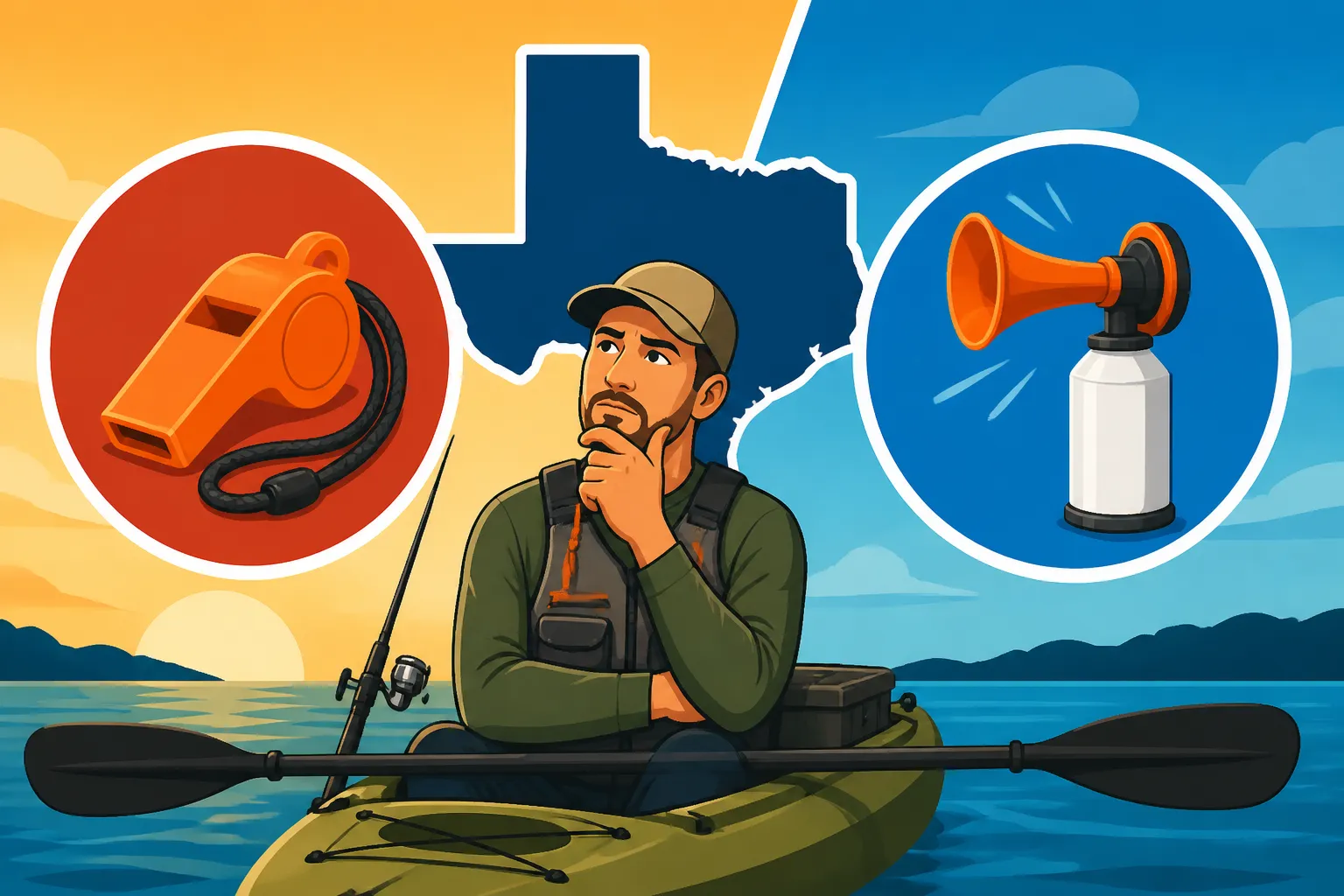
Do you need a whistle or horn on a kayak in Texas?
Heading out on the serene waters of a Texas lake or bay in your kayak is one of life's true pleasures, but many paddlers find themselves scratching their heads over what safety gear is truly required. It’s easy to focus on your paddle, your fishing rod, and your cooler, completely overlooking smaller, yet critically important, items like an audible signaling device. This guide is here to untangle the confusion surrounding whether a simple whistle or a more robust horn is a legal necessity for your kayak here in Texas, and why having one can genuinely make a difference in your safety and peace of mind.
The Foundation of Texas Boating Regulations for Kayaks
When you glide across the water in your kayak, you're not just enjoying a peaceful outing; you're operating a vessel, and that comes with certain responsibilities under Texas law. Many folks assume that because kayaks are small, non-motorized, and often used close to shore, they might be exempt from some of the stricter boating rules. However, that’s often not the case, especially when it comes to basic safety equipment designed to prevent accidents or signal for help. Understanding these foundational regulations is the first step to ensuring you're compliant and safe.
Understanding "Vessel" Classification
In Texas, the definition of a "vessel" is broad, encompassing nearly any type of watercraft, from massive yachts to personal watercraft, and yes, even your humble kayak or canoe. The laws don't typically distinguish based on propulsion method or size for all regulations. Instead, they often categorize vessels by length for specific equipment requirements. For instance, smaller vessels like kayaks, canoes, and stand-up paddleboards often fall into a category that dictates a minimum set of safety gear, much of it federal law adopted by the state. This means that while you might not need the same equipment as a 26-foot powerboat, you’re definitely not off the hook entirely.
Minimum Safety Equipment Requirements for Small Crafts
Even the smallest watercraft, including kayaks, are subject to certain minimum safety equipment requirements. The most universally known and enforced rule is the requirement for a readily accessible life jacket, or Personal Flotation Device (PFD), for every person on board. Beyond that, many paddlers are surprised to learn about other items on the list, such as visual distress signals for coastal waters and, you guessed it, audible signaling devices. These regulations are not just bureaucratic hurdles; they are in place because even calm waters can turn hazardous quickly, and being prepared can save lives. It's smart to review the full Texas Boat Safety Equipment Requirements before every outing.
The Rationale Behind Audible Signals
Why would a small, quiet kayak need something as loud as a whistle or a horn? The rationale is simple: communication and collision avoidance. On busy waterways, especially in areas with blind turns, heavy boat traffic, or limited visibility (like fog or dusk), smaller vessels are incredibly vulnerable. A whistle or horn allows a kayaker to alert larger boats to their presence, signal distress, or even communicate with other paddlers. It's a fundamental tool for safety that allows you to be heard when you might not be seen, providing a crucial layer of protection against unexpected dangers.
Specific Requirements for Audible Signaling Devices on Kayaks
Alright, let's get down to brass tacks: do you actually need a whistle or horn on your kayak in Texas? The answer, as with many regulations, has a few nuances, but generally, yes, you do. Texas Parks and Wildlife Department (TPWD) regulations align with federal guidelines, which specify requirements for audible signals based on vessel size. For smaller vessels like kayaks, the good news is that it doesn't have to be a massive air horn, but an effective device is indeed mandatory.
When a Whistle or Horn Becomes Mandatory
Under both federal and Texas state regulations, any vessel under 39.4 feet (12 meters) in length is required to carry an efficient sound-producing device. This includes virtually all kayaks, canoes, and paddleboards. So, if your kayak is longer than, say, a frisbee, you're going to need one. The purpose is unambiguous: to signal intentions or to give warning. This isn't just a suggestion; it's a legal requirement designed to enhance safety for everyone on the water. Ignoring it could lead to a citation, but more importantly, it leaves you vulnerable in situations where being heard is absolutely critical. Imagine paddling around a bend on Lake Conroe Fishing Guide and suddenly encountering a bass boat moving at speed – a quick blast of a whistle could prevent a disaster.
Types of Audible Signaling Devices Permitted
The regulations are mercifully flexible for kayaks when it comes to what kind of sound-producing device you need. You don't have to mount a loud, compressed air horn to your paddlecraft, which is a relief for those of us who prefer a minimalist setup. An "efficient sound-producing device" for a kayak can be as simple as a pealess whistle. This type of whistle is preferred by many outdoor enthusiasts because it won't clog with water or debris, ensuring it works when you need it most. Many kayak PFDs, like those designed for fishing, even come with a whistle integrated right into the vest, making it super convenient. You can also find compact air horns, often called "pocket horns," that work well for kayaks, offering a louder blast for greater distances.
Practical Use of a Whistle or Horn
Knowing you need one is one thing, but knowing how and when to use it is another. The primary uses for an audible signal from a kayak fall into two categories: collision avoidance and distress signaling.
For collision avoidance, rules of the road dictate specific signals:
- One short blast: "I intend to leave you on my port side" (or "I intend to pass you on your port side").
- Two short blasts: "I intend to leave you on my starboard side" (or "I intend to pass you on your starboard side").
- Three short blasts: "I am operating astern propulsion" (i.e., backing up).
- Five or more short, rapid blasts: "Danger signal" or "I am unsure of your intentions." This is crucial for kayaks when you feel a larger vessel isn't aware of you, or if you're approaching a blind spot.
For distress signaling, a continuous sounding of the whistle for at least 4-6 seconds, repeated at short intervals, is the universal signal for help. This is invaluable if you capsize, get separated from your group, or find yourself in genuine trouble far from shore. It’s a simple, yet powerful, way to get attention.
Beyond the Law: Why Carry a Whistle Anyway?
Even if you were somehow exempt from the legal requirement (which, to be clear, you aren't for most kayaks), carrying a whistle or horn on your kayak is just plain smart. It’s a low-cost, lightweight item that offers a disproportionately high level of safety. Think of it as cheap insurance for your peace of mind and, potentially, your life. The situations where a small whistle can be a game-changer are far more common than you might think, making it an essential piece of your Beginner Fishing Gear Checklist for Texas.
Enhancing Personal Safety on the Water
Kayaking, while generally safe, isn't without its risks. Currents can pick up, weather can change in an instant, and accidents can happen. A whistle attached to your PFD means that even if you capsize and are separated from your boat, you still have a way to signal for help. Imagine paddling Caddo Lake Fishing Guide among the cypress trees, a beautiful but often secluded environment. If you run into trouble, your phone might be wet, or out of service, but a whistle always works. It's especially vital for solo paddlers or those venturing into less-trafficked areas. Being able to quickly alert someone to your predicament can be the difference between a minor scare and a serious emergency.
Alerting Other Boaters to Your Presence
Kayaks are inherently low-profile on the water. From the perspective of a bass boat zooming by or a cruiser navigating a channel, a kayak can be surprisingly hard to spot, especially in choppy water, at dawn or dusk, or in crowded areas like Galveston Bay Fishing Spots. A quick, sharp blast from a whistle can cut through engine noise and draw attention to your position long before a potential collision. This isn't about being aggressive; it's about proactively ensuring your visibility and safety. You can also use it to signal to other paddlers in your group, perhaps to let them know you're stopping, or to point out a fishing spot without shouting across the water.
Emergency Situations and Signaling for Help
When things go truly wrong, a whistle becomes a lifeline. Whether it's a sudden medical emergency, a fast-approaching storm, or becoming disoriented in fog, being able to send a universal distress signal is invaluable. Three distinct blasts are commonly understood as a call for help in the outdoors, and repeating a series of long blasts is recognized as a marine distress signal. This signal is designed to carry across water much more effectively than shouting, especially over long distances or in windy conditions. Pairing this with a visual distress signal, if applicable to your waters, creates a robust emergency communication plan.
Choosing and Maintaining Your Kayak's Audible Signal
Now that we're clear on the necessity and benefits of carrying an audible signaling device, let's talk about picking the right one and making sure it's always ready to perform. It's not a complicated piece of gear, but a little thought goes a long way in ensuring its reliability when you need it most.
What to Look for in a Kayak Whistle or Horn
For kayaks, a pealess whistle is often the top recommendation. Unlike traditional whistles with a pea (the small ball inside), a pealess design means there's no moving part to get stuck if it gets wet, frozen, or filled with grit. This makes them incredibly reliable in all conditions. Look for bright, easy-to-spot colors, and consider one with a lanyard or clip so you can attach it directly to your PFD. Brands like Fox 40 make excellent, widely available pealess whistles. If you prefer a small air horn, ensure it's marine-grade and resistant to water and corrosion, and that it uses a non-flammable propellant if it's a canned horn. Many outdoor retailers, including Bass Pro Shops and Amazon, offer a wide variety of these devices, so you can easily find one that fits your needs and budget.
Here’s a quick comparison of common audible signaling devices for kayaks:
| Device Type | Pros | Cons | Best Use Case |
|---|---|---|---|
| Pealess Whistle | Affordable, lightweight, waterproof, reliable | Less volume than air horn, shorter range | General safety, distress, light traffic areas |
| Canned Air Horn | Very loud, long range, effective for warning | Can run out of air, bulkier, requires button press | Busy waterways, fog, long-distance signaling |
| Manual Pump Horn | Rechargeable air, no propellant needed | Requires manual pumping, can be bulky | Regular use, environmental concern, backup to whistle |
Best Practices for Carrying and Storing Your Device
The most effective whistle or horn is one you can access immediately. The best place for a whistle is attached directly to your PFD. Most PFDs have a small loop or pocket specifically for this. This way, even if you become separated from your kayak, you still have your signaling device. For air horns, secure them to your kayak in an easily reachable spot, perhaps with a bungee cord or in a mesh pocket on your kayak's deck. Ensure it's not submerged or subject to constant splashing, which can degrade some components over time. Regularly check both whistles and horns to ensure they are clean and functional, especially before long trips or venturing into remote areas. Having a reliable Best dry bag for kayak fishing gear can also help keep a spare whistle or horn protected.
Incorporating It Into Your Routine Kayak Gear Checklist
Make your audible signaling device a non-negotiable part of your pre-paddle checklist. Just as you check your paddle, PFD, and ensure your Are life jackets required for kayaks in Texas? knowledge is fresh, take two seconds to confirm your whistle or horn is attached and ready. This small habit can prevent you from inadvertently leaving it behind. Think about it: you spend time researching the Best Kayaks for Texas Fishing, learning Beginner Fishing Techniques for Texas Anglers, and picking the perfect spot, so don't let a simple item like a whistle be an afterthought. It's a small but significant detail that separates a prepared paddler from one taking unnecessary risks. Having a well-organized gear setup ensures that when you’re ready to launch, everything from your fishing license to your safety whistle is accounted for.
Disclaimer
This article is for general informational purposes only and does not constitute professional advice. Laws, prices and regulations vary by location and change over time. Consult a qualified professional for guidance on your specific situation.