Best dry bag for kayak fishing gear
We've all been there: out on the kayak, enjoying a peaceful day fishing on a Texas lake or bay, when suddenly a rogue wave sloshes over the bow, or you accidentally drop your paddle, sending a cascade of water into your lap. Your heart skips a beat as you realize your phone, car keys, or even your fishing license, might be soaking wet. It's a common, frustrating reality for kayak anglers, but it doesn't have to be. This guide is all about helping you keep your essential gear bone-dry and safe, no matter what surprises the water throws your way, by choosing the best dry bag for your kayak fishing adventures.
Why a Dry Bag is Non-Negotiable for Texas Kayak Fishing
Let's face it, fishing from a kayak in Texas means you're going to get wet. It's not a matter of if, but when. Whether you're paddling the quiet backwaters of Caddo Lake or battling currents in Galveston Bay, water is an ever-present companion. Trust me, I've seen countless phones succumb to the depths, and nothing sours a great fishing trip faster than realizing your car won't start because your keys took an unplanned swim. A reliable dry bag isn't just a convenience; it's a fundamental piece of safety and peace-of-mind equipment.
The Inevitable Splash and Submersion
Think about a typical day on the water. You launch your Best Kayaks for Texas Fishing into the cool morning air, excited for a day of chasing bass or redfish. As you paddle out, every stroke sends a little drip into the cockpit. Then, a quick turn, a sudden gust of wind, or the wake from a passing boat can send a significant splash right where your wallet or phone is sitting. If you're wade fishing from your kayak in the shallow saltwater flats, even getting in and out can lead to unexpected dunkings for your gear.
And let's not even talk about the dreaded capsize. It happens to the best of us, especially in choppier waters or when wrestling a big fish. One minute you're upright, the next you're swimming alongside your kayak, watching your unsecure gear drift away. Having your vital items, like your fishing license (which is a requirement in Texas, by the way!), identification, and vehicle keys, safely tucked away in a dry bag ensures that even if your kayak flips, your day isn't completely ruined. It protects against the minor splashes that happen all day long and the major disasters that hopefully never do.
Protecting Your Investment and Peace of Mind
Consider the value of the items you typically bring on a kayak fishing trip. Your smartphone alone can be hundreds, if not over a thousand, dollars. A good GPS unit, your expensive camera, or even a specialized headlamp for Best night fishing spots in Texas all represent significant investments. Leaving these items exposed to the elements is a gamble you really don't want to take.
Beyond the monetary value, there's the sheer inconvenience. Imagine catching that trophy bass of a lifetime, only to realize your phone is waterlogged and you can't snap a picture to prove it. Or, worse, being stranded at the boat ramp because your car keys shorted out. A high-quality dry bag provides an impermeable barrier, safeguarding your electronics, documents, and other sensitive items. This peace of mind allows you to focus on what you're out there to do: enjoy the tranquility, the challenge of the catch, and the beauty of Texas's waters, without constantly worrying about your gear. It's about ensuring your adventure stays an adventure, and not a costly headache.
Key Features to Look For in a Kayak Fishing Dry Bag
Choosing a dry bag isn't as simple as grabbing the first one you see. There are specific features that really make a difference, especially for the unique demands of kayak fishing. Understanding these will help you pick a bag that stands up to the Texas elements and keeps your valuables secure.
Material and Construction: Durability Matters
The backbone of any good dry bag is its material and how it's put together. You need something tough that can handle being tossed around, dragged across rough surfaces, and exposed to relentless sun and water.
Most quality dry bags are made from either PVC (polyvinyl chloride) or TPU (thermoplastic polyurethane). PVC is generally more affordable and robustly waterproof, making it a popular choice. It's often found in thicker, more heavy-duty bags. However, it can be stiffer in cold weather and less environmentally friendly. TPU, on the other hand, is known for being more durable, flexible, and resistant to extreme temperatures, punctures, and abrasions. It's often found in higher-end bags, offering a lighter feel with excellent performance. The thickness of these materials is often measured in denier; a higher denier means a tougher, more robust material. For kayak fishing, especially if you're exploring areas with sharp oyster shells or rocky banks, opting for a higher denier or TPU material will give you much more longevity.
Equally important is the construction method. The best dry bags feature welded seams rather than stitched seams. Welded seams use heat or radio frequency technology to fuse the material panels together, creating a truly waterproof bond that won't leak, even under pressure. Stitched seams, while often reinforced and taped, still create tiny holes in the material, which can eventually compromise waterproofness. Always look for welded seams when maximum dryness is your priority.
Closure Systems: Roll-Top vs. Zippered
The closure system is critical because it's the gateway to your dry bag's interior. The two main types are roll-top and zippered.
The roll-top closure is the most common and arguably the most reliable for dry bags. It involves rolling the top edge of the bag down three to four times and then securing the rolled section with buckles. This creates a tight, waterproof seal that is excellent for preventing water ingress, even if the bag is submerged. These are typically simpler, more cost-effective, and less prone to failure over time compared to zippers. They're perfect for items you don't need constant access to, like spare clothes, a first-aid kit, or your wallet. Many reputable brands like Sea to Summit and Watershed use variations of this proven design.
Waterproof zippers, primarily TIZIP or YKK Aquaseal zippers, offer much quicker and easier access to your gear. These are heavy-duty, often self-lubricating zippers designed to be completely watertight. However, they come at a higher cost and require regular maintenance to keep them clean and functioning smoothly. Saltwater, especially on the Texas coast, can be particularly harsh on zippers, so thorough rinsing after each trip is essential. Zippered dry bags, often in the form of duffels or backpacks, are fantastic for items you might need to grab quickly, like a camera, extra lures, or a sandwich. You can find excellent options with waterproof zippers at outdoor retailers or even on Amazon, making it easy to compare features and read reviews.
Size and Capacity: What Are You Stashing?
Dry bags come in a vast range of sizes, from tiny pouches to massive duffels. Your choice of capacity depends entirely on what you plan to store and for how long you'll be on the water.
For a short, half-day trip on a local pond, a smaller 5-10 liter dry bag might be perfect for just your phone, keys, wallet, and a snack. If you're planning an all-day excursion on a larger reservoir like Lake Fork Fishing Guide or Sam Rayburn Reservoir Fishing Guide, you might want a 20-30 liter bag to stash a change of clothes, a small towel, extra tackle, and a packed lunch. For multi-day kayak camping trips, you'll be looking at 40 liters or more, or perhaps multiple dry bags, to accommodate sleeping gear, cooking supplies, and more substantial clothing.
Consider the dimensions as well. Some kayaks have limited storage space, so a long, narrow dry bag might fit better than a bulky, round one. Think about where it will sit in your kayak – under the deck, in a hatch, or strapped to the stern – and measure accordingly. You don't want a dry bag that's so big it gets in the way of your paddling or fishing.
Attachment Points and Accessibility
Once you have your gear in a dry bag, you need to make sure the dry bag itself doesn't float away. This is where attachment points come in. Look for sturdy D-rings, grab handles, and external webbing loops. These allow you to easily secure the dry bag to your kayak's bungee cords, deck rigging, or internal tie-down points.
For quick access to frequently used items, some dry bags feature external mesh pockets or a clear window. While external pockets might not be fully waterproof, they can be useful for stashing items that can get wet, like a water bottle or a pair of pliers. A clear window can be handy for identifying contents quickly without having to open the bag. Remember, though, every additional feature is a potential point of failure if not well-designed, so prioritize core waterproofness first.
Additional Features to Consider
Beyond the basics, a few extra features can enhance your dry bag experience:
- Shoulder Straps: If you plan on portaging your kayak or carrying your gear a distance from your vehicle to the launch, padded shoulder straps can be a game-changer. Some dry bags even convert into fully functional backpacks.
- Internal Organizers: While not common in basic dry sacks, some larger dry duffels or backpacks have internal pockets or compartments to help keep your gear organized, making it easier to find what you need without rummaging.
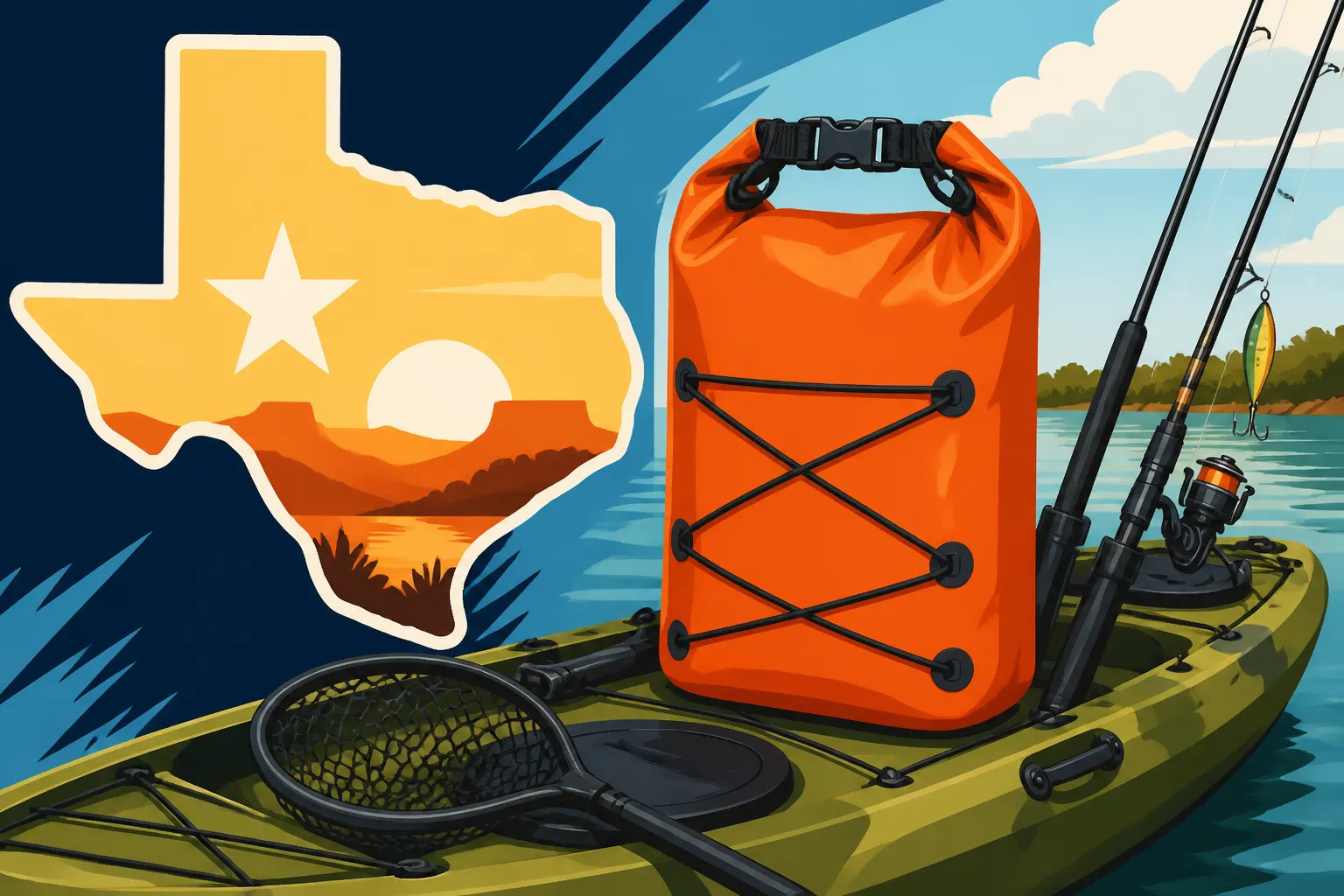
- Bright Colors: High-visibility colors like yellow or orange aren't just for style. If your bag goes overboard, a bright color makes it much easier to spot in the water, especially in choppy conditions or low light.
- Purge Valve: Some dry bags include a purge valve, allowing you to compress the bag and remove excess air. This can be great for saving space, especially when packing soft items like clothing.
Types of Dry Bags for Different Kayak Fishing Needs in Texas
Just like there are different kayaks for different waters – a Best Kayaks for Texas Bass Fishing might differ from one for Best Kayaks for Texas Saltwater Flats – there are different dry bags designed for specific purposes. Matching the dry bag type to your fishing style and the items you need to protect is key.
Roll-Top Dry Sacks: The Workhorse
These are the quintessential dry bags, the kind most people picture when they hear the term. They are typically cylindrical or oval-shaped, made from durable PVC or TPU, and feature the reliable roll-top closure.
Best Use: Standard roll-top dry sacks are the versatile workhorses of kayak fishing. They are ideal for anything you absolutely cannot afford to get wet, but don't need immediate access to. Think spare clothing, towels, a first-aid kit, your car keys, wallet, and any important paper documents like your Texas Fishing License Requirements Explained. They stow away easily in kayak hatches, behind the seat, or strapped to the deck. Because of their robust waterproofness and relative affordability, it's common for kayak anglers to have several of these in different sizes for various gear. You can often find a wide selection of these at outdoor retailers and fishing supply stores like Bass Pro Shops, offering various brands and durability levels.
Waterproof Backpacks and Duffels: Portability and Capacity
When you need to carry more gear, or you frequently transport your dry contents away from your kayak, waterproof backpacks and duffels step up to the plate. These often feature the same durable materials and welded seams as dry sacks, but with added structure, shoulder straps, and sometimes waterproof zippers.
Best Use: A waterproof backpack is a fantastic choice if you regularly fish spots that require a bit of a hike from your vehicle, or if you're taking your kayak on a multi-day trip where you'll be leaving your boat for onshore excursions. They allow you to easily carry a larger volume of gear – like a tent, sleeping bag, extra food, or multiple changes of clothes – all while keeping it dry. Waterproof duffels are great for storing bulkier items in your kayak, offering a wider opening for easier packing and retrieval, though they might be less comfortable for extended carrying. These are also excellent for organizing your gear before you even leave home, ensuring everything is packed neatly.
Small Dry Pouches and Phone Cases: Critical Electronics Protection
While larger dry bags are great for general gear, sometimes you need something small, highly accessible, and specifically designed for your most vulnerable items.
Best Use: These smaller, specialized pouches are absolute necessities for protecting your smartphone, GPS, and other small, vital electronics. Many are designed with clear, touch-sensitive windows, allowing you to use your phone's screen while it's safely sealed inside. They often have lanyards or carabiner clips for easy attachment to your PFD or kayak, keeping your phone within arm's reach for navigation, taking photos, or making emergency calls. While many dry bags claim to be submersible, the compact, targeted protection of a dedicated dry phone pouch provides an extra layer of assurance for your most precious communication device. Always check the waterproof rating (IPX rating) on these to ensure they meet your needs for splash protection or full submersion. You'd be surprised how many options for these essential small dry bags and cases you can find browsing online on Amazon or at your local sporting goods store.
Maintenance and Best Practices for Your Dry Bag
A dry bag is an investment in your gear's safety, and like any good piece of fishing equipment, it needs a little TLC to ensure it performs when you need it most. Neglecting your dry bag can lead to unexpected leaks and damaged electronics, which is exactly what you're trying to avoid.
Cleaning and Storage for Longevity
Proper cleaning and storage are paramount to extending the life of your dry bag, especially after battling the salty air of the Gulf Coast or the muddy waters of inland rivers.
After each trip, particularly saltwater excursions, rinse your dry bag thoroughly with fresh water. Use a mild soap if it's visibly dirty or has a funky odor. Pay close attention to the closure system: clean any sand or debris from the roll-top strip or around waterproof zippers. For zippers, you might need a small brush to get into the teeth. Salt and dirt are abrasive and can cause seals to degrade prematurely. Once clean, it's crucial to dry the bag completely, inside and out. This means leaving it open and ideally upside down in a well-ventilated area, away from direct sunlight. Storing a damp dry bag can lead to mildew, which not only smells terrible but can also damage the material.
When storing your dry bag for longer periods, it's best to store it unrolled and loosely folded, rather than tightly rolled or crumpled. This prevents creases and stress points from forming in the material or at the seams, which can eventually lead to cracks and leaks. Keep it in a cool, dry place, out of direct sunlight, as UV rays can degrade plastic materials over time. Taking these simple steps will ensure your dry bag is ready for your next adventure, whether you're targeting Texas Redfish Size and Bag Limits or Texas Largemouth Bass Length Limits.
Testing and Pre-Trip Checks
Before any significant trip, especially if you haven't used your dry bag in a while or it's a new purchase, it's a really good idea to give it a quick test. You don't want to find out it's compromised when your phone is already inside!
A simple test involves filling the bag with air, sealing it tightly, and then submerging it in a bathtub or large sink. Apply gentle pressure and look for a steady stream of bubbles. Even tiny, consistent bubbles indicate a leak that needs addressing. For zippered bags, pay extra attention to the zipper track and corners. If you find a small puncture, many dry bag materials can be patched with specialized repair kits designed for PVC or TPU, similar to patching an inflatable boat.
Before every outing, quickly inspect your dry bag for any visible signs of wear and tear. Look for scuffs, small holes, or cracks in the material, especially around the seams and closure. Check the buckles and straps to ensure they are secure and free of damage. Make sure the roll-top strip or zipper is clean and functions smoothly. This quick pre-trip check, along with always securing your dry bag to your kayak, is a small habit that can prevent a big headache and keep all your Beginner Fishing Gear Checklist for Texas safe and dry.
| Feature Type | Roll-Top Dry Bag | Waterproof Zippered Bag (Duffel/Backpack) | Small Dry Pouch/Phone Case |
|---|---|---|---|
| Waterproofness | Excellent (Submersible if sealed correctly) | Very Good (Requires zipper care) | Good (Often splash-proof, some submersible) |
| Access Speed | Slower (Unrolling and re-rolling) | Faster (Quick zipper access) | Quick (Often designed for immediate use) |
| Capacity Range | Small to Very Large (5L to 100L+) | Medium to Large (20L to 80L+) | Very Small (0.5L to 5L) |
| Durability | High (Often PVC/TPU, welded seams) | High (TPU often, high-quality zippers) | Varies (Often thin plastic/TPU for flexibility) |
| Cost | Lower to Mid-range | Mid to High-range | Low to Mid-range |
| Best For | Clothing, sleeping bags, extra gear, long trips | Frequently accessed gear, electronics, organized items | Phones, keys, wallet, documents |
| Key Benefit | Simplicity, reliability, proven design | Ease of access, often better organization | Critical item protection, hands-free use |
Disclaimer
This article is for general informational purposes only and does not constitute professional advice. Laws, prices and regulations vary by location and change over time. Consult a qualified professional for guidance on your specific situation.