Caddo Lake Fishing Guide
Caddo Lake is a place of almost mythical beauty, shrouded in Spanish moss and dotted with ancient cypress trees, but its unique character can also make it incredibly intimidating for anglers. You might find yourself staring at a map, wondering where on earth to even begin casting a line amidst such a labyrinthine watery wonderland. It's easy to feel lost before you even get on the water, but don't worry – this guide is here to unravel the mysteries of Caddo Lake, offering practical advice and insider tips to help you conquer its enchanting, yet challenging, fishing grounds.
The Unique Allure of Caddo Lake Fishing
Caddo Lake isn't just another body of water; it's an experience, a living, breathing ecosystem that feels more like a swampy jungle than a typical Texas reservoir. For many anglers, its mystique is precisely what draws them in, offering a fishing adventure unlike anything else in the Lone Star State. But with that beauty comes a certain level of navigational and angling complexity that requires a different approach.
A Landscape Unlike Any Other in Texas
Imagine thousands of acres of shallow water, deeply stained by tannins from decaying vegetation, weaving through dense forests of cypress trees with their knobby knees breaking the surface. That's Caddo Lake. It's an ancient natural lake, the only natural lake of its size in Texas, straddling the border with Louisiana, and its unique hydrology creates an unparalleled environment. The bottom is often soft mud and silt, sometimes covered with submerged vegetation, making it a prime habitat for a diverse range of fish. The sheer density of cover, from vast cypress stands to lily pads and hydrilla, can be overwhelming. This is a place where you're not just fishing on the water, but in the forest. For more on this unique environment, check out our piece on Caddo Lake fishing among the cypress trees.
The lake's character changes with the seasons and water levels. During periods of higher water, new areas of flooded timber become accessible, offering fresh challenges and opportunities. When water levels drop, certain channels and pockets become more defined, concentrating fish and bait. Understanding these subtle shifts is key to consistent success. It’s not about finding a deep creek channel drop-off like in many Texas reservoirs; it’s about deciphering patterns within the endless maze of structure and vegetation.
Navigating the Mazes of Cypress and Stumps
One of the biggest hurdles for first-time Caddo Lake anglers is simply getting around. GPS is your best friend here, but even with the best electronics, a watchful eye is essential. The lake is notorious for its hidden stumps and shallow areas that can easily damage a prop or lower unit. Channels are often marked, but venturing off the main paths requires extreme caution and ideally, local knowledge. It's not uncommon to see boats with bent props or even broken skegs if they're not careful.
Navigating also means understanding how fish relate to this dense cover. Bass, crappie, and catfish use the cypress trees, fallen logs, and thick vegetation for ambush points, shade, and spawning grounds. This means your casting accuracy and ability to fish tight to cover will be tested. It's a place where a missed cast can mean a snagged lure, and a perfectly placed one can mean a trophy fish. Many anglers, especially those in smaller boats or kayaks, find immense satisfaction in silently paddling through the cypress groves, casting into pockets that larger boats can't reach. If you're considering a more intimate approach, you might be interested in Is Caddo Lake good for kayak fishing?
Top Fish Species to Target in Caddo Lake
Caddo Lake boasts a healthy population of several popular game fish, offering something for every type of angler. While it's particularly famous for one species, its diverse ecosystem supports a wide range of catches that can keep your rods bent throughout the year.
Largemouth Bass: The Undisputed King
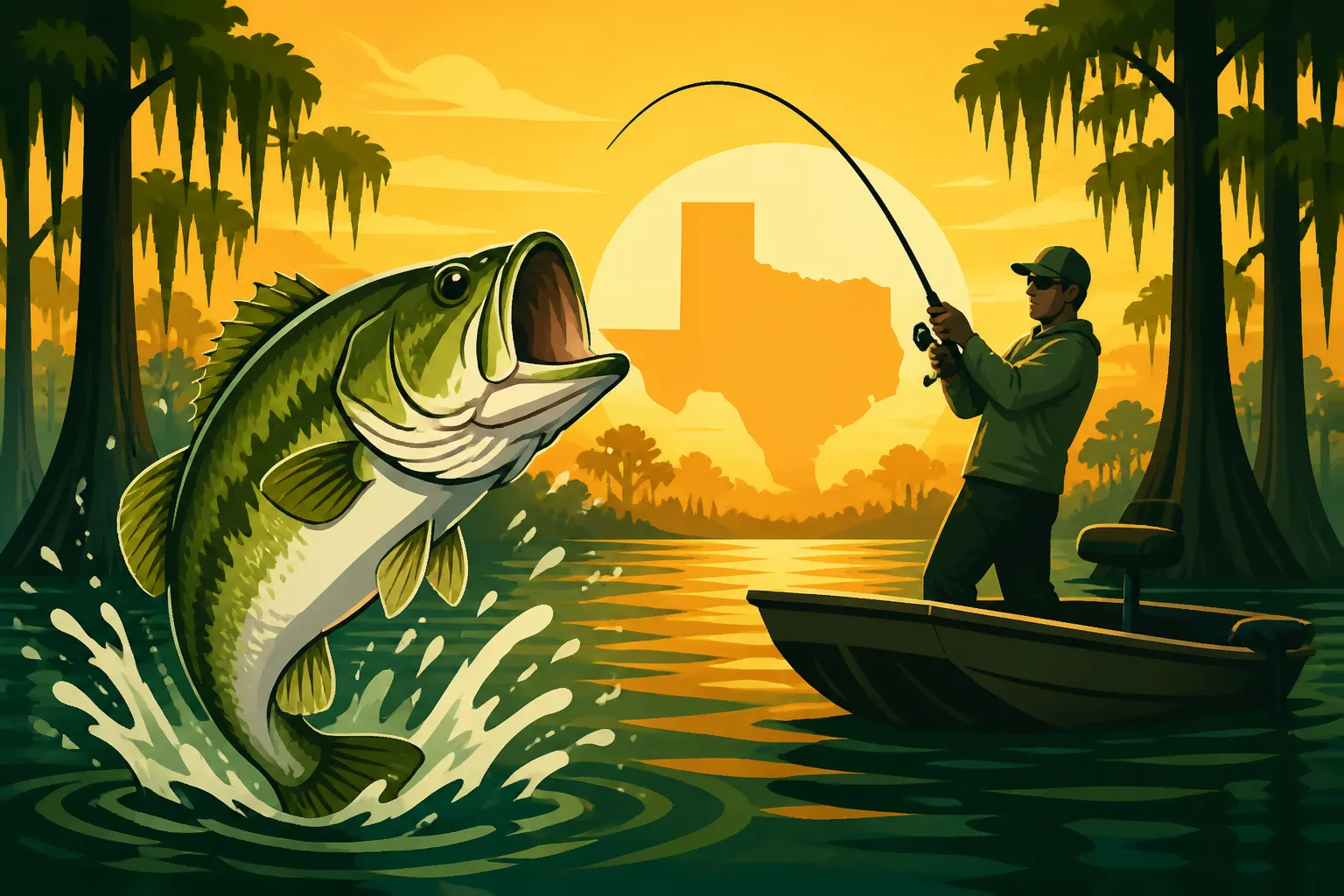
When most people think of fishing Caddo Lake, they think of largemouth bass. This lake consistently produces good numbers of healthy bass, with the potential for true giants. The abundant cover — from lily pads and hydrilla to submerged timber and cypress trees — creates an ideal environment for bass to thrive. They have endless ambush points and a rich forage base, including sunfish, shad, and even frogs and snakes.
Targeting largemouth bass on Caddo often involves fishing heavy cover. Pitches and flips with jigs, Texas-rigged worms, and creature baits are incredibly effective around the bases of cypress trees and into dense vegetation mats. Topwater lures like frogs and buzzbaits can be absolutely explosive in the early morning and late evening, particularly over lily pads or scattered grass. Spinnerbaits and chatterbaits also shine when fished through sparser vegetation or along the edges of grass lines. The bass here are often dark-colored, reflecting the stained water, and they fight hard, using the heavy cover to their advantage. For more in-depth techniques, consult our Texas Largemouth Bass Fishing Guide.
Crappie and Catfish: Dependable Bites
Beyond bass, Caddo Lake is also a fantastic destination for crappie and catfish, offering reliable action that can fill a cooler. These species are often less finicky than bass, making them a great option for a relaxing day on the water or for introducing new anglers to the sport.
Crappie, both white and black, are abundant in Caddo's waters. They tend to congregate around submerged timber, brush piles, and the deeper channels, especially during cooler months. When the water warms up, they move into shallower cover, often still relating to woody structure. Minnows and small jigs are the go-to baits for crappie, typically fished vertically around cover or trolled slowly. Knowing how to locate these hidden brush piles and structures is key to consistent crappie success on Caddo. We have a detailed guide on How to Fish for Crappie that can provide you with more specialized tips for these elusive panfish.
Catfish are another Caddo Lake staple. Channel catfish, blue catfish, and flathead catfish all call these waters home. They thrive in the lake's rich, dark waters, often found in deeper holes, along channels, or near dense cover where they can ambush prey. For channel and blue catfish, cut bait, stink baits, and shrimp fished on the bottom are highly effective. Flatheads prefer live bait, like sunfish or perch, fished near woody cover or submerged logs. Night fishing for catfish can be particularly productive, as these nocturnal predators become more active. Learn more about effective strategies in our guide on How to Catch Catfish in Texas.
Pursuing Alligator Gar and Other Unique Catches
Caddo Lake is also renowned for its incredible population of alligator gar, a prehistoric-looking fish that can grow to truly immense sizes. These giants are a major draw for specialized anglers seeking a unique challenge. Catching an alligator gar often involves heavy tackle, stout lines, and large chunks of cut bait, often fished on a trotline or jugline. It's a fight that you won't soon forget, and the thrill of landing one of these ancient predators is an experience in itself. If targeting these majestic creatures sounds exciting, our Texas Alligator Gar Fishing Guide offers essential insights into techniques and regulations.
Besides gar, you'll find various sunfish species like bluegill and redear sunfish, which are fantastic for kids or light tackle enthusiasts. White bass also make an appearance, particularly in the spring during their spawning runs up the feeder creeks. The diversity of Caddo Lake truly offers an angling experience that caters to all preferences, making every trip a potential adventure for something new.
Essential Fishing Techniques for Caddo's Waters
Fishing Caddo Lake successfully often requires a slightly different approach than fishing a typical open reservoir. The dense cover and stained water dictate specific strategies and gear choices. Being adaptable and patient is crucial for navigating this unique environment.
Mastering Lure Presentations in Heavy Cover
The sheer amount of heavy cover on Caddo Lake means you'll need to be proficient at getting your lures into tight spots and extracting fish from them. Flipping and pitching are fundamental techniques here. This involves accurately dropping jigs, creature baits, or heavy Texas-rigged worms into small openings in lily pads, hydrilla mats, or right up against cypress tree trunks. You’ll need a stout rod, heavy braided line, and a strong hook to muscle fish out of the snags. Losing tackle is part of the game, but the reward of a big bass pulled from thick cover is worth it.
Topwater fishing is also incredibly exciting and effective on Caddo. Frog lures, like those from companies such as Spro or Booyah, are perfect for working over dense vegetation. Walking baits and poppers can draw explosive strikes when fished in more open pockets or along the edges of grass. Remember, in stained water, fish often rely on sound and vibration, so lures that displace water or create a strong thumping action can be particularly effective. Spinnerbaits with large thumping blades, chatterbaits, and even noisy crankbaits can draw strikes when other lures fail.
Using Sonar and Mapping for Navigation and Fish Finding
While Caddo Lake is famous for its visible cover, a good fish finder with detailed mapping capabilities is invaluable, especially for navigation and finding less obvious structure. Many areas of Caddo appear uniform on the surface but hide subtle channels, old creek beds, and deeper holes that can hold concentrations of fish. GPS mapping is critical for safely navigating the unmarked stumps and staying within main channels. When you find a productive area, marking it on your GPS is essential, as the landscape can be disorienting.
Modern sonar units with side-imaging or down-imaging can help you identify submerged logs, brush piles, and even fish relating to those structures that are not visible to the naked eye. While you won't be "reading" structure like on a deep clear reservoir, these tools help you understand what's beneath the surface, allowing you to present your bait more effectively. Look for subtle changes in bottom contour or density that might indicate a hidden fish highway or a community hole for crappie.
The Art of Kayak Fishing on Caddo
Caddo Lake is an absolute paradise for kayak anglers. The ability to silently slip into tight cypress groves and shallow backwaters that larger boats can't access opens up an entirely new world of fishing opportunities. Kayaks allow you to experience the lake's unique beauty up close, paddling among the trees and truly immersing yourself in the environment. Many local guides swear by kayaks for targeting specific fish in untouched areas.
When kayak fishing on Caddo, stability is key, as you'll often be casting into heavy cover or navigating tight spaces. A sit-on-top kayak with a wide, stable hull is often preferred, allowing for easy casting and even standing if you're feeling adventurous. Paddle propulsion is fine, but many anglers opt for pedal-drive kayaks (like those from Hobie or Old Town) or even small electric motors for covering more water and battling winds. Remember your safety gear, including a whistle, PFD, and always tell someone where you're going. For detailed advice on selecting the right watercraft, check out our guide to the Best Kayaks for Texas Fishing.
Understanding Caddo Lake's Unique Regulations
Fishing on Caddo Lake comes with a unique set of rules, largely due to its status as an interstate waterbody. It's not just a matter of following Texas Freshwater Fishing Regulations; you also need to be aware of how Louisiana's regulations can come into play. Ignoring these rules can lead to fines and a ruined day on the water, so it's vital to be informed.
The Texas-Louisiana Border Conundrum
The most significant regulatory aspect of Caddo Lake is its shared border with Louisiana. This means that anglers often operate under a reciprocal agreement between the two states. Generally, if you possess a valid Texas fishing license, you can fish in the Louisiana waters of Caddo Lake, and vice-versa. However, this reciprocity typically applies to recreational fishing and may not extend to all forms of commercial fishing or specific gear types.
It's crucial to understand that while you might be able to fish on either side with one license, the bag limits and length limits can sometimes differ slightly between Texas and Louisiana for certain species. For example, Texas might have one set of rules for largemouth bass, while Louisiana has another. You are always subject to the regulations of the state whose waters you are physically fishing in, even if your license is from the other state. Always double-check the current regulations from both the Texas Parks and Wildlife Department (TPWD) and the Louisiana Department of Wildlife and Fisheries (LDWF) before you head out. This complex situation is thoroughly explained in our guide on Caddo Lake fishing license rules for Texas and Louisiana anglers, which is a must-read for anyone planning a trip. If you need to ensure you have the correct basic license, our article on Texas Fishing License Requirements Explained is a good starting point.
Bag and Length Limits Specifics
Beyond the interstate rules, Caddo Lake has its own specific bag and length limits for various species, which can sometimes differ from general statewide regulations to help manage its unique fisheries. For instance, largemouth bass on Caddo Lake often have a slot limit or a protected slot, meaning fish within a certain size range must be immediately released, while those outside the slot can be kept. This is a common conservation tool to protect breeding-age fish and promote a healthy population of larger bass.
Crappie and catfish also have daily bag limits and sometimes minimum length requirements. Alligator gar, due to their unique nature and conservation efforts, have very specific regulations regarding harvest, often limiting anglers to one fish per day. It’s imperative to consult the most current TPWD Outdoor Annual for Caddo Lake specific regulations before each trip. These regulations are designed to protect the lake's resources and ensure sustainable fishing for future generations. Don't forget to review our comprehensive article on Texas Fish Bag and Length Limits to stay informed about general Texas rules.
When to Visit and Where to Launch
Timing your trip to Caddo Lake can significantly impact your success, and knowing the best access points is crucial for a smooth start to your fishing adventure. The lake offers different opportunities throughout the year, catering to various fishing preferences.
Seasonal Fishing Trends and Best Times
Caddo Lake offers good fishing year-round, but each season presents its own unique challenges and rewards:
- Spring (March-May): This is arguably the most popular time for bass fishing on Caddo. As water temperatures rise, largemouth bass move into shallower areas for their spawn. Topwater action can be incredible, and flipping jigs or Texas rigs into the newly flooded vegetation or around cypress trees can be highly productive. Crappie also become very active and move shallow to spawn, making them easier to target.
- Summer (June-August): Fishing in the Texas heat can be tough, but Caddo still produces. Bass often move to deeper shaded areas, such as the thicker cypress stands or deeper channels. Early morning and late evening topwater bites are still strong. Catfish become very active at night, and alligator gar are often seen cruising the surface in the heat. Patience and seeking shade are key. Our guide on the Best Time of Year to Fish in Texas provides a broader context for seasonal changes.
- Fall (September-November): As temperatures cool, fishing can pick up again dramatically. Bass become more active, feeding heavily in preparation for winter. They can be found in various depths, from shallow grass beds to creek channels. Crappie also start to school up and can offer excellent action. This is a beautiful time to be on the lake, with the cypress trees starting to change colors.
- Winter (December-February): While slower, winter fishing on Caddo can still yield good results, especially for crappie and larger bass. Fish tend to congregate in deeper channels and around major structure, making them somewhat easier to locate with sonar. Focus on slow presentations and patience. Be mindful of sudden cold fronts, which can make fish lethargic.
Key Access Points and Marinas
Accessing Caddo Lake is relatively easy, with several public and private boat ramps available. On the Texas side, the main hub is around the community of Uncertain.
Here are some popular access points:
- Earl G. Williamson Park (Caddo Parish, LA): This is a large public park on the Louisiana side, offering multiple boat ramps, ample parking, and picnic areas. It's a very popular spot and often hosts tournaments.
- Mooringsport Boat Ramp (Mooringsport, LA): Another Louisiana option, providing good access to the northern parts of the lake.
- Shady Pines Marina & RV Park (Uncertain, TX): A popular private marina with boat ramps, lodging, and supplies. It's a great base of operations on the Texas side.
- Johnson's Ranch Marina (Uncertain, TX): Another well-known private marina offering ramps, cabins, and guide services. It's iconic for its history and location right in the heart of the cypress trees.
When choosing a ramp, consider your boat size and the current water levels. Some ramps are better suited for smaller boats or kayaks, especially in lower water conditions. Always check with the local marinas or TPWD for current conditions before heading out.
Hiring a Local Fishing Guide on Caddo Lake
For a lake as complex and unique as Caddo, hiring a local fishing guide can transform your experience from potentially frustrating to incredibly productive. A guide offers not just expertise but also ensures your safety and maximizes your time on the water.
Why a Guide is Invaluable on Caddo
Let's be honest, Caddo Lake isn't the kind of place you just "figure out" in a day or two. Its intricate network of channels, submerged stumps, and ever-changing cover can be daunting for even experienced anglers. This is where a seasoned local guide truly shines. They possess an intimate knowledge of the lake's secret spots, current patterns, and how fish are behaving with the season and water conditions. They know where the hazards are, how to navigate the maze safely, and how to get you to the fish quickly and efficiently.
A guide provides all the necessary equipment, often including specialized gear tailored to Caddo's heavy cover. They'll teach you the specific techniques that work best here, whether it's flipping a jig into a tight cypress pocket or working a frog over lily pads. This is especially beneficial if you're targeting specific species like trophy bass or alligator gar, which require specialized approaches. Think of it as an accelerated learning curve; you'll gain years of local knowledge in a single trip, setting you up for future success.
| Benefit of Hiring a Caddo Lake Guide | Description |
|---|---|
| Local Knowledge | Access to secret spots, current patterns, and navigation expertise for safe and productive fishing. |
| Equipment & Expertise | Use of specialized gear appropriate for Caddo's heavy cover and instruction on effective local techniques. |
| Increased Safety | Expert navigation through tricky channels and stump fields, reducing the risk of damage or getting lost. |
| Maximized Fishing Time | No time wasted searching for fish or struggling with navigation; direct access to productive areas. |
| Educational Experience | Learn specific Caddo Lake tactics, fish behavior, and environmental nuances from a seasoned professional. |
| Targeted Species Focus | Guides specialize in specific fish (e.g., bass, crappie, gar) and can tailor the trip to your preferred catch. |
Finding the Right Expert for Your Trip
Finding a reputable guide for Caddo Lake is easier than you might think. Many experienced guides operate directly from the marinas around Uncertain, Texas, and Mooringsport, Louisiana. Word-of-mouth recommendations are always great, but online platforms also make the process simple and transparent. Websites like FishingBooker, for example, list numerous licensed Caddo Lake fishing guides, complete with customer reviews, pricing, and available dates. This allows you to compare different guides, their specialties (some focus on bass, others on crappie or gar), and their experience levels to find the perfect match for your group and desired fishing experience.
When booking a guide, be sure to communicate your expectations clearly. Are you looking for a trophy bass, a cooler full of crappie, or the thrill of an alligator gar? Let them know if you're a beginner or an experienced angler, and if you have any specific learning goals. A good guide will tailor the trip to your preferences, ensuring you have a memorable and successful day on the water.
Disclaimer
Please remember that fishing regulations, including bag and length limits, can change. Always consult the latest rules and regulations from the Texas Parks and Wildlife Department and the Louisiana Department of Wildlife and Fisheries before your trip. This guide is for informational purposes only and should not replace official regulatory sources.