Best kayak fishing rod holders
One of the biggest headaches for any kayak angler in Texas is the constant juggle: paddle in one hand, rod in the other, trying to manage line, and maybe even a fish on the hook, all while battling a breeze or current. It's a chaotic ballet on the water, often leading to dropped gear or missed opportunities. This comprehensive guide will walk you through everything you need to know about choosing, installing, and maintaining the best kayak fishing rod holders to make your next Texas fishing trip much more organized and enjoyable.
Why Kayak Rod Holders Are Essential for Texas Anglers
If you've spent any time fishing from a kayak in Texas, you know it's a unique experience. The vast lakes, winding rivers, and expansive coastal bays offer incredible fishing, but they also present challenges. Kayaks are fantastic for stealth and getting into skinny water, but they come with limited space and stability. Trying to manage multiple rods, a paddle, a net, and perhaps a stringer of fish without a proper system is a recipe for frustration. That's where kayak fishing rod holders become not just a convenience, but an absolute necessity.
The Struggle of Multitasking on the Water
Imagine this scenario: you're paddling along a serene stretch of Lake Fork, trying to maintain your position against a gentle breeze. Suddenly, your rod, which you precariously wedged between your legs, gets a solid strike. What do you do first? Grab the rod, drop the paddle, forget about steering? Or maybe you're trying to cast with one rod while trolling with another. Without a dedicated place to secure that second rod, it's just lying in the bottom of your kayak, vulnerable to getting stepped on, tangled, or worse, kicked overboard. Texas anglers often run multiple setups, from a heavy jig rod for deep-water bass to a finesse rig for picky crappie, or perhaps a popping cork for speckled trout while you're sight casting for redfish on the flats. Managing these different setups simultaneously while maintaining control of your kayak and engaging with your target species is nearly impossible without reliable rod holders. They free up your hands, allowing you to focus on paddling, navigating, or simply enjoying the moment until that next big bite.
Protecting Your Valuable Gear from Texas Elements
Let's face it, fishing gear isn't cheap. Your rods, reels, and tackle are an investment, and protecting them from damage is paramount, especially when you're out on the water. Texas weather can be unpredictable. One minute it's sunny and calm, the next a gust of wind can whip up, or an unexpected wave from a passing boat can rock your kayak. A rod lying unsecured in the cockpit is highly susceptible to bouncing around, getting scratched, or even breaking. Beyond mechanical damage, prolonged exposure to the intense Texas sun can also degrade rod blanks and reel components over time. Rod holders keep your gear elevated and securely stowed, minimizing these risks. When you're paddling through thick lily pads on Caddo Lake or navigating oyster reefs in Galveston Bay, a rod holder keeps your valuable equipment out of harm's way, preventing snagged lines, broken tips, or reels getting dunked in corrosive saltwater. This small investment can save you a much larger expense in replacing damaged equipment down the line.
Enhancing Your Fishing Experience with Hands-Free Benefits
The true magic of a good rod holder is the freedom it gives you. Imagine being able to cast with precision, knowing your other rod is safely trolling behind you, or being able to quickly grab your net when you've got a big one on the line, without having to awkwardly put down your paddle. Hands-free operation transforms your kayak fishing experience from a juggling act into a streamlined operation. It allows you to rig baits more easily, tie on new lures, eat a snack, or even snap a photo of your catch without worrying about your rod taking an unplanned swim. For those who enjoy trolling, whether it's for striped bass on Lake Texoma or big blue catfish on Lake Livingston, a rod holder is non-negotiable. It keeps your line in the water at the optimal angle, absorbing strikes and allowing you to set the hook effectively when the time comes. This increased efficiency and peace of mind means you can spend more time actually fishing and less time fumbling with your gear, ultimately leading to a more enjoyable and productive day on the water.
Types of Kayak Fishing Rod Holders and Their Best Use Cases
When it comes to outfitting your fishing kayak with rod holders, you'll quickly discover a wide array of options, each designed for different purposes and kayak setups. Understanding the various types is crucial to choosing what will work best for your specific needs, whether you're targeting elusive bass in a freshwater reservoir or chasing aggressive redfish in a coastal estuary. The right choice depends on your kayak's design, your fishing style, and how much versatility and permanence you're looking for.
Flush Mount Rod Holders: Permanent and Sleek
Flush mount rod holders are often the most integrated and aesthetically pleasing option. These holders are typically installed directly into the hull of your kayak, creating a seamless, low-profile look. They consist of a tube, usually angled at 30 or 45 degrees, that's permanently affixed into the kayak with screws and marine sealant. Once installed, they provide a strong and secure place to store your rods, often used for holding extra rods out of the way, or for slow trolling. They don't typically allow for much adjustment in angle or direction after installation, which is their main trade-off.
For a Texas angler who primarily uses one or two rods for active casting but wants extra rods stored securely, a flush mount is a fantastic choice. They're great for kayaks that don't have existing track systems and where you prefer a clean, uncluttered deck. However, remember that installing them requires drilling into your kayak, which some anglers are hesitant to do. If you're looking for a permanent storage solution that won't interfere with your paddling stroke or deck space, and you don't need constant angle adjustments, these are a solid, reliable option. Just ensure you measure carefully and choose a location that won't interfere with internal rigging or cause imbalance.
Track Mount Rod Holders: Versatile and Adjustable
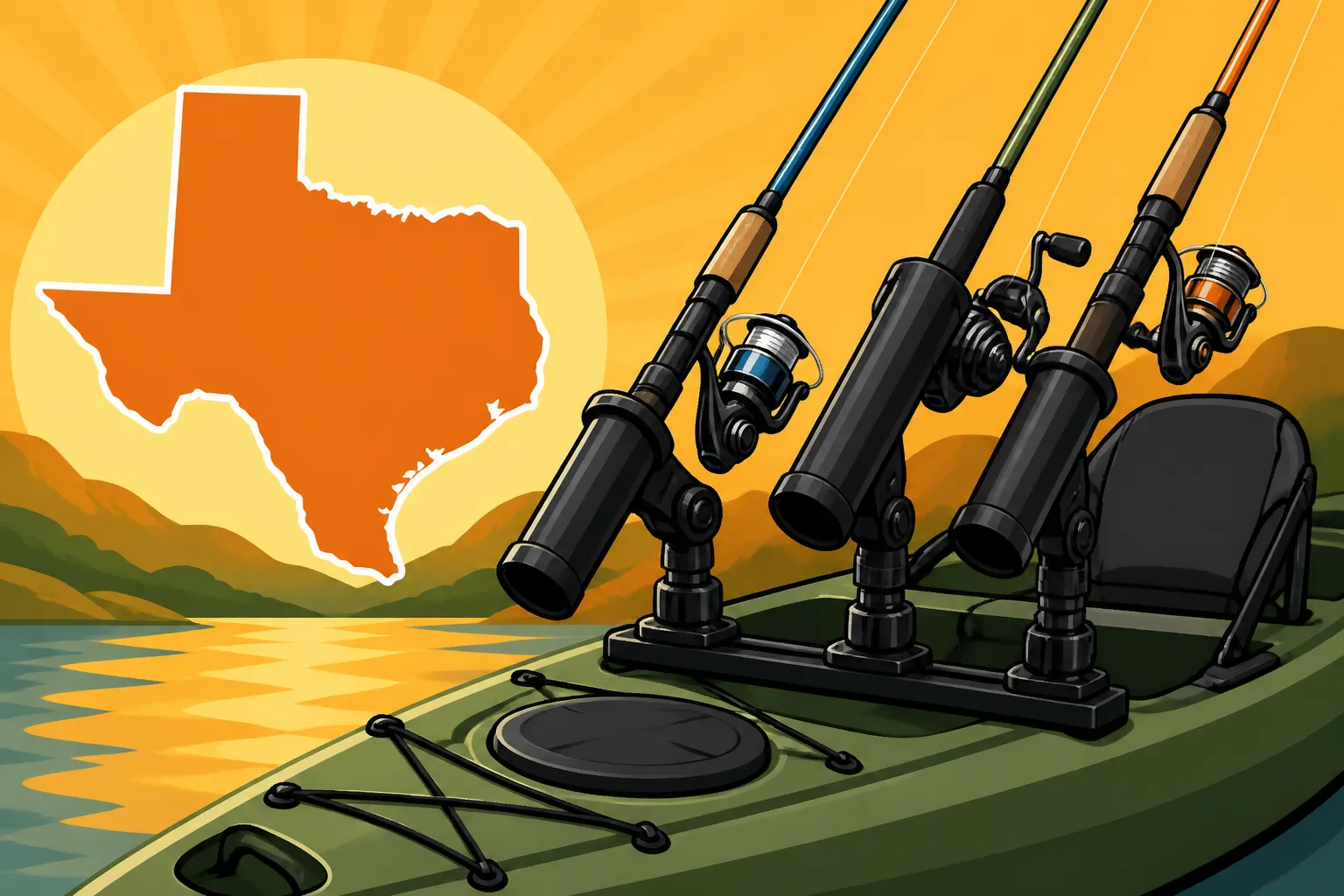
Track mount rod holders are incredibly popular, especially with newer kayaks that often come pre-equipped with gear tracks (also known as accessory rails or gear rails). These holders attach to a base that slides into the track, allowing you to easily adjust their position along the length of the track. Even better, most track mount systems allow for rotation and angle adjustments of the rod holder itself, offering unparalleled versatility. You can point your rod forward for trolling, angle it out to the side, or keep it upright for storage, all with a simple twist or lever adjustment.
This type of holder is a favorite among Texas anglers who fish a variety of species and techniques. If you're moving from casting for Texas Largemouth Bass Fishing Guide to trolling for Texas Striped Bass Fishing Guide on the same outing, the ability to quickly reconfigure your rod angles is invaluable. Brands like YakAttack and Scotty offer excellent track-compatible systems, and you can often find a wide selection of these versatile holders on platforms like Amazon or at outdoor retailers like Bass Pro Shops. The biggest advantage is that you can add, remove, and reposition these holders without drilling new holes, making them ideal for experimenting with different setups or sharing accessories between multiple kayaks. If your kayak has tracks, or if you're willing to install a track system, this offers the most flexibility for your fishing adventures.
Clamp-On and Suction Cup Rod Holders: Temporary and Easy
For those who want a less permanent solution, or are just starting out with kayak fishing, clamp-on and suction cup rod holders offer an easy entry point. Clamp-on holders typically attach to the edge of a kayak's coaming, a seat frame, or even a cooler. They use a strong vice-like grip to secure themselves, requiring no drilling. Suction cup holders, as the name suggests, rely on powerful suction cups to adhere to a smooth, flat surface on your kayak.
These temporary solutions are fantastic for beginners, or for situations where you only occasionally need an extra rod holder. Maybe you're trying out kayak fishing for the first time with an Best entry-level kayak for Texas fishing, or you want to add a temporary rod holder to a friend's kayak without modifying it. They're generally easy to install and remove, making them convenient for transport or storage. However, their main drawback is security. While modern designs are quite robust, they are typically less secure than bolted-down or track-mounted options. Clamp-on holders can sometimes slip under heavy strain, and suction cups can lose their grip, especially in rough water or after extended exposure to sunlight. For serious, multi-rod Texas fishing, these might serve as supplementary holders rather than primary ones, but for casual outings or testing the waters, they are a practical and affordable option.
RAM Mounts and Adjustable Systems: High-End and Customizable
Beyond the basic types, you'll find highly adjustable and modular systems, with RAM Mounts being one of the most prominent names in this category. These systems are built around a ball-and-socket design that offers incredible flexibility. A base is mounted to your kayak (either directly, to a track, or with a clamp), an arm connects to the base, and then the rod holder itself attaches to the other end of the arm, usually via another ball. This allows for nearly infinite adjustment in angle, height, and orientation.
These high-end systems are favored by experienced Texas kayak anglers who demand precision and adaptability. If you need to fine-tune the angle of your trolling rod to perfection, or you want to quickly pivot your rod holder to accommodate a sudden change in wind direction or fish behavior, a RAM Mount system delivers. They are typically made from robust, marine-grade materials, offering excellent durability even in harsh saltwater environments. While they tend to be a more significant investment, the quality, security, and sheer adjustability they provide often make them worthwhile for dedicated kayak fishermen. Many serious anglers building out their ultimate fishing machine for Lake Fork Bass Fishing Guide or for chasing bull redfish off the Gulf Coast will gravitate towards these customizable setups, as they can also integrate other accessories like fish finders and camera mounts into the same system.
Here's a quick comparison of the main types of kayak fishing rod holders:
| Rod Holder Type | Installation Method | Adjustability | Pros | Cons | Best For |
|---|---|---|---|---|---|
| Flush Mount | Permanent Drill-in | Minimal (fixed angle) | Sleek, secure, out of the way | Permanent holes, limited versatility | Storage of extra rods, light trolling, clean deck |
| Track Mount | Slides into track | High (position, angle) | Versatile, no drilling (if tracks exist) | Requires existing or installed tracks | Diverse fishing styles, quick adjustments, customization |
| Clamp-On | Clamps to edge | Moderate (pivot) | Easy install/removal, no drilling | Less secure, can slip, bulky | Temporary use, beginners, supplementary holder |
| Suction Cup | Suction to smooth surface | Moderate (pivot) | Very easy install/removal, no drilling | Least secure, can lose grip, limited surfaces | Occasional use, very temporary needs, calm water |
| RAM Mount/Modular | Drill, Track, or Clamp | Maximum (multi-axis) | Highly customizable, secure, durable | More expensive, can be bulky | Serious anglers, precise adjustments, integrated systems |
Key Factors to Consider When Choosing a Rod Holder for Your Texas Kayak Adventures
Selecting the perfect rod holder isn't just about picking one off the shelf; it's about understanding your kayak, your fishing style, and the unique challenges presented by fishing in Texas. With so many options available, taking a moment to consider these key factors can save you a lot of frustration and ensure you invest in a system that truly enhances your time on the water. From the scorching summer sun to the sometimes choppy bay waters, your gear needs to stand up to the elements and serve its purpose reliably.
Kayak Compatibility and Mounting Options
First and foremost, you need to consider what kind of kayak you have and what mounting options it offers. Does your kayak have built-in gear tracks? Many modern fishing kayaks from brands like Hobie, Old Town, or Native Watercraft come with these tracks as standard, making track mount holders a no-brainer. If so, Best Kayaks for Texas Fishing often feature these. If your kayak is a simpler, older model, or a recreational kayak you're converting for fishing, you might need to consider drilling flush mount holders or installing aftermarket gear tracks. Alternatively, clamp-on holders might be your only drill-free option for certain areas.
Think about the available flat surfaces on your kayak's deck and gunwales. Where can a rod holder be mounted without interfering with your paddling, pedal drive, or other essential gear? You want a spot that's easily accessible for grabbing your rod but also keeps it out of the way when not in use. Consider the thickness of your kayak's plastic or fiberglass for drilling, and always check for internal obstructions before making any permanent modifications. The goal is seamless integration that doesn't compromise the structural integrity or comfort of your vessel.
Material Durability and Weather Resistance
Texas fishing can be tough on gear. The intense UV radiation from the sun, especially during How to Fish in Hot Texas Summers, can degrade plastics and fabrics quickly. Saltwater environments, common in places like Corpus Christi Bay or Sabine Lake, are highly corrosive and will quickly rust inferior metals. This is why the material of your rod holder is so crucial. Look for marine-grade materials like UV-resistant nylon, fiberglass-reinforced composites, or anodized aluminum.
Avoid cheap plastics that might become brittle and crack under the sun's assault or the stress of a big fish strike. Stainless steel hardware is a must for saltwater applications to prevent rust and ensure longevity. While some economy options might seem appealing price-wise, investing a bit more in high-quality, weather-resistant materials will pay off in the long run by preventing premature failure and protecting your expensive rods and reels. You want a holder that can withstand years of being baked by the Texas sun and splashed by salty spray without failing when you need it most.
Adjustability and Versatility for Different Fishing Styles
Are you a multi-species angler who enjoys everything from bass fishing with a Texas rig for bass to chasing catfish with trotlines, or do you primarily focus on one type of fishing? Your fishing style dictates the level of adjustability you'll need in a rod holder. If you mostly cast and retrieve, a simple, fixed-angle holder for storing an extra rod might suffice. However, if you're into trolling, drift fishing, or like to keep multiple lines in the water at varying depths, then a highly adjustable holder with tilt, swivel, and height adjustments is invaluable.
Consider how quickly you need to access your rod. Some holders are designed for quick rod removal, essential for reactive fishing where every second counts, like when a big redfish takes your bait. Others are more for secure, long-term storage or passive trolling. The ability to adjust the angle of your rod holder can also be critical for managing drag and preventing line twist, especially when dealing with strong currents or powerful fish. A versatile holder allows you to adapt to changing conditions and techniques without having to constantly re-rig or switch out equipment. For example, when you are fishing for Texas Crappie Bag Limits in brush piles, you might want your rods almost vertical, but for trolling for Texas Striped Bass Fishing Guide, you might want them almost parallel to the water.
Security and Ease of Access: Balancing Protection and Speed
The ideal rod holder strikes a perfect balance between securely holding your rod and allowing for quick, easy access when a fish hits. You want your rod to be locked in place firmly enough that it won't bounce out while paddling through chop or when a powerful fish tries to yank it from the holder. Many rod holders feature safety straps or collars that provide an extra layer of security, especially important for offshore kayak fishing or navigating rougher waters.
However, security shouldn't come at the cost of accessibility. When a monster largemouth bass slams your topwater lure or a bull redfish screams off with your line, you need to be able to grab that rod instantly. Look for designs that allow for a smooth, single-motion retrieve of your rod. Some holders have quick-release mechanisms, while others have open tops that make grabbing the rod easy. Test the retrieve motion before committing to a purchase. You don't want to be fumbling with a stiff release or battling a tight grip while a trophy fish is making its escape. A good holder protects your rod while empowering you to react swiftly to every strike.
Installation and Maintenance Tips for Kayak Rod Holders
Once you've made the exciting decision about which kayak fishing rod holders are right for your Texas adventures, the next crucial steps are proper installation and ongoing maintenance. Getting these right will ensure your investment lasts, performs flawlessly, and keeps your valuable fishing gear secure for years to come. A little bit of careful planning and routine care goes a long way in the often-harsh environment of Texas waterways.
Proper Installation Techniques for Maximum Security
Whether you're drilling into your kayak for flush mounts or attaching track-based systems, proper installation is paramount. For flush mount holders, always start by carefully measuring and marking your desired location. Consider where the rod will sit, how it clears your paddle stroke, and whether it will interfere with any other gear. Use a template if provided, and choose a drill bit size appropriate for the holder's diameter. Before drilling, check underneath the area you plan to drill to ensure there are no wires, flotation foam, or structural components you might damage. Apply marine sealant around the drilled holes and on the screws to create a watertight seal and prevent leaks. For added security, use stainless steel bolts with backing plates and nylon-locking nuts on the inside of the hull if possible, rather than just screws, especially for heavy-duty trolling applications. This distributes the stress over a larger area and prevents the screws from pulling out.
For track mount systems, if your kayak doesn't already have tracks, you'll need to install them first. This usually involves drilling small pilot holes for the track's screws and sealing them properly. Once the tracks are secure, attaching the rod holders is typically a simple matter of sliding them into the track and tightening a locking mechanism. Always ensure the base is firmly seated in the track and the holder itself is tightened down to prevent wobble. Don't overtighten, as this can strip threads or crack plastic, but make sure there's no play that could lead to a lost rod. If you're going to take your kayak on rougher waters, like for Best Kayaks for Texas Saltwater Flats, double-check all connections before launching.
Routine Maintenance for Longevity in Texas Waters
The longevity of your kayak rod holders, especially in the harsh Texas environment, largely depends on regular cleaning and maintenance. After every saltwater outing, it’s critical to rinse your rod holders thoroughly with fresh water. Salt spray can quickly corrode metal components and leave behind crusty deposits. Even after freshwater trips, a quick rinse can remove dirt, sand, and algae that can build up and affect moving parts.
Periodically, inspect all screws, bolts, and mounting hardware for any signs of loosening, wear, or rust. Tighten anything that feels loose, and if you notice rust on stainless steel, a light cleaning with a marine-grade rust remover might be necessary, followed by a protective spray. For adjustable holders, occasionally lubricate the moving parts, such as pivot points and locking mechanisms, with a marine-grade silicone spray or grease. This keeps them operating smoothly and prevents binding. Pay special attention to any springs or release buttons. For track mount systems, keep the tracks themselves clean of sand and debris, as this can make adjusting the holders difficult. Keeping them clean and well-lubricated will ensure they function flawlessly when that trophy fish decides to strike.
Troubleshooting Common Issues and Quick Fixes
Even the best rod holders can encounter minor issues, but many are easy to troubleshoot. If your clamp-on holder keeps slipping, ensure the clamping surface is clean and dry, and that the clamp itself is tightened as much as safely possible without damaging your kayak. Sometimes adding a rubberized non-slip mat between the clamp and the kayak can help. If a suction cup holder is losing grip, check that both the kayak surface and the suction cup itself are perfectly clean and free of debris. A slightly damp surface often helps a suction cup adhere better. Avoid mounting suction cups on textured or uneven surfaces.
For track-mounted or adjustable systems, if you find them becoming stiff or difficult to adjust, a good cleaning and lubrication of the moving parts and the track itself often resolves the issue. If a screw or bolt is stripped, replace it immediately with appropriate marine-grade hardware. Don't put off repairs, especially if it compromises the security of your rod. A lost rod and reel can quickly turn a fun day into a costly one. If a rod holder breaks or shows significant signs of wear and tear, especially in a critical weight-bearing area, it's usually best to replace it. Luckily, many components for popular brands can be found as spare parts at stores like Bass Pro Shops, or through online retailers like Amazon, extending the life of your overall setup. Remember that proactive maintenance and quick fixes are key to a reliable and frustration-free kayak fishing experience in Texas.
Disclaimer
This article is for general informational purposes only and does not constitute professional advice. Laws, prices and regulations vary by location and change over time. Consult a qualified professional for guidance on your specific situation.