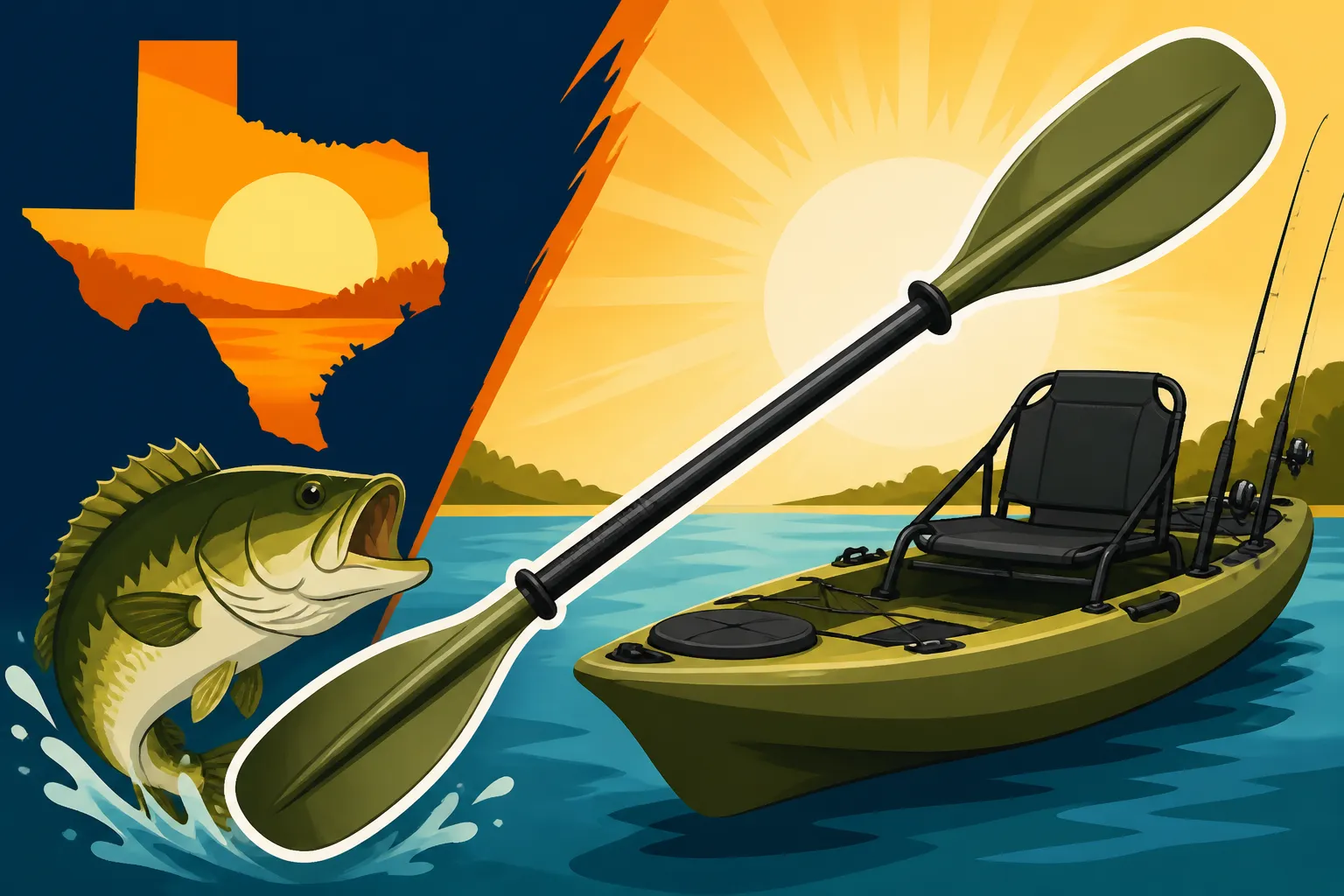
Best paddle for a fishing kayak
One of the most overlooked pieces of gear for kayak fishing is, ironically, the very thing that propels you: your paddle. Many new kayak anglers, and even some seasoned ones, just grab the first paddle they see, often a cheap aluminum one that comes with a "starter" kayak. But if you’ve ever found yourself exhausted after only an hour on the water, or struggling to hold your position against a light breeze on Galveston Bay, you know the frustration. This guide is here to help you navigate the often-confusing world of kayak paddles, ensuring you pick the perfect one to enhance your Texas fishing adventures.
Why Your Paddle Matters More Than You Think Beyond Just Moving Water
It’s easy to think of a paddle as just a stick with two blades, something that simply gets you from point A to point B. But for a fishing kayak, your paddle is an extension of your body, a tool for stealth, control, and endurance. Skimping on this vital piece of equipment can seriously detract from your overall enjoyment and success on the water, leading to more fatigue and less time with a line in the water.
The Frustration of the Wrong Paddle: Fatigue and Inefficiency
Have you ever tried paddling upstream on a river like the Guadalupe, or across a choppy stretch of Lake Texoma when the wind picks up, with a paddle that feels like it’s made of lead or just doesn't catch the water right? It’s absolutely brutal. The wrong paddle can transform a relaxing day of fishing into an exhausting chore. A paddle that's too heavy, too short, or too long for your kayak and paddling style forces you to expend excessive energy with every stroke. This isn't just about speed; it's about efficiency. Inefficient paddling means you're fighting the water more than moving through it.
Imagine you're trying to sneak up on a school of redfish in a shallow grass flat down in Rockport. With a clunky, inefficient paddle, every stroke is loud, splashy, and throws off your rhythm, potentially spooking the very fish you're trying to catch. Or perhaps you're out on Lake Fork, hoping to hit several prime bass fishing spots. If your paddle makes you tired after only an hour, you'll be cutting your trip short, feeling sore and defeated instead of exhilarated. This kind of fatigue isn't just physical; it can mentally wear you down, making you less focused on fishing and more focused on getting back to the ramp. It’s a common frustration, and one that's easily avoidable with the right information.
How the Right Paddle Enhances Your Fishing Experience
Conversely, a properly chosen paddle can feel like a natural extension of your arms, allowing for smooth, quiet, and powerful strokes. This improved efficiency directly translates to less fatigue, meaning you can stay on the water longer, cover more ground, and focus more on fishing and less on fighting your gear. The right paddle provides superior control, allowing you to subtly adjust your position, hold against a slight current, or make quick, precise maneuvers to get into that perfect casting lane. Think about it: a lightweight, responsive paddle lets you make those quick corrections without jarring your body or making excess noise.
For instance, when you're trying to hold your position over a submerged brush pile on Sam Rayburn Reservoir, a well-designed paddle allows you to scull effortlessly, keeping you precisely where you need to be. On the Texas coast, when you're sight-fishing for speckled trout in clear water, a quiet paddle ensures your approach is stealthy, increasing your chances of a successful cast. It truly transforms the experience, allowing you to fish smarter, not harder. You'll find yourself reaching those distant honey holes with less effort, confidently navigating tricky currents, and silently gliding into position, all of which contribute to a more enjoyable and productive day of fishing.
Key Factors to Consider When Choosing a Fishing Kayak Paddle
Choosing the "best" paddle isn't about finding the most expensive one; it's about finding the best paddle for you and your specific kayak and fishing style. Several critical factors come into play, and understanding them will empower you to make an informed decision that will save you energy and enhance your time on the water.
Paddle Length: Getting It Just Right for You and Your Kayak
The length of your paddle is arguably the most crucial factor. It’s not a one-size-fits-all situation, especially with the wide variety of fishing kayaks on the market. The primary determinants for paddle length are:
- Your Height: Taller paddlers generally need longer paddles.
- Your Kayak's Width: Fishing kayaks, particularly stable sit-on-top models, tend to be much wider than recreational or touring kayaks. The wider your kayak, the longer your paddle needs to be to comfortably reach the water without constantly bumping the sides or having to lean excessively.
- Your Seat Height: If your kayak has a raised seat (common in many modern fishing kayaks for better visibility and comfort), you'll need a longer paddle to compensate for the higher seating position.
A paddle that's too short will force you to hunch over or over-reach, leading to back and shoulder strain. Too long, and it becomes unwieldy, causing awkward, inefficient strokes and splashes. A common rule of thumb for sit-on-top fishing kayaks is to start with a paddle in the 230-260 cm range, but it's best to check specific charts that factor in your height and kayak width. Many manufacturers provide excellent sizing guides.
Here’s a simplified chart to give you a starting point, but always verify with your kayak manufacturer's recommendations:
| Kayak Width (Inches) | Paddler Height (Feet & Inches) | Suggested Paddle Length (CM) |
|---|---|---|
| 23-28 | 5'0"-5'5" | 210-220 |
| 5'6"-5'11" | 220-230 | |
| 6'0"-6'3" | 230-240 | |
| 29-33 | 5'0"-5'5" | 220-230 |
| 5'6"-5'11" | 230-240 | |
| 6'0"-6'3" | 240-250 | |
| 34-38 (Fishing Kayaks) | 5'0"-5'5" | 230-240 |
| 5'6"-5'11" | 240-250 | |
| 6'0"-6'3" | 250-260 |
Remember, this is a starting point. If you have a particularly wide fishing kayak, like some of the popular models designed for standing, you might even venture into longer lengths. An adjustable paddle can be a fantastic option, allowing you to fine-tune the length for different conditions or even different kayaks if you own more than one, or if you're out on the water with a friend who might need a slightly different setup. It offers incredible versatility, especially for a new angler still figuring out their perfect stroke.
Blade Design and Material: Power, Efficiency, and Durability
The blades are where the magic happens – they are what connect you to the water. Their shape, angle, and the material they're made from significantly impact your paddling experience.
Blade Shape:
- Wider, Shorter Blades: Often favored by kayak anglers. These blades provide more immediate power with less effort, which is great for moving a heavy fishing kayak, making quick turns, or holding your position in a current. They excel in what's known as "high-angle" paddling, where you hold the paddle more vertically and closer to your body.
- Longer, Narrower Blades: More common on touring kayaks, these are designed for sustained, efficient strokes over long distances. They are better suited for "low-angle" paddling, where the paddle is held flatter and further from the body. While efficient, they might not offer the immediate power and maneuverability often needed when actively fishing.
- Dihedral Blades: Many paddle blades have a dihedral shape, which is a slight curve or rib that runs down the middle. This design helps water flow smoothly off both sides of the blade, reducing flutter and making for a more stable, efficient stroke. Most quality paddles will incorporate some form of this.
Blade Angle (Feathering): This refers to the angle between the two blades on the paddle shaft.
- Unfeathered: Both blades are in line with each other (0-degree angle). This is simpler and often preferred by beginners or those who primarily paddle in calm conditions.
- Feathered: The blades are offset at an angle (e.g., 30, 45, or 60 degrees). This reduces wind resistance on the blade that's out of the water, which can be a huge benefit on a windy day, especially on open lakes or bays. Many modern paddles offer adjustable feathering, allowing you to customize the angle to your preference and conditions. This can be a game-changer when fighting a stiff Texas breeze on a large body of water like Lake Livingston Fishing Guide.
Blade Materials:
- Aluminum: This is typically the most affordable option. Aluminum paddles are durable but tend to be heavier and can feel cold in winter or hot in summer. They're a good choice for beginners or those on a tight budget but can lead to arm fatigue on longer trips.
- Fiberglass: A popular mid-range option, fiberglass offers a great balance of weight, durability, and performance. They are significantly lighter than aluminum, reducing fatigue, and provide a good flex in the water. Most recreational and serious fishing kayaks will pair well with a fiberglass paddle.
- Carbon Fiber: The lightest and often the most expensive option. Carbon fiber paddles offer superior stiffness and minimal weight, translating to maximum efficiency and reduced fatigue. If you're planning long days on the water or frequently paddle in challenging conditions, a carbon fiber paddle can be a worthwhile investment. The weight savings are truly noticeable over a full day of paddling.
The choice of blade material often correlates with overall paddle cost, but the investment in a lighter, more efficient paddle often pays dividends in comfort and stamina on the water.
Shaft Material and Grip: Comfort for Long Days on the Water
Just like the blades, the paddle shaft's material and design play a significant role in overall comfort and performance. You're going to be holding this thing for hours, so it needs to feel good in your hands!
Shaft Materials:
- Aluminum: Again, the most budget-friendly. It's sturdy but can be heavy and conductive, meaning it gets cold in the winter and can heat up under the Texas sun, potentially making your hands sweaty.
- Fiberglass: Offers a better feel than aluminum, with less conductivity and a lighter weight. It's generally more comfortable to grip and provides a slight flex that can absorb some of the shock of paddling.
- Carbon Fiber: The lightest and strongest option. Carbon fiber shafts are incredibly comfortable due to their light weight and often have a warmer, more natural feel than aluminum. They offer minimal flex, transferring power directly to the water, which is fantastic for efficiency but might feel a bit stiff to some.
Shaft Shape:
- Straight Shafts: The most common and straightforward design. They are versatile and work well for most paddlers.
- Bent (Ergonomic) Shafts: These shafts have a slight bend designed to keep your wrists in a more neutral, ergonomic position. This can significantly reduce wrist fatigue and strain on long paddling days, making them a favorite for anglers who spend hours on the water. While they might take a little getting used to, the long-term comfort benefits can be substantial.
Grip and Features:
- Indexing: Many paddles feature an "index" or "ovalized" shaft on one side. This slight oval shape helps your hand instinctively find the correct orientation of the paddle blade without looking, which is invaluable when you're focusing on fishing.
- Drip Rings: These small rubber rings are placed on the shaft near the blades. Their job is simple but effective: they prevent water from running down the paddle shaft and onto your hands, lap, or into your kayak. Essential for staying dry and comfortable, especially on cooler days or during active paddling.
- Hand Grips/Paddles for Comfort: Some paddles have cushioned grips or specific textures designed to improve comfort and reduce blisters over extended use. This is particularly important for fishing kayaks, where you might be holding the paddle for hours, making small adjustments, or taking strong strokes. You can also add aftermarket paddle grips for extra comfort, especially from retailers like Amazon.
When you're constantly gripping and manipulating your paddle, especially in various Texas weather conditions, a comfortable and well-designed shaft can truly make a difference in your endurance and overall satisfaction.
Special Features and Considerations for Anglers
Fishing from a kayak brings unique demands, and paddle manufacturers have responded by incorporating features specifically tailored to anglers. These specialized designs can add significant convenience and utility to your fishing trips.
Integrated Fishing Features: Rulers, Hook Retrievers, and More
Some paddles go beyond just propulsion, integrating handy tools directly into their design. This can be a huge space and time saver when you're out on the water.
- Integrated Rulers: Many fishing-specific paddles have a ruler printed directly on the shaft. This means you don't have to fumble for a separate measuring device when you catch a fish to check if it meets length limits. It's quick, convenient, and keeps your hands free for the fish. For instance, knowing the Texas Redfish Size and Bag Limits or Texas Largemouth Bass Length Limits is crucial, and having a ruler right there on your paddle makes compliance a breeze.
- Hook Retrievers/Line Snags: Some blades are designed with a small notch or hook-like feature that can be used to retrieve snagged lures or untangle lines from hard-to-reach places on your kayak. This can save you a lot of frustration and potentially lost lures.
- Anchor Pole Capabilities: A few specialized paddles are designed with a sturdy shaft and blade that can double as a shallow water anchor pole, allowing you to stick it into the mud or sand to momentarily hold your position. This is particularly useful in calm, shallow bays or river flats.
- Noise Reduction: While not a "feature" in the traditional sense, some paddles are designed with materials and shapes that minimize water noise and splashing. This stealth factor is incredibly important for approaching skittish fish like redfish or speckled trout in clear, shallow waters. A quiet paddle lets you get closer without alerting your quarry.
These integrated features might seem minor, but they contribute to a more streamlined and efficient fishing experience, allowing you to spend more time casting and less time fumbling with gear. When you're considering a new paddle, think about which of these small conveniences would genuinely benefit your style of fishing.
Two-Piece vs. Four-Piece Paddles: Portability and Storage
Paddles are not always one solid piece. The way your paddle breaks down affects its portability, storage, and even its function as a backup.
- Two-Piece Paddles: This is the most common breakdown design for quality paddles. They separate in the middle, making them much easier to transport in a car, store in a garage, or carry down to the launch site than a single-piece paddle. Most two-piece paddles feature a ferrule system that allows for adjustable feathering angles, adding to their versatility. They're robust enough for everyday use and are generally the preferred choice for most kayak anglers. If you’re looking at Best Kayaks for Texas Fishing, chances are you’ll want a two-piece paddle to go with it.
- Four-Piece Paddles: These paddles break down into even smaller, more compact sections. They are excellent for packing into smaller spaces, like a backpack for hiking to a remote pond, or for stowing as a backup paddle in the hull of your kayak or in a kayak fishing crate setup. While incredibly portable, they sometimes introduce a slight amount of flex or play at the joints compared to a two-piece or one-piece paddle. However, modern designs are remarkably solid, making them a fantastic choice for those who prioritize ultimate compactness or need a reliable spare. They are also great for anglers who travel frequently with their kayak.
The choice between a two-piece and a four-piece paddle often comes down to your storage space, transport method, and whether you need a dedicated backup. Having a spare paddle, especially on longer trips or when tackling big waters like Lake Fork Fishing Guide, is a smart safety precaution, and a compact four-piece can fit almost anywhere.
Weight and Durability: Balancing Performance with Real-World Use
We've touched on weight and durability throughout, but it's worth highlighting them together as a crucial balancing act for fishing kayak paddles.
Weight: Lighter isn't always absolutely necessary, but it almost always means less fatigue. When you're making hundreds, if not thousands, of strokes over a day, every ounce saved adds up. A lighter paddle allows for more effortless paddling, quicker movements, and ultimately, more energy left for casting and reeling. This is especially true for longer paddles required by wider fishing kayaks. Think about an all-day excursion on the Texas Gulf Coast Fishing Spots where you're battling wind and current – a lightweight paddle will save your shoulders.
Durability: Fishing kayaks often venture into challenging environments. You might be pushing off oyster reefs, bumping against rocky banks, or dragging your kayak over rough terrain. Your paddle needs to be able to withstand this abuse. While carbon fiber is incredibly light and strong, it can be more brittle than fiberglass or aluminum if struck sharply against a hard object. Fiberglass offers a good balance of impact resistance and moderate weight, making it a popular choice for durability without being overly heavy. Aluminum, while heavy, is very tough and can take a beating.
Consider where and how you typically fish. If you're constantly in shallow, oyster-filled bayous, extreme durability might trump ultra-lightweight performance. If you're primarily on open, clear lakes, you might lean more towards weight savings. Brands like Bass Pro Shops and Amazon offer a wide spectrum of paddles, from entry-level aluminum options that are highly durable for rough use, to high-performance carbon fiber paddles designed for minimal weight and maximum efficiency. It's about finding that sweet spot where the paddle's weight and robust construction match your fishing adventures without breaking your budget.
Making Your Final Choice and Where to Look
With so many options, making that final decision can still feel a bit overwhelming. But by bringing together all the factors we've discussed, you can confidently select a paddle that will truly enhance your Texas fishing experiences.
Matching Your Paddle to Your Kayak and Fishing Style
Before you even start looking at specific models, take a moment to honestly assess your kayak and your fishing habits.
- Kayak Type: Is it a wide, stable sit-on-top fishing kayak, or a narrower, sit-in model? The wider your kayak, especially if it has a raised seat for comfortable casting, the longer your paddle needs to be. Many dedicated fishing kayaks, like those designed for stability and standing, will require a paddle in the 240-260 cm range. For more insight into different kayak types, check out Best Kayaks for Texas Bass Fishing or Best Kayaks for Texas Saltwater Flats.
- Paddling Style: Do you tend to paddle with a higher, more vertical stroke, or a lower, more horizontal one? Higher-angle paddlers often prefer shorter, wider blades for quick power, while lower-angle paddlers might prefer longer, narrower blades for smooth, efficient glides. However, for fishing, the higher-angle, more powerful stroke often provides the quick maneuverability needed.
- Fishing Environment: Are you primarily fishing calm freshwater lakes like Lake Conroe, battling currents on the Brazos River, or navigating windy, choppy conditions on the Texas coast? Different conditions benefit from different paddle characteristics. For Texas Saltwater Fishing Techniques, a more durable and perhaps feathered paddle might be crucial. For How to Fish for Bass in Texas on calm reservoirs, lightweight efficiency might be your top priority.
- Frequency and Duration: How often and how long do you typically fish? If you're an occasional angler who only goes out for a couple of hours, a mid-range fiberglass paddle will likely suffice. If you're out every weekend for full-day excursions, investing in a lighter, higher-performance carbon fiber paddle will pay dividends in reduced fatigue and increased enjoyment. Don't forget to consider How to stay safe fishing in Texas summer heat, as a comfortable paddle will make long, hot days more bearable.
Think of your paddle as an investment in your comfort and success on the water. It’s not just a means of getting around; it’s part of your angling arsenal, as important as your rod and reel.
Trying Before You Buy If Possible and Reading Reviews
This is where the rubber meets the road, or rather, the blade meets the water. If there’s any way for you to try out a few different paddles before committing, do it!
- Demo Days/Rental Shops: Some kayak retailers or rental outfits offer demo days where you can test different kayaks and paddles. This is an invaluable opportunity to feel the difference a few centimeters in length or a few ounces in weight can make. Even renting a few different setups can give you a real-world perspective.
- Borrow From a Friend: If you have friends who kayak fish, ask if you can try their paddle on your kayak for a few minutes. Even a short test can reveal a lot about comfort and fit.
- In-Person Shopping: While you might not be able to "try before you buy" on the water, visiting a physical store like Bass Pro Shops allows you to hold paddles, feel their weight, test the ferrule system, and get a sense of their build quality. You can compare different models side-by-side and ask knowledgeable staff questions.
- Online Reviews: When shopping online, particularly from large retailers like Amazon, read detailed user reviews. Pay close attention to reviews from other kayak anglers who own similar kayaks or fish in similar conditions. Look for comments on durability, comfort during long paddles, ease of adjustment (for adjustable models), and how well the paddle performs in windy or choppy conditions. Don't just look at the star rating; dig into the specifics.
Remember that a paddle is a very personal piece of gear. What works perfectly for one angler might not be ideal for another. Take your time, do your research, and prioritize comfort, efficiency, and durability based on your individual needs. Investing in the right paddle now will save you a lot of grief and backache later, allowing you to fully enjoy all the incredible Best Places to Fish in Texas. Whether you're a seasoned pro or just starting out with your Beginner Fishing Gear Checklist for Texas, the right paddle is a cornerstone of a great kayak fishing setup.
Disclaimer
This article is for general informational purposes only and does not constitute professional advice. Laws, prices and regulations vary by location and change over time. Consult a qualified professional for guidance on your specific situation.