Best boat for offshore Texas Gulf fishing
Heading out into the vast, open waters of the Texas Gulf is a dream for many anglers, but it's a completely different ballgame than fishing a calm inland lake. The challenges are immense, from unpredictable weather shifts to long runs to distant fishing grounds, and without the right vessel, that dream can quickly turn into a nightmare. This guide is here to cut through the confusion and help you understand exactly what kind of boat is best equipped to handle the unique demands of offshore Texas Gulf fishing, ensuring your adventures are both productive and safe.
Navigating the Vast Texas Gulf: Why Offshore Boats Are Different
The Texas Gulf Coast isn't just a bigger version of our freshwater lakes and bays; it's an entirely different beast. When you decide to head offshore, you're committing to an environment that requires a boat with specific capabilities, not just any vessel that floats. Understanding these distinctions is the first crucial step in choosing your ultimate offshore fishing machine.
The Unpredictable Nature of Gulf Waters
One of the biggest eye-openers for new offshore anglers is just how quickly the conditions can change out in the Gulf. You might leave the jetties on a glassy morning, but a few hours later, a strong south wind can kick up a vicious chop that will absolutely punish a boat not designed for it. We're talking about waves that aren't just big, but often steep and close together, making for a jarring and potentially dangerous ride. A boat designed purely for bay fishing or calm lake waters simply won't have the hull shape, freeboard, or structural integrity to safely navigate these conditions. It's not just about comfort; it's about getting back to shore when the weather decides to turn sour, which it inevitably will. Texas Saltwater Fishing Techniques often emphasize patience and preparation, and that preparation starts with the right boat.
Long Runs to Productive Grounds
Unlike many inshore spots where fishing can be phenomenal just a short distance from the ramp, true offshore fishing in Texas often means making significant runs. Whether you're chasing kingfish and dorado around oil rigs, targeting snapper on artificial reefs, or heading to the deep water for tuna, you're likely covering 30, 50, or even 100 miles or more one way. This isn't a quick trip across the lake; these are serious voyages that demand a boat capable of sustained speed and, critically, ample fuel capacity. Breaking down in the middle of the Gulf, miles from land, is not a situation you ever want to experience. Your offshore boat needs to be a reliable workhorse, not a fair-weather friend. This long-distance capability also means your boat needs to carry enough supplies for a full day, or even multiple days, on the water, including ice, food, water, and safety gear.
What Makes a True Offshore Fishing Machine for Texas?
So, what exactly does an offshore fishing boat need to have to thrive in the challenging Texas Gulf environment? It's a combination of engineering, thoughtful design, and robust features that prioritize safety, range, and fishability in open water.
Hull Design: Cutting Through the Chop
The hull is the heart and soul of an offshore boat. For the Texas Gulf, you're looking for a deep-V hull design. This isn't just a marketing term; it's crucial for performance and comfort in rough seas. A deep-V hull slices through waves rather than pounding over them, providing a much smoother, drier, and more comfortable ride. Look for boats with a deadrise (the angle of the hull bottom to the horizontal) of 20 degrees or more at the transom. While a deeper V can sometimes mean a little less stability at rest, the trade-off for a better ride in rough seas is almost always worth it for offshore pursuits. Additionally, a wide flare in the bow helps deflect spray, keeping you and your crew drier during those long, bumpy runs.
Power and Range: Getting There and Back Safely
Offshore fishing demands serious horsepower and, just as importantly, sufficient fuel capacity. Modern outboard engines are incredibly reliable and fuel-efficient, but even with that efficiency, covering 100+ miles round trip, plus fishing time, requires a substantial fuel tank. You should aim for a boat with a range that gives you a comfortable margin of safety, accounting for unexpected detours, adverse currents, and potential rough weather that can burn more fuel. Don't just calculate the mileage; factor in a safety reserve.
As for power, you want enough to get up on plane quickly, maintain a comfortable cruising speed even in a chop, and still have some reserve power for emergencies. Dual or even triple engine setups are common on larger offshore boats, not just for speed, but for redundancy. If one engine fails miles offshore, having another to get you home is invaluable peace of mind.
Stability and Seaworthiness: Battling the Waves
When you're fighting a big kingfish or wrestling a snapper off the bottom, the last thing you want is a boat that's rolling violently with every swell. Stability, both at rest and while running, is paramount. A wider beam generally contributes to greater stability, as does a well-designed hull. High gunwales (the upper edge of the side of a boat) are also critical for safety, providing a secure feeling and preventing anglers from being tossed overboard during sudden lurches or when battling a strong fish. Good drainage from the deck is also important, ensuring that any water taken over the bow or transom quickly drains overboard, keeping the deck clear and safe.
Deck Layout and Fishing Amenities
An offshore fishing boat isn't just about getting there; it's about being able to fish effectively once you arrive. The deck layout should prioritize open, unobstructed space for multiple anglers to cast, fight fish, and move around safely. Key fishing amenities include:
- Large, Insulated Fish Boxes: Not just for keeping your catch cold, but also for acting as storage for ice, keeping the deck clear. These need to be well-drained.
- Livewells: Multiple, properly aerated livewells are essential for keeping bait fresh and lively, especially during those long runs.
- Rod Holders: Plenty of flush-mount rod holders are needed for trolling, drift fishing, and temporary storage.
- Rocket Launchers & Rod Storage: Vertical rod storage on the T-top or leaning post, as well as horizontal storage under the gunwales, keeps expensive rods safe and accessible.
- Tackle Storage: Built-in tackle drawers and compartments help keep your gear organized and protected from the elements.
- Raw Water Washdown: Indispensable for cleaning up blood, bait, and slime quickly, keeping the deck safe and sanitary.
- Transom Door: A swing-in transom door makes it much easier to boat large fish or for divers to enter and exit the water.
When you’re looking at these features, think about how you typically fish. Do you troll extensively? Do you prefer bottom fishing? Does your crew include multiple anglers who need space to work? The answers will guide your choices.
Top Boat Styles for Offshore Texas Anglers
While many boats can technically go offshore on a calm day, only a few styles are truly designed for the rigors and demands of the Texas Gulf. Each has its own strengths and weaknesses.
| Boat Type | Key Features | Pros | Cons | Ideal for |
|---|---|---|---|---|
| Center Console | Open deck, console in center, T-top, deep-V hull | Max fishing space, 360-degree fishability, fast, versatile | Limited cabin space, exposure to elements | Serious anglers, trolling, bottom fishing, multiple crew members |
| Walkaround/Express | Small cabin forward, good deck space aft, deeper V | Shelter from weather, sleeping/head facilities, good for families | Less fishing space than CC, slightly heavier/slower | Overnight trips, comfort for crew, couples fishing |
| Sportfisher | Large cabin, dedicated bridge/tower, heavy deep-V, powerful inboard/outboard | Ultimate offshore capability, luxury, long-range, serious tournament rig | High cost, complex maintenance, larger crew often needed | Big game fishing, extended trips, entertaining, serious offshore adventurers |
The Versatile Center Console
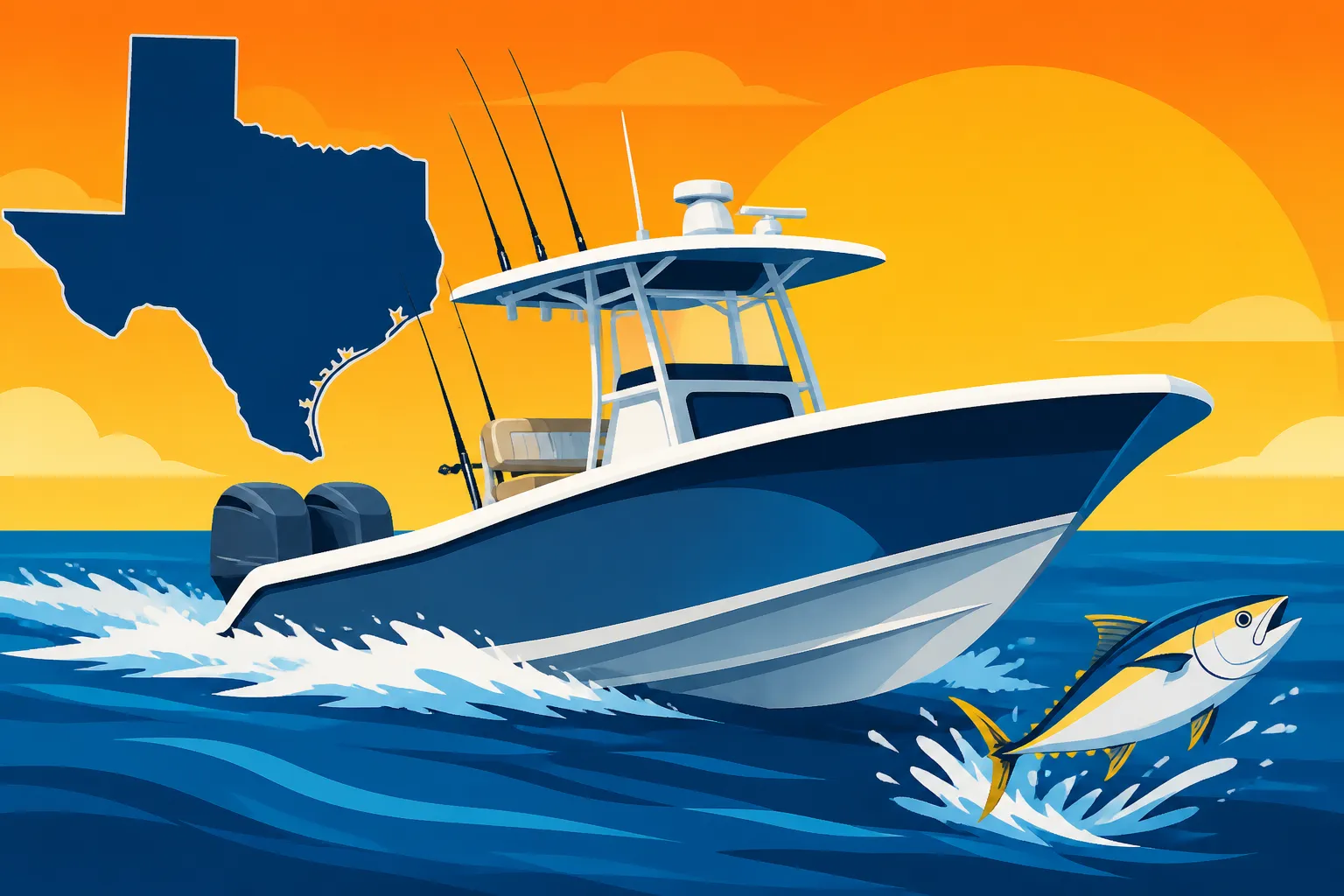
The center console is arguably the most popular and iconic offshore fishing boat in Texas. Its design places the helm and controls in the center of the boat, surrounded by a wide-open deck. This layout allows for 360-degree fishability, meaning you can fight a fish from any point around the boat without obstructions.
Why they excel:
Center consoles typically feature deep-V hulls, offering an excellent ride in choppy conditions. They are also highly versatile, capable of everything from trolling for kingfish to bottom fishing for snapper or even making long runs to chase tuna. Their open design means there's plenty of space for multiple anglers, copious tackle storage, and large fish boxes. Many come equipped with robust T-tops that provide shade and can be fitted with outriggers, rocket launchers, and advanced electronics. Reputable brands that specialize in these kinds of offshore machines include those you might find at large marine dealers, often located near coastal cities, or even through specialized outlets where you can customize your rig. For smaller items like emergency repair kits or specialized cleaning supplies, shops like Bass Pro Shops or even online retailers like Amazon offer a huge selection.
Things to consider:
While offering fantastic fishability, the open design means less shelter from the sun, rain, and cold. If you plan on long runs in inclement weather or overnight trips, the lack of a proper cabin can be a drawback.
Comfortable Walkaround and Express Fisherman Designs
For anglers who value a bit more comfort and protection from the elements, walkaround or express fisherman boats offer a compelling alternative. These designs typically feature a small cabin forward, accessible from the deck via narrow side decks (the "walkaround" part). The cabin often includes a V-berth for sleeping, a small galley, and a head (marine toilet), making them much more comfortable for longer days or even overnight trips offshore.
Why they excel:
The cabin provides invaluable shelter from sun, rain, and cold, allowing for a more comfortable experience, especially on those really long runs or when the weather turns sour. Having a private head is also a huge bonus, particularly for families or mixed-gender crews. While the fishing space isn't as expansive as a pure center console, there's still ample room in the cockpit for fishing, and the deeper V-hulls ensure a capable ride in offshore conditions. These boats strike a nice balance between dedicated fishing performance and creature comforts.
Things to consider:
The walkaround design means a narrower path to the bow, which can sometimes feel cramped or less secure in rough seas. The cabin also eats into the overall deck space compared to a center console of similar length, limiting the number of anglers who can comfortably fish at once. They are generally heavier, potentially impacting fuel efficiency or requiring more powerful engines.
Dedicated Sportfishers: The Serious Offshore Rig
For the most serious offshore angler with deep pockets, a sportfisher is the ultimate choice. These are large, purpose-built offshore vessels, often featuring a commanding flybridge for enhanced visibility, spacious cabins with multiple berths, galleys, and heads, and powerful inboard or outboard engines. They are designed for extended offshore trips and tackling the biggest game fish.
Why they excel:
Sportfishers are built to handle the harshest offshore conditions with grace and stability. Their heavy, deep-V hulls provide an incredibly smooth ride, and their extensive fuel capacity allows for multi-day excursions to distant oil rigs or deep-sea canyons. The elevated flybridge offers an unparalleled view for spotting fish, debris, or other vessels. They come equipped with every conceivable fishing amenity, from massive livewells and fish boxes to fighting chairs, bait prep stations, and state-of-the-art electronics suites. Texas Largemouth Bass Fishing Guide might be about freshwater, but a sportfisher is for an entirely different kind of trophy.
Things to consider:
The sheer size and complexity of sportfishers translate to a significantly higher purchase price and ongoing maintenance costs. They also require a larger crew to operate effectively, especially when docking or handling lines in tight quarters. Their size can make them less maneuverable in shallower bay waters if you ever decide to venture closer to shore.
Beyond the Boat: Essential Offshore Safety and Gear
Having the right boat is crucial, but it's only part of the equation for safe and successful offshore Texas Gulf fishing. The right gear and a commitment to safety are equally important. You can find many of these items at marine supply stores or through online retailers.
Critical Safety Equipment for Gulf Runs
The U.S. Coast Guard has specific requirements for vessels, and offshore you'll want to exceed them. Think of safety gear as your lifeline when you're miles from shore.
- VHF Radio: A reliable fixed-mount VHF radio with a strong antenna is non-negotiable for communicating with other vessels and the Coast Guard. Consider a handheld VHF as a backup.
- EPIRB or PLB: An Emergency Position Indicating Radio Beacon (EPIRB) or Personal Locator Beacon (PLB) can transmit a distress signal with your exact location to rescue authorities, even without cell service. This is truly critical.
- Life Jackets (PFDs): Ensure you have enough Coast Guard-approved life jackets for everyone on board, and ideally, have them easily accessible and encourage wearing them, especially in rough conditions. Texas Boat Safety Equipment Requirements outlines the specifics, but offshore, you'll want comfort and reliability.
- First Aid Kit: A comprehensive kit, specifically stocked for marine environments, including seasickness medication and treatments for common injuries.
- Flares and Signaling Devices: Visual distress signals are vital for attracting attention if you're in trouble.
- Fire Extinguishers: Ensure they are properly charged and accessible.
- Anchor and Rode: A substantial anchor with plenty of rode (line and chain) is essential for holding your position or in case of engine failure.
- Tool Kit and Spare Parts: Basic tools, spare fuses, impellers, and other common wear-and-tear items can save a trip.
- De-watering Devices: Beyond your bilge pump, a bucket or hand pump can be critical in a serious emergency.
It's a good idea to perform regular safety checks before every offshore trip. A checklist can save lives.
Must-Have Electronics for Navigation and Fish Finding
Modern marine electronics have revolutionized offshore fishing, making it safer and more productive.
- GPS Chartplotter: Integrated with detailed marine charts, a GPS chartplotter is essential for navigation, marking fishing spots, and plotting courses. Look for units with high-resolution displays and intuitive interfaces. Brands such as Garmin, Simrad, and Lowrance offer excellent options.
- Fish Finder/Sonar: A powerful fish finder with good transducer technology (Chirp, side-scan, down-scan) is crucial for locating baitfish, structure, and game fish at various depths. This is your eye below the surface.
- Radar: For serious offshore anglers, radar is an invaluable safety tool, especially in fog, rain, or at night. It helps detect other vessels, land, and even rain squalls.
- Autopilot: On long runs, an autopilot can significantly reduce fatigue, allowing you to focus on scanning the horizon or preparing gear.
- Satellite Communication Device: While not strictly navigation, a satellite phone or messenger (like those available from Garmin InReach or similar brands) offers reliable communication even when miles beyond cell tower range, allowing you to send texts or make calls to loved ones or emergency services. Many anglers find these indispensable for longer Gulf trips. Best Fishing Electronics for Texas Anglers delves deeper into these options.
Outfitting your boat with the right electronics can be a significant investment, but for offshore fishing, they are not luxuries; they are necessities that contribute directly to your safety and success. You can often find a good selection of marine electronics at specialty retailers or even general outdoor stores like Bass Pro Shops, or research them extensively on sites like Amazon before making a purchase.
Ultimately, choosing the best boat for offshore Texas Gulf fishing isn't just about speed or comfort, it's about making a wise investment in a vessel that can reliably and safely take you to distant fishing grounds and bring you home, regardless of what the Gulf throws your way. It's about respecting the power of the ocean and equipping yourself to enjoy its bounty responsibly.
Disclaimer
This article is for general informational purposes only and does not constitute professional advice. Laws, prices and regulations vary by location and change over time. Consult a qualified professional for guidance on your specific situation.