Best boat for skinny water redfish flats
There's nothing quite like the thrill of sight fishing for redfish on the shallowest Texas flats, but that excitement can quickly turn to frustration if your boat isn't up to the task. Dragging bottom, spooking fish, or getting stuck miles from the ramp can ruin an otherwise perfect day. This guide is all about helping you understand what makes a boat truly excel in these challenging, yet incredibly rewarding, environments so you can spend less time worrying and more time catching those beautiful bronzebacks.
The Unique Challenges of Skinny Water Redfish Flats in Texas
Texas's coastal waters are a magnificent mosaic of shallow bays, vast grass flats, and intricate marsh systems, all teeming with redfish. However, these environments present a very specific set of challenges for anglers. You're not just dealing with shallow water; you're contending with soft mud, abrasive oyster shells, dense seagrass beds, and incredibly wary fish. Having the wrong vessel can turn a dream fishing trip into a nightmare of prop repairs and muddy wades.
Navigating Extremely Shallow Depths
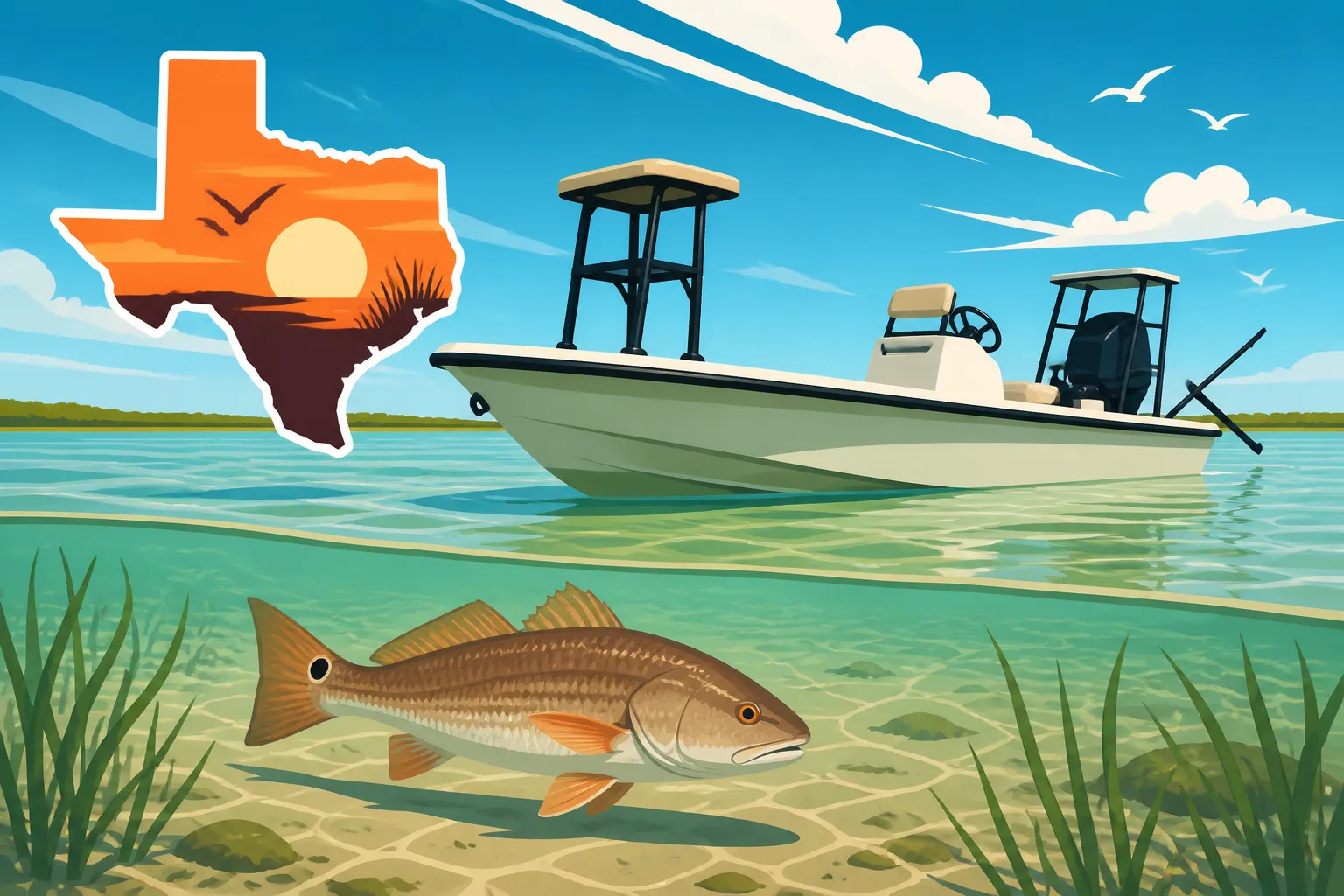
When we talk about "skinny water," we're often talking about depths measured in inches, not feet. Think about trying to float a boat in 6-8 inches of water over a soft, silty bottom or, worse, hard-packed sand and oyster shell reefs. A traditional V-hull boat, designed for cutting through chop, simply draws too much water. Its keel will dig in, and its propeller will churn mud, scaring away every fish within a quarter-mile. Not to mention the damage it can do to fragile seagrass ecosystems, which are vital nurseries for many fish species. The goal isn't just to float, but to move silently and efficiently, often pushing pole in hand, without leaving a visible scar on the bottom or on your prop blades.
Imagine poling slowly across a vast flat in San Antonio Bay, the sun just coming up, trying to spot a redfish tailing in the golden light. If your hull is constantly tapping the bottom or your prop is grinding, that magical moment is gone. You need a boat that practically glides over these minimal depths, allowing you to access areas that bigger boats can only dream of.
Stealth and Presentation are Key
Redfish in shallow water are exceptionally wary. They're often feeding in plain sight, making them highly susceptible to disturbances. A loud outboard motor, the slap of a hull on a small ripple, or even the shadow of your boat can send them bolting for deeper water. Your approach needs to be as quiet as possible, almost ghost-like. This isn't about brute force or speed; it's about finesse and patience. The fish are often within casting distance, but only if they haven't detected your presence first.
This emphasis on stealth extends to your casting and presentation, too. Being able to position your boat quietly, whether by poling or with a whisper-quiet electric trolling motor, allows you to make precise casts to tailing fish or cruising singles. If you're constantly fighting the wind or current with a noisy engine, your chances of getting a natural presentation decrease dramatically. It's a delicate dance, and your boat is your partner. This is where techniques like How to Wade Fish for Redfish in Texas truly shine, as getting out of the boat reduces your footprint even further.
Essential Boat Features for Skinny Water Domination
Choosing the right boat for Texas redfish flats means understanding how specific design elements contribute to performance in ultra-shallow conditions. It’s a delicate balance between draft, stability, and maneuverability. You're looking for a specialized tool, not a jack-of-all-trades.
Hull Design: The Foundation of Shallow Water Access
The hull is where it all begins. For skinny water, you want a hull that minimizes draft – the amount of water the boat needs to float. This usually means a flatter bottom or a unique tunnel design.
- Tunnel Hulls: Many flats boats incorporate a "tunnel" in the hull, which essentially creates a channel for the propeller to run higher than the bottom of the boat itself. This design allows the boat to get into much shallower water without fear of prop strike. When the boat is moving forward, the tunnel packs water around the prop, allowing it to maintain thrust even when the prop is technically above the hull bottom. This is a game-changer for getting over those incredibly shallow spots and oyster reefs without damaging your motor.
- Low Deadrise: Deadrise refers to the angle of the hull from the keel to the chine. A high deadrise (like a deep-V hull) cuts through waves beautifully but draws a lot of water. For skinny water, you want a very low or even zero-deadrise hull in the stern. This allows the boat to plane out quickly and run incredibly shallow. The trade-off is often a rougher ride in choppy open bays, but on the calm flats, it’s exactly what you need.
- Wider Beams: A wider beam (the boat's width) generally contributes to greater stability, which is crucial when you're poling or sight fishing from a casting platform. It also helps distribute the boat's weight over a larger surface area, further reducing draft.
Propulsion Systems: Getting in Without Getting Stuck
Even with a great hull, your propulsion system needs to be optimized for shallow water. This isn't just about the engine itself, but how it's mounted and augmented.
- Outboard Motors with Jack Plates: A high-quality outboard motor is essential, but it needs to be paired with a hydraulic jack plate. This device allows you to raise and lower your motor vertically with the flick of a switch. In ultra-skinny water, you can raise your motor almost completely out of the water, letting the tunnel hull do its job and allowing you to pole into truly inaccessible areas. When it’s time to run, you drop the motor, get on plane in minimal depth, and then raise it again to run even shallower. This flexibility is non-negotiable for serious flats fishing.
- Electric Trolling Motors: For silent maneuvering and holding position, a powerful, reliable electric trolling motor is a must-have. Consider models with GPS anchoring features, which will automatically keep your boat in position against wind and current, freeing you up to cast. Brands like Minn Kota and MotorGuide offer robust options that can be found at retailers like Bass Pro Shops or online through Amazon. A quiet trolling motor allows you to ease into casting range of wary fish without making a sound.
- Poling Platforms and Push Poles: For the ultimate in stealth and shallow water access, a poling platform mounted on the stern is invaluable. This elevated perch gives the angler poling the boat a better vantage point to spot fish. Paired with a lightweight, strong push pole, it allows for incredibly quiet and precise navigation through the shallowest grass and mud flats. This technique is often detailed in guides like Texas Saltwater Fishing Techniques because it's so effective.
Deck Layout and Storage: Optimized for Sight Fishing
The interior layout of a flats boat is designed with one primary goal in mind: sight fishing. Every element contributes to a clean, unobstructed fishing platform.
- Open, Uncluttered Decks: You want as much open, non-skid deck space as possible. This allows anglers to move freely, make wide casts, and have clear sightlines to the water. Pop-up cleats and flush-mounted hardware minimize snags for fly lines or casting lures.
- Elevated Casting Platforms: A dedicated casting platform on the bow (and often the stern) provides anglers with a higher vantage point. This elevation is crucial for spotting redfish against the bottom, especially when they are tailing or cruising. The extra height helps cut through glare and gives you a better angle for a precise cast.
- Rod Storage and Livewells: Integrated rod holders, often under-gunnel, keep multiple rods out of the way but easily accessible. Large, well-aerated livewells are also important for keeping bait fresh or for holding any legal catches you might want to keep, following Texas Redfish Size and Bag Limits. These details contribute to a smooth, efficient fishing experience.
Top Boat Types for Texas Redfish Flats
When you're trying to fish those skinny redfish flats, not all boats are created equal. The market offers a few specialized types, each with its own set of advantages and compromises. Understanding these differences will help you choose the best vessel for your specific needs and budget. We're looking for boats that prioritize minimal draft and quiet operation.
Technical Poling Skiffs (TPS)
Technical Poling Skiffs are purpose-built machines designed for the absolute shallowest water and ultimate stealth. These boats are the epitome of flats fishing design.
- Design Philosophy: TPS boats are typically lighter, narrower, and have incredibly shallow drafts – often floating in just 4-6 inches of water. They achieve this with ultra-flat stern sections, minimalist designs, and high-quality construction materials like fiberglass or carbon fiber. The focus is entirely on poling efficiency and stealth.
- Ideal Scenarios: If your primary goal is sight fishing tailing redfish in glass-calm, ultra-skinny water, a TPS is your dream boat. They are easy to pole, track straight, and offer unparalleled shallow water access. They excel in places like the Laguna Madre or the back lakes of Galveston Bay where the water can be incredibly clear and shallow.
- Pros: Unmatched shallow water access, exceptional stealth (especially when poled), great fuel efficiency due to lightweight, excellent stability for sight fishing from the deck. The elevated poling platform provides a fantastic vantage point for spotting fish, a huge advantage when trying to How to catch redfish in shallow water.
- Cons: Limited rough water capability (they can be a wet and bumpy ride in open bay chop), typically lower horsepower and slower speeds, less storage space, and often come with a premium price tag due to specialized construction. These are not family boats for tubing or cruising.
Shallow Water Bay Boats
While still designed for shallow water, bay boats offer a significant step up in versatility and comfort compared to a pure TPS. They are a popular choice for many Texas anglers because they can handle more varied conditions.
- Design Philosophy: Shallow water bay boats still feature tunnel hulls and low deadrise sterns to reduce draft, but they are generally wider, longer, and have a bit more V in the hull towards the bow. This allows them to handle a chop on larger open bays more comfortably while still offering excellent shallow water running and floating capabilities.
- Ideal Scenarios: These boats are perfect for anglers who want to fish a variety of environments on the same trip: running across a choppy Galveston Bay to get to a protected marsh flat, then working that flat in 10-12 inches of water. They offer a good balance for someone who might want to chase trout in deeper channels as well as redfish on the flats. They are often described in articles like Best bay boats for the Texas coast.
- Pros: Good balance of shallow water capability and rough water ride, more storage and seating, often higher horsepower for faster runs, suitable for both flats fishing and light bay fishing. They can still be poled or maneuvered quietly with a trolling motor.
- Cons: Draw more water than a TPS, heavier and harder to pole, generally less stealthy in the absolute skinniest water, can be more expensive than modified jon boats.
Jon Boats (Modified for Flats)
For the budget-conscious angler or the DIY enthusiast, a modified jon boat can be an incredibly effective and affordable option for accessing skinny water redfish flats.
- Design Philosophy: A standard jon boat has a flat bottom and square bow, making it inherently shallow-drafting. Modifications often include adding a jack plate for the outboard, installing a comfortable casting deck, adding a trolling motor, and sometimes building a poling platform. Some anglers even add a custom tunnel or sponsons for even shallower running.
- Ideal Scenarios: Jon boats are fantastic for exploring smaller, protected marsh systems, tidal creeks, and quiet back lakes where you need to get exceptionally shallow and don't expect much chop. They are also popular for those who trailer their boats frequently and don't want to invest heavily.
- Pros: Very affordable upfront cost, easy to customize and maintain, incredibly stable due to flat bottom, can be surprisingly shallow-drafting when modified correctly, and can be found at local boat dealers or online marketplaces.
- Cons: Rough ride in any significant chop, not as refined or durable as purpose-built flats boats, can be noisy without proper sound dampening, typically slower, and may not have the same fit and finish as a high-end skiff. However, for a simple and effective tool, they are hard to beat.
| Boat Type | Typical Draft (Running) | Typical Draft (Floating) | Rough Water Comfort | Stealth (Poled) | Versatility | Price Range (General) |
|---|---|---|---|---|---|---|
| Technical Poling Skiff (TPS) | 3-5 inches | 4-7 inches | Low | Excellent | Low | Higher |
| Shallow Water Bay Boat | 6-10 inches | 8-14 inches | Medium | Good | Medium-High | Medium-High |
| Modified Jon Boat | 4-8 inches | 6-10 inches | Very Low | Good | Low-Medium | Lower |
Beyond the Boat: Accessories and Techniques for Skinny Water
Having the right boat is a huge step, but it's only part of the equation for successful skinny water redfishing in Texas. There are essential accessories and techniques that will truly maximize your time on the flats, making your investment in a specialized boat pay off even more.
Critical Electronics and Navigation
Even in shallow water, modern electronics play a crucial role in safety, navigation, and fish finding. You might not be looking for deep structure, but knowing your surroundings is paramount.
- GPS and Chartplotter: A reliable GPS with detailed mapping is essential, especially in expansive bay systems. It helps you navigate safely through winding channels, mark productive spots, and avoid running aground on unmarked reefs or sudden shoals. Some units offer specific shallow water charts or satellite imagery overlays that can be invaluable.
- Shallow Water Fish Finder/Depth Sounder: While you won't be "finding" fish with sonar in 6 inches of water, a good depth sounder is critical for ensuring you're not trying to run through areas too shallow for your boat. It can also help you identify subtle changes in bottom contour that might hold fish, or mark potholes in grass flats. Look for models that can read accurately in very shallow water.
- Power-Pole or Minn Kota Raptor (Shallow Water Anchors): These hydraulic or electric anchors deploy quickly and silently, pinning your boat in place with spikes driven into the bottom. They are absolutely invaluable for holding your position when you spot fish, making multiple casts, or fighting a strong redfish without drifting. No more fumbling with a noisy traditional anchor! You can find these at marine stores or through online retailers like Amazon.
Essential Gear for Flats Fishing
Your personal gear also needs to be tailored to the challenges and opportunities of skinny water sight fishing.
- Polarized Sunglasses: This is not an optional accessory; it's a fundamental tool. High-quality polarized sunglasses cut the glare off the water, allowing you to actually see into the shallow depths and spot redfish, dark shapes, and subtle movements that you would otherwise miss. Copper or amber lenses are often preferred for their ability to enhance contrast in diverse light conditions, a fact often highlighted in discussions about Best Sunglasses for Sight Fishing in Texas.
- Push Pole: Even if your boat has a trolling motor, a push pole is indispensable for absolute stealth and navigating truly impossible depths. It allows you to move silently, adjust your position with minimal disturbance, and free your boat if you accidentally find yourself too shallow to use the motor. A 15-20 foot graphite or fiberglass pole is ideal for most flats boats.
- Appropriate Tackle: For redfish on the flats, you'll want medium-heavy rods and reels capable of making long, accurate casts with artificial lures like weedless spoons, soft plastics rigged on weighted hooks (like a Texas rig), or topwater plugs. Fly fishermen will need a 7-9 weight fly rod and appropriate flies designed to imitate shrimp, crabs, and baitfish. Remember, the goal is often a precise presentation to a visible fish, so practice your casting. Detailed tackle recommendations can be found in guides like Best Tackle for Texas Saltwater Wade Fishing and Best Rods for Texas Redfish.
Remember, successful skinny water redfishing isn't just about the boat; it's about the entire system working in harmony – boat, gear, and angler. With the right setup, those elusive redfish on the shallowest Texas flats are well within your reach.
Disclaimer
This article is for general informational purposes only and does not constitute professional advice. Laws, prices and regulations vary by location and change over time. Consult a qualified professional for guidance on your specific situation.