Best trolling motor for a jon boat
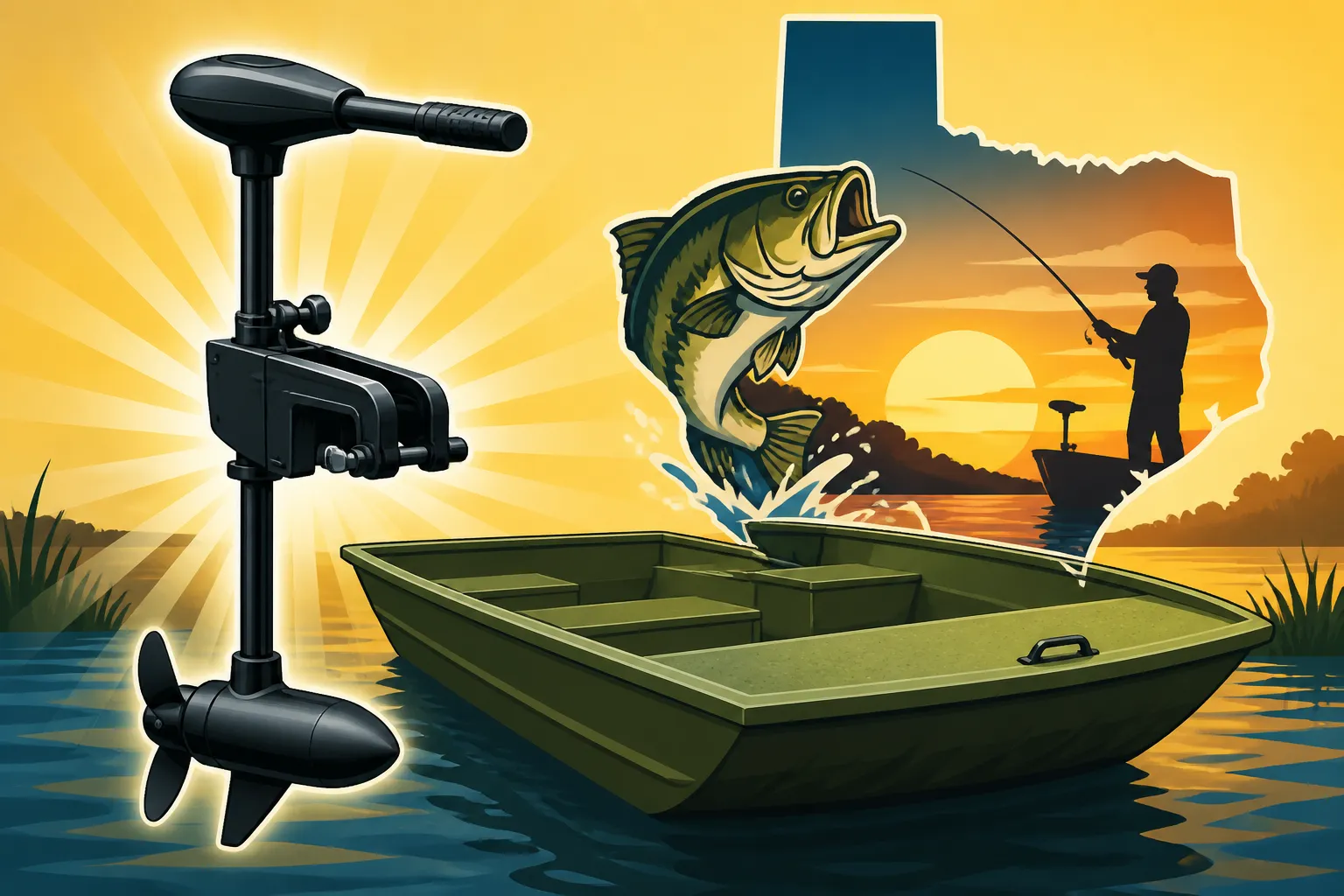
Choosing the right trolling motor for your jon boat can feel like a real head-scratcher, especially when you're dreaming of quietly slipping through Texas backwaters or holding steady over a brush pile without spooking every fish in the county. It's not just about getting from point A to point B; it's about precise boat control, conserving energy, and making the most of your time on the water. This guide will help you sort through the options and find the perfect trolling motor to transform your jon boat into a stealthy, fish-catching machine.
Understanding Your Jon Boat's Needs: Thrust, Shaft, and Environment
When you're looking at trolling motors for your jon boat, it's easy to get overwhelmed by all the numbers and features. But before you dive into brands and bells and whistles, you really need to consider the basics: how much power you need (thrust), how long the motor needs to be (shaft length), and where you'll be using it (freshwater or saltwater). Getting these fundamental aspects right will save you a lot of frustration and ensure your motor actually performs the way you expect it to.
Determining Optimal Thrust
Thrust is the pushing or pulling power of your trolling motor, measured in pounds. It's probably the most critical factor to get right, because too little thrust means you'll struggle against currents or wind, and too much is just overkill, potentially draining your battery faster than necessary. A common rule of thumb is to have at least 2 pounds of thrust for every 100 pounds of fully loaded boat weight. This "fully loaded" part is crucial – think about your boat, motor, fuel, cooler, tackle, yourself, and any fishing buddies.
Let's say you have a 14-foot aluminum jon boat that weighs about 200 pounds empty. You add a small outboard (maybe 75 lbs), a full cooler (50 lbs), two anglers (350 lbs total), and gear (50 lbs). That's roughly 725 pounds. Applying the rule of thumb, you'd need at least 14.5 pounds of thrust (725 / 100 * 2). However, this is a minimum. Texas waters can be windy, and currents on rivers like the Trinity can be strong. You'll often want a bit more power than the absolute minimum, especially if you plan on holding your position in a breeze or pushing through weeds. Most anglers find that for 12-16 foot jon boats, something in the 30-55 pound thrust range is a sweet spot, with larger or heavier boats possibly needing 70 pounds or more. It’s always better to have a little extra power and not need it, than to need it and not have it.
Selecting the Right Shaft Length
The shaft length of your trolling motor determines how deep the propeller sits in the water. If it's too short, your prop will come out of the water in choppy conditions or when you hit a wake, reducing control and potentially damaging the motor. If it's too long, it can drag on the bottom in shallow areas or make it harder to deploy and retrieve. The key is to ensure the prop is submerged by at least 12 inches, ideally more, when the boat is loaded and sitting in the water.
To figure this out, measure the distance from where the trolling motor will mount to the waterline when your jon boat is fully loaded. Then, add about 20 inches to that measurement for optimal performance, giving you enough depth without hitting the bottom too often. For most jon boats, which sit fairly low in the water, a 36-inch to 45-inch shaft is often sufficient for bow-mounted motors. Transom-mounted motors might use slightly shorter shafts, as they typically sit closer to the waterline. Consider the type of water you fish. If you're primarily on calm, shallow ponds or small rivers, a shorter shaft might work. But if you venture out onto larger reservoirs like Lake Fork or Sam Rayburn where boat wakes and wind chop are common, a longer shaft will be a blessing. Having the propeller consistently submerged means better control and less "ventilation," where the prop sucks air, causing a loss of thrust.
Freshwater vs. Saltwater Considerations
This is a critical distinction, especially in a state like Texas where you can fish for bass in Lake Conroe one day and redfish in Galveston Bay the next. Saltwater is highly corrosive, and standard freshwater trolling motors are not built to withstand its harsh effects. Using a freshwater motor in saltwater will severely shorten its lifespan, often leading to rust, electrical issues, and motor failure.
Saltwater trolling motors are specifically designed with features like stainless steel hardware, encapsulated electronics, and special corrosion-resistant coatings on all exposed metal components. They also often come with sacrificial anodes that help protect the motor from galvanic corrosion. The price point for saltwater-specific models is generally a bit higher, but it's a worthwhile investment if you're going to be launching your jon boat into brackish bayous or the open Gulf. If you plan to fish both environments, always opt for a saltwater-rated motor. It can handle freshwater just fine, but a freshwater motor cannot handle saltwater. Many manufacturers, like Minn Kota and MotorGuide, offer distinct product lines for each environment, clearly labeled to avoid confusion. So, if you're dreaming of chasing Texas Redfish Fishing Guide or Texas Speckled Trout Fishing Guide, make sure your motor is up to the task!
Types of Trolling Motors and Mounting Options
Once you've got a handle on thrust and shaft length, it's time to think about how your trolling motor will attach to your boat and how you'll control it. Jon boats, being incredibly versatile, can accommodate a few different mounting styles, each with its own advantages depending on your fishing style and the boat's layout.
Bow Mount Trolling Motors for Jon Boats
A bow mount trolling motor attaches to the front (bow) of your jon boat. This is by far the most popular choice for serious anglers, and for good reason. When the motor pulls the boat from the front, it offers superior control, allowing for more precise maneuvering, especially in windy conditions or when navigating tight spots. Imagine trying to push a string versus pulling it – pulling is always easier and more accurate.
For a jon boat, a bow mount often means you'll need a flat, reinforced area on the bow to install the mounting bracket. Many jon boat manufacturers now offer models with pre-drilled or reinforced bows specifically for this purpose. You'll typically find bow mounts with either a foot pedal control that sits on the deck or a wireless remote control. The foot pedal allows for hands-free operation, which is fantastic when you're casting and retrieving. Motors with GPS features, like those with "Spot-Lock" technology (often found on brands like Minn Kota or MotorGuide), are almost exclusively bow-mounted and can literally hold your boat in place over a fishing spot with incredible accuracy. This feature alone can be a game-changer for working structure or wind-blown points on lakes like Sam Rayburn.
| Feature | Pros | Cons | Ideal for |
|---|---|---|---|
| Bow Mount | Superior control & maneuverability | Requires flat bow space for mounting | Precise boat positioning, hands-free fishing, navigating structure |
| Easy integration with GPS/Spot-Lock | Can be more expensive | Working shorelines, brush piles, or in windy conditions | |
| Often allows for hands-free operation (foot pedal) | Retrieval/deployment can sometimes be awkward from a seated position |
Transom Mount Trolling Motors for Jon Boats
Transom mount trolling motors attach to the back (transom) of your jon boat, much like a small outboard engine. These are generally simpler, more affordable, and easier to install than bow mounts. If your jon boat is smaller, or if you primarily use your trolling motor for basic propulsion or to supplement a small gas outboard, a transom mount can be a great, cost-effective option. They are also popular for those who don't have enough clear deck space on the bow or prefer to control the boat from the stern.
The control for transom mounts is typically a tiller handle, which is a simple hand-operated stick that you steer and control speed with. This means one hand will always be occupied. While they don't offer the same level of precise control as a bow mount, they are perfectly adequate for slow-trolling for Texas Catfish Species Guide in a river or navigating calmer waters. They also don't require any deck modifications or complex wiring runs to the front of the boat. For a no-frills, reliable option, especially on utility-focused jon boats or those primarily used for getting around, a good transom mount motor is a solid choice. Just make sure the shaft is long enough to keep the prop submerged but not so long that it drags in very shallow areas.
Foot Pedal vs. Hand Control vs. Remote
The way you control your trolling motor significantly impacts your fishing experience.
-
Foot Pedal Control: Mostly found on bow-mounted motors, a foot pedal allows you to steer and adjust speed with your feet, leaving your hands completely free for fishing. This is a huge advantage for bass anglers who are constantly casting and retrieving, needing both hands on the rod. The learning curve for some can be a little steep, but once you get the hang of it, it becomes second nature. Think about how much easier it is to stay on target when you're not constantly fiddling with a handle.
-
Hand Control (Tiller Handle): Common on transom-mounted motors, this involves a tiller arm that extends from the motor, which you use to steer and often has speed controls integrated into the handle. It's intuitive and simple, but it does mean one hand is always on the motor. This can be fine for casual fishing or when you're primarily using the motor for slow, steady propulsion, but it might feel restrictive if you're trying to fish actively.
-
Wireless Remote Control: Many modern bow-mount motors, especially those with advanced features like GPS anchoring, come with a small, handheld remote. This offers incredible freedom, allowing you to control the boat from anywhere in your jon boat, whether you're standing on the front deck or sitting in the back. Some remotes even have display screens for battery life, speed, and GPS functions. This flexibility is a huge perk for solo anglers or those who like to move around the boat while fishing. Companies like Minn Kota and MotorGuide offer robust wireless systems that integrate seamlessly with their motors. You can often find a wide selection of these motors at retailers like Bass Pro Shops or even compare options and read reviews on Amazon.
Power, Battery Life, and Key Features
Beyond how your motor attaches and how you steer it, the power source and special features can truly elevate your jon boat fishing experience. Don't overlook these details, as they can make the difference between a good day on the water and a frustrating one.
Battery Systems and Longevity
Trolling motors run on 12-volt deep-cycle marine batteries, and the thrust of your motor will dictate how many you need.
- 12-volt motors: Typically 30-55 pounds of thrust. These run on a single 12-volt deep cycle battery.
- 24-volt motors: Typically 70-80 pounds of thrust. These require two 12-volt batteries wired in series.
- 36-volt motors: Typically 100+ pounds of thrust. These require three 12-volt batteries wired in series.
For most jon boats, a 12-volt or 24-volt system will be sufficient. If you opt for a 24-volt motor, you'll need space to store two batteries and manage the added weight. Battery longevity, or how long your motor will run on a single charge, depends on several factors: the capacity (Ah) of your batteries, the power draw of your motor at a given speed, and external factors like wind and current.
To maximize your time on the water, invest in high-quality deep-cycle marine batteries. Not all batteries are created equal, and a cheap battery will leave you stranded faster. It's also smart to consider an onboard charger, which makes recharging multiple batteries easier and more efficient once you're back home. Always remember to charge your batteries fully after each outing, even if you only used the motor for a short time, to prolong their lifespan. You don't want to be halfway across Lake Texoma Fishing Guide and suddenly lose power!
Essential Features for Texas Jon Boat Anglers
Modern trolling motors come packed with features that can greatly enhance your fishing experience, especially when navigating the diverse waters of Texas.
-
GPS and Spot-Lock: This is probably the most revolutionary feature in trolling motors. Motors equipped with GPS can "lock" onto a specific location and automatically adjust to hold your boat in place, even in wind and current. Imagine fishing a submerged roadbed on Lake Palestine or a shell reef in Sabine Lake, and your boat just stays put without you having to constantly adjust the motor. It’s truly hands-free fishing and can be incredibly helpful when targeting specific structure or allowing you to focus purely on casting and retrieving. This technology is typically found on higher-end bow-mount motors.
-
Integrated Transducers: Some trolling motors come with a sonar transducer built right into the lower unit. This simplifies your electronics setup, as you don't need to mount a separate transducer on your transom or worry about transducer interference. The sonar signal comes directly from where your motor is pointing, giving you clear readings right beneath your bait. This is a fantastic feature for working specific depths or identifying fish holding close to the bottom.
-
Digital Maximizer / Variable Speed Control: Instead of just 5 fixed speeds, motors with digital maximizer technology offer infinitely variable speed control. This is not only smoother for precise boat maneuvering but also incredibly efficient. It only draws the power needed for the selected speed, significantly extending your battery life compared to older motors that run at full power even at lower settings. This is a huge benefit for long days out, especially when slow-trolling is the key.
-
Composite Shafts: Many premium motors feature composite shafts instead of aluminum. These shafts are designed to flex on impact rather than break, making them virtually indestructible. If you frequently fish shallow, stump-filled lakes like Caddo Lake or navigate rocky rivers, a composite shaft offers excellent durability and peace of mind. They often come with impressive warranties, a testament to their toughness.
Budgeting for Your Trolling Motor System
Let's be realistic – a quality trolling motor, especially one with advanced features, can be a significant investment. However, there are options for every budget, and it's important to consider the total cost of ownership.
| Component | Entry-Level Estimate | Mid-Range Estimate | High-End Estimate |
|---|---|---|---|
| Trolling Motor | Simple transom mount | Bow mount, basic GPS | Bow mount, advanced GPS, Spot-Lock |
| Batteries | 1 deep-cycle | 2-3 deep-cycle, quality | 2-3 premium AGM or Lithium |
| Onboard Charger | Not included | Basic 2-bank | Advanced multi-bank, smart charging |
| Installation Supplies | Basic wiring, fuse | Quality wiring, circuit breaker | Wiring kit, quick-release mount |
| Total System Cost | Check current pricing for specific models | Check current pricing for specific models | Check current pricing for specific models |
When setting your budget, remember to factor in not just the motor itself, but also the batteries and a reliable charger. A cheaper motor with poor batteries will give you limited run time and frustration. Look for sales at major retailers like Bass Pro Shops, or check out online marketplaces like Amazon for competitive pricing and customer reviews. Sometimes, a slightly higher initial investment in a motor with digital maximizer technology will save you money on batteries and increase your fishing enjoyment in the long run. Consider how often you fish, the conditions you fish in, and what features will truly enhance your specific jon boat fishing experience. For many Texas anglers, a 24-volt bow-mount motor with at least 55-70 pounds of thrust and digital maximizer is a fantastic all-around choice for a jon boat. You'll have plenty of power for Texas Largemouth Bass Fishing Guide or for handling the diverse waters across the state.
Selecting the best trolling motor for your jon boat really boils down to balancing your boat's specifications, your fishing style, and your budget. By carefully considering thrust, shaft length, mount type, and features, you can equip your jon boat to be an incredibly effective fishing platform. Don't rush the decision; research the options, compare features from brands like Minn Kota and MotorGuide, and think about where and how you love to fish. A well-chosen trolling motor will open up new possibilities on the water and make your time fishing even more enjoyable.
Disclaimer
This article is for general informational purposes only and does not constitute professional advice. Laws, prices and regulations vary by location and change over time. Consult a qualified professional for guidance on your specific situation.