Sit-on-top vs sit-in kayak for Texas lakes
Choosing the right fishing kayak for Texas lakes can feel like a daunting task, especially when you're caught between the freedom of a sit-on-top and the cozy embrace of a sit-in. Many anglers agonize over this decision, worried about making a significant investment in a vessel that might not perfectly suit their style or the diverse conditions our Texas waters throw at us. This guide is here to untangle that knot for you, breaking down the distinct features, advantages, and trade-offs of sit-on-top and sit-in kayaks specifically for fishing our beautiful Texas lakes, helping you paddle confidently toward your next angling adventure.
Understanding Sit-on-Top Kayaks for Texas Fishing
Sit-on-top kayaks have become incredibly popular in the fishing world, and for good reason, especially when you consider the Texas climate and our expansive lake systems. These kayaks are designed with an open deck, meaning you sit on top of the hull rather than inside a cockpit. This fundamental difference shapes their entire performance and angler experience.
The Appeal of Open-Deck Freedom
One of the most immediate benefits of a sit-on-top kayak is the sheer ease of getting in and out. There's no claustrophobic cockpit to squeeze into; you simply hop on. This is a huge plus if you're fishing in warm Texas weather and want the option to quickly jump in for a refreshing swim, or if you find yourself capsizing – re-entry is significantly simpler on a sit-on-top. Many models are "self-bailing," meaning water that splashes onto the deck or comes over the side drains out through scupper holes, keeping your feet mostly dry, though a wet rear is a common companion on these boats. This open design also tends to make them feel more stable, especially wider fishing-specific models, giving you a greater sense of security on the water.
Imagine you're out on a scorching August afternoon on Lake Whitney, the kind of day where the heat shimmers off the water. You've been paddling hard, reeling in a few feisty stripers, and now you're overheated. With a sit-on-top kayak, you can just slide off into the cool lake water for a quick dip, then easily pull yourself back onto the deck to continue fishing. No fuss, no drama, just pure relief. This accessibility is invaluable for many Texas anglers who enjoy combining fishing with a little recreational swimming or just need an easy way to stretch their legs. The open deck also means less gear clutter directly in front of you, providing more usable space.
Advantages for the Angler
For the dedicated angler, sit-on-top kayaks offer a multitude of specific advantages. Their inherent stability often allows anglers to stand up and sight fish, a game-changer when you're trying to spot cruising largemouth bass in clearer waters or locating beds in the spring. This elevated vantage point lets you see deeper into the water, extending your casting range and improving your chances of success. How to Fish for Bass in Texas often involves sight fishing, and a stable platform is key.
The open deck also provides ample, easily accessible space for mounting a variety of fishing accessories. Think about all those gadgets: extra rod holders, fish finders, GPS units, action cameras, anchor trolleys, and more. Most sit-on-tops come with plenty of flat surfaces, tracks, or pre-drilled points where you can attach these items without impeding your paddling or fishing motion. You can often find a wide array of these specialized mounts and accessories at a place like Bass Pro Shops or even through online retailers like Amazon, making customization a breeze. This means your tackle box, cooler, and other essentials are often within arm's reach, rather than tucked away in a cramped compartment. If you're wondering about a motor, check out Do you need a trolling motor on a kayak?.
Downsides to Consider
However, sit-on-top kayaks aren't without their drawbacks. The most common complaint from users, especially during cooler months or on windy days, is the "wet ride." While scupper holes drain water, you're constantly exposed to splashes, paddle drip, and often a wet seat. On a crisp November morning fishing for crappie on Lake Fork, that constant dampness can get uncomfortable quickly.
Their wider, flatter hulls, designed for stability, typically mean they are slower and require more effort to paddle compared to their sit-in counterparts. On vast Texas lakes like Sam Rayburn or Toledo Bend, covering long distances can become quite a workout. Furthermore, their higher profile and wider stance make them more susceptible to wind. A strong Texas breeze can turn your leisurely paddle into an unintended drift, making it difficult to hold your position or track in a straight line, especially if you're trying to maintain a precise casting angle. While an anchor can help, constant readjustment saps energy and time from fishing.
Exploring Sit-in Kayaks for Texas Fishing
Moving over to the sit-in camp, these kayaks offer a completely different experience, focusing on efficiency, protection, and a more intimate connection with the water. You sit inside a cockpit, with your legs and lower body largely protected by the hull.
The Embrace of a Protected Cockpit
The primary benefit of a sit-in kayak, particularly for Texas anglers, is the dryness and warmth it provides. Your lower body is enclosed within the hull, shielding you from paddle drip, splashes, and wind chill. This is a game-changer if you enjoy fishing in cooler weather, during an unexpected rain shower, or on a brisk winter morning on the Guadalupe River when trout are active. Best Time of Year to Fish in Texas can often involve chilly mornings, and a sit-in kayak makes those trips far more comfortable.
Beyond comfort, sit-in kayaks are generally designed for greater hydrodynamic efficiency. Their narrower, sleeker hulls glide through the water with less resistance, allowing for faster paddling with less effort. They track straighter, too, meaning you spend less energy correcting your course and more energy propelling forward. This efficiency is invaluable on larger Texas lakes where you might need to cover significant distances to reach prime fishing spots or when you're battling headwinds.
Picture yourself on a chilly February morning on Canyon Lake, targeting striped bass. The air is crisp, and the water is cold. In a sit-in kayak, you're mostly shielded from the biting wind and cold spray, allowing you to focus on your fishing rather than shivering. The more enclosed space also often feels a bit more secure to some paddlers, especially those who might feel exposed on an open deck.
Benefits for Distance and Comfort
The superior glide and tracking of sit-in kayaks make them ideal for covering long distances, a common necessity on many of our sprawling Texas reservoirs. If your fishing strategy involves moving from one cove to another, or from a main lake point to a distant creek channel, a sit-in kayak will get you there more quickly and with less fatigue. This efficiency means more time fishing and less time paddling. Many sit-in kayaks, particularly touring models, are also lighter than comparable sit-on-tops, making them easier to load onto a car roof rack or carry down to the water's edge.
The protected cockpit also offers better defense against the sun's relentless rays and sudden downpours, which are both common occurrences in Texas. While you'll still need appropriate sun protection for your upper body, the lower half of your body enjoys a degree of shelter. This can contribute to overall comfort and reduce exposure during those long days on the water. When thinking about gear, consider Best Fishing Rods for Texas Anglers that might fit a more compact cockpit space.
The Trade-offs for Anglers
For all their benefits, sit-in kayaks present certain trade-offs that can be significant for anglers. The enclosed cockpit, while offering protection, also restricts mobility. Standing up to fish is typically not an option unless you have a very specialized and exceptionally stable wide sit-in model, which are rare. This limits your ability to sight fish or get a better casting angle.
Accessing gear can also be more challenging. While many sit-ins have hatches and storage compartments, they often require you to contort or reach into tight spaces to retrieve tackle or switch lures. Reaching behind the seat for a cooler or tackle box can be awkward, especially on the water. If you drop something small, it can easily roll into an inaccessible corner of the hull. Re-entry after a capsize is also significantly more difficult in a sit-in kayak, often requiring practiced self-rescue techniques or assistance, which can be a safety concern on larger, colder bodies of water. For those starting out, reviewing a Beginner Fishing Gear Checklist for Texas might highlight other considerations.
Key Factors for Your Texas Lake Decision
When you're trying to decide between a sit-on-top and a sit-in kayak for your Texas fishing adventures, there are a few critical factors that should heavily influence your choice. It's not just about one being "better" than the other, but rather which is "better for you."
Water Type and Weather Conditions
Think about the specific Texas lakes you plan to fish most often. Are they vast, open impoundments like Lake Amistad or Richland Chambers, where you might face long paddles and significant wind? Or are they smaller, more sheltered bodies of water, perhaps some of the Best Kayak Fishing Lakes in Texas that are known for calm coves and tighter fishing spots?
For big, open lakes with potential for chop and wind, the speed and tracking of a sit-in can be a huge advantage, allowing you to cover more water efficiently. However, if those lakes are fished primarily in the searing summer heat, the ease of getting wet and cooling off in a sit-on-top becomes very appealing. For a smaller, more intimate lake like a Neighborhood Fishin' pond or a winding river like a stretch of the Brazos, the maneuverability and stability of a sit-on-top for precise casting might be more beneficial. Conversely, if you're planning on fishing a lot of the Guadalupe River for trout during winter stockings, the warmth and dryness of a sit-in kayak will be a godsend.
Fishing Style and Target Species
Your preferred fishing style and the species you're chasing play a massive role in this decision. If you're an avid bass angler who loves to stand up and sight fish for lurking largemouths in clear shallow water, or cast to visible structure, a stable sit-on-top with a high seat and plenty of deck space is likely your best bet. Texas Largemouth Bass Fishing Guide often emphasizes visual cues, making that elevated position invaluable.
If, however, you prefer trolling for striped bass or hybrid stripers in the deeper sections of Lake Texoma, where covering ground is key and standing isn't necessary, the efficiency of a sit-in kayak might be more appealing. Catfish anglers who often fish from a stationary position, perhaps with multiple rod holders, might also appreciate the stability and gear access of a sit-on-top, though a sit-in can certainly be adapted. For those who enjoy fly fishing, the open deck of a sit-on-top provides a less snag-prone environment for casting lines.
Portability and Storage
Don't underestimate the practicalities of getting your kayak from your home to the water and back. How will you transport it? Do you have a truck with a bed extender, a trailer, or will you be car-topping it on a sedan? Larger, wider sit-on-tops can be heavier and bulkier to load, while sleeker sit-ins can sometimes be more manageable for solo car-topping. This is where researching Best entry-level kayak for Texas fishing often brings up questions about material and weight.
Where will you store it at home? Do you have a spacious garage, or are you working with limited apartment balcony space? Sit-on-tops can sometimes be more awkward to store due to their bulkier shape, while some sit-ins, especially recreational models, can be more compact. You might also want to look into kayak carts on Amazon or Bass Pro Shops to help with transport from your vehicle to the launch site.
| Feature | Sit-on-Top Kayak | Sit-in Kayak |
|---|---|---|
| Paddler Position | On top of the hull, open deck | Inside the hull, enclosed cockpit |
| Stability | Generally very stable, easy to stand (fishing models) | Good, but standing is difficult/impossible |
| Dryness/Warmth | Wet ride, exposed to elements | Dry, protected from elements, warmer |
| Speed/Efficiency | Slower, more effort to paddle, wind-affected | Faster, easier to paddle, better tracking |
| Entry/Exit | Easy, especially after capsize | More challenging, especially after capsize |
| Gear Access | Abundant, open deck space, easy to customize | More restricted, relies on hatches, harder to access |
| Visibility | High vantage point (when standing) | Lower vantage point |
| Best For | Warm weather, sight fishing, standing, easy re-entry | Cooler weather, long distances, speed, protection |
| Typical Use Case | Best Kayaks for Texas Bass Fishing, recreational paddling | Touring, Best Kayaks for Texas Saltwater Flats (if enclosed for longer journeys), colder water fishing |
Making the Right Choice for Your Angling Adventure
Ultimately, the best kayak for you is the one that aligns most closely with your personal fishing preferences, the types of waters you frequent, and your comfort level. There's no single "perfect" answer, just the right fit for your unique situation.
Hybrid Options and Considerations
It's worth noting that the kayak market has evolved significantly, and there are now many "hybrid" designs that blur the lines between traditional sit-on-top and sit-in models. Some sit-on-tops feature elevated, stadium-style seating that keeps you higher and drier, offering a more comfortable fishing platform. Others have integrated pedal drives that free up your hands for casting and reeling, a huge advantage for anglers regardless of kayak type. Conversely, some recreational sit-in kayaks have larger cockpits, making entry and exit a bit easier, though still not as open as a sit-on-top.
These innovations mean you might not have to make a stark, all-or-nothing choice. You can often find a kayak that combines some of the most desired features from both categories, offering a balanced approach to your angling needs. Just be prepared to explore the options and maybe even try a few out.
Test Paddling and Personal Preference
There's truly no substitute for getting out on the water and trying both types of kayaks yourself. What feels stable to one person might feel tippy to another. What seems like an ample amount of gear space to one angler might feel cramped to another. Many outfitters and even some larger outdoor retailers like Bass Pro Shops offer demo days or rental options where you can experience both sit-on-top and sit-in models firsthand. If you're considering a significant investment, paying for a rental day or two could save you from buyer's remorse down the road.
Consider renting both a sit-on-top and a sit-in for a few hours on a local Texas lake. Load them up with some of your typical fishing gear (safely, of course!) and see how they handle. How easy is it to cast? How comfortable are you after an hour of paddling? Can you easily access your tackle? These personal insights are far more valuable than any spec sheet or online review. And don't forget the essential safety gear like a good Best PFD for kayak fishing in summer no matter which type you choose.
Accessories to Enhance Your Chosen Kayak
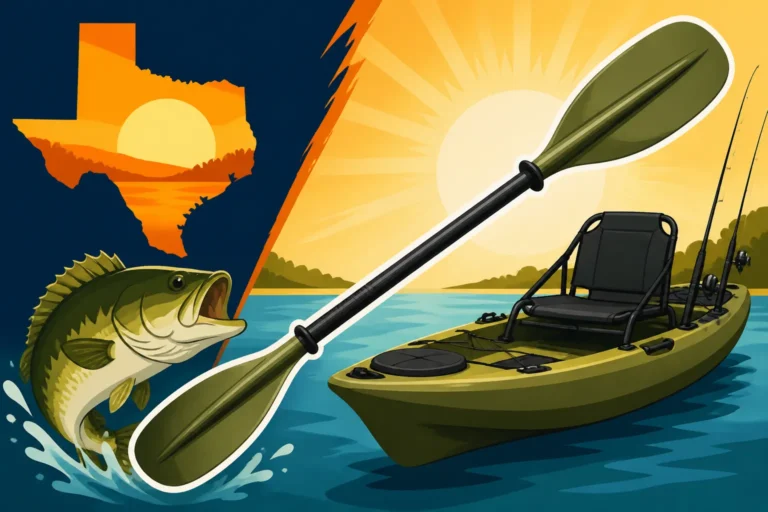
Regardless of whether you choose a sit-on-top or a sit-in, the right accessories can significantly enhance your fishing experience. A comfortable, supportive seat is paramount for long days on the water. A good quality paddle, like those found at Bass Pro Shops, is another must-have; look for one that's lightweight and appropriately sized for your height and kayak width, checking out options for Best paddle for a fishing kayak. Rod holders, anchor systems, and dry bags for electronics and personal items are also essential.
For sit-on-tops, an anchor trolley system can be a lifesaver for holding your position in wind or current. For sit-ins, a spray skirt might be a valuable addition for colder, choppier days to keep water out of the cockpit. Even simple items like a good set of kayak fishing pliers or a small cooler can make a big difference. Don't forget about how much you're willing to spend. Exploring How much does a fishing kayak cost will help you factor in accessories. By thoughtfully accessorizing your chosen kayak, you can maximize its potential and truly tailor it to your Texas fishing adventures.
Disclaimer
This article is for general informational purposes only and does not constitute professional advice. Laws, prices and regulations vary by location and change over time. Consult a qualified professional for guidance on your specific situation.