How to keep fish alive in a Texas summer live well
Oh, the Texas summer heat! If you've spent any time fishing our beautiful lakes and bays when the sun is blazing, you know the struggle is real. It's not just about us staying cool; it's about keeping our precious catches alive and healthy in the livewell. There's nothing worse than seeing a fish struggle or, heaven forbid, lose its vitality before a weigh-in or a healthy release. This guide is all about tackling that intense heat head-on, giving you tried-and-true strategies to ensure your fish thrive in your livewell, even when the Texas mercury is soaring.
Understanding the Livewell Challenge in Texas Heat
Keeping fish alive in a livewell during a scorching Texas summer is probably one of the biggest challenges an angler faces. It's not just about sloshing some water in there; it's a delicate balance of science and good old-fashioned fish care. When those temperatures climb into the high 90s and beyond, the water in your livewell can quickly become a hostile environment. We're talking about a combination of factors that, if left unaddressed, can rapidly lead to stressed, unhealthy, or even dead fish. It’s a frustrating scenario many of us have faced, especially during competitive tournaments where every ounce and every healthy fish counts.
Oxygen Depletion in Warm Water
One of the most immediate and critical issues in a hot livewell is oxygen. Warmer water simply cannot hold as much dissolved oxygen as cooler water. Think about it: a cold soda stays fizzy longer than a warm one. It's a similar principle with oxygen in water. Fish, especially active species like bass, consume a significant amount of oxygen just to survive. When you pack several fish into a relatively small livewell with already low oxygen water, they're essentially gasping for air. This oxygen depletion happens rapidly, stressing their systems and making them vulnerable to other issues.
Imagine being in a small, stuffy room with several other people on a hot day – that's what it's like for your fish. Their gills have to work harder, and their metabolism spikes, consuming even more of the dwindling oxygen supply. This is particularly true for fish that have just been caught, as the fight itself is a strenuous activity that uses up a lot of their stored energy and oxygen. Adequate aeration becomes not just important, but absolutely vital in these conditions.
Temperature Shock and Stress
Texas summer water temperatures can easily hit the high 80s or even low 90s in shallow areas of lakes and bays. If you transfer a fish directly from these warm waters into a livewell that's significantly cooler, or vice versa, it can experience severe temperature shock. Fish are cold-blooded creatures, meaning their body temperature largely matches their environment. Rapid changes can overwhelm their physiological systems, leading to extreme stress. Their immune systems can weaken, they can lose equilibrium, and in severe cases, they may go into shock.
Similarly, if the livewell water gradually heats up, the fish become lethargic and stressed. Maintaining a stable, consistent temperature that is slightly cooler than the lake water, but not drastically so, is key. This requires careful monitoring and often proactive measures to keep the livewell from turning into a hot tub. It's a fine line to walk, as too much temperature manipulation can be just as detrimental as too little.
Ammonia Buildup and Toxins
Fish excrete waste, primarily ammonia, through their gills and in their urine. In a natural environment, this waste is quickly diluted and processed by a vast ecosystem. However, in the confined space of a livewell, ammonia can accumulate quickly to toxic levels. This is particularly problematic in warm water, as the fish's metabolism is higher, meaning they produce more waste. Ammonia is highly corrosive to gill tissue, impairing the fish's ability to absorb oxygen and causing severe internal damage.
Think of it like being trapped in a small, unventilated room with increasing levels of exhaust fumes. The longer fish are exposed to high ammonia concentrations, the more their health deteriorates. This toxic environment is often an unseen killer in livewells, making water quality management just as important as oxygen and temperature control. Regular water changes and the use of livewell additives become crucial tools in combating this silent threat.
Essential Livewell Setup for Texas Summers
Having a well-designed and properly equipped livewell is your first line of defense against the brutal Texas summer heat. You can't just rely on the factory settings; you need to optimize it for extreme conditions. It's about creating a miniature, controlled ecosystem that prioritizes the health and comfort of your fish from the moment they enter. Many anglers invest heavily in their boats and fishing gear, but sometimes overlook the critical importance of a properly outfitted livewell system designed for the specific challenges of our intense summers.
Proper Aeration and Circulation
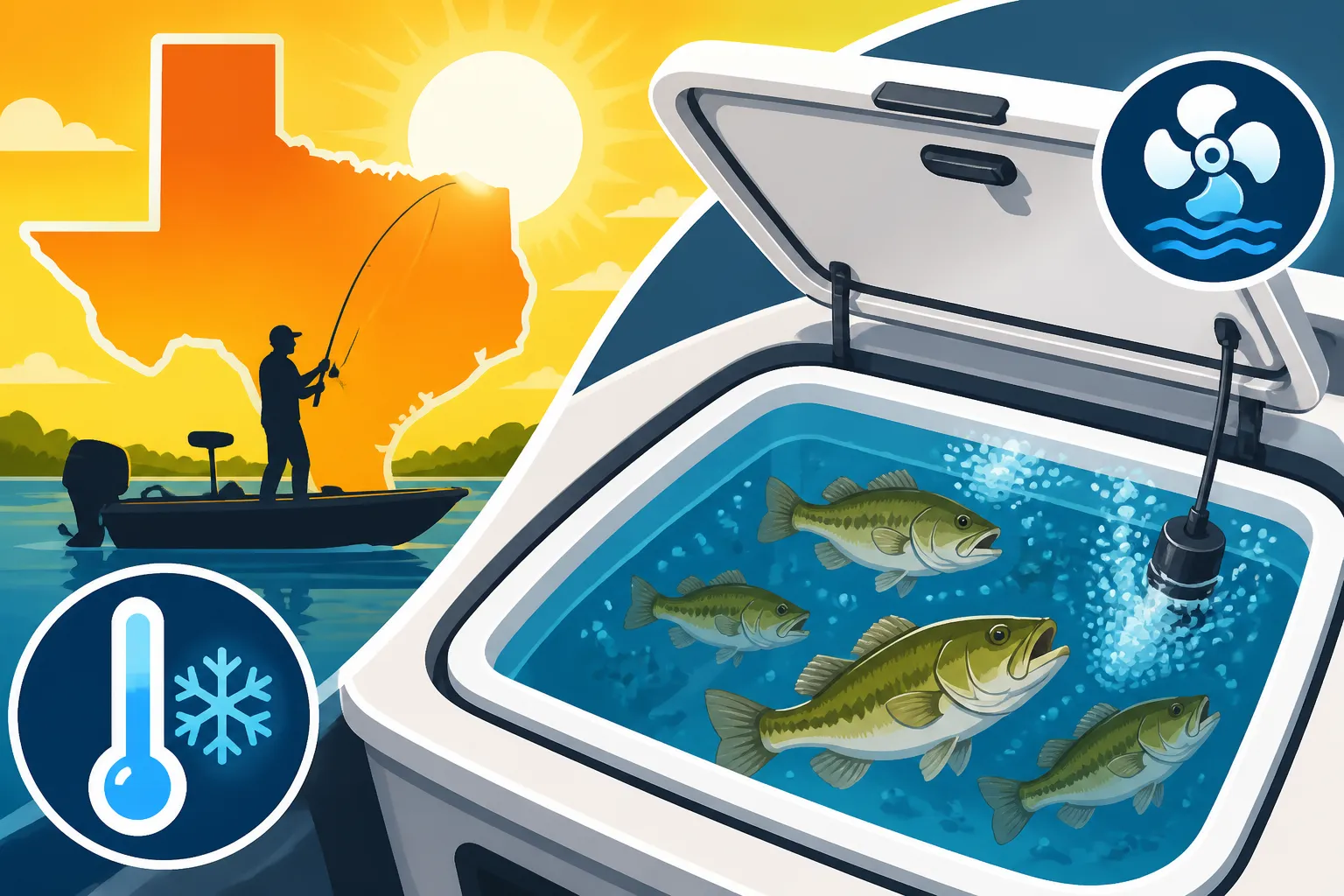
Your livewell's aeration system is its heart and lungs. In Texas heat, you need robust and reliable aeration. Most modern boats come with some form of aeration, but for summer conditions, you want to ensure it's working optimally. This often means running your pumps more frequently, if not continuously. Look for systems that not only pump fresh water in but also circulate it effectively throughout the livewell, minimizing "dead spots" where oxygen can stagnate.
Consider adding an additional air stone or an aftermarket aerator, especially in larger livewells. These can significantly increase dissolved oxygen levels. Many serious anglers opt for systems that offer both a fresh water exchange mode and a recirculating mode with an independent aerator, allowing you to fine-tune the oxygen delivery. Products from brands like Bass Pro Shops often carry a range of aerator pumps, diffusers, and oxygenation systems specifically designed to keep fish lively in challenging conditions. Remember, you can never have too much oxygen in a livewell when it's hot.
Insulation and Cooling Strategies
Keeping the livewell water cool is paramount. Modern livewells are usually insulated, but during a Texas summer, that insulation can only do so much. You need active cooling strategies. The most common and effective method is adding ice. However, simply dumping a bag of ice into the livewell can lead to dangerous temperature shock. Instead, use frozen water bottles or carefully melt the ice in a separate bucket with livewell water, then slowly introduce the cooler water. The goal is a gradual, controlled temperature drop, aiming for water that's slightly cooler than the lake, perhaps by 5-10 degrees, but never cold.
Some anglers swear by a small piece of block ice (not crushed) wrapped in a towel. This allows for a slower melt and less direct contact with the fish. Another strategy is to keep your livewell lid closed as much as possible to prevent ambient air from warming the water. In the fiercest heat, you might even drape a wet towel over the livewell lid to help with evaporative cooling. Regularly checking your livewell water temperature with a simple thermometer (easily found on Amazon) is crucial to ensure you're not over-cooling or under-cooling. For more general advice on dealing with the heat, check out How to Fish in Hot Texas Summers.
Water Quality Management and Additives
Beyond oxygen and temperature, the chemical quality of your livewell water plays a huge role. As fish excrete waste, ammonia builds up, and harmful bacteria can proliferate. This is where livewell additives become invaluable. Many products are available that neutralize ammonia, remove chlorine (if you're starting with tap water), add electrolytes, and even provide mild sedatives to calm stressed fish. These additives create a more hospitable environment, reducing stress and helping fish recover.
A good practice is to start with fresh, clean lake water in your livewell and immediately add a quality livewell treatment. Throughout the day, consider doing partial water exchanges if you have access to fresh water, especially if you're holding fish for an extended period. This helps dilute accumulating toxins. Brands like Rejuvenade or Please Release Me are popular choices among tournament anglers for their effectiveness. Having a dedicated livewell care regimen, including proper cleaning after each use, will ensure your system is always ready to go. You can find many effective livewell additives and cleaners at your local Bass Pro Shops or online through Amazon.
On-the-Water Strategies for Fish Survival
Once you're out on the water, the game changes from preparation to real-time management. Every action you take, from how you handle a fish to how you monitor your livewell, directly impacts the survival rate of your catch. These strategies are all about being proactive and attentive to the needs of your fish during what can be a very stressful period for them. Tournament anglers, in particular, understand that seconds matter when a fish is on the line and destined for the livewell.
Smart Fish Handling Techniques
The moment a fish is caught, its stress levels begin to climb. Minimizing handling time and being gentle is paramount. When landing a fish, use a soft, rubber-coated net to avoid damaging fins and scales. If you're targeting Texas Largemouth Bass Fishing Guide, try to keep them in the water as much as possible until you're ready to quickly move them to the livewell. Avoid dropping fish onto hard surfaces or letting them flop around on the deck. Wet your hands before handling fish to protect their protective slime coat, which is their primary defense against disease and parasites.
Get the fish into the livewell as quickly and gently as possible. If you need to measure or weigh them before placing them in the livewell, do it swiftly and without excessive squeezing or jostling. The less time a fish spends out of water, or being roughly handled, the better its chances of survival. This mindful approach to handling reduces physical trauma and the initial shock of capture, giving them a much better start in the livewell.
Monitoring and Adjusting Livewell Conditions
This isn't a "set it and forget it" operation. Throughout the day, you need to actively monitor your livewell conditions. The most important tool here is a good quality water thermometer. Check the temperature periodically, especially after moving to different areas of the lake or if the air temperature significantly changes. If the water is getting too warm, implement your cooling strategy slowly. If fish appear sluggish, check your aeration system and consider adding more livewell treatment.
Observe your fish frequently. Are they swimming upright? Are their gill plates moving steadily? Are they staying at the bottom or coming to the surface? Any unusual behavior is a sign that something might be amiss. Don't be afraid to make adjustments. Sometimes, a quick partial water change with fresh lake water (especially from a deeper, cooler spot) can make a huge difference. Consider using your boat's fish finder or other Best electronics for Texas reservoir fishing to monitor water temperatures at depth, which can inform your decisions on where to refresh your livewell water.
Hydration and Revitalization Strategies
Even with the best practices, fish can become stressed and dehydrated in a livewell. That's why revitalization is so important, especially for those longer tournament days or when you plan to release a trophy catch after photos. Livewell additives that provide electrolytes are designed to help fish rehydrate and recover from stress. These formulations replace vital minerals that fish can lose when confined or stressed, similar to how sports drinks help athletes recover.
Some anglers even carry a small aerated bucket with a super-concentrated dose of these additives, specifically for "reviving" a fish that seems particularly stressed before adding it to the main livewell or before release. The goal is to give the fish every possible advantage to regain its strength. For details on protecting your fish from the sun, consider reading How to stay safe fishing in Texas summer heat, as these tips can also indirectly help keep your livewell cooler.
Post-Fishing Care and Release
The work isn't over when the fishing stops. What you do with your fish after they leave the livewell is just as critical for their long-term survival and for the health of our fisheries. Whether you're releasing them after a successful tournament or simply returning a caught fish, proper post-fishing care ensures they have the best chance to thrive back in their natural habitat. This final stage is crucial for conservation-minded anglers.
Gradual Release and Acclimatization
Just as sudden temperature changes are bad for fish going into a livewell, they're also detrimental when releasing them. Before releasing fish, especially after a long day in a temperature-controlled livewell, take the time to acclimate them to the surrounding lake water. Open your livewell hatches and let fresh lake water slowly circulate through for a few minutes. This gradual exchange helps the fish adjust to the ambient temperature and water chemistry.
If a fish looks particularly lethargic, hold it gently in the water by its tail, supporting its belly, and slowly move it back and forth to force water through its gills. This helps it regain oxygen and equilibrium. Only release the fish when it can swim off under its own power. Sometimes, this means holding it for a few extra minutes, but that patience can make all the difference for its survival. This practice is especially important for larger, more valuable fish caught during key periods like the Texas Bass Spawning Season Guide, where their health impacts future generations.
Cleaning and Maintenance of Your Livewell
After every fishing trip, especially during summer, a thorough cleaning of your livewell is non-negotiable. Residual fish slime, scales, and waste can become a breeding ground for bacteria, fungus, and parasites. These can then infect your next batch of fish, even if the water conditions are otherwise perfect. Use a mild bleach solution (about 1 part bleach to 10 parts water) or a commercial livewell cleaner to thoroughly scrub down all surfaces. Make sure to run the bleach solution through your pumps and aeration lines to kill any lurking pathogens.
Rinse the livewell meticulously with fresh water until no trace of bleach or cleaner remains. Any residue can be toxic to fish. Leave the livewell lids open to allow it to air dry completely, preventing mold and mildew growth. Regular maintenance of your livewell's pumps and hoses is also important. Check for clogs, cracked hoses, or worn-out impellers, which can cause aeration failures at the worst possible time. Proper cleaning ensures that your livewell is a healthy and sterile environment for your next catch. Many of these cleaning supplies, alongside Best Live Wells for Texas Bass Boats and related components, can be found at specialized fishing retailers.
Maximizing Fish Survival Table
To help summarize the key strategies for keeping your fish alive and healthy in a Texas summer livewell, here's a handy breakdown:
| Challenge | Problem | Solution | Key Takeaway |
|---|---|---|---|
| Oxygen Depletion | Warm water holds less O2; fish consume more | Maximize aeration; run pumps constantly; add secondary air stone | More oxygen is always better in heat. |
| Temperature Stress | Rapid temp changes; hot livewell water | Gradual cooling with frozen bottles/block ice; monitor temps; insulate | Stability over drastic changes. |
| Ammonia/Toxin Buildup | Fish waste accumulates in confined space | Use livewell additives (ammonia neutralizers, electrolytes); partial water changes | Maintain water quality, not just quantity. |
| Physical Trauma (Catch) | Rough handling; prolonged air exposure | Gentle handling; wet hands; quick transfer to livewell | Minimize stress from hook to livewell. |
| Post-Release Mortality | Stress, dehydration, temperature shock | Gradual acclimatization; revival techniques; release only when strong | Ensure fish can swim away strongly. |
It truly comes down to a proactive and informed approach. Your fish are counting on you, and by implementing these strategies, you'll be doing your part for healthy fish and sustainable fishing in Texas. Plus, it just feels good to know you're giving those fish the best possible chance!
Disclaimer
This article is for general informational purposes only and does not constitute professional advice. Laws, prices and regulations vary by location and change over time. Consult a qualified professional for guidance on your specific situation.