How to catch redfish in shallow water
Ever spent hours staring into crystal clear shallow water, knowing those elusive Texas redfish are lurking somewhere in the grass or a sandy pothole, but they just won't show themselves, let alone take your bait? It's incredibly frustrating, and every seasoned angler has been there. But here's the secret: catching redfish in the skinny water isn't about luck; it's about understanding their behavior, having the right gear, and mastering specific techniques. This comprehensive guide will walk you through everything you need to know to transform those frustrating near misses into successful catches, specifically for the challenging yet rewarding world of shallow water red drum.
Understanding Redfish Behavior in Skinny Water
Before you even think about casting, you need to think like a redfish. These powerful fish don't venture into ankle-deep water just for fun; they have very specific reasons, and knowing those reasons is your first step to success. The shallow flats, often only a foot or two deep, are dynamic environments, and redfish adapt to them with remarkable precision.
Why Redfish Head to the Shallows
Redfish are masters of their environment, and the shallow water offers them several distinct advantages, which in turn gives us clues on where and when to find them. Think of it as their grocery store and a safe haven rolled into one. They aren't just cruising; they're actively hunting and seeking refuge.
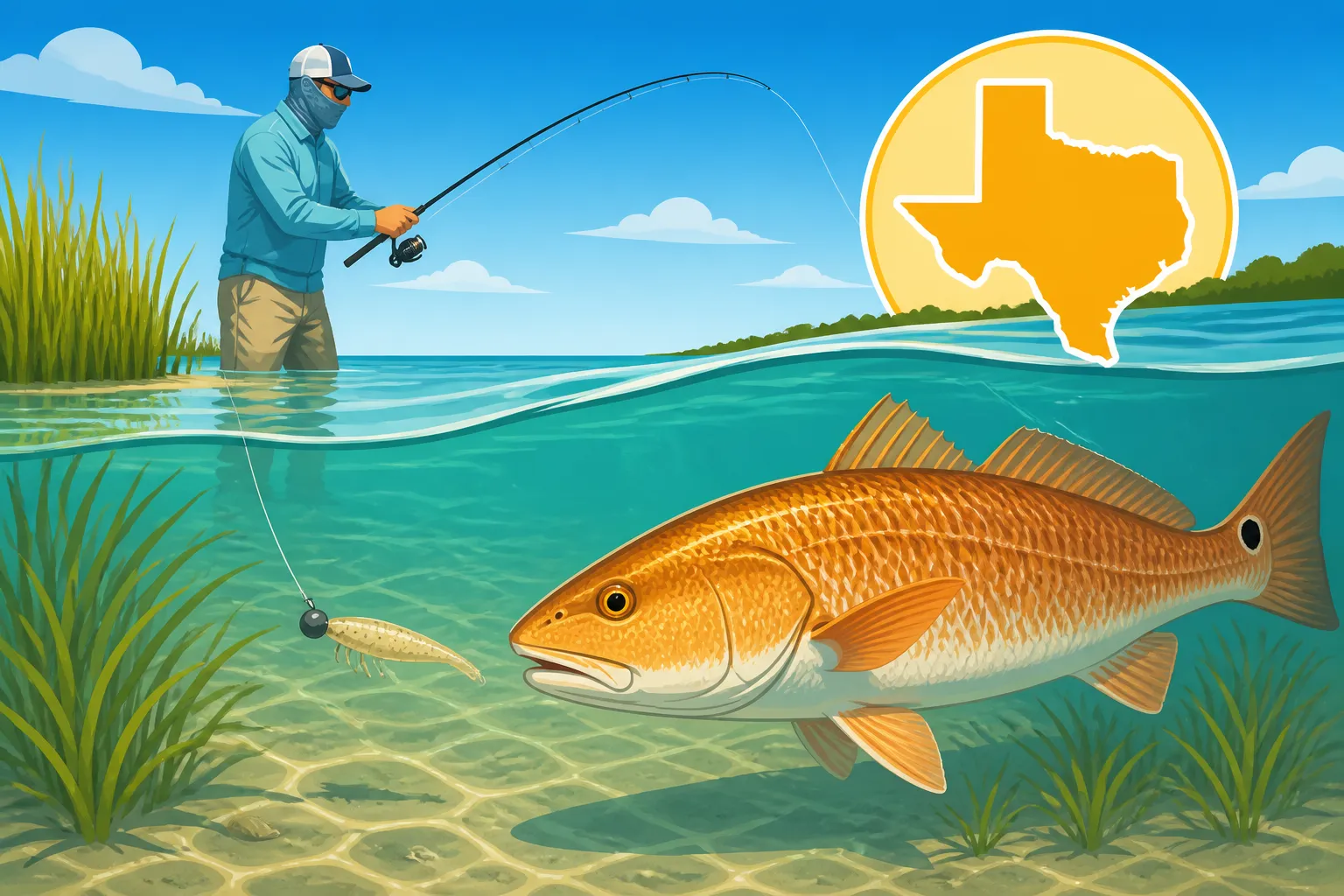
First and foremost, the flats are prime feeding grounds. Crabs, shrimp, and small baitfish, like finger mullet and shad, thrive in the grass beds and sandy bottoms of these shallow areas. Redfish will root around in the mud and grass, often with their tails breaking the surface – a tell-tale sign known as "tailing" – as they gorge on these crustaceans and baitfish. It's like watching a pig root for truffles, except it's a magnificent bronze fish. Secondly, these shallow areas often warm up faster under the Texas sun, which can be a huge draw during cooler months, providing comfort and boosting their metabolism for feeding. Lastly, the intricate network of grass, oyster beds, and mangroves provides excellent cover from larger predators and allows redfish to ambush unsuspecting prey. They use the structure to their advantage, often hiding in plain sight.
Reading the Water for Signs of Life
Success in shallow water fishing boils down to keen observation. You're not just looking for fish; you're looking for signs of fish. The water itself tells a story if you know how to read it. Learning these visual cues can dramatically increase your chances of finding redfish.
One of the most exciting signs is "tailing." This occurs when a redfish is feeding head-down in the mud or grass, with its tail sticking out of the water. It’s an unmistakable sign of an actively feeding fish. Another common sign is a "push" or "wake." This is a V-shaped disturbance on the water's surface, caused by a redfish swimming just below, pushing water in front of it. Sometimes, you might even see a darker spot or a shadow moving subtly against the bottom, which could be a redfish camouflaged against the grass. Don't dismiss nervous baitfish jumping or scattering; this often indicates a predator, like a redfish, is nearby and actively hunting. Pay attention to how the light hits the water; polarized sunglasses are an absolute game-changer here, cutting glare and allowing you to see deeper into the water column. Many anglers swear by brands like Costa Del Mar or Maui Jim, and you can find a fantastic selection of these on Amazon.
The Impact of Tides and Weather
Tides and weather are the primary architects of shallow water redfish movements. Ignoring them is like trying to navigate without a compass – you might get lucky, but you're probably going to be lost. Understanding how these factors influence redfish activity is key to timing your trips right.
High tides are often when redfish move further onto the shallowest flats, exploring areas that were previously dry. This allows them access to new feeding grounds and covers that were inaccessible at lower tides. As the tide begins to fall, redfish often retreat to slightly deeper channels, potholes, or the edges of the flats, creating ambush points where they concentrate. This movement can present excellent opportunities. Conversely, extremely low tides can concentrate redfish in deeper troughs or bayou mouths, making them easier targets if you can find these isolated pockets. Weather also plays a massive role. Calm, sunny days with light winds are ideal for sight fishing, as the visibility is at its best. However, a slight chop on the water can actually be beneficial, breaking up your silhouette and making it harder for the fish to spot you. Overcast days can also be productive, as the reduced light penetration makes fish less wary. Strong winds, however, can make casting difficult and stir up the bottom, reducing visibility. You'll want to check a detailed tide chart and weather forecast before heading out; there's plenty of great information online that can help you figure out the best time of day to catch redfish.
Essential Gear for Shallow Water Redfish
Having the right tools for the job can make all the difference when targeting wary redfish in shallow water. You need gear that prioritizes stealth, sensitivity, and precision, without sacrificing the power needed to land a strong fighting fish.
Rods and Reels for Precision and Power
For shallow water redfish, you're looking for a balance. You need a rod sensitive enough to feel the most subtle takes and accurate enough to place a lure exactly where you need it, but with enough backbone to turn a powerful redfish away from cover.
A medium-heavy to heavy power spinning rod, typically 7 to 7.5 feet long, is a fantastic choice. Look for a fast action tip, which provides excellent sensitivity and allows for quick, accurate casts. Brands like Fenwick, Ugly Stik, and St. Croix offer great options that hold up well to the rigors of saltwater. Pair this with a reliable 2500-4000 series spinning reel that has a smooth, consistent drag system. A smooth drag is crucial because a redfish can make powerful runs, and a jerky drag will either snap your line or pull the hook. You can find excellent reviews and options for best rods for Texas redfish to suit your budget and preferences. When shopping, always consider saltwater-rated reels with good corrosion resistance, as the salty environment is brutal on gear.
Line, Leaders, and the Importance of Stealth
Your line and leader choice can be the difference between a successful hook-up and a spooked fish. In clear, shallow water, visibility is high, so minimizing your line's presence is paramount.
Many anglers opt for a braided mainline, typically 15-30 lb test. Braid offers incredible strength for its diameter, excellent casting distance, and zero stretch, which translates to superior sensitivity. You'll feel every bump, tick, and subtle bite. The low visibility of braid is also a plus. However, braid is visible to fish, especially in clear water, so it's crucial to tie on a fluorocarbon leader. Fluorocarbon is nearly invisible underwater due to its refractive index being similar to water, and it also offers good abrasion resistance against oyster shells and redfish teeth. A 20-30 lb test fluorocarbon leader, usually 18-36 inches long, is a good starting point. You'll want to secure it to your braid with a strong knot like the FG knot or an Albright knot. Getting the right best leader material for redfish will greatly improve your success. Remember, presentation is key, and an invisible leader helps make your lure or bait appear more natural.
Lures and Baits: Mimicking Natural Prey
The selection of lures and baits for shallow water redfish is vast, but the best approach is to "match the hatch" – use lures that imitate what redfish are naturally eating in that specific area at that time.
| Lure Type | Best Conditions | Retrieve Style | Notes |
|---|---|---|---|
| Soft Plastic (Paddle Tail) | Murky to clear, grass flats, potholes | Slow, steady, occasional twitch | Mimics small baitfish/shrimp, very versatile |
| Weedless Spoon | Heavy grass, oyster beds | Steady retrieve, pauses | Great for cutting through weeds, flashes, durable |
| Topwater Plug | Calm mornings, low light, clear water | Walk-the-dog, erratic pops | Exciting blow-ups, covers water quickly, ideal for aggressive fish |
| Jighead with Shrimp | Potholes, open sand, nervous water | Short hops, drag along bottom | Mimics fleeing shrimp, natural presentation, can be tipped with scent |
| Cut Bait (Mullet, Ladyfish) | Muddy water, ambush points, strong current | Still, scent trail | Great for enticing hesitant fish, scent is key, for patient anglers |
Soft plastics are incredibly versatile. A 1/8 to 1/4 ounce jighead paired with a 3-5 inch paddle tail or Gulp! shrimp is often irresistible. Experiment with colors: natural hues like clear, white, or light green work well in clear water, while darker colors like root beer or chartreuse shine in stained or murky conditions. Weedless spoons, like those from Johnson Silver Minnow, are fantastic for working over grass beds without snagging, emitting a flash that mimics fleeing baitfish. Topwater plugs, especially "walk-the-dog" style baits, create an exciting surface commotion that can trigger aggressive strikes, particularly during low light conditions or when redfish are actively feeding on the surface. Live bait, such as free-lined shrimp or a small mullet on a weighted popping cork, can be deadly when fish are finicky. Just remember to check Texas Redfish Size and Bag Limits before you start fishing with bait. Many of these essential lures and baits, along with necessary hooks and weights, can be easily found and stocked up on via Amazon.
Mastering Shallow Water Redfish Techniques
Once you've got your gear dialed in, it's time to talk strategy. Catching shallow water redfish isn't just about throwing a lure; it's about the entire approach, from how you enter the water to how you present your bait.
Stealth and Approach: Becoming a Hunter
This might be the single most critical factor in shallow water redfishing: stealth. Redfish in skinny water are incredibly wary. They're on high alert for predators from above (like birds) and from the shore (like you!). Any sudden movement, loud noise, or heavy splash can send them scattering.
Whether you're wading, poling a skiff, or using a kayak, your approach needs to be slow and deliberate. When wading, shuffle your feet to avoid disturbing the bottom or stepping on stingrays. Keep your silhouette low against the horizon. If you're using a kayak or skiff, avoid banging gear or dropping anything loudly. Paddle or pole quietly, minimizing disturbances. Wind can be your friend here, as it can mask sounds and break up your profile. Always try to approach fish from downwind and with the sun at your back, if possible. This allows you to see them better while reducing your visibility. This kind of careful, deliberate approach is key to how to wade fish for redfish in Texas successfully.
Precision Casting and Presentation
Once you've spotted a redfish (or a sign of one), the cast is paramount. It's not just about distance; it's about accuracy and delicacy. A poor cast will either spook the fish or land too far away to entice a strike.
Aim to land your lure softly a few feet beyond and slightly to the side of the fish, allowing it to sink or settle naturally without crashing down directly on top of the fish. A perfect cast avoids creating a huge splash. If the fish is tailing or actively feeding, a soft entry near its path is often all it takes. If you spook a fish with a bad cast, don't keep hammering the same spot; move on and try to find another. When presenting your lure, think about what it's mimicking. A shrimp doesn't swim in straight lines; it darts and pauses. A mullet doesn't just float there; it swims purposefully. Your retrieve should imitate these natural movements, which brings us to our next point: learning how to sight cast for redfish will greatly improve your catch rate in shallow conditions.
Retrieval Strategies: Making Lures Come Alive
The retrieve is where your lure comes alive, and different situations call for different approaches. Redfish can be aggressive, but in clear, shallow water, they can also be incredibly finicky.
For soft plastics and jigheads, a slow, subtle retrieve is often best. Let the lure hit the bottom, then give it a few short hops or a slow drag, mimicking a shrimp or crab scuttling along. Pause frequently; many strikes occur during these pauses. If you're working a weedless spoon, a steady retrieve with occasional twitches or speed changes can be effective. When using topwater plugs, a "walk-the-dog" retrieve, created by twitching your rod tip while reeling slack, makes the lure zig-zag enticingly across the surface. Pay attention to how the fish reacts. If it follows but doesn't strike, try speeding up, slowing down, or changing the retrieve pattern. Sometimes, a long, slow retrieve that keeps the lure in the strike zone for as long as possible is all it takes to convince a hesitant redfish. Experimentation is key, and it’s a big part of learning all the various Texas Saltwater Fishing Techniques.
Prime Texas Locations and Conditions for Shallow Water Redfish
Texas boasts an incredible coastline, and within its vast bay systems, there are countless shallow water havens for redfish. Knowing where and when to go significantly ups your chances of success.
Key Texas Bays for Shallow Water Reds
Our coast is blessed with several productive bay systems, each offering unique opportunities for shallow water redfishing. From the expansive flats of the Lower Laguna Madre to the intricate marsh systems of East Texas, reds are abundant.
The Upper and Lower Laguna Madre, particularly around Port Mansfield and South Padre Island, are world-renowned for their vast, shallow grass flats and clear water, making them sight-fishing paradises. Further north, the San Antonio Bay and Aransas Bay areas, including places like Rockport and Port Aransas, offer excellent opportunities with extensive marshlands and oyster reefs. For anglers closer to the major metropolitan areas, Galveston Bay has several phenomenal shallow water spots, especially around the West Bay and Christmas Bay areas. You can find specific hotspots by looking at resources like Galveston Bay Redfish Fishing Spots. Even places known for other species, like Matagorda Bay Flounder Fishing Spots or Aransas Bay Speckled Trout Fishing Spots, often hold good numbers of redfish too, as these species often share similar shallow water habitats.
Optimal Time and Conditions
Beyond just the right bay, timing your trip for optimal conditions can make a huge difference. Redfish activity levels are highly dependent on environmental factors.
Early morning and late evening, when the sun is low on the horizon, are often the best times. The reduced light penetration makes redfish less wary, and the cooler temperatures can increase their feeding activity. Overcast days can extend these prime feeding windows. As discussed earlier, tides are critical. Focus on incoming and outgoing tides around the new and full moons, as these typically create stronger currents and more pronounced water movement, which can concentrate bait and, in turn, redfish. Look for areas where shallow water drains into slightly deeper channels on an outgoing tide; these are classic ambush points. Conversely, on an incoming tide, redfish will push onto the flooded flats. The calmer the wind, the better for sight fishing, allowing you to easily spot wakes and tails. Remember, best polarized lenses for sight fishing are absolutely essential for spotting those subtle movements.
The Importance of Water Clarity
Water clarity dictates your approach more than almost anything else in shallow water. You can't catch what you can't see, and redfish can't eat what they can't find.
In crystal clear water, sight fishing is king. This is where your polarized sunglasses, stealth, and precision casting shine. You'll literally be casting to individual fish you spot. Presentation needs to be impeccable, and often lighter leaders and more subtle lures are required. However, redfish can be incredibly wary in super clear conditions. Conversely, in slightly stained or murky water, sight fishing becomes difficult or impossible. Here, you'll rely more on casting to "structure" – grass lines, oyster reefs, potholes, or points – where you anticipate redfish will be holding. Scented lures, darker lure colors, and noisy topwaters that create a disturbance can be more effective in these conditions. The redfish are less spooky in stained water but need a little more help finding your offering. Don't be afraid to try different strategies; a versatile angler is a successful angler!
Disclaimer
Fishing involves inherent risks, and conditions can change rapidly. Always prioritize safety, wear appropriate personal flotation devices (PFDs) when on the water, and be aware of your surroundings. Regulations, including bag and length limits, can change. Always consult the latest Texas Parks and Wildlife Department (TPWD) regulations before heading out on the water. This guide is for informational purposes only and should not replace official safety guidelines or regulations.