Texas gear tag requirements for trotlines and juglines
Navigating the specific rules and regulations for fishing in Texas can sometimes feel like trying to untangle a particularly stubborn fishing knot, especially when you're using gear beyond the typical rod and reel. One area that often causes confusion, and can lead to unnecessary headaches, is understanding the requirements for properly tagging your trotlines and juglines. This guide is here to help you cut through that confusion, ensuring you're fully compliant with Texas Parks and Wildlife Department (TPWD) regulations, so you can enjoy your time on the water worry-free.
Why Gear Tags Are Essential for Trotlines and Juglines
It might seem like a small detail, but those little tags on your trotlines and juglines serve a big purpose. They're not just bureaucratic red tape; they're a critical component of responsible resource management and ensuring fairness for all anglers. Ignoring them can lead to your gear being confiscated and potential fines, which is certainly not the kind of memory you want to make on a fishing trip.
Preventing Abandoned Gear and Ghost Fishing
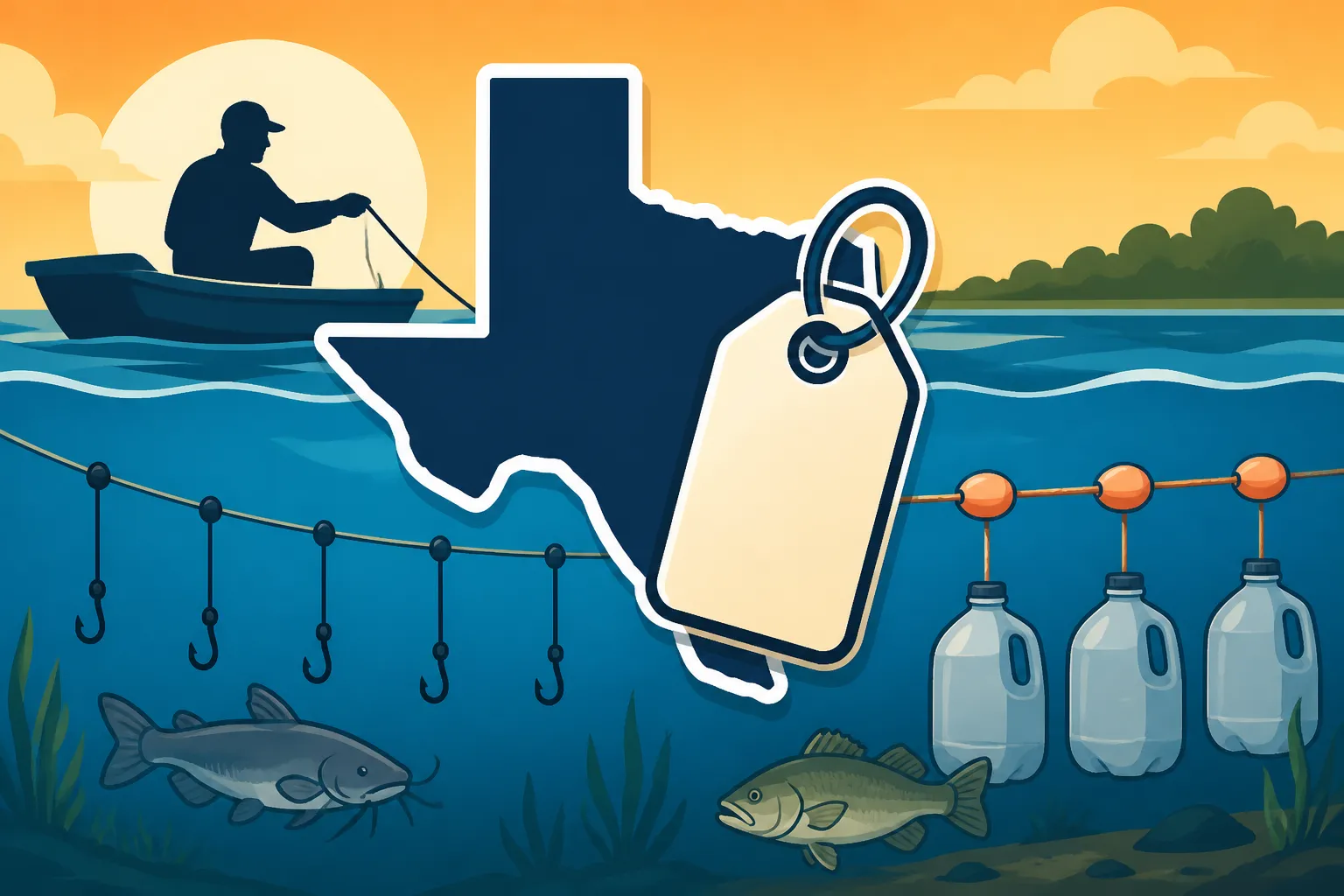
One of the primary reasons for mandatory gear tags is to combat the problem of abandoned fishing equipment. Imagine losing a trotline or a jugline in a lake. Without proper identification, there's no way to link that gear back to an owner. This abandoned equipment can continue to "ghost fish," meaning it keeps catching fish unnecessarily, which then die, wasting a valuable resource. It can also pose a hazard to other boaters and wildlife. By requiring your name and address or a unique customer number, the TPWD can identify the owner, hold them accountable, and ensure that gear is either properly maintained or removed from the water when no longer in use. This helps protect our fish populations and keeps our waterways safer and cleaner for everyone.
Ensuring Fair Play and Resource Management
Beyond preventing ghost fishing, gear tags are a cornerstone of fair play among Texas anglers. They help ensure that everyone is abiding by the rules, especially when it comes to the number of lines or hooks permitted. Without identification, it would be nearly impossible to regulate how much gear any one individual has deployed. This system allows game wardens to easily verify who owns what, helping to prevent overfishing by individuals and ensuring that the resource is shared equitably. It's all about sustainable fishing practices, making sure there are plenty of fish for generations to come. Having proper identification on your gear makes it clear you're a responsible angler contributing to the health of our Texas fisheries.
Accountability for Illegal Practices
Unfortunately, not everyone plays by the rules. Gear tags provide an essential layer of accountability. If a game warden discovers a trotline or jugline that violates regulations – perhaps it has too many hooks, is set in a restricted area, or contains protected species – the tag provides immediate identification of the responsible party. This means that enforcement actions, such as citations or even confiscation of gear, can be directed to the correct individual. It’s a mechanism to deter illegal fishing activities and helps maintain the integrity of our fishing laws. Being able to quickly identify owners ensures that those who disregard the regulations are held responsible, protecting the honest anglers and the fish alike.
Specific Tagging Requirements for Trotlines
When it comes to trotlines, the rules are fairly precise, and for good reason. A trotline can be a highly effective fishing tool, but its larger scale means proper identification is even more critical. Failing to tag your trotline correctly can lead to significant issues with game wardens, so understanding these details is paramount.
What Information Must Be Included on the Tag
For a trotline, each individual line must be clearly marked with a legible gear tag. The tag needs to include either the name and address of the person using the line or, alternatively, their TPWD customer number. The customer number is often a preferred option for privacy and simplicity, as it's a unique identifier linked to your fishing license information. This ensures that even if your personal address changes, your TPWD customer number remains constant and traceable. This information is crucial for identification purposes, allowing game wardens to quickly determine who owns the line and to verify compliance with other regulations, such as those detailed in the Texas Trotline and Jugline Rules.
It's not enough to just write down the information; it must be legible. This means using a permanent marker that won't fade in the sun or wash off in the water, or an engraved tag that can withstand the elements. Many anglers opt for sturdy plastic tags that can be written on with marine-grade markers or even custom-engraved tags. You can often find these types of durable tags and suitable markers on platforms like Amazon, making it easy to comply. Remember, if a game warden can't read your tag, it's as good as not having one at all, potentially leading to a penalty.
Material and Placement of Trotline Tags
The material of your gear tag is almost as important as the information it holds. Given that trotlines are often left in the water for extended periods and exposed to harsh conditions like sun, rain, and fluctuating water levels, the tag must be durable. Metal or sturdy plastic tags are excellent choices. Avoid flimsy materials like cardboard or thin paper, even if laminated, as these often degrade quickly. The goal is for the tag to remain intact and readable throughout the time the trotline is deployed.
Placement is also key. The gear tag must be attached to the trotline so that it is visible and easily accessible to a game warden checking the line. Typically, this means securing it to one of the main ends of the trotline, near where it's tied off to a bank, buoy, or submerged structure. It shouldn't be hidden or submerged deep underwater, making it difficult to find. Think about accessibility; a game warden should be able to approach your trotline and immediately see the tag without having to pull up the entire line. Some anglers use bright, contrasting colors for their tags to make them stand out, which is a smart practical tip.
Example Scenarios for Trotline Tagging
Let's imagine you're setting up a trotline on Lake Whitney. You've got your main line stretched across a productive channel, and you're using 50 hooks, which is well within the Texas Freshwater Fishing Regulations limits. To comply with the tagging rules, you'd securely attach a durable plastic tag to one end of the main line, perhaps near the bank where it's anchored. On this tag, you'd clearly engrave or use a waterproof marker to write "John Doe, 123 Main St, Anytown, TX 77777" or, more simply, your TPWD customer number, say "TPWD# 123456789".
Another scenario: you're using multiple trotlines in a larger body of water like Sam Rayburn Reservoir. Each individual trotline, even if they're relatively close together, requires its own separate tag with your identifying information. You can't just tag one line and assume it covers all your gear. For instance, if you have three trotlines set, you need three distinct, properly labeled tags, one for each line. It’s a good practice to double-check these tags periodically, especially after storms or strong currents, to ensure they haven't come loose or become illegible. It's a small effort that saves a lot of potential hassle down the line.
Specific Tagging Requirements for Juglines
Juglines, while often smaller and more numerous than trotlines, also fall under strict tagging regulations in Texas. These regulations are designed to prevent them from becoming anonymous floating hazards or contributing to uncontrolled fishing pressure. Much like trotlines, the key is clear, durable identification.
What Information Must Be Included on the Tag
Just like trotlines, every single jugline you deploy in Texas waters must bear a legible gear tag. This tag needs to display either your name and address or your TPWD customer number. Again, opting for your customer number can be a convenient and secure way to comply, linking directly to your official fishing license records. Whether you're fishing for catfish on Lake Livingston or experimenting with different species, each individual jug – whether it’s a pool noodle, a plastic bottle, or a purpose-built jug – needs its own identifier.
The legibility requirement is paramount here as well. Because juglines are often retrieved and redeployed, or might drift, the tag needs to be robust. Using a waterproof, fade-resistant marker on a brightly colored plastic tag, or a metal tag, is highly recommended. For instance, brands like Sharpie offer extreme-fade-resistant markers that work well on plastic tags you might purchase from a sporting goods store or even a bulk pack from Amazon. The goal is for that information to be clear and readable throughout the lifespan of your jugline, preventing any ambiguity for game wardens.
Material and Placement of Jugline Tags
Given that juglines are free-floating and subject to various environmental stresses, the material choice for your tag is particularly important. A small, durable plastic tag, metal tag, or even a section of PVC pipe with the information clearly marked, are all good options. They need to withstand prolonged immersion, sun exposure, and the general wear and tear of being on the water. Think ruggedness; a simple piece of duct tape with your name written on it probably won't cut it for long.
Regarding placement, the gear tag must be securely attached to the jugline itself, typically on the float (the "jug") or the main line directly below it, in a way that it is visible and easily accessible when the jugline is retrieved or inspected. It shouldn't be so small or so hidden that a game warden has to struggle to find or read it. Many anglers simply tie a durable tag directly to the neck of a plastic bottle or through a hole drilled in a foam float. This ensures that as soon as the jug is spotted and brought closer, the identification is immediately apparent.
Example Scenarios for Jugline Tagging
Let's consider a day of juglining for blue catfish on the Trinity River. You've got ten juglines ready to go, each with a single hook, which is perfectly within the Texas Catfish Bag Limits and gear restrictions. Before you toss each one out, you need to ensure every single jug has a tag. So, if you're using recycled plastic soda bottles as your floats, you'd tie a small, sturdy plastic tag to the handle or neck of each bottle. On each tag, you'd write something like "Jane Smith, TPWD# 987654321."
In another instance, perhaps you're using specialized foam jug floats. You'd still need to ensure each one carries the necessary identifying information. A common practice is to have these tags pre-made. Many anglers buy blank, durable plastic tags in bulk from craft stores or online retailers like Amazon and then prepare them all at home. This makes deployment on the water much quicker and ensures consistency across all your gear. Remember, if even one jugline is found without a proper, legible tag, it can be considered illegal gear.
Here's a quick comparison of the tagging requirements for both:
| Feature | Trotlines | Juglines |
|---|---|---|
| Information Required | Name & Address OR TPWD Customer Number (legible) | Name & Address OR TPWD Customer Number (legible) |
| Material Durability | Sturdy, weather-resistant (plastic, metal) | Sturdy, weather-resistant (plastic, metal, PVC) |
| Placement | Visible on main line, typically at an end | Visible on the float or main line near the float |
| Quantity | One tag per individual trotline | One tag per individual jugline |
| Purpose | Prevent ghost fishing, ensure accountability | Prevent ghost fishing, identify responsible party |
Consequences of Non-Compliance and Best Practices
Ignoring or misunderstanding the gear tag requirements for trotlines and juglines in Texas is not a minor oversight. It can lead to real and unpleasant consequences, disrupting your fishing trip and potentially costing you money. Understanding these risks is part of being a responsible angler.
Fines, Penalties, and Gear Confiscation
The Texas Parks and Wildlife Department takes gear tagging seriously as part of its broader efforts to manage natural resources. If a game warden discovers your trotline or jugline without the required, legible tag, or with incorrect information, it's considered an illegal fishing device. The consequences can include a citation, which typically carries a fine. These fines can vary but are generally in the range of several hundred dollars, plus court costs. You can imagine how quickly that adds up if you have multiple untagged lines.
Beyond the financial penalty, game wardens have the authority to immediately confiscate any untagged or improperly tagged gear. This means you could lose your entire investment in trotlines, juglines, weights, and hooks. It’s not just a warning; they will take the gear. This isn't meant to be punitive for the sake of it, but rather to remove illegal fishing devices from the water that could continue to harm fish populations or pose a hazard. For more detailed information on penalties, you might want to review resources like "Penalties for Fishing Without a Texas License".
Practical Tips for Ensuring Compliance
Staying compliant is actually quite simple once you know the rules. Here are some practical tips to make sure your gear is always good to go:
- Invest in Quality Tags: Don't skimp on the tags. Buy durable plastic or metal tags that are designed for outdoor use. Many outdoor supply stores or online retailers like Amazon offer bulk packs of durable tags perfect for this purpose.
- Use Permanent Markers: For handwritten tags, use industrial-grade, waterproof, and UV-resistant markers. Test them first to ensure they don't fade or run when wet. Engraved tags are even better for longevity.
- Choose Your Identifier: Decide whether you want to use your full name and address or your TPWD customer number. The customer number is often more convenient and private. Make sure the number is written clearly and correctly.
- Prepare in Advance: Don't wait until you're at the lake or river to tag your gear. Prepare all your tags at home, in good light, where you can ensure legibility and accuracy. This saves time and prevents errors when you're eager to start fishing.
- Secure Attachment: Use strong zip ties, durable fishing line, or small stainless steel wires to attach tags securely to your gear. Make sure they won't easily come loose due to currents, fish activity, or general handling.
- Regular Checks: Before each outing, and periodically while your gear is deployed, check all your tags. Are they still legible? Are they still securely attached? Replace any tags that are faded, damaged, or missing. This is especially important for gear left in the water for extended periods.
Maintaining Your Tags and Updating Information
Life happens, and sometimes your information might change. If you move, and your address on your tags becomes outdated, that could potentially cause an issue, especially if you're not using your TPWD customer number. While a game warden would likely check your license information, having current details on your tag is always the safest bet. If you use your TPWD customer number, this concern is largely mitigated as the number itself doesn't change, only the address associated with it in the TPWD system.
It's a good habit to integrate tag maintenance into your regular fishing gear checks. Just as you might check your fishing line for nicks or your hooks for sharpness, take a moment to inspect your gear tags. Weather, sun, and even curious fish can wear them down. Keeping a small supply of blank tags and a good marker in your tackle box or boat is a smart move for quick replacements. This proactive approach ensures you're always in good standing and can focus on the joy of catching fish, rather than worrying about compliance issues.
Disclaimer
Please note that fishing regulations, including those for gear tagging, can change. While this guide aims to provide accurate and up-to-date information, it is always your responsibility as an angler to consult the latest official Texas Parks and Wildlife Department (TPWD) Outdoor Annual or their website before heading out. This content is for informational purposes only and should not be considered legal advice.