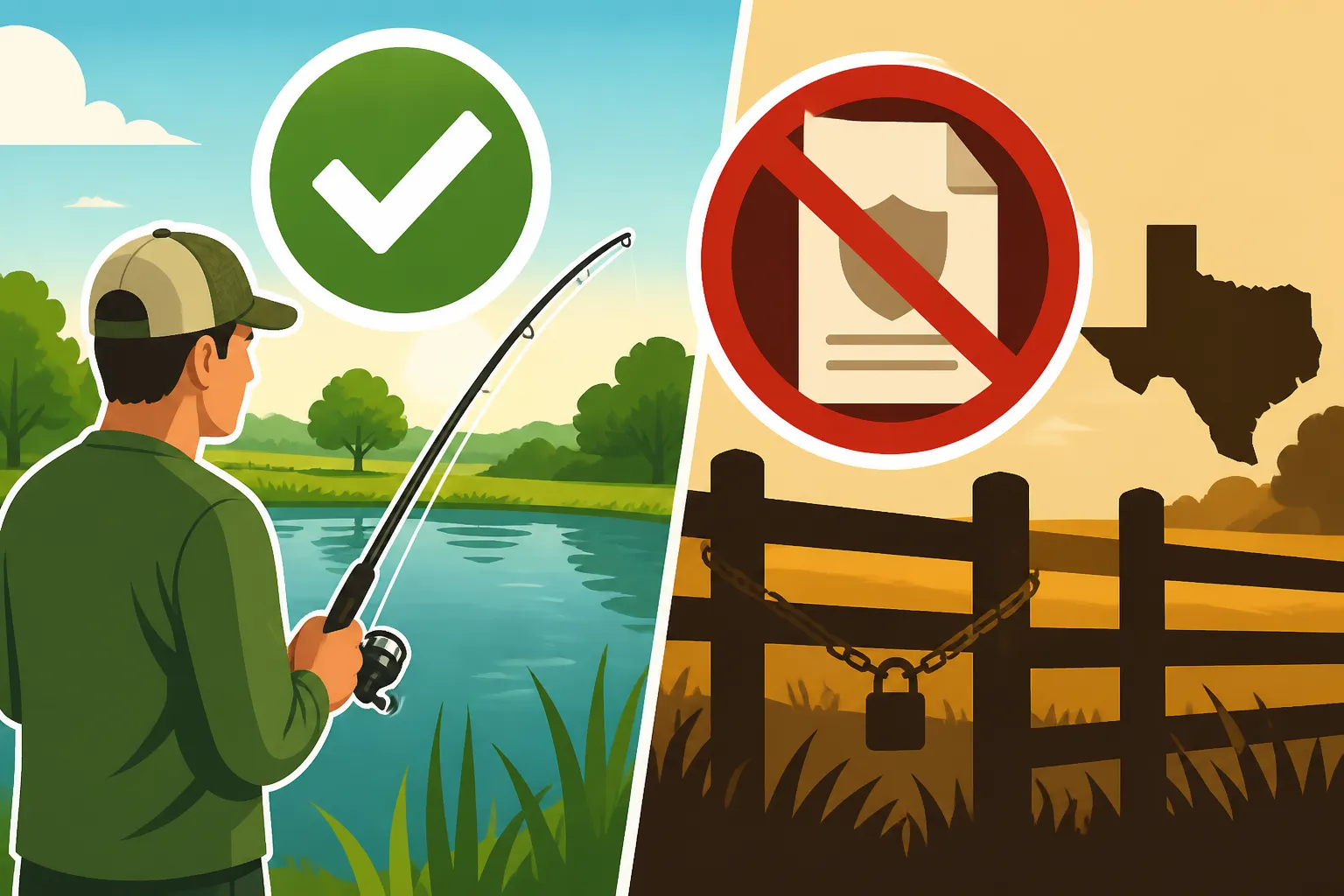
Do you need a license to fish on private property in Texas?
It's a question that trips up a lot of Texas anglers, and honestly, it's easy to see why there's confusion: "Do I really need a fishing license if I'm just casting a line on my buddy's ranch pond or my own backyard lake?" The rules around fishing on private property in Texas can feel a little murky, but understanding them is crucial to staying on the right side of the law and ensuring your peaceful day of fishing doesn't turn into a headache. This guide is here to untangle those knots, explaining precisely when a Texas fishing license is required on private lands and when you might be exempt.
Understanding Texas Fishing License Fundamentals
Before we dive deep into the specifics of private property, it’s helpful to understand the general philosophy behind fishing licenses in our great state. Texas, like most places, has a robust system in place to manage its incredible natural resources, and licenses are a cornerstone of that system.
Why Texas Requires Fishing Licenses
At its heart, the requirement for a fishing license isn't about making a buck off recreational anglers, though that's certainly part of the funding mechanism. It's primarily about conservation and management. Every time you purchase a fishing license, a portion of that fee goes directly towards vital programs run by the Texas Parks and Wildlife Department (TPWD). These programs include stocking fish in public lakes, monitoring fish populations, conducting research, enforcing regulations, and improving public access to fishing spots. Without these funds, our beloved fishing holes wouldn't be nearly as healthy or productive. It's an investment in the future of fishing for all Texans. Think of it as your contribution to keeping our waters vibrant and full of fish, whether you're chasing bass in East Texas or redfish on the coast. You can learn more about specific requirements in our comprehensive guide to Texas Fishing License Requirements Explained.
Standard License Requirements for Public Waters
The general rule of thumb is straightforward: if you're fishing in any public body of water in Texas, you need a fishing license if you are 17 years of age or older. This includes our vast network of freshwater lakes and rivers, as well as the entire Texas Gulf Coast, including bays, estuaries, and the open ocean. This requirement applies whether you're fishing from a boat, from the bank, off a pier, or even wade fishing. There are very few exceptions to this rule in public waters, such as during the annual Texas Free Fishing Day, but for the vast majority of your fishing adventures, that license needs to be with you. This applies to both residents and non-residents, though the specific Texas Fishing License Cost for Residents and Nonresidents will vary.
The Private Property Exemption Explained
Now, let's get to the heart of the matter: private property. The good news for those with access to private land is that Texas does offer a significant exemption from the general fishing license requirement. However, this exemption comes with some very specific conditions.
What Qualifies as Private Property for Fishing Exemptions
This is where the details really count. For a body of water to be considered "private water" by the TPWD, thereby exempting anglers from needing a license, it must meet two critical criteria:
- Fully Enclosed and Contained: The water body must be entirely located on private land. This means it cannot have any direct or indirect connection to public waters. It must be wholly contained within the boundaries of the private property, with no inflow or outflow from public streams, rivers, or lakes. Think of a classic farm pond or stock tank that's fed only by rainwater runoff, groundwater, or a well on the property. These are perfect examples of truly "private" water. Even a small stream running through private land is generally not considered private water if it eventually flows into a public river or lake.
- Privately Owned and Managed: The water body must be privately owned and managed, with no public access allowed or maintained by the state. This means the landowner has full control over who can access the water and fish it.
Let's look at some examples to make this clearer:
- Stock Tanks and Farm Ponds: These are the quintessential examples of private waters where you typically don't need a license. If your friend has a few stock tanks on their ranch, entirely within their property lines and not connected to a public waterway, you're usually good to go without a license, as long as you have their permission, of course!
- Homeowners Association (HOA) Lakes: Some planned communities have private lakes or ponds within their boundaries. If these lakes are truly enclosed and managed by the HOA or developer, and not connected to public waterways, they can often fall under the private water exemption. Always check with the HOA management, though, as they might have their own rules.
- Commercial Pay Lakes (sometimes): This is a tricky one we'll dive into more later, but some pay lakes, particularly those that are entirely man-made and isolated, might not require a state license.
The key takeaway is "fully contained." If the water flows into or out of a public water body, even if it runs through private land, it's generally considered public water, and a license is required. This distinction is vital and often misunderstood.
Key Conditions for License-Free Private Fishing
So, you've identified a truly private water body according to TPWD's definition. Who can fish there without a license?
- The Landowner and Their Family: If you own the land that contains the private water, you and your immediate family residing on that property generally do not need a license to fish within those specific private waters.
- Direct Invitees of the Landowner: This is where most casual anglers benefit. If you are fishing a private water body with the direct consent and invitation of the landowner, you also do not need a Texas fishing license. This means your friend, neighbor, or family member who owns that stock pond can invite you to fish it, and you can cast away without worrying about purchasing a license. However, if the landowner is charging you a fee to fish, that might change things, depending on how it's structured (more on that below).
It's absolutely paramount to always have explicit permission from the landowner before stepping onto their property, license or no license. Trespassing is a serious offense, and even the most understanding landowner won't appreciate uninvited guests.
Common Misconceptions and Nuances
The world of private water fishing isn't always black and white. There are several scenarios that frequently cause confusion among even experienced anglers.
Navigating Access to Private Waters
Just because a body of water is private doesn't mean you automatically have the right to fish it. Property rights are incredibly important in Texas.
- Always Get Permission: This cannot be stressed enough. Whether it's a handshake, a written agreement, or a formal lease, make sure you have the landowner's explicit permission to fish on their property. Even if you're certain it's a private pond and no license is required, you still need permission to be there. Showing up unannounced, even with the best intentions, can lead to legal trouble.
- Leases and Agreements: Many landowners lease access to their private fishing spots. If you're part of such an arrangement, your lease agreement should clearly outline your fishing privileges. Remember, the exemption from a state license is tied to the nature of the water, not just the fact that you paid to be there.
- Ethical Considerations: Treat private property with the utmost respect. Pack out everything you pack in, close gates, and follow any specific rules the landowner might have. Building a good relationship with landowners is key to maintaining access to these hidden gems.
When Private Waters Connect to Public Waters
This is perhaps the biggest pitfall for anglers assuming they don't need a license on private land. If the water on private property is part of a flowing stream, river, or connects to a larger public lake or bay system, then it is generally considered "public water," even as it passes through private land.
- Navigable Waterways: In Texas, many rivers and streams are considered "navigable" and thus public waters, regardless of whose land they flow through. If you're fishing a section of the Brazos River that happens to cross a private ranch, you absolutely still need a fishing license because the river itself is a public waterway.
- Tributaries and Inlets: If a private pond has an inlet or outlet that eventually flows into a public lake or river, that pond might be classified as public water by association, especially if fish can move freely between the two. The TPWD typically defines public waters as all bays, estuaries, and streams of the state, as well as the portions of rivers and streams with a width of more than 30 feet from the mouth up. It can get technical, so if there's any doubt about a connection to public water, it's always safer to just have your license. If you're wondering about specific locations, such as Lake Texoma Fishing License Rules, it's always best to check official regulations.
Rules for Pay Lakes and Commercial Fishing Operations
Pay lakes are a popular option for many anglers, especially families or beginners, as they often provide a convenient, stocked fishing experience. The license requirement here can vary:
- Fully Enclosed Pay Lakes: If a pay lake is a completely self-contained, man-made pond with no natural connection to public waterways, then generally, a state fishing license is not required. The operators of these facilities usually manage their own fish stocking and rules. These types of operations might sell bait and tackle right on site, making it easy to grab what you need. You might even find some basic gear for these smaller ponds available for purchase on Amazon.
- Pay Lakes Connected to Public Waters: However, if a "pay lake" is actually just an area of a larger public lake or river where access is controlled and a fee is charged (e.g., a privately run pier on Galveston Bay), then a state fishing license is required, as you are still fishing in public waters. Always clarify with the pay lake operator if you're unsure.
Here’s a quick summary table to help clarify common scenarios:
| Scenario | Description | License Required? |
|---|---|---|
| Your Own Fully Enclosed Pond | A pond entirely on your private land, with no connection to public waterways (e.g., fed by rain, groundwater, or a well). | No |
| Buddy's Fully Enclosed Stock Tank | Fishing with the landowner's permission on their private stock tank, which has no connection to public waterways. | No |
| River/Stream on Private Land | Fishing a section of a river or stream that flows through private property but is part of a larger public waterway system. | Yes |
| Pond Connected to Public Water | A pond on private land that has an inlet or outlet connecting to a public creek, river, or lake, allowing fish to move freely. | Yes |
| HOA Lake (Fully Enclosed) | A lake within a private community, entirely self-contained and managed by the HOA, with no connection to public waters. (Always confirm with HOA management). | No |
| Commercial Pay Lake (Fully Enclosed) | A man-made, self-contained pond operated commercially for fishing, with no connection to public waters. (Always confirm with operator). | No (usually) |
| Commercial Pay Pier on Public Water | A pier or fishing area on a public bay, lake, or river where a fee is charged for access, but you are fishing in public waters. | Yes |
| Fishing at a Texas State Park | Fishing from the bank or a pier at a Texas State Park, even with day-use fees. (Note: Many state parks allow Free Shoreline Fishing at Texas State Parks without a license, but this is a specific exception and rules still apply). | Yes (unless specific state park exception applies) |
Beyond the License: Other Important Regulations
It's a common rookie mistake to think that if you don't need a license, then no rules apply. That's a dangerous assumption that can quickly lead to trouble. Even on private waters where a fishing license isn't required, many other statewide fishing regulations still hold true.
Bag and Length Limits Still Apply Usually
This is a critical point that many anglers overlook. For most species, Texas Parks and Wildlife Department's statewide bag and length limits still apply, even if you're fishing a private pond or lake. This means that if you catch a largemouth bass that's under the minimum length limit or over the daily bag limit, you're still in violation of the law, license or not. For instance, the Texas Largemouth Bass Length Limits typically apply everywhere.
- Conservation Through Regulation: These limits are in place to ensure the health and sustainability of fish populations across the entire state. Even if your private pond is isolated, it's generally assumed that you will adhere to these conservation practices.
- Exceptions for Permitted Private Waters: There are exceptions, but they are rare and require specific action by the landowner. If a landowner has a specific management plan for a completely enclosed private water body and has secured a special permit from TPWD to deviate from statewide bag and length limits (e.g., to reduce an overpopulation of smaller fish), then those specific rules would apply. However, this is not the norm, and you should always assume statewide limits are in effect unless the landowner can show proof of such a special permit. Your average stock tank definitely falls under statewide rules.
Gear Restrictions and Other Statewide Rules
Beyond bag and length limits, general gear restrictions and ethical fishing practices are also typically enforced on private waters.
- Lawful Fishing Methods: This means you can't use prohibited methods like dynamiting, poisoning, or electric shocking, even on your own property. You'll still need to stick to legal fishing gear. If you're looking for new gear, you can often find a wide variety of lawful fishing rods, reels, and tackle on Amazon.
- Prohibited Species: You can't introduce or keep prohibited aquatic invasive species in your private pond, for example. This is critical for preventing ecological damage.
- Reporting Requirements: While less common for private anglers, certain activities like fishing tournaments or commercial aquaculture might have their own reporting requirements, even if conducted on private land. You'll want to check out details on Texas Fishing Tournament Permit Requirements if you're planning a competitive event.
Always keep a copy of the current Texas Outdoor Annual or download the TPWD Outdoors mobile app. It's an invaluable resource, even for private water fishing, and it’s free!
How to Ensure You're Compliant
Navigating regulations can be daunting, but with a little foresight, you can ensure your fishing trips are both enjoyable and lawful.
Always Confirm with the Landowner
Before you even tie a knot, have a clear conversation with the landowner. This isn't just about courtesy; it's about covering all your bases.
- Explicit Permission: Get direct, unequivocal permission to fish. Don't assume.
- Rules of the Land: Ask if there are any specific rules for their property. Are there areas off-limits? Do they prefer catch and release? Are there any specific fish they want you to keep or release?
- Water Status: Inquire if they know whether the water is truly enclosed or if it connects to any public waterways. While they might not be a TPWD expert, their knowledge of their own land can be incredibly helpful.
- Bag and Length Limits: Confirm if they have any special permits from TPWD that alter the standard bag and length limits for their specific private water body. As mentioned, this is rare, but it's worth asking. You might even suggest they check out our guide on Texas Fish Bag and Length Limits for general info.
When in Doubt, Get a License
This is the golden rule, folks. If there's even a sliver of doubt about whether the water you're fishing is truly "private" according to TPWD's strict definition, or if you're unsure about any connection to public waters, err on the side of caution and buy a Texas fishing license.
- Peace of Mind: A license is inexpensive, especially compared to the potential fines and legal hassles of being caught without one. The cost of a Texas resident all-water fishing license or even a Texas One-Day Fishing License for Visitors is a small price to pay for peace of mind.
- Support Conservation: Remember, your license fee directly supports the very resources you love to enjoy. It's a small contribution to keep Texas fishing great. You can easily get a license online, by phone, or at many retailers like Walmart. Checking the specific Texas Online License Purchase Fees is always a good idea.
- Easily Accessible: Licenses are incredibly easy to acquire. You can buy them online directly from the TPWD website, by calling their toll-free number, or by visiting any licensed vendor, which includes most sporting goods stores and even many grocery stores. If you need to know Where to Buy a Texas Fishing License In Person, that information is readily available.
By understanding these nuances and always leaning towards caution, you can enjoy the incredible private water fishing opportunities Texas has to offer without any unnecessary worries.
Disclaimer
This article is for general informational purposes only and does not constitute professional advice. Laws, prices and regulations vary by location and change over time. Consult a qualified professional for guidance on your specific situation.