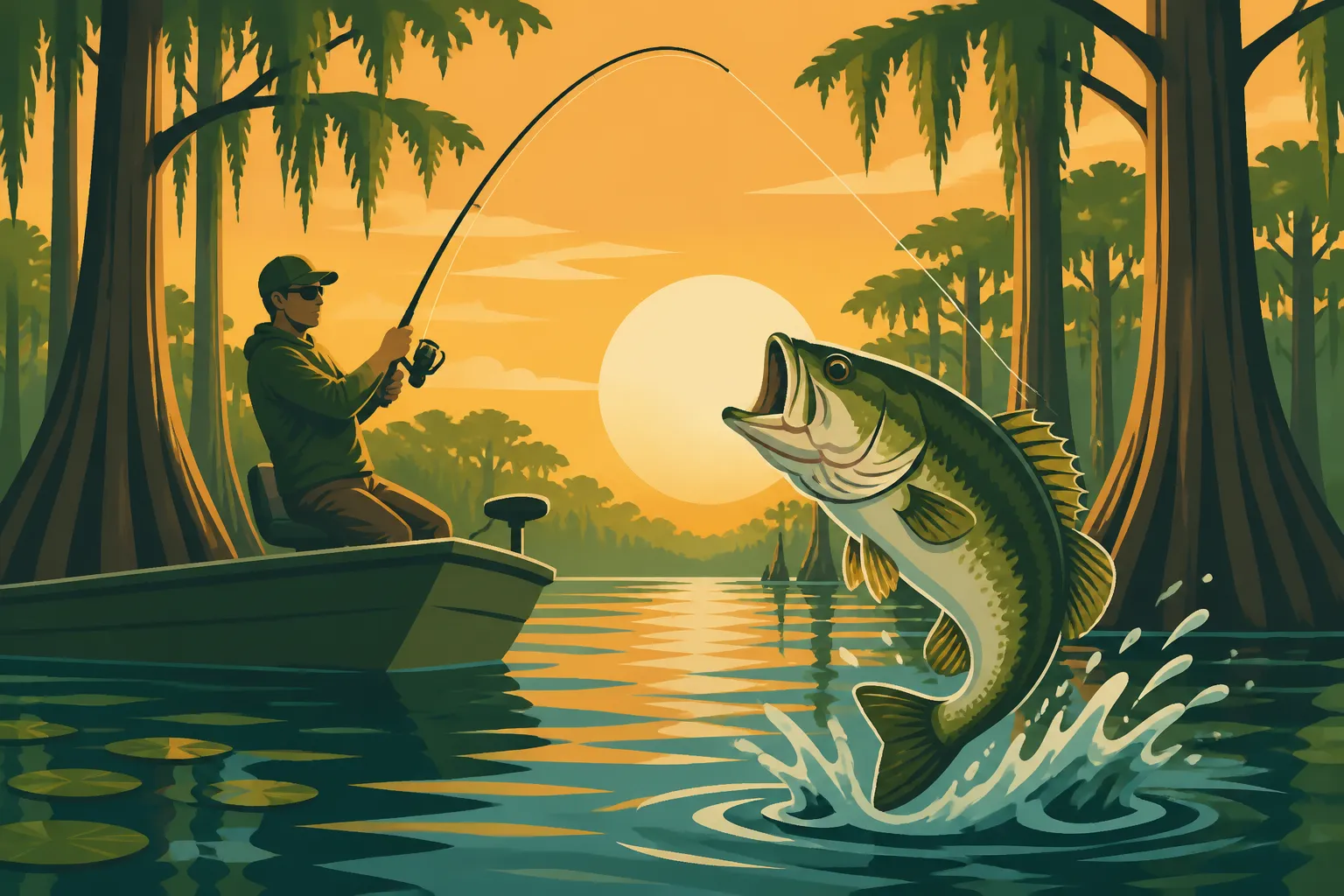
Caddo Lake fishing among the cypress trees
Fishing on Caddo Lake is an experience unlike almost any other in Texas, often leaving new anglers feeling overwhelmed by its sprawling, dense cypress forests and winding sloughs. This guide will walk you through the unique challenges and incredible rewards of fishing among Caddo's ancient trees, helping you unlock its secrets for an unforgettable angling adventure.
Embracing the Mystique of Caddo Lake's Cypress Forests
Caddo Lake isn't just a body of water; it's an entire ecosystem, a living, breathing swamp forest that captivates and challenges every angler who ventures onto its waters. The sheer density of cypress trees, draped in Spanish moss and rising majestically from the water, creates an atmosphere that feels ancient and wild. This unique environment is precisely what makes Caddo so special, but it also demands a different approach to fishing than your typical Texas reservoir.
The Unforgettable Ecosystem: Cypress Trees and Backwater Sloughs
Imagine launching your boat and almost immediately being surrounded by towering cypress trees, their gnarled knees protruding from the dark, tannin-stained water. This isn't just scenery; it's the structure, cover, and habitat for nearly every fish species in Caddo. The roots and knees provide endless ambush points for bass, crappie, and catfish, while the expansive lily pad fields offer shade and oxygen-rich environments during the scorching Texas summers. Navigating this labyrinth can be intimidating, especially for first-timers. It's incredibly easy to get turned around, even with modern electronics. The Texas Parks and Wildlife Department (TPWD) and local authorities have marked main boating lanes, but venturing off these trails into the numerous backwater sloughs and pockets is often where the best fishing happens. Just remember, a map and a fully charged GPS are your best friends here, preventing you from spending more time finding your way back than finding fish.
The ecology of Caddo is truly unique, being the only natural lake of significant size in Texas. It’s not a man-made impoundment like most of our other great fishing lakes. This natural origin contributes to its incredible biodiversity and the unique way fish interact with their environment. The water levels can fluctuate, but the structure of the cypress trees and the heavy vegetation remains a constant. Understanding how fish relate to this cover—whether they're tucked deep into a cypress knee during a cold front or cruising the edges of lily pads on a warm evening—is the first step to unlocking Caddo's potential. It's a place where patience and observation pay off handsomely, as the fish often reveal their patterns in subtle ways within the dense cover.
Navigating the Maze: Channels, Pockets, and Open Waters
Caddo Lake isn't uniform; it's a patchwork of open water areas, winding bayous, narrow sloughs, and dense cypress stands. Understanding these different zones is crucial for effective fishing. The main lake areas, like Big Cypress Bayou or the river channel, offer deeper water and are often good for targeting species like catfish or for trolling certain lures. However, the real magic of Caddo often lies in its more secluded pockets and backwater sloughs, tucked away from the main thoroughfares. These areas can be surprisingly challenging to access, often requiring careful navigation through narrow passages and over shallow flats.
When you're trying to find fish, think about how the water flows and where different types of cover are concentrated. Cypress trees are obvious, but also look for submerged stumps, laydowns, and expansive beds of hydrilla or coontail moss. These hidden structures provide prime ambush points and feeding grounds. In many cases, the most productive spots are not immediately visible from the main channels. This is where a good mapping system comes into play, helping you identify potential hidden pockets or subtle depth changes. Remember that the water can be incredibly shallow in many areas, so a boat with a shallow draft or even a kayak is often ideal for exploring the deeper recesses of the lake. If you’re not comfortable navigating on your own, consider hiring a local guide who knows the lake like the back of their hand.
Prime Catches: What to Expect from Caddo's Waters
While Caddo Lake is famous for its breathtaking scenery, it's equally renowned among anglers for its fantastic fishing opportunities. The lake supports a healthy population of several popular game fish, each offering a unique challenge and reward. Knowing what species thrive here and where to find them will significantly boost your success rate on this captivating fishery.
Legendary Largemouth Bass Action
Caddo Lake is a bonafide trophy bass factory, and it's particularly famous for producing giant largemouth bass. The dense cover provided by the cypress trees, lily pads, and submerged vegetation creates an ideal habitat for these apex predators. Bass thrive in these protective environments, ambushing prey from behind roots, under thick mats of vegetation, or along the edges of fallen timber. You'll often find them tucked deep into the cypress knees, seeking shade and cover, especially on bright, sunny days.
To consistently catch largemouth here, you need to understand their patterns in this specific environment. In the spring, during the spawn, bass will move into shallow, protected coves and backwater areas, often nesting right up against cypress trees or in dense lily pad fields. As summer heats up, they'll seek deeper shade in the thickest mats or near cooler, spring-fed pockets. In the fall, they'll scatter, feeding actively before winter. Common baits that produce well include heavy jigs, creature baits, Texas-rigged worms, and various topwater lures like frogs or buzzbaits fished over vegetation. For a deeper dive into targeting this iconic species, check out our Texas Largemouth Bass Fishing Guide. Always remember that stealth is key when approaching these fish in such dense cover; a quiet approach often means the difference between a bite and spooking your target.
Crappie and Catfish: Abundant and Fun
Beyond bass, Caddo Lake offers fantastic fishing for crappie and catfish, providing excellent options for anglers looking for a different kind of fight or a tasty meal. Crappie, both white and black varieties, are plentiful in Caddo. They love structure and can often be found congregated around submerged brush piles, standing timber, and the deeper channels or sloughs, especially during cooler months. Light tackle and small jigs or minnows are the go-to baits for crappie. Look for concentrations of submerged cover using your electronics, or talk to local bait shops for tips on where crappie have been schooling. Our Texas Crappie Fishing Guide offers more specific tips on techniques that work for these speckled beauties.
Catfish are another strong draw on Caddo Lake. Channel cats, blue cats, and flatheads all call these waters home. They can be found in a variety of habitats, from the main river channels to the deeper holes in backwater areas. Catfish are less structure-dependent than bass or crappie, often patrolling open bottoms or congregating in deeper bends of the bayous. Common methods for catching them include fishing with stink bait, cut bait, or live bait on the bottom. Many anglers also have great success using trotlines and juglines, which can be very effective in Caddo's expansive waters. However, be sure to familiarize yourself with the specific Texas Trotline and Jugline Rules to ensure you're fishing legally and responsibly. Caddo's rich ecosystem provides an ample food source, leading to healthy populations of robust catfish, making them a reliable target for many anglers.
Exploring Other Species: Sunfish and Gar
While bass, crappie, and catfish steal most of the spotlight, Caddo Lake also holds a variety of other interesting fish species that can provide exciting action, especially for families or anglers looking for something different. Sunfish, including bluegill and redear sunfish, are abundant throughout the lake. They are often found in shallow, vegetated areas, making them an excellent target for kids or those who enjoy light tackle fishing. A simple worm under a bobber near a lily pad patch can lead to a consistent bite.
For the more adventurous angler, Caddo Lake is also home to formidable alligator gar. These prehistoric giants can grow to impressive sizes and offer a truly unique angling challenge. They are often found in slower-moving waters, deep channels, or lurking near dense cover. Catching an alligator gar typically requires heavy tackle and specialized techniques. If you're interested in pursuing these massive fish, it's wise to consult resources like our Texas Alligator Gar Fishing Guide for proper techniques and safety considerations, as they can be powerful and require careful handling. The presence of these diverse species truly makes Caddo Lake a versatile fishing destination, ensuring there's always something interesting to pursue.
Strategies for Success: Fishing Techniques That Work on Caddo
Fishing Caddo Lake successfully isn't just about knowing what's biting; it's about understanding how to fish in such a unique, dense environment. The strategies you'd use on a clear, open reservoir often won't cut it here. Instead, you'll need to adapt to the cypress trees, lily pads, and stained water, focusing on precision, power, and presentation.
Pitching and Flipping Cypress Knees and Pads
When you talk about bass fishing on Caddo Lake, pitching and flipping immediately come to mind. This is arguably the most effective technique for targeting largemouth bass that are tucked deep into the dense cover that defines Caddo. Bass love to hide right up against cypress knees, submerged logs, and under thick mats of lily pads or hydrilla. These spots offer shade, ambush points, and protection. Pitching involves making short, accurate casts to specific targets, while flipping is a more controlled, shorter-distance presentation where you swing the bait underhand into tight spaces.
You'll need specialized gear for this. A heavy-action casting rod, typically 7 to 8 feet long, paired with a high-speed baitcasting reel spooled with 50-80 pound braided line, is essential. This heavy setup allows you to not only extract big bass from thick cover but also to withstand the abrasion from the cypress knees and heavy vegetation. Common lures include heavy jigs (1/2 to 1 ounce) with chunk trailers, and creature baits or straight-tail worms Texas-rigged with a heavy tungsten weight (3/8 to 1 ounce). The goal is to get your bait directly into the fish's living room, so practice your accuracy. Let the bait fall vertically, often bumping off the cover, then give it a few subtle twitches. Many strikes will occur on the fall or just as it settles. For more detailed instructions on rigging, check out our guide on How to Fish a Texas rig for bass.
Topwater Thrills and Spinnerbait Smarts
While pitching and flipping dominate the close-quarters game, Caddo Lake also offers incredible opportunities for topwater fishing and covering water with spinnerbaits. There's nothing quite like a giant bass exploding on a topwater lure amidst the lily pads, and Caddo provides the perfect stage for such thrills. Frog lures, like those from popular brands such as LIVETARGET or Booyah, are incredibly effective when fished over thick mats of vegetation. Walk them slowly across the pads, pausing occasionally, to mimic a frog or rodent. Buzzbaits can also be deadly, especially during low-light conditions or when fished along the edges of grass lines and cypress trees. For more on maximizing this exciting technique, read our Best Topwater Lures for Texas Bass guide.
Spinnerbaits are another excellent choice for covering larger areas of water, especially when fish are scattered or actively searching for prey. The flash and vibration of a spinnerbait can draw bass out of cover and are particularly effective in slightly stained or muddy water, which Caddo often presents. Choose models with Colorado blades for maximum thump in murky water or willowleaf blades for a more subtle flash in clearer sections. Fish them around the edges of cypress tree lines, through sparse vegetation, or over submerged stumps. The key is to experiment with retrieve speeds until you find what the fish are reacting to, which can change throughout the day.
Understanding Water Levels and Seasonal Patterns
Caddo Lake's fishing success is heavily influenced by both water levels and the changing seasons. As a natural lake, its levels can fluctuate more organically than controlled reservoirs, though dam operations do play a role. Higher water levels can open up new fishing areas deep within the cypress swamps, allowing boats to access previously unreachable pockets. Conversely, lower levels can concentrate fish in main channels or expose more prominent structure, making certain areas easier to pinpoint. Always check local conditions before heading out, as water levels can dramatically alter accessibility and fish behavior.
Seasonally, Caddo offers year-round fishing, but the patterns shift significantly. Spring is prime time for big bass as they move shallow for the spawn. This is when pitching and flipping to cypress knees and bedding areas is incredibly effective. Our Texas Bass Spawning Season Guide provides more detail on this critical period. Summer means early mornings and late evenings for topwater action, with bass often retreating to deeper, shadier cover or oxygen-rich mats during the midday heat. Fall sees a resurgence of activity as fish feed up before winter, often spreading out and chasing baitfish. Winter fishing can be tough but rewarding, with crappie schooling in deeper channels and bass often holding tight to vertical structure. To get a comprehensive overview of how to plan your trips around the year, explore our Best Time of Year to Fish in Texas.
Planning Your Caddo Lake Adventure
A successful trip to Caddo Lake requires a bit more planning than a typical reservoir outing. Given its unique environment, preparation is key to ensuring a safe, enjoyable, and productive fishing experience. From equipping your boat to considering a guide, thinking ahead will make all the difference.
Essential Gear and Navigation Tips
When heading out on Caddo, your usual tackle box might not be enough. Beyond your heavy pitching and flipping gear, consider adding a few crucial items. A shallow water anchor, like a Power-Pole or a simple stick anchor, is invaluable for quietly holding your position against a cypress tree or in a lily pad field without spooking fish or getting tangled in ropes. Navigation is paramount: a reliable GPS unit loaded with detailed lake maps is non-negotiable. Even with marked channels, it's incredibly easy to get lost in the winding sloughs. Many seasoned Caddo anglers even carry a handheld GPS as a backup to their boat electronics. Knowing how to read a lake contour map for bass fishing can also give you an edge. For a deeper understanding of what technology can aid your fishing, check out our guide on Best Fishing Electronics for Texas Anglers.
Safety gear is also particularly important on Caddo. Always have extra paddles on board in case your trolling motor or main engine fails in a tight spot. Carry extra fuel, as backtracking through the maze can burn more than you expect. A whistle or air horn, a well-stocked first-aid kit, and plenty of water are also essential. Because you'll often be in dense cover, wearing polarized sunglasses will help you spot submerged structure and even fish. Lastly, consider carrying a stout push pole or a strong branch to push off cypress trees if you get stuck or need to move quietly through extremely shallow areas.
Hiring a Local Guide or Charter
For many anglers, especially those visiting Caddo Lake for the first time, hiring a local fishing guide is not just a recommendation, it's almost a necessity. Caddo's intricate layout, subtle fishing patterns, and challenging navigation make local knowledge incredibly valuable. A good guide can save you countless hours of searching, get you directly on fish, teach you specific techniques that work on Caddo, and, most importantly, navigate the lake safely. They know the hidden channels, the productive cypress stands, and the current bite patterns that can be hard to figure out on your own.
Platforms like FishingBooker are excellent resources for finding reputable, experienced Caddo Lake fishing guides. You can browse profiles, read reviews from other anglers, and compare prices to find a guide that specializes in the type of fishing you want to do, whether it's trophy bass, crappie, or even alligator gar. Many guides operate out of nearby towns like Uncertain, Texas, or Mooringsport, Louisiana, and often provide all the necessary gear, so all you need to bring is your fishing license (which might be tricky due to the border – ensure you understand Caddo Lake Fishing License Rules for Texas and Louisiana anglers), snacks, and sunscreen. The investment in a guide often pays off in both fish caught and a much less stressful, more educational experience on this truly unique body of water.
Local Amenities and Accommodations
Caddo Lake is surrounded by a charming, laid-back atmosphere, with several small towns offering amenities for visiting anglers. Uncertain, Texas, on the lake's eastern shore, is a popular hub, featuring several lodges, cabins, and RV parks that cater specifically to fishermen. You'll find bait shops there that can provide up-to-date fishing reports and local insights on what baits are currently working best. On the Louisiana side, Mooringsport offers similar services and a gateway to different parts of the lake.
Many accommodations offer boat launches and dock access, making it convenient to get on the water early. Some also have fish cleaning stations. If you're looking to make a full trip out of it, consider booking your stay well in advance, especially during peak fishing seasons. FishingBooker can also assist with finding local accommodations or complete fishing packages that include lodging and guided trips, streamlining your planning process. While the towns themselves are small, they provide everything you need for a comfortable stay, including a few local eateries where you can grab a bite after a long day on the water.
Here's a quick overview of what to target and how on Caddo Lake:
| Species | Primary Habitat | Best Techniques | Recommended Bait/Lures | Seasonal Peak |
|---|---|---|---|---|
| Largemouth Bass | Cypress knees, lily pads, submerged timber | Pitching/Flipping, Topwater, Spinnerbaits | Jigs, Creature Baits, Frogs, Buzzbaits, Worms | Spring, Fall |
| Crappie | Brush piles, standing timber, deep channels | Jigging, Vertical fishing | Small Jigs, Minnows | Winter, Spring |
| Catfish | Main channels, deeper holes, open bottom | Bottom fishing, Trotlines, Juglines | Cut Bait, Stink Bait, Live Bait (shad, sunfish) | Summer, Fall |
| Alligator Gar | Slower currents, deep channels, open water | Heavy tackle, Live bait (carp, small catfish) | Large Live Bait, Heavy Rods | Summer |
| Sunfish (Bream) | Shallow vegetated areas, dock pilings | Light tackle, Bobber fishing | Worms, Crickets, Small poppers | Spring, Summer |
Disclaimer
Fishing regulations can change, and it is always your responsibility to check the latest rules and requirements from the Texas Parks and Wildlife Department before you head out. This guide is for informational purposes only and should not be considered a substitute for official regulations.