How to Fish in Hot Texas Summers
The scorching Texas sun isn't just a minor inconvenience; it's a formidable adversary for anglers. That relentless heat can make our favorite lakes and rivers feel like simmering bathtubs, turning normally active fish into lethargic, lock-jawed ghosts. We've all been there: baking under a cloudless sky, wondering why the fish finder shows activity but nothing bites, or worse, watching that prized catch struggle in a warm livewell. But don't let the summer heat deter you from the water. Fishing in the peak of a Texas summer demands a strategic mindset and a few crucial adjustments to your techniques and routines. This comprehensive guide is here to transform your summer struggles into successes, revealing how you can adapt your approach to find and catch fish, all while staying safe and comfortable when the mercury soars.
Understanding Summer Fish Behavior in Extreme Heat
To truly succeed at fishing in the brutal Texas summer, you have to think like a fish. Just like us, fish don't enjoy being uncomfortable, and their entire physiology is dictated by the water around them. When temperatures climb into the high 80s and 90s, their world changes dramatically, and understanding these shifts is your first step to outsmarting them.
The Impact of Water Temperature on Fish Metabolism
Fish are cold-blooded creatures, meaning their internal body temperature mirrors that of their environment. As water temperatures rise, so does their metabolism. While this might sound good in theory – a faster metabolism means they need to eat more, right? – there's a critical point where it becomes detrimental. Beyond their optimal temperature range, fish become stressed. Their metabolic rate can accelerate to an unsustainable level, making them lethargic, reducing their appetite, and forcing them to seek refuge in cooler waters.
This is why you'll often find that the aggressive, shallow-water bites you enjoyed in spring disappear in summer. A largemouth bass, for instance, might be perfectly happy foraging in 75-degree water, but push that to 90 degrees, and its priorities shift from hunting to simply surviving. It's disheartening to know they're there but just won't bite, or when they do, they're not putting up the fight you expect. They conserve energy, preferring to ambush an easy meal rather than chase down a fast-moving lure.
Oxygen Depletion and Fish Movement
Another critical factor often overlooked in the heat is dissolved oxygen. Warm water holds significantly less oxygen than cold water. Add to this the natural decomposition of organic matter (like dying algae or vegetation), which consumes oxygen, and you have a recipe for oxygen-depleted zones, especially in shallower, stagnant areas of a lake or river.
Fish, much like us, need oxygen to breathe. When shallow waters become both too hot and oxygen-starved, fish are forced to abandon these areas. They migrate to deeper zones, where temperatures are more stable and, crucially, oxygen levels are higher. This migration can push entire schools of fish away from traditional spots, leaving anglers scratching their heads. You might find them congregating near active springs, creek channels, or even offshore humps and ledges where water circulation maintains better oxygen levels.
Finding the Thermocline
In many deeper Texas reservoirs, especially those with significant depth changes, summer brings about a phenomenon called thermal stratification. This means the lake water separates into distinct layers based on temperature. The warmest water sits on top, the coldest at the bottom, and in between is a transition zone called the thermocline. This is a narrow band where the water temperature changes rapidly.
The thermocline is often the sweet spot for many game fish during the summer. Above it, the water can be too warm and oxygen-depleted. Below it, the water might be cooler but can also be anoxic (lacking oxygen) and devoid of baitfish. Therefore, fish will frequently suspend in or just above the thermocline, finding the perfect balance of temperature, oxygen, and food availability. Learning How to Fish Deep Structure in Texas Reservoirs is key here. A quality fish finder with temperature graphs or a standalone temperature probe can be invaluable for identifying this critical depth, essentially pinpointing the "comfort zone" for the fish.
Timing Your Attack: Early Mornings and Late Evenings
When the sun is blazing high overhead, even the most dedicated anglers can struggle. That's why timing your fishing trips becomes arguably the most important factor for summer success. Instead of battling the midday inferno, strategically planning your outings for cooler periods can drastically improve your chances.
Capitalizing on the Golden Hours
The period around sunrise and sunset, often referred to as the "golden hours," is prime time for summer fishing. In the early morning, before the sun has had a chance to fully bake the landscape, surface water temperatures are at their coolest point of the day. This slight reprieve allows many fish species to move shallower from their deep-water sanctuaries to feed. The lower light conditions also make them feel more secure and less exposed to predators, including us anglers.
Think about the bass on Lake Fork. Right as the sun cracks the horizon, you might get an explosive topwater bite near lily pads or submerged timber. Similarly, speckled trout and redfish in the shallow bays of the Texas coast, like those around Port Aransas, will often push into skinny water to ambush baitfish during this fleeting cool-down. It might mean setting your alarm clock for an ungodly hour, but believe me, the reward of a bending rod in the tranquil morning air is often worth that sacrifice. It's a fundamental principle of Best time of day to catch bass in summer and other species.
Night Fishing for Summertime Success
If early mornings aren't your jam, or if you simply can't get enough fishing, then night fishing is an absolute game-changer for hot Texas summers. As the sun dips below the horizon and the air cools, the surface water temperatures also begin to drop. This, coupled with the cover of darkness, encourages many species to become significantly more active. The boat traffic subsides, making for a quieter, more peaceful experience, and the fish feel much less pressured.
Species like blue catfish, channel catfish, and even some of the biggest largemouth bass are well-known for their nocturnal feeding habits. Crappie can also school up under lights at night, attracting minnows and other baitfish. Techniques vary, from casting noisy topwater lures and dark-colored spinnerbaits for bass near shallow cover to setting up under powerful submersible lights that draw in baitfish, creating a feeding frenzy. For catfish, night is often the absolute best time to deploy stink bait, cut bait, or even set out juglines and trotlines. Just be sure to check local regulations for specific rules on night fishing and gear. I've had some of my most memorable nights on the water, pulling in massive blue catfish from Lake Livingston under the stars, when during the day, it felt like nothing was biting.
Deep Water Tactics for Lethargic Fish
When the sun is high and the water is warm, most active fish will have retreated to the cooler, deeper parts of the lake or river. This means that if you want to catch them, you've got to learn how to effectively present your baits down where they live. Forget about shallow-water power fishing; summer often calls for deep-water finesse and precision.
The Art of Deep Cranking and Carolina Rigging
Deep-diving crankbaits are essential tools for covering significant depths and locating active fish in the summer. These lures are designed with large bills that allow them to plunge to depths of 15, 20, or even 25 feet or more, depending on the model and line size. They're excellent for bumping off deep ledges, submerged roadbeds, humps, and points, triggering reaction strikes from bass that might not be actively chasing. Brands like Strike King, Rapala, and Berkley offer a wide range of deep-divers, and selecting colors that mimic local baitfish or provide a high-contrast flash can be key.
For a slower, more methodical approach, the Carolina rig is a deep-water superstar. This rig consists of a heavy sinker (often 1/2 to 1 ounce or more) followed by a bead and a swivel, then a leader (usually 18 inches to 4 feet) tied to a hook with a soft plastic bait. The heavy weight keeps the rig on the bottom, but the long leader allows your bait to float enticingly above the substrate. It's perfect for dragging across shell beds, rock piles, and deep contours, presenting a subtle meal to less aggressive fish. Mastering How to fish a Texas Carolina rig can be a game-changer for your summer fishing success.
Using Electronics to Locate Structure and Schools
In the vastness of a deep Texas reservoir, finding those key fish-holding areas without advanced electronics is like searching for a needle in a haystack. Modern fish finders are no longer just for marking fish directly under the boat; they are sophisticated mapping and scanning tools. Side imaging and down imaging technologies allow you to scan wide swaths of water, revealing submerged brush piles, rock formations, creek channel bends, old roadbeds, and even individual tree stumps that might be holding fish.
When you're idling over a promising area, look for schools of baitfish, which are often indicated by cloudy masses or distinct arches on your screen. Game fish will rarely be far from their food source. Once you locate a prime piece of structure or a school of fish, mark it on your GPS. Don't be afraid to experiment with different angles and distances from the structure. It's not "cheating" to use these tools; it's smart, efficient fishing that helps you decode the underwater world.
Drop-Shotting and Jigging in the Abyss
When fish are exceptionally finicky or suspended precisely in the thermocline, finesse techniques like drop-shotting come into their own. A drop-shot rig involves tying your hook directly to the main line, with a sinker tied below the hook on a tag end of line. This allows your soft plastic bait to be presented horizontally and subtly at a specific depth, completely independent of the bottom. You can twitch and shake the rod tip, making the bait dance tantalizingly right in front of the fish's face without moving the weight.
Vertical jigging, using spoons, blade baits, or heavy hair jigs, is another excellent tactic for deep-holding fish. This involves dropping the lure directly down to the target depth and then sharply snapping the rod tip up and letting the lure flutter back down on a semi-slack line. The erratic action often triggers a strike from otherwise lethargic fish. Both drop-shotting and jigging require patience and a light touch but can be incredibly effective when other methods fail. You can find an excellent selection of finesse soft plastics and drop-shot weights for these techniques on Amazon.
Bait and Lure Adjustments for Summer
Summer fishing isn't just about where you fish; it's also about what you're offering and how you're presenting it. Fish are often less aggressive, meaning your usual go-to baits and retrieves might need some serious reconsideration. The goal is to present something enticing enough to overcome their heat-induced sluggishness.
Slower Presentations and Natural Baits
During the heat of summer, fish are less inclined to chase down a fast-moving meal. Their metabolism, while active, isn't always screaming for a high-energy pursuit. This means slowing down your retrieve to a crawl, allowing your bait to linger in the strike zone longer. Think about it: a slow, easy target is much more appealing than one requiring a burst of energy.
Live bait, when legal and practical, often reigns supreme in summer. A lively shiner fished on a Carolina rig near a deep brush pile can be irresistible to a sluggish bass. For catfish, live or cut bait, such as shad or perch, presented on the bottom, is almost always the most effective strategy. Even with artificials, consider baits designed for slower movement, like soft plastic worms, creature baits, or jigs. The key is to match the hatch, but also to present it as effortlessly as possible. When comparing options, check out our guide on Best Bait and Lures for Texas Fishing for broader insights.
Color Choices and Profile Considerations
Water clarity can vary significantly across Texas lakes and rivers, and summer often brings clearer conditions to deeper waters. In clear water, more natural and subtle colors tend to perform best. Think greens, browns, watermelon, or clear baits with some sparkle (flake) to mimic natural forage. These colors blend in better and appear less artificial to weary fish.
Conversely, in stained or murky waters, which can still occur in certain parts of Texas or after a summer rain, brighter colors can be more effective for visibility. Chartreuse, white, or firetiger patterns can stand out in low-light conditions or less-than-clear water, grabbing a fish's attention when it might otherwise be missed. Always consider the profile of your lure as well. If fish are feeding on smaller baitfish, downsize your lure. If they're targeting larger shad, a bigger profile might be necessary. It's all about providing the most appealing target for a fish that might not be willing to expend much energy.
Targeting Specific Species in the Heat
While the general principles of deep water and early/late timing apply to many species, understanding the specific summer habits of your target fish can fine-tune your approach and lead to more consistent success. Texas is home to a fantastic array of game fish, each with its own strategies for beating the heat.
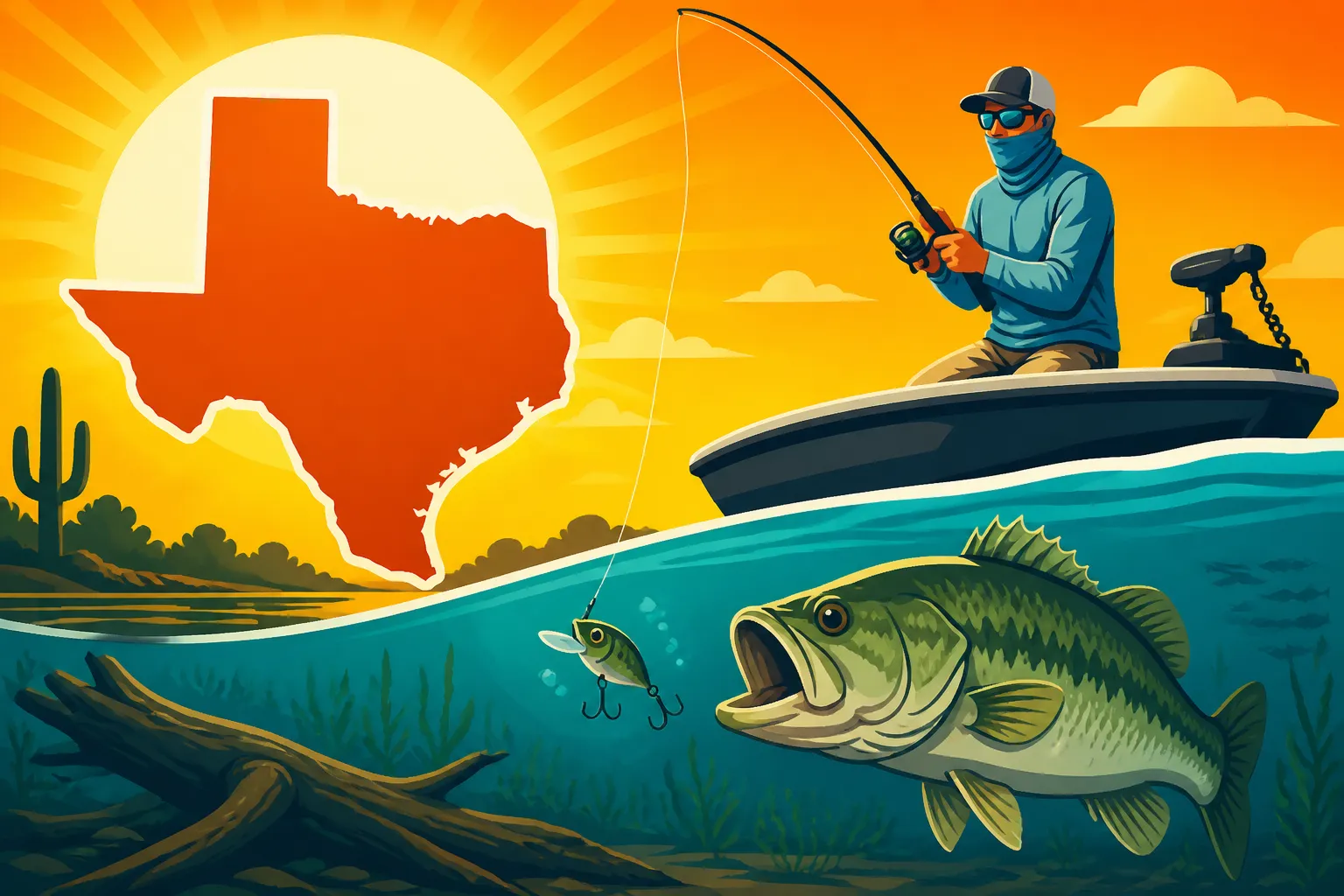
Largemouth Bass in Summer
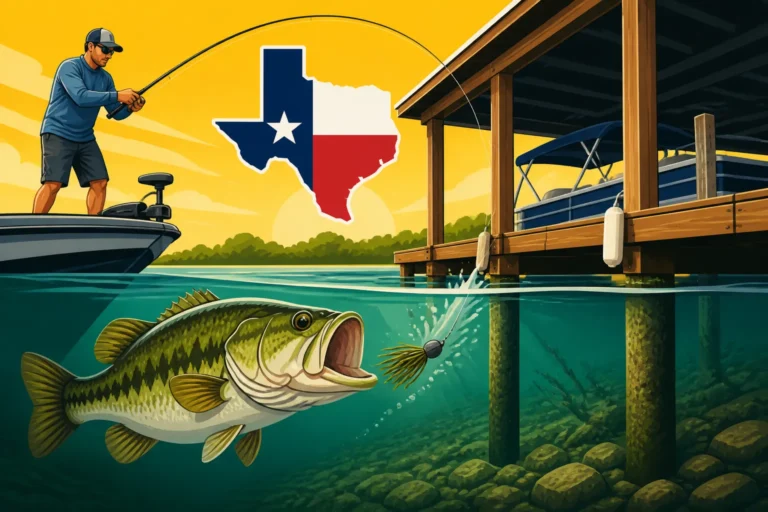
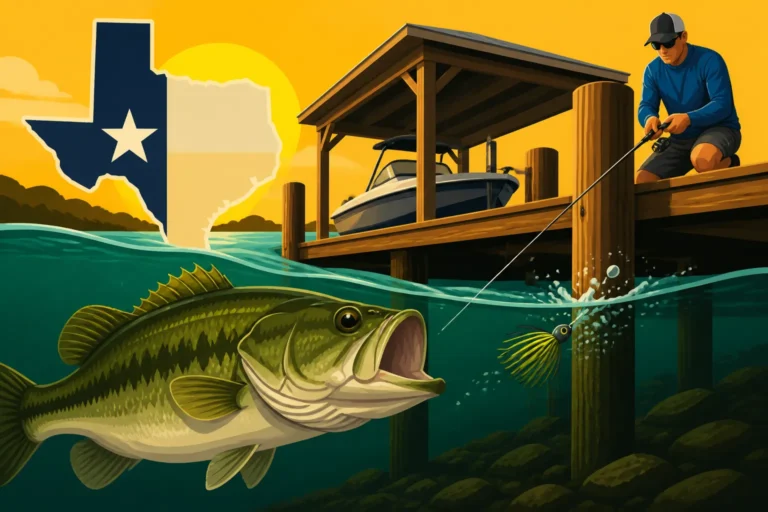
Ah, the mighty largemouth bass. While they can be found throughout Texas, their summer behavior is quite consistent. They'll often abandon shallow flats and move to deeper, cooler waters, especially after the spawn. Look for them around main lake points, ledges, humps, deep brush piles, and the shaded sides of bridge pilings. During the crucial "golden hours" of dawn and dusk, they might temporarily move to shallower, shadier cover like docks, overhanging trees, or the edges of deep grass beds to ambush prey.
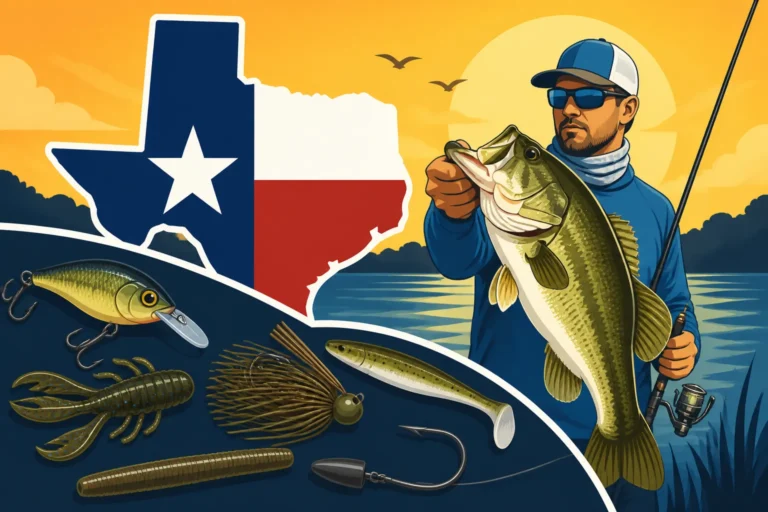
Techniques like deep cranking, Carolina rigging (using a substantial weight to get down), shaky heads, football jigs, and large Texas-rigged worms are excellent choices for targeting these deep-water bass. Don't forget that early morning topwater bite near any available cover; a frog fished over matted vegetation on a lake like Sam Rayburn Reservoir can produce explosive strikes even in July. For a complete guide, explore our Texas Largemouth Bass Fishing Guide.
Catfish: An All-Season Fighter
Catfish are arguably the most resilient species to warm water, making them an excellent target throughout the Texas summer. Blue catfish, channel catfish, and flathead catfish are abundant in nearly all Texas reservoirs and rivers, and they remain highly active even when the mercury climbs. You'll often find them on main lake flats, along river and creek channel edges, and anywhere there's a good concentration of baitfish.
The best techniques for summer catfish involve bottom fishing with natural baits. Stink bait, cut bait (shad, carp, or even hot dogs), or punch bait are highly effective for channel and blue catfish. For flatheads, a live sunfish or perch is usually the ticket. Night fishing is particularly productive for all three species, as they tend to cruise shallower and feed more aggressively under the cover of darkness. Many anglers also find success with juglines and trotlines, allowing them to cover more water and set baits for an extended period. To deepen your knowledge, read our Texas Catfish Species Guide.
White Bass and Stripers: Schooling Action
If you love fast-paced action, summer can be prime time for white bass and striped bass (including hybrid stripers) in Texas. These schooling fish are often found in open water, chasing baitfish. In the early morning or late evening, they might create "boiler" or "jump" schools, pushing shad to the surface, creating a visible feeding frenzy. This is when you quickly cast chrome or white slabs, spoons, or topwater lures into the melee.
During the heat of the day, these fish retreat to deeper water but will still school up, often suspending over main lake channels, humps, or deep points. Trolling deep-diving crankbaits is an effective way to cover water and locate these schools. Once found, vertical jigging with slabs or spoons can lead to rapid-fire catches. Live bait, especially shad, fished on downriggers or a three-way rig, is also incredibly productive for larger stripers on lakes like Texoma. Our Texas Striped Bass Fishing Guide and Texas White Bass Fishing Guide offer even more specialized tips for these fantastic fighters.
Essential Gear and Boat Setup for Summer Fishing
Surviving and thriving on the water during a Texas summer isn't just about fish behavior; it's also about angler comfort and safety. The right gear and a properly prepped boat can make all the difference between an enjoyable outing and a miserable one. Investing in key items will enhance your experience and protect you from the elements.
Sun Protection and Hydration Gear
This is non-negotiable for summer fishing in Texas. The sun's UV rays are intense, and prolonged exposure can lead to severe sunburn, heat exhaustion, and long-term health issues. Your first line of defense should include:
- Wide-brimmed hat: Something that shades your face, ears, and neck.
- UV-protective clothing: Long-sleeve shirts made from breathable, moisture-wicking fabric are essential. Many popular brands like Columbia PFG or Simms offer excellent options.
- Neck gaiter/buff: Provides additional protection for your neck and face.
- Polarized sunglasses: Crucial for reducing glare, seeing into the water, and protecting your eyes.
- Broad-spectrum sunscreen: Apply generously and reapply often, even on cloudy days.
Hydration is equally critical. You will sweat, and you will lose fluids and electrolytes rapidly. Carry plenty of water, and supplement it with electrolyte drinks like Gatorade or Powerade, or even electrolyte tablets. A high-quality cooler is not just a luxury; it's a necessity for keeping your drinks ice-cold all day. Many anglers find durable coolers from brands like Yeti or RTIC invaluable, though robust options from Igloo are also readily available on Amazon. I can't stress this enough: I've seen countless trips cut short because someone underestimated the Texas sun and didn't stay hydrated. Don't be that person!
Livewell Management in High Temperatures
If you're practicing catch-and-release, especially for tournament fishing, or if you plan to keep your catch for the dinner table, proper livewell management in summer is paramount. Warm water holds less dissolved oxygen, which means fish placed in a hot livewell will stress quickly and may not survive. This is particularly true for bass, which are sensitive to temperature shock and low oxygen.
Here are some strategies for maintaining a healthy livewell:
- Add ice slowly: Never dump a bucket of ice directly onto your fish. Instead, add ice to the livewell water gradually to cool it down by a few degrees at a time, avoiding sudden temperature changes. Block ice melts slower than cubed ice, helping to maintain stable temperatures.
- Use livewell additives: Products like G-Juice or Rejuvenade are designed to reduce fish stress, remove harmful chemicals, and add essential electrolytes to the water, boosting oxygen uptake.
- Constant aeration: Ensure your livewell pumps are running continuously or on a very frequent cycle. Oxygen is consumed rapidly in warm water.
- Avoid overcrowding: Don't keep more fish than your livewell can comfortably handle, especially when conditions are tough.
- Monitor water temperature: Keep an eye on the livewell's water temperature and adjust as needed. Aim to keep it a few degrees cooler than the lake's surface temperature, but not too cold to cause shock.
For a deeper dive into preserving your catch, refer to our guide on Best Coolers and Live Wells for Texas Fishing. Your efforts will ensure your fish stay healthy, whether they're going back into the lake or onto your plate.
Safety First: Staying Healthy on the Water
Fishing in hot Texas summers is rewarding, but it also carries significant risks if you're not prepared. Heat-related illnesses can strike quickly, and being isolated on a lake or river means you need to be extra vigilant. Prioritizing your health and safety is just as important as knowing where the fish are biting.
Recognizing Heat Exhaustion and Heatstroke
It's easy to get caught up in the thrill of fishing, but ignoring your body's signals in extreme heat can turn a fantastic day into a medical emergency. Be aware of the symptoms of heat exhaustion and the more severe heatstroke:
- Heat Exhaustion: Symptoms include heavy sweating, cold and clammy skin, weakness, nausea, muscle cramps, headache, and dizziness or faintness. If you experience these, get to a cooler place, loosen clothing, drink cool water or sports drinks, and apply cool, wet cloths.
- Heatstroke: This is a life-threatening condition requiring immediate medical attention. Symptoms include a body temperature of 103°F or higher, red/hot/dry skin (though sometimes sweating can still occur), confusion, dizziness, throbbing headache, rapid and strong pulse, and even unconsciousness. If you suspect heatstroke, call 911 immediately and try to cool the person down with cool water or ice packs while waiting for help.
Understanding How to stay safe fishing in Texas summer heat is paramount. Keep an eye on yourself and your fishing buddies. Taking regular breaks in the shade, even for a few minutes, can make a huge difference.
Hydration Strategies Beyond Water
While water is absolutely essential for staying hydrated, during prolonged exposure to extreme Texas heat and physical activity, plain water alone might not be enough. When you sweat, you lose crucial electrolytes like sodium, potassium, and magnesium. Depleting these can lead to muscle cramps, fatigue, and other heat-related issues.
That's where sports drinks or electrolyte supplements come in. Brands like Gatorade, Powerade, or even specialized electrolyte tablets (Nuun, Liquid IV) are excellent for replenishing these lost minerals. I always keep a variety in my cooler. The key is to drink regularly, even if you don't feel thirsty. A good rule of thumb is to take a few sips every 15-20 minutes. Don't wait until you're parched; by then, you're already dehydrated. Amazon offers bulk options for these essential items, making it easy to stock up before your summer trips.
Planning for the Unexpected
Beyond hydration and heat awareness, general preparedness is vital for any fishing trip, but especially in summer when conditions can be more challenging.
- Tell someone your plan: Always let a friend or family member know where you're going, your planned route, and when you expect to return.
- Communication: Carry a fully charged cell phone (in a waterproof case!) and consider a marine radio if you're venturing onto large reservoirs or coastal waters where cell service can be spotty.
- First-aid kit: A basic kit with bandages, antiseptic wipes, pain relievers, and any personal medications is a must.
- Essential boat safety gear: Ensure your boat is equipped with all required safety equipment, including life jackets for everyone on board, a whistle or horn, and a fire extinguisher. Check that all your navigation lights work, especially if you plan to be out after dark.
- Weather awareness: Always check the weather forecast before heading out. Summer storms, though often brief, can pop up quickly and bring dangerous lightning and high winds.
Being prepared isn't just about catching fish; it's about getting home safely, enjoying the outdoors responsibly, and ensuring that any unexpected situation is manageable.
Summary of Summer Fishing Strategies
| Time of Day | Water Temperature Trend | Fish Activity Level | Recommended Techniques | Species to Target |
|---|---|---|---|---|
| Pre-Dawn | Coolest | High | Topwater (noisy), Finesse (worms), Live Bait | Bass, Catfish, Crappie |
| Sunrise (Golden Hour) | Warming slightly | Moderate to High | Topwater, Shallow Cranks (reaction), Soft Plastics | Bass, Redfish, Speckled Trout |
| Mid-Morning | Warming significantly | Moderate (retreating deep) | Deep Cranking, Carolina Rigs, Jigging | Bass, Stripers, Catfish |
| Mid-Day (Hottest) | Warmest (seek deepest refuge) | Low (deepest/shadiest spots) | Finesse (Drop-Shot, Neko Rig), Live Bait (deep), Catfish | Bass (very deep), Catfish |
| Late Afternoon | Cooling slightly | Moderate (starting to move up) | Deep Cranking, Slower Presentations, Heavy Jigs | Bass, Stripers |
| Sunset (Magic Hour) | Cooling rapidly | Moderate to High | Topwater, Jerkbaits, Live Bait (moving shallow) | Bass, Redfish, Speckled Trout |
| Night | Coolest | High | Stink Bait, Cut Bait, Buzzbaits (Bass), Crappie Lights | Catfish, Crappie, Bass |
Disclaimer
The information provided in this guide is for general informational purposes only and does not constitute professional advice. Fishing regulations, conditions, and safety guidelines can change. Always consult the latest Texas Parks and Wildlife Department (TPWD) regulations, check local weather forecasts, and exercise caution when on the water. Fishing inherently involves risks, and adherence to safety protocols is the responsibility of each individual angler.