How to tie a Texas rig
There's nothing quite as frustrating as getting that perfect cast into a promising patch of hydrilla or submerged timber, feeling a subtle bite, setting the hook, and then… thunk. You're hung up. Or worse, you retrieve your bait only to find it's completely balled up, rendering it useless. Many Texas anglers face this, especially when trying to fish effectively in the state's famously snaggy waters. This guide is all about mastering the Texas rig, a technique that not only minimizes snags but also maximizes your chances of landing that elusive lunker.
Understanding the Texas Rig Basics
The Texas rig is a cornerstone technique for bass anglers, especially here in the Lone Star State, where we encounter a wild mix of fishing environments. From dense hydrilla beds to submerged timber and rocky creek channels, Texas waters demand a presentation that can navigate obstacles without getting hung up every other cast. That's precisely where the Texas rig shines.
Why the Texas Rig Reigns Supreme in Texas Waters
Imagine fishing a classic Texas lake like Lake Fork, known for its incredible bass but also notorious for its thick stands of timber and underwater brush piles. Throwing a traditional jig or crankbait into that kind of cover is often an exercise in frustration and lost tackle. This is where the Texas rig comes to the rescue. Its design inherently makes your soft plastic bait weedless and snag-resistant. The hook point is actually embedded within the bait itself, meaning it glides over branches, through grass, and across rocks with minimal chance of snagging.
This weedless design means you can confidently present your lure where the big bass live – deep within heavy cover that other lures simply can't reach. It minimizes the time you spend re-tying or trying to free a hung lure, allowing you more time with your line in the water, which, as we all know, is crucial for success. For those hot Texas summers, when bass often bury themselves deep in cooler, denser cover, the ability of a Texas rig to penetrate that sanctuary is an absolute game-changer. Learning How to Fish in Hot Texas Summers often involves this very technique.
Essential Components of a Texas Rig
To tie a successful Texas rig, you only need a few key components. The beauty of this rig is its simplicity and effectiveness, but choosing the right parts is crucial for optimal performance.
First, you'll need a worm weight. These are typically bullet-shaped and come in various materials and sizes. Historically, lead weights were the standard, but increasingly, anglers are turning to tungsten weights. Tungsten is much denser than lead, meaning a tungsten weight of the same ounce rating will be significantly smaller, offering a more compact presentation and better sensitivity. This increased sensitivity allows you to feel subtle bites and discern bottom composition more clearly. You can find a vast selection of both lead and tungsten weights on Amazon, often in bulk packs that save you money in the long run.
Next up is the hook. The most common choice for a Texas rig is an Extra Wide Gap (EWG) hook. The wide gap ensures that when a bass bites down, the hook has ample room to penetrate the plastic and find purchase in the fish's mouth. Straight shank hooks are also used, particularly with longer worms, offering a slightly different profile and hook-up angle. Hook size will depend heavily on the size of your soft plastic bait, generally ranging from 3/0 to 5/0 for standard bass worms.
Finally, and perhaps most importantly, you need your soft plastic bait. This is where the variety truly explodes! The Texas rig is incredibly versatile, working with everything from classic straight-tail worms (like a Zoom Trick Worm or a Berkley PowerBait worm) to creature baits, crawfish imitations, and even some swimbaits. The key is to choose a plastic that matches the forage in your fishing spot and the conditions you're facing. For a deeper dive into lure selection, check out our guide on Best Bait and Lures for Texas Fishing.
Step-by-Step Guide How to Tie a Texas Rig
Tying a Texas rig might seem a little intimidating if you're new to it, but I promise, it's one of the simplest and most effective knots and rigging methods you'll master. Once you've got it down, you'll be rigging up in no time, ready to tackle any cover Texas lakes throw your way.
Gathering Your Materials
Before you even think about tying, lay out all your components. It makes the process smoother and ensures you don't realize you're missing something halfway through. Here's your checklist:
- Fishing Line: Whether you prefer fluorocarbon, monofilament, or braided line, have it spooled on your reel and ready. The type of line can impact sensitivity and action, so choose wisely based on your preferences and the cover you're fishing. For instance, fluorocarbon offers excellent sensitivity and low visibility, which can be critical in clear water situations you might find in parts of Canyon Lake.
- Worm Weight: As discussed, a bullet-shaped weight. Make sure it's the right size for your desired presentation and the cover. A 1/4 oz to 3/8 oz is a great starting point for many scenarios, but sometimes a 1/2 oz or heavier is needed for punching through thick mats of vegetation.
- EWG Hook: Match the size to your soft plastic. A good rule of thumb is that the hook bend should extend roughly halfway down the body of your chosen bait.
- Soft Plastic Bait: Have your favorite worm, creature bait, or craw imitation ready. The length and bulk of the plastic will influence your hook size and even weight choice.
- Pliers/Line Clippers: Essential for cleanly cutting line and sometimes for crimping a weight if you're using a pegged setup.
The Knotting Process: Securing Your Weight and Hook
This is where the magic happens, connecting your weight and hook to your line.
- Thread the Weight: Take your main fishing line and thread the bullet weight onto it. The tapered, pointed end of the weight should face towards your rod tip, and the wider, blunt end should face towards where your hook will be. This orientation allows the weight to slide smoothly over cover without snagging.
- Tie Your Hook: Now, take the tag end of your line (the end coming out of the blunt side of the weight) and tie it directly to the eye of your EWG hook. There are several reliable knots you can use.
- Palomar Knot: This is a favorite among many bass anglers for its strength and reliability, especially with braided and fluorocarbon lines. It’s relatively easy to tie, even in low light, and holds up well against aggressive strikes.
- Improved Clinch Knot: Another tried-and-true option that's strong and widely used. Ensure you make enough wraps (at least 5-7 for mono/fluoro, fewer for braid) and lubricate the knot before tightening it down completely to prevent line damage.
- Uni Knot: A versatile knot that's also very strong. Whichever knot you choose, practice it a few times at home until you can tie it quickly and confidently on the water.
- Test Your Knot: After tying, always give your knot a good, firm tug to ensure it's secure. You don't want to lose a trophy bass due to a faulty knot!
You now have your weight free-sliding on your line, directly above your securely tied hook. Some anglers prefer to "peg" the weight by inserting a small toothpick or rubber bobber stopper into the weight to keep it from sliding up the line. This is particularly useful when flipping or pitching into very dense cover, as it keeps the weight and bait together as a compact unit. However, for general Texas rigging, letting the weight slide freely allows for a more natural fall of the bait.
Rigging Your Soft Plastic Weedless
This is the critical step that makes the Texas rig so effective at being snag-resistant.
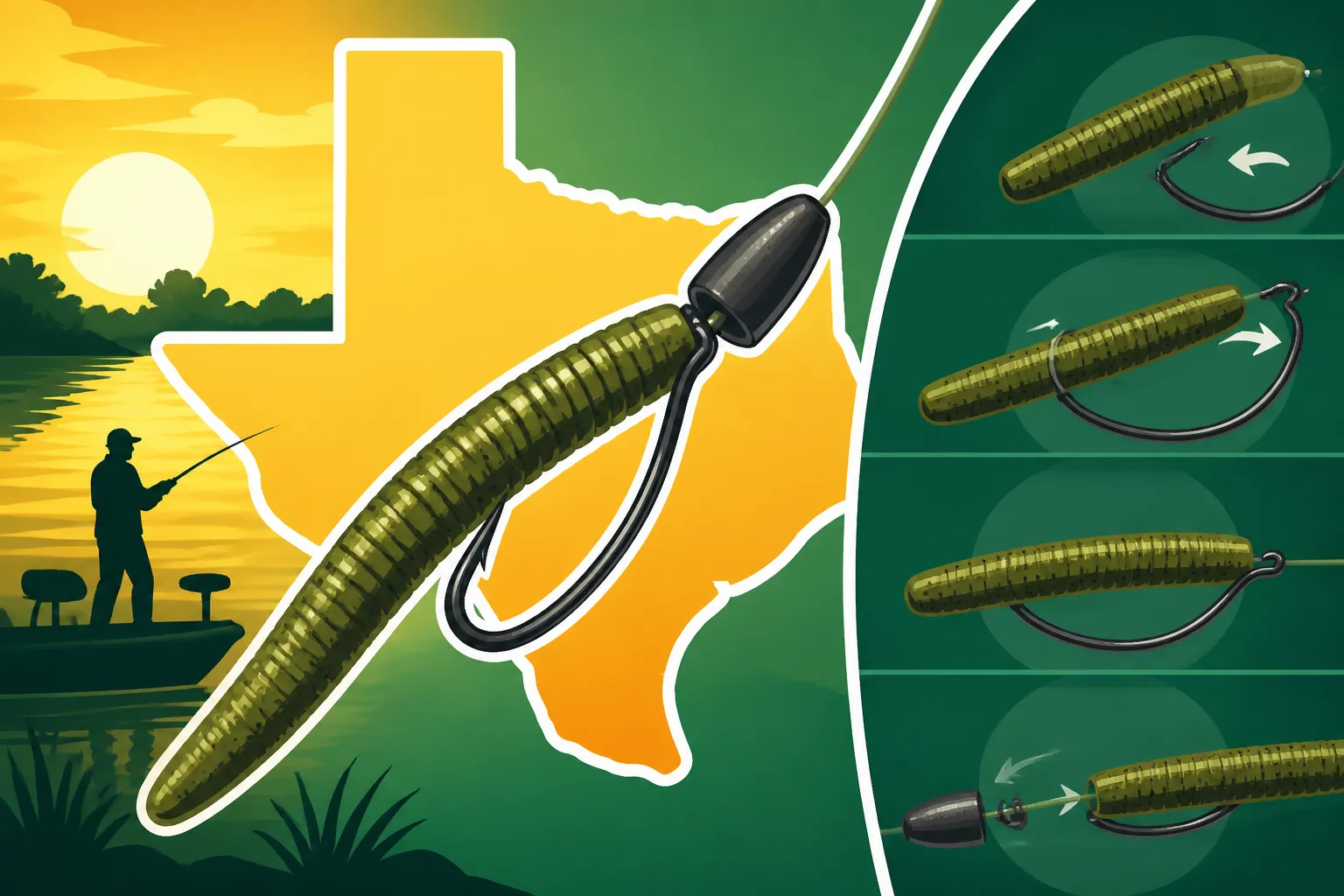
- Initial Hook Penetration: Take your soft plastic bait. Insert the hook point directly into the very tip (head) of the bait. Push the hook straight in for about a quarter to half an inch, depending on the size of your bait.
- Exiting the Plastic: Now, gently push the hook point out of the side of the bait. The goal here is to ensure the hook goes in straight and comes out relatively straight along the midline of the bait.
- Threading the Bait: Slide the plastic up the shank of the hook, over the eye of the hook, until the head of the plastic is snug against the knot you tied. The plastic should sit straight on the hook.
- Measuring for Weedlessness: Lay the hook along the belly of the plastic to see where the hook bend naturally falls. This will tell you where you need to re-insert the hook point.
- Re-inserting for Weedlessness: Carefully fold the plastic slightly. Insert the hook point back into the belly of the plastic. The crucial part here is to embed the hook point just under the surface of the plastic, so it's hidden but can easily pop out when a fish bites. The hook should lay perfectly flush and straight with the body of the plastic, creating a streamlined, weedless profile.
If rigged correctly, your hook point should be completely concealed within the plastic. This allows the bait to glide through thick vegetation or timber without snagging. When a fish bites and compresses the plastic, the hook point is exposed, allowing for a solid hook-set. This method is fundamental to How to Fish for Bass in Texas, especially when targeting those trophy largemouth.
Tips for Optimizing Your Texas Rig Performance
Mastering the basic tie is just the beginning. To truly excel with a Texas rig, you need to understand how to adapt it to different conditions and optimize its performance. It's not a one-size-fits-all approach; the nuances can make all the difference.
Matching Your Rig to Conditions and Lure
The beauty of the Texas rig lies in its adaptability. However, simply tying it on isn't enough; you need to tailor the components to the specific situation you're fishing.
- Weight Selection for Cover and Depth: This is perhaps the most critical adjustment.
- Heavy Weights (e.g., 1/2 oz to 1 oz+): These are your go-to when fishing extremely dense cover, such as punching through thick mats of hydrilla or cattails (think some areas of Sam Rayburn Reservoir), or when fishing very deep structure. The heavier weight helps the bait quickly penetrate the cover and get down to the fish. They also excel in windy conditions where you need to maintain bottom contact and feel.
- Medium Weights (e.g., 1/4 oz to 3/8 oz): These are incredibly versatile for general fishing. They work well in moderately thick cover, along ledges, or when pitching to submerged brush piles. They offer a good balance of penetration and a slightly slower, more natural fall that can entice finicky bass.
- Light Weights (e.g., 1/16 oz to 1/8 oz): Ideal for sparse cover, shallower water, or when bass are pressured and require a more subtle, slower fall. This lighter presentation mimics a wounded baitfish or crawfish gently fluttering to the bottom, often irresistible to cautious bass.
- Hook Size and Type for Lure and Bite: The size of your hook should always match the size and bulk of your soft plastic.
- For slender worms (e.g., 6-inch finesse worms), a 3/0 EWG might be perfect.
- For thicker worms (e.g., 10-inch ribbon tails) or bulky creature baits, you might need a 4/0 or even 5/0 EWG to ensure good hook exposure and a solid hook-set.
- Consider straight shank hooks for extremely long worms, as they can sometimes offer better penetration through the bait.
- Line Choice: While not part of the "tie," your line choice plays a huge role.
- Braided Line: Excellent for heavy cover due to its strength, abrasion resistance, and zero stretch, which aids in feeling bites and getting a powerful hook-set through thick plastic.
- Fluorocarbon Line: A great all-around choice offering good abrasion resistance, low stretch, and near invisibility underwater, making it ideal for clear waters or pressured fish.
- Remember that for heavy cover, you might be looking at 17-25 lb fluorocarbon or 30-65 lb braid. This consideration is vital when looking at Best Tackle for Texas Bass Fishing.
Common Mistakes and How to Avoid Them
Even seasoned anglers can make mistakes with the Texas rig. Being aware of these common pitfalls can significantly improve your success rate.
- Improper Hook Placement: This is probably the number one mistake. If the hook point isn't perfectly buried or if the plastic is bunched up around it, your "weedless" rig quickly becomes a "snag-magnet." Ensure the hook lies perfectly straight and flush with the bait, and the point is just barely tucked under the skin. Practice this until it feels natural.
- Wrong Hook Size: Using a hook that's too small for your plastic means poor hook-sets. A hook that's too large can hinder the bait's action and make it more prone to snagging or tearing. Always match the hook size to the bait.
- Dull Hooks: After hitting rocks or repeated hook-sets, hooks can become dull. A dull hook simply won't penetrate a bass's jaw effectively. Carry a small hook sharpener (you can grab a decent one on Amazon) and give your hooks a quick touch-up periodically throughout the day.
- Ignoring Line Damage: Braided and fluorocarbon lines, while strong, can get frayed or nicked when fishing around abrasive cover. Periodically check the first few feet of your line for damage. If you find any, cut it off and re-tie. This simple check can prevent losing that monster fish.
- Not Setting the Hook Hard Enough: When fishing a Texas rig, especially with soft plastics, you need to deliver a solid, sweeping hook-set to drive the hook through the plastic and into the fish. Don't be shy!
By paying attention to these details, you'll not only fish more efficiently but also increase your confidence, which is half the battle when targeting bass.
Advanced Applications and Variations
While the basic Texas rig is incredibly effective, its versatility allows for numerous advanced applications and variations that can further tailor your presentation to specific fishing scenarios and species. It's not just for classic worms anymore!
Texas Rig for Different Soft Plastics
One of the greatest strengths of the Texas rig is its ability to be paired with almost any soft plastic bait imaginable. This opens up a world of possibilities beyond the traditional worm, letting you mimic various forage and adapt to different fish moods.
- Creature Baits: Baits like the Strike King Rage Craw or Zoom Speed Craw rigged Texas style are absolute killers around any kind of cover. The appendages on these baits create a lot of subtle action on the fall and retrieve, mimicking a crawfish fleeing or foraging. When bass are keyed in on crawfish, especially during certain times of the year, this can be your most effective presentation. Try fishing these around rocky banks or brush piles, letting them sink and then slowly dragging them.
- Swim Baits: Yes, you can Texas rig a soft plastic swimbait! This is particularly effective for fishing in grassy areas or around submerged timber where a jig head swimbait might snag. Rigging a paddle-tail swimbait (like a Keitech Swing Impact or a Gambler EZ Swimmer) Texas style with a weighted EWG hook allows it to swim freely and realistically, yet remain weedless. This setup is fantastic for covering water and targeting active fish that might be ambushing baitfish.
- Flukes and Jerkbaits: Soft plastic flukes (like the Zoom Super Fluke) or soft jerkbaits can also be Texas rigged, often weightless or with a very light bullet weight. This creates a highly erratic, darting action that perfectly imitates a dying or wounded baitfish. It's especially deadly when bass are chasing shad in open water or around sparse cover. For more on matching your lure to species, consider exploring our Texas Largemouth Bass Fishing Guide.
The key is to experiment. Don't limit yourself to just worms. Think about what the fish are eating, where they are hiding, and how you can present a weedless imitation using the Texas rig.
Weight Selection and Presentation
The weight you choose and how you work the bait are arguably more important than the specific soft plastic itself. These elements dictate the rate of fall, the feel of the bottom, and ultimately, how enticing your bait appears to a hungry bass.
- Punching Heavy Cover: For those super thick mats of vegetation or dense canopy cover that bass seek refuge in, especially in summer, a heavy tungsten weight (3/4 oz to 1.5 oz or more) is essential. The dense nature of tungsten allows the weight to slice through the mat, pulling your compact, Texas-rigged bait with it. When punching, you'll want to peg your weight to the hook eye with a bobber stopper or toothpick to create a single, compact unit that penetrates cleanly. Once through, let it sink to the bottom, give it a few gentle shakes, and then retrieve or hop it a couple of times. This technique is often critical for success when fishing Best Bass Lakes in Texas known for dense vegetation, such as Lake Sam Rayburn.
- Dragging and Hopping on Open Bottom: When fishing ledges, humps, or open points, a lighter to medium weight (1/4 oz to 1/2 oz) unpegged Texas rig is often best. The unpegged weight allows the weight to fall first, then the plastic drifts down slowly behind it, creating a natural, enticing action. Drag your rig slowly along the bottom, feeling for subtle changes in depth or composition. Every now and then, give your rod tip a short hop to lift the bait and let it fall again. Most bites often occur on the fall, so pay close attention.
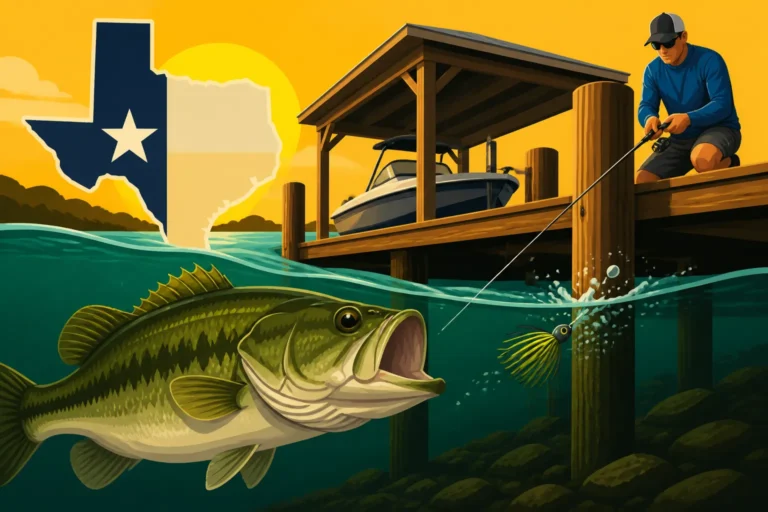
- Flipping and Pitching: This is a classic Texas rig presentation. Using a medium-heavy to heavy weight (3/8 oz to 3/4 oz), accurately flip or pitch your rig into specific targets like submerged brush, docks, or cypress trees. Let it sink, feel for the bite, and gently shake it to make the plastic quiver. For precision casting around targets like boat docks, mastering techniques like skipping a Texas rig can be incredibly effective. Consider using a quality baitcasting reel and a stout rod, often discussed in our Best Fishing Rods for Texas Anglers guide.
- Slow Fall vs. Fast Fall: Consider the mood of the fish. If they're aggressive, a faster fall with a heavier weight can trigger a reaction strike. If they're sluggish or pressured, a slower, more deliberate fall with a lighter weight might be necessary to coax a bite. This is especially important during the Texas Bass Spawning Season Guide when bass might be more focused on protecting beds than actively feeding.
Remember, the Texas rig is incredibly effective because it allows you to put your bait where the fish are hiding, regardless of how challenging the cover might be. With practice and attention to these details, you'll be consistently catching fish that other anglers miss.
Texas Rig Weight Application Table
| Weight Size | Typical Material | Primary Application | Key Advantage | Texas Lake Examples |
|---|---|---|---|---|
| 1/16 oz – 1/8 oz | Lead, Tungsten | Finesse, shallow water, sparse cover, clear water | Subtle presentation, slow natural fall | Lady Bird Lake (Austin), smaller city ponds, clear creeks |
| 3/16 oz – 1/4 oz | Lead, Tungsten | Versatile, general purpose, medium cover, moderate depth | Good balance of feel and fall rate | Lake Travis, Canyon Lake, parts of Lake Palestine |
| 3/8 oz – 1/2 oz | Lead, Tungsten | Heavy cover pitching/flipping, deeper water, windy | Faster fall, better penetration into moderate cover | Lake Conroe, Lake Livingston, Richland Chambers Reservoir |
| 3/4 oz – 1 oz+ | Tungsten (recommended) | Punching through thick mats, extremely deep water | Maximum penetration, rapid descent | Lake Fork, Sam Rayburn Reservoir, Toledo Bend Reservoir |
Disclaimer
Fishing conditions and regulations in Texas can change. Always consult the latest Texas Parks and Wildlife Department (TPWD) regulations before heading out. This guide is for informational purposes only and does not supersede official regulations.