Best conditions for topwater fishing
There's nothing quite like the heart-stopping explosion of a fish blowing up on a topwater lure. It's the kind of strike that makes your knees weak and gets your adrenaline pumping, whether you're chasing largemouth in a freshwater lake or redfish in a coastal marsh. But if you've ever spent hours casting a perfectly good popper or walking bait only to see it ignored, you know the frustration. It's not always about the lure itself; often, it's about the conditions. This guide is all about helping you understand the absolute best conditions for topwater fishing across Texas, so you can increase those explosive, unforgettable strikes.
The Golden Hour and Beyond: Best Times of Day for Topwater
Many anglers treat topwater fishing like a secret handshake, only pulling out those surface-splashing lures during specific, almost mythical times. While there’s some truth to that, it’s more about understanding why certain times are better and how you can sometimes bend those rules.
Dawn and Dusk: The Low Light Advantage
Hands down, the "golden hours" — that period just after sunrise and just before sunset — are often heralded as the absolute prime time for topwater action. But why? It's simple, really. Fish, especially predatory ones, use low light to their advantage. They have better vision in dim conditions than their prey, giving them an edge.
Think about it from the fish's perspective. In the harsh midday sun, they often retreat to deeper, cooler water or seek shade under docks, submerged timber, or thick vegetation. Their eyes are built for detecting movement and silhouettes, and in bright light, surface disturbance can make them wary. But as the sun dips low or just starts to peek over the horizon, that glaring overhead light softens. The surface becomes a less intimidating ceiling and more of a hunting ground. Baitfish might be more active and vulnerable near the surface during these times, too. This is when a largemouth bass might move out from under its cover to patrol the shallow edges, or a redfish might be cruising the flats with its back out of the water, looking for an easy meal. This is also when you'll find it more comfortable to be out yourself, especially during the warmer months, making it easier to focus on your presentation without squinting into the sun.
Overcast Days: Extending the Topwater Window
Don't pack away your topwater box just because the golden hours have passed. Overcast conditions can be your best friend, extending that prime topwater bite well into the day. A blanket of clouds acts like a giant diffuser, softening the harsh overhead light that often sends fish scurrying for cover.
When the sky is gray and featureless, the fish feel more secure in shallower water, and they don't have to deal with the glare from the sun. This means they're more likely to be active and willing to look up for a meal. You might find bass aggressively chasing a popper in midday on a cloudy day that they'd completely ignore if the sun were beating down. The same goes for coastal species like speckled trout. A light drizzle on an overcast day can be even better, as the water's surface is already broken, making your lure's disturbance seem even more natural. Just be mindful of approaching storms and lightning – safety first, always! Many anglers, myself included, will often choose to hit the water on these kinds of days, specifically targeting them for topwater action, knowing that the extended window gives us more opportunities.
Reading the Water and Weather: Environmental Factors for Topwater Success
Beyond the time on the clock, the environment itself plays a massive role in whether topwater fishing will be successful. Understanding these factors can help you decide if it's a topwater day or if you should reach for something deeper in your tackle box.
Water Clarity and Temperature Sweet Spots
Water conditions are paramount for topwater success. Generally, clearer to lightly stained water is ideal. In crystal clear conditions, fish can get a good look at your lure and might be more hesitant if it doesn't look just right. However, in overly muddy or turbid water, your topwater lure's visual appeal is lost, and the fish might struggle to locate it by sound or vibration alone. Lightly stained water, where visibility is a few feet, often creates that perfect balance: enough clarity for the fish to see the silhouette and disturbance, but enough tint to obscure minor imperfections in your presentation or line.
Water temperature is another critical factor. Topwater bites typically shine when the water temperatures are warm, usually above 60-65 degrees Fahrenheit. This is when fish are most active, their metabolism is high, and they're willing to expend energy chasing down a meal on the surface. During the brutal Texas summers, early mornings and late evenings are key when surface temperatures might be slightly cooler. Conversely, when the water gets too cold, fish become lethargic and prefer to stay deep, conserving energy, making topwater strikes far less likely. You won't find many anglers throwing topwater for bass in the dead of winter, for instance, unless there's an unusually warm spell that coaxes them up. Remember, you can often find a good thermometer on Amazon to help you gauge these conditions.
Wind, Waves, and Barometric Pressure
The wind can be a double-edged sword for topwater enthusiasts. A light chop on the water's surface can actually be beneficial. It breaks up the surface tension, makes your lure's disturbance appear more natural, and helps mask your presence and fishing line. A gentle ripple can make a popper sound more like a struggling baitfish and a walking bait shimmer enticingly.
However, too much wind can quickly turn a good topwater day into a struggle. Heavy winds create whitecaps and strong currents, making it nearly impossible to work your lure effectively. The fish will also have a harder time locating your bait amid all the natural surface disturbance. When the wind really picks up, you might find yourself switching to a subsurface lure that can cut through the water more efficiently.
Barometric pressure is another subtle yet significant factor. Many anglers swear by the idea that a stable or slowly falling barometric pressure is best for active fish, while rapidly rising pressure after a front can shut them down. A stable, high-pressure system might indicate clear skies, which, as we discussed, isn't always ideal for topwater. However, a falling pressure often precedes a storm or overcast conditions, which are prime for surface strikes. This is something worth considering, especially if you're planning a full day out on one of Texas's many great lakes, like Lake Fork Fishing Guide, which is renowned for its big bass.
Tides and Currents: The Saltwater Equation
For our saltwater anglers hitting the Texas coast, understanding tides and currents is just as important as reading the weather. While freshwater fishing largely depends on stable weather and light, saltwater topwater action is heavily influenced by the ebb and flow of the ocean.
Moving water is almost always better for fishing, and this holds especially true for topwater. A gentle incoming or outgoing tide creates current, which pushes baitfish and other forage, making them easier targets for predators like redfish and speckled trout. These currents also position predatory fish in ambush points, such as around oyster reefs, grass lines, and channel edges, where they can wait for bait to be swept past.
On the other hand, slack tide, where the water is not moving significantly, often sees a lull in activity. The bait isn't moving, and neither are the predators. While you might still get a strike during slack tide, your chances significantly increase when the water is pushing or pulling. Learning to read the tide charts for your specific fishing spots, like Galveston Bay Fishing Spots, can be a game-changer for your topwater success. Knowing when the tide will be moving and where the currents will be strongest allows you to plan your day to coincide with the most productive windows.
| Condition Type | Ideal State | Why It's Good for Topwater |
|---|---|---|
| Light Conditions | Low light (dawn, dusk, overcast, cloudy) | Predators use low light to ambush prey; less glare for fish. |
| Water Clarity | Lightly stained to clear | Fish can see silhouette/disturbance; not too clear to spook. |
| Water Temperature | Warm (above 60-65°F) | Fish are active, high metabolism, willing to chase. |
| Wind/Surface | Light chop/ripple | Breaks surface tension, masks presence, natural lure movement. |
| Barometric Pressure | Stable or slowly falling (pre-front) | Often correlates with active feeding; fish feel more secure. |
| Tides (Saltwater) | Moving (incoming or outgoing) | Concentrates bait, positions predators in ambush points. |
Species-Specific Topwater Considerations in Texas
While the general principles of topwater fishing apply broadly, specific conditions and approaches work best for different species. Let's dive into some of the favorites here in Texas.
Largemouth Bass: Ambush Predators of the Surface
Texas is legendary for its largemouth bass fishing, and a topwater blow-up from a big bucketmouth is pure exhilaration. For largemouth, the ideal topwater conditions often involve warm water temperatures, usually from late spring through early fall. During the spawn, they might be less interested, but immediately post-spawn, they become incredibly aggressive, eager to replenish energy, making it a prime time for topwater. For more details on this, check out our guide on Texas Largemouth Bass Spawning Months.
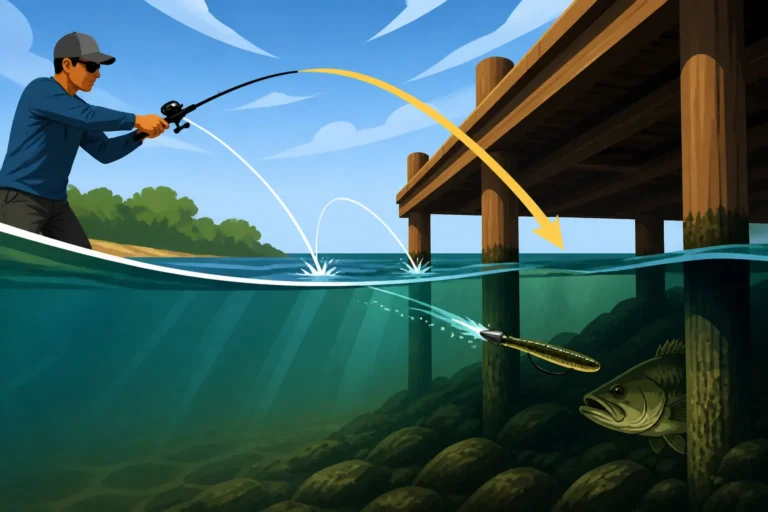
When fishing for bass, focus on areas where they can ambush prey. This means targeting cover: weed lines, lily pads, submerged timber, boat docks, and brush piles. Bass love to hide just beneath the surface, waiting for an unsuspecting frog, baitfish, or even a small bird to make a mistake. Your topwater lure, whether it's a frog bait skipped over pads or a popper worked along a dock, needs to mimic that vulnerable prey. Early mornings and late evenings are especially productive in shallow coves and along shady banks. Many anglers find great success using specific lures mentioned in Best Topwater Lures for Texas Bass. If you're looking to stock up on these, remember to check Amazon for a wide selection.
Redfish and Speckled Trout: Coastal Topwater Thrills
The Texas Gulf Coast offers incredible opportunities for topwater fishing, particularly for redfish and speckled trout. These powerful saltwater species provide an equally exciting, if not more aggressive, surface strike.
For redfish, the magic often happens on shallow grass flats and around oyster reefs during moving tides. Redfish are often "tailing" in super shallow water, indicating they're actively feeding. A topwater plug worked near these tailing fish or along a grass line can elicit a violent strike. They're particularly aggressive in warmer months, but can still be caught on topwater during mild winter days, especially if there's a good solar warm-up. Check out our Texas Redfish Fishing Guide for more insights.
Speckled trout also absolutely hammer topwater lures. They tend to prefer a bit deeper water than redfish, often found near potholes on the flats, along drop-offs, or under working birds. When you see birds diving, that's a tell-tale sign of baitfish being pushed to the surface, and trout are usually right underneath. Target these feeding frenzies with a fast-walking bait for explosive strikes. Overcast days are fantastic for trout topwater, as they don't spook as easily from the boat or kayak. A good pair of polarized sunglasses, easily found on Amazon, can be a game-changer for spotting these fish in the often-turbid bay waters. For more on saltwater tactics, our Texas Saltwater Fishing Techniques article offers excellent advice.
Gear and Approach: Maximizing Your Topwater Opportunities
Even with perfect conditions, the wrong gear or poor presentation can lead to a frustrating day. Dialing in your setup and technique is crucial for consistent topwater success.
The Right Tackle for the Surface Game
Choosing the right rod, reel, and line is fundamental. For most topwater applications, whether freshwater or saltwater, a medium-heavy to heavy action rod with a fast tip is ideal. This combination gives you the backbone to cast larger lures and set hooks effectively, while the fast tip allows for precise lure manipulation. Rod length typically ranges from 6'6" to 7'6", depending on the casting distance needed and the cover you're fishing.
Baitcasting reels are often preferred for larger topwater lures, offering better casting control and power. A moderate gear ratio (around 6.x:1 or 7.x:1) provides a good balance for working various topwater baits, allowing you to slow down or speed up your retrieve as needed. For line, many anglers opt for braided line, especially for bass. Its no-stretch properties provide excellent sensitivity and direct hook sets, which are critical when a fish blows up on your lure from a distance. A 30-50lb braid for bass and 20-40lb for trout/redfish is common. If you're concerned about fish seeing the bright braid, a short monofilament or fluorocarbon leader can be added. You can find a vast array of quality fishing gear on Amazon, from rods and reels to specialty lines and leaders.
Presentation Matters: Making Your Lure Dance
Having the right gear is only half the battle; knowing how to work your topwater lure is just as important, if not more so. Different lures require different retrieves, and even subtle changes in cadence can make a huge difference.
- Poppers: These lures are designed to "pop" and splash water, mimicking a struggling baitfish or frog. Cast them near cover and let them sit for a few seconds. Then, give a sharp twitch or two of your rod tip to create a pop, followed by another pause. Experiment with the length of your pauses and the aggressiveness of your pops. Sometimes a subtle "bloop" is all it takes, while other times a loud splash is necessary to draw a strike.
- Walking Baits (e.g., Zara Spooks): These are designed to "walk the dog," creating a side-to-side gliding motion. This requires a rhythmic twitching of the rod tip while reeling in the slack. It takes practice, but once you get it down, the erratic, sashaying motion is incredibly effective. This retrieve is often best for covering water and calling fish from a distance. You can learn more about this in our How to Fish Topwater Lures Early in the Morning guide.
- Prop Baits: These lures have small propellers that churn the water, creating a buzzing sound and splash. They can be retrieved steadily, with pauses, or with short twitches, depending on how much commotion you want to create.
- Frog Lures: Designed for heavy cover like lily pads and thick grass, these weedless lures are meant to be retrieved slowly, with pauses and short hops, mimicking a frog swimming across the surface. Let them sit in open pockets of water for an extended period, as bass often watch them before striking.
The key is to experiment. Pay attention to how the fish are reacting (or not reacting) and adjust your retrieve accordingly. Sometimes a faster, more erratic retrieve triggers a chase, while other times a slow, deliberate approach with long pauses is what ultimately coaxes a strike. Don't be afraid to try different lures and retrieve styles until you find what the fish want on that particular day. Consistency and confidence in your presentation are vital, especially when you're looking for that explosive topwater strike!
Disclaimer
This article is for general informational purposes only and does not constitute professional advice. Laws, prices and regulations vary by location and change over time. Consult a qualified professional for guidance on your specific situation.