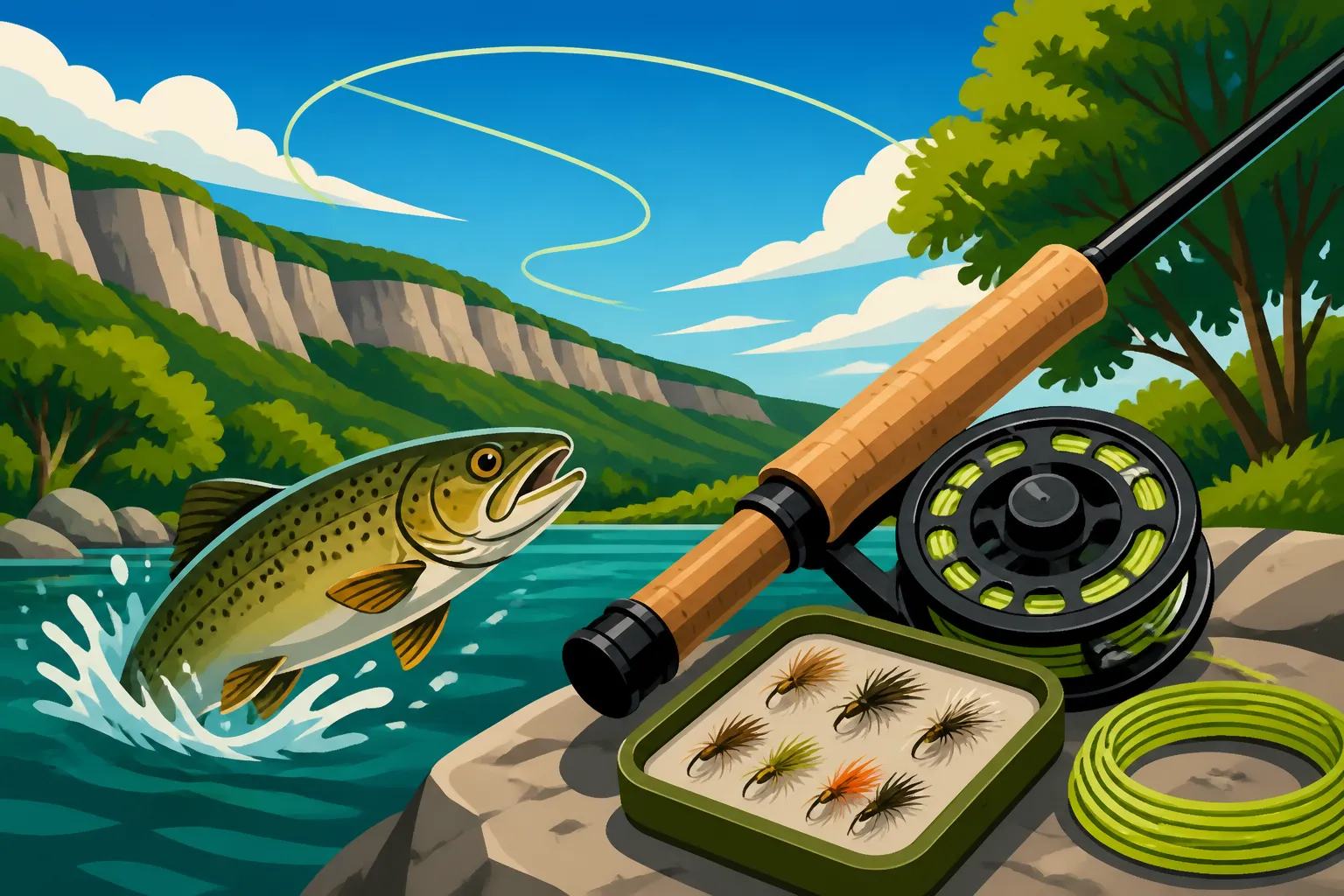
Fly fishing gear for the Guadalupe River
Alright, let's talk about fly fishing on the Guadalupe River. If you've ever stood on its banks, fly rod in hand, feeling a mix of excitement and maybe a little intimidation, you're not alone. It's easy to get overwhelmed trying to figure out exactly what gear you need for this unique Texas fishery, especially when you're used to traditional bass setups or just starting out in fly fishing. This guide is here to cut through the confusion and walk you through the essential fly fishing gear that will set you up for success on the Guadalupe.
Understanding the Unique Challenges of Guadalupe River Fly Fishing
The Guadalupe River isn't your typical Texas fishing spot, and that's precisely why it's so beloved by fly anglers. While most of our rivers and lakes are teeming with warm-water species like bass and catfish, the stretch of the Guadalupe below Canyon Lake Dam offers something truly special: a vibrant, year-round cold-water fishery for trout. This unique environment presents its own set of challenges and, consequently, demands a specific approach to gear.
Cold-Water Species in a Warm-Water State
Imagine this: you're in the heart of Texas, where summer temperatures regularly soar past 100 degrees Fahrenheit, yet you're casting flies for rainbow and brown trout. This is the magic of the Guadalupe. The deep, cold waters released from the bottom of Canyon Lake create a tailwater fishery that supports trout, a rarity in a state primarily known for its warm-water fishing. Texas Parks and Wildlife Department (TPWD) regularly stocks these waters, typically from late fall through early spring, to maintain the population. This means that unlike a wild trout stream in Montana, you're often targeting newly stocked fish or those that have managed to hold over through the warmer months, adapting their feeding habits to the available forage.
The presence of these cold-water species dictates much of your gear selection. You're not just throwing big bass flies; you're often trying to "match the hatch" (even if it's mostly subsurface nymphs) or imitate small baitfish that trout prefer. This shift means lighter rods, more delicate presentations, and a focus on subtle takes, which can be a significant departure for anglers accustomed to aggressive strikes from largemouth bass. Getting your setup right is crucial, as an overpowered rod or too heavy a leader will spook these wary fish in the clear tailwater.
Varying Water Conditions and Access Points
The Guadalupe River, particularly the prime trout section, isn't a monolithic stretch of water. It flows from the base of Canyon Lake Dam, meandering through private lands, public access points, and eventually broadening and warming further downstream. This means you can encounter everything from fast, deep runs immediately below the dam to slower, wider pools, and even some wadeable riffles, depending on the current generation schedule and where you choose to fish.
Water levels and clarity can fluctuate dramatically. Heavy rains upstream can cause murky conditions and higher flows, making nymphing more effective. Conversely, long dry spells with low generation mean clearer, shallower water, demanding even more stealth and longer casts. Access points vary too; some areas are easily accessed from public parks or river crossings, while others require navigating private properties or utilizing guide services. Each of these variations impacts your gear choices. Are you planning to wade extensively, or will you be fishing primarily from the bank or a kayak? Will you be battling strong currents or making delicate casts in still pools? Understanding these dynamics before you go will prevent you from showing up with a heavy bass rod when you really need something more refined. Plus, knowing the conditions helps you decide whether you'll be primarily focusing on trout or if the warmer sections might offer a chance at Texas Largemouth Bass Fishing Guide or smallmouth.
Essential Fly Rod, Reel, and Line Combinations for the Guadalupe
When you're gearing up for the Guadalupe, think balance and versatility. You need a setup that can handle delicate presentations but also has enough backbone to fight a strong trout in current. Getting this foundational combination right makes all the difference.
Choosing the Right Rod Weight and Action
For the Guadalupe River, a fly rod in the 4-weight to 6-weight range is generally considered ideal. This covers most situations you'll encounter when targeting trout.
- 4-weight rods are fantastic for delicate presentations, especially when the water is clear and the fish are spooky. They're perfect for throwing small nymphs, dry flies, or tiny emergers. If you primarily plan to fish for stocked trout and focus on finesse, a 4-weight offers a thrilling fight, even with smaller fish. It's often favored during lighter flows or in calmer sections. However, they can struggle in strong winds or when trying to cast heavier nymph rigs with multiple split shot.
- 5-weight rods are the workhorse for many fly anglers, and they shine on the Guadalupe. A 5-weight provides an excellent balance of finesse and power. It's light enough to make delicate casts with smaller flies but has enough backbone to handle larger trout, deal with moderate winds, and cast slightly heavier nymph or streamer patterns. If you're looking for one rod to do it all on the Guadalupe, a 5-weight is your best bet, especially if you're a beginner or just want a versatile setup. You can find a good selection of quality 5-weight rods on Amazon, often in combo packages that include a reel and line, which can be a great starting point for new anglers.
- 6-weight rods offer a bit more power. They're great if you anticipate stronger winds, heavier currents, or if you plan to throw larger streamer patterns to target bigger holdover trout or even bass that might be lurking in warmer sections. While a 6-weight can feel a bit overkill for smaller stockers, it provides excellent control and power for fighting fish in swift water. It's also a good choice if you're interested in fly fishing for other species like white bass or panfish in different Texas waters. The added power can be a comfort when casting heavier indicator rigs.
Regarding rod action, you'll typically find rods described as fast, medium (or moderate), or slow.
- Fast-action rods are stiffer and bend mostly in the tip. They're great for powerful casting, punching through wind, and making long casts, but they can be less forgiving for beginners.
- Medium-action rods bend more in the middle of the blank and offer a good balance of casting power and feel. They're often recommended for general-purpose trout fishing and are excellent for the varied conditions of the Guadalupe.
- Slow-action rods bend deep into the blank, providing a very delicate presentation, but they require a different casting rhythm and are generally less common for the Guadalupe's primary trout fishery.
For most Guadalupe fishing, a medium-fast to fast-action rod will serve you well, offering the versatility needed for different fly types and conditions.
Matching Reels and Lines for Performance
The reel on a fly rod, unlike a spinning or baitcasting reel, isn't primarily for fighting the fish (unless it's a very large one!). Its main job is to store your line and backing and provide a smooth drag system.
- Reel Choice: For a 4- to 6-weight rod, you'll want a reel that matches the rod's weight. Look for a large arbor design, which helps retrieve line quickly and reduces line memory (those annoying coils in your line). A smooth, adjustable drag system is important, as it protects lighter tippets from breaking when a feisty trout makes a run. You don't need to break the bank on a reel; many mid-range options provide excellent performance. A reputable brand like Orvis or Redington offers reliable reels that will stand up to years of use.
- Backing: Before your fly line goes on, you'll spool backing onto the reel. This is usually braided Dacron line, typically 20-pound test for trout reels. It's there to give the fish something to run against if it pulls all your fly line off the reel, and it also helps fill the arbor so your fly line doesn't coil as tightly. For a 5-weight reel, 50-75 yards of backing is usually sufficient.
- Fly Line: This is where things get a bit more specific. For general trout fishing on the Guadalupe, a weight-forward (WF) floating line is the most versatile choice. The weight-forward taper helps you cast further and turn over heavier fly rigs (like nymphing setups).
- Floating lines are great for presenting dry flies, nymphing with indicators, and even some lighter streamer presentations in shallower water.
- However, if you plan to target deeper pools with streamers or during times of high flow, you might consider an intermediate or sinking tip line. These lines help get your flies down to where the fish are holding in stronger currents or deeper holes. You could have a separate spool with a sinking line, or simply use sink tips or weighted flies with your floating line. When looking for fly line, match the line weight to your rod weight (e.g., a 5-weight line for a 5-weight rod).
Choosing the right fly line for your rod and target species is paramount. A good quality fly line will dramatically improve your casting and presentation. Remember to maintain your fly line by cleaning it periodically to ensure it floats high and casts smoothly.
Must-Have Terminal Tackle and Accessories
Beyond the main rod and reel setup, the smaller details, often referred to as terminal tackle and accessories, are absolutely critical for success on the Guadalupe River. These are the items that make your fishing effective, comfortable, and safe.
Flies, Leaders, and Tippets for Guadalupe Trout
This is where the real nuance of fly fishing comes in. What you tie onto the end of your line directly interacts with the fish.
- Leaders: A tapered leader connects your fly line to your tippet. Its purpose is to gradually transfer the energy of your cast from the thick fly line to a nearly invisible presentation near the fly. For trout on the Guadalupe, a 9-foot, 4X to 6X monofilament or fluorocarbon tapered leader is a good starting point. Fluorocarbon leaders are less visible underwater and sink faster, which can be an advantage when nymphing. However, they are less supple and can be harder to knot.
- Tippets: Tippet is the final, thinnest section of line tied to your leader, and then your fly is tied to the tippet. It's designed to be easily replaced, saving your more expensive tapered leader, and to provide the least visible connection to your fly. Matching your tippet to your leader and the size of your fly is important. For small nymphs and dry flies, 5X or 6X tippet is common. For larger nymphs or streamers, 3X or 4X might be more appropriate. Always carry a spool of 3X, 4X, 5X, and 6X tippet material with you. How to fish a Texas Carolina rig is a very different setup, often using much heavier line than you'd ever consider for Guadalupe trout!
- Flies: Ah, the flies! The Guadalupe's trout are opportunistic feeders, so you need a variety.
- Nymphs: These are the bread and butter for Guadalupe trout. You'll want to carry an assortment of patterns that imitate aquatic insects like midges, caddis, and mayflies. Popular choices include:
- Pat's Rubber Legs: A versatile stonefly imitation, great for a lead fly.
- Squirmy Wormy: Imitates various worms and can be incredibly effective.
- Prince Nymph: A classic attractor pattern.
- Hare's Ear Nymph: Mimics a wide range of aquatic insects.
- Pheasant Tail Nymph: Another staple, especially in smaller sizes.
- Egg Patterns: Trout love eggs, especially during and after spawning activity.
- Midge Larvae/Pupae: Zebra Midges are a must-have in various colors and tiny sizes (18-22).
- Streamers: For more aggressive fish or when targeting larger holdovers, streamers imitating baitfish can be very productive. Woolly Buggers (black, olive, brown) are a universal favorite. Clouser Minnows or Sex Dungeons can also be effective.
- Dry Flies: While less common than nymphing, dry fly opportunities arise, especially during specific hatches or when terrestrials are abundant. Elk Hair Caddis, Adams, and Parachute Adams are good general patterns.
- Terrestrials: Grasshoppers, ants, and beetles can be effective, particularly in late summer and fall.
Many local fly shops around the Guadalupe River, like Gruene Outfitters or Action Angler, are fantastic resources for current hatch information and recommended patterns. They're often better than just guessing online, though Amazon can be a good place to stock up on common patterns once you know what you need. For specific patterns, you might want to read our guide on the Best flies for Guadalupe River trout.
- Nymphs: These are the bread and butter for Guadalupe trout. You'll want to carry an assortment of patterns that imitate aquatic insects like midges, caddis, and mayflies. Popular choices include:
Waders, Boots, and Essential Bankside Gear
Staying comfortable and having the right tools makes a huge difference in your enjoyment and effectiveness on the water.
- Waders: Unless you only plan to fish from the bank, waders are an absolute necessity for the Guadalupe. The water is cold year-round, even in summer, due to the dam releases. Neoprene waders offer excellent insulation for winter fishing, while breathable waders are more versatile for warmer months, allowing you to layer underneath as needed. Ensure they fit well; ill-fitting waders are uncomfortable and can be a safety hazard. Our guide on the Best waders for the Guadalupe River in winter offers more specific advice.
- Wading Boots: Pair your waders with comfortable, supportive wading boots. Felt soles offer excellent grip on slippery rocks but are banned in some states due to invasive species concerns (check current Texas regulations). Rubber soles with good traction, sometimes augmented with studs, are a safer, more environmentally friendly option.
- Wading Staff: A wading staff is highly recommended, especially if you're navigating unfamiliar or swift sections of the river. It provides an extra point of contact, enhancing stability and preventing falls on slick, rocky bottoms.
- Fishing Vest or Pack: You need a way to carry all your flies, tippets, tools, and other essentials. A traditional fishing vest offers plenty of pockets, while a chest pack or sling pack keeps items easily accessible without impeding casting. Choose what feels most comfortable and organized for you.
- Net: A landing net with a rubberized, knotless mesh is crucial for safely landing trout, especially if you plan to practice catch and release. The rubber mesh protects the fish's slime coat and fins.
- Tools: Don't forget the small but mighty tools:
- Nippers: For cleanly cutting tippet and leader.
- Forceps/Hemostats: Essential for safely removing flies from a fish's mouth, minimizing harm.
- Strike Indicators: Often called "bobbers" by conventional anglers, these help detect subtle takes when nymphing. Yarn, foam, or New Zealand-style indicators are all popular.
- Split Shot: Small lead-free weights to help get your nymphs down to the strike zone.
- Floatant: For keeping your dry flies riding high on the water.
- Desiccant: A powder that dries out waterlogged dry flies.
- Sunscreen and Hat: Even on cloudy days, UV rays are strong.
- Polarized Sunglasses: These are non-negotiable! They drastically reduce glare, allowing you to see deeper into the water, spot fish, and detect subtle strikes. They also protect your eyes from errant hooks.
This comprehensive array of items, from the smallest fly to the largest waders, ensures you're prepared for whatever the Guadalupe throws your way. You can often find great deals on these accessories, especially multi-packs of tippet or fly assortments, when browsing sites like Amazon, but don't hesitate to support your local fly shop for expert advice and specific local patterns.
Seasonal Considerations for Your Guadalupe Fly Fishing Kit
While the Guadalupe River offers year-round trout fishing, thanks to the cold water releases, the specific conditions and recommended gear can definitely shift with the seasons. Thinking about the time of year you plan to visit will help you fine-tune your fly fishing kit. Our general guide on Texas Fishing Seasons Month by Month gives a broader overview, but let's dive into the specifics for the Guadalupe.
Winter Trout Fishing Gear Adjustments
Winter is prime trout season on the Guadalupe. From late fall through early spring, TPWD actively stocks rainbow trout, making this the most popular time for fly anglers targeting these cold-water beauties. The water is consistently cold, usually in the 50s Fahrenheit, creating ideal conditions for trout but demanding careful gear choices for the angler.
- Heavier Layers and Insulation: This is probably the most significant adjustment. Your breathable waders will need serious insulation underneath. Think fleece pants, thermal base layers, and warm wool socks. A good waterproof and windproof jacket is essential, as is a warm hat and gloves. You’ll be standing in cold water for hours, and staying warm is key to comfort and enjoyment.
- Nymphing Domination: In winter, most of the trout's feeding activity happens below the surface. This means nymphing setups will be your primary technique. You'll want to carry a wide array of nymphs in various sizes and weights. Focus on smaller patterns (sizes 16-22) like Zebra Midges, Pheasant Tails, and Hare's Ears. Heavier patterns like Pat's Rubber Legs or larger Prince Nymphs can serve as lead flies to get your rig down quickly.
- Strike Indicators and Weight: You'll be relying heavily on strike indicators to detect the subtle takes of cold-water trout. Carrying a variety of sizes and styles (yarn, foam, New Zealand wool) allows you to adapt to different depths and currents. Likewise, a good selection of lead-free split shot in various weights is crucial for fine-tuning your drift and getting your flies to the correct depth. Sometimes, even a slight adjustment in weight can make all the difference. Our guide on How to fish for stocked trout in winter has more insights on this.
- Leader and Tippet: While still aiming for delicate presentations, you might find yourself using slightly heavier tippets (4X-5X) if the water is a bit off-color or flows are stronger. However, always be prepared to drop down to 6X if the fish are leader-shy in clear, low-flow conditions.
- Wading Traction: With potentially slicker, colder rocks, ensure your wading boots have excellent traction, possibly with studs, to prevent slips.
Winter fishing on the Guadalupe can be incredibly rewarding, offering consistent action, but being prepared for the cold is paramount.
Warmer Month Strategies for Bass and Other Species
As spring transitions into summer, the upper reaches of the Guadalupe below Canyon Lake Dam still maintain their cold-water trout fishery due to the consistent dam releases. However, further downstream, where the water warms up, and in other sections of the river, your target species and therefore your gear will start to shift.
- Continuing Trout Opportunities: Even in the peak of summer, the specific tailwater section directly below the dam can hold trout, though they might be less active during the hottest parts of the day. Early mornings and late evenings become prime times. Your nymphing techniques will still be effective, but you might also see more dry fly action if aquatic insect hatches occur. Using lighter tippets (5X-6X) for more delicate presentations will be key when fish are more selective.
- Shifting to Warm-Water Species: As you move downstream or fish other parts of the Guadalupe (or other Texas rivers), the focus will often pivot to warm-water species.
- Bass: The Guadalupe is home to Guadalupe bass (the state fish!), largemouth bass, and smallmouth bass. For these species, you'll want to adjust your fly selection significantly. Topwater poppers and divers can be incredibly exciting during low-light conditions. Streamers in baitfish patterns (like Clouser Minnows or Deceivers) are effective for subsurface action. Larger nymphs and crawfish patterns also work well. You might consider a slightly heavier rod, like a 6-weight or even a 7-weight, especially if you're targeting bigger bass or fishing in heavier cover. Read our How to Fish for Bass in Texas guide for more techniques.
- Sunfish and Panfish: Don't overlook the joy of catching sunfish (bluegill, green sunfish) and other panfish on a fly rod. A light 3-weight or 4-weight rod is perfect for these feisty fighters. Small poppers, foam spiders, and tiny nymphs are irresistible to them.
- Lighter Clothing and Hydration: In warmer months, breathable waders are still recommended for the cold tailwater, but your layering will be minimal. Outside the cold sections, quick-drying shorts or pants are more appropriate if you're wet wading. Sun protection becomes even more critical: wide-brimmed hats, sun-protective clothing, and plenty of water are non-negotiable.
- Water Levels and Clarity: During summer, flows can be lower and water clearer (unless there's significant rain). This means longer leaders, lighter tippets, and more stealthy approaches. In some areas, low water can make wading easier but also concentrates fish, making them more wary.
Regardless of the season, checking the generation schedule for Canyon Lake Dam is always a smart move before heading out, as it directly impacts water levels and currents in the trout section.
Here's a quick summary table of recommended gear considerations for the Guadalupe River:
| Gear Category | Winter (Trout Focus) | Warmer Months (Trout & Bass/Panfish) | Key Considerations |
|---|---|---|---|
| Rod Weight | 4-6 weight (5-weight most versatile) | 4-6 weight for trout; 6-7 weight for bass | Balance finesse for trout with power for current/bass; action preference. |
| Reel | Matching weight with smooth drag | Matching weight with smooth drag | Large arbor for quick retrieve, reliable drag. |
| Fly Line | WF Floating (with sink tips or weighted flies for depth) | WF Floating (potentially intermediate/sinking for streamers/deeper bass) | Floating for surface/nymphs; sinking for depth. |
| Leaders/Tippets | 9ft, 4X-6X tapered leader; 3X-6X tippet spools | 9ft, 4X-6X tapered leader; 3X-6X tippet spools (lighter for panfish) | Stealth and strength; fluorocarbon for nymphing; carry various sizes. |
| Flies | Nymphs (Zebra Midge, PT, Hare's Ear, Squirmy, Eggs); small streamers | Nymphs (same as winter); small dry flies; Poppers, Streamers for bass | Match local hatches; have varied patterns/sizes for different species. |
| Waders/Boots | Neoprene or breathable waders with heavy insulation; studded wading boots | Breathable waders (light layers); quick-drying pants for wet wading; wading boots | Cold water dictates waders; comfort and safety on slick terrain. |
| Accessories | Strike indicators, split shot, forceps, net, staff, warm hat, gloves | Sunglasses, hat, sunscreen, hydration, net, forceps, nippers, pack | Stay warm/cool, safe, and organized; sight fishing benefits from polarized lenses. |
| Other Considerations | River flows, stocking reports, local fly shop advice. | River flows, water temperatures (esp. downstream), insect activity. | Always check conditions before you go! |
Being well-prepared with the right fly fishing gear for the Guadalupe River means you can truly enjoy this gem of a fishery. Whether you're chasing winter trout or casting for bass in warmer months, the right tools will make your experience much more successful and enjoyable.
Disclaimer
This article is for general informational purposes only and does not constitute professional advice. Laws, prices and regulations vary by location and change over time. Consult a qualified professional for guidance on your specific situation.