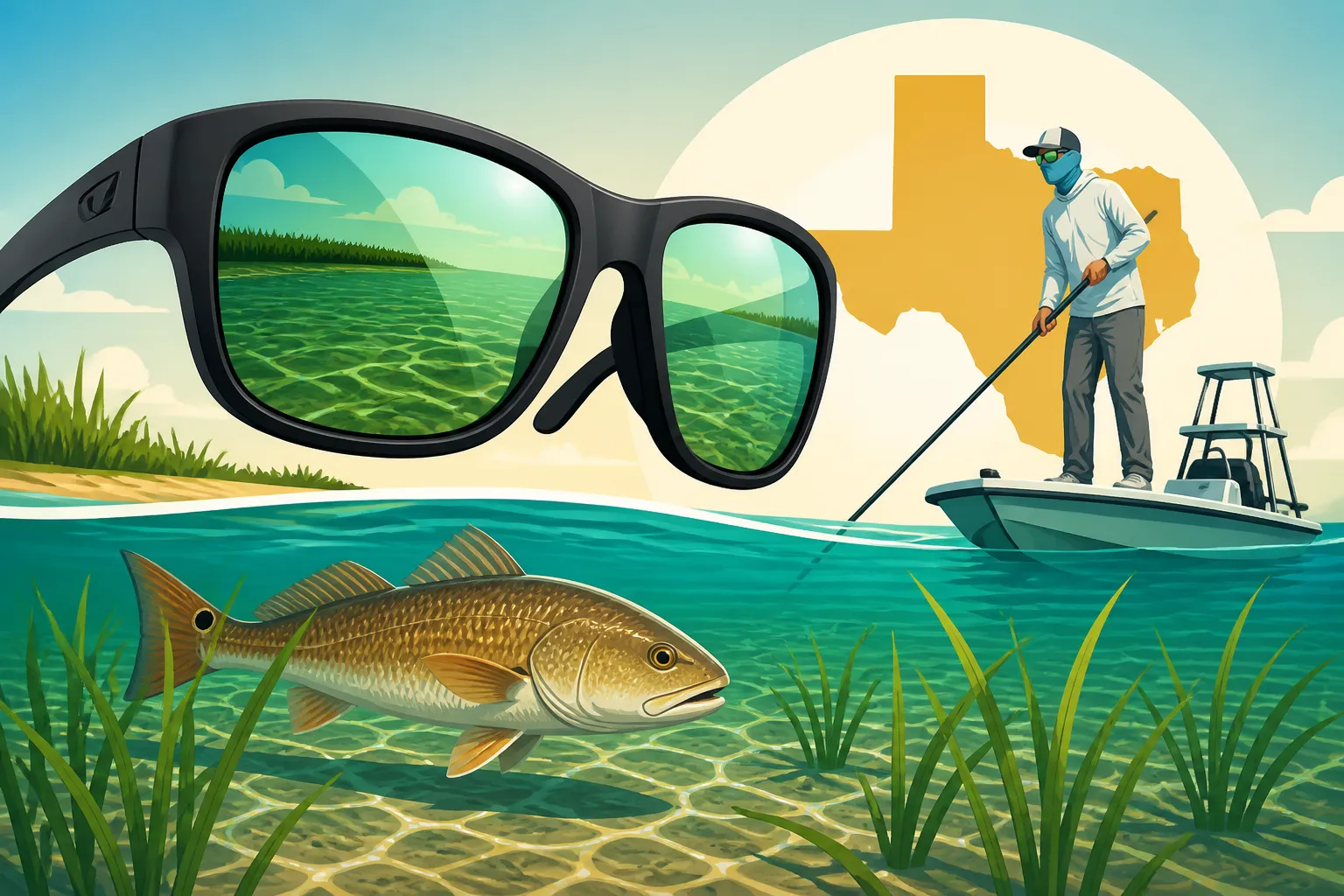
Best sunglasses for spotting redfish in shallow water
There’s nothing quite like the rush of spotting a redfish tailing in inches of water, its golden-bronze flank flashing in the sun, knowing it's just waiting for your perfectly placed lure or fly. But let's be honest, how many times have you been out on the Texas flats, squinting into the glare, convinced there must be fish there, only to come up empty-handed because you simply couldn’t see them? It’s incredibly frustrating when you know the fish are around but the water acts like a blinding mirror. This guide is all about cutting through that frustrating glare and giving you the visual edge you need to spot those elusive redfish in shallow water, making every trip more successful and enjoyable.
Why Regular Sunglasses Just Don't Cut It for Redfish
You might think any pair of sunglasses will do, but when it comes to sight fishing for redfish in the shallow Texas bays, "any old pair" just isn't enough. The unique challenges of shallow water environments demand specialized optics that can truly transform your vision. Without them, you're essentially fishing blind in a highly visual game.
The Frustration of Glare and Water Reflection
Imagine standing on a poling platform in the Laguna Madre or wading through the grass flats of Galveston Bay, the sun high overhead or at a low angle, reflecting off the water's surface. What you often see is a shimmering, bright sheet—a wall of glare that obscures everything beneath. This isn't just uncomfortable; it actively prevents you from seeing crucial details.
This glare is caused by sunlight hitting the water and scattering in all directions. When you're trying to spot a redfish, you're looking for subtle movements: a tail fanning, a slight disturbance in the water, or the distinct shape of a fish against the bottom. Glare masks these critical visual cues, turning clear water into an opaque barrier. It’s like trying to watch a movie through a window that’s constantly reflecting the bright sky. You know the action is there, but you can’t quite make it out. This is a common pain point for anglers, especially those targeting redfish, which often hold in incredibly clear, shallow water where their camouflage is already top-notch.
The Science Behind Seeing Through Water
To understand why specialized sunglasses are so effective, it helps to grasp a little bit about how light behaves. When light waves hit a flat surface like water, some of them become polarized. This means their vibrations align horizontally. It's this horizontally polarized light that creates the blinding glare you see.
Regular sunglasses might reduce the overall brightness, but they don't specifically target this horizontally polarized light. Think of it like trying to filter out noise from a conversation. Regular sunglasses turn down the volume of everything, making it a bit quieter but not necessarily clearer. Polarized sunglasses, on the other hand, are designed with a special filter that blocks these horizontal light waves, much like a venetian blind only allows vertical light through. By selectively filtering out the glare, they allow the light waves that have penetrated the water and bounced off objects beneath the surface (like a redfish or a patch of grass) to reach your eyes. This dramatically improves clarity and contrast, letting you peer into the aquatic world rather than just reflecting off its surface.
Key Features to Look for in Redfish Spotting Sunglasses
Choosing the right pair of sunglasses for redfish is about more than just picking a cool-looking frame. It’s about understanding the specific optical technologies that will give you the unfair advantage you need on the water. Every feature, from lens type to frame design, plays a crucial role in enhancing your vision and making those redfish pop into view.
The Non-Negotiable: Polarized Lenses
Let's be absolutely clear: if you're serious about spotting redfish in shallow water, polarized lenses are not an option, they are a necessity. Without them, you're missing the single most important tool in your sight-fishing arsenal. As we discussed, polarization is the magic that cuts through surface glare. It eliminates the blinding reflections that make the water opaque, allowing you to see into the water instead of just at it.
When you put on a good pair of polarized sunglasses, the immediate difference is often astounding. That shimmering veil over the water disappears, revealing the subtle contours of the bottom, the movement of baitfish, and most importantly, the dark shapes or subtle movements of redfish. You'll suddenly be able to distinguish a redfish's tail from a clump of grass, or spot the slight ripple it makes as it slowly cruises along a flat. This is particularly vital in environments like the clear, shallow areas of the Lower Laguna Madre or the grassy flats of Port Aransas, where redfish are masters of camouflage. The ability to see deeper into the water column and identify structure or fish movement can turn a frustrating day of casting at ghosts into a productive day of landing fish. It’s the difference between guessing where the fish are and knowing exactly where to cast.
Lens Color: The Secret Weapon for Shallow Water
While polarization is paramount, the color of your lenses is the next critical factor for maximizing your ability to spot redfish, especially in varying light conditions and water clarity typical of Texas coastal waters. Different lens tints enhance contrast and transmit light differently, making certain colors better suited for specific scenarios.
- Amber, Copper, or Brown Lenses: These are often considered the go-to colors for shallow water sight fishing. They excel at enhancing contrast, which is crucial for distinguishing fish from the bottom, especially when the water is clear or slightly stained. These tints filter out blue light, which can scatter and cause haze, making everything look sharper. In the golden light of a Texas sunrise or sunset, or on bright, sunny days over clear sand and grass flats, these lenses make redfish, trout, and flounder practically jump out at you. Many anglers swear by copper or brown for their ability to bring out the subtle reds and oranges of a redfish’s back.
- Rose or Vermilion Lenses: These tints offer excellent contrast enhancement, often even more so than amber or copper, particularly in lower light conditions or when there's an overcast sky. They can be fantastic for cutting through haze and bringing out details, making them a strong choice for those days when the sun isn't blazing but you still need maximum clarity.
- Gray or Green Lenses: While popular for offshore fishing or general use in extremely bright, open conditions because they maintain true color perception, they generally don't offer the same level of contrast enhancement needed for picking out camouflaged fish against a complex shallow bottom. They're great for reducing overall brightness without color distortion, but for the specific task of spotting redfish, you'll often find amber, copper, or rose more effective.
The best lens color often comes down to personal preference and the specific conditions you fish most often. If you frequently fish clear, sun-drenched flats, a strong copper or amber will be a game-changer. For variable conditions or slightly darker, more stained water, a rose tint might give you the edge.
Frame Fit and Coverage: Keeping the Light Out
Even the best polarized lenses can be compromised if your frames aren't doing their job. A proper frame fit and ample coverage are essential for maximizing the effectiveness of your sunglasses and ensuring comfort during long hours on the water.
- Wrap-Around Styles: Sunglasses that feature a wrap-around design are incredibly effective because they block peripheral light. Glare doesn't just come from directly in front of you; it can sneak in from the sides, top, and bottom of your lenses, undermining the polarization. A frame that snugly wraps around your face minimizes these gaps, preventing stray light from entering and reducing eye strain. This also provides better physical protection for your eyes from errant hooks, lures, or even debris kicked up by the wind.
- Close Fit without Pressure Points: While a close fit is important, it shouldn't be uncomfortable. Look for frames that sit securely on your nose and ears without causing painful pressure points. Adjustable nose pads can be a huge bonus, allowing you to customize the fit for maximum comfort and to prevent slipping, especially when you're sweating under the Texas sun. Many quality brands offer different frame sizes, so make sure to try them on to find what feels right for your face.
- Lightweight Materials: Fishing often involves long days, and heavy sunglasses can quickly become a nuisance. Lightweight frame materials like TR90 nylon or specialized alloys contribute significantly to overall comfort, allowing you to wear them for hours without even noticing them.
Good frame design means your eyes stay shielded, focused, and free from external light interference, letting the polarized lenses do their work unhindered. This becomes especially important when you’re leaning over the bow of a boat, trying to peer into the water, or when you’re wade fishing and need your glasses to stay put.
Top Lens Technologies and Materials
Beyond color and polarization, the actual construction and materials of the lenses themselves play a monumental role in their performance, durability, and how clearly you'll be able to spot those redfish. Investing in quality here pays dividends in the long run.
Lens Materials: Glass vs. Polycarbonate
When it comes to the material your lenses are made from, you'll typically encounter two main options: glass and polycarbonate (or a similar high-grade plastic like Trivex). Each has its distinct advantages and disadvantages.
- Glass Lenses:
- Pros: Generally offer superior optical clarity. Many anglers swear by glass for its distortion-free vision and incredible scratch resistance. If you prioritize seeing every minute detail without any optical imperfection, glass is often the choice. It's like looking through a perfectly clean, high-quality window.
- Cons: They are heavier than polycarbonate lenses, which can lead to fatigue over long fishing days. More importantly for active anglers, they are more susceptible to shattering or cracking if dropped or impacted. While a crack in an expensive lens is frustrating, shattered glass near your eyes on a rocking boat is a genuine safety concern.
- Polycarbonate Lenses (including Trivex):
- Pros: Incredibly lightweight, making them very comfortable for extended wear. They are also highly impact-resistant, making them a much safer option should you take a fall, drop them, or have a lure fly back at your face. While traditionally thought to be less optically clear than glass, modern polycarbonate lenses, especially higher-end versions from reputable brands, offer excellent clarity that is more than sufficient for most anglers.
- Cons: While much more scratch-resistant than they used to be, they are still generally less scratch-resistant than glass. They might also exhibit a very slight amount of distortion compared to the purest optical glass, though for most people, this difference is imperceptible.
For active Texas anglers who are constantly moving, wading, or on a boat, the impact resistance and lighter weight of polycarbonate lenses often make them the more practical and safer choice. However, if you are extremely careful with your gear and demand the absolute highest optical clarity, glass still holds a slight edge in that department. Brands like Costa Del Mar (with their 580G glass and 580P polycarbonate) or Maui Jim (known for their proprietary lens materials) offer excellent options in both categories.
Coatings and Enhancements
Beyond the core material and polarization, modern fishing sunglasses come with a host of coatings and enhancements that further improve performance, durability, and comfort. These aren't just marketing gimmicks; they genuinely make a difference.
- Anti-Reflective (AR) Coatings: These are applied to the inside surface of the lens (the side facing your eye). Their purpose is to eliminate reflections that bounce off the back of the lens into your eye. Without an AR coating, sunlight coming from behind you can reflect off the inner surface of your sunglasses, causing distracting glare and ghosting. This might seem minor, but when you're trying to spot a nervous redfish, any distraction can be costly.
- Oleophobic (Oil/Smudge Resistant) Coatings: These coatings repel oils, fingerprints, and other smudges, making the lenses much easier to clean. When you're constantly handling bait, sunscreen, or fish, your lenses are bound to get dirty. An oleophobic coating ensures that a quick wipe with a microfiber cloth is usually enough to restore crystal-clear vision, rather than wrestling with stubborn streaks.
- Hydrophobic (Water Repellent) Coatings: Similar to oleophobic, hydrophobic coatings repel water. Raindrops or saltwater spray will bead up and roll right off the lens instead of clinging and distorting your vision. This is particularly valuable when fishing in choppy conditions, during light rain, or when wading through splashy water. You don't want to miss a tailing redfish because a water droplet is obscuring your view.
- Scratch-Resistant Coatings: While glass is inherently more scratch-resistant, quality polycarbonate lenses almost always include a hard-coat to improve their durability against abrasions. Even with these, it's always wise to store your sunglasses in a hard case when not in use.
These coatings work together to ensure your vision remains unobstructed and clear, no matter what the challenging Texas fishing environment throws at you. They prolong the life of your lenses and maintain their peak performance, which is exactly what you want when you’re out on the water chasing a trophy redfish.
Choosing Your Perfect Pair and Where to Find Them
Finding the perfect pair of redfish-spotting sunglasses can feel a bit like finding the perfect fishing spot – it requires some research, a little trial and error, and knowing where to look. But once you find that ideal combination, it truly elevates your entire fishing experience.
Matching Sunglasses to Your Fishing Style and Conditions
Think about how and where you typically fish for redfish. Are you wading the shallow clear flats of the Lower Laguna Madre on bright, sunny days? Or are you poling through slightly stained marsh grass in East Texas bays under variable cloud cover? Your answers will guide your choice.
Consider these factors:
- Water Clarity: For crystal-clear water, lens clarity (like high-quality glass) and a contrast-enhancing color (copper, amber) are paramount. For slightly stained or murky water, strong contrast (rose, vermilion) can help penetrate the haze.
- Light Conditions: Bright, sunny days demand darker tints and strong glare reduction. Overcast or low-light conditions might benefit from lighter tints that still offer contrast but allow more light transmission.
- Fishing Method: If you're wade fishing, durability and a secure, comfortable fit are essential. If you're on a boat, peripheral coverage to block glare bouncing off the deck or water from all angles is key. For those who enjoy How to Wade Fish for Redfish in Texas, a lightweight, secure-fitting pair with excellent contrast is invaluable.
Here’s a quick table to help you decide on lens color for different common Texas shallow water scenarios:
| Scenario | Ideal Lens Color | Rationale |
|---|---|---|
| Bright Sun, Clear Flats | Copper, Amber, Brown | Max contrast for spotting fish on light bottoms, excellent glare reduction. |
| Overcast, Clear Water | Rose, Light Copper | Enhanced contrast in lower light, cuts through haze. |
| Sunny, Slightly Stained Marsh | Amber, Brown, Rose | Good balance of brightness reduction and contrast for darker water. |
| Low Light, Dawn/Dusk | Rose, Yellow (specialized) | Maximum light transmission and contrast for twilight conditions, less glare. |
| Mixed Conditions (Sunny/Cloudy) | Copper, Amber (versatile) | Good all-around performance for changing light, strong contrast. |
Ultimately, having a couple of pairs with different lens colors might be the ultimate solution for the serious angler, allowing you to adapt to whatever conditions Texas throws at you. Just like you wouldn't use the same lure for every situation, you might not want the same lens for every condition.
Trying Before You Buy (or Buying Smart Online)
When you're ready to invest in a quality pair of fishing sunglasses, don't rush the decision.
- In-Person Shopping: If possible, visit a dedicated outdoor outfitter like Bass Pro Shops. They often have knowledgeable staff and a wide selection of fishing-specific brands. This allows you to try on various frames, feel the fit, and even step outside to see how different lens colors perform in actual sunlight. This hands-on experience is invaluable. You can compare glass vs. polycarbonate, test the wrap-around coverage, and find a pair that feels genuinely comfortable for your face shape. Ask if they have a "water test" or an area with a polarized viewing screen that simulates glare.
- Online Shopping: If an in-person visit isn't feasible, online retailers like Amazon offer a vast selection. However, buying online requires a bit more diligence. Read reviews carefully, especially those from other anglers who target similar species in similar conditions. Pay close attention to descriptions of lens color performance and frame fit. Look for retailers with generous return policies, so you can send them back if they don't meet your expectations for comfort or optical performance. Many brands also have excellent virtual try-on tools on their websites, which can give you a better idea of how frames will look on your face.
Remember that a good pair of fishing sunglasses is an investment. While you can find budget-friendly options, investing a bit more in high-quality optics from reputable brands will provide better clarity, durability, and a more enjoyable fishing experience for years to come. Make sure you also have your Texas Saltwater Endorsement Explained in order before you hit the coastal waters! Whether you're chasing Texas Redfish Fishing Guide or simply enjoying a day on the water using Texas Saltwater Fishing Techniques, the right pair of sunglasses can truly be the difference between seeing the fish and just guessing they're there.
Disclaimer
This article is for general informational purposes only and does not constitute professional advice. Laws, prices and regulations vary by location and change over time. Consult a qualified professional for guidance on your specific situation.