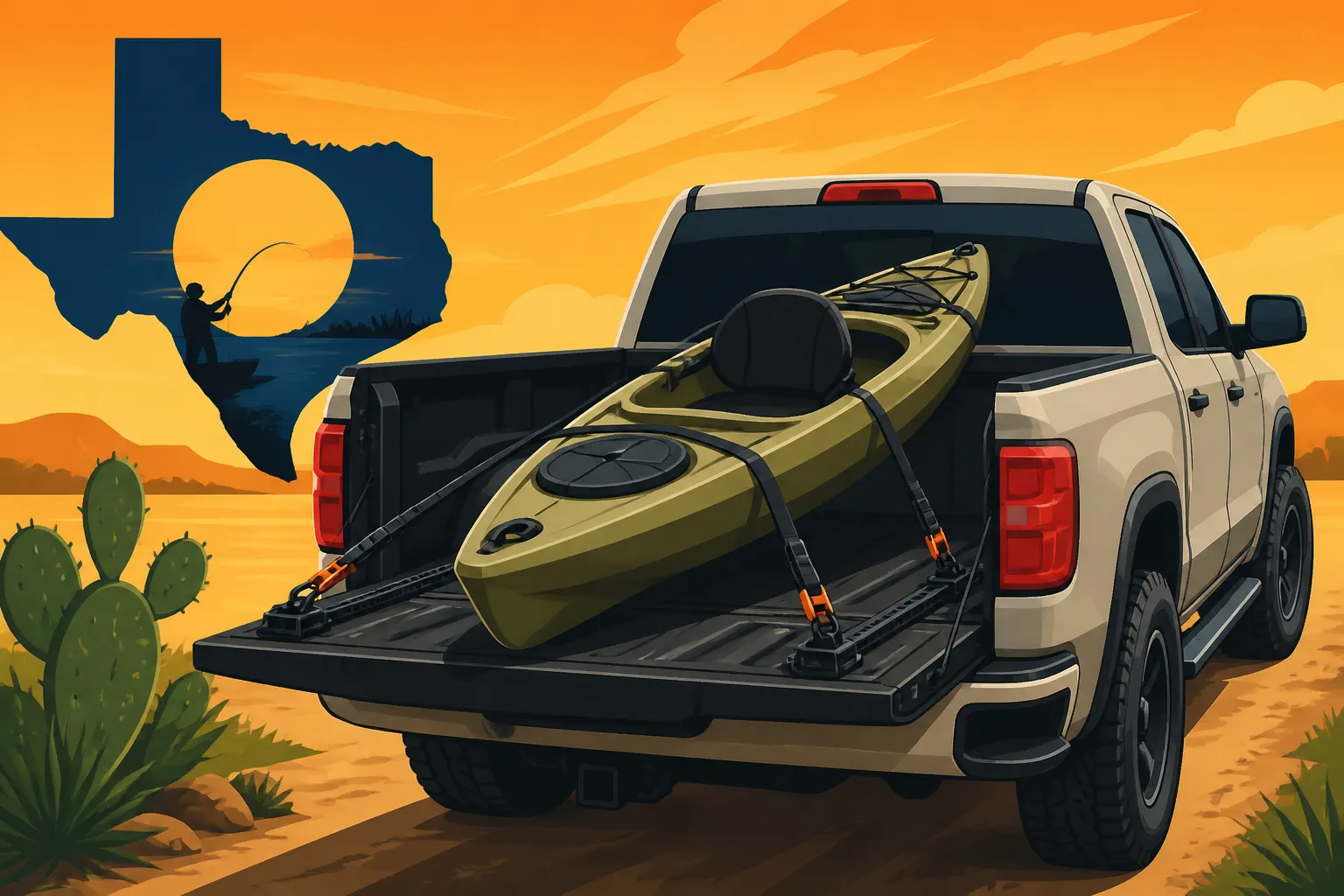
Best truck bed setup for hauling a kayak
Hauling a kayak in the back of your truck can seem straightforward, but if you've ever tried to cram a 12-foot fishing kayak into a standard short bed, you know the struggle is real. It’s not just about getting it in there; it’s about doing it safely, securely, and without breaking any Texas road rules. This comprehensive guide will walk you through the best truck bed setups for transporting your beloved kayak, ensuring both your gear and other drivers stay safe on the road.
Understanding the Challenges of Hauling Kayaks in a Truck Bed
Before we dive into the solutions, let's acknowledge the common frustrations. Most pickup truck beds, especially the popular short beds, are simply not long enough for the average fishing kayak, which often stretches 10 to 14 feet. This means you're almost certainly going to have an overhang, which presents its own set of challenges regarding stability, visibility, and legal requirements. Then there's the issue of protecting your kayak from rubbing against the bed liner or tailgate, and ensuring it doesn't shift around during transit, especially on those bumpy back roads leading to your favorite Best Places to Fish in Texas.
The "Just Throw It In" Method and Its Pitfalls
We've all seen it: a kayak tossed haphazardly into the back of a truck, maybe with a single bungee cord holding it down. While this might work for a very short trip to the neighborhood pond with a very short kayak, it’s a recipe for disaster in most situations.
Imagine you're heading out to Lake Fork Fishing Guide with your brand new 13-foot pedal kayak. You just drop it in your 5.5-foot truck bed, tailgate down. The kayak is sticking out over seven feet. If it’s not properly secured, that kayak can easily slide side-to-side, potentially scraping against the wheel wells or even trying to lift out of the bed at highway speeds. Over-tightening can also damage the kayak hull, while under-tightening means it could become a projectile. The sheer length of the overhang, if unmarked, is also a serious safety hazard for other drivers and could lead to a hefty fine if a game warden or state trooper pulls you over.
Protecting Your Kayak and Truck Bed
Even if your kayak fits perfectly without an overhang, you still need to think about protection. The rough plastic of a truck bed liner can easily scuff and scratch the hull of your kayak, especially if it's sliding around. Likewise, the edges of your tailgate or bed rails can create pressure points that, over time or with vibrations, can deform or damage the kayak's plastic.
To combat this, simple solutions like old blankets, foam pads, or even purpose-built kayak bed pads can make a huge difference. Laying down a thick moving blanket or a few yoga mats before loading your kayak provides a cushioned barrier. For the tailgate, pool noodles or pipe insulation can be wrapped around the edge to protect against sharp corners and direct pressure. These small steps are crucial for maintaining the integrity and resale value of your kayak, whether it's one of the Best Kayaks for Texas Bass Fishing or a simple recreational model.
Utilizing Truck Bed Extenders for Longer Kayaks
For most Texas anglers, especially those with longer fishing kayaks, a truck bed extender is going to be your best friend. These ingenious devices provide the necessary support for your kayak, extending your effective bed length and making transport much safer and more compliant with regulations.
Types of Truck Bed Extenders
There are primarily two types of truck bed extenders that most kayak anglers consider:
-
H-Bar Extenders: These are the most common type and resemble a large "H" shape when installed. They typically slide into your truck's receiver hitch and provide a platform that supports the rear of your kayak (when the front is in the truck bed, tailgate down). The height is often adjustable, allowing you to match the level of your truck bed or even raise it slightly for better clearance. They're excellent for providing solid support underneath the kayak, distributing the weight evenly. You can find robust H-bar extenders from manufacturers like Lund or Thule, and they're readily available at outdoor retailers like Bass Pro Shops or through online stores like Amazon.
-
T-Bar Extenders: Less common for kayaks but still viable, T-bar extenders also slide into the receiver hitch but typically have a single vertical support with a horizontal bar across the top, forming a "T" shape. These are more often used for lumber or ladders but can work for kayaks, especially if you have a very narrow kayak or are only carrying one. However, they offer less surface area support than an H-bar, so securing the kayak firmly to prevent twisting and shifting is even more critical.
Why You Absolutely Need a Bed Extender
Beyond the obvious benefit of physically supporting the kayak, a bed extender is a safety and legal necessity for long overhangs. In Texas, as in many places, an object extending more than four feet past the rear of your vehicle must be marked. An extender not only provides structural support, preventing your kayak from bouncing wildly or twisting, but it also gives you a clear point to attach a red or orange flag, making your load visible to others.
Without an extender, a long kayak simply resting on the tailgate can put immense stress on the tailgate hinges and cables, especially with heavier kayaks or rough roads. The unsupported section of the kayak can also flex and bounce, leading to fatigue cracks or even catastrophic failure over time. A good extender takes that stress off your truck's components and protects your valuable kayak. It’s an investment in peace of mind and safety for you and everyone else sharing the road.
Installation and Usage Tips
Installing most truck bed extenders is a straightforward process. They usually slide into your truck's 2-inch receiver hitch and are secured with a hitch pin. Make sure to use the proper pin and clip to prevent it from coming loose. Once installed, adjust the height of the extender to match the level of your truck bed as closely as possible, or slightly higher if your kayak has a curved hull and you want to ensure the entire rear section is supported.
When loading your kayak, slide it in with the bow (front) facing forward into the truck bed, and the stern (rear) resting on the extender. Always center the kayak to distribute weight evenly. For longer trips, consider adding a piece of carpet or an old towel over the extender bar to protect the kayak's hull from abrasion. This small detail can prevent significant wear and tear on your Best entry-level kayak for Texas fishing or even a high-end model.
| Extender Type | Primary Benefit | Best For | Considerations |
|---|---|---|---|
| H-Bar | Wide, stable support; adjustable height | Single or multiple kayaks, wider boats | Takes up hitch receiver, can reduce departure angle |
| T-Bar | Compact, often lighter weight | Narrow kayaks, single kayak, budget-friendly | Less surface area support, requires more securing |
| DIY Solutions | Custom fit, cost-effective | Specific needs, handy individuals | May lack professional finish, ensure structural integrity |
Securing Your Kayak in the Truck Bed
Properly securing your kayak is non-negotiable. It doesn't matter how great your extender is if the kayak isn't cinched down tight. A loose kayak is a dangerous kayak.
Strapping Techniques: Bow, Stern, and Mid-Section
You need more than just one strap. Think of your kayak as needing three points of contact:
-
Mid-Section/Main Tie-Down: This is your primary anchor. With the tailgate down and kayak loaded, run a sturdy cam buckle or ratchet strap over the widest part of your kayak, near the cockpit or seat. Attach the strap ends to the tie-down points inside your truck bed, usually at the front corners near the cab, or to strong points on the truck's frame if accessible. Cinch this down firmly, but don't over-tighten ratchet straps to the point of deforming the kayak hull. The goal is to prevent upward lift and side-to-side movement. This strap is crucial for keeping your Best Kayaks for Texas Saltwater Flats stable during turns and emergency braking.
-
Bow Tie-Down: Even with the main strap, the bow of the kayak can still shift or lift. Run a strap from the grab handle or a sturdy point on the bow of your kayak to the front corners of your truck bed, or to anchor points under the hood. This prevents the kayak from sliding backward or lifting at the front, especially when you hit a bump or make a sudden stop. Ensure this strap is taut.
-
Stern Tie-Down (to the Extender): This is where your bed extender comes into play. Use a separate strap to secure the stern of your kayak directly to the bed extender. This prevents the kayak from bouncing vertically off the extender and ensures it remains aligned with your truck. If you don't have an extender, you might tie the stern directly to the tailgate, but this can cause more wear on the kayak and tailgate. Make sure this strap is visible.
Always use good quality straps. Cam buckle straps are generally preferred for kayaks as they are less likely to over-tighten and damage the hull compared to ratchet straps. However, if using ratchet straps, be gentle and check tension frequently. You can find a wide selection of durable straps at any outdoor outfitter like Bass Pro Shops, or with a quick search on Amazon.
Warning Flags and Visibility
Texas law, like federal law, requires that any load extending four feet or more beyond the rear of a vehicle must be marked. This means a red or orange flag (at least 12×12 inches) tied to the absolute furthest point of your kayak's overhang. This isn't just a legal formality; it's a vital safety measure. Drivers behind you need to clearly see the full extent of your load, especially at dusk, dawn, or in poor weather.
For night travel, or in low-light conditions, a red light visible from at least 500 feet must be affixed to the end of the overhang. Don't skip this step! It could save you a ticket and, more importantly, prevent a serious accident. Always double-check your flag and lights before heading out, particularly if you’re fishing late into the evening. Remember, safety equipment is paramount when discussing Texas Boat Safety Equipment Requirements.
Preventing Theft: Simple Deterrents
While straps keep your kayak secure on the road, they don't do much for security when you're parked at the gas station grabbing a snack or checking into a motel. Kayaks are unfortunately easy targets. Simple measures can go a long way:
- Cable Locks: A steel cable lock threaded through the scupper holes, grab handles, or around a sturdy part of the kayak and then around a permanent fixture in your truck bed (like the tie-down anchors) can deter opportunistic thieves.
- Park Smart: When stopping, try to park in well-lit, visible areas. If you're staying overnight, consider bringing the kayak into your room or securing it to a sturdy, immovable object.
- Visibility: While you want your overhang to be visible, don't leave expensive gear like your Best Fishing Electronics for Texas Anglers or fishing rods strapped to the kayak where they can be easily snatched. Store them in the cab of your truck.
Considerations for Different Kayak Types and Truck Sizes
Not all kayaks are created equal, and neither are all trucks. The ideal setup often depends on what you're hauling and what you're hauling it with.
Short vs. Long Kayaks: Adjusting Your Approach
If you have a shorter recreational kayak, say 8-10 feet, and a full-size truck with an 8-foot bed, you might not even need an extender. With the tailgate down, your kayak might sit almost flush or with minimal overhang. In this case, robust bow and mid-section straps, along with protection on the tailgate, might be all you need. However, for most fishing kayaks, which tend to be longer and wider to accommodate gear and stability for standing, an extender is almost always a necessity.
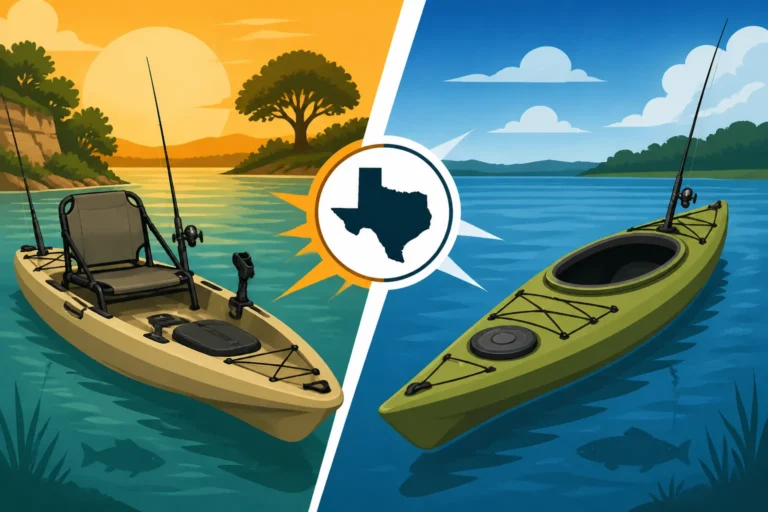
Consider the dimensions of your kayak. A 14-foot Best pedal kayak for Texas bass fishing is a beast to transport compared to a 10-foot sit-in touring kayak. The longer and heavier your kayak, the more critical it is to have proper support and multiple tie-down points. The type of kayak, whether it's a Sit-on-top vs sit-in kayak for Texas lakes, also affects how easily it sits in the bed and how you can secure it via scupper holes or integrated handles.
Full-Size vs. Mid-Size Trucks: Maximizing Bed Space
A full-size truck (like a Ford F-150, Chevy Silverado, or Ram 1500) generally offers more bed length and width, making it easier to carry larger kayaks. Even with a short bed (around 5.5-6.5 feet), a full-size truck provides ample tie-down points and can handle the weight of most kayaks without issue.
Mid-size trucks (like a Toyota Tacoma, Chevy Colorado, or Ford Ranger) have shorter beds (often 5 feet or less) and less overall cargo capacity. This means a bed extender becomes even more crucial for anything but the shortest kayaks. You'll also need to be more mindful of the kayak's width, especially if you're trying to carry two side-by-side. The bed walls on some mid-size trucks might also be lower, requiring creative solutions for tying down the bow to secure it adequately. Always check your truck's payload capacity; while most kayaks aren't excessively heavy, if you're loading up with multiple kayaks, gear, and passengers, you can approach limits.
Weight and Capacity Limits: Don't Overlook the Fine Print
Every truck has a payload capacity, and every hitch receiver has a tongue weight capacity. While a single kayak usually won't push these limits, it's wise to be aware, especially if you're carrying multiple kayaks, heavy fishing gear, or camping equipment in the truck bed alongside the kayak.
Your truck bed extender also has a weight rating. Ensure the combined weight of your kayak(s) and any gear sitting on the extender doesn't exceed this. Overloading can lead to damage to the extender, your hitch receiver, or even impact your truck's handling and braking. Always check the manufacturer's specifications for both your truck and your extender. These details are important for overall vehicle safety and something you definitely want to understand when outfitting your rig for a trip to Lake Texoma Fishing Guide or any other great Texas fishing spot.
The right truck bed setup for hauling your kayak is a blend of practicality, safety, and adherence to regulations. By investing in a quality bed extender, using proper strapping techniques, and always marking your overhang, you can transport your kayak confidently and safely, getting you to the water with your gear intact and ready for a great day of fishing.
Disclaimer
This article is for general informational purposes only and does not constitute professional advice. Laws, prices and regulations vary by location and change over time. Consult a qualified professional for guidance on your specific situation.