What is a southern flounder
There’s nothing quite like the thrill of feeling that distinct thump on your line, setting the hook, and battling a tenacious flatfish from the murky depths of a Texas bay. But let's be honest, sometimes identifying exactly which flounder you've landed can be a bit tricky, especially with several species swimming our coastal waters. This guide is dedicated to shining a spotlight on one of the most beloved and sought-after flatfish in the Lone Star State: the Southern Flounder. We'll dive deep into what makes them unique, how to spot them, and the best ways to bring them home to the dinner table, all while respecting conservation efforts.
The Southern Flounder: A Texas Treasure
For many Texas anglers, the Southern Flounder (scientific name Paralichthys lethostigma) represents a true challenge and a delicious reward. These fascinating creatures are a staple of our coastal ecosystems, thriving in the rich, nutrient-filled waters of our bays and estuaries, as well as cruising the nearshore Gulf. They're masters of disguise, incredibly powerful for their shape, and offer an exciting pursuit for both seasoned and novice fishermen. Understanding this species is key to consistently finding them and appreciating their role in our marine environment.
What Makes a Flounder "Southern"?
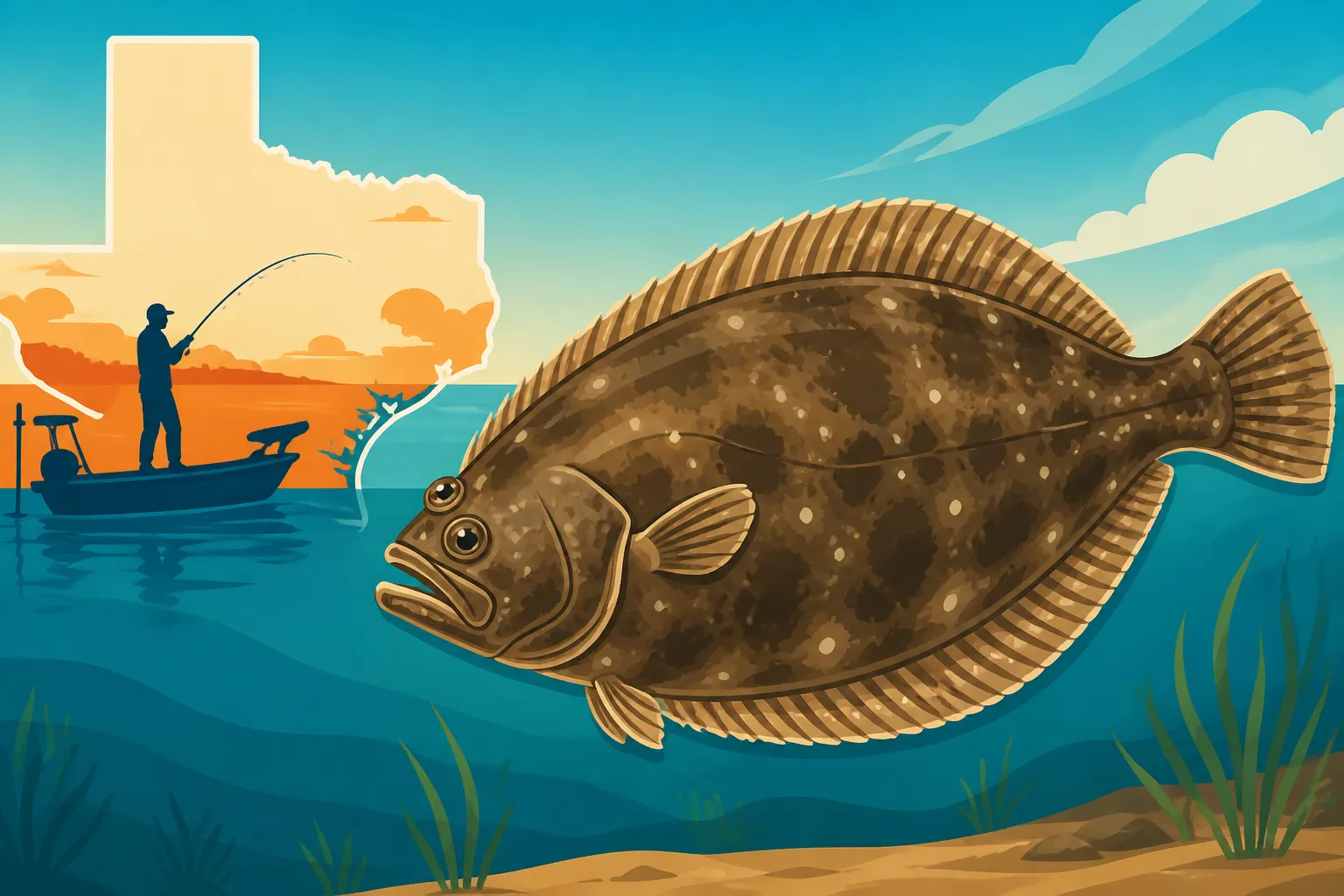
The "Southern" in Southern Flounder isn't just a geographical tag; it points to a specific set of characteristics that distinguish it from its cousins. Imagine a fish that's perfectly evolved to blend seamlessly with the bottom: a flat, oval-shaped body, with both eyes situated on one side of its head. This allows them to lie camouflaged on the seafloor, watching for unsuspecting prey.
What really sets the Southern Flounder apart from some other flounder species in Texas is its often uniform, drab olive-brown to grayish coloration, which it can rapidly change to match its surroundings – be it muddy bottom, sandy flats, or shell hash. Unlike the Gulf Flounder, for instance, which typically has three distinct, dark ocellated (ringed) spots forming a triangle, the Southern Flounder usually lacks these prominent spots. If it does have spots, they are usually much less defined, often appearing as faint, irregular blotches rather than crisp, ringed markings. Their mouth is fairly large, extending back beyond the eye, lined with sharp, conical teeth designed for grabbing and holding prey. They are typically "left-eyed" fish, meaning their eyes are on the left side of their head when viewed with their dark side up, though right-eyed individuals do occur occasionally, adding a little twist to identification!
Life Cycle and Habitat of the Southern Flounder
The life story of a Southern Flounder is a remarkable journey of adaptation and migration, heavily intertwined with the health of Texas's coastal waters. Their existence truly highlights the importance of our estuaries as vital nurseries for countless marine species.
Southern Flounder are born in the Gulf of Mexico. Adult flounder, driven by the urge to spawn, undertake an incredible migration from the bays and estuaries through the passes and into the deeper waters of the Gulf, often congregating offshore during the late fall and early winter months. This is famously known as the "flounder run," a period that brings heightened excitement for coastal anglers. Once spawned, the tiny larval flounder, looking nothing like their adult forms, drift in the currents. As they grow, one eye actually migrates across the top of their head to join the other, and their body flattens, beginning their transformation into the distinctive flatfish shape. They then drift back into the bays and estuaries, taking advantage of tidal currents. These shallow, protected, and food-rich environments, like those found in Galveston Bay or Matagorda Bay, become their nursery grounds where they feed and mature. Here, they spend their juvenile years, growing rapidly before they too will eventually heed the call of the Gulf for their own spawning migration. This cycle underscores the delicate balance required to maintain healthy flounder populations and why understanding Texas Flounder Season and Limits is so crucial.
Identifying Southern Flounder: Key Characteristics
Getting a clear visual on a flounder, especially when it's buried in the sand, can be tough. But once you've got it in hand, knowing what to look for can quickly tell you if it's the Southern variety or another species. This is important for adhering to regulations and simply for satisfying your angler's curiosity.
Visual Cues: Spotting the Southern Flounder
The primary visual characteristic to look for on a Southern Flounder is the absence of prominent, distinct spots. While they can have splotches or a mottled appearance that helps them blend in, these usually don't form the clear, ocellated (eye-like) spots that you'd see on, say, a Gulf Flounder. The Southern Flounder's coloration is often a much more uniform olive-brown, gray, or almost black, depending on the bottom it's been lying on. They are masters of chromatophores, specialized cells that allow for rapid color changes.
Another key identifier is their mouth. The Southern Flounder has a relatively large mouth compared to some other flatfish, with a maxillary (upper jawbone) that extends significantly past the rear margin of the lower eye. Their teeth are sharp and conical, perfect for ambushing and seizing prey like small fish and shrimp. Finally, when looking at the fish with its pigmented, "eyed" side facing up, almost all Southern Flounder will have both eyes on the left side of their head. This "left-eyed" trait is quite consistent for the species, offering another reliable way to differentiate it from some other local flatfish that might be predominantly right-eyed. Always check these features carefully, especially if you're unsure, to ensure proper identification.
Behavioral Traits and Where to Find Them
Southern Flounder are classic ambush predators, and their behavior directly reflects this strategy. They spend most of their time lying perfectly still, often partially buried in the bottom sediment, with only their eyes protruding. This incredible camouflage makes them incredibly difficult to spot in their natural habitat, whether you're wade fishing or scanning the bottom from a boat.
They prefer a variety of bottom types, typically gravitating towards areas with soft mud, sand, or a mixture of shell and mud. You'll often find them lurking along the edges of oyster reefs, near jetties, around pilings, in the cuts and channels of bays, and at the mouths of bayous and rivers. During warmer months, they might be found in shallower bay waters, especially near seagrass beds or areas with good current flow that brings prey to them. As temperatures drop and the spawning instinct kicks in, they begin their migration towards the deeper waters of the Gulf. This migration means you can find them congregating in major passes and channels that lead out to the Gulf. Looking for areas where baitfish are abundant, or where structure creates current breaks and ambush points, is often a good strategy. A good fishing spot often offers them both concealment and an easy meal.
Fishing for Southern Flounder in Texas
Fishing for Southern Flounder is a truly rewarding experience, whether you're battling them on a rod and reel or stalking them with a gig. Their strong fight and delicious meat make them a top target for many Texas anglers. However, it requires a bit of specific knowledge and technique.
Best Baits and Lures for Southern Flounder
When it comes to enticing a Southern Flounder, presentation is almost as important as the bait itself, as they are bottom-dwelling ambush predators. They aren't going to chase a fast-moving lure very far.
- Live Bait: This is often the undisputed champion for flounder fishing. Live mullet, mud minnows, and fingerling perch are incredibly effective. A common setup involves using a Carolina rig with a kahle or circle hook, allowing the bait to swim naturally just above the bottom. The key is to keep your bait moving slowly, mimicking an injured or unaware prey item. Many anglers will drift with the current or slowly bump their trolling motor to cover ground while dragging live bait. Small shrimp, though not typically their primary diet as adults, can also work, especially for smaller flounder or in areas where shrimp are abundant.
- Cut Bait: Fresh cut bait, such as pieces of mullet or croaker, can also be effective, especially when fished on a Carolina rig. The scent trail can attract flounder from a distance. Again, a slow drag or drift along the bottom is crucial.
- Artificial Lures: Soft plastics rigged on jig heads are incredibly popular and productive. Grubs, paddle tails, and shrimp imitations in natural colors (like root beer, chartreuse, white, or pumpkinseed) are excellent choices. Brands like Berkley Gulp! are particularly effective due to their scent dispersion. The trick here is to work the lure very slowly along the bottom, creating puffs of sand or mud to imitate a fleeing baitfish or shrimp. A gentle lift-and-drop or a slow drag can trigger a strike. You can find a fantastic array of these soft plastics and jig heads on Amazon, making it easy to stock up before your next trip. Consider checking out Best Rigs for Flounder Fishing for more detailed setup instructions.
Popular Techniques for Targeting Flounder
Catching flounder involves a blend of patience, observation, and choosing the right technique for the conditions.
- Wade Fishing: This is a fantastic way to target flounder, especially in shallow bay systems. Wading allows you to cover ground stealthily, feeling the bottom with your feet for subtle changes in depth or structure where flounder might be hiding. Many wade fishermen use live bait on a Carolina rig, slowly dragging it along the bottom, or work soft plastics with a slow retrieve. Key areas for wade fishing include sandy or muddy flats adjacent to channels, oyster reefs, or grass beds. Paying attention to tidal movements is vital, as flounder often stage in channels and move onto flats with incoming tides to feed. For a deeper dive into similar techniques, you might check out How to Wade Fish for Redfish in Texas, as many of the principles apply.
- Drift Fishing from a Boat: For covering larger areas, drift fishing is incredibly effective. Allowing your boat to drift with the wind or current while dragging baits or lures along the bottom can help you locate flounder. This is particularly good for exploring large flats or channels. Using a trolling motor to control your drift speed can enhance your success, ensuring your bait stays in the strike zone longer.
- Flounder Gigging: This unique and exhilarating method is often done at night, primarily during the cooler months when flounder are migrating or concentrated. Armed with a strong light (LED flounder gig lights are highly recommended, and many excellent options can be found on Amazon) and a multi-pronged gig, anglers walk silently in shallow water or glide slowly in a shallow-draft boat, scanning the bottom for the distinctive outline of a buried flounder. The key is a clear, calm night and being able to spot the fish before it spooks. It's a true hunting experience and incredibly popular along the Texas coast. Be sure to be acutely aware of Texas Flounder Season and Limits and specific gigging regulations, as seasons and limits can vary and are often more restrictive for gigging than for rod and reel.
Conservation and Regulations for Southern Flounder in Texas
The popularity of Southern Flounder as both a sport fish and a table fare makes careful management absolutely critical. Texas Parks and Wildlife Department (TPWD) implements specific regulations to ensure the sustainability of this species for future generations. Ignoring these rules not only risks penalties but also jeopardizes the very resource we all cherish.
Understanding Texas Flounder Regulations
Texas regulations for Southern Flounder are designed to protect the species, particularly during their vulnerable spawning migrations. These rules typically involve specific daily bag limits (the number of fish you can keep), length limits (the minimum and sometimes maximum size of fish you can keep), and critically, seasonal closures. The most notable closure is usually in the fall, coinciding with the "flounder run," when these fish move offshore to spawn. During this time, the season might be entirely closed, or only gigging might be prohibited, allowing for rod and reel fishing.
It is absolutely paramount that every angler checks the most current Texas Saltwater Fishing Regulations before heading out. These regulations can change based on scientific assessments of the flounder population, so what was true last year might not be true this year. Ignorance of the law is never an excuse, and penalties for violations can include significant fines and even loss of fishing privileges. Always consult the official TPWD outdoor annual or their website for the most up-to-date information on Texas Fish Bag and Length Limits and specific seasonal rules, especially concerning the annual flounder closure. These conservation efforts are vital to ensuring healthy populations for years to come.
Responsible Flounder Fishing Practices
Beyond simply following the letter of the law, responsible anglers embrace practices that go above and beyond to protect the fishery. Catch and release, especially for undersized fish, is a core tenet of ethical fishing. When you catch a flounder that doesn't meet the legal length limit, careful handling is crucial to maximize its chances of survival.
| Flounder Identification Feature | Southern Flounder | Gulf Flounder (Common Confusion) |
|---|---|---|
| Eyes | Almost always left-eyed (eyes on the left side when dark side up) | Can be left or right-eyed, but often seen right-eyed |
| Spots | Generally uniform coloration; if spots present, they are faint, irregular blotches, not distinct ocelli. | Usually has three prominent, dark, ocellated (ringed) spots forming a triangle on the body. |
| Coloration | Drab olive-brown to grayish, adaptable to bottom substrate. | Lighter brown to tan, with the three distinct spots clearly visible. |
| Mouth Size | Relatively large mouth, upper jawbone extends well past the rear margin of the lower eye. | Smaller mouth, upper jawbone typically does not extend past the rear margin of the lower eye. |
| Teeth | Sharp, conical teeth. | Smaller, sharper teeth. |
This table outlines some key differences to help you confidently identify your catch.
When handling flounder for release, try to minimize the time the fish is out of the water. Use a de-hooking tool if the fish has swallowed the hook, and support its body horizontally. Avoid dragging it on rough surfaces or squeezing it excessively. Additionally, be mindful of the habitats where flounder thrive. Avoid damaging seagrass beds with your boat propeller or anchor, and dispose of all trash properly. These small actions collectively make a big difference in maintaining the health and vitality of our Texas coastal waters and the incredible fish that call them home. Supporting conservation efforts and promoting ethical angling helps secure the future of species like the Southern Flounder.
Disclaimer
This article is for general informational purposes only and does not constitute professional advice. Laws, prices and regulations vary by location and change over time. Consult a qualified professional for guidance on your specific situation.