Is Lake Texoma the only lake with wild striped bass in Texas
It’s a common belief among Texas anglers, especially those just getting into the incredible world of striped bass fishing, that Lake Texoma is the only place in the Lone Star State where you can truly catch a "wild" striper. And while Texoma is undeniably special and holds a unique place in our hearts for its self-sustaining population, the truth is a little more nuanced. This guide will dive deep into what makes Lake Texoma unique, where else you can find fantastic striper fishing in Texas, and clarify the difference between naturally reproducing and stocked fisheries.
The Unique Case of Lake Texoma and Its Wild Striped Bass
There's no denying it: Lake Texoma is an absolute powerhouse when it comes to striped bass. This massive reservoir, straddling the Texas-Oklahoma border, boasts a fishery unlike any other in our state, primarily because it supports a naturally reproducing population of stripers. For many, a trip to Texoma is a pilgrimage to experience what pure, unadulterated striper fishing is all about.
Why Lake Texoma is Different: Natural Reproduction
What makes Lake Texoma so incredibly special is its unique set of environmental factors that allow striped bass to successfully spawn and reproduce within the reservoir system. Striped bass are anadromous fish by nature, meaning they typically migrate from saltwater to freshwater rivers to spawn. When confined to freshwater lakes, they need specific conditions to complete their life cycle. The Red River, which feeds Lake Texoma, provides the crucial element: a long, free-flowing stretch of river with sufficient current.
During the spring spawning run, adult striped bass migrate upstream into the Red and Washita rivers. The eggs, once fertilized, require a certain amount of turbulence and flow to remain suspended in the water column as they develop. Without this sustained movement, the eggs would sink to the bottom and suffocate. The Red River provides exactly these conditions, acting like a natural incubator. As the juvenile stripers hatch and grow, they eventually make their way back into the expansive main lake, where an abundant forage base, primarily shad, awaits them. This natural cycle means Lake Texoma doesn't rely solely on stocking programs to maintain its robust striper numbers, a distinction that sets it apart from every other freshwater lake in Texas.
The Thriving Striper Fishery on Texoma
Because of this natural reproduction, Lake Texoma truly lives up to its reputation as the "Striper Capital of the Southwest." The population here is incredibly healthy and self-sustaining, providing consistent action for anglers year-round. You can find stripers of all sizes, from schoolies providing fast-paced fun to impressive trophy-class fish that will test your gear and your grit. The sheer volume of fish means that even on a challenging day, your chances of hooking up are generally quite good.
Anglers from all over Texas and beyond flock to Texoma, contributing significantly to the local economy. Fishing guides specializing in striped bass are incredibly popular here, offering chartered trips that often put clients on fish quickly. Whether you prefer trolling, casting, or live-bait fishing, Lake Texoma offers diverse opportunities. For those looking to dive deeper into the specifics, check out our guides on Lake Texoma Fishing Guide and How to Catch Striped Bass on Lake Texoma, which offer even more insights into maximizing your experience on this incredible body of water.
Stocked Striped Bass Fisheries Across Texas
While Lake Texoma holds the crown for naturally reproducing stripers, it absolutely doesn't mean it's the only place to catch these hard-fighting fish in Texas. In fact, many other reservoirs across the state offer fantastic striped bass fishing, thanks to proactive and successful stocking programs by the Texas Parks and Wildlife Department (TPWD).
The Reality of Striped Bass in Other Texas Lakes
The vast majority of Texas lakes with healthy striped bass populations are sustained entirely through annual stocking efforts. These lakes lack the specific riverine conditions – particularly the necessary length of flowing water and unique salinity levels – that striped bass eggs need to hatch and survive naturally. Without these environmental factors, any eggs laid by adult stripers would perish.
To address this, TPWD regularly stocks millions of striped bass fingerlings into various reservoirs. This "put, grow, and take" management strategy ensures that anglers still have incredible opportunities to pursue stripers, even if these fish aren't completing their full life cycle within that specific lake. Lakes like Lake Whitney, Possum Kingdom Lake, Lake Tawakoni, and Richland Chambers Reservoir are renowned for their excellent stocked striper fisheries. These lakes might not have "wild" stripers in the same sense as Texoma, but the fishing can be every bit as thrilling, with plenty of big, strong fish available for the taking. The stocking programs are designed to create a vibrant fishery where fish grow quickly and provide exciting angling opportunities for years after they are introduced.
Why Stocking is Necessary and Effective
The necessity of stocking in most Texas lakes boils down to the biological requirements of the striped bass. As mentioned, their eggs need to remain suspended in flowing water for several days during incubation. Most Texas reservoirs, while massive, don't have river inflows that are consistently long enough or strong enough to prevent the eggs from sinking to the bottom, where they would be lost. Furthermore, slight salinity is often observed in the Red River feeding Lake Texoma, which aids in the buoyancy of the eggs – a condition not typically found in other freshwater impoundments.
Stocking programs are incredibly effective because they bypass this critical bottleneck in the striper life cycle. TPWD hatcheries raise striped bass in controlled environments, ensuring high survival rates for the fingerlings before they are released into suitable lakes. These stocked fish then thrive on the abundant forage, growing rapidly into formidable game fish. This strategic management ensures that anglers across the state have access to excellent striper fishing, even far from Lake Texoma. For a comprehensive look at where these fish are stocked, you might find our article Which Texas lakes have stocked striped bass particularly helpful, alongside a general overview in our Texas Striped Bass Fishing Guide. Many anglers rely on gear available from retailers like Amazon to target these stocked fish, ensuring they have the right lures and equipment for the job.
Distinguishing "Wild" from "Stocked" Striped Bass
It’s easy to get caught up in the romance of "wild" fish, and indeed, there's something truly special about a self-sustaining population. However, from a practical fishing perspective, the distinction between a naturally reproduced striper and a stocked one is often academic, especially when you're battling a hard-fighting fish on the end of your line.
Understanding the Life Cycle and Habitat Needs
To truly appreciate why Lake Texoma stands alone, it's essential to understand the full life cycle requirements of striped bass. These fish are evolutionarily programmed for specific conditions that are rarely found in man-made reservoirs. They need an extensive stretch of flowing river – sometimes hundreds of miles – where currents are strong enough to keep their non-adhesive, semi-buoyant eggs suspended. Water temperature is also critical, triggering the spawn and influencing the development rate of the eggs. Without these precise environmental cues and conditions, the reproductive cycle simply cannot complete itself successfully.
Lake Texoma is a marvel in this regard. The powerful inflows from the Red River create the perfect "conveyor belt" for millions of eggs during the spring spawn. The slightly brackish water from the Red River also plays a role, as striped bass have an affinity for some salinity, even during their freshwater spawning phase. This unique combination of vast freshwater expanse, a long and flowing river system, and a touch of natural salinity truly mimics the estuarine and river environments where stripers typically reproduce. This is why only Texoma supports a true, self-sustaining "wild" striped bass population in Texas.
How Anglers Can Tell the Difference
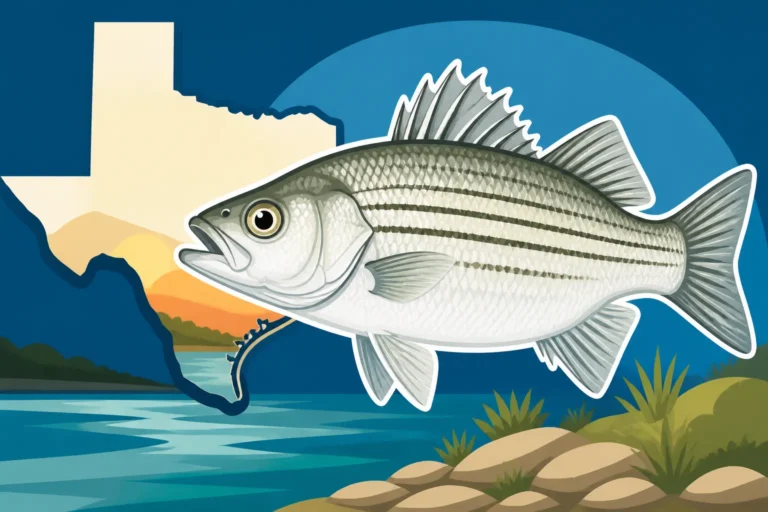
For the average angler, visually distinguishing a "wild" striped bass from a "stocked" one is nearly impossible. Both types of fish will exhibit the same characteristic dark, unbroken horizontal stripes along their silver bodies, the same powerful build, and the same aggressive fighting spirit. Unless a fish has been fin-clipped, tagged, or marked by fisheries biologists (which is sometimes done for research purposes), there are no reliable external features to tell them apart.
The key difference isn't in the individual fish you catch, but rather in the population dynamics of the lake itself. When you fish Lake Texoma, you know that every striper you encounter, from the smallest schoolie to the largest cow, is part of a naturally regenerating population. When you fish other lakes like Whitney or Possum Kingdom, you're enjoying the fruits of a well-managed stocking program. Both scenarios offer fantastic fishing, and understanding the source of the fish helps appreciate the efforts in fisheries management. Knowing whether a lake relies on stocking can inform your expectations about fish size, population density, and future fishing prospects, which is why following Texas Freshwater Fishing Regulations and stocking reports is always a good idea. Many experienced anglers track this data, often using resources found on platforms like Amazon for their analytical tools or logbooks.
Beyond Pure Striped Bass: Hybrid Stripers in Texas
To add another layer of exciting striper-like fishing to the Texas landscape, we can't overlook the incredibly popular hybrid striped bass. These fish offer a slightly different, but equally thrilling, angling experience in many Texas lakes.
The Popularity of Hybrid Striped Bass
Hybrid striped bass, often simply called "hybrids," are a cross between a pure striped bass and a white bass. This genetic blend creates an incredibly resilient, fast-growing, and hard-fighting fish that has become a staple in many Texas reservoirs. Hybrids are often stocked in lakes where pure striped bass might not thrive as well, or where a different kind of challenge is desired. They tend to be more tolerant of varying water conditions, making them an excellent choice for expanding fishing opportunities across the state. They grow quickly, often reaching impressive sizes, and are known for their explosive strikes and powerful runs.
Lakes such as Lake Lewisville, Lake Grapevine, Canyon Lake, and Lake Livingston are celebrated for their exceptional hybrid striped bass fisheries. These fish school up, often chasing baitfish in open water, creating exciting surface feeding frenzies that are a blast to fish. For many anglers, the fight of a hybrid striper rivals that of its purebred cousin, making them a highly sought-after game fish. They provide consistent action and are often found in numbers, making for memorable fishing trips.
Identifying Hybrid Stripers vs. Pure Stripers
While similar, there are subtle visual cues that can help you distinguish a hybrid striped bass from a pure striped bass. It can be tricky, especially with smaller fish, but with a keen eye, you can usually tell the difference.
Here’s a quick comparison:
| Feature | Pure Striped Bass | Hybrid Striped Bass |
|---|---|---|
| Body Shape | More elongated, torpedo-shaped | Tends to be more stout and deeper-bodied |
| Stripe Pattern | Typically distinct, unbroken parallel lines | Stripes are often broken, irregular, or "dashed" |
| Stripe Count | Generally 7-8 dark horizontal lines | Similar count, but the broken nature is key |
| Size (Average) | Can reach larger sizes than hybrids | Often grow to respectable sizes, but rarely as large as the biggest pure stripers |
| Fight | Known for long, powerful runs | Explosive initial run, very strong, "bulldog" fight |
The most reliable visual clue is usually the stripe pattern. Pure stripers tend to have very clean, unbroken lines running along their sides, whereas hybrids often have stripes that are visibly broken, interrupted, or unevenly spaced. Don't worry if you can't tell the difference right away; it takes practice, and even seasoned anglers sometimes have to look closely! Regardless of whether you're catching a pure or a hybrid, the thrill of the fight is what truly matters. If you want a deeper dive into telling these fish apart, our article Texas Hybrid Striped Bass vs Pure Striped Bass offers more detailed insights, and for general identification, you can always consult a good field guide, many of which are readily available on Amazon. And remember, both are covered under Texas Freshwater Fishing Regulations.
Texas offers an incredible diversity of fishing experiences, and while Lake Texoma is truly exceptional for its wild striped bass, the rest of the state's lakes provide amazing opportunities for both stocked pure stripers and hard-fighting hybrids. So, no, Texoma isn't the only lake with striped bass, but it's certainly one of a kind. Get out there and enjoy!
Disclaimer
This article is for general informational purposes only and does not constitute professional advice. Laws, prices and regulations vary by location and change over time. Consult a qualified professional for guidance on your specific situation.