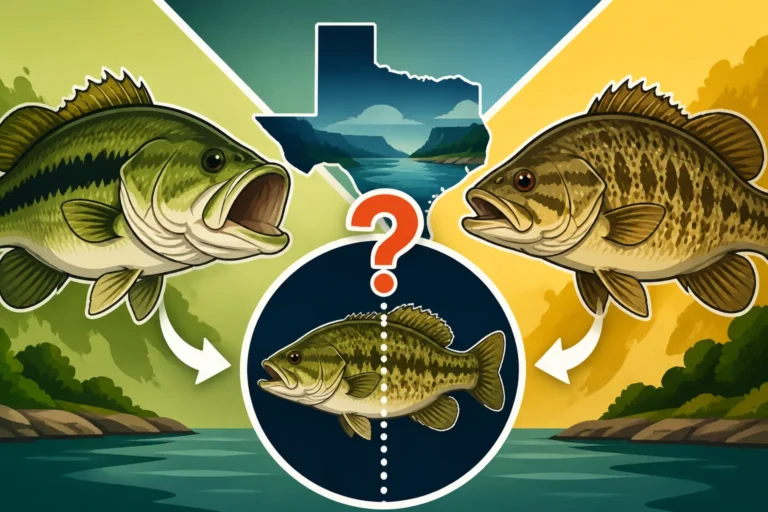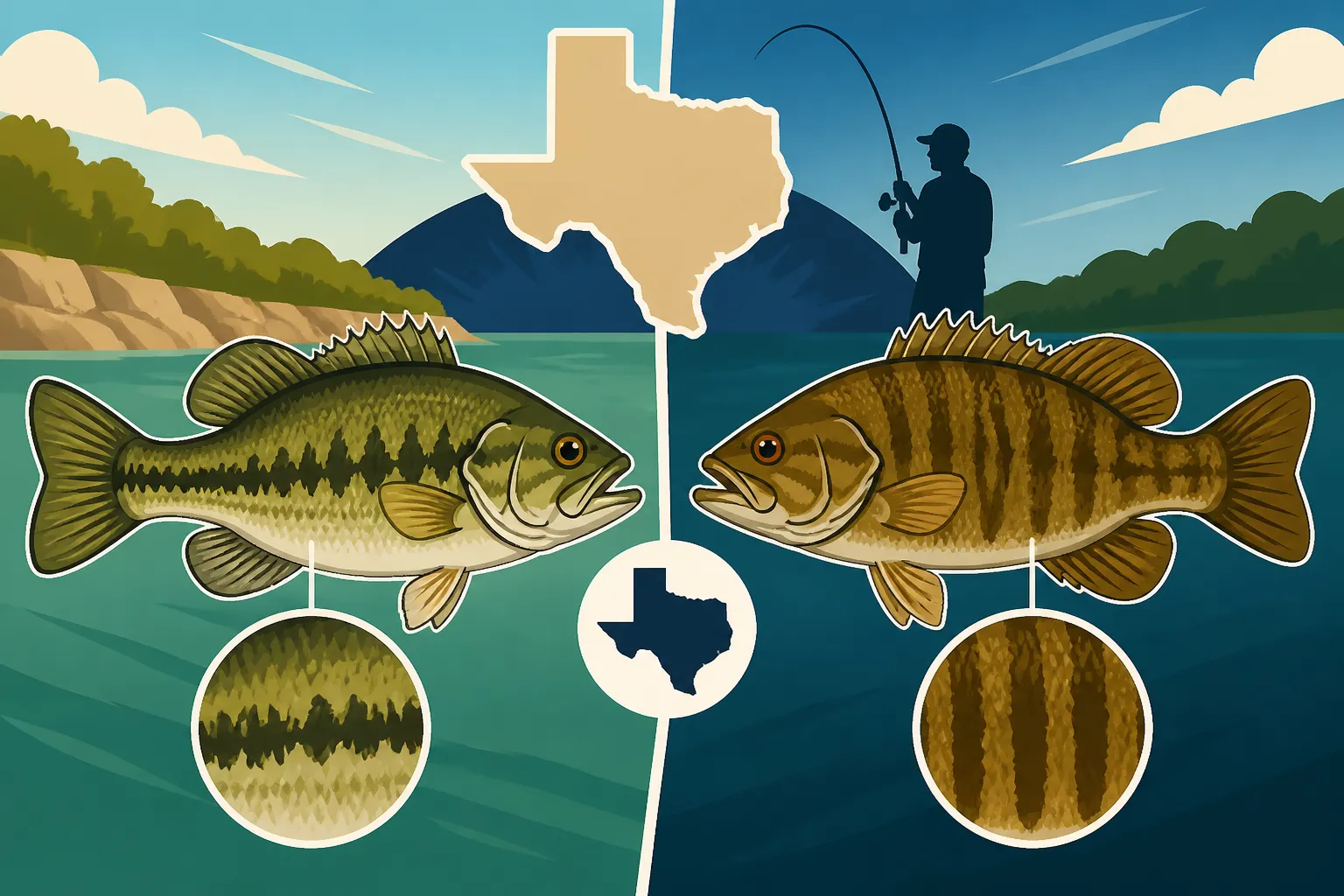
How to tell a Guadalupe bass from a smallmouth bass
It can be incredibly frustrating to reel in a beautiful bass in a Texas river, only to stare at it, scratching your head, wondering if it's a native Guadalupe bass or a more widely distributed smallmouth. These two species share enough similarities to make identification tricky, especially for newer anglers or when you're caught up in the excitement of the catch. This comprehensive guide is here to untangle that confusion, providing you with clear, practical characteristics and tips to confidently tell a Guadalupe bass from a smallmouth bass every time.
The Tale of Two Bass: Why Identification Matters
Knowing the difference between a Guadalupe bass and a smallmouth bass isn't just about showing off your fish identification skills; it has real implications for conservation, regulations, and even how you approach your fishing strategy. Texas is unique because it's home to the Guadalupe bass, a species found nowhere else in the world in its natural range. Confusing it with a smallmouth, which is widely stocked in many states, can lead to misidentification, potentially impacting its delicate populations.
Guadalupe Bass: Texas's Own Treasure
The Guadalupe bass, often affectionately called the "Guad," is the official state fish of Texas, a title it earned for good reason. It’s an iconic species that thrives in the clear, flowing waters of the Edwards Plateau and other central Texas river systems. Unlike many other bass species that have been widely introduced across the continent, the Guadalupe bass is a true Texan. Its existence is intrinsically linked to the health of our unique river ecosystems. Anglers who target them often speak of their feisty fight and the satisfaction of catching a truly indigenous fish. However, this unique status also means they require specific conservation efforts, and misidentification can inadvertently put pressure on their numbers if anglers mistakenly keep them when they shouldn't, or release them into unsuitable habitats. Protecting this unique species is paramount, which starts with accurate identification. You can learn more about this special fish in our Guadalupe Bass Texas State Fish Guide.
Smallmouth Bass: The Widespread Fighter
Smallmouth bass, on the other hand, are celebrated across North America for their aggressive strikes and powerful fighting capabilities. While not native to most of Texas, they have been stocked in several Texas lakes and rivers, particularly in the northern and western parts of the state, where cooler, clearer water conditions are more prevalent. They are incredibly popular game fish, and for good reason—they hit hard, jump often, and pull with surprising strength for their size. However, because they share some visual traits with the Guadalupe bass, they can be mistaken for their Texan cousins. Knowing which one you've caught ensures you adhere to the correct regulations, which can differ significantly between species, especially concerning length and bag limits. Understanding where these fish naturally thrive can also help you determine the likelihood of encountering one over the other.
Key Physical Characteristics: Spotting the Differences
When you've got a fish in hand, there are several key visual cues you can use to distinguish a Guadalupe bass from a smallmouth bass. These aren't always glaringly obvious, but if you know what to look for, the differences become much clearer. Think of it like comparing two slightly different shades of paint – at first glance, they might seem the same, but under closer inspection, their unique qualities emerge.
Body Shape and Size
One of the first things to notice is the overall body shape. Guadalupe bass tend to have a slightly more slender or "torpedo-shaped" body compared to the smallmouth. They are generally smaller than smallmouth bass, rarely exceeding 17-18 inches in length, with most being much smaller. Smallmouth bass, especially mature ones, can grow significantly larger, often reaching lengths of 20 inches or more and having a more robust, deeper body profile. They also tend to be a bit more football-shaped or stocky, especially when they're healthy and well-fed. If you're comparing two fish of similar lengths, the smallmouth will often feel heavier and more muscular.
The slender build of a Guadalupe bass is an adaptation to the flowing river and stream environments it typically inhabits. These fish need to be agile and quick to navigate currents and ambush prey. Smallmouth, while also strong swimmers, often inhabit larger, sometimes deeper, impoundments or larger rivers where a more substantial body mass can be an advantage for battling larger prey or stronger currents. So, while size isn't a definitive identifier, when you consider the overall proportions, you can start to see a trend.
Coloration and Markings
This is where the differences really start to shine, though they can vary with water clarity and habitat. Both fish typically have a greenish-brown to golden-brown back that fades to a lighter belly. However, the markings are distinct.
- Guadalupe Bass: Look for distinct, broken diamond-shaped spots or blotches along their sides, especially running horizontally. These spots don't typically form vertical bars like you'd see on a largemouth or smallmouth. Often, there will be a series of dark, somewhat irregular spots along the lateral line. The belly is usually white or cream, and they generally lack any prominent vertical banding. Their overall appearance can be a bit more muted in color compared to a vibrant smallmouth. Some anglers describe their markings as almost "tiger-striped" but with broken, irregular patterns rather than solid bars.
- Smallmouth Bass: Smallmouth are famous for their prominent vertical bars or stripes that run down their sides. These bars can be quite striking, especially in clear water, and they often appear as darker, well-defined bands. You'll typically see 8-16 of these vertical bars. Additionally, some smallmouth may have a dark horizontal stripe or a series of spots running along their lateral line, but it's the vertical bars that are the most distinctive feature. Their eyes also tend to be reddish or amber, which is another subtle, yet often reliable, indicator. In some waters, their coloration can be a beautiful bronze or copper hue.
It's important to remember that fish coloration can change based on their environment, diet, and even stress levels, so don't rely solely on color. However, the pattern of the markings is a much more consistent differentiator.
Jawline and Mouth Structure
The mouth of a bass is always a critical identification point, especially when distinguishing between species within the black bass family. For Guadalupe and smallmouth, pay close attention to how far back the jaw extends.
- Guadalupe Bass: When the mouth is closed, the upper jaw (maxillary) of a Guadalupe bass does not extend beyond the back edge of its eye. In many cases, it barely reaches the middle of the eye. This is a crucial distinction that helps separate it from a largemouth bass, and it's also generally more pronounced than in a smallmouth. Their mouth feels smaller and more proportionate to their head.
- Smallmouth Bass: The mouth of a smallmouth bass is slightly larger than that of a Guadalupe bass. When closed, its upper jaw typically extends to, or slightly beyond, the middle of the eye, but generally not past the back edge of the eye (which would be characteristic of a largemouth bass). So, while both have relatively smaller mouths compared to a largemouth, the smallmouth's mouth is usually noticeably larger than the Guadalupe's. This slight difference in jaw extension can be subtle, but it's a reliable trait.
Another subtle but helpful point is that the smallmouth bass often has a slightly more pointed snout compared to the more rounded profile of the Guadalupe bass. This might be hard to see in a quick glance, but if you look closely, the shape of the head and mouth can provide extra clues.
Dorsal Fin Connection
This is one of the most reliable and often overlooked identification features for black bass species. The dorsal fin on a bass is actually two fins: a spiny front dorsal fin and a soft-rayed rear dorsal fin. The key is how connected these two parts are.
- Guadalupe Bass: Like other Micropterus species (the black bass genus), the Guadalupe bass has a deeply notched dorsal fin, meaning the spiny front portion and the soft-rayed rear portion are distinctly separated by a deep indentation, but they are still connected. You can almost feel it as two separate fins if you run your finger along the top. The connection between the two sections of the dorsal fin is lower than the height of the shortest spine in the front dorsal.
- Smallmouth Bass: Smallmouth bass also have a deeply notched dorsal fin, very similar to the Guadalupe bass. The spiny and soft-rayed portions are clearly distinct, though still connected. For both of these species, the connection is significantly deeper than what you would find on a largemouth bass, where the two parts of the dorsal fin are almost fully joined. So, while this trait is great for distinguishing them from largemouths, it's less useful for telling a Guadalupe bass from a smallmouth, as they share this deeply notched characteristic. You'll need to rely more heavily on the other physical cues for these two.
Here’s a quick summary table to help visualize these differences:
| Characteristic | Guadalupe Bass | Smallmouth Bass |
|---|---|---|
| Body Shape | More slender, torpedo-shaped, typically smaller | More robust, football-shaped, often larger |
| Coloration/Markings | Broken diamond-shaped spots or irregular blotches | Prominent vertical bars/stripes on sides |
| Jawline (closed) | Upper jaw does not extend past back of eye | Upper jaw extends to or slightly past middle of eye |
| Dorsal Fin | Deeply notched, spiny & soft rays clearly separate | Deeply notched, spiny & soft rays clearly separate |
| Eye Color | Typically dark | Often reddish or amber |
| Native Range | Endemic to Central Texas rivers | Widely distributed, stocked in parts of Texas |
Habitat and Range: Where You'll Find Them
Beyond their physical appearance, understanding where these fish are typically found can be a massive clue in distinguishing them. It’s like knowing that a certain bird only nests in specific types of trees – if you see it in a different tree, you might question your initial identification. This ecological context is incredibly important, especially in a large and diverse state like Texas.
Guadalupe Bass: River Dwellers
The Guadalupe bass is a true connoisseur of specific environments. They are primarily found in clear, flowing streams and rivers within the Edwards Plateau region of Central Texas. Think of rivers like the Guadalupe, Llano, San Gabriel, San Marcos, Colorado, and Blanco Rivers. These waterways typically feature rocky bottoms, plenty of submerged timber, and a good current. You'll often find them lurking around undercut banks, submerged logs, and boulders, waiting to ambush prey. They are highly sensitive to changes in water quality and habitat, which is why their populations are so carefully monitored. If you're fishing in a small, clear-flowing river in Central Texas, especially one with a good current, your chances of encountering a Guadalupe bass are significantly higher. Familiarizing yourself with the Guadalupe Bass Native Range in Texas can greatly assist in identification before you even cast a line.
It's rare to find a true Guadalupe bass in large, stagnant impoundments or muddy, slow-moving rivers, though some populations have been introduced to reservoirs that mimic their preferred riverine conditions. However, the further you get from their traditional central Texas river homes, the less likely you are to be catching a pure Guadalupe bass. These fish are adapted to specific niches, and their survival depends on these habitats remaining healthy.
Smallmouth Bass: Cooler, Clearer Waters
Smallmouth bass, while capable of adapting to a range of environments, also show a preference for cooler, clearer waters. In Texas, they are primarily found in the northern and western parts of the state where water temperatures are generally lower, and habitats like rock and gravel bottoms are more common. Some of the well-known smallmouth fisheries in Texas include lakes like Lake Meredith, Lake Texoma, and Canyon Lake. They thrive in rocky habitats, clear water, and areas with good current or wave action. You'll often find them around submerged ledges, rock piles, drop-offs, and points.
Unlike the Guadalupe bass, which is almost exclusively a river fish, smallmouth bass can do very well in both rivers and reservoirs, as long as the conditions meet their needs for cooler temperatures and structure. If you're fishing in a large reservoir known for its clear water and rocky bottom, particularly outside of Central Texas, there's a good chance you're looking at a smallmouth. Understanding Texas Freshwater Fishing Regulations will also provide details on where different bass species are managed, offering further clues.
Angling Considerations and Regulations
Beyond just identification, knowing which bass species you've caught has tangible consequences for how you fish and what you can legally do with your catch. This is where the importance of accurate identification truly hits home. The rules aren't just arbitrary; they're in place to protect fish populations and ensure healthy fisheries for future generations.
Catch Limits and Conservation Efforts
Because the Guadalupe bass is a native and often more vulnerable species, conservation efforts are particularly strict. Their populations are smaller and more localized than many other bass species, making them more susceptible to overfishing or habitat degradation. As such, there are often specific slot limits or minimum length requirements, and sometimes even catch-and-release only rules for Guadalupe bass, depending on the specific waterbody and current population health. It's crucial to check the latest Texas Fish Bag and Length Limits for the exact body of water you're fishing. Violating these regulations, even accidentally due to misidentification, can lead to fines and penalties.
Smallmouth bass, while also managed, often have different regulations. In some stocked lakes, they might have more liberal bag and length limits due to their healthier, introduced populations. However, responsible angling is always key. For both species, understanding the nuances of their regulations is paramount. When in doubt, take a photo, measure carefully, and consider releasing the fish, especially if you're uncertain of its identity. A good waterproof camera (you can find many reliable models on Amazon) can be an invaluable tool for documenting your catch for identification purposes later.
Gear and Techniques for Each Species
While both are bass and will strike many similar lures, there are subtle differences in optimal gear and techniques that can make a difference.
For Guadalupe bass, given their riverine habitat, lighter tackle is often preferred. They are smaller, so ultra-light or light spinning gear with 6-8 pound fluorocarbon or monofilament line works well. Smaller lures that mimic baitfish or insects found in rivers, such as small crankbaits, topwater lures, lightweight spinnerbaits, or soft plastic jigs fished on a light wire hook, are effective. Fishing parallel to current breaks, around boulders, and in eddies tends to be productive. The key is presenting lures naturally in the current and being ready for a quick, aggressive strike. For more general advice on river fishing, consider reading How to Fish a Texas River for Catfish, as some principles of current and structure apply.
For smallmouth bass, especially larger ones in reservoirs, you can often step up your gear slightly. Medium-light to medium power spinning or baitcasting rods with 8-12 pound line are common. Lures that imitate crawfish, shad, or other forage are highly effective. This includes deeper diving crankbaits, tube jigs,Ned rigs, swimbaits, and topwater lures. Targeting rocky points, drop-offs, and ledges, often with a retrieve that mimics struggling prey, can elicit powerful strikes. They are notorious for fighting hard, often jumping multiple times, so a rod with good backbone is beneficial. Whether you're targeting either species, making sure you have the right bait and lures can significantly improve your chances, and a quick search on Amazon can reveal a vast array of options.
Practical Tips for On-the-Water Identification
When you're out on the water, excited after a catch, the last thing you want to do is waste time agonizing over fish ID. Having a clear mental checklist and some quick tricks can save you time and ensure you're compliant with regulations. It's about making a quick, informed decision so you can enjoy the rest of your day fishing.
Quick Visual Checks
When you land a bass that you suspect might be either a Guadalupe or a smallmouth, run through these rapid checks:
- Look for Stripes vs. Spots: Is it covered in clear vertical bars (smallmouth) or more irregular, broken diamond-like blotches (Guadalupe)? This is often the quickest and most obvious indicator. If you see strong vertical bars, lean towards smallmouth. If it’s more mottled and spotty without strong bars, it’s likely a Guad.
- Check the Jawline: Gently close the fish's mouth. Does the corner of the jaw reach only to the middle of the eye (Guadalupe) or slightly beyond the middle but not past the back edge (smallmouth)? This takes a bit more practice but is a reliable anatomical clue.
- Consider the Location: Are you in a clear, rocky, flowing river in Central Texas (more likely Guadalupe)? Or a larger, clearer lake or reservoir, especially in Northern or Western Texas (more likely smallmouth)? While not definitive, it heavily influences the probability.
- Overall Build: Does the fish feel sleek and slender for its length (Guadalupe)? Or more stout and muscular (smallmouth)? Again, this is a subtle cue, but it contributes to the overall picture.
Remember, a combination of these factors is more reliable than relying on just one. If you’re ever truly unsure, the safest bet is to practice catch and release. This way, you contribute to conservation and avoid any potential regulatory issues.
Using Photography for Confirmation
In today's digital age, your smartphone is one of your best fishing tools for identification. If you're unsure about a fish, snap a few clear photos before releasing it.
- Angle is Key: Get shots from multiple angles: a clear side profile showing the full body and markings, a close-up of the head to show the jawline and eye, and a top-down view if possible.
- Good Lighting: Ensure the fish is well-lit and not in shadow, which can obscure markings.
- Scale for Reference: If possible, include a ruler or a standard object (like a fishing license, though be careful not to obscure important features) in the shot to give a sense of scale. A good quality measuring board, easily found on Amazon, can also be used here.
Once you have your photos, you can consult a reliable fish identification guide, Texas Parks and Wildlife Department resources, or even online fishing forums for help. Many seasoned anglers are happy to offer their opinion based on clear photos. This practice not only helps you learn but also ensures you're correctly identifying and managing your catch according to specific Texas Freshwater Bag Limits by Species or Texas Saltwater Bag Limits by Species guidelines. Over time, you'll develop an eye for these differences, and identifying these beautiful bass will become second nature.
Disclaimer
This article is for general informational purposes only and does not constitute professional advice. Laws, prices and regulations vary by location and change over time. Consult a qualified professional for guidance on your specific situation.