What rivers have Guadalupe bass in Texas
For many Texas anglers, the elusive Guadalupe bass is more than just a fish; it's a symbol of our state's unique freshwater heritage. It can be incredibly frustrating to hit the water, hoping to catch a glimpse of this feisty native, only to come up empty-handed because you're not quite sure where to even begin your search. This guide is here to pinpoint the exact rivers and stretches where these treasured black bass call home, helping you increase your chances of a successful and rewarding encounter.
Understanding the Unique Guadalupe Bass
The Guadalupe bass, often affectionately called the "Guad," holds a special place in the hearts of Texas anglers because it's the official State Fish of Texas. It's a true native, found nowhere else in the world, which makes successfully catching one a real badge of honor. But what makes this bass so unique, and why is knowing its specific habitat so crucial?
A Texas Original: What Sets Them Apart
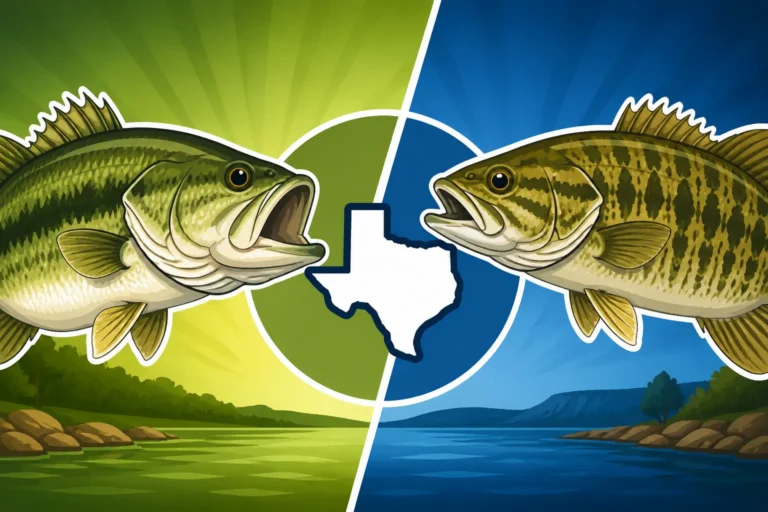
Unlike its larger cousin, the largemouth bass, or even the smallmouth bass it often gets confused with, the Guadalupe bass is a streamlined, torpedo-shaped fish adapted to the flowing waters of our central Texas rivers and streams. They tend to be smaller than largemouths, rarely exceeding a few pounds, but what they lack in size, they make up for in fight. Pound for pound, a Guadalupe bass will pull harder and fight more aggressively in current than almost any other freshwater fish you'll encounter in Texas. Their coloring is typically an olive green back fading to lighter sides with distinct, diamond-shaped blotches along the lateral line, and often prominent dark spots in rows below that line. Their jaw doesn't extend past the eye, which is a key identifier when you're trying to distinguish them from a largemouth. If you're struggling with identification, our guide on Guadalupe Bass vs Smallmouth Bass offers more detailed tips.
They are incredibly sensitive to changes in water quality and habitat, preferring clear, cool, flowing water with plenty of rocky structure, submerged timber, and undercut banks to ambush prey. This preference for pristine river environments is precisely why their range is so specific and why conservation efforts are so vital. If you’re truly passionate about our state fish, understanding their biology and preferred environment is the first step to finding them.
Why Habitat Matters for Guadalupe Bass
You wouldn't look for a desert cactus in a swamp, right? The same principle applies to fishing for Guadalupe bass. These fish are specialists. They are inherently tied to specific riverine habitats, primarily the Edwards Plateau region of Central Texas. This area is characterized by spring-fed rivers, limestone bedrock, and consistent flows that provide the ideal conditions for their survival and spawning. They need dissolved oxygen levels, specific water temperatures, and the right mix of cover and current to thrive. Trying to find them in slow, murky, or heavily vegetated impoundments will almost always lead to disappointment.
Their reliance on these specific river systems also means that any alterations to these waterways – such as damming, pollution, or excessive water withdrawal – can severely impact their populations. Knowing which rivers historically and currently support healthy Guadalupe bass populations is key, not just for catching them, but for appreciating the delicate balance of their ecosystem. The Texas Parks and Wildlife Department (TPWD) works tirelessly on conservation programs, including stocking efforts in suitable rivers, to ensure these iconic fish continue to thrive. You can learn more about their natural distribution in our post on Guadalupe Bass Native Range in Texas.
The Core Rivers: Where Guadalupe Bass Naturally Reside
When you're looking to target Guadalupe bass, you need to focus on the rivers and their tributaries that flow from the Edwards Plateau. These aren't your typical slow-moving, muddy East Texas rivers; these are often clear, rocky, and fast-flowing waterways that offer a completely different fishing experience.
The Guadalupe River: The Namesake and Stronghold
It's no surprise that the Guadalupe River is arguably the most famous and productive river for its namesake bass. From its headwaters near Kerrville, downstream past Comfort, Boerne, and through the Canyon Lake tailrace, the Guadalupe offers prime habitat. The river is renowned for its clear, cool waters, especially below Canyon Lake where the dam releases colder water, creating a unique trout fishery in winter alongside the resident Guadalupe bass.
The middle and upper stretches, above Canyon Lake, are classic Guadalupe bass territory. Here, the river winds through limestone canyons, offering abundant rapids, riffles, deep pools, and shady undercut banks. Popular access points can be found around various state parks and private river outfitters. This river is fantastic for wading, kayaking, or floating in a small raft, allowing anglers to cover significant stretches of water and target those hard-to-reach pockets where Guads love to hide. For a deeper dive into one of its famous sections, check out our Guadalupe River Trout Fishing Guide which also covers much of the bass habitat.
The Llano River System: A Hidden Gem
The Llano River, both the North and South Llano branches, and their confluence, represent another stronghold for Guadalupe bass. This river system is a bit wilder and often less crowded than parts of the Guadalupe, offering a more secluded fishing experience. The North and South Llano Rivers originate in the western Edwards Plateau and flow eastward to join near the town of Junction, then continue as the main Llano River before emptying into Lake Buchanan.
These rivers are characterized by their crystal-clear waters, granite bedrock (especially in the lower stretches), and an abundance of cypress trees lining their banks. The rocky bottom and swift currents provide ideal ambush points for Guadalupe bass. Anglers often find success targeting the numerous shoals, rapids, and the deeper pools formed by the current scouring out the riverbed. Access can be a mix of public crossings and private land, often requiring a bit of research or working with local outfitters. The beauty and wildness of the Llano system make it a truly special place to pursue Guads.
The Colorado River and Its Tributaries: A Broader Range
While the lower, wider sections of the main Colorado River might not be ideal Guadalupe bass habitat due to slower flows and increased turbidity, its upper reaches and several of its significant tributaries are crucial. The Colorado River, particularly above Austin and extending into the Hill Country, still holds good populations.
However, it's the smaller, spring-fed tributaries feeding into the Colorado that are often the best bets. Rivers like the San Gabriel, Lampasas, and Pedernales Rivers all offer excellent opportunities.
- The Pedernales River: This scenic river, flowing through the heart of the Hill Country and Pedernales Falls State Park, is a prime location. Its rocky bottom, rapids, and numerous pools are textbook Guadalupe bass habitat. Access can be challenging in some areas, but wade fishing and kayaking are popular methods.
- The San Gabriel River: Both the North and South Forks of the San Gabriel, before they merge and flow into Lake Granger, offer consistent Guadalupe bass fishing. These rivers have a mix of clear water, rocky structure, and occasional deeper stretches.
- The Lampasas River: Similar to the San Gabriel, the Lampasas provides excellent conditions in its upper and middle sections, with good current and rocky structure.
These tributaries exemplify the smaller, more intimate settings where Guadalupe bass thrive, often requiring stealth and precision casting.
| River System | Primary Location | Key Characteristics | Best Fishing Method |
|---|---|---|---|
| Guadalupe River | Central Texas | Clear, cool water, limestone canyons, strong currents | Wade, Kayak, Small Raft |
| Llano River System | Western Hill Country | Clear, rocky, cypress-lined banks, granite features | Wade, Kayak, Bank (limited) |
| Pedernales River | Central Hill Country | Scenic, rocky, rapids, diverse pool structure | Wade, Kayak |
| San Gabriel River | North Central Hill Country | Clear, rocky bottom, varied flow | Wade, Kayak |
| Lampasas River | North Central Hill Country | Consistent flow, rocky structure, good cover | Wade, Kayak |
Navigating Specific Stretches and Tributaries
Knowing the major rivers is a great start, but to truly maximize your chances, it helps to understand how to approach specific sections and the role of smaller, less-known tributaries. These are often where some of the best fishing can be found, away from the crowds.
Targeting Upper Reaches and Spring-Fed Streams
Guadalupe bass absolutely love the cooler, oxygen-rich waters of upper river reaches and direct spring-fed streams. As you move closer to the headwaters of rivers like the Guadalupe, Llano, or Pedernales, the water typically becomes clearer, shallower, and faster-flowing. This environment means you'll often find these bass holding tight to structure, such as large rocks, boulders, logs, or undercut banks, waiting for insects and smaller baitfish to drift by.
When fishing these areas, stealth is paramount. The clear water allows the fish to see you just as easily as you see them. Approach slowly, make long casts, and use lighter lines. Kayaks, canoes, or simply wading are often the best ways to navigate these tighter, more intimate stretches of water. Always be mindful of private property along the banks and ensure you have legal access. For essential gear for these types of trips, you might find some great waterproof bags or small tackle boxes on Amazon to keep your essentials dry and organized.
The Importance of Confluences and Current Breaks
Wherever two streams meet, or where the main river flow encounters a significant obstacle, you'll often find a sweet spot for Guadalupe bass. Confluences, where a tributary joins a larger river, create varied current patterns, eddies, and often deeper pools due to the converging flows. These areas are natural holding spots for bass, providing a smorgasbord of food and diverse cover. Look for the seams where fast water meets slow water, or where the current pushes baitfish into calmer pockets.
Similarly, any significant current break – a large boulder, a fallen tree, a sharp bend in the river, or even a small island – can be a prime ambush point. Guadalupe bass are opportunistic predators that use the current to their advantage, expending minimal energy while waiting for prey to come to them. Fishing these current breaks effectively requires precise casting to put your lure right in the strike zone, often just upstream of the cover, allowing the current to carry it naturally to the fish.
Navigating Access and Respecting Private Land
While these rivers offer incredible fishing, a significant portion of their banks in Texas are private property. Anglers must always be diligent about securing legal access. Public access points can be found at state parks, county parks, and designated river crossings. However, many of the best fishing spots might require floating through private lands, which is generally permissible as long as you stay within the "gradient boundary" of the riverbed. Stepping onto private banks without permission is trespassing.
Consider hiring a local guide, especially for your first trip to a new river. They not only know the best spots but also understand the nuances of access and river etiquette. Alternatively, purchasing detailed maps or utilizing apps that show public access points can be invaluable. Always be prepared to carry out everything you carry in, and leave no trace behind. Maintaining good relationships with landowners and respecting the environment ensures these amazing fishing opportunities remain available for everyone.
Gear and Techniques for Guadalupe Bass
Catching Guadalupe bass is a unique challenge that often requires a slightly different approach than targeting largemouths in a lake. Their riverine habitat and aggressive nature dictate specific gear and techniques for success.
Recommended Rods, Reels, and Line
When it comes to tackle, a lighter setup is generally preferred for Guadalupe bass. These fish are known for their strong fights, but they typically don't exceed a few pounds, so heavy gear will overpower them and diminish the fun.
- Rods: A medium-light to medium power spinning rod, around 6' to 7' long, with a fast action tip is ideal. This setup provides the sensitivity to detect subtle bites and the backbone to handle their powerful runs in current. Some anglers also enjoy using a lightweight baitcasting setup, especially for slightly heavier lures or when needing more precise casting in tight cover. Our guide on Best Fishing Rods for Texas Anglers has more general advice.
- Reels: Pair your rod with a quality spinning reel in the 1000 to 2500 size range, or a low-profile baitcaster with a smooth drag system. A smooth drag is essential when a hard-fighting guad tries to run with the current.
- Line: Opt for 6-10 lb fluorocarbon or monofilament line, or 10-15 lb braided line with a fluorocarbon leader. Fluorocarbon offers excellent sensitivity and invisibility in the clear water, while braid provides superior casting distance and strength. The leader is crucial in clear water rivers. You can find a wide selection of these lines on Amazon, ensuring you have the right strength and visibility for river conditions.
Lures and Baits That Guads Can't Resist
Guadalupe bass are opportunistic feeders, preying on insects, crayfish, and small baitfish. Matching the hatch or presenting something that looks like an easy meal is key.
- Small crankbaits: Shallow-diving crankbaits in natural colors (crayfish, minnow patterns) are incredibly effective, especially when fished upstream and allowed to drift back with the current, bumping off rocks.
- Soft plastics: Small finesse worms, creature baits, or grubs rigged on a light jig head or a Texas rig work wonders. These can be bounced along the bottom in pools or slowly retrieved through current breaks. Think green pumpkin, black, or natural brown colors.
- Topwater lures: In low light conditions or during warmer months, small poppers, walk-the-dog baits, or propeller baits can trigger explosive strikes. The thrill of a guad blowing up on a topwater is truly unforgettable.
- Spinnerbaits and Buzzbaits: Small, single-bladed spinnerbaits or buzzbaits can be great for covering water, especially if the water has a bit of stain after a rain.
- Flies: Fly fishing for Guadalupe bass is immensely popular and effective. Streamers that imitate baitfish or crayfish, and large nymphs that mimic aquatic insects, are often deadly.
For more general lure advice, you can check out Best Bait and Lures for Texas Fishing, but remember to scale down for Guadalupe bass.
River-Specific Techniques
Fishing rivers for Guadalupe bass is different from fishing lakes. You're constantly dealing with current, varying depths, and often limited casting space due to overhanging trees.
- Upstream Casts: Many successful river anglers cast upstream and retrieve their lure with the current, maintaining just enough tension to feel the bite. This allows the lure to drift naturally, mimicking how real prey moves in the river.
- Targeting Current Seams: Look for where fast water meets slow water. Guadalupe bass will often sit in the slower water, just out of the main current, waiting for food to wash by in the faster flow. Cast into the faster water and let your lure drift into the seam.
- Wade Fishing: For many of these rivers, wade fishing is the most effective method. Investing in a good pair of wading boots (felt soles or rubber with studs are excellent for slick rocks) and possibly waders (especially in cooler weather) will allow you to access prime spots. Always use a wading staff for stability in swift currents. Safety is paramount, especially when wading in unfamiliar rivers.
- Kayak or Canoe: A kayak or canoe allows you to cover more water than wading and reach spots inaccessible from the bank. Paddle upstream, then drift back down, fishing as you go. Look for stable, maneuverable kayaks, many of which are available on Amazon with features specifically for anglers, like rod holders and storage.
Remember, patience and observation are key. Take the time to "read the water" – understand where the current is flowing, where the deeper pockets are, and where potential cover lies. The more you understand the river, the better your chances of finding and catching these magnificent Texas native fish.
Disclaimer
This article is for general informational purposes only and does not constitute professional advice. Laws, prices and regulations vary by location and change over time. Consult a qualified professional for guidance on your specific situation.