Do largemouth bass and spotted bass interbreed
Have you ever landed what you thought was a largemouth bass in a Texas lake, only to look a little closer and wonder if it was actually something else, or maybe… a mix? That feeling of uncertainty is all too common, especially when you're trying to identify the subtle differences between our various black bass species. It can be frustrating when you're trying to follow regulations, or just satisfying your own curiosity about what's biting. This guide is here to untangle the mystery and provide a comprehensive look into whether largemouth bass and spotted bass interbreed in Texas, what that means for our fisheries, and how you can spot these unique fish.
Understanding the Bass Family in Texas
Texas is blessed with a diverse array of fish, and our black bass family is particularly beloved by anglers. But within this family, there are distinct members, each with their own quirks and characteristics. It's important to know them individually before we discuss how they might sometimes mingle.
The Iconic Largemouth Bass
Ah, the largemouth bass – practically the state fish in the hearts of many Texas anglers, even though the Guadalupe bass holds the official title! These powerful, aggressive fish are easily recognizable by their deep green backs, lighter bellies, and a prominent dark lateral line that runs down their sides. The key identifier for a largemouth, and where it gets its name, is that its jaw extends well beyond the back of its eye when its mouth is closed. They love living in areas with plenty of cover like submerged timber, aquatic vegetation, and boat docks, ambushing prey with a sudden burst of speed. They are the giants of our freshwater lakes and reservoirs, often topping the scales and making for legendary fishing stories. You can learn more about these impressive fish in our Texas Largemouth Bass Fishing Guide.
Reproductively, largemouth bass are quite specific. Males create and guard nests, often in shallow, protected areas, and entice females to lay their eggs there. It's a precise ritual, designed to ensure the continuation of their species. Their genetic makeup is typically well-defined, leading to consistent largemouth characteristics from one generation to the next, barring any outside influences.
The Often-Confused Spotted Bass
The spotted bass, or "spot" as many call them, often throws anglers for a loop because they can look so similar to a largemouth at first glance. They tend to have a more slender body shape and typically don't grow quite as large as their largemouth cousins. A key difference lies in their jaw: it generally extends only to the middle of the eye, or just slightly beyond, but not significantly past it like a largemouth. They also have rows of small, dark spots below their lateral line, which is where they get their "spotted" name, and a rough patch of teeth on their tongue. Many anglers might mistake a smaller spotted bass for a juvenile largemouth, especially if they aren't checking for that tell-tale tongue patch or the jawline. These fish often prefer clearer, rockier waters, and can be found in rivers and many of our larger reservoirs. If you're struggling to tell them apart, our Texas Black Bass Species Comparison dives deeper into the specific identifying features.
Like largemouths, male spotted bass are also nest builders and guardians, ensuring the survival of their offspring. They seek out similar protected areas, though sometimes favoring rocky bottoms or gravel beds more than thick vegetation. Their reproductive process is, in isolation, designed to produce more spotted bass.
The Biological Definition of a Species and Hybridization
In the world of biology, a "species" is generally defined as a group of organisms that can breed with one another in nature and produce fertile offspring. This means their genetic material is compatible enough to create new generations that can also reproduce. It's like a family recipe that consistently yields the same dish.
"Hybridization," on the other hand, is what happens when two different species do manage to interbreed. Sometimes, this occurs naturally when species are very closely related and their habitats overlap, leading to accidental pairings. Think of it like a chef experimenting with two similar family recipes and accidentally creating a new dish. The resulting offspring, a "hybrid," carries genetic material from both parents. While some hybrids can be vigorous and healthy, others might struggle to survive, or, critically, may be sterile and unable to reproduce themselves. This sterility is often a natural barrier that keeps species distinct, preventing a complete genetic mixing pot.
The Truth About Largemouth and Spotted Bass Interbreeding
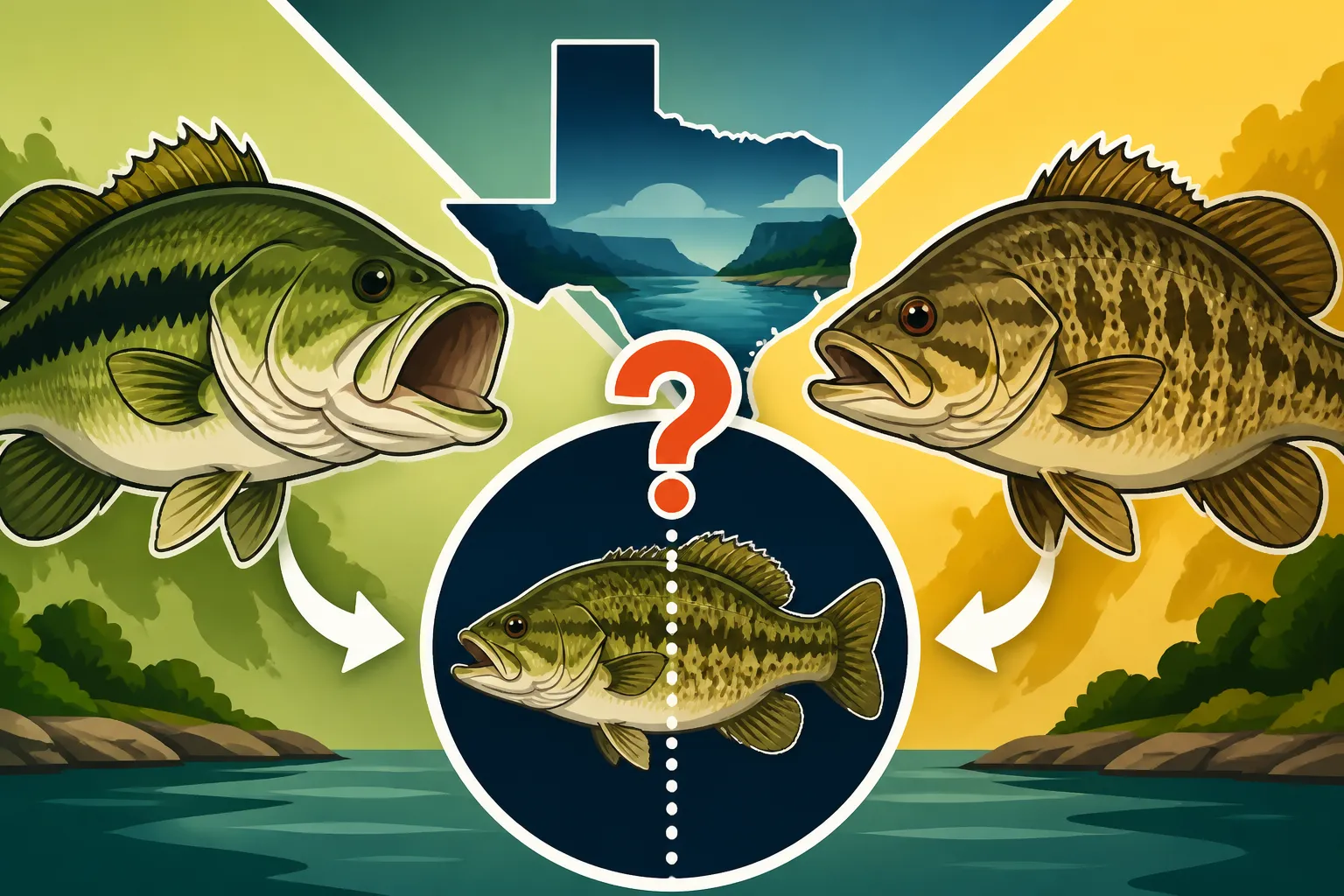
Now for the burning question: Do largemouth bass and spotted bass interbreed? The simple answer is yes, they absolutely can and do hybridize in Texas waters.
Yes, They Can and Do Hybridize!
It might surprise some, but largemouth bass (scientific name Micropterus salmoides) and spotted bass (Micropterus punctulatus) are closely enough related within the Micropterus genus that they can, and sometimes do, produce hybrid offspring. This isn't a rare, one-off event; it's a known phenomenon in many parts of Texas where their populations coexist.
Why does this happen? Usually, it's a combination of factors. When two closely related species share the same spawning grounds or have overlapping territories, especially during the spring when the bass are focused on reproduction, mix-ups can occur. Environmental factors can also play a role. For instance, if one species is struggling to find suitable mates of its own kind, or if habitat changes reduce the available nesting sites, a male bass might entice a female of the other species to spawn in his nest. The eggs are fertilized, and a hybrid is born. These hybrids typically exhibit a mix of characteristics from both parent species, making them a fascinating, albeit sometimes confusing, catch for anglers.
Where and When Hybrids Are Most Common in Texas
You're most likely to encounter these hybrids in Texas reservoirs and river systems where both largemouth and spotted bass populations are well-established and their territories naturally overlap. Many of our large, clear-water reservoirs with a mix of rocky and vegetated areas are prime candidates. Lakes in East Texas, Central Texas, and even some in North Texas might hold these mixed populations.
Consider a lake like Lake Travis or Canyon Lake, where you have clear water and rocky banks that spots love, but also plenty of coves and submerged structure that largemouths prefer. During the spring spawning season, when both species are shallow and focused on reproduction, the chances for interbreeding increase significantly. You might find a male largemouth guarding a nest in a shallow cove, and a female spotted bass, perhaps unable to find a suitable male of her own species, spawns there. The resulting fry will carry genes from both parents.
It's not just natural overlap; historical stocking practices could have also contributed in some areas, intentionally or unintentionally introducing populations that now commingle. While Texas Parks and Wildlife Department (TPWD) carefully manages stocking, it speaks to the complex dynamics of our freshwater ecosystems.
The Impact of Hybridization on Bass Populations
The presence of hybrids can have several interesting, and sometimes complex, impacts on bass populations.
On one hand, some hybrids can exhibit what biologists call "hybrid vigor," meaning they might grow faster or be more robust than either parent species. This isn't always the case, but it's a possibility. Anglers who accidentally catch these hybrids might notice they fight particularly hard or have unusual markings.
However, hybridization can also lead to genetic dilution over generations. If hybridization becomes widespread and too many "pure" fish interbreed, the distinct genetic integrity of the parent species can be lessened. This is generally a concern for conservationists because it can reduce the overall fitness and adaptability of the species in the long run. Also, some hybrids might not be as fertile as their purebred parents, or their offspring might have reduced survival rates, which can impact population numbers. For instance, sometimes a hybrid can only breed with one of the parent species, or their offspring are sterile.
From an angling perspective, hybrids can be a fun and challenging catch. They often exhibit aggressive feeding habits, making them eager biters. While they might not reach the trophy sizes of pure largemouths, they certainly contribute to the excitement of fishing in Texas. Plus, knowing you might catch a rare hybrid adds another layer of intrigue to your fishing trip.
Identifying Bass Hybrids: A Texas Angler's Challenge
So, you've heard that largemouth and spotted bass can interbreed, and now you're wondering how on earth you're supposed to tell them apart, let alone spot a hybrid! It's a valid challenge, and frankly, even seasoned anglers scratch their heads sometimes.
Key ID Features of Largemouth vs. Spotted Bass (Review)
Let's quickly recap the main differences between a pure largemouth and a pure spotted bass. This is crucial for recognizing anything in between.
| Feature | Largemouth Bass | Spotted Bass |
|---|---|---|
| Jawline | Extends noticeably past the back of the eye | Extends to or slightly beyond the middle of the eye |
| Tongue Patch | Smooth tongue | Rough patch of teeth on the tongue |
| Lateral Line | Dark, distinct, often broken lateral stripe | Distinct lateral stripe, sometimes more continuous |
| Body Spots | Generally no spots below the lateral line (except sometimes subtle ones) | Distinct rows of small spots below the lateral line |
| Dorsal Fins | Deep notch between spiny and soft dorsal fins | Shallower notch between spiny and soft dorsal fins |
The challenge often arises because these features can be subtle, especially in smaller fish or if the fish is stressed or faded in color. Moreover, a slight variation in jaw length might be genetic, not necessarily an indication of a hybrid. This is why looking for a combination of characteristics is always best.
What to Look For in a Hybrid
When you suspect you've caught a hybrid, you're essentially looking for a blend of these features. It's like seeing a child who has their mother's eyes but their father's nose – a mix.
- Intermediate Jaw Length: The jaw might extend slightly past the eye, but not as far as a typical largemouth, yet further than a classic spotted bass. It's in that middle ground that can cause confusion.
- Presence of a Tongue Patch: This is one of the most reliable indicators of spotted bass genetics. If you find a rough patch of teeth on the tongue, even if other features lean towards largemouth, you're likely holding a fish with spotted bass lineage. However, a hybrid might have a smaller or less defined patch.
- Mixed Spotting: You might see some faint spotting below the lateral line, but not the clear, distinct rows you'd expect on a pure spotted bass. Or, a fish with an otherwise largemouth-like body might have more prominent spots than usual.
- Body Shape: Hybrids might have a slightly more slender body than a typical largemouth, but a little chunkier than a pure spot.
It's a judgment call, and sometimes, you just won't be 100% sure without genetic testing. But by carefully examining multiple characteristics, you can make a very educated guess. Don't be shy about checking the mouth and tongue!
Why Accurate Identification Matters
Accurate fish identification isn't just for bragging rights (though it helps!). It truly matters for several practical reasons for Texas anglers:
- Regulations: Bag and length limits can differ between species, even within the black bass family. For example, some lakes might have specific slot limits or minimum length limits for largemouth bass that don't apply to spotted bass, or vice versa. Misidentifying a fish could lead to accidental violations of Texas Fish Bag and Length Limits. It's always best to err on the side of caution or consult the current Texas Freshwater Fishing Regulations guide from TPWD.
- Conservation: State fisheries biologists rely on accurate data to manage fish populations effectively. If anglers are consistently misidentifying species or failing to report unusual catches, it can skew data and impact future stocking decisions or regulation changes. Your accurate identification contributes to the overall health of our fisheries.
- Tournament Rules: If you're a competitive angler, knowing your fish is paramount. Tournaments often have strict rules regarding species, and bringing in a misidentified fish could lead to disqualification.
Fishing for Bass in Hybrid Zones: Tips for Texas Anglers
So, you're heading out to a lake where you know both largemouth and spotted bass, and potentially their hybrids, might be lurking. The good news is, generally speaking, what works for one often works for the other, especially when they're in the same waters.
Gear and Techniques for Mixed Populations
When you're fishing in waters known to hold a mix of bass species, flexibility in your approach is key. You'll want gear that can handle the aggressive nature of a largemouth but is also sensitive enough for the sometimes more subtle bites of a spotted bass.
- Versatile Rods and Reels: A medium-heavy fast-action baitcasting rod, paired with a reliable reel spooled with 15-20lb fluorocarbon or braided line, is a fantastic all-around setup. This will give you the power to handle a big largemouth ripping through cover, but also the sensitivity to feel a lighter bite from a spot. For those who prefer spinning gear, a medium-action spinning rod with 8-12lb line is also very effective. You can find a wide range of suitable options on Amazon, from entry-level combos to more advanced setups.
- Diverse Lure Selection: Don't limit yourself! Hybrids, like their parent species, will hit a variety of baits.
- Soft Plastics: The classic Texas Rig or Carolina Rig with worms, creature baits, or senkos are deadly for both species, especially around structure. Bass rarely say no to a well-presented soft plastic.
- Crankbaits: Medium-diving crankbaits are excellent for covering water and triggering reaction strikes.
- Jigs: Football jigs or swim jigs can mimic crawfish or baitfish, which are staples in the diet of both species.
- Topwater: Don't forget topwater lures, especially during lower light conditions. Poppers, walking baits, and buzzbaits can produce explosive strikes from any of the black bass in the area.
- Targeting Structure: Both species love structure. Look for rock piles, ledges, submerged timber, brush piles, and points. Spotted bass often prefer rocky or deeper structure, while largemouths might be tighter to vegetation, but there's always overlap, especially in hybrid zones. Consider How to Fish Deep Structure in Texas Reservoirs for those deeper spots, and don't forget the shallows in spring for Texas Bass Spawning Season Guide.
Basically, if you're fishing for bass, you're likely using techniques and baits that will appeal to hybrids too. The main thing is to pay attention to where you're getting bites and adjust your presentation accordingly.
Reporting Your Catches and Contributing to Science
As a Texas angler, you have a unique opportunity to contribute to the scientific understanding and conservation of our fisheries. If you catch a bass that you strongly suspect is a hybrid, or just something truly unusual, consider documenting it.
- Take Photos: Get clear photos from different angles, especially showing the jawline, tongue (if you can safely check for a patch), and the overall body shape and spotting.
- Measure and Weigh: Note the length and weight, and if possible, the exact location where you caught it.
- Contact TPWD: You can reach out to local TPWD Inland Fisheries biologists. They are always interested in unusual catches, especially if it could indicate something new happening in a lake's ecosystem. Your report, combined with others, helps them monitor trends and make informed decisions about managing our precious fish populations.
By being observant and sharing your findings, you're not just fishing; you're actively participating in the stewardship of Texas's incredible aquatic resources. It's a fantastic way to give back to the sport we all love, ensuring there are plenty of bass, pure or hybrid, for future generations.
Disclaimer
This article is for general informational purposes only and does not constitute professional advice. Laws, prices and regulations vary by location and change over time. Consult a qualified professional for guidance on your specific situation.