Best Boat Storage and Trailer Tips for Texas Owners
Owning a boat in Texas is an absolute dream for anglers targeting giant largemouth bass on inland reservoirs or chasing redfish across coastal flats. However, the blistering heat, relentless humidity, severe thunderstorms, and coastal salt air can rapidly ruin your gel coat, dry-rot your trailer tires, and corrode your electrical systems if you do not have a dedicated protection plan. This complete guide solves the headache of trailering and storing your vessel in the Lone Star State, giving you actionable strategies to extend the lifespan of your rig and keep you safe on the highway.
Mastering Texas Boat Storage Options
Choosing where and how to store your boat in Texas requires a realistic assessment of local weather patterns. From sub-tropical humidity along the Gulf Coast to triple-digit summer heat in North Texas, ambient conditions dictate how quickly fuel degrades, tires rot, and fiberglass chalks. Selecting the right shelter layout keeps your investment protected when you are not out on the water.
Dry Enclosed Storage Units vs Carports
An enclosed, climate-controlled or well-ventilated dry storage unit is the gold standard for any Texas boat owner. Storing your rig indoors completely shields it from direct sunlight, hail storms, and blowing debris. High ambient heat indoors can still cause humidity build-up, but eliminating direct ultraviolet light preserves your boat’s finish, seating upholstery, and electronics screens. If space permits, opting for a fully enclosed unit with electrical access allows you to run a trickle charger continuously, ensuring your marine batteries remain topped off without overcharging.
For many boat owners, a metal carport or open-sided shelter offers a middle ground between total enclosure and open outdoor storage. A roof overhead keeps direct sun and hail off the deck, but it still exposes the sides of the hull and the trailer to ambient humidity and wind-blown rain. If you utilize a carport, you must combine it with a breathable, heavy-duty cover to protect the interior from blowing dust and pests. Leaving a boat under a simple carport without a cover in East Texas often results in spider infestations, mud dauber nests in air intakes, and pollen buildup that locks onto gel coats during humid spring mornings.
When setting up your boat under a carport or in a dry storage unit, pay close attention to ground conditions. Concrete pads are far superior to dirt or gravel, as ground moisture constantly evaporates upward from bare soil, rusting trailer frames and corroding bare metal components underneath your boat. If you must park on dirt, lay down a heavy vapor barrier tarpaulin under the trailer footprint to reduce moisture rising into the frame components.
Wet Slip Storage on Major Texas Lakes
Keeping a boat in a wet slip at marinas on large lakes like Sam Rayburn Reservoir, Lake Texoma, or Lake Conroe offers incredible convenience for quick access to the water. However, full-time water storage exposes your boat to a distinct set of challenges. Constant exposure to lake water promotes algae growth and blistering on untreated hulls. Furthermore, sudden water level fluctuations caused by Texas summer droughts or sudden monsoon-like rainstorms require active slip management to keep lines from binding or snatching clear cleats off the deck.
To safely maintain a boat in a wet slip, installing a boat lift is essential. Hydropneumatic or electric overhead lifts elevate the hull completely out of the water, preventing hull fouling, marine growth, and constant wave action stress against dock pilings. Ensure your slip is equipped with high-quality dock bumpers and spring lines that accommodate fluctuating lake levels. If you leave your vessel in the water on coastal bays or brackish estuaries, anti-fouling bottom paint and sacrificial zinc or aluminum anodes are non-negotiable to combat rapid galvanic corrosion.
Routine checks are mandatory for wet slip storage. Bilge pumps must be wired directly to deep-cycle marine batteries with continuous float switches, and solar charging panels should be installed if shore power is unavailable. A single clogged bilge pump during a sudden Texas downpour can allow hundreds of gallons of rainwater to pool in the stern, sinking or severely damaging a vessel resting in an unattended slip.
Backyard Outdoor Storage and Custom Covers
Parking a boat in a driveway or backyard is often the most cost-effective solution, but it leaves your rig fully vulnerable to Texas weather extremes. Direct exposure to intense summer sun bakes gel coats, turns clear windshields cloudy, and cracks vinyl seating within just a few seasons. If you choose backyard storage, investing in high-end protective gear is critical. Many boaters find suitable heavy-duty marine covers on Amazon that feature tensioning straps and reinforced corners designed specifically to withstand high winds.
A proper cover for Texas backyard storage must be constructed from heavy-duty, marine-grade solution-dyed polyester that features mold inhibitors and strong UV resistance. Cheap tarps or loose plastic covers trap heat and moisture beneath them, effectively creating a greenhouse environment that accelerates mold growth and cooks vinyl seams. Always use support poles or custom support bows beneath the cover to create high pitch angles, allowing torrential rains to shed instantly rather than pooling in deep depressions over your deck.
Beyond UV protection, outdoor backyard storage demands rigorous security and pest control measures. Trailer tongue locks, wheel chocks, and coupler locks are necessary to deter theft. Additionally, seal off rod lockers, battery compartments, and outboard cowlings using breathable mesh covers or pest repellents. Texas mice, squirrels, and wasps quickly seek shelter inside parked boats, chewing through complex electrical wiring harnesses and creating costly repairs before your next outing.
Protecting Your Boat Trailer from Extreme Texas Heat and Road Hazards
A boat is only as mobile as the trailer underneath it. Towing a multi-ton boat down Texas highways like I-35, I-10, or Highway 59 in 100-degree weather places immense stress on tires, wheel bearings, and structural welds. Preventive trailer maintenance guarantees you arrive at the boat ramp safely without stranded delays on hot asphalt.
Tire Maintenance and Heat Blowout Prevention
Highway pavement temperatures in Texas can easily surpass 140 degrees Fahrenheit during July and August. High speeds combined with scorching road surfaces cause internal air pressure inside trailer tires to spike dramatically, leading to catastrophic sidewall failures if tire inflation is neglected. Always check trailer tire pressures when the rubber is completely cold, inflating them strictly to the manufacturer’s recommended maximum PSI listed on the tire sidewall rather than guessing.
Understanding tire age is just as critical as monitoring air pressure. Trailer tires generally degrade from the inside out due to chemical breakdown accelerated by extreme heat and UV exposure. Even if a tire shows deep tread depth, any trailer tire over five years old represents a high blowout risk on Texas highways. Inspect your tires regularly for subtle cracking along the sidewalls and tread grooves. When shopping for replacement rubber, choose high-ply Special Trailer (ST) radial tires rather than standard passenger car tires, as ST tires feature stiffer sidewalls designed to handle heavy marine loads and minimize sway. Buying quality tires directly from major retailers like Bass Pro Shops ensures you receive fresh inventory with recent manufacturing date codes.
For additional safety, review Best Trailer Tires for a Texas Bass Boat to select tread patterns designed specifically for heavy towing. When your trailer sits parked in the sun for extended periods, install reflective canvas tire covers over all wheels, including the spare. Blocking direct sun rays prevents premature rubber hardening and sidewall dry rot, greatly extending the reliable service life of your trailer tires.
Trailer Hubs Bearings and Marine Grease Strategies
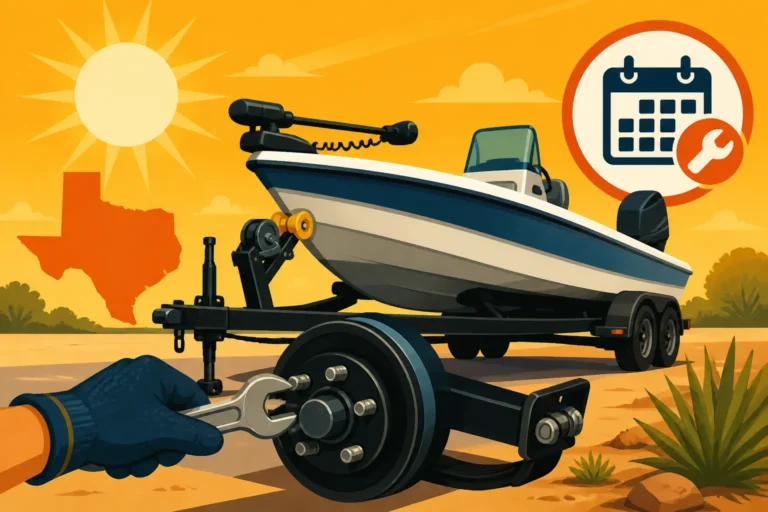
Wheel bearing failure is the leading cause of roadside trailer breakdowns in Texas. When trailer hubs become hot from highway travel and are abruptly submerged into cool lake or ocean water at a boat ramp, a vacuum effect occurs inside the hub shell. If your hub seals are worn or improper grease is used, this vacuum sucks water directly past the seals into the bearing cavity, contaminating the lubricant and causing metallic grinding, severe overheating, and eventual axle failure.
To prevent water intrusion, equip your trailer axles with positive-pressure bearing protectors or oil-bath hub systems. High-quality spring-loaded bearing caps maintain constant positive internal pressure, pushing grease outward against the seal so water cannot enter during launching. Use only premium, water-insoluble marine-grade grease formulate with high-tack synthetic additives. Check out How Often to Service a Boat Trailer in Texas Heat for detailed service intervals, but as a rule of thumb, repacking trailer bearings with fresh grease should occur at least once per season, or more frequently if you regularly launch in saltwater.
Before heading out on any trip, conduct a visual inspection of your hubs. Look for grease sling on the inside of trailer wheels, which indicates a blown rear grease seal. After driving 20 to 30 miles on the highway toward your fishing destination, pull off safely into a rest stop and carefully place your hand near each trailer hub. A warm hub is normal, but a hub that feels too hot to touch indicates insufficient lubrication, over-tightened spindle nuts, or failing bearings that require immediate mechanical attention before resuming your highway travel.
| Feature / Scenario | Closed Storage Unit | Covered Carport | Outdoor Backyard Storage |
|---|---|---|---|
| UV & Sun Protection | Maximum / Full Shield | Moderate / Top Cover Only | Low / Requires Heavy Cover |
| Moisture Control | High (Ventilated Units) | Moderate / High Airflow | Poor / High Condensation |
| Security Level | High / Locked Structure | Moderate / Open Access | Low / Requires Locks |
| Tire Strain Factor | Low / Climate Protected | Moderate / Ambient Heat | High / Direct UV and Heat |
| Maintenance Demand | Low Routine Care | Moderate Cleaning Needs | High / Frequent Inspections |
Trailer Frame Corrosion and Saltwater Rinsing Protocols
Launching your boat in Texas bays like Galveston, Matagorda, or Corpus Christi exposes your trailer frame to aggressive saltwater corrosion. Hot coastal air accelerates oxidation, quickly turning minor metal scratches into structural frame rust. Even if you only fish in freshwater, coastal rivers and brackish estuaries carry enough salinity to ruin unprotected steel frames, brake calipers, and electrical wiring connections over time.
Selecting the right trailer type is your first line of defense against corrosion. Aluminum C-channel frames and hot-dipped galvanized steel trailers are far superior to painted steel square-tube trailers for coastal anglers. Square-tube painted trailers trap saltwater inside the hollow frame rails, rusting out from the inside out where it cannot be visually detected. C-channel and I-beam designs allow water to drain instantly, making them far easier to clean thoroughly after a day on the bay.
Establish a strict post-trip washdown routine immediately after pulling your trailer out of saltwater. Never let saltwater dry on trailer axles, leaf springs, or brake assemblies. Wash the entire trailer down with fresh water treated with salt-neutralizing detergent concentrate. Pay special attention to hidden crevices, bunk board brackets, wiring harness channels, and tongue jack assemblies. Spraying bare metal hardware, leaf springs, and brake lines with heavy-duty marine corrosion inhibitor spray creates a durable barrier that halts rust formation in humid coastal conditions.
Long-Term Storage and Off-Season Boat Maintenance Rules
While Texas offers year-round angling opportunities, there are stretches during cold winter fronts or mid-summer heatwaves when boats remain parked for several weeks or months. Properly preparing your engine, fuel system, and onboard electrical components guarantees your boat fires up instantly the moment you decide to hook up and head out.
Fuel System Care and Thermal Expansion Issues
Ethanol-blended gasoline is the single greatest enemy of modern marine engines stored in warm climates. Gas containing ethanol absorbs atmospheric moisture through fuel tank vent lines. In humid environments, this water absorption leads to phase separation, where the water-ethanol mixture drops to the bottom of the fuel tank as a corrosive sludge that ruins fuel injectors, carburetors, and fuel pumps.
When storing a boat in Texas, always treat every tank of fuel with a high-quality marine fuel stabilizer formulated specifically to prevent ethanol phase separation and corrosion. If your boat will sit for longer than 30 days, fill the fuel tank to roughly 90% capacity. Leaving the tank nearly full minimizes the volume of humid air inside the tank, reducing condensation buildup. However, do not overfill the tank to 100% capacity; Texas temperature swings cause fuel to expand thermally, which can force raw gasoline out through air vents or ruin charcoal canister emissions systems.
Before leaving your boat in long-term storage, run the engine for 10 to 15 minutes after adding fuel stabilizer to ensure treated gas circulates fully through the fuel lines, filters, vapor separator tanks, and injection systems. Additionally, install an inline 10-micron water-separating fuel filter between the tank and the outboard motor. Inspect this filter bowl regularly, draining any trapped water before it ever reaches your engine.
Battery Management in Sweltering Summer Conditions
Extreme ambient heat drains and degrades marine batteries just as quickly as sub-freezing temperatures. Leaving marine batteries discharged in a hot storage unit causes permanent plate sulfation, ruining their capacity to hold a charge. Both traditional flooded lead-acid and modern AGM batteries require continuous maintenance to survive long periods of non-use.
Disconnect marine batteries completely using a heavy-duty main battery switch when the boat is parked, preventing subtle parasitic draws from stereo memory channels, GPS modules, or automatic bilge sensors. For long-term off-season storage, connect your batteries to a multi-bank smart onboard marine charger featuring automatic temperature compensation. Smart chargers adjust charge voltage based on ambient heat, preventing battery overcharging and fluid boil-off during intense summer heatwaves.
If you use conventional flooded lead-acid batteries, check cell fluid levels monthly using distilled water. Never top off battery cells with tap water, as dissolved minerals damage internal lead plates. For detailed instructions on selecting durable protective covers that shield your engine and deck electrical systems from sun degradation, consult Best Boat Cover for Texas Weather before setting up your outdoor storage space.
Preventing Mildew and Mold in High Humidity Environments
Texas humidity makes enclosed boat cabins, rod lockers, and bilge compartments ideal breeding grounds for mold and mildew. Storing a boat with even a small amount of residual water sitting in the carpet or bilge creates a foul, musty odor and ruins expensive tackle and upholstery within days.
Prior to pulling your cover tight over the deck, ensure the interior is completely dry. Sponge out residual water standing in the livewells, fish boxes, and bilge channels. Pull all drainage plugs, including the main transom drain plug, and elevate the tongue of the trailer as high as possible using the trailer jack. This steep angle forces any hidden deck condensation to flow backward and drain completely out of the stern drain hole.
To control ambient moisture inside covered compartments, open all storage locker hatches slightly to promote cross-ventilation. Place reusable moisture-absorbing buckets or solar-powered ventilation fans inside closed cabin spaces or large storage bays. Reviewing strategies on Best Way to Store a Boat in Texas Summer Heat provides additional practical tips for keeping air circulating through your vessel during peak summer months.
Texas Boat Towing and Highway Safety Best Practices
Towing a boat across vast stretches of Texas demands precise vehicle setup, vigilant driving habits, and total compliance with state safety laws. Long highway drives to legendary waters require your trailer and tow vehicle to operate as a single, perfectly balanced system.
Hitches Safety Chains and Weight Distribution Setup
Matching your boat trailer to the correct hitch receiver and tow vehicle capacity is critical for stable highway travel. Always check the Gross Vehicle Weight Rating (GVWR) of your trailer and ensure your hitch ball matches the exact size stamped directly on the trailer coupler. A 2-inch hitch ball placed into a 2-5/16-inch coupler may latch temporarily, but it can pop off violently when driving over bumps or bridge transitions on Texas highways.
Safety chains provide a vital backup line of defense should the trailer coupler separate from the hitch ball. Cross your safety chains beneath the trailer tongue in an “X” pattern before connecting them to the tow vehicle frame. Crossing the chains creates a cradle that catches the trailer tongue off the pavement if it drops off the hitch ball, preventing the tongue from digging into the asphalt and causing a jackknife rollover. Ensure the chains have enough slack to allow sharp turns without binding, but not so much slack that they drag along the road surface creating sparks.
Proper weight distribution prevents dangerous trailer sway at highway speeds. Aim for a tongue weight that equals roughly 10% to 15% of the total combined weight of your boat and trailer. If the tongue weight is too light, the trailer will fish-tail erratically at speeds above 55 mph; if the tongue weight is too heavy, it will depress the rear suspension of your tow vehicle, reducing front tire traction and steering control. Adjust your boat’s position on the trailer bunks or move heavy gear forward or aft to achieve proper balance.
Trailer Brakes and Emergency Breakaway Cable Inspections
Texas law requires braking systems on trailers when the gross total weight exceeds specific legal limits. Surge brakes and electric-over-hydraulic brakes are the two most common systems found on marine trailers. Surge brakes utilize a hydraulic master cylinder inside the trailer tongue coupler that compresses when the tow vehicle slows down, applying brake pressure to the trailer wheels. Electric brakes require an adjustable brake controller mounted inside your tow vehicle cab.
Before setting off on long road trips, inspect your trailer brake fluid reservoir located inside the tongue coupler. Ensure the fluid is clean and filled to the proper line. Inspect the flexible brake lines running along the trailer frame for kinks, dry rot, or fluid leaks near the brake calipers. Test brake responsiveness by making several slow-speed stops in a parking lot before pulling out onto heavy traffic corridors.
Always connect the emergency breakaway cable securely to the frame of your tow vehicle. Never hook this safety cable around the hitch ball itself. If the trailer detaches entirely from the vehicle, the breakaway cable pulls a mechanical switch or actuates the surge brake master cylinder, locking the trailer brakes solid to bring the runaway trailer to a quick stop. Replace frayed or rusted breakaway cables immediately before hitting the highway.
Navigating Texas Boat Ramps and Launch Etiquette
Busy Texas boat ramps during spring and summer weekends can be stressful environments. Practicing sound ramp etiquette keeps the launch process moving efficiently for everyone while preventing costly accidents on the concrete slope. Prepare your boat completely in the designated staging area before joining the launch line; never back down onto the ramp lane to load gear, tie down bumpers, or install drain plugs.
While in the staging area, perform a systematic pre-launch checklist:
- Remove all transom tie-down straps and motor support brackets.
- Verify the main transom drain plug is screwed in tight.
- Disconnect trailer wiring plugs if using non-waterproof light systems.
- Load all fishing gear, coolers, and safety equipment into the boat.
- Attach bow and stern dock lines and deploy side bumpers.
When backing down the ramp, go slowly and use your side mirrors. Once the trailer is deep enough for the boat to float free, set your tow vehicle parking brake firmly before stepping out. Unhook the bow winch strap and safety chain, back the boat off smoothly, and immediately tie up at the far end of the courtesy dock so other anglers can continue launching.
Reviewing Texas Life Jacket Requirements for Boats ensures that all required personal flotation devices are properly sized and positioned on deck before leaving the ramp. Additionally, ensure your registration numbers and decal are displayed correctly in accordance with Texas Boat Title and Renewal Rules to keep your outings fully compliant with state game wardens.
Essential Gear and Checklist for Texas Boat and Trailer Care
Keeping your boat and trailer in top mechanical shape requires having the right tools and replacement parts on hand. A quick repair at the ramp or in a parking lot can save an entire fishing trip when minor mechanical issues arise.
Storage Methods vs Maintenance Needs Summary
Different storage options impose distinct maintenance requirements on your boat and trailer. Comparing these choices helps you tailor your preventive care routine to your specific setup.
| Storage Method | UV & Weather Shielding | Humidity Risk | Pest Hazard | Key Maintenance Focus |
|---|---|---|---|---|
| Fully Enclosed Unit | Maximum Protection | Low to Moderate | Low | Battery trickle charging, fuel stabilization |
| Covered Carport | Moderate Protection | Moderate | High | Dust covers, pest repellents, tire UV covers |
| Backyard Uncovered | Minimal Protection | High | Extreme | Heavy UV covers, water pooling prevention, tire care |
| Wet Slip Marina | Variable / Cover Needed | Extreme | Moderate | Hull growth cleaning, bilge pumps, dock lines |
Must-Have Maintenance Tools and Equipment
Carrying a dedicated marine emergency kit in your tow vehicle or boat compartment provides complete peace of mind when traveling to remote fishing spots. Keep these essential items packed and ready for every outing:
- Tire Care: High-capacity 12-volt air compressor, digital tire pressure gauge, heavy-duty hydraulic bottle jack, lug wrench matching trailer lug nuts, and a fitted spare tire.
- Bearing Maintenance: Waterproof marine grease gun, extra tub of grease, spare pre-packed hub assembly, replacement cotter pins, and extra bearing dust caps.
- Electrical Repair: Waterproof electrical tape, spare marine fuses matching your boat’s fuse block, wire strippers, heat-shrink butt connectors, and a compact digital multimeter.
- General Hardware: Extra transom drain plugs, heavy-duty ratchet straps, stainless steel cotter pins, marine-grade anti-corrosion spray, and a complete socket set.
Finding high-quality toolkits and specialty marine hardware on Amazon is a great way to build out a custom roadside emergency box designed specifically for your trailer’s axle dimensions and lug patterns.
Step-by-Step Pre-Trip and Post-Trip Inspection Checklist
Developing a quick inspection habit prevents roadside breakdowns and structural damage. Run through these simple steps every time you tow your boat.
Pre-Trip Highway Checklist:
1. Check tire pressures on all tow vehicle and trailer tires, including spares, while cold.
2. Inspect trailer hub dust caps for leaking grease or missing seals.
3. Test all trailer lights: brake lights, running lights, hazard flashers, and turn signals.
4. Verify the hitch coupler is locked tight over the correct ball size and pinned secure.
5. Cross safety chains under the tongue and attach the emergency brake breakaway cable.
6. Ensure transom tie-down straps are cranked tight and the motor support bracket is locked.
7. Double-check that the main transom drain plug is installed securely.
8. Confirm your trailer frame tags comply with Texas Boat Trailer Registration Rules.
Post-Trip Washdown Checklist:
1. Pull the transom drain plug immediately upon exiting the ramp to drain bilge water.
2. Flush the outboard motor with fresh water using marine flushing muffs or direct hose ports.
3. Wash down the entire boat deck, hull, and trailer frame with fresh water and salt remover.
4. Open livewell drains and compartment hatches to air out residual moisture.
5. Wipe down marine electronics screens and store removable units in protective cases.
6. Connect battery chargers to recharge deep-cycle batteries back up to 100% capacity.
7. Cover the boat tightly using support poles to shed rainwater off the cover canvas.
If you are preparing your vessel for extended periods of cold weather during late fall or winter, review How to Winterize a Boat in Texas alongside Do Boats Need to Be Winterized in Texas? to ensure your engine block and onboard plumbing lines are fully protected against unexpected hard freezes.
By applying these storage strategies, trailer maintenance routines, and highway safety practices, you can enjoy stress-free trips to your favorite waters. Protect your rig against heat, humidity, and road stress, and your boat will be ready to perform smoothly every time you turn the key.
For tow vehicle driving recommendations, check out How to Trailer a Boat Safely on Texas Highways before taking off. If you are heading out toward coastal waters, review Best Public Boat Ramps on the Texas Coast to pick the safest launch facilities for your vessel.
Disclaimer
This article is for general informational purposes only and does not constitute professional advice. Laws, prices and regulations vary by location and change over time. Consult a qualified professional for guidance on your specific situation.