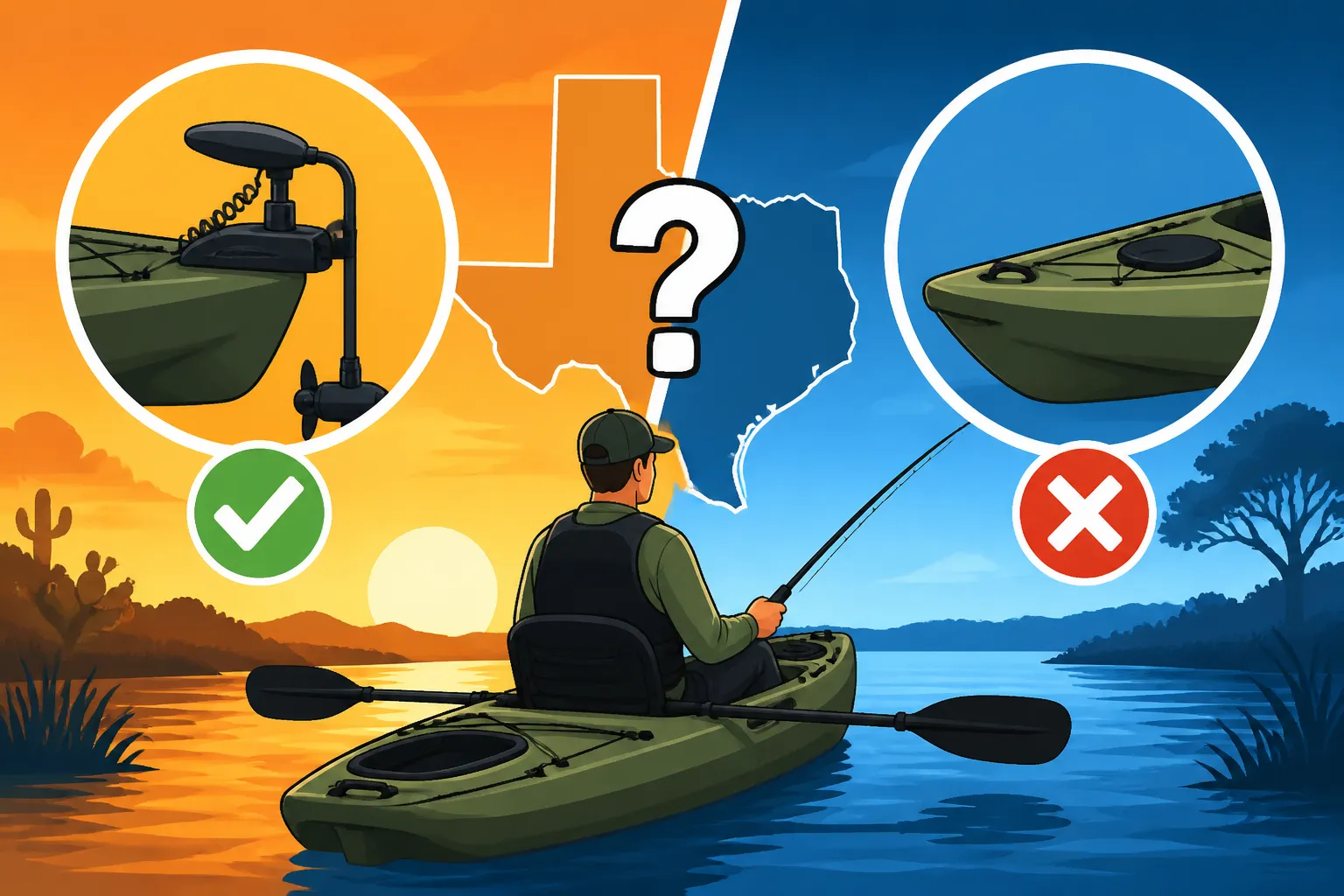
Do you need a trolling motor on a kayak?
Many Texas kayak anglers wrestle with the question of whether to add a trolling motor to their trusty vessel. It’s a completely valid dilemma, especially when you're out on a vast lake like Sam Rayburn or battling a stiff breeze in Galveston Bay, feeling like you're paddling uphill both ways. This guide is here to walk you through the ins and outs, helping you decide if a trolling motor is truly a "need" for your Texas fishing adventures, or if paddle power is still the way to go.
The Great Debate: Why Kayak Anglers Even Consider Trolling Motors
Let's be real, there are days when your arms feel like lead after just an hour of fighting the wind or covering ground on a big body of water. That's where the idea of a trolling motor starts to really shine for many kayak fishermen. It's not about being lazy; it's about extending your reach, conserving energy, and, let's face it, sometimes just making the fishing experience more enjoyable and productive.
Covering More Water and Fighting the Elements
Imagine launching your kayak into Lake Fork, notorious for its big bass, but also for its sprawling size. Without a motor, you might be limited to a few coves near the ramp. With a trolling motor, you can zip across open water to those prime fishing spots quicker, allowing you more time with your lines in the water. This is a huge game-changer when you're trying to fish multiple areas, or even just chasing schools of Texas White Bass Fishing Guide during their spring run up a river.
Furthermore, Texas weather can be notoriously unpredictable. A calm morning can quickly turn into a windy afternoon, making the paddle back to the launch a grueling, arm-aching ordeal. A trolling motor provides that crucial assist, helping you punch through headwinds, navigate currents, and even safely return to shore if you find yourself further out than anticipated. Think about trying to hold a position in a strong current on the Guadalupe River while trying to fly fish for trout; a motor can provide that subtle push to keep you exactly where you need to be. It can turn a potentially exhausting and frustrating trip into a much more relaxed and focused one.
Enhancing Fishing Efficiency and Comfort
Beyond just covering distance, a trolling motor significantly ups your fishing game in terms of efficiency. Picture this: you've hooked into a monster Texas Largemouth Bass Fishing Guide, and it's pulling you all over the place. Instead of frantically paddling with one hand while trying to fight the fish with the other, a motor can hold your position or even pull you away from snags and structure, giving you more control over the fight. For those serious about tournament fishing or just maximizing their catch rates, this is invaluable.
Modern trolling motors also come with advanced features like GPS anchoring (spot-lock), which is nothing short of magical. Imagine finding a brush pile absolutely loaded with crappie. Instead of constantly adjusting your paddle or deploying an anchor that might spook the fish, you hit a button, and your kayak stays precisely over that spot, hands-free. This allows you to focus 100% on your casting, lure presentation, and fish retrieval. It's a huge comfort upgrade, especially during those long Texas summer days when every ounce of energy counts. No more fumbling with anchors or drifting off your target zone – just pure, uninterrupted fishing.
When Less is More: Reasons to Stick with Paddle Power
While the appeal of a trolling motor is undeniable, it's not always the best fit for every kayak angler or every fishing scenario. Many of us cherish the simplicity and quiet nature of traditional kayaking, and there are very practical reasons why sticking with paddle power might be the smarter choice for you.
Simplicity, Cost, and Portability
One of the biggest draws of kayak fishing, for many, is its inherent simplicity and accessibility. You can often load a kayak onto your car, drive to a remote launch, and be on the water in minutes with minimal fuss. Adding a trolling motor complicates things considerably. First, there's the upfront cost of the motor itself, which can range widely. Then you need a robust battery (or two), a charger, wiring, a mounting system, and potentially specialized gear like a Best Kayak Fishing Crate Setup to hold it all. This quickly adds up, both in terms of dollars and pounds.
Suddenly, your lightweight, grab-and-go kayak becomes a much heavier, more cumbersome setup. Lifting it onto your vehicle, portaging it over short distances, or even launching from less accessible spots can become significantly more challenging. Furthermore, you're introducing more points of failure – batteries can die, motors can malfunction, and electronics can get wet. For those who value the minimalist approach and the sheer ease of getting on the water, the added complexity and expense of a trolling motor can be a major deterrent. If your fishing trips are typically short and close to the launch, or if you frequently fish small ponds and creeks, a motor might simply be more trouble than it's worth.
The Pure Kayaking Experience and Stealth
There's a certain Zen to paddling a kayak. The rhythmic stroke, the quiet glide across the water, the feeling of being truly connected to your surroundings – it's an experience many anglers wouldn't trade for anything. A trolling motor, by its very nature, introduces noise and a degree of detachment from this "pure" paddling experience. While modern motors are quieter than ever, they still generate some sound, and the hum of a propeller can sometimes spook fish in shallow, clear waters, especially when you're targeting wary species like redfish on the flats of Matagorda Bay.
For those who enjoy the stealth aspect of kayak fishing, paddling offers an unmatched advantage. You can creep into prime fishing areas with minimal disturbance, slipping through reeds and under low-hanging branches without the concern of a propeller getting tangled or making a splash. This silent approach is particularly effective for sight fishing in clear water or stalking spooky fish in calm conditions. The challenge of using your own strength and skill to navigate and position your craft is also a significant part of the appeal for many. If you love the exercise, the quiet, and the intimate connection with nature that paddling provides, then a trolling motor might detract from the very reasons you enjoy kayak fishing in the first place.
Taking the Plunge: What You Need to Know Before Motorizing Your Kayak
So, you've weighed the pros and cons, and you're leaning towards adding some electric assist to your kayak. That's awesome! But before you hit up Bass Pro Shops or jump on Amazon, there are some critical considerations to ensure your setup is safe, effective, and compliant with Texas regulations. It’s not just about bolting on a motor; it’s about creating a harmonious system.
Motor Types, Power, and Battery Choices
When it comes to trolling motors for kayaks, you'll generally encounter two main types: transom-mount and bow-mount. Transom-mount motors are typically simpler to install, clamping onto the back of your kayak, much like a small outboard. They're often more affordable and a good entry point. However, steering can be awkward, requiring you to reach behind you, or they might interfere with your rudder. Bow-mount motors, like those found on many bass boats, offer much better control, usually with a foot pedal or remote control, allowing you to steer from the front of the kayak. They are more complex to install and generally more expensive, but offer superior maneuverability, especially with GPS anchoring features. For Texas bass fishing, where precise boat control around structure is key, a bow-mount motor with spot-lock can be a game-changer. You might want to explore options mentioned in Best Trolling Motors for Texas Bass Boats for larger versions, keeping in mind the scale for kayaks.
Power is measured in pounds of thrust. For kayaks, something in the 30-55 lb thrust range is usually sufficient. A higher thrust will give you more speed and better performance against wind and current, but it will also draw more power from your battery. This brings us to batteries – a crucial component. You'll typically need a 12V deep-cycle marine battery. Lead-acid batteries are the most common and affordable, but they are heavy. Lithium-ion batteries are a fantastic alternative; they are significantly lighter, last longer, and maintain consistent power output, but they come with a higher price tag. Consider how long you plan to be on the water. A full day of heavy motor use will require a larger capacity battery or even two, which adds to the weight and complexity. If you're pondering battery specifics, check out resources like Best battery for a 24-volt trolling motor for insights, adjusting for your kayak's 12V needs.
Here's a quick comparison of common battery types for kayak trolling motors:
| Feature | Lead-Acid (Deep Cycle) | Lithium-Ion (LiFePO4) |
|---|---|---|
| Weight | Heavy (can be 60+ lbs for a large capacity) | Lightweight (often half the weight of lead-acid) |
| Cost | Lower initial cost | Higher initial cost |
| Lifespan | ~200-500 charge cycles (2-4 years) | ~2000-5000 charge cycles (10+ years) |
| Usable Capacity | Typically 50% without damage | Nearly 100% usable capacity |
| Performance | Power drops as charge depletes | Consistent power output throughout discharge |
| Maintenance | May require periodic water top-offs, sensitive to deep discharge | No maintenance, less sensitive to deep discharge |
| Charging | Slower charging, specific charging profile required | Faster charging, more flexible charging options |
Installation, Safety, and Legalities in Texas
Mounting a trolling motor securely to your kayak is paramount. Many fishing kayaks come "motor-ready" with transom plates or mounting points. If yours doesn't, you'll need to invest in a sturdy aftermarket motor mount. DIY solutions are common, but ensure they are robust enough to handle the motor's thrust and vibrations without compromising the kayak's integrity. Wiring needs to be safely routed and protected from water. Use marine-grade connectors and fuses to prevent electrical issues.
Safety on the water takes on new importance with a motorized kayak. Always wear a life jacket; in Texas, anyone on a vessel less than 26 feet in length must wear a life jacket if they are 13 years of age or younger, but it's wise for all ages on a kayak. Have a kill switch (safety lanyard) attached to you and the motor, which instantly cuts power if you fall out. This is a non-negotiable safety feature. Carry appropriate Texas Boat Safety Equipment Requirements, such as a whistle or horn and navigation lights if you plan to be out at dawn, dusk, or night. Remember, a motorized kayak is still a small vessel and easily overlooked by larger boats.
Now, for the big one: Texas regulations. This is where many kayak anglers get tripped up. In Texas, any vessel propelled by mechanical means (including an electric trolling motor) must be registered with the state. This means your kayak, once you add that motor, is no longer just a paddlecraft in the eyes of the law. You will need to obtain a Texas boat registration number and display it on your kayak, along with a Texas Parks and Wildlife Department (TPWD) decal. This applies even if you only use the motor occasionally. Ignoring this can lead to penalties for fishing without a license or operating an unregistered vessel. Information on Texas Boat Registration Requirements and Do you need to register a kayak in Texas? is essential reading before you power up.
You'll also need to consider your Texas Fishing License Requirements Explained. While a basic fishing license covers you, adding a motor turns your kayak into a "boat" for regulatory purposes, so always ensure your license is current and you understand all regulations specific to the waters you're fishing.
Is It Right for You? Matching the Motor to Your Texas Fishing Style
Ultimately, the decision to add a trolling motor to your kayak boils down to your personal fishing style, the types of water you typically fish, and what you hope to gain from the experience. There’s no single right answer, just what’s right for you.
Freshwater Lake Hopping vs. Coastal Flats Stalking
Consider the environment where you spend most of your fishing time. If you're primarily a freshwater angler, frequently hitting up large reservoirs like Lake Conroe, Toledo Bend, or O.H. Ivie Reservoir, a trolling motor can be a fantastic asset. These lakes often have vast expanses of open water, and a motor allows you to quickly move between different structure points – brush piles, creek channels, ledges – without exhausting yourself. For chasing schooling fish or covering long stretches of shoreline for bass, it’s incredibly efficient. A bow-mount motor with GPS spot-lock is particularly useful here for holding position over submerged humps or brush. This kind of flexibility allows you to adapt to changing conditions and target a wider range of Texas Freshwater Game Fish Species Guide.
However, if your passion lies in the Texas coastal waters – wade fishing the shallow flats of Aransas Bay for redfish or creeping through the back lakes near Port Mansfield – the calculus changes. In extremely shallow water, propellers can get fouled in grass or stir up too much mud, spooking the very fish you're trying to catch. The noise, even subtle, might be enough to send wary redfish packing. For true stealth and access to the skinny water, a paddle or a push pole is often superior. While some anglers use motors to get to a general area and then paddle or wade, the primary mode of fishing in these hyper-shallow environments usually favors human power. For these coastal conditions, Best Kayaks for Texas Saltwater Flats might lean towards more paddle-friendly, stable designs.
Tournament Angler vs. Casual Weekend Warrior
Your fishing goals also play a huge role. If you're a serious tournament angler, constantly striving to maximize your time on the water, explore new spots rapidly, and maintain precise boat control in all conditions, then a trolling motor can provide a significant competitive edge. The ability to quickly relocate, hold position in windy conditions, and fight fish without losing control of your kayak can translate directly into more bites and more fish in the livewell. For this group, the investment in a high-quality motor and battery setup is often justified by the performance gains. They might be looking at sophisticated units that offer GPS navigation and mapping, integrating seamlessly with their fish finders.
On the other hand, if you're a casual weekend warrior, someone who loves to simply drift down a quiet river for catfish, explore a small pond in a state park, or enjoy a peaceful morning casting for bluegill with the kids, a trolling motor might be an unnecessary complication. For these serene experiences, the added weight, cost, and maintenance of a motor could detract from the laid-back vibe you're seeking. The joy often comes from the simplicity, the quiet, and the exercise of paddling. Many anglers find immense satisfaction in earning their catch through their own paddle power. Before making a big purchase, consider what truly brings you joy on the water. Is it speed and efficiency, or tranquility and simplicity?
| Feature / Scenario | Paddle-Powered Kayak | Motorized Kayak |
|---|---|---|
| Cost (Initial) | Low (kayak + paddle) | Moderate to High (kayak + motor + battery + mount) |
| Weight & Portability | Lightweight, easy to transport/launch | Heavier, more cumbersome, requires more effort |
| Speed & Range | Limited by paddler endurance, slower | Faster travel, greater range, less fatigue |
| Stealth | Extremely quiet, ideal for wary fish | Quieter than gas, but still generates some sound |
| Maneuverability | Good with skill, but tiring in wind/current | Excellent, especially with remote/GPS control |
| Fishing Efficiency | Requires multi-tasking (paddling/fishing) | Hands-free fishing, precise positioning (spot-lock) |
| Maintenance | Minimal | Battery charging, motor care, electrical checks |
| Texas Regulations | No registration required (unless over 14 ft long) | Registration required, boat safety gear |
| Best For | Small waters, stealth fishing, exercise, budget-conscious | Large lakes, fighting wind/current, covering distance, tournament fishing |
So, do you need a trolling motor on a kayak in Texas? Not in the absolute sense. You can have incredible fishing experiences without one. But for many, especially those who fish large waters, battle strong winds, seek greater range, or simply want to enhance their fishing efficiency and comfort, a trolling motor can transition from a "want" to a very practical and highly valued addition to their Texas fishing arsenal.
Disclaimer
This article is for general informational purposes only and does not constitute professional advice. Laws, prices and regulations vary by location and change over time. Consult a qualified professional for guidance on your specific situation.