Best fish finder for deep Texas reservoirs
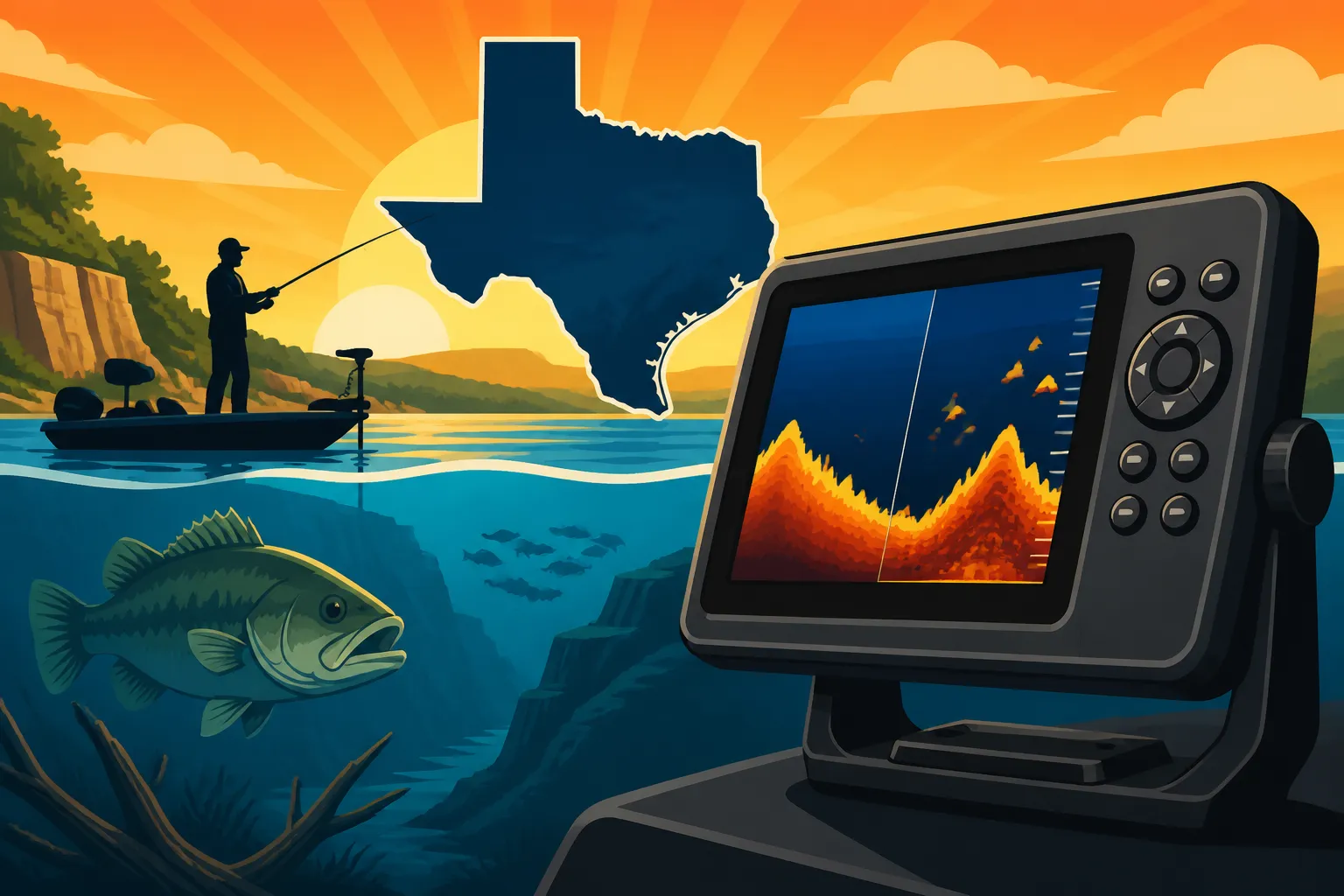
If you've ever found yourself staring at a blank screen on your fish finder while idling over seemingly productive deep water in a vast Texas reservoir, you know the frustration. Many anglers struggle to accurately locate fish and structure beyond a certain depth, missing out on prime opportunities. This guide is dedicated to helping you understand what makes a fish finder truly effective for those deep Texas lakes, ensuring you get the most out of your time on the water.
Why Deep Texas Reservoirs Present Unique Challenges for Fish Finders
Fishing deep reservoirs in Texas, like the expansive Toledo Bend or the legendary Sam Rayburn, isn't quite the same as shallow-water fishing in a smaller pond. These massive bodies of water come with their own set of unique characteristics that can really put a standard fish finder to the test. Understanding these challenges is the first step to choosing the right gear.
Signal Attenuation and Cone Angle Limitations
When your sonar signal travels through hundreds of feet of water, it naturally loses strength. This is called signal attenuation. A weaker signal means less clear returns, making it difficult to distinguish between a submerged tree and a school of baitfish far below. Think of trying to shout across a football field versus whispering across a small room—the signal gets weaker with distance. Standard fish finders often lack the power to send a strong enough pulse all the way to the bottom and get a clear echo back in very deep water.
Compounding this is the cone angle. Your transducer sends out a cone-shaped beam. In shallow water, this cone covers a relatively small area. But as the water gets deeper, that cone expands dramatically. While a wider cone might seem good for covering more ground, it also means that the same amount of sonar energy is spread over a much larger area, further weakening the signal. More importantly, it can lead to less precise readings, as targets at various depths within that wide cone can appear ambiguous on your screen. You might see a "blob" rather than distinct fish or structure, which isn't helpful when you're trying to pinpoint a specific brush pile holding bass.
Thermoclines and Water Column Interpretation
Texas reservoirs, especially in the warmer months, often develop distinct thermoclines. A thermocline is a layer of water where the temperature changes rapidly with depth. These layers can be a goldmine for anglers because they often concentrate baitfish and predatory fish like striped bass or largemouth bass. However, they can also interfere with sonar signals. When a sonar wave hits a thermocline, a portion of its energy can be reflected or refracted, creating what looks like a false bottom or a thick, hazy line on your fish finder screen.
Learning to accurately interpret your fish finder's display to distinguish between a genuine school of fish and a thermocline is a skill that comes with practice, but a quality fish finder with advanced processing can make this much easier. Some units are better at filtering out this interference, giving you a clearer picture of what's truly below the surface, even through multiple thermoclines. This is crucial for understanding the behavior of fish and knowing where to present your bait. If you're struggling with reading your screen, you might want to check out articles like How to use a fish finder for bass fishing for some great tips.
Identifying Deep Structure and Cover
Many of the best fishing spots in deep Texas reservoirs aren't just open water; they're defined by subtle changes in bottom contour, submerged timber, old roadbeds, or rock piles. These structures, especially when they're 50, 100, or even 200 feet down, can be incredibly difficult to identify with a basic fish finder. A low-resolution screen or an older sonar technology might simply show a flat line where a complex contour exists, or obscure a crucial brush pile with general clutter.
The ability to clearly see these deep structures—whether it's a creek channel, a steep drop-off, or a hidden stump field—is paramount for consistent success. If your fish finder can't paint a detailed picture of these underwater features, you're essentially fishing blind in vast expanses of water. This is where advanced technologies really shine, allowing you to map and pinpoint those hidden gems. If you're looking for where those fish might be hiding, a good resource to check out is How to Fish Deep Structure in Texas Reservoirs.
Key Features to Look For in a Fish Finder for Deep Water
When you're trying to unlock the secrets of deep Texas reservoirs, you can't just grab any old fish finder. The deeper the water, the more sophisticated your unit needs to be. There are specific features that are absolutely essential for penetrating those depths and giving you a clear, actionable picture of what's beneath your boat.
High-Power Transducer and CHIRP Technology
This is arguably the most critical component for deep-water performance. A transducer is what sends and receives the sonar waves. For deep water, you need a transducer with high wattage output (power) to ensure the signal can reach the bottom and return with enough strength to be processed clearly. Think of it like a flashlight: a weak flashlight won't illuminate a distant object, but a powerful one will.
Even more important than raw wattage is CHIRP (Compressed High-Intensity Radiated Pulse) technology. Unlike traditional 2D sonar which sends out a single frequency pulse, CHIRP sends out a continuous sweep of frequencies (from low to high). This allows the receiver to process a much wider range of information, resulting in significantly clearer, more detailed, and higher-resolution images. With CHIRP, you'll see better target separation (distinguishing individual fish in a school), less noise, and a more accurate representation of structure, even in hundreds of feet of water. Many reputable brands like Humminbird, Lowrance, and Garmin offer excellent CHIRP-enabled transducers. You can often find a great selection of these high-performance transducers and units at Bass Pro Shops, where you can speak with knowledgeable staff about compatibility.
Large, High-Resolution Display
Imagine trying to read a detailed map on a tiny, blurry screen. It's frustrating and ineffective. The same goes for fish finders in deep water. As the signal travels further, it needs more pixels to accurately render the fine details of fish arches, bait balls, and subtle bottom contours. A large screen (7 inches or more is a good starting point, with 9-12 inches being ideal for serious deep-water anglers) provides ample real estate for viewing multiple sonar types simultaneously, like traditional 2D, Down Imaging, and Side Imaging.
Coupled with size, resolution is key. Look for displays with a high pixel count (e.g., 800×480, 1024×600, or higher). A higher resolution means more detailed images and a clearer distinction between targets and structure. This becomes especially noticeable when you're trying to pick out a lone fish sitting tight to a submerged stump in 70 feet of water. You want crisp, clear images that don't leave you guessing.
Integrated GPS and Detailed Mapping
Navigating vast Texas reservoirs and marking precise fishing spots in deep water without reliable GPS and mapping is a recipe for getting lost and frustrated. Your fish finder should have an integrated, high-precision GPS receiver that can pinpoint your location with accuracy. More importantly, it should support detailed mapping, ideally with pre-loaded maps of major Texas reservoirs or the ability to load high-definition mapping cards.
These maps often include contour lines that show depth changes, highlighting submerged creek channels, humps, and ledges—prime deep-water structure. Some advanced units even allow for real-time mapping (like Garmin's Quickdraw Contours or Lowrance's Genesis Live), letting you create your own custom, detailed contour maps of areas that might not be fully charted. This is invaluable for finding new honey holes and returning to productive spots with precision. If you're planning a trip to one of the truly epic spots, you might want to look into Lake Fork Fishing Guide or O.H. Ivie Reservoir Fishing Guide for specific mapping needs.
Types of Sonar Technology Best Suited for Deep Texas Reservoirs
The world of fish finders has evolved so much, offering anglers an incredible array of sonar technologies. For the challenges of deep Texas reservoirs, certain types of sonar truly stand out, offering the clarity and detail you need to find fish and structure that might otherwise remain hidden.
Traditional 2D CHIRP Sonar
This is the foundational sonar technology, but with the vital upgrade of CHIRP. Traditional 2D sonar sends a cone-shaped beam straight down, displaying returns as arches (fish) or lines (bottom contour and structure). While it might seem basic compared to newer imaging technologies, a high-frequency, high-power CHIRP 2D sonar is still incredibly effective for deep-water applications. The CHIRP pulse provides much better target separation and clarity than older, fixed-frequency 2D sonar, making it easier to identify individual fish, schools of bait, and even density changes in the bottom.
In deep water, a strong 2D CHIRP signal can penetrate further and provide a reliable depth reading and a good overview of the water column directly beneath your boat. You'll often use 2D CHIRP in conjunction with other imaging technologies, as it excels at showing fish suspended in the water column or tightly hugging the bottom, even when side-scanning or down-scanning might struggle with signal returns from extreme depths. It’s your workhorse for understanding what’s directly under your hull in any given moment.
Down Imaging / DownVu / ClearVü
Down Imaging, known by various brand names like DownVu (Garmin) or ClearVü (Lowrance), offers a photographic-like view of what's directly beneath your boat. Instead of a traditional sonar cone, it uses a very thin, high-frequency beam that essentially scans a "slice" of water below. This technology is fantastic for distinguishing structure from fish and getting a much clearer picture of what the bottom looks like.
For deep Texas reservoirs, Down Imaging provides incredible detail for identifying submerged timber, rock piles, brush piles, and even individual fish associated with those structures. While it doesn't offer the same wide coverage as Side Imaging, its focused beam excels at revealing precise details in the vertical plane. It's like having an underwater camera focused straight down. When you see a faint return on your 2D sonar, switching to Down Imaging can confirm if it's a tight school of crappie in a brush pile or just some debris. Many anglers rely on it to confirm their 2D readings, especially when fishing for species like Texas Crappie Bag Limits or Texas Catfish Bag Limits that often hold tight to structure.
Side Imaging / SideVu / SideScan
Side Imaging, or SideVu/SideScan, is a game-changer for covering vast areas and finding hidden structure in deep water. This technology sends out two thin, high-frequency beams to the sides of your boat, essentially creating a panoramic view of the bottom and water column out to the left and right. This allows you to scan a much wider swath of water than traditional 2D or Down Imaging.
Imagine cruising over a deep flat. With Side Imaging, you can spot a brush pile 100 feet to your left or a submerged creek channel running off to your right, long before you pass directly over it. This saves an enormous amount of time, allowing you to quickly identify potential holding areas for fish. For deep Texas reservoirs, where cover can be sparse and spread out, Side Imaging is invaluable for locating those isolated humps, submerged roadbeds, or timber lines that hold fish. It’s also incredibly useful for finding schools of baitfish, which often indicate where larger predatory fish are lurking. When used effectively, Side Imaging helps you piece together the underwater topography and discover those elusive deep-water honey holes. If you're interested in covering more ground, this is your best friend. Retailers like Amazon offer a vast array of units with these advanced capabilities, making it easy to research and find the perfect fit.
Here's a quick comparison of these sonar types:
| Sonar Technology | Best Use for Deep Texas Reservoirs | Strengths | Limitations |
|---|---|---|---|
| 2D CHIRP Sonar | Identifying fish in the water column, bottom composition, depth, general structure beneath boat. | Excellent target separation, reliable depth readings, good in all depths, strong signal penetration. | Narrow coverage directly under boat, less detailed structure depiction than imaging. |
| Down Imaging | Detailed, photographic-like views of structure and fish directly below boat. | Superior clarity for submerged objects (trees, brush piles), easy to interpret what's directly below. | Only views directly under the boat, limited side coverage. |
| Side Imaging | Scanning wide areas for structure, baitfish schools, and fish not under boat. | Covers vast swaths of water quickly, excellent for finding offshore structure and contour breaks. | Can be more difficult to interpret at extreme depths or high speeds. |
Tips for Maximizing Your Fish Finder's Performance in Deep Water
Having a top-tier fish finder for deep Texas reservoirs is a fantastic start, but it's only part of the equation. To truly unlock its potential, you need to understand how to set it up, adjust its settings, and interpret what it's telling you. It's like having a high-performance sports car—you still need to know how to drive it.
Proper Transducer Installation
This cannot be stressed enough: a poorly installed transducer will cripple even the most expensive fish finder. For deep water, you need an unobstructed path for the sonar signal.
- Location: The transducer should be mounted in an area with minimal turbulence. On a transom mount, this usually means on the starboard (right) side of the boat, away from the propeller wash and any strakes or rivets that might create air bubbles. For maximum performance in deep water, especially on boats that spend a lot of time on big lakes like Lake Texoma Fishing Guide, a thru-hull or in-hull transducer can provide the cleanest signal.
- Angle: Ensure the transducer is perfectly level with the bottom of the hull, both side-to-side and front-to-back, when the boat is running at fishing speeds. If it's tilted, your signal will be skewed, and your side/down imaging won't be accurate.
- Wiring: Route the transducer cable carefully, avoiding any sharp bends or pinching, and keep it away from other electrical wires that could cause interference. Electrical noise is a killer for deep-water clarity.
Taking the time for proper installation, or even having a professional do it, will pay dividends in clearer readings and more consistent performance.
Adjusting Sensitivity, Range, and Frequency
The default settings on your fish finder might be fine for average conditions, but deep water fishing demands specific adjustments.
- Sensitivity (Gain): This controls how much detail your unit displays. In deep water, you generally want to increase the sensitivity to pick up faint returns from distant fish or subtle bottom changes. However, too much sensitivity can introduce clutter and noise. It’s a delicate balance. Start higher and reduce it slightly if your screen becomes too busy.
- Range (Depth): Always set your depth range to slightly deeper than the actual water depth you're fishing. This ensures you're seeing the entire water column and aren't cutting off any crucial bottom detail.
- Frequency: Many CHIRP units allow you to select a frequency range (e.g., low, medium, or high CHIRP). Lower frequencies (e.g., 50 kHz or low CHIRP) penetrate deeper water more effectively, making them ideal for initial deep-water searches. Higher frequencies (e.g., 200 kHz or high CHIRP) offer better detail and target separation but have less depth penetration. Often, running a split screen with both a low and high CHIRP frequency will give you the best of both worlds. For example, use low CHIRP to scan for deep fish, and high CHIRP for detailed views of structure when you're closer to it.
Experiment with these settings. What works on Lake Whitney might not be ideal for the deeper sections of Canyon Lake. Don't be afraid to tweak them throughout the day as conditions change.
Interpreting Your Readings and Using Multiple Views
Understanding what you're seeing on your screen is just as important as the technology itself. Fish arches, blobs, lines, and colors all tell a story.
- Fish Arches: On 2D sonar, a strong, well-defined arch typically indicates a fish. The longer and thicker the arch, the longer the fish was in the sonar beam, often suggesting a larger or slower-moving fish.
- Structure vs. Fish: Use Down Imaging to differentiate between a brush pile and a school of baitfish. Down Imaging renders structure with incredible detail, helping you understand where fish might be relating to it.
- Side Imaging Interpretation: Side Imaging takes practice. Learn to identify shadows cast by objects on the bottom – these shadows indicate height and shape. A long, dark shadow usually means a tall object. Fish often appear as bright specks or small white "clouds" on Side Imaging.
- Split Screens: Most modern fish finders allow for multiple views on a single screen. For deep water, a common and effective setup is a split screen showing 2D CHIRP on one side, and Down Imaging or Side Imaging on the other. This allows you to quickly cross-reference information and build a complete picture of the underwater environment. For finding those trophy fish, consider combining this with How to read lake contour maps for bass fishing or Best electronics for Texas reservoir fishing.
By mastering these techniques, you'll be able to confidently navigate and fish the vast, deep waters of Texas reservoirs, turning what used to be a frustrating experience into a highly productive one.
Disclaimer
This article is for general informational purposes only and does not constitute professional advice. Laws, prices and regulations vary by location and change over time. Consult a qualified professional for guidance on your specific situation.