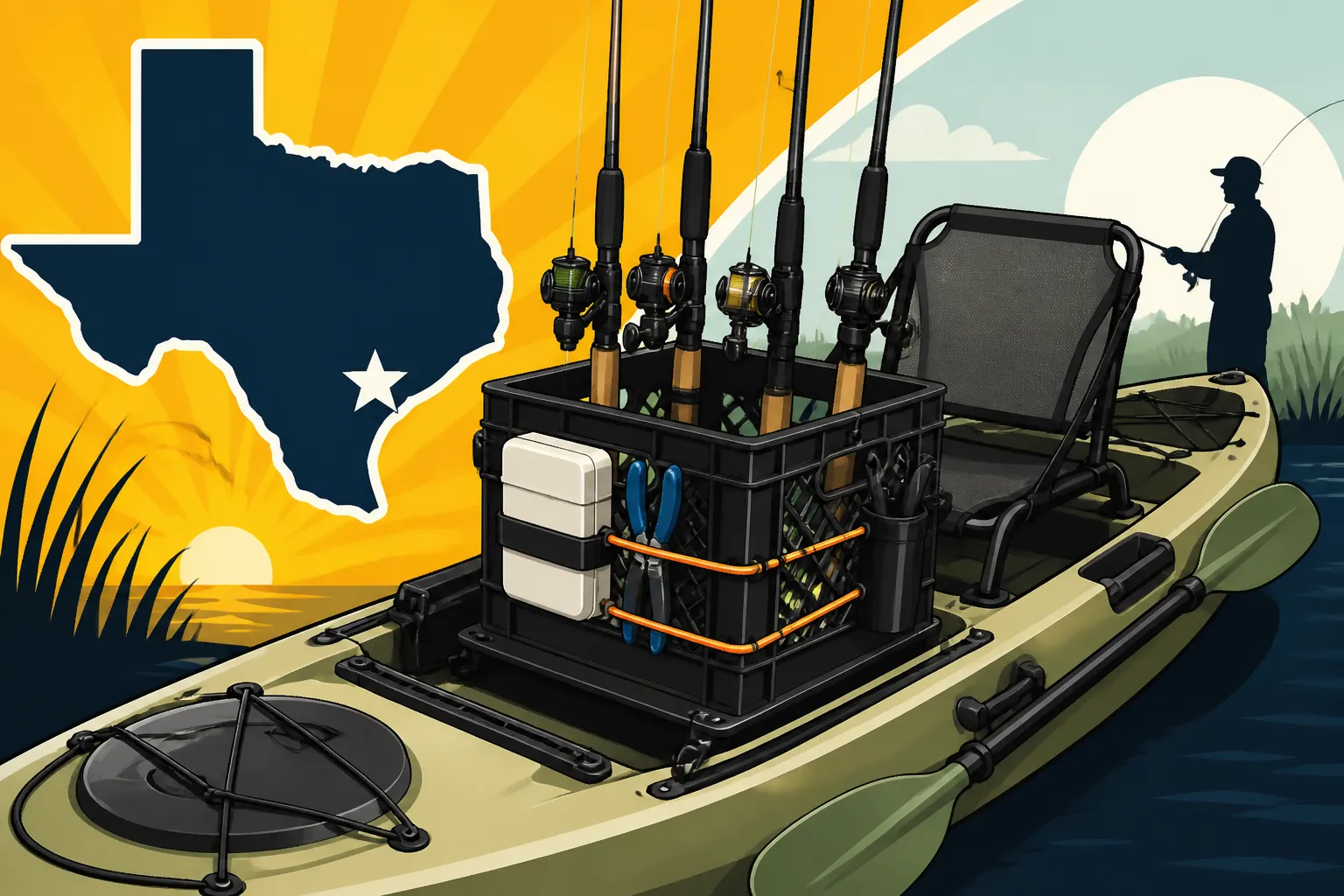
Best kayak fishing crate setup
One of the biggest challenges for us kayak anglers, especially out here in Texas where you can find yourself paddling across vast lakes or navigating winding rivers, is keeping all our essential gear organized, accessible, and most importantly, secure. There’s nothing worse than needing your pliers in a hurry only to realize they’ve tumbled into the abyss of your kayak hull, or worse, overboard. This comprehensive guide is all about helping you design and build the best kayak fishing crate setup so you can focus on the fish, not on fumbling with your tackle.
Why a Fishing Crate is Essential for Kayak Anglers
Kayak fishing offers an incredible sense of freedom and access to waters often unreachable by larger boats, but it comes with the unique constraint of limited space. Unlike a bass boat with multiple storage compartments, a kayak demands efficiency and clever organization. That's where a well-designed fishing crate truly shines, transforming your stern into a functional, organized fishing station.
Solving the Storage Conundrum
Think about it: where do you put your extra rods, tackle boxes, leader material, and all those little tools you need on the water? Just tossing them into the hull or tying them down haphazardly can lead to frustration and lost gear. A fishing crate provides a centralized, elevated storage solution that keeps your most important items within easy reach. It acts as your portable command center, neatly containing everything from your primary tackle trays to your water bottle and first aid kit. Without a dedicated system like a crate, your kayak can quickly become a cluttered mess, turning an enjoyable outing into a constant struggle to find what you need.
Enhancing Accessibility and Safety
When you've got a feisty largemouth on the line or a redfish thrashing boatside, you need immediate access to your pliers, a measuring board, or perhaps a net. Fumbling around or having to twist awkwardly in your seat to retrieve these items isn't just inconvenient; it can be dangerous. A properly configured crate positions these tools right behind you, easily reachable with a slight turn. This accessibility reduces the risk of capsizing from sudden movements, keeps you focused on the fish, and ultimately makes your time on the water safer and more productive. It also means less time with your hands in a fish's mouth than you'd like, searching for clippers.
Portability and Versatility for Any Trip
One of the unsung heroes of the fishing crate is its grab-and-go nature. Imagine packing all your gear directly into your crate at home, knowing it's perfectly organized. When you arrive at the launch, whether it's a quiet ramp on Lake Tawakoni fishing guide or a bustling put-in near the coast for Texas Saltwater Fishing Techniques, you simply lift the loaded crate from your truck or garage, drop it into the stern well of your kayak, secure it, and you're ready to paddle. This ease of transfer is invaluable, especially if you own multiple kayaks or frequently fish different locations. You can even move the crate to a friend's boat for a shared trip, knowing your essential setup is always consistent.
Key Components of an Effective Kayak Fishing Crate
Building a fantastic fishing crate isn't about throwing things together; it's about choosing the right foundation and then customizing it with smart additions. Let's look at the core elements that make a crate truly indispensable for kayak anglers.
The Foundation: A Sturdy Crate
The base of your kayak fishing setup is, of course, the crate itself. While the classic plastic milk crate is a popular and budget-friendly choice, there are now purpose-built kayak fishing crates available that offer more features from the get-go.
A standard milk crate is a great starting point because it's readily available, durable, and its open lattice design makes it easy to customize with zip ties, bungees, and PVC pipe. However, if you're looking for something more refined, brands like Wilderness Systems, YakAttack, or even some generic options you might find on Amazon, offer crates specifically designed for kayaks. These often come with integrated rod holders, accessory tracks, and sometimes even a lid. The key is to choose a crate that fits snugly into your kayak's stern well or tankwell, preventing it from sliding around too much. Consider the dimensions of your kayak's storage area when making your selection. A crate that's too tall might interfere with your paddling stroke, while one that's too small wastes valuable space.
Rod Holders: Keeping Your Rods Secure
For most kayak anglers, a fishing crate isn't complete without a way to securely hold multiple fishing rods. Whether you're trolling, paddling, or simply need a safe place to put a rod down while you re-tie, rod holders are crucial.
You have a few options here. Many DIY enthusiasts use PVC pipes, cut to length and zip-tied or bolted to the sides of a milk crate. These can be angled to prevent rods from tangling or hitting overhead obstacles. For a more robust solution, you can invest in dedicated rod holders from companies like Scotty or Ram Mounts, which can be bolted directly to a more solid crate or even attached to accessory tracks if your crate (or kayak) has them. Typically, having at least two to four rod holders is ideal. This allows you to carry multiple setups for different techniques – perhaps one for topwater, one for a Texas rig, and one for a Carolina rig – or to keep spare rods at the ready. Think about how you fish; if you often bring a net, you might even dedicate one "rod holder" slot for your net. When choosing positions, ensure they don't interfere with your paddle stroke and that the reels won't clang together.
Tackle Management Systems
Once your rods are sorted, the next big challenge is organizing your tackle. A chaotic mess of lures, hooks, and weights at the bottom of your crate is just as frustrating as having no crate at all.
This is where a good system of tackle boxes and bags comes into play. Flat, clear plastic utility boxes, often from brands like Plano, are perfect for this. You can stack several of them horizontally or vertically within your crate, allowing you to separate lures by type, color, or even by target species. Some kayak anglers prefer soft-sided tackle bags that fit inside the crate, offering mesh pockets and zippered compartments. These can be particularly good for protecting gear from spray. Consider dedicating one box to frequently used items, like your favorite Best Lures for Lake Fork bass in spring or your everyday soft plastics, and another for less common but still essential gear. You could even integrate a small, soft-sided cooler from Bass Pro Shops on one side of your crate, secured with bungees, for snacks, drinks, or to keep your catch fresh on How to Fish in Hot Texas Summers.
Essential Tools and Accessories
Beyond rods and tackle, there are numerous small but vital tools and accessories that make a big difference in your kayak fishing experience. The crate is the perfect place to keep these within arm's reach.
Think about pliers for hook removal, line cutters, a fish gripper (especially for toothy critters like gar or bigger catfish), and a measuring board. Many anglers attach these directly to the outside of their crate using bungee cords, retractable lanyards, or specialized tool holders. This ensures they are always accessible without opening a lid or digging through a bag. Other useful items might include a small first-aid kit, a headlamp for early morning or late evening trips, sunscreen, bug spray, and a whistle or signaling mirror for safety. For those long days out on Sam Rayburn Reservoir Fishing Guide, a dedicated space for a water bottle or thermos is also a wise addition. The goal is to make sure that when you need something, it's there, and you can get to it instantly.
Step-by-Step Guide to Building Your Own Kayak Fishing Crate
Putting together a kayak fishing crate might seem daunting, but it's a straightforward DIY project that pays huge dividends on the water. Here's how to build a functional and customized setup.
Choosing Your Base Crate
Your first decision is the foundation. As mentioned, the humble milk crate is king for DIY projects due to its affordability and adaptability. You can often find these at hardware stores, or even recycled from local businesses. Make sure it's a sturdy, standard size that will fit securely in your kayak's tankwell.
If you opt for a purpose-built kayak fishing crate, such as those you might find at Bass Pro Shops or online retailers like Amazon, you're buying a product often designed with fishing features already integrated. These can sometimes include built-in rod holders, lids, or accessory tracks, which can save you some customization steps. Whichever you choose, ensure the plastic is robust enough to withstand sun, saltwater, and the occasional bump. Consider how much gear you typically bring. If you're a minimalist, a smaller crate might suffice. If you carry multiple tackle boxes and extra layers, a larger or taller crate might be better. Remember, the goal is efficiency, not just volume.
Attaching Rod Holders
This is typically the most crucial modification for any fishing crate. For a milk crate, PVC pipe is your best friend.
- Measure and Cut: Decide how many rod holders you need (usually 2-4) and cut PVC pipes to a length that will support your rod reels above the crate, often around 10-12 inches. Angle the top cut if you want your rods to lean outwards slightly.
- Positioning: Place the pipes against the outside or inside of the crate walls. Consider where they'll sit in relation to your paddling stroke and other gear. Avoid placing them so far back they make it hard to reach your rods.
- Secure Attachment: Use heavy-duty zip ties or small stainless steel bolts with washers and nuts to secure the PVC pipes to the crate. Drill small holes through the crate and the PVC for bolts. For zip ties, thread them through the crate's existing holes and around the pipe, ensuring a tight fit. You might use two or three attachment points per pipe for maximum stability. Make sure there are no sharp edges that could chafe your line or snag your clothing.
Adding Storage Pockets and Bungees
To maximize the external storage and keep frequently used items handy, consider adding mesh pockets or bungee cords to the sides of your crate.
Mesh gear bags, often designed for boats or kayaks, can be easily zip-tied or screwed onto the exterior of a plastic crate. These are perfect for items that need to air dry or be quickly accessed, like a small towel, a plastic bag for trash, or a water bottle. For flexible storage, drill small holes at strategic points around the top perimeter of your crate and thread bungee cords through them, creating a crisscross pattern on the lid if you have one, or along the sides. These bungees can then hold down spare jackets, small dry bags, or even a compact landing net. You can even create small "pockets" by attaching short sections of bungee cord to two points on the crate, forming a loop to hold a specific tool like a fish gripper or a small cutting board.
Securing the Crate to Your Kayak
This step is non-negotiable. An unsecured crate is a lost crate, especially if you capsize or hit rough water.
Most kayaks come with bungee cords in the stern tankwell specifically for this purpose. If yours doesn't, you can easily install "pad eyes" (small loops that attach to your kayak) using waterproof rivets or screws, and then thread bungee cords or cam straps through them. Position the pad eyes so the straps go over the top of the crate, pulling it down firmly into the tankwell. You want it snug enough that it won't shift around during paddling or when reeling in a big fish, but not so tight that it's difficult to remove at the end of the day. A quick release system, like simple buckles or carabiners, can be handy for easy loading and unloading. Make sure the straps or bungees are durable and weather-resistant, as they'll be exposed to the elements constantly. Don't forget that if you happen to get a Fine for fishing without a license in Texas, they'll want to see it, and it's best not to be fumbling with an unsecured crate trying to find your paperwork.
Advanced Customizations and Maximizing Space
Once you have the basics down, you can take your kayak fishing crate to the next level with advanced customizations. These additions focus on integrating technology, maximizing every inch of space, and ensuring your gear is protected, no matter what Texas weather throws at you.
Integrating Electronics and Power
For many serious kayak anglers, a fish finder is a game-changer. Your crate can serve as the perfect mounting point and power source.
Small, portable fish finders can often be mounted directly to the top edge or a side of your crate using RAM mounts or similar systems. For power, you can place a small, sealed lead-acid battery or a lithium-ion battery inside a waterproof box within your crate. Run the transducer cable neatly along the side of your kayak to avoid snags. Some anglers even install a small, waterproof switch on the crate itself for easy power control. This keeps all your electronics consolidated and easily removable when you're done fishing. You might even use a small, clear, waterproof box to house your phone, keeping it visible for GPS or weather updates without risking water damage. Check out Best Fishing Electronics for Texas Anglers for ideas on what kind of gear works best.
Specialized Holders and Mounts
Beyond rod holders, there's a world of specialized mounts and holders that can make your crate even more functional.
Consider adding a cup holder – a simple but often overlooked luxury that keeps your drink from rolling around. Action camera mounts, like those for a GoPro, can be attached to the top or side of your crate, giving you a stable platform to capture all your fishing adventures without needing an extra pole or clamp. Some anglers even integrate a small, collapsible anchor system to their crate, with the anchor line neatly coiled and secured, ready for deployment. For night fishing or low-light conditions, a small, collapsible light pole that can be inserted into a rod holder is a fantastic addition, providing visibility for you and other boaters, or even illuminating your work area if you're rigging up new bait.
Utilizing Vertical Space
The beauty of a crate is its vertical orientation. Don't just think horizontally; leverage the height to your advantage.
Stackable tackle trays are excellent for this, allowing you to organize a variety of lures and tools without taking up a large footprint. You can also create removable inserts or dividers within the crate to keep items from shifting during transit. For instance, a thin piece of cutting board material or marine-grade plywood can be cut to fit inside the crate, creating a flat, stable platform for your tackle boxes, and allowing you to store bulkier items like a small dry bag or a larger bait cooler underneath. Some anglers even fashion a removable lid for their crate, which can double as a small work surface or a spot to temporarily place a fish while getting ready for a photo. Maximizing vertical space means you can carry more gear efficiently without cluttering your kayak's deck.
Weather Protection and Durability
Texas weather can be unpredictable, from scorching summer sun to sudden thunderstorms. Protecting your gear is paramount.
While a milk crate is open, you can easily add a simple lid made from a thin sheet of plastic or even a cutting board, secured with bungees or hinges, to protect your tackle from rain and sun. For more sensitive items, always store them in waterproof dry bags or hard cases within the crate. Consider the materials you use for your DIY additions: stainless steel hardware will resist rust better than regular steel, and marine-grade adhesives or sealants will ensure your attachments stay put through wet conditions. The sun can also degrade plastics over time, so if your kayak (and crate) is stored outdoors, consider a cover to prolong its life. This will ensure your Best Fishing Rods for Texas Anglers and Best Bait and Lures for Texas Fishing stay in top condition.
| Crate Component | Primary Benefit | Common Material / Type | Customization Idea |
|---|---|---|---|
| Base Crate | Centralized, accessible storage | Plastic Milk Crate / Purpose-built Kayak Crate | Add a custom-fit lid that doubles as a cutting board |
| Rod Holders | Secure transport & ready access for rods | PVC pipe / Scotty, Ram Mounts | Vary angles to prevent tangles; integrate net holder |
| Tackle Boxes/Bags | Organized lure & accessory storage | Plano utility boxes / Soft tackle bags (Amazon) | Label boxes by species or lure type; use foam inserts |
| Tool Holders | Instant access to pliers, cutters, grippers | Bungee loops / Retractable lanyards | Mount magnetic strips for quick tool attachment |
| External Pockets | Quick access to soft goods, water bottles | Mesh bags / Dry bags | Create specific loops for paddle leash or lip gripper |
| Power/Electronics | Integrated fish finder & charging station | Waterproof battery box / RAM mounts | Add a USB charging port for phone/accessories |
| Security Straps | Prevents loss in rough water or capsize | Bungee cords / Cam straps | Use quick-release buckles for easy removal |
Disclaimer
This article is for general informational purposes only and does not constitute professional advice. Laws, prices and regulations vary by location and change over time. Consult a qualified professional for guidance on your specific situation.