Do bag limits still apply on Texas Free Fishing Day?
There's a common misconception swirling around Texas Free Fishing Day: that "free" means "no rules." Many folks get excited about the chance to hit the water without needing a license, but they often wonder if that freedom extends to the limits on how many fish they can keep. It’s a completely fair question, and the answer is crucial for a fun and legal day out. This guide is here to clear up that confusion, explaining exactly what "free" truly means and how you can enjoy Texas Free Fishing Day while staying within the law.
What Texas Free Fishing Day Really Means
Texas Free Fishing Day is a fantastic opportunity, a real gift from the state to encourage more people to experience the joy of angling. It's designed to remove a common barrier – the cost and effort of obtaining a license – and simply get folks outdoors, rods in hand, enjoying our incredible waterways.
A License-Free Opportunity, Not a Free-for-All
First things first, let's nail down what this special day actually entails. Each year, on the first Saturday in June, the Texas Parks and Wildlife Department (TPWD) designates a specific day when Texans and out-of-state visitors alike can fish in public waters without needing a Texas fishing license. It's a wonderful initiative to introduce new anglers to the sport, or to allow seasoned veterans to bring friends and family along without the immediate financial commitment of a license.
The spirit behind Texas Free Fishing Day is truly about accessibility and sharing our natural resources. Imagine a family who rarely fishes because of the perceived hassle or expense; this day makes it easy for them to grab some basic gear, head to a local lake, and try their luck. It's also a perfect chance to take kids out, giving them a taste of reeling in their first fish without having to worry about the usual Texas Fishing License Requirements Explained.
However, and this is where the misunderstanding often creeps in, the "free" aspect applies only to the fishing license requirement itself. It doesn't mean that every other regulation suddenly goes out the window. This is a crucial distinction that many anglers, especially those new to the sport, might overlook, leading to unintended violations.
The Importance of Conservation
Understanding why other regulations remain in effect on Free Fishing Day really boils down to the bigger picture of conservation. The rules and limits set by TPWD aren't there to make fishing difficult; they're thoughtfully designed to protect our precious fish populations and ensure healthy ecosystems for generations to come.
Think about it: if everyone could keep as many fish as they wanted on Free Fishing Day, even for just one day, the impact on specific species could be devastating, particularly in popular fishing spots. Our lakes, rivers, and coastal bays are vibrant, living systems that need careful management. Without regulations like bag limits and length limits, popular species could be overharvested, leading to declines in population, disruptions in the food chain, and ultimately, poorer fishing for everyone in the long run.
These regulations are based on extensive scientific research into fish biology, spawning cycles, growth rates, and population dynamics. They ensure that enough fish survive to reproduce, that trophy-sized fish can develop, and that the overall health of the fishery is maintained. So, while it feels liberating not to buy a license, remembering that the rules are for the good of the fish – and future fishing trips – helps put it all in perspective.
Navigating Bag and Length Limits on Free Fishing Day
This is the big question everyone has, and it deserves a crystal-clear answer. When it comes to how many fish you can keep, Free Fishing Day operates under the same established rules as any other day of the year.
Bag Limits Remain Fully Enforceable
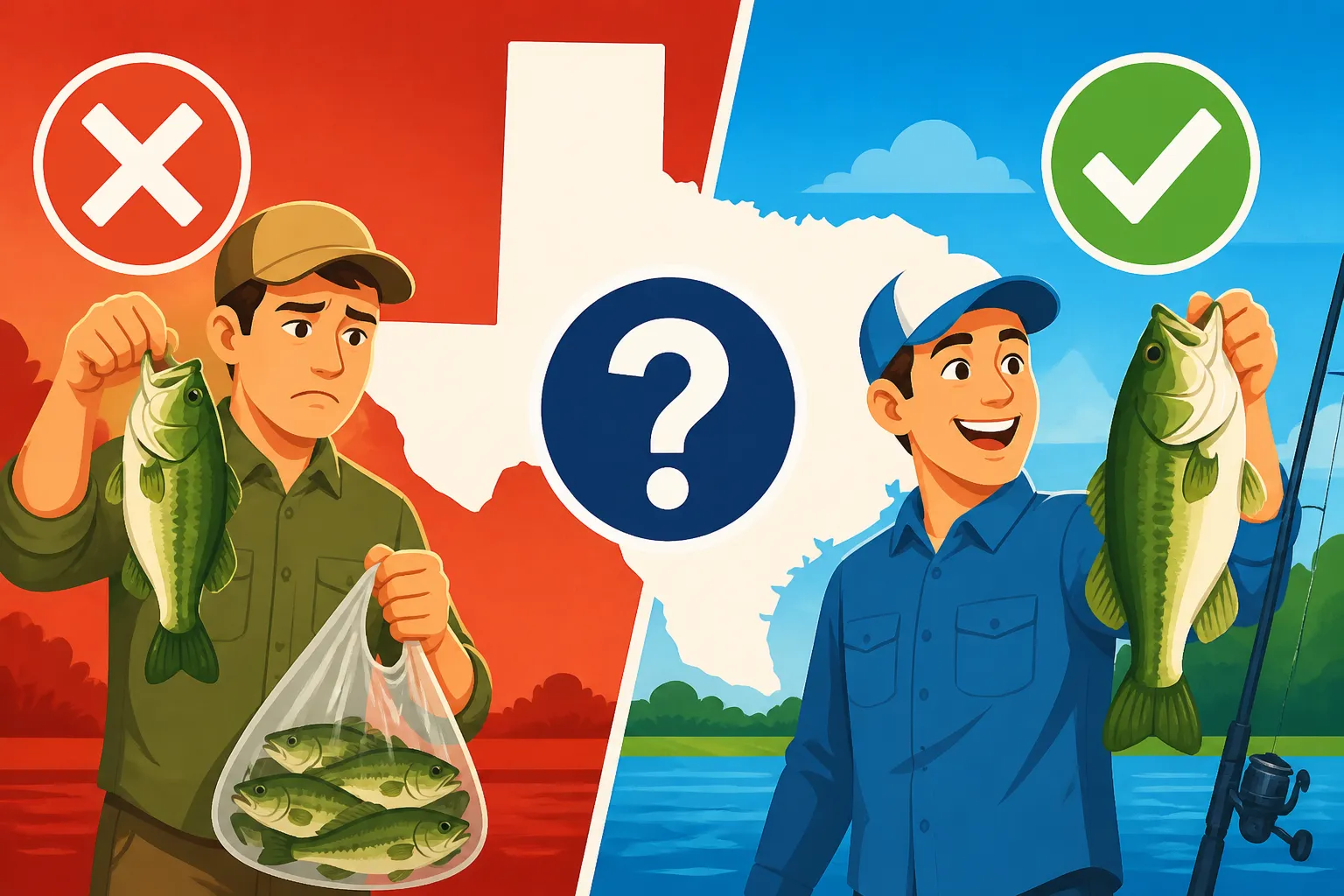
Let me be absolutely straightforward: Yes, bag limits still apply on Texas Free Fishing Day. There's no exception. When you're out there on the water, whether it's the first Saturday in June or any other day, you are still bound by the daily bag limits and possession limits for every species you target. This means the number of fish you can legally keep in a 24-hour period, and the total number you can possess at any given time (including those at your home or in transit), are exactly the same as always.
It's easy to get swept up in the excitement of a "free" day, but overlooking this could land you in serious trouble. Imagine you're out on Lake Conroe, known for its fantastic largemouth bass fishing. On Free Fishing Day, you might be catching bass left and right. But you still need to adhere to the Texas Largemouth Bass Length Limits, which typically stipulate a 5-fish daily bag limit with a specific minimum length. If you boat seven bass, even if you release some later, you've already exceeded your daily limit. Game wardens are out patrolling on Free Fishing Day just like any other day, ensuring everyone understands and follows these critical rules.
The same goes for saltwater anglers. If you're wading the flats in Matagorda Bay, enjoying the thrill of chasing redfish, you'll still need to follow Texas Redfish Size and Bag Limits. Generally, that means a 3-fish daily bag limit, with fish needing to be within a specific slot size, often 20-28 inches, and only one fish over 28 inches allowed if you have the appropriate endorsement. Exceeding this, even by one fish, is a violation.
It's vital to check the current regulations for the specific body of water and species you plan to fish, as rules can vary slightly by location or be updated annually. You can find detailed information in the official TPWD Outdoor Annual, which is available online and at most license retailers.
Length Limits Are Also Critical
Just as bag limits are strictly enforced, so too are length limits. These are incredibly important conservation tools, perhaps even more so for some species, as they protect fish during critical growth and spawning stages.
Length limits come in a few flavors:
- Minimum Length Limits: This means a fish must be at least a certain length to be legally kept. This protects young fish, allowing them to grow to maturity and reproduce at least once before being harvested. For instance, many popular panfish like crappie have a minimum length limit.
- Maximum Length Limits: This means a fish cannot exceed a certain length to be legally kept. This is often used for larger, older fish that are significant spawners, ensuring they stay in the population to contribute to future generations.
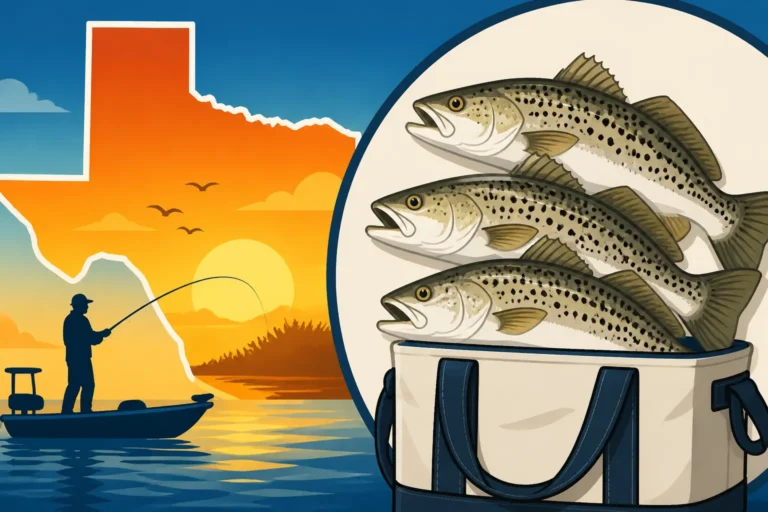
- Slot Limits: This is a combination of both, where only fish within a specific length range (the "slot") can be kept. Fish smaller than the slot or larger than the slot must be released. This is very common for trophy species like redfish and speckled trout, helping to maintain a healthy distribution of sizes within the population. If you’re targeting Texas Speckled Trout Bag Limits along the coast, you know how crucial that 15-25 inch slot limit is, with only one over 25 inches.
Ignoring length limits can be just as detrimental to fish populations as exceeding bag limits. A fish that's too small hasn't had a chance to reproduce, and one that's too large might be a prime breeder. On Free Fishing Day, you still need your measuring device handy and be prepared to accurately measure your catch immediately upon landing it. If it doesn't meet the legal requirements, it must be released quickly and carefully.
To give you a better idea, here's a quick, illustrative table of typical bag and length limits for some popular species found in Texas. Always consult the current TPWD Outdoor Annual for the most up-to-date and specific regulations for your fishing location.
| Species | Daily Bag Limit | Length Limit | Common Location |
|---|---|---|---|
| Largemouth Bass | 5 | 14 inches minimum (varies by lake) | Freshwater Lakes |
| Channel Catfish | 25 | 12 inches minimum | Freshwater Lakes, Rivers |
| Blue Catfish | 25 | 12 inches minimum (only 1 over 30") | Freshwater Lakes, Rivers |
| Crappie | 25 | 10 inches minimum (varies by lake) | Freshwater Lakes |
| Redfish | 3 | 20-28 inch slot (only 1 over 28" w/ tag) | Saltwater Bays, Gulf |
| Speckled Trout | 5 | 15-25 inch slot (only 1 over 25" w/ tag) | Saltwater Bays, Gulf |
| Flounder | 5 (seasonally) | 15 inches minimum | Saltwater Bays, Gulf |
Remember, these are general examples. Checking the specific regulations for the water you'll be fishing is paramount. You can find comprehensive details in the Texas Freshwater Fishing Regulations or Texas Saltwater Fishing Regulations section of the TPWD Outdoor Annual.
Beyond Bag Limits: Other Key Regulations to Remember
While bag and length limits are often the most talked-about regulations, it's crucial to understand that many other rules of the road still apply on Free Fishing Day. A fishing license is just one piece of the puzzle, and ignoring the rest can lead to just as much trouble.
Gear, Method, and Location Restrictions
Even without a license, anglers must adhere to all legal fishing methods and gear restrictions. This isn't a free pass to use whatever you want or fish however you please.
- Legal Gear: Most recreational fishing in Texas is done with a rod and reel, and that's perfectly fine. However, if you're thinking of using alternative methods, you need to be aware of specific rules. For instance, if you're planning to use gear like trotlines or juglines, these still have very specific regulations regarding the number of hooks, material, and labeling requirements. You'll need to understand Texas Trotline and Jugline Rules and be sure your gear is properly tagged as per Texas Jugline Regulations Explained, even on Free Fishing Day. Using prohibited gear, like nets meant for commercial fishing or dynamiting, is absolutely illegal on any day, Free Fishing Day included, and carries severe penalties.
- Prohibited Methods: Certain fishing methods are simply illegal in Texas waters. This includes snagging (unless specifically allowed for certain species like carp), electrofishing, or using chemicals to stun fish. Free Fishing Day doesn't change these prohibitions.
- Area-Specific Rules: Don't forget that certain bodies of water or specific areas within them might have unique rules. For example, some community fishing lakes in urban areas might have special youth-only sections or unique bag limits designed for intensive stocking programs. Similarly, fishing near dams often has specific restrictions, and federal waters in the Gulf of Mexico have entirely different rules that even a Texas state license wouldn't cover. Always check for any local signage or special regulations for the specific lake, river, or bay you plan to visit.
Respecting Private Property and Waterways
Another vital aspect that Free Fishing Day does not change is the respect for private property. The waiver of the fishing license requirement applies only to public waters. It does not grant you access to fish on private property without the landowner's permission.
Texas has a mix of public and private waterways. While many major lakes and rivers are considered public, the land surrounding them can often be private. If you're fishing from the bank, you must ensure you are on public land or have explicit permission from the property owner. Trespassing to go fishing is still trespassing, regardless of whether you have a license or not. Always be mindful of "No Trespassing" signs and use common courtesy. Stick to designated public access points, parks, and boat ramps unless you've secured permission.
The Consequences of Ignoring Regulations
It's easy to think of Free Fishing Day as a relaxed, consequence-free outing, but nothing could be further from the truth. The Texas Parks and Wildlife Department is diligent in enforcing fishing regulations, and violations carry real weight, both legally and environmentally.
Fines, Penalties, and Environmental Impact
Make no mistake: fishing without a license is often the least of your worries if you violate other regulations. Exceeding bag limits, keeping undersized fish, or using illegal gear can lead to significant penalties, even on Free Fishing Day. A game warden can issue citations that result in hefty fines, confiscate your fishing gear, and in some cases, even revoke your future fishing privileges. The exact Penalties for Fishing Without a Texas License or other infractions can vary depending on the severity and type of violation, but they are rarely minor.
Beyond the legal ramifications, there's a more profound consequence: the environmental impact. Every fish illegally harvested, every protected species taken, contributes to the overall stress on our natural resources. While one angler might feel their single violation doesn't matter, multiply that by the thousands of people who might be out on Free Fishing Day, and the cumulative effect could be substantial.
Our fisheries are a shared resource. We all have a responsibility to protect them. Following bag and length limits isn't just about avoiding a ticket; it's about being a good steward of the environment and ensuring that those same fish populations can thrive for our children and grandchildren to enjoy. When we disregard these rules, we're not just breaking the law, we're diminishing the very resource that brings us so much joy.
How to Stay Informed and Fish Responsibly
So, how can you make sure you're doing everything right on Free Fishing Day, and every other day you cast a line in Texas? The key is preparation and information.
- Consult the TPWD Outdoor Annual: This is your bible for all things fishing regulations in Texas. It's updated annually and provides comprehensive details on bag limits, length limits, legal gear, special provisions for various waters, and much more. You can easily find it online on the TPWD website, download it as a PDF, or pick up a physical copy at most Academy Sports + Outdoors stores, Walmart, or other places where licenses are sold. Many dedicated anglers even keep a copy on their phones or tablets for quick reference out on the water.
- Use the TPWD Outdoor Annual Mobile App: For ultimate convenience, the TPWD offers a free mobile app that puts all the regulations right in your pocket. It's incredibly handy for checking rules on the fly, especially when you're unsure about a specific species or body of water.
- Measure and Identify Your Catch: Always carry a reliable measuring device (like a bump board or tape measure) and know how to identify the fish you're catching. Sometimes, similar-looking species have different limits (e.g., distinguishing a spotted bass from a largemouth bass). When in doubt, it's always best to release the fish.
- Practice Catch-and-Release: Even if you're within your bag limit, consider practicing catch-and-release, especially for larger breeding fish or if you simply don't need to keep them for a meal. Proper catch-and-release techniques minimize stress on the fish and increase its chances of survival, contributing to healthy populations.
Free Fishing Day in Texas is a fantastic initiative that encourages everyone to get out and enjoy our incredible natural resources. It removes the barrier of needing a license, making it easier for new anglers to discover the sport. However, it's absolutely crucial to remember that "free" only applies to the license itself. All other regulations, including bag limits, length limits, and gear restrictions, remain fully in effect. By understanding and respecting these rules, we ensure that our Texas waterways continue to be abundant and enjoyable for all, for many years to come.
Disclaimer
This guide is intended for informational purposes only and does not constitute legal advice. Fishing regulations in Texas can change, and it is the responsibility of each angler to consult the most current official Texas Parks and Wildlife Department Outdoor Annual for precise and up-to-date rules and regulations before fishing.